Washington Elk Hunting Tactics by Weapon Season
One of the biggest hurdles for Washington elk hunters isn't just finding a bull, but figuring out how to effectively hunt them across our state's incredibly varied terrain and the distinct regulations tied to each weapon season. Whether you're chasing Roosevelt elk in the dense western forests or Rocky Mountain elk in the expansive eastern breaks, adapting your approach is critical. This comprehensive guide is designed to dissect the most successful elk hunting tactics for archery, modern firearm, and muzzleloader seasons, helping you understand the nuances of each and ultimately fill your tag.
Understanding Washington's Elk Landscape and Seasons
Washington state offers a truly unique elk hunting experience, spanning from the rainforests of the Olympic Peninsula to the sagebrush canyons of the Columbia Basin. To effectively pursue elk here, you first need to grasp the fundamental differences in our elk populations and the structure of our hunting seasons. It’s not a one-size-fits-all approach, and what works for one part of the state or one season might be entirely ineffective in another.
East vs. West: Rocky Mountain and Roosevelt Elk
Washington is home to two distinct subspecies of elk: the Rocky Mountain elk (Cervus canadensis nelsoni) primarily found east of the Cascade crest, and the Roosevelt elk (Cervus canadensis roosevelti) residing in the wetter, denser forests of Western Washington. Understanding their habitats, behaviors, and even their vocalizations is paramount. Rocky Mountain elk typically inhabit more open, drier country, such as the Okanogan, Colockum, and Blue Mountains. They are often found in large herds, utilizing timber pockets for cover but frequently venturing into clearcuts, burn areas, and open hillsides to feed. Their larger body size and more impressive antler growth are often cited by hunters.
On the other hand, Roosevelt elk, especially in areas like the Willapa Hills and Olympic Peninsula, are creatures of the deep, dark timber. They navigate thick rain-soaked forests, steep canyons, and dense brush like salal and devil's club. Their herds tend to be smaller, and their movement patterns are heavily influenced by the extreme cover. While they don't typically grow the same antler mass or spread as their Rocky Mountain cousins, a mature Roosevelt bull is a truly magnificent animal, embodying the rugged spirit of the western rainforest. The tactics you employ will drastically differ depending on which subspecies you're pursuing, necessitating different glassing, stalking, and calling strategies. If you're curious about specific herd locations and populations, our guide on Washington Elk Herds and Where They Live provides an in-depth look.
General Season Structure and Permit Hunts
Washington's elk seasons are primarily divided into general seasons for archery, muzzleloader, and modern firearm hunters, alongside a complex system of special hunt permits. General seasons offer opportunities for most hunters to pursue elk, but often come with stricter regulations, such as spike-only rules in many GMUs for modern firearm or either-sex for archery. These general seasons are crucial for many hunters, especially those new to the state or trying a new unit. They are the bread and butter for accessible elk hunting.
Special hunt permits, on the other hand, are highly coveted drawings that often allow access to quality units, branch-antlered bulls, or extended seasons with better weather or rut activity. Applying for these permits requires careful research into past success rates, herd numbers, and access. Many hunters dream of drawing a branch-antlered bull tag in a quality unit, as these hunts can offer a significantly higher chance at a mature animal. It’s a game of odds, but one worth playing if you’re serious about a trophy. Our detailed article on Washington Special Hunt Permits and How to Apply can help you navigate this often-confusing process.
Key Regulations and Unit Considerations
Washington elk hunting is governed by a detailed set of regulations that change frequently, making it essential to consult the most current WDFW hunting pamphlet. Key considerations include specific GMU boundaries, antler point restrictions (like the widespread 3-point minimum for modern firearm deer, or spike-only rules for elk), and weapon-specific legal requirements. Some units might be open to "any legal elk" for archery but "spike-only" for modern firearm, which dramatically changes your target animal. Road access, motorized vehicle restrictions, and private land access rules also play a significant role in unit selection.
For instance, understanding the Green Dot road system in national forests is crucial for vehicular access in many parts of Eastern Washington. Furthermore, knowing if a GMU has significant portions of private timberland, such as those managed by Weyerhaeuser or Hancock Forest Management, means researching their permit requirements well in advance. These details can make or break a hunt. Using tools like GoHunt can help you overlay different land ownership maps and regulations, giving you a comprehensive view of potential hunting grounds. Always double-check boundaries and rules, as ignorance is no excuse in the field.
Archery Elk Hunting Strategies for Washington's September Rut
Archery season for elk in Washington is a magical time, often coinciding with the peak of the rut in September. This is when bulls are most vocal and vulnerable, creating incredible opportunities for close-range encounters. However, it also demands exceptional stealth, patience, and calling prowess. Success with a bow comes down to meticulous preparation and a deep understanding of elk behavior during this crucial period.
Locating Bulls in Early Season Habitat
During the early September archery season, particularly as the rut begins to crank up, elk will be focused on feeding, breeding, and establishing dominance. For Rocky Mountain elk east of the Cascades, this means focusing on areas with good forage, water sources, and security cover. Look for higher elevations early in the season, as temperatures are often warmer, pushing elk higher until the first substantial cold fronts hit. Satellite imagery can help pinpoint south-facing slopes, old burns, or recent clearcuts that offer lush feed. Bedding areas will typically be in dark timber pockets adjacent to these feeding grounds.
For Roosevelt elk on the west side, the challenge is different. Their habitat is dense and wet, making visual spotting almost impossible. Instead, focus on finding fresh sign: heavily used game trails, fresh rubs on small trees, wallows, and most importantly, bugles. Roosevelts often bugle less frequently than their Rocky Mountain cousins, but when they do, it's often close. River bottoms, creek drainages, and areas with thick, regenerating timber (reprod) are prime locations. Learning to interpret fresh sign in these environments is essential, as detailed in our guide on Public Land Scouting in Washington Before Opening Day.
Calling Tactics and Close-Range Encounters
Calling is the cornerstone of archery elk hunting during the rut. For Rocky Mountain elk, aggressive bugling can challenge a dominant bull, drawing him into range. Starting with a locator bugle from a distance and then transitioning to cow calls or softer bugles as you close the gap can be highly effective. Understanding the nuances of bull responses – whether they're coming in hot, raking trees, or trying to circle downwind – is key. A good two-man calling setup, where the shooter is positioned ahead of the caller, can often seal the deal by drawing the bull's attention away from the approaching hunter.
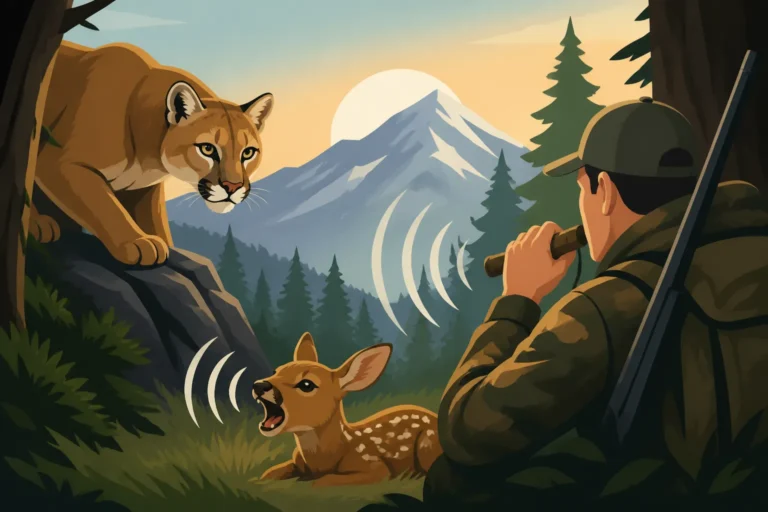
Roosevelt elk calling requires a more nuanced approach. While a bugle can work, cow calls and subtle mews often prove more effective, especially in the thick timber where aggressive bugling can seem out of place. Roosevelts are often more cautious. Sometimes, simply mimicking the sounds of a lost calf can pique a bull's curiosity enough to bring him in close. The thick cover limits visibility, making the last 50 yards the most critical and intense. It's about drawing them into your shooting lane, not necessarily into a wide-open field. For more specific calling techniques, check out our article on Bugling and Cow Calling in Washington's Archery Elk Season.
Equipment Considerations for Archery Hunters
Your archery setup needs to be dialed in for Washington's varied conditions. A durable, weatherproof bow is crucial, especially for western Washington's incessant rain. Ensure your bow has been properly tuned, and practice shooting from various positions – kneeling, sitting, and at odd angles – simulating real-world hunting scenarios. Broadhead selection is also paramount; Washington state regulations mandate a minimum cutting width, so always double-check the current pamphlet. Fixed blade broadheads are often favored for their reliability and penetration, especially on a quartering-away elk.
Beyond your bow, quality optics are vital. A reliable rangefinder with angle compensation is a must for accurately judging distances in steep, broken terrain. Binoculars (10×42 are a solid choice) will help you pick apart distant timber for movement or spot those subtle signs. Don't overlook the importance of good rain gear, as staying dry and comfortable will directly impact your ability to stay focused and still for extended periods. When you’re spending hours in the dense, wet brush of Western Washington, having the right gear, from waterproof boots to a silent rain jacket, is non-negotiable. Our guide on Archery Gear for Washington's Wet Westside offers more specialized advice.
Modern Firearm Elk Hunting Tactics for Diverse Terrain
Modern firearm season, often in October and November, presents a different set of challenges and opportunities for Washington elk hunters. The rut is typically winding down or over, and elk behavior shifts from breeding to primarily feeding and seeking security cover. This season often involves covering more ground, utilizing optics for long-range spotting, and executing precise shots.
Adapting to Early Fall Elk Behavior
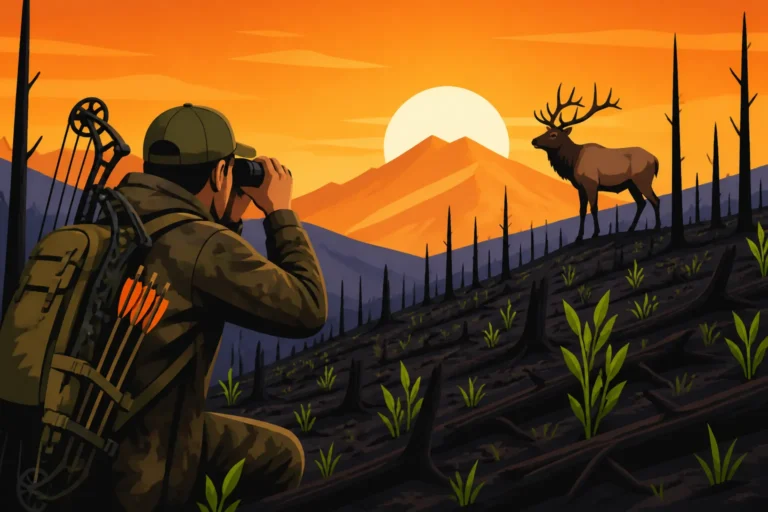
As the leaves change and temperatures drop, elk patterns often become more predictable, centering around food, water, and security cover. East of the Cascades, elk might be found transitioning from higher summer ranges down to lower elevations as snow begins to fall, or concentrating in specific winter range areas. They will often feed heavily in morning and evening, then retreat to dense timber or north-facing slopes for bedding during the day. Look for fresh tracks in new snow, which can provide invaluable information about herd size and travel corridors. Hunting a recent burn for elk can also be highly productive, as new growth provides excellent forage.
In Western Washington, Roosevelt elk will remain in their dense timber strongholds, but their feeding habits may become more concentrated around specific food sources like acorns, ferns, or regenerating clearcuts. With less bugling activity, hunters must rely more on still-hunting through thick areas, looking for fresh sign, and listening intently for the subtle sounds of elk moving through brush. Patience is key, as these animals can disappear into the forest seemingly effortlessly. You need to become part of the forest, moving slowly and deliberately.
Spotting, Stalking, and Shot Opportunities
Modern firearm hunting often leans heavily on effective glassing, especially in the more open landscapes of Eastern Washington. Utilizing powerful binoculars (like 15×56) or a spotting scope on a tripod is essential for picking apart distant hillsides, clearcuts, and timber edges. Key in on prime feeding areas at first and last light. Once elk are spotted, the stalk begins. This requires careful planning to account for wind direction, terrain features, and avoiding detection. Often, the best approach involves closing the distance during the middle of the day when elk are bedded.
For Roosevelt elk, the "spot" might be hearing a subtle crunch of branches or seeing a flick of an ear in the dense cover. This necessitates a much slower, more deliberate still-hunt. Move at a snail's pace, pausing frequently to glass and listen. Shot opportunities are often fleeting and at close range, demanding quick target acquisition in the timber. Understanding Shot Placement on a Quartering Elk is crucial for both subspecies, ensuring a clean, ethical harvest, as follow-up shots can be difficult in dense brush.
Rifle and Ammunition Choices for Washington Elk
Choosing the right rifle and ammunition is paramount for success and ethical hunting in Washington. Our state regulations mandate a minimum .24 caliber for big game, but for elk, most seasoned hunters opt for larger calibers like .30-06, .300 Win Mag, .7mm Rem Mag, or even .338 Win Mag. These cartridges offer the kinetic energy needed to ethically take down a large animal like an elk, especially at varying ranges. Bullet construction is equally important. Premium bullets designed for deep penetration and controlled expansion, such as Barnes TSX, Nosler AccuBond, or Hornady ELD-X, are highly recommended to ensure pass-throughs and quick, humane kills.
Your rifle scope should be reliable and appropriate for the terrain. In dense Western Washington timber, a lower power variable scope (e.g., 1.5-6x or 2-8x) with a wide field of view is ideal. For the more open country of Eastern Washington, a higher magnification scope (e.g., 3-9x or 4-16x) with a good reticle for holding over at distance might be beneficial. Practice shooting from field positions, not just off a bench, to prepare for real-world scenarios. Make sure your Rifle Setup for Washington Elk and Deer is perfectly sighted in and tested before the season.
Muzzleloader Elk Hunting: Capitalizing on Special Seasons
Muzzleloader season in Washington typically falls in late September or early October, nestled between archery and modern firearm seasons. These hunts often offer prime weather and less hunter pressure than modern firearm seasons, creating excellent opportunities for the dedicated muzzleloader hunter. However, the unique challenges of muzzleloading demand a different level of preparation and skill.
Scouting and Pre-Season Preparation for Muzzleloader
Muzzleloader seasons often offer a unique window into elk behavior. Depending on the year, you might catch the tail end of the rut or the beginning of the post-rut feeding patterns. Effective scouting is critical. Use E-Scouting Washington GMUs Before the Draw to pinpoint potential areas that align with muzzleloader-specific regulations and access. Look for areas with a mix of feed, water, and dense cover that might hold elk during this transitional period. Pay attention to elevations and aspect, as elk will often move in response to weather patterns and forage availability.
Pre-season practice with your muzzleloader is non-negotiable. Familiarize yourself with the loading process, powder charges, and projectile choices that group best with your rifle. Washington regulations for muzzleloaders are very specific, often requiring iron sights or unmagnified optics, and prohibiting sabots in some areas (always check the pamphlet). Ensure your rifle is clean, functioning flawlessly, and you are proficient out to its maximum ethical range. Understanding Muzzleloader Loading and Ignition in Rain is particularly important, as Washington weather can be notoriously unpredictable.
Getting Close and Making the Shot Count
Muzzleloader hunting is inherently a close-range game, much like archery. This means stalking skills become paramount. In the timber, move slowly and deliberately, scanning constantly for elk sign and movement. Pay close attention to wind direction, as your scent will travel easily. If you encounter elk in more open terrain, utilizing terrain features to break up your silhouette and close the distance is crucial. The limited range and single-shot nature of a muzzleloader mean that every shot counts, and you need to be within your effective ethical range before pulling the trigger.
Consider how elk react to human presence. During muzzleloader season, they've likely been pressured by archery hunters, making them warier. Using cow calls or soft mews can sometimes bring a curious bull closer in thick cover, especially if the rut is still lingering. The goal is to get inside 100 yards, preferably closer, for a high-percentage shot. When you finally get that opportunity, take a deep breath, settle your crosshairs, and execute a clean shot. Our guide to Muzzleloader Hunting Washington's Special Seasons delves deeper into these specific tactics.
Muzzleloader-Specific Gear and Maintenance
Beyond the rifle itself, specific gear is essential for muzzleloader success. You'll need a reliable bullet starter, a clean ramrod, speedloaders pre-charged with powder and bullet, and percussion caps or primers. A small, waterproof container to keep your caps or primers dry is a must, especially in Western Washington. Many hunters carry a small bottle of water or alcohol wipes to clean the bore between shots during practice, but in the field, a quick swipe with a bore swab can be enough if a follow-up shot is needed.
Maintenance is critical for muzzleloaders. Black powder and its substitutes are corrosive, so a thorough cleaning after every shooting session, even if it's just one shot, is necessary to prevent rust and ensure reliability. A waterproof rifle case or cover for your rifle while in the field is also highly recommended to protect it from Washington's often wet conditions. Don't forget a quality rangefinder to confirm distances, as knowing your exact maximum ethical range is vital with a muzzleloader.
Post-Shot Strategy and Ethical Recovery Across Seasons
Getting an elk on the ground is just the beginning of the hunt. Ethical recovery, proper field dressing, and efficient meat care are crucial steps that often determine the quality of your wild game meat. This phase of the hunt presents its own set of challenges, from blood trailing in dense cover to preserving meat in warm weather.
Blood Trailing and Tracking Challenges
After the shot, patience is paramount. If you suspect a solid hit, give the animal time, especially with archery or muzzleloader. A minimum of 30-60 minutes for a good lung hit, and several hours (or even overnight) for a suspected gut shot, is often recommended. Mark your shot location and the last place you saw the elk. Blood trailing in Washington can be incredibly challenging due to the dense vegetation, especially on the west side with salal, ferns, and devil's club that can easily soak up or hide blood.
Look for a distinct blood trail – color, consistency, and volume can tell you a lot about the hit. Pink, frothy blood indicates a lung hit; dark blood suggests a liver or muscle hit; green or brown matter points to a gut shot. If the trail is sparse, expand your search pattern in ever-widening circles from the last known blood. Use landmarks, flagging tape (removed after recovery), and the help of hunting partners. Don't be afraid to take your time. A detailed understanding of Blood Trailing in Salal and Devil's Club can save a lot of frustration and increase your recovery rate.
Field Dressing and Meat Care in Varying Conditions
Once you've located your elk, rapid field dressing is essential, especially during warmer early seasons like archery. The goal is to cool the carcass as quickly as possible to prevent spoilage. The traditional gutting method involves opening the cavity and removing all internal organs. Alternatively, the "gutless method" has gained popularity, especially for solo hunters or those in steep, difficult terrain. This method allows you to quarter the animal and remove the meat without opening the body cavity, leaving the guts intact. This can be much faster and cleaner in the field.
After field dressing, the meat needs to breathe and cool. Hang quarters if possible, using durable game bags like those from The Allen Company or Kuiu to protect the meat from flies and dirt. If hanging isn't feasible, prop the quarters up off the ground. In warm weather, getting the meat into coolers packed with ice as quickly as possible is critical. Even better is to bone out the meat, which reduces weight and allows for faster cooling. Field Dressing in Warm Early-Season Weather is a skill every hunter needs to master for quality meat.
Packing Out: Logistics and Essential Gear
Packing an elk out of Washington's backcountry is physically demanding, often requiring multiple trips or the assistance of a good pack string. A quality frame pack with a load shelf, like those offered by Mystery Ranch or Kifaru, is an indispensable tool. You'll likely be carrying 50-80 pounds per trip, so a comfortable, well-fitting pack is crucial to prevent injury and make the haul manageable. Remember to pack enough water and high-energy snacks for the journey.
Estimate the number of trips based on the size of the elk and your physical condition. A mature bull elk can yield 200-300 pounds of boned-out meat, plus the hide and antlers. This often means 3-5 trips for a single hunter, or 2-3 trips with a partner. Plan your route, especially if it's getting dark, and use a reliable headlamp for night travel. Our guide on Packing an Elk Out of Washington's Backcountry offers a detailed breakdown of the logistics and gear needed for this monumental task. Remember, the hard work after the shot is what makes the harvest truly earned.
Essential Scouting and E-Scouting for Washington Elk
Success in Washington elk hunting, regardless of the weapon season, often hinges on thorough scouting. This isn't just about showing up the week before opening day; it's a year-round commitment to understanding elk movement, habitat use, and pressure points. Combining boots-on-the-ground reconnaissance with advanced digital tools can give you a significant advantage.
Interpreting Sign and Understanding Elk Movement
Reading the landscape and interpreting elk sign is a fundamental skill. Look for fresh tracks in soft soil near water sources, dusting areas, and trails. Examine rubs on trees, which indicate bull activity and can give you an idea of antler size. Wallows are key indicators of elk presence, especially during the rut; check for fresh mud and hair. Droppings can tell you how recently elk were in the area and what they've been feeding on. Remember, fresh sign is much more valuable than old sign.
Understanding how elk move through different types of terrain is also crucial. They tend to follow paths of least resistance, such as ridge lines, creek bottoms, and old logging roads. However, they will quickly dive into the thickest cover when pressured. Learn to identify bedding areas (often north-facing slopes with dense timber or thick reprod) and feeding areas (clearcuts, burn areas, aspen groves, or open hillsides). Paying attention to wind direction and thermals will help you predict how elk move between these areas throughout the day.
Leveraging Digital Tools and Satellite Imagery
E-scouting has revolutionized how hunters prepare for their seasons. Platforms like GoHunt, OnX Hunt, and BaseMap allow you to analyze satellite imagery, topo maps, and land ownership from the comfort of your home. Use these tools to identify potential access points, locate prime feeding and bedding habitat, mark water sources, and understand terrain features. You can look for subtle changes in vegetation that might indicate old clearcuts or natural openings that would otherwise be hidden.
Specifically, look for benches, saddles, and drainages that funnel elk movement. Identify areas of dense timber adjacent to meadows or burns. You can mark potential glassing knobs and escape routes. Pay attention to private land boundaries and road closures (like Washington's Green Dot roads) to ensure legal access. These digital maps are also invaluable for planning your boots-on-the-ground scouting trips, allowing you to prioritize areas with the highest potential. Our guide on E-Scouting Washington GMUs Before the Draw provides a deeper dive into these powerful techniques.
Boots-on-the-Ground Reconnaissance
While e-scouting is powerful, there's no substitute for actually putting boots on the ground. Visit your chosen GMU months before the season, if possible. This allows you to verify what you saw on maps, understand the terrain's true difficulty, and find fresh sign that digital tools can't reveal. Walk the trails, explore potential bedding and feeding areas, and learn how the wind and thermals behave in different drainages. This is your chance to scout for water holes that hold deer in dry country, which often attract elk as well.
During your physical scouting trips, look for natural barriers, funnels, and pinch points where elk movement might be concentrated. Set up trail cameras in promising areas, particularly on game trails, ridge saddles, or near wallows, to get an idea of elk numbers, antler quality, and movement patterns. Remember to adhere to Washington's trail camera rules on public land. These in-person experiences build confidence and provide invaluable insights that simply cannot be gained from a computer screen.
Navigating Washington's Public and Private Land Access
Access to hunting grounds in Washington can be a complex puzzle, ranging from vast tracts of national forest to patchwork private timberlands with restricted entry. Understanding the different land designations and their specific access rules is fundamental to a successful and legal hunt.
Understanding National Forests, DNR, and BLM Lands
Washington offers millions of acres of public land managed by various agencies. National Forests, such as the Okanogan-Wenatchee, Gifford Pinchot, and Olympic National Forest, are generally open to hunting and offer significant opportunities for both Roosevelt and Rocky Mountain elk. These lands often feature a mix of dense timber, high alpine meadows, and road systems, including the important Green Dot roads that regulate motorized access. Always check the specific forest service regulations for any closures or special restrictions.
Department of Natural Resources (DNR) lands are also extensive and often provide excellent hunting access, particularly in Western Washington. Many DNR lands are open to hunting, but some may require a Discover Pass for parking. Similarly, Bureau of Land Management (BLM) lands, though less prevalent in Washington compared to other western states, can offer valuable hunting opportunities, especially in some eastern Washington counties. Always consult the WDFW hunting pamphlet and land management agency websites for specific rules and boundaries within your chosen unit.
Private Timberlands and Access Programs
A significant portion of prime elk habitat, particularly in Western Washington, is owned by private timber companies such as Weyerhaeuser and Hancock Forest Management. These companies manage their lands for timber production and often have complex access policies. Many require permits, which can range from free walk-in permits to expensive paid vehicle access permits that are limited in number and often sell out quickly. Some areas may only be accessible through specific programs or may require special permission.
It’s crucial to research these timber company policies well in advance of the season. Information on how to apply for permits, access fees on private timber land, and specific gate opening/closing dates is usually available on their respective websites. Not all timber company land is accessible, and some areas may be permanently closed to public entry. Planning your hunt around these access restrictions is essential for Western Washington elk hunters. Our article on Timber Company Permits in Western Washington can help you navigate these often-confusing rules.
Respecting Boundaries and Hunter Ethics
Regardless of where you hunt, respecting land ownership boundaries and practicing good hunter ethics are non-negotiable. Always know precisely where you are in relation to property lines, especially when hunting near private land. Using a GPS with land ownership layers (like GoHunt or OnX Hunt) is highly recommended. Trespassing, even accidentally, can lead to fines, loss of hunting privileges, and gives all hunters a bad name.
Beyond legal boundaries, practice responsible stewardship. Pack out all your trash, including spent shell casings and flagging tape. Avoid driving off designated roads or creating new trails. Treat other outdoor users, whether they are hikers, mountain bikers, or other hunters, with courtesy and respect. Leaving gates as you found them (open or closed) and being mindful of noise and disturbance are simple ways to ensure continued access for everyone. Remember, we are guests on these lands, and our behavior impacts future hunting opportunities.
Overcoming Common Challenges and Staying Safe
Washington elk hunting is often an arduous endeavor, fraught with unpredictable weather, challenging terrain, and inherent risks. Being prepared for the unexpected and prioritizing safety are just as important as knowing where the elk are.
Weather Extremes and Contingency Planning
Washington's weather can shift dramatically, sometimes within hours, particularly in the mountains. From mild September days to freezing rain, heavy snow, and strong winds in October and November, you need to be prepared for it all. This means layering your clothing with appropriate moisture-wicking base layers, insulating mid-layers, and a waterproof/windproof outer shell. Quality rain gear for Westside hunting is non-negotiable if you plan on staying dry. Pack extra clothes, even for a day hunt, and always have emergency fire-starting supplies.
Beyond clothing, plan for adverse weather impacting travel. Snow can quickly close mountain roads, leaving you stranded. Always check road conditions and weather forecasts before heading out, especially for late-season hunting in Washington snow. Have a backup plan for extracting your vehicle or, worst-case, yourself. Carry extra food, water, and emergency shelter. Understanding potential fire restrictions during dry hunting seasons is also crucial, as wildfires can rapidly change access and safety conditions.
Solo Hunting Safety and Communication
Many hunters enjoy the solitude of a solo elk hunt, but it comes with increased risks. If you plan to hunt alone, take extra precautions. Always leave a detailed trip plan with a trusted person, including your exact hunting location, expected return time, and vehicle description. Carry a satellite messenger or personal locator beacon (PLB) like a Garmin inReach or Zoleo, which allows you to send emergency messages even when out of cell service. While two-way radios can be useful for groups, they rely on line-of-sight and are often unreliable in mountainous terrain for lone hunters.
A well-stocked first aid kit for a remote hunt is essential, tailored to treat cuts, sprains, and more serious injuries. Know basic first aid. Carry enough water and food for an extra day or two beyond your planned trip duration. Physical fitness is also critical for solo hunting, as you'll be responsible for all packing out and navigating difficult terrain alone. Being realistic about your capabilities is a key part of solo hunting safety.
Physical Conditioning and Mental Toughness
Elk hunting in Washington is not for the faint of heart; it's a physically and mentally demanding sport. Whether you're navigating the steep, brushy slopes of Western Washington or traversing the vast, broken country of the east, you'll be covering miles with heavy loads, often at elevation. Pre-season physical conditioning is vital. Focus on cardiovascular endurance, leg strength, and core stability. Hiking with a weighted pack, especially uphill, is excellent preparation.
Mental toughness is equally important. There will be days of relentless rain, fruitless miles, and frustrating close calls. The ability to stay positive, persist through discomfort, and maintain focus when tired or discouraged is what separates successful hunters from those who give up. Remember, elk hunting is as much a mental game as it is a physical one.
| Weapon Season | Typical Dates (Approx.) | Primary Elk Behavior | Key Challenges | Tactical Focus |
|---|---|---|---|---|
| Archery | Mid-Sept to early Oct | Rut activity, vocalizations | Close-range shot, dense cover, unpredictable bulls | Calling (bugling/cow calls), stealth, wind reading |
| Muzzleloader | Late Sept to mid-Oct | Post-rut/early feeding | Single shot, limited range, specific equipment rules | Stalking, patience, precise shot placement |
| Modern Firearm | Mid-Oct to mid-Nov | Feeding, security cover, migration | Wary elk, long shots, weather extremes | Glassing, long-range stalking, accurate shooting |
Disclaimer
The information provided in this guide is for general informational purposes only and does not constitute legal advice. Hunting regulations in Washington are subject to change, and it is the hunter's responsibility to consult the most current Washington Department of Fish and Wildlife (WDFW) hunting pamphlet and all applicable state and federal laws before engaging in any hunting activities. Always prioritize safety and ethical hunting practices.