Blacktail Deer Hunting in Western Washington Timber
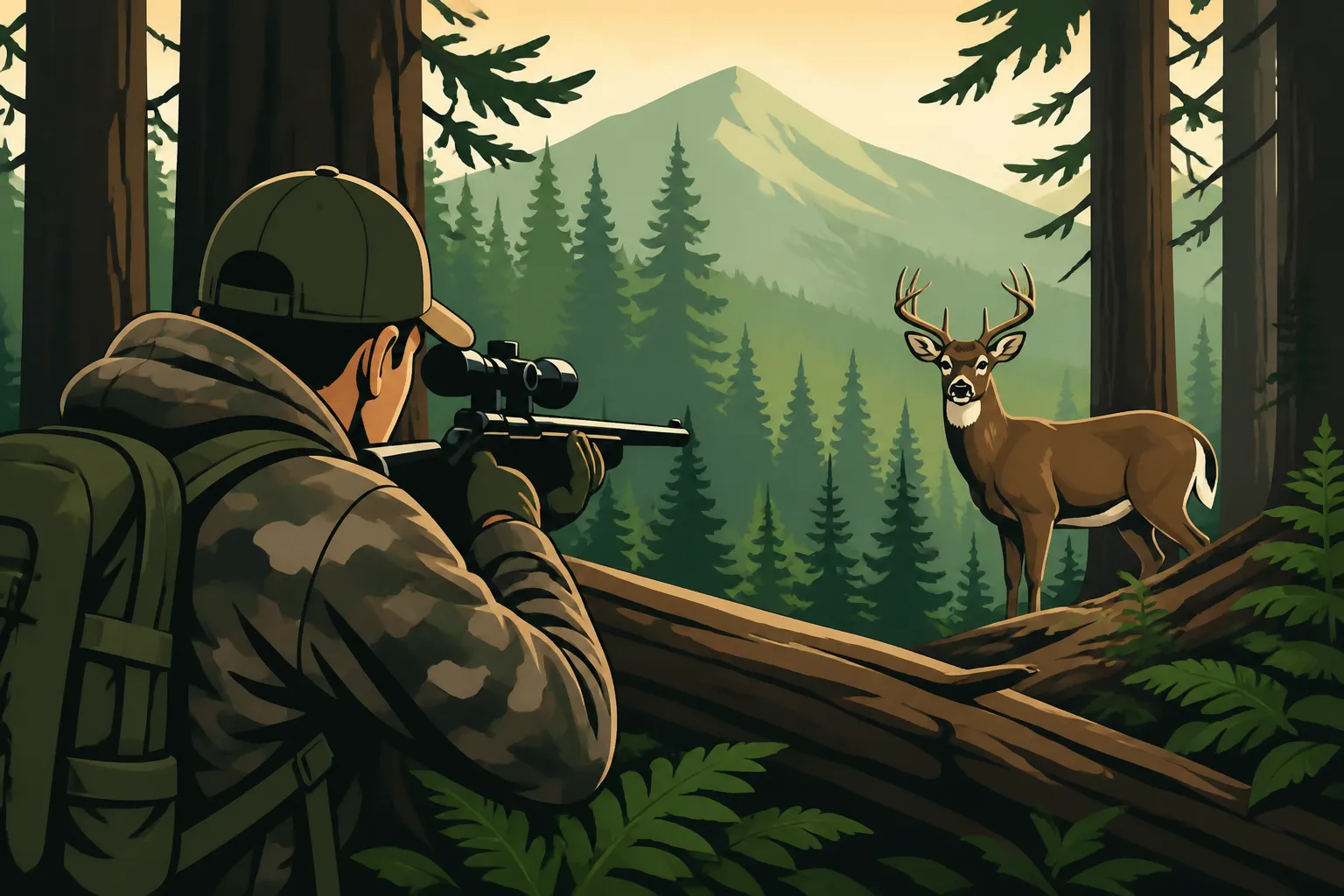
Hunting blacktail deer in Western Washington timber can feel like looking for a ghost in a green hell. The sheer density of the forest, the constant rain, and the secretive nature of these deer can make it incredibly frustrating, leaving many hunters feeling defeated season after season. But with the right strategies, gear, and a deep understanding of their habitat, you absolutely can turn those struggles into success. This comprehensive guide will break down everything you need to know to effectively hunt blacktails in the challenging landscapes of Western Washington's timber country.
Understanding the Western Washington Blacktail Deer Habitat
Before you even think about stepping into the woods, you've got to wrap your head around the world a blacktail lives in. Western Washington's timber country isn't your open, rolling eastern Washington rangeland. It's a beast all its own, and understanding its nuances is key to finding success.
The Dense World of Westside Timber
Imagine trying to spot a deer, let alone get a shot off, when visibility is often limited to mere yards. That's the reality of hunting in Western Washington's timber. This isn't your grandma's open hardwood forest; it's a labyrinth of thick second-growth, dense replanted clearcuts, and gnarly old-growth patches. The ground cover alone can be a nightmare to navigate quietly. You’re talking about vast expanses choked with salal, evergreen huckleberry, sword ferns, and the infamous devil's club, all weaving together to form an almost impenetrable barrier. This incredibly dense vegetation provides blacktails with unparalleled security, allowing them to move through their territories largely unseen, even by experienced hunters.
The constant moisture from the Pacific Northwest climate only exacerbates this challenge. Everything is wet, from the moss on the trees to the undergrowth underfoot. This means silent movement is incredibly difficult, as every twig snap or brush rustle can give away your position long before you even know a deer is near. The humidity also plays tricks on thermals and scent, making wind direction even more critical and unpredictable within the timber. It’s a challenging environment that demands a completely different approach than hunting in more open terrain, requiring a mental shift from covering ground quickly to moving with extreme precision and patience.
Blacktail Behavior in Forested Environments
Blacktails are masters of their domain, evolved to thrive in this dense, unforgiving landscape. Their entire existence revolves around using the thick cover to their advantage. They don't typically travel vast distances in open areas; instead, they prefer to stick to the security of the timber, using game trails and natural corridors to navigate from bedding areas to feeding grounds. These deer are naturally more reclusive and less prone to open-field antics compared to their mule deer cousins. You won't often see blacktails skylining themselves on ridgelines or grazing in wide-open fields during daylight hours, especially when hunting pressure is on.
Their activity patterns are often dictated by the cover available. During the day, especially under hunting pressure, they'll often bed down in the thickest reprod patches, on brushy benches, or within the shadows of dark timber where visibility is minimal. They'll use these secure bedding sites to chew their cud and stay hidden, only venturing out to feed during low-light hours or when extreme weather forces them to seek shelter or sustenance. Understanding this inherent need for security is paramount; it means you'll have to get into their living rooms, so to speak, to have a chance at seeing them. Their subtle movements and reliance on stealth make them incredibly challenging to intercept, but also immensely rewarding when you finally connect.
Impact of Logging and Timber Management
The landscape of Western Washington is heavily influenced by commercial timber operations, and this creates a dynamic and ever-changing habitat for blacktails. Logging practices result in a mosaic of different forest stages, each offering distinct resources and presenting unique challenges for hunters. Fresh clearcuts, for example, might initially seem barren, but quickly become havens for new growth – grasses, forbs, and succulent browse – that deer absolutely love to feed on. However, these areas also offer minimal cover, meaning deer will often only venture into them during twilight or nighttime hours, or on particularly foggy, rainy days when visibility is low.
As these clearcuts mature, they become what we call "reprod" – dense stands of regenerating conifers, often mixed with thick brush. These reprod stands, ranging from head-high to 20 feet tall, are prime bedding and security cover for blacktails. They can be incredibly difficult to navigate and hunt due to their density, but they are also where deer spend a significant amount of their time. Older second-growth timber, with its slightly more open understory, can also hold deer, particularly if there are still patches of good browse or natural clearings. Understanding the age and characteristics of these logged areas, and how deer utilize them at different times, is crucial for developing an effective hunting strategy. Many of these areas are managed by private timber companies, which often require permits or have specific access rules, so always check before you head out, possibly looking into services like GoHunt for mapping private land boundaries and timber company access points.
Essential Scouting Strategies for Western Blacktails
Scouting for blacktails in Western Washington isn't just a suggestion; it's a non-negotiable step to success. You can't just show up on opening day and expect to stumble onto a buck. These deer demand you put in the time and effort long before the season even begins.
E-Scouting Western Washington Units
Before you even lace up your boots, modern technology can give you a significant leg up. E-scouting allows you to analyze potential hunting areas from the comfort of your home, saving countless hours and miles. Start by using satellite imagery to identify key features of a Game Management Unit (GMU) that blacktails are likely to utilize. Look for the edges of clearcuts where they meet dense timber, identifying areas where deer can quickly transition from feeding to security. Pay close attention to drainages, benches, and saddles – these often serve as natural travel corridors, even in the thickest brush.
Topo maps are equally crucial. Blacktails, like all deer, prefer to travel the path of least resistance. Look for benches or subtle changes in elevation that allow for easier movement across steep hillsides. Identify areas with varied terrain that offer both dense cover for bedding and nearby browse for feeding. Tools like GoHunt or other mapping apps can layer public land boundaries, private timber holdings, and even WDFW data, giving you a comprehensive overview. Mark potential access points, old logging roads, and areas of interest that you'll want to investigate further on the ground. This initial reconnaissance is about narrowing down vast tracts of timber into manageable, high-potential zones, providing a solid foundation for your physical scouting efforts. For more detailed insights, check out our guide on E-Scouting Washington GMUs Before the Draw.
Boots-on-the-Ground Reconnaissance
Once you've done your homework with e-scouting, it's time to put boots on the ground. Nothing beats physically walking an area to understand its nuances and verify what you saw on the map. This is where you connect the dots between potential habitat and actual deer sign. Focus on finding evidence of deer activity: fresh tracks, especially larger ones that might indicate a buck, in soft dirt or mud along trails and creek bottoms. Look for droppings, which can tell you how recently deer have been in an area and whether they're actively feeding there. Scrapes and rubs are also invaluable, especially as you get closer to the rut. While blacktails aren't as prolific as whitetails with rubs, finding fresh ones can pinpoint a buck's core area.
The dense undergrowth of Western Washington often means you won't see deer from a distance. Instead, you'll be looking for subtle signs of their presence as you move slowly through the timber. Identify potential bedding areas within thick reprod or on brushy benches, and look for trails leading in and out of them. Pay attention to natural funnels – places where the terrain or vegetation forces deer into a narrow travel path. These pinch points are prime locations for setting up an ambush during the season. Scouting in the off-season, or even during archery season if you have a general tag, allows you to observe deer patterns without the pressure of a rifle hunt. The more time you spend in the woods, the more intimately you'll understand how blacktails use a particular piece of ground, drastically increasing your chances when hunting season arrives.
Reading Clearcuts and Reprod
Clearcuts and regenerating timber, or "reprod," are the lifeblood of blacktail habitat in Western Washington, offering a complex mix of food and cover. Learning to "read" these areas is a critical skill for any successful blacktail hunter. A freshly logged clearcut, especially one that's a year or two old, will be bursting with new forage like clover, fireweed, and succulent sprouts. While these areas are feeding magnets, they offer little cover. Deer will typically only use them under the cover of darkness or on extremely foggy, rainy days when their security is enhanced. Look for trails leading into these open areas from the adjacent timber, as these will be their primary entry and exit points.
As the clearcut grows, it transitions into dense reprod. This stage, anywhere from 3 to 15 years post-logging, becomes prime bedding and security cover. These thickets are often impenetrable to humans, but deer will create intricate trail systems within them. Your job is to find the edges of these reprod blocks, identify the main travel corridors, and locate "holes" or slightly less dense spots where a deer might bed or pause. Look for areas where reprod meets older timber, as these transition zones are often high-traffic areas. Older clearcuts, those with established reprod, also provide excellent cover for bucks that want to disappear. Understanding how deer utilize these different stages of timber regrowth throughout the day and across the season is paramount. For a deeper dive into this specific skill, make sure to read our guide on Reading Clearcuts and Reprod for Blacktail Bucks.
Effective Hunting Methods for Timber Blacktails
Hunting blacktails in Western Washington timber requires a specific set of skills and a whole lot of patience. You can't just walk and hope; you need calculated strategies tailored to the environment.
Still-Hunting the Dense Undergrowth
Still-hunting is perhaps the most effective, albeit physically and mentally demanding, method for pursuing blacktails in dense Western Washington timber. It's not about covering ground quickly; it's about moving at an excruciatingly slow pace, often taking several minutes to cover just a few yards. Your goal is to blend into the environment, using every bit of available cover, and relying heavily on your senses. You're looking for subtle cues: a flick of an ear, a patch of dark hair, the horizontal line of a deer's back against the vertical trees. This method demands extreme focus and discipline. You move a few steps, then stop for a long period, scanning every shadow, every clump of brush, every tree trunk.
The key to successful still-hunting in this environment is silence and observation. Use the natural noise of the forest to your advantage; a gust of wind, a passing truck, or a steady rain can mask your footsteps, allowing you to move undetected. Listen for any unnatural sounds – a twig snap, a deer blowing, or even the subtle rustle of leaves as a deer moves. Pay particular attention to your downwind side, as deer will often circle to get your scent. When you move, pick up your feet, step slowly and deliberately, testing the ground before you commit your weight. This method is incredibly tiring and can be frustrating when you see nothing for hours, but it’s often the only way to surprise a bedded buck in the thick stuff. The article Still-Hunting Blacktails in Wet Washington Brush offers even more specific tactics for mastering this technique.
Stand Hunting and Ambush Tactics
While still-hunting is excellent for covering ground, stand hunting or ambush tactics can be incredibly effective when you've identified key travel corridors or feeding areas. The trick is finding those specific pinch points where deer movement is concentrated. Look for natural funnels created by terrain features like saddles between ridges, narrow benches along steep hillsides, or strips of timber connecting larger blocks of cover. Also, focus on transition zones: where thick bedding reprod meets a more open feeding clearcut, or where two different types of timber merge. Deer will often utilize the "inside corner" of these transitions, using the varied cover as they move.
Setting up an ambush isn't just about finding a good spot; it's about being invisible. In thick timber, this means using natural cover to break up your outline, whether you're on the ground or in a tree stand. Scout for a natural blind or a tree that offers good concealment and shooting lanes, keeping in mind that your shots will likely be close and quick. Wind direction is critical; you absolutely must be downwind of where you expect deer to approach. Setting up early, well before first light, allows you to get into position without alerting deer to your presence. Patience is your best friend here. Wait for the deer to come to you, often in those crucial first and last hours of daylight, or even throughout the day on especially foul-weather days when blacktails are more prone to movement.
Rattling and Grunting for Blacktails
Calling can be a surprisingly effective tactic for timber blacktails, especially during the peak of the rut, typically in mid-November through early December in Western Washington. While they might not respond with the same aggressive enthusiasm as whitetails, blacktail bucks are still competitive and can be drawn in by sounds that mimic a challenging encounter. Rattling antlers, even small ones, can simulate two bucks sparring, which might pique the interest of a dominant buck looking for a fight or a subordinate buck trying to sneak in and see what's happening.
When rattling, it's crucial to consider the density of the timber. You don't need to rattle as loudly as you would in open country; the sound won't carry as far, and too much volume might sound unnatural up close. Combine rattling sequences with soft grunts, challenging growls, or even a doe bleat to add realism. After a calling sequence, be prepared for a deer to approach silently and quickly. They often circle downwind to scent-check the area before committing, so be vigilant in all directions. Setting up with a partner, where one person calls and the other watches a shooting lane, can be incredibly effective. For more nuanced strategies on using calls, you might find our article on Rattling and Grunting for Blacktails useful, even though it focuses on a slightly different context, the core principles apply. Remember, even a wary blacktail can't resist curiosity or a perceived challenge during the right time of year.
Gear and Equipment Tailored for Westside Timber
Hunting in Western Washington timber isn't just about tactics; it's about having the right gear that can withstand the elements and help you succeed in this challenging environment. Skimping on quality here will only lead to misery.
Optics for Close-Quarters Hunting
Unlike hunting in open country where high-magnification binoculars and spotting scopes are essential, blacktail hunting in dense timber often calls for a different optical setup. Your primary goal is to spot deer in tight quarters, often at ranges of 20 to 100 yards, and quickly identify if it's a legal buck. A good pair of 8×42 or even 10×42 binoculars is usually sufficient. The wider field of view offered by these magnifications helps you scan thick brush more effectively, and the larger exit pupil aids in low-light conditions prevalent under the dense canopy. There's little need for bulky, heavy optics when your visibility is measured in yards, not miles.
A quality rangefinder is also an invaluable tool, not just for confirming distance to a target but also for judging distances to obstacles and potential shooting lanes. In thick timber, judging distance can be surprisingly difficult due to the lack of clear reference points. A quick laser reading can help you confirm that a lane is clear or that a patch of brush isn't too close for an ethical shot. Some models, like those from Vortex or Leupold, feature angle compensation, which is particularly useful in the steep terrain often found in Western Washington. While you might not be glassing vast expanses, reliable optics that perform well in dim, wet conditions are crucial for making quick, confident decisions in the fleeting moments a blacktail appears. For a broader look at selecting optics, refer to our guide Optics for Washington Elk and Deer Hunting.
Weapon Choices and Setups
Your weapon choice for blacktail hunting in Western Washington timber should prioritize maneuverability, quick target acquisition, and reliable terminal performance on deer-sized game. For rifle hunters, a shorter barrel (20-22 inches) can be a significant advantage when navigating through thick brush, helping to prevent snags and allowing for faster swings on an unexpected opportunity. Calibers like the .30-06, .308, 6.5 Creedmoor, or even a .270 are excellent choices, offering plenty of knockdown power without excessive recoil. Focus on using quality bullets that retain their weight and expand reliably, even if you hit a twig (though shooting through brush is highly discouraged). Heavy-for-caliber, bonded bullets are a good choice here.
For archery hunters, a compact bow with a shorter axle-to-axle length is often preferred for navigating dense terrain and taking shots in tight windows. A setup that's quiet, smooth, and forgiving is key. Broadhead choice is critical; fixed-blade broadheads with strong construction tend to perform well, though many hunters successfully use mechanicals. Washington's regulations require a broadhead width of at least 7/8 inch. Regardless of your weapon, practice shooting from various positions – kneeling, sitting, and offhand – as you'll rarely get a perfect standing shot opportunity in the timber. Ensure your rifle or bow is sighted in for close to mid-range shots, as long-range opportunities are rare. For comprehensive advice on rifle setups, our article on Rifle Setup for Washington Elk and Deer provides excellent guidance.
Rain Gear, Footwear, and Essential Apparel
If you're hunting blacktails in Western Washington, you're going to get wet. It's not a matter of "if" but "when." Therefore, high-quality, truly waterproof and breathable rain gear is not a luxury; it's an absolute necessity. Look for durable materials that can stand up to constant abrasion from brush and keep you dry even during all-day downpours. Brands like Sitka, Kuiu, and even more budget-friendly options from outdoor retailers offer technical outerwear designed for these conditions. Layering is also crucial for managing temperature fluctuations. Start with a moisture-wicking base layer, add an insulating mid-layer (fleece or synthetic puffy), and top it with your waterproof shell. This system allows you to adapt to changing weather and activity levels.
Your footwear is equally critical. You'll be traversing steep, often muddy, and rocky terrain that is perpetually wet. Waterproof, supportive boots with excellent traction are paramount. Choose boots with a sturdy sole that can handle uneven ground and a high ankle for support and to keep water out. Many hunters prefer a full-grain leather boot with a Gore-Tex or similar waterproof membrane. Gaiters are another essential piece of gear, preventing water, mud, and debris from getting into your boots and soaking your pants from the knees down. Think of your clothing as a system designed to keep you comfortable, dry, and able to perform in adverse conditions. Without proper rain gear and footwear, a Western Washington blacktail hunt can quickly turn miserable and even dangerous due to hypothermia risks. Check out our comprehensive guide on Rain Gear and Layering for Washington Hunts for more in-depth advice on staying dry and comfortable.
Navigating Washington's Regulations and Access Challenges
Hunting in Washington comes with its own unique set of rules, regulations, and access quirks. Understanding these intricacies is just as important as knowing deer behavior, especially when it comes to maximizing your opportunities for blacktails.
Understanding GMUs and Season Dates
The Washington Department of Fish and Wildlife (WDFW) divides the state into numerous Game Management Units (GMUs), each with specific regulations regarding season dates, weapon types, and antler restrictions. For blacktails, you'll primarily be focused on GMUs located west of the Cascade crest. It's imperative to consult the current year's WDFW Big Game Hunting Seasons & Regulations pamphlet, which is available online and at license vendors. This document is your bible for understanding what's legal in your chosen GMU. Pay close attention to the general season dates for archery, muzzleloader, and modern firearm, as well as any special permit hunts you might consider applying for.
Many Western Washington GMUs have a "three-point minimum" antler restriction for bucks during certain seasons, meaning the buck must have at least three points on one side, not including the eye guard. This requires careful antler identification before you take a shot. Other GMUs might be "any buck" or have specific antlerless opportunities through special permits. Always double-check the rules for your specific GMU. The pamphlet will also detail tagging requirements, harvest reporting deadlines, and legal hunting hours. Staying compliant with these regulations is not just about avoiding fines; it's about ethical hunting and contributing to sound wildlife management. Our guide on Washington General Season Versus Special Permit Hunts offers a deeper dive into these different hunt structures.
Public Land Access: Forest Service and DNR Lands
Western Washington offers significant public land hunting opportunities, primarily through the U.S. Forest Service (USFS) and Washington Department of Natural Resources (DNR) lands. These lands are generally open to public hunting, but each agency has its own rules and access considerations. USFS lands, primarily National Forests like the Olympic, Gifford Pinchot, and Mount Baker-Snoqualmie National Forests, often provide more remote, backcountry hunting experiences. Access to these areas typically involves forest roads, many of which may be seasonally closed or require high-clearance vehicles. Familiarize yourself with Green Dot road systems, which are common on WDFW and some USFS lands, indicating motor vehicle restrictions to protect winter range or maintain a walk-in experience.
DNR lands are typically timber-producing state lands. While they are usually open for hunting, access may require a Discover Pass for parking at trailheads or designated recreation sites. DNR also manages some areas that may have specific rules or closures, so always check their website or local signage. It's crucial to understand land ownership boundaries, as private timber lands are often interspersed with public lands. Utilizing mapping apps like GoHunt is invaluable for clearly identifying these boundaries in the field. Always be respectful of these lands, pack out what you pack in, and adhere to all posted rules regarding dispersed camping, vehicle access, and fire restrictions. For more detailed information on navigating state lands, our article Washington DNR Land Open to Hunting provides specific guidance.
Private Timber Company Access
A significant portion of Western Washington's timber country is owned by large private timber companies, most notably Weyerhaeuser and Hancock Forest Management. These lands often contain excellent blacktail habitat, but accessing them can be a complex and sometimes costly endeavor. Historically, many of these lands were open to public access, but in recent years, many companies have implemented paid permit systems, restricting access to control usage and manage their resources. Weyerhaeuser, for example, often operates on a lottery or first-come, first-served permit system for specific hunting areas, with varying fees and often selling out quickly. Hancock also offers permits, sometimes through specific hunting clubs or directly through their website.
It's absolutely essential to research the access policies of the specific timber company that owns the land you wish to hunt. Do not assume you can just drive onto private timber land. Trespassing is a serious offense. Many companies have online portals or dedicated phone lines for purchasing permits or checking access rules. Some areas may still be "walk-in only" behind locked gates, which can offer a fantastic remote hunting experience for those willing to put in the miles. Always check for seasonal closures, fire restrictions, and any specific vehicle rules. Using an app with private land overlays is critical to avoid accidentally trespassing. Securing a permit or understanding access nuances is often the biggest hurdle to hunting some of the best blacktail country. For in-depth information on navigating these private lands, refer to our article on Timber Company Permits in Western Washington.
Post-Harvest: Field Care and Packing Out
Congratulations, you've successfully harvested a blacktail buck in the dense Western Washington timber! But the hunt isn't over yet. The real work of field care and packing out begins, and doing it right ensures your hard-won meat makes it to your table in prime condition.
Field Dressing in Wet, Early-Season Conditions
In Western Washington, "early season" often means mild temperatures and high humidity, even for deer. Coupled with the typical wet conditions, proper field dressing is paramount to prevent spoilage. The moment your deer is down, get to work. The primary goal is to cool the carcass as quickly as possible. This means removing the entrails promptly to dissipate body heat. If you're in a relatively clean spot, lay the deer on its back and make a careful incision from the sternum to the pelvis, avoiding puncturing the stomach or intestines. Roll the deer onto its side to help everything drain and pull out the organs.
In particularly wet or muddy conditions, or if you're hunting solo and want to minimize moving the animal, consider the gutless method. This technique involves skinning and quartering the deer without opening the body cavity, which can be advantageous in rough terrain or when dealing with limited space. Regardless of the method, ensure all hair and debris are kept off the meat. Once field dressed, elevate the carcass if possible to allow air circulation. If you can't hang it, at least prop it open with a stick to allow heat to escape. If conditions are warm, getting the hide off quickly after field dressing is ideal to further accelerate cooling. For more detailed techniques on quick cooling in various conditions, refer to our guide on Field Dressing in Warm Early-Season Weather.
Packing Out Through Dense Timber
Packing a blacktail out of dense Western Washington timber is a test of grit and determination. Unlike open country, you'll be navigating blowdowns, thick undergrowth, steep slopes, and slippery terrain, often in low light or rain. A good frame pack designed for carrying heavy loads is essential. Attempting to drag a whole deer through this kind of country is not only incredibly difficult but also risks damaging the meat and exhausting yourself. Quartering the animal is almost always the most efficient and practical method. Separate the four quarters, backstraps, tenderloins, neck meat, and anything else you intend to keep.
Load your pack carefully, distributing the weight evenly and keeping heavier items closer to your back. Utilize game bags to protect the meat from dirt, insects, and debris. Expect to make multiple trips, especially if you're alone or your buck is particularly large. Before you start packing, make a mental note of your exit route, or better yet, mark it on your GPS or mapping app. Navigating back to your vehicle in the dark with a heavy load, especially through unfamiliar, thick timber, can be disorienting and dangerous. Plan for slower travel times than you might expect, and don't be afraid to take breaks. While our article on Packing an Elk Out of Washington's Backcountry focuses on elk, the core principles of breaking down an animal and safely packing heavy loads through challenging terrain are directly applicable to blacktail deer.
Meat Care and Transport
Once the meat is off the deer and into game bags, the clock is still ticking. Proper meat care during transport and storage is critical for flavor and safety. The goal remains to keep the meat cool and clean. If it's warm outside, place the game bags in a cooler with ice as soon as possible. Layer ice on the bottom, then the meat, then more ice on top. Ensure the cooler drains melted ice water regularly, or use frozen water bottles/jugs to keep the meat from sitting in water, which can leach flavor and promote bacterial growth. If you have a longer drive home, periodically check the ice levels.
Upon returning home, if you plan to process the deer yourself, ideally, the meat should be aged for a few days in a clean, cool environment (around 35-40 degrees Fahrenheit). A spare refrigerator works perfectly for this. If you're taking it to a professional processor, call ahead to ensure they have space and understand their drop-off procedures during hunting season. Many processors get overwhelmed, so timely action is key. Proper cooling, cleanliness, and timely processing or storage are the final steps in honoring your harvest and ensuring that delicious blacktail venison makes it to your plate.
| Method | Pros | Cons | Optimal Conditions |
|---|---|---|---|
| Still-Hunting | Maximizes ground covered, allows stealthy approach to bedded deer, highly engaging and active. | Extremely demanding physically and mentally, requires immense patience, easy to miss deer. | Rainy, windy days (masks sound), dense fog, areas with fresh sign, thick bedding cover. |
| Stand Hunting | Less physically demanding, can be highly effective in high-traffic areas, good for focused vigilance. | Limited to small area, relies on deer movement, scent/wind management crucial, can get cold/boring. | Known travel corridors, pinch points, feeding/bedding transitions, rut periods. |
| Calling | Can pull deer into shooting range, adds an active element, effective during the rut. | Blacktails can be wary of calls, requires understanding deer vocalizations, may alert other hunters. | Rut (mid-Nov/early Dec), calm or slightly windy days, areas with good visibility/cover. |
Disclaimer
Hunting is an inherently dangerous activity. This guide provides information for educational purposes only and should not replace proper training, local regulations, or sound judgment. Always prioritize safety, adhere to all Washington Department of Fish and Wildlife (WDFW) regulations, and respect private property. Always inform someone of your hunting plans and expected return.