Camp Stoves and Fuel in Washington Fire Season
Hunting season in Washington often overlaps with some of the driest, warmest parts of the year, which means fire season is a constant, looming concern. It's incredibly frustrating to plan a backcountry trip, only to find out that a sudden burn ban means your trusty wood stove is now illegal, leaving you scrambling for alternatives or risking a hefty fine. This guide is here to demystify the rules around camp stoves and fuel during Washington's fire season, helping you stay warm, fed, and legal while out pursuing your passion.
Understanding Washington's Fire Season and Restrictions
Navigating fire season in Washington can feel like a game of constantly shifting goalposts. One week, you’re good to go with a small fire in a designated pit, and the next, a red flag warning means even your most modern propane stove might be under scrutiny. It’s not just about the big forest fires you see on the news; it's about the cumulative risk that every spark, every ember, presents when conditions are tinder-dry. Hunters need to be particularly vigilant because our seasons often put us deep in the very areas most susceptible to these dangers.
Defining Fire Season and Severity Levels
Washington's "fire season" isn't a fixed date on the calendar; it's a dynamic period that typically runs from late spring through late fall, but can extend much longer depending on precipitation and temperatures. What really matters are the severity levels or industrial fire precaution levels (IFPLs) declared by various agencies. These levels dictate what activities are allowed on public and private lands.
Think of it like this: Level 1 might mean you can have a campfire in an approved ring in developed campgrounds, but nothing else. By the time you hit Level 4, which is often dubbed a "hunker down" or "shutdown" level, almost all activities that could produce a spark are prohibited, including internal combustion engines in certain areas, welding, and even operating chainsaws. For us hunters, these levels directly impact our ability to cook, stay warm, and even travel. The difference between a minor inconvenience and a full-blown crisis often hinges on understanding these escalating restrictions.
Common Fire Restrictions Affecting Hunters
When fire restrictions are in place, the first thing usually banned are open campfires. This is almost universal across most public lands, be it National Forest, DNR, or WDFW lands, once conditions start to dry out. However, it doesn't stop there. Restrictions often extend to charcoal briquettes, portable outdoor fireplaces, and even, in extreme cases, internal combustion engines if they're not equipped with spark arrestors.
For hunters, this means the cozy evening campfire, a tradition almost as old as hunting itself, is often off-limits. You might pull into your favorite dispersed camping spot, only to find a sign (or worse, learn from a ranger) that anything resembling a campfire is a no-go. This is why having an alternative cooking and heating method is so vital. It’s not just about compliance; it's about preventing the kind of devastating fires that close down hunting units, displace game, and endanger communities.
Local Versus Statewide Regulations
One of the trickiest aspects of fire season rules is that they aren't uniform across the entire state. What’s allowed in the Gifford Pinchot National Forest might be completely different from the regulations in the Colville National Forest, or even on a specific parcel of Department of Natural Resources (DNR) land on the Olympic Peninsula. Even within the same county, a designated wilderness area might have stricter rules than a general forest use area.
You might be planning your hunt in the Okanogan-Wenatchee National Forest and dutifully check their website, only to cross into a small section of private timber land where the rules are even tighter. This is where pre-hunt planning becomes absolutely critical. You can't just assume. You need to verify the specific regulations for every GMU and land ownership type you plan to enter. Tools like E-Scouting a Washington GMU From Home can help you identify land boundaries, which is the first step in knowing whose rules you need to follow. Always check the websites for the specific National Forest, DNR region, or WDFW wildlife area you intend to hunt. Checking Washington Fire Closures Before You Go should be a mandatory step in your pre-hunt routine.
Types of Camp Stoves and Their Legality During Fire Season
When open fires are restricted, your choice of camp stove becomes paramount. Not all stoves are created equal in the eyes of fire restrictions, and understanding the nuances can save your hunt — and potentially prevent a disaster. Generally, stoves that contain their fuel and flame completely, and don't produce embers, are viewed more favorably.
Propane and Liquid Fuel Stoves
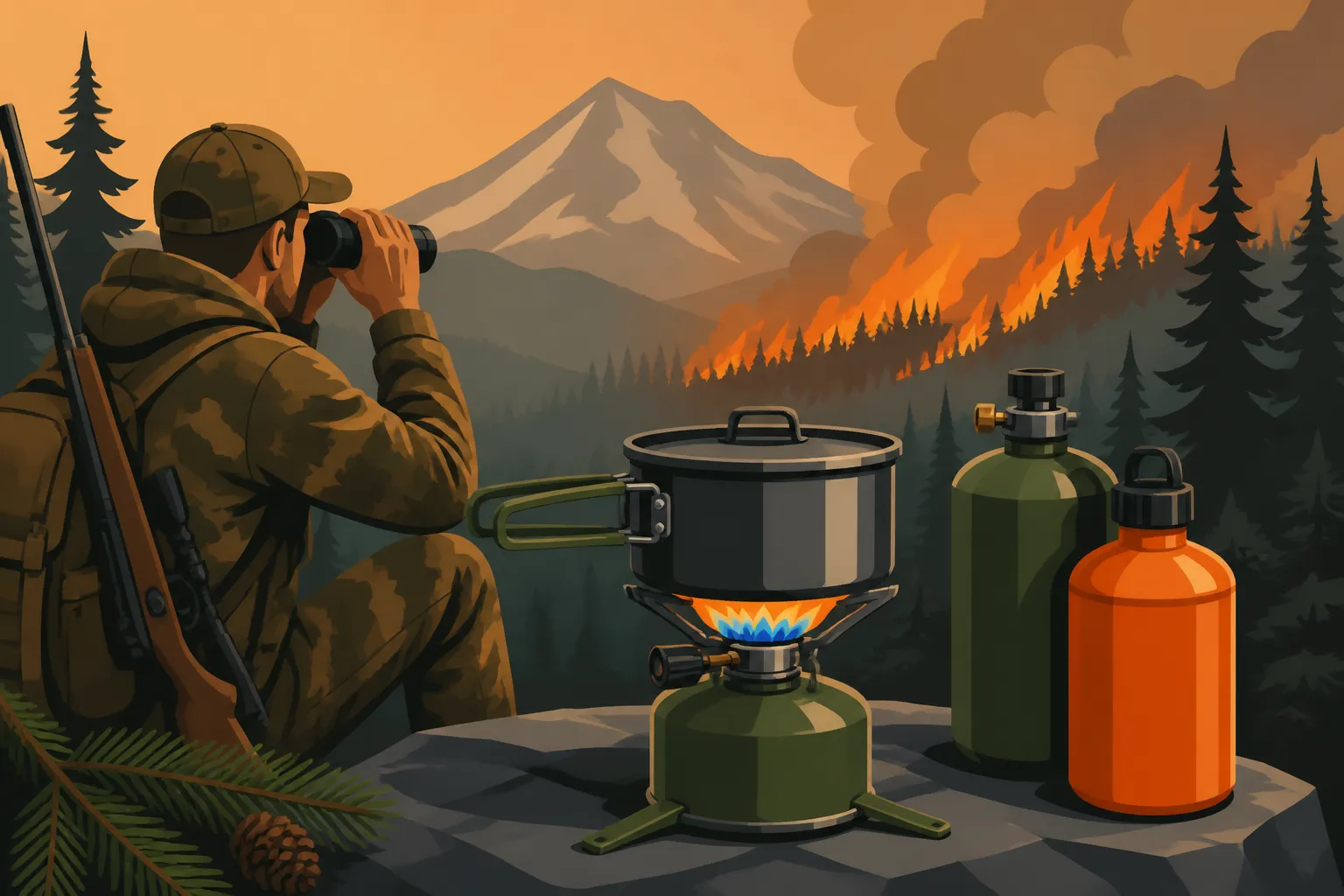
These are, without a doubt, your best bet during Washington's fire season. Stoves that run on propane, butane, isobutane (canister stoves), or white gas (liquid fuel stoves) are typically allowed even when open campfires are banned. The key reason is their contained flame and lack of flying embers. The flame is controlled and generally disappears as soon as you turn the valve off.
- Canister Stoves: These lightweight, compact stoves run off screw-on fuel canisters. They're incredibly convenient for backpacking and spike camps, and they light easily. Brands like MSR, Jetboil, and Soto offer reliable options. They are usually your safest bet for legal cooking during a burn ban in Backcountry Camps in Washington Wilderness. Just make sure your stove is stable, used on a non-flammable surface, and kept clear of any dry vegetation. A real-life scenario: You've packed into a remote basin for an archery elk hunt. Daytime temps are still in the 70s, and the forest floor is bone dry. Your small canister stove allows you to boil water for dehydrated meals and coffee without worry, while a fellow hunter who packed a wood stove sits hungry, unable to use it.
- Liquid Fuel Stoves: These stoves burn white gas, which is often more affordable in bulk and performs better in colder temperatures than canisters. They require a bit more priming and maintenance but are incredibly robust. They're excellent for base camps where weight isn't as much of a concern, or for longer trips where you need a consistent, powerful flame. Again, the contained nature of the flame makes them generally acceptable during restrictions. Imagine a scenario where you're set up for a multi-day hunt from a truck camp. A large two-burner white gas stove allows you to cook full meals for your party, even when the forest service has a complete ban on open flames.
Wood-Burning Stoves and Fire Pans
This is where you need to exercise extreme caution and be prepared for potential disappointment. Wood-burning stoves, even portable ones designed for tents or small shelters, are often subject to the same restrictions as open campfires, or at least come under much heavier scrutiny. The reason is simple: they still produce embers. Even with spark arrestors, there's a risk of embers escaping and igniting dry fuels, especially during windy conditions.
- Portable Wood Stoves (for tents): While fantastic for heating a wall tent in wet, cold conditions, these are almost universally banned during high fire danger. If you’re planning a hunt that relies on one of these for warmth and cooking, you absolutely must have a backup plan. A buddy of mine packed his beautiful cylinder stove for a late-season deer hunt in eastern Washington, hoping to warm his canvas tent. A red flag warning was issued the day before opening, making his stove unusable. He ended up shivering through two nights before cutting his trip short. The only time these are usually permissible is if the ground is completely snow-covered or soaked, and even then, local rules might vary.
- Fire Pans and Raised Fire Pits: These are often an intermediary step. When campfires are banned outright, some areas might still allow fires in a designated fire pan or a raised pit that contains all ash and embers and prevents scorching the ground. However, during severe burn bans, these are typically prohibited too. The principle is the same: if it burns wood and produces embers, it’s a high risk. Always assume these are not allowed unless explicitly stated otherwise by the land management agency for your specific location and current fire danger level.
Alternative Heating Solutions
Sometimes, even gas stoves can be prohibited in the most extreme conditions, or you might just want an alternative for warmth without flame.
- Catalytic Heaters: These flameless heaters run on propane and use a catalytic process to generate heat. They are much safer than open-flame heaters and are often allowed even under strict fire restrictions because there's no visible flame or spark. They are excellent for warming up a tent or a small shelter, though you must ensure adequate ventilation to prevent carbon monoxide buildup. They won't cook your food, but they can be a lifesaver for warmth.
- Sleeping Bags and Layers: This might seem obvious, but for warmth, a good sleeping bag and a robust layering system are your ultimate fire-safe alternatives. If all else fails and stoves are prohibited, your sleep system is paramount. Invest in a quality bag rated for colder than you expect, and learn to layer effectively. My article on Layering for Wet Cold Weather has some great tips on staying warm even when the thermometer drops and you can't have a fire.
| Stove Type | Fuel Source | Typical Fire Season Legality | Ember Risk | Best Use Case |
|---|---|---|---|---|
| Canister Stove | Isobutane/Propane Canister | Generally Allowed | Low | Backpacking, spike camps, quick meals |
| Liquid Fuel Stove | White Gas, Kerosene, etc. | Generally Allowed | Low | Base camps, colder weather, bulk cooking |
| Portable Wood-Burning Stove | Wood | Often Restricted/Banned | High | Wall tents in wet/snowy conditions (check rules) |
| Fire Pan / Raised Fire Pit | Wood, Charcoal | Often Restricted/Banned | High | Intermediate restriction levels (check rules) |
| Catalytic Heater | Propane Canister | Generally Allowed (for heat) | None | Tent heating, emergency warmth (ensure ventilation) |
Fuel Choices and Safety Best Practices
Beyond the stove itself, the fuel you choose and how you handle it are critical components of fire season safety. Mishandling fuel can be just as dangerous as an uncontained flame, leading to spills that ignite or containers that rupture.
Canister Fuels Versus Bulk Liquid Fuels
Each fuel type has its advantages and disadvantages, especially when considering fire safety and logistics during a Washington hunt.
- Canister Fuels (Propane, Butane, Isobutane): These are incredibly convenient. The fuel is pre-pressurized in sealed canisters, meaning minimal handling. They screw directly onto your stove, reducing the risk of spills. The primary safety concern is proper storage and disposal. Never leave canisters in direct sunlight or inside a hot vehicle, as pressure can build. Always pack out empty canisters; don't leave them in the woods. Their self-contained nature generally makes them a low-risk option in terms of fire ignition from the fuel itself during a burn ban. For those fast-moving hunts where every ounce counts and you just need to boil water quickly, these are ideal.
- Bulk Liquid Fuels (White Gas, Kerosene): White gas, also known as Coleman fuel, is a popular choice for liquid fuel stoves. It's cost-effective for longer trips and performs well in cold weather. However, it requires careful handling. You'll carry it in refillable fuel bottles, which means pouring and priming your stove in the field. This introduces a spill risk. Always fill your stove away from any open flames, embers, or heat sources. Spilled white gas can evaporate quickly, but the fumes are highly flammable. Kerosene is another option for some multi-fuel stoves, but it’s less common for recreational use and can be dirtier burning. The safety precautions for liquid fuels are paramount: store them in approved, clearly labeled fuel bottles, away from food and water, and always in a well-ventilated area. While the stove itself is contained, the act of fueling it demands extra vigilance.
Safe Handling and Storage
Regardless of your fuel type, adhering to strict safety protocols is non-negotiable, especially during dry conditions.
- Ventilation is Key: When using any stove or heater, particularly indoors (like in a tent or enclosed shelter), ensure ample ventilation. Carbon monoxide is a silent killer, and it's a real risk with fuel-burning devices. If you're using a catalytic heater in your Wall Tent and Stove Setup for warmth, make sure there's enough airflow.
- Stable Surface: Always operate your stove on a flat, stable, non-combustible surface. A wobbly stove is an accident waiting to happen. Clear away any dry leaves, pine needles, or grass from around your cooking area. A small piece of aluminum foil or a collapsible heat shield can offer an extra layer of protection.
- Away From Flammables: Keep all fuel, extra canisters, and flammable materials (clothing, sleeping bags, paper towels) well away from your operating stove. A common mistake is to try and "warm up" a fuel canister near the stove. Never do this; it's incredibly dangerous due to pressure buildup.
- Fire Extinguisher/Water: Always have a small fire extinguisher or, at minimum, a liter of water readily available when operating a stove. If a flare-up occurs or something spills and ignites, you want to be able to act immediately. This is part of being prepared, much like having a First Aid Kit for a Remote Hunt.
Minimizing Fire Risk with Any Stove
Even when gas stoves are permitted, personal responsibility is key. Just because it's legal doesn't mean you can be careless.
- Clear a Perimeter: Before lighting any stove, take a moment to clear a small perimeter (at least a few feet) down to mineral soil, especially if you're in a dispersed camping scenario. Remove all duff, pine needles, dry grass, and anything else that could easily ignite.
- Wind Protection: Wind is an enemy of fire safety. It can blow a flame unexpectedly, dry out surrounding vegetation faster, and quickly spread any ignition. Use a wind screen with your stove if you have one, and position your cooking area behind natural wind breaks like large rocks or logs, ensuring they aren't flammable themselves.
- Never Leave Unattended: A stove, even a small canister stove, should never be left unattended while operating. Fires can start incredibly quickly. If you need to step away, turn it off.
- Full Extinguishment: Make absolutely certain your stove is completely off and cool before packing it up or leaving the area. Just like a campfire, a seemingly extinguished stove can still hold residual heat that could spark later.
Navigating Permits and Information Sources
The rules are only useful if you know where to find them and how to interpret them. Relying on outdated information or hearsay from a fellow hunter can lead you into trouble. During fire season, official sources are your absolute best friends.
Checking Official Sources
The landscape of land management in Washington is a patchwork, and each agency might have slightly different rules or even different reporting mechanisms for fire restrictions.
- Washington Department of Fish and Wildlife (WDFW): If you're hunting on a WDFW Wildlife Area, their website is the place to go. They'll often post emergency rule changes or specific unit closures due to fire danger.
- U.S. Forest Service (USFS): For National Forests (like Okanogan-Wenatchee, Gifford Pinchot, Colville), check the specific forest's website. They often have dedicated pages for "Alerts & Notices" or "Fire Information." These sites will update IFPLs and campfire restrictions.
- Washington Department of Natural Resources (DNR): DNR manages vast tracts of state lands, especially important for hunting in western Washington timber country. Their website will have current fire information, burn bans, and land use restrictions. Remember, DNR often works closely with private timber companies like Weyerhaeuser and Hancock, so their regulations might influence private land access as well.
- County and Local Fire Districts: Sometimes, local county-level burn bans can be even more restrictive than federal or state land rules. If you're hunting near private property or in areas with mixed ownership, a quick check of the county sheriff's office or local fire department website for burn bans is a smart move.
The Role of a Burn Ban
A "burn ban" is essentially an official declaration that fire conditions are too dangerous for certain activities. It’s not just a suggestion; it’s a legal order. When a burn ban is in effect, it means fire conditions are critical, and almost all forms of open flame, including campfires, are prohibited.
The frustration often stems from the varying levels of a burn ban. Sometimes it means "no campfires, but gas stoves are fine." Other times, in extreme heat and drought, it can mean "no fires or open flames whatsoever," which would include propane stoves. This is rarer but does happen, particularly during Red Flag Warnings or when IFPLs hit level 4. The penalty for violating a burn ban can range from a substantial fine to being held liable for the cost of fighting a fire you start, which can easily run into millions of dollars. It’s simply not worth the risk. Always confirm what exactly is covered by a current burn ban in your specific hunting unit.
Planning Ahead with GoHunt and Other Tools
Modern technology can be an invaluable asset in navigating fire season. Don't wait until you're at the trailhead to find out about restrictions.
- GoHunt: This platform, popular with serious hunters, offers fantastic mapping and planning tools that often include layers for land ownership and, critically, links to official agency websites for current conditions. While GoHunt itself won't issue burn bans, it can streamline your research process by linking you directly to the relevant Forest Service or DNR pages where those restrictions are posted. Using GoHunt, you can identify the specific land managing agency for your target GMU and then jump straight to their fire restriction page, saving you precious time and potential headaches.
- WDFW Hunt Planner Map: The official WDFW Hunt Planner map is another critical resource. It outlines GMU boundaries, land ownership, and often links to relevant regulations. Always double-check this before you head out.
- Offline Maps: Cell service is notoriously unreliable in many Washington hunting areas. Downloading Offline Maps for Washington on your phone using an app like onX Hunt or Gaia GPS is essential. This allows you to navigate without service and see land ownership boundaries, which helps you know whose rules apply. While these apps won't show real-time fire restrictions, they ensure you know where you are and which agency to check online when you do have service.
Ultimately, being a responsible hunter means being a fire-aware hunter. It means understanding that the privilege of hunting in Washington's beautiful, wild places comes with the responsibility of protecting them. By choosing the right stove, handling fuel safely, and diligently checking official sources, you can ensure your hunt is memorable for the right reasons, not for an accidental blaze.
Disclaimer
This article is for general informational purposes only and does not constitute professional advice. Laws, prices and regulations vary by location and change over time. Consult a qualified professional for guidance on your specific situation.