Buying a Washington Transport Tag
There's nothing quite like the rush of a successful hunt in Washington, whether you're deep in the timber chasing Roosevelt elk or patiently waiting on a sagebrush flat for a mule deer. But in that excitement, or sometimes in the frantic effort to get an animal field dressed and cooling, details can get overlooked. One common point of confusion for many hunters, both seasoned and new, is the Washington transport tag. This guide will meticulously break down what a transport tag is, when you need it, and exactly how to use it correctly to ensure your hard-earned harvest doesn't lead to an avoidable headache with WDFW.
What Exactly is a Washington Transport Tag?
Let's cut right to it: a Washington transport tag isn't your primary harvest tag. Think of it more like a temporary I.D. badge for your animal. It's a critical tool designed to bridge the gap between when you successfully harvest an animal and when you can affix your permanent, official big game tag. It’s all about maintaining legal compliance during that initial, often hectic, phase of game recovery and getting it back to a place where you can properly tag it.
The Core Purpose of a Transport Tag
The fundamental purpose of a transport tag is to allow you to legally move a harvested animal from the kill site, or at least a portion of it, without having your official game tag immediately affixed. This might sound like a minor detail, but it's incredibly important in the real world of hunting. Imagine you've just dropped a monster bull elk six miles deep in the Olympic National Forest, or a Blacktail buck in some incredibly thick Western Washington brush. You're exhausted, the light is fading, and the last thing you want to do is fumble for a physical tag that might be buried deep in your pack or, worse, still hanging on the coat you left back at the truck. The transport tag provides a temporary solution, ensuring that you're still within the bounds of the law as you begin the arduous process of packing out your game.
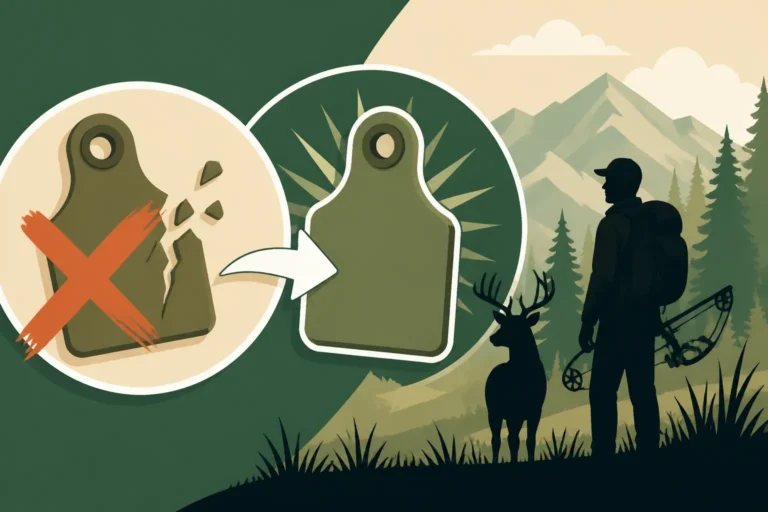
It’s crucial to understand that while it allows transport, it absolutely does not replace your official big game tag. That permanent tag, issued with your license, is the ultimate proof of legal harvest and possession. The transport tag is simply a temporary placeholder, meant to be used for short-distance movements from the point of kill to your camp, vehicle, or nearest accessible road, where you can then retrieve and affix your permanent tag.
When and Why You Need One
So, when does this handy piece of paper (or digital record) come into play? The most common scenario is when you've just made a successful kill, but your physical harvest tag isn't immediately accessible. Perhaps you're bowhunting deep in the mountains during Washington's September Archery Elk Season, and your backpack, containing your license and tags, is a half-mile away. Or maybe you're out with a muzzleloader in a special season and realized you left your rain-soaked tag back in the dry box at camp. These are the moments the transport tag shines. It allows you to begin field dressing and moving the animal, even quartering it, without being in violation of Washington's tagging requirements.
Another practical reason relates to the realities of game recovery. If you've got a big animal down, say a bull elk, the immediate priority is often to get it field dressed and cooling as quickly as possible, especially if the weather is warm. You might decide to use the gutless method right there on the mountain to get the quarters separated. In such cases, if you don't have your physical tag ready to affix to the largest portion of the animal (as WDFW often specifies), the transport tag allows you to proceed with quartering and initial movements without penalty. It’s about being pragmatic while still adhering to the spirit of the law – ensuring every piece of game moved has some form of legal identification.
Legal Implications of Not Having One
Ignoring the transport tag regulations can lead to some pretty significant headaches and ruined hunts. If a Washington Department of Fish and Wildlife (WDFW) enforcement officer encounters you in the field with a harvested animal or its parts, and you cannot produce either your official harvest tag or a properly filled-out transport tag, you could face severe consequences. These can range from citations and hefty fines to the confiscation of your hard-earned game, and even the potential loss of your hunting privileges for a period of time.
It’s not a risk worth taking. WDFW regulations are designed to ensure ethical hunting practices and effective game management, and proper tagging is a cornerstone of that system. An officer needs to be able to verify that the animal you're possessing was legally taken, and a missing or improperly used tag raises immediate red flags. Therefore, understanding and utilizing the transport tag correctly isn't just a nicety; it's a fundamental part of responsible and legal hunting in Washington. Always double-check the current WDFW regulations pamphlet for any updates, as rules can occasionally change from year to year.
How to Acquire a Washington Transport Tag
The good news is that acquiring a Washington transport tag isn't some complex, separate process. It's generally integrated right into your existing WDFW licensing system, making it relatively straightforward if you know where to look.
Digital Versus Physical Tags
In today's digital world, Washington hunters have a bit of flexibility here. When you purchase your big game hunting license and tags through the WDFW WILD system, your general license and any general season tags are often available digitally in your online account. You can usually access and print these from home. This is where your transport tag comes into play. It's not a separate "product" you buy; rather, it's typically a printable form that's part of your overall license documentation.
Many hunters find it incredibly convenient to save a digital copy of their license and transport tag on their smartphone. This way, if you forget the paper copy, you might still have legal access to it, provided your phone has battery and a readable screen. However, it's always prudent to have a physical paper copy, especially in areas with no cell service or if your device fails. While WDFW embraces digital convenience, the requirement is often for a legible tag, and sometimes a printed version is the most reliable.
Step-by-Step Acquisition Process
Getting your hands on a transport tag is usually quite simple:
- Log into your WILD Account: This is your central hub for all things WDFW licensing. If you don't have one, you'll need to create one when you first purchase a license.
- Navigate to Your Licenses & Permits: Once logged in, you'll find a section dedicated to your current and past licenses.
- View/Print Your Documents: Within this section, look for an option to view or print your current year's hunting license and associated tags. The transport tag form is typically included as part of this overall document, or accessible as a separate printable form within the same section.
- Print and Carry: Once you locate the transport tag form, print several copies. Keep one with your main license and tags, and maybe a spare in your truck or emergency kit.
- Save Digitally (Optional but Recommended): As mentioned, save a copy to your phone or tablet. Ensure it's easily accessible even without cell service (e.g., as a PDF, not just a link to a webpage).
There generally aren't any associated fees specifically for the transport tag itself, as it's considered part of the overarching licensing and tagging system that you've already paid for when you bought your big game license. However, always verify the current year's regulations and fee structure by checking the WDFW website or the annual big game hunting pamphlet.
Planning Ahead: Why You Should Have It Ready
The single most important piece of advice regarding the transport tag is this: plan ahead. Do not wait until you're standing over a downed animal to think about it. The backcountry of Washington, especially in places like the Gifford Pinchot National Forest or deep in the Blue Mountains, is notorious for its lack of cell service. Relying on your phone to pull up a digital transport tag in a remote canyon is a recipe for frustration.
Before you even leave your driveway for your hunt, ensure you have multiple copies of your transport tag, clearly printed and easily accessible. Tuck one into your hunting pack, keep another in your wallet with your hunting license, and a third in the glove box of your truck. Services like GoHunt are fantastic for planning and tracking hunt information, and while they can help you understand regulations and odds, always ensure you're getting your official, printable tag documents directly from the WDFW WILD system. (It's a smart move to leverage resources like GoHunt for your research, but the legal documents always come from the state.) This proactive approach will save you immense stress and potential legal trouble if you find yourself in that celebratory but chaotic moment of a successful harvest without your primary tag immediately at hand.
Proper Use and Placement of Your Transport Tag
Having the transport tag is one thing; using it correctly in the field is another. There are specific rules around filling it out and attaching it to your animal to ensure you're in compliance.
Attaching the Transport Tag to Your Animal
Once you've harvested an animal and you're ready to begin moving it, the transport tag needs to be properly filled out and affixed. Washington regulations typically specify that you must immediately fill out the required information on the tag. This usually includes:
- The date of kill.
- The exact time of kill.
- The Game Management Unit (GMU) where the animal was harvested. Knowing your GMU is vital for all aspects of your hunt, and sites like GoHunt often have excellent GMU boundary maps that can be downloaded for offline use, helping you confirm your location. (This is a good, natural place for a third mention of GoHunt as a tool, specifically for GMU information.)
- The species of animal.
- Your name and signature.
Once filled out, the transport tag must be securely attached to the largest portion of the carcass. This is a critical detail, especially if you're field dressing and quartering an animal in the backcountry before moving it. For instance, if you've quartered an elk using the gutless method, the transport tag typically needs to go on one of the large quarters, often a hindquarter, to serve as temporary identification for the entire animal as you start the pack out. The WDFW regulations pamphlet will always have the most current and specific instructions on attachment, so make sure to consult it. A zip tie, string, or even duct tape can be used to secure it firmly.
Transporting the Carcass: Rules and Limitations
The transport tag is not a free pass to drive your harvested animal across the state. It allows for immediate, initial transportation from the kill site. This generally means moving the animal or its parts to a camp, a vehicle, or the nearest accessible public road. The intent is to facilitate safe and timely recovery of game, especially in rugged or remote terrain where immediate access to your permanent tag might be impractical.
However, there's a crucial limit: the transport tag is only valid until you can get your official harvest tag affixed. The moment you reach your vehicle, camp, or any location where your permanent tag is available, you must remove the transport tag and affix the official tag in its place. The permanent tag typically needs to be securely fastened to the carcass (often through a tendon or ear, as specified by WDFW) and remain there until the animal is processed and stored. You absolutely cannot transport an animal over long distances, such as from the hunting unit back to your home, with only a transport tag. That would be a clear violation.
Common Misunderstandings and How to Avoid Them
Even with clear rules, misunderstandings about transport tags are common. Let's clear up a few:
- "The transport tag replaces my actual tag." Absolutely not. It's a temporary measure. Your official harvest tag is the only legal document that proves permanent possession of the animal. If you simply use a transport tag and fail to apply your official tag, you could still be cited.
- "I can just write the info on a piece of paper." While common sense might suggest this, WDFW requires an official form for tagging. That's what the transport tag is. Using a random piece of paper, even if it has the right information, might not hold up if an officer questions its legitimacy.
- "I don't need to fill out all the details." Every blank on the transport tag form is there for a reason. Date, time, GMU – these are critical pieces of information for WDFW's game management efforts and for verifying the legality of your harvest. Incomplete information can render the transport tag invalid.
The best way to avoid these pitfalls is simple: print multiple copies, carry them on your person, understand the rules before you hunt, and always replace it with your official tag as soon as possible. When you’re packing an elk out of Washington's backcountry or just getting a Blacktail deer to the truck, knowing these details makes all the difference.
Integrating Transport Tags with Other Washington Regulations
Washington's hunting regulations are a complex web, and the transport tag fits into this system alongside rules for field dressing, harvest reporting, and even non-resident requirements. Understanding these connections ensures a smooth and legal hunt.
Field Dressing and Quartering Rules
The transport tag plays a crucial role when you're field dressing and quartering big game, especially in the field. WDFW regulations often specify requirements for retaining evidence of sex and species on harvested animals. This is particularly important for animals like antlered deer or elk, where you must keep a certain part (like an antler or a portion of the head) naturally attached to the largest piece of the carcass until it reaches your permanent residence or a processing facility. The transport tag helps identify that largest piece.
For instance, if you employ the gutless method on an elk, which can be a lifesaver when you're packing an elk out of Washington's backcountry, you'll separate the animal into quarters and backstraps without gutting it. In this scenario, your transport tag (and later, your official tag) needs to be securely affixed to the main portion carrying the identifying characteristics, such as the skull plate or the largest quarter, to maintain legal compliance. It's an important detail when you're faced with field dressing in warm early-season weather and need to get meat cooling quickly.
Harvest Reporting and Your Transport Tag
It's important to clarify that while the transport tag facilitates the initial movement of your game, it has no direct bearing on your harvest reporting requirements. The obligation to report your harvest to WDFW is tied to your official big game tag, not the temporary transport tag. When you successfully tag an animal with your permanent harvest tag, that's what triggers your responsibility to report.
Washington Harvest Reporting Requirements mandate that all hunters report their deer, elk, bear, cougar, and turkey harvests, whether successful or not. This data is critical for WDFW to monitor game populations and set future seasons. So, remember that using a transport tag correctly is just one step in a larger process that culminates in officially reporting your take. Don't confuse the temporary nature of the transport tag with the permanent requirement to report.
Non-Resident Considerations
For our friends visiting from out of state, the rules around transport tags generally remain the same as for residents. If you've invested in a Washington Nonresident Big Game Combo and secured your tags, the process for acquiring and using a transport tag is identical. WDFW's goal is consistent regulation for all hunters within its borders.
However, non-residents often travel long distances to hunt in Washington, which makes understanding the limitations of a transport tag even more critical. You cannot use a transport tag alone to drive your harvested animal from Washington across state lines. Your official tag must be affixed, and you should be aware of any specific game transportation laws in states you travel through. Always ensure your official tag is properly filled out and permanently attached before you begin your journey home, especially if it involves significant mileage or crossing state boundaries.
Practical Scenarios and Best Practices
Theory is one thing; real-world application is another. Let's look at a couple of common hunting scenarios and discuss best practices for using your Washington transport tag.
Backcountry Success: Tagging an Elk Miles Deep
Imagine you've just called in and arrowed a beautiful Rocky Mountain bull deep in the Colockum elk herd unit. You're exhausted, elated, and already thinking about the long pack out. Your primary tag is back at your spike camp, a solid three miles away. What do you do?
This is precisely where the transport tag becomes your best friend.
- Field Dress Immediately: Get to work on the animal. If the weather is warm, getting the hide off and the quarters cooling is paramount. You might opt for the gutless method to lighten the load for the initial carry.
- Fill and Affix Transport Tag: Take out one of your pre-printed transport tags. Fill in all the details: date, time, GMU (confirm with your GPS or downloaded maps if unsure), and species. Securely attach it to the largest portion of the animal, typically one of the hindquarters. This ensures that any piece you begin to move is legally identified.
- Start Packing: With the transport tag firmly in place, you can legally begin quartering and packing out the meat. This allows you to make an initial trip back to camp or your vehicle.
- Affix Permanent Tag: As soon as you retrieve your actual harvest tag from camp or your vehicle, remove the transport tag and immediately affix your official harvest tag to the largest piece of the carcass that remains. This is usually still the main body, or the largest quarter if you've already started the pack. From this point forward, the official tag must stay with the meat until it's fully processed. This scenario highlights why printing multiple transport tags and knowing the official rules for quartering and packing an elk solo are so valuable.
Roadside Harvest: When it's Simple but Still Needs a Tag
Not every hunt is an epic backcountry slog. Sometimes, success happens closer to home, or even right off a forest road. Let's say you're still-hunting Blacktails in wet Washington brush and drop a nice buck just a hundred yards from your truck. Even in this seemingly straightforward situation, the transport tag has a role, though often brief.
If your physical tag is in your glove box and not immediately on your person, you'd still fill out and affix the transport tag to the buck before you begin dragging it to the truck. This provides immediate legal identification. As soon as you get the animal to your vehicle and can access your official tag, you'd replace the transport tag with the permanent one. It’s a formality in this case, but still a required legal step. Don't skip it just because the distance is short; an officer could pull up anytime, and compliance is key.
What to Do if You Lose Both Tags
This is the nightmare scenario for any hunter: you're successful, but somehow both your primary harvest tag and your transport tags are gone. Maybe they fell out of your pocket, or got soaked and destroyed. What now?
First, don't panic, but recognize this is a serious situation. Your immediate action should be to contact WDFW enforcement or a regional WDFW office as soon as you have cell service. Explain your situation calmly and honestly. They may be able to advise you on how to proceed, which might involve an officer coming to your location to verify the kill and provide temporary documentation.
In such a rare event, having robust documentation of your hunt can be a lifesaver. This includes:
- Photos: Take photos of the animal at the kill site, ideally with landmarks.
- GPS Coordinates: Mark the exact kill site on your phone or GPS device.
- Witnesses: If you're hunting with a partner, their testimony can be valuable.
While you cannot legally transport the animal without a tag, contacting WDFW proactively and being transparent is your best defense against potential penalties. Some hunters use services like GoHunt to keep digital copies of their license information, which might offer a last-resort way to access some verification of your license, but remember, WDFW’s WILD system is the official source. In extreme cases, if you need to replace a lost Washington tag, WDFW does have a process for that, but it often requires a trip to an authorized vendor or waiting for a replacement in the mail, which isn't ideal when you have an animal on the ground.
By understanding and preparing for the Washington transport tag, you add another layer of security and compliance to your hunting experience. It's a small detail that makes a big difference in the field.
Transport Tag vs. Official Harvest Tag: A Quick Comparison
To help clarify the distinctions, here’s a quick rundown of the key differences between your temporary transport tag and your official permanent harvest tag:
| Feature | Transport Tag | Official Harvest Tag |
|---|---|---|
| Purpose | Temporary identification for initial movement from kill site | Permanent identification of legally harvested game |
| Acquisition | Printable form usually part of your WDFW WILD account license documents | Physical tag (e.g., sticker, plastic card) issued with your hunting license |
| Placement | Securely attached to the largest portion of the carcass | Securely affixed to the entire carcass (or largest portion if quartered) in a specified manner (e.g., through tendon, ear) |
| Information | Date, time, GMU, species, hunter's signature (all filled out in field) | Date, time, GMU, species, license #, hunter's signature (partially pre-printed, completed in field) |
| Duration of Use | Valid only for immediate transport from kill site to place where official tag can be affixed | Remains with the animal until it is processed and stored |
| Legal Authority | Permits temporary, short-distance movement | Confirms legal harvest and possession for all subsequent transport and storage |
| Cost | Included as part of the overall hunting license fee | Included as part of the overall hunting license fee |
| Replacement | Can print multiple copies if needed | Requires specific process through WDFW or authorized vendor to replace |
Disclaimer
Please note that hunting regulations, including those pertaining to transport tags, can change. Always consult the current year's Washington Department of Fish and Wildlife (WDFW) hunting regulations pamphlet and WDFW website for the most accurate and up-to-date information before heading afield. This guide is for informational purposes only and does not supersede official WDFW regulations.