Written Permission Forms in Washington
For any hunter in Washington, the quest for that perfect spot often leads to the gates of private property. It’s a common frustration, staring at promising timber or prime agricultural land, knowing game is there but feeling shut out. This guide is all about demystifying the process of obtaining written permission to hunt in Washington, giving you the practical steps and insights you need to confidently approach landowners and secure legitimate access, ensuring your hunt is both successful and legally sound.
The Absolute Necessity of Written Permission in Washington
Let's face it, the idea of walking onto someone else's property, even if it looks unkempt or vacant, is a non-starter in Washington. Our state's laws are clear, and landowners have every right to protect their property and privacy. Verbal permission, while sometimes granted in passing, is a flimsy shield at best. It's easily forgotten, misunderstood, or denied later, potentially landing you in hot water with the landowner or, worse, with law enforcement. This isn't just about being polite; it's about legal compliance and building a foundation of trust that can lead to future hunting opportunities.
Legal Requirements and Landowner Expectations
In Washington, hunting on private land requires permission. It's not a suggestion; it's a rule. While some states have "implied consent" laws where unposted land might be fair game, Washington is definitely not one of them. You need to assume all private land is off-limits unless you have explicit, documented permission. This protects you from trespass charges and the landowner from liability issues. Landowners are often worried about property damage, litter, poaching, or accidental injury. A formal written permission form addresses many of these concerns head-on by outlining clear terms and responsibilities. It shows you're serious, respectful, and organized.
Imagine you've been scouting a fantastic piece of land bordering public timber, seeing clear signs of deer moving between the two. Without written permission for that private parcel, you're stuck on the public side, watching the deer disappear. It's a real bummer, but it's the reality. Having that signed document in your pack means you can follow that trail with confidence, knowing you're legally there and respecting the landowner's wishes. It's not just about avoiding trouble; it's about ethical hunting and maintaining a good reputation for all hunters.
Why Verbal Permission Just Doesn't Cut It
Many of us have heard stories, or even tried ourselves, to get by with a handshake and a "yeah, go ahead." But consider the scenario: you're out hunting, and a game warden or a new property owner approaches you. If all you have is a vague memory of a conversation, you're in a precarious position. The warden has a job to do, and without proof, your word against someone else's can quickly escalate into a citation or worse.
A written permission form serves as undeniable proof. It spells out exactly who can hunt, when, where, and for what species. This clarity eliminates ambiguity and misunderstanding. It acts as a safety net for both you and the landowner. If something unforeseen happens – a fence is damaged, a gate is left open – having those terms in writing makes it much easier to resolve issues. It’s also important if the landowner changes their mind or forgets the details of your conversation. A signed paper speaks for itself. This is particularly crucial when dealing with busy landowners who might grant permission to several people and need a clear record.
Crafting Your Approach: How to Ask for Permission
Asking for permission can feel intimidating. What do you say? When's the best time? What if they say no? These are all valid concerns, and it's easy to feel disheartened before you even start. But with a thoughtful, prepared approach, you significantly increase your chances of success. Remember, you're essentially asking for a privilege, so present yourself as someone trustworthy and responsible.
Researching the Property and Landowner
Before you even think about knocking on a door, do your homework. Knowledge is power, and it shows respect. Tools like onX Hunt are invaluable here. You can use it to pinpoint property boundaries, identify the landowner's name, and even find mailing addresses or contact information. This saves you from guessing and potentially bothering the wrong person. Knowing the property's layout can also help you articulate why you're interested in hunting a specific area. For instance, you might notice a thick bedding area or a funnel point that connects to public land.
Beyond just ownership, try to learn a bit about the property itself. Is it actively farmed? Is it used for livestock? Is it primarily timber? Understanding their land use can help you anticipate concerns they might have and offer solutions. For example, if it's pastureland, you can assure them you'll be extra careful around livestock and close all gates. If you've been using tools like GoHunt to research potential Washington Game Management Units Explained for quality animals, you might already have an idea of areas where private land access could be a game-changer for your hunting prospects. Identify which GMUs have a good mix of private and public land that might create these transition areas.
Making a Good First Impression
When it comes to the actual interaction, presentation matters. Dress neatly, but not formally – clean hunting attire or work clothes are usually appropriate. Avoid showing up in your camouflage during hunting season unless you already have a relationship with the landowner. That can send the wrong message. Choose a reasonable time to visit; avoid early mornings, meal times, or late evenings. Weekends often work best, but be mindful of their family time.
Approach the interaction with humility and respect. Start by introducing yourself clearly, stating your purpose upfront: "Hi, my name is [Your Name], and I'm a hunter interested in asking for permission to hunt on your property." Be prepared to answer questions about your hunting experience, safety practices, and what kind of game you're interested in. Emphasize that you prioritize safety and respect their land. Offer to share your contact information. Being open and honest builds trust. If they say no, thank them for their time anyway and move on graciously. A polite "no" today might turn into a "yes" next season if you've left a positive impression.
Elements of an Effective Written Permission Form
The beauty of a written permission form is its clarity and legal standing. It protects everyone involved. While there's no single "official" Washington state form, a well-drafted document will cover all the critical bases. You can find generic templates online, but it's always best to customize one that specifically addresses hunting activities in Washington.
Key Details to Include
A robust written permission form should be comprehensive, leaving little room for misinterpretation. Here's a breakdown of what to include:
- Landowner Information: Full name, address, and contact number.
- Hunter Information: Your full name, address, hunting license number, and vehicle description (make, model, license plate) for identification. If multiple hunters are granted permission, list them all.
- Property Description: Legal description if possible, but at minimum, a clear physical address, parcel number, and identifiable boundaries. Attaching a map with the approved hunting area highlighted (you can print this from onX Hunt!) is a fantastic visual aid.
- Dates of Permission: Clearly state the start and end dates. This could be for a specific weekend, an entire season, or a full year.
- Species Allowed: Specify what you are permitted to hunt (e.g., "deer only," "elk only," "deer and turkey").
- Weapon Type: State whether you can use a rifle, bow, muzzleloader, or a combination. This is especially important given Washington's Washington's Legal Equipment Rules by Weapon and varying regulations.
- Special Conditions/Restrictions: This is where you address specific landowner concerns. Examples include:
- No vehicle access beyond a certain point.
- Gates must remain closed.
- No littering, absolutely.
- Stay clear of specific buildings or livestock.
- Reporting harvest to the landowner.
- No open fires.
- Respecting specific private Washington Winter Range Closures That End Late Hunts.
- Liability Clause: A statement acknowledging that the hunter understands and accepts the risks associated with hunting and absolves the landowner of liability for accidents or injuries (within legal limits).
- Signatures: Both the landowner's and the hunter's signatures, with dates.
Creating and Utilizing a Permission Form Template
Having a standardized template makes the process much smoother. You can create one on your computer and print multiple copies. When you meet a landowner, you'll have everything ready to go. You can fill in the specifics on the spot.
Here’s a simple structure you might use:
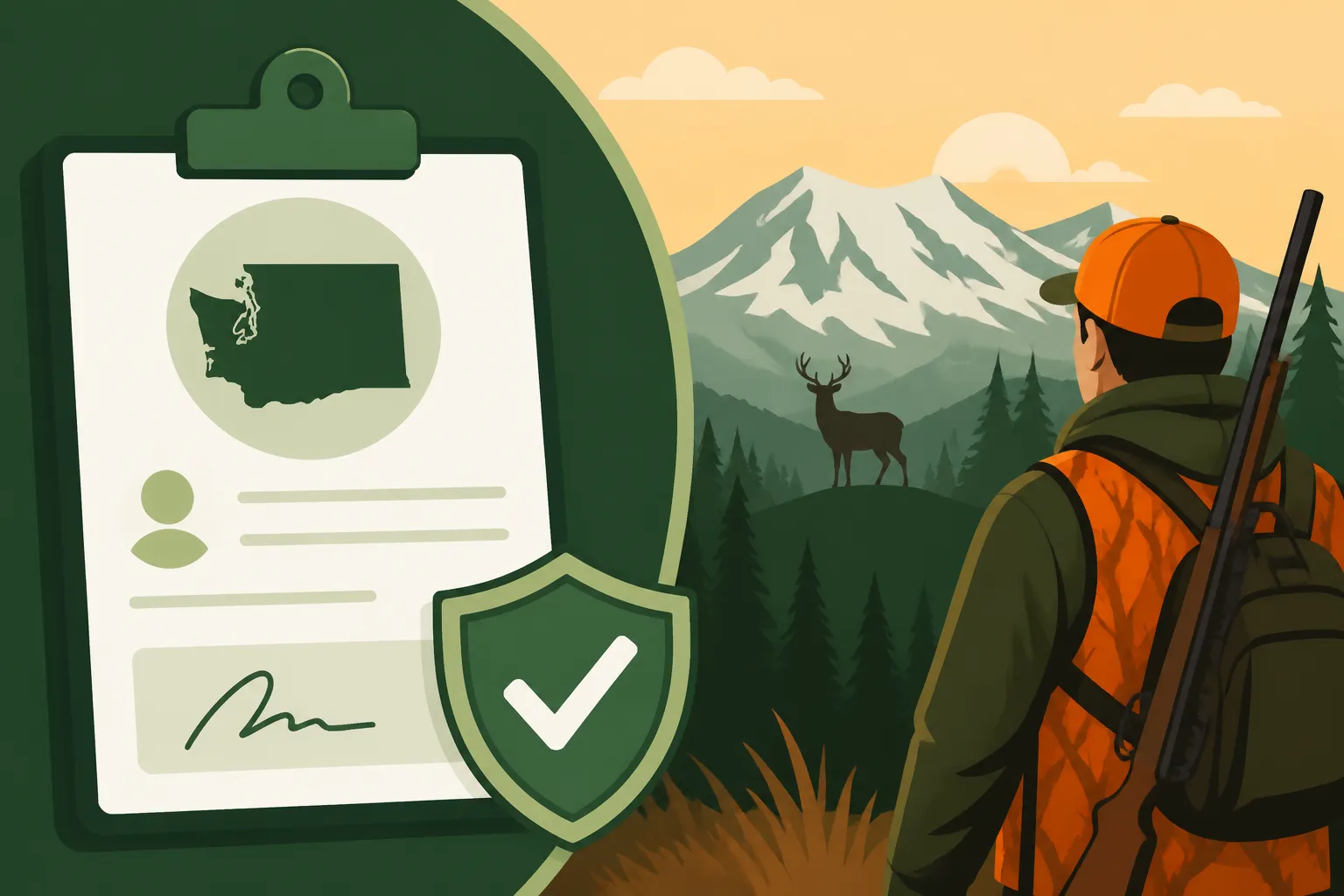
WASHINGTON HUNTING PERMISSION AGREEMENT
This agreement grants permission to hunt on private property located in Washington State.
Landowner Information:
Name: _________________________________________
Address: _______________________________________
Phone: _________________________________________
Hunter Information:
Name: _________________________________________
Address: _______________________________________
WA Hunting License #: ____________________________
Vehicle Description: ______________________________ (Make, Model, License Plate)
Property Details:
Property Address/Location: _________________________________________________
County: ___________________
Approximate Acreage (if known): __________
[Attach detailed map with boundaries clearly marked.]
Permission Details:
Species Permitted: ________________________________________________________
Weapon Type(s) Permitted: _________________________________________________
Dates of Permission: From _________________ to _________________
Special Conditions and Restrictions:
- All gates must remain closed and locked (if applicable).
- No vehicles beyond indicated parking area/road.
- No littering whatsoever. Pack it in, pack it out.
- Respect all fences, boundaries, and private residences.
- Hunter agrees to abide by all Washington State hunting regulations.
- Hunter will notify landowner upon entering and exiting the property.
-
-
Liability Release:
The undersigned hunter acknowledges and agrees that hunting is an inherently dangerous activity. The hunter assumes all risks of injury, death, or property damage resulting from participation in hunting activities on the above-described property. The hunter hereby releases, discharges, and covenants not to sue the landowner, their agents, employees, or representatives, from any and all claims, demands, losses, or damages incurred as a result of participation in said hunting activities, whether caused by the negligence of the landowner or otherwise, to the fullest extent permitted by law.
Signatures:
Landowner: _________________________________________ Date: _________________
Hunter: _________________________________________ Date: _________________
| Section | What to Include | Why It's Important |
|---|---|---|
| Landowner Info | Full name, address, phone | Identifies who granted permission. |
| Hunter Info | Full name, address, WA license #, vehicle info | Identifies you as the authorized hunter. |
| Property Description | Address, parcel number, map | Clearly defines where permission is granted, avoids boundary disputes. |
| Dates of Permission | Start and end dates | Defines when permission is valid, prevents overstaying. |
| Species Allowed | Specific game animals (e.g., deer, elk, turkey) | Prevents confusion and ensures you're targeting what the landowner expects. |
| Weapon Type | Rifle, bow, muzzleloader, etc. | Addresses safety concerns and complies with landowner preferences/local restrictions. |
| Special Conditions | Gates, vehicle limits, no litter, report harvest, etc. | Tailors the agreement to the specific property and landowner's concerns. |
| Liability Clause | Hunter assumes risk, releases landowner from liability. | Protects landowner from legal action for accidents. |
| Signatures & Dates | Landowner and hunter signatures, date signed | Makes it a legally binding document for both parties. |
Remember, always carry a copy of this signed form with you while hunting on the private land. A laminated copy or a clear photo on your phone can be a lifesaver if questioned.
Expanding Your Access: Leveraging Technology and Programs
While individual landowner approaches are key, Washington also offers programs and technological tools that can aid your quest for private land access. Don't limit yourself to just knocking on doors; explore all avenues available to you.
WDFW Private Lands Access Programs
The Washington Department of Fish and Wildlife (WDFW) understands the importance of private lands for hunting and works to facilitate access. They have several programs designed to connect hunters with private landowners. These include Washington Feel Free to Hunt Properties Explained, Washington Hunt by Reservation Lands, and Washington Register to Hunt Properties. Each program has slightly different rules and access methods, but all are built on the premise of written or recorded permission.
For example, "Feel Free to Hunt" lands might have specific rules posted at access points, acting as a general permission statement, but for "Register to Hunt" properties, you'll often need to obtain a specific permission slip or register online for access. These programs are fantastic because the landowner has already expressed willingness to allow hunting, taking some of the guesswork and anxiety out of the initial approach. Always check the current WDFW hunting pamphlet or their website for the most up-to-date information on these properties, as they can change annually.
Using Mapping Software for Landowner Information
Modern mapping tools have revolutionized private land hunting access. onX Hunt is probably the most popular, and for good reason. It provides incredibly detailed parcel data, showing you property boundaries, owner names, and often mailing addresses. This makes the "researching the property" step infinitely easier. Instead of driving around trying to guess who owns a promising parcel, you can look it up on your phone or computer.
Another useful tool can be found through platforms like GoHunt, which often have map layers or resources that help hunters identify public access points and sometimes even highlight private lands that might be worth investigating for permission. While GoHunt focuses heavily on draw odds and Western big game strategy, their mapping features often integrate land ownership, making them another valuable resource in your arsenal. With these tools, you can even pre-plan your approach, identifying parcels that are less developed or directly adjacent to public hunting areas, making them potentially more appealing to landowners. Knowing precisely whose land you're looking at, and being able to show them exactly what area you're interested in on a map, really adds to your credibility when you make that initial contact.
Building Lasting Relationships
Obtaining written permission isn't just a one-time transaction; it's the beginning of a potential long-term relationship. Treat this access as a precious privilege, not a right. Your actions reflect not only on you but on the entire hunting community. Be a good steward, and you might secure a hunting spot for years to come.
Post-Hunt Etiquette and Gratitude
After your hunt, regardless of success, follow up with the landowner. A simple thank you note, a phone call, or even a small gift (like a piece of processed game meat if you were successful and they appreciate it, or perhaps a gift certificate to a local business) goes a long way. This shows genuine appreciation and reinforces the positive impression you worked so hard to make.
If you harvested an animal, offer to share pictures. If you noticed anything unusual on their property (a downed fence, suspicious activity, etc.), report it to them. This demonstrates that you were observant and caring about their land, not just focused on your hunt. It transforms you from just "a hunter" into a trusted individual. Remember, Asking Permission Before Washington's Opener gives you a head start, but post-hunt gratitude is what truly seals the deal for future opportunities.
Maintaining Your Reputation and Respect
The golden rule here is simple: leave the property better than you found it. Pick up any trash, even if it's not yours. Close all gates. Don't drive off designated paths or create new trails. Avoid damaging crops, fences, or other property. If you cause any damage, no matter how minor, report it immediately to the landowner and offer to fix it or compensate them. Honesty and accountability are paramount.
Your ethical conduct can open doors not only for you but for other hunters as well. Conversely, poor behavior by one hunter can lead to private lands being permanently closed to all. Be a responsible ambassador for hunting. Respect the landowner’s privacy and their decisions, even if they choose not to renew your permission. By consistently demonstrating respect, responsibility, and gratitude, you cultivate a positive image and increase the likelihood of future hunting adventures on private ground in Washington.
Disclaimer
This article is for general informational purposes only and does not constitute professional advice. Laws, prices and regulations vary by location and change over time. Consult a qualified professional for guidance on your specific situation.