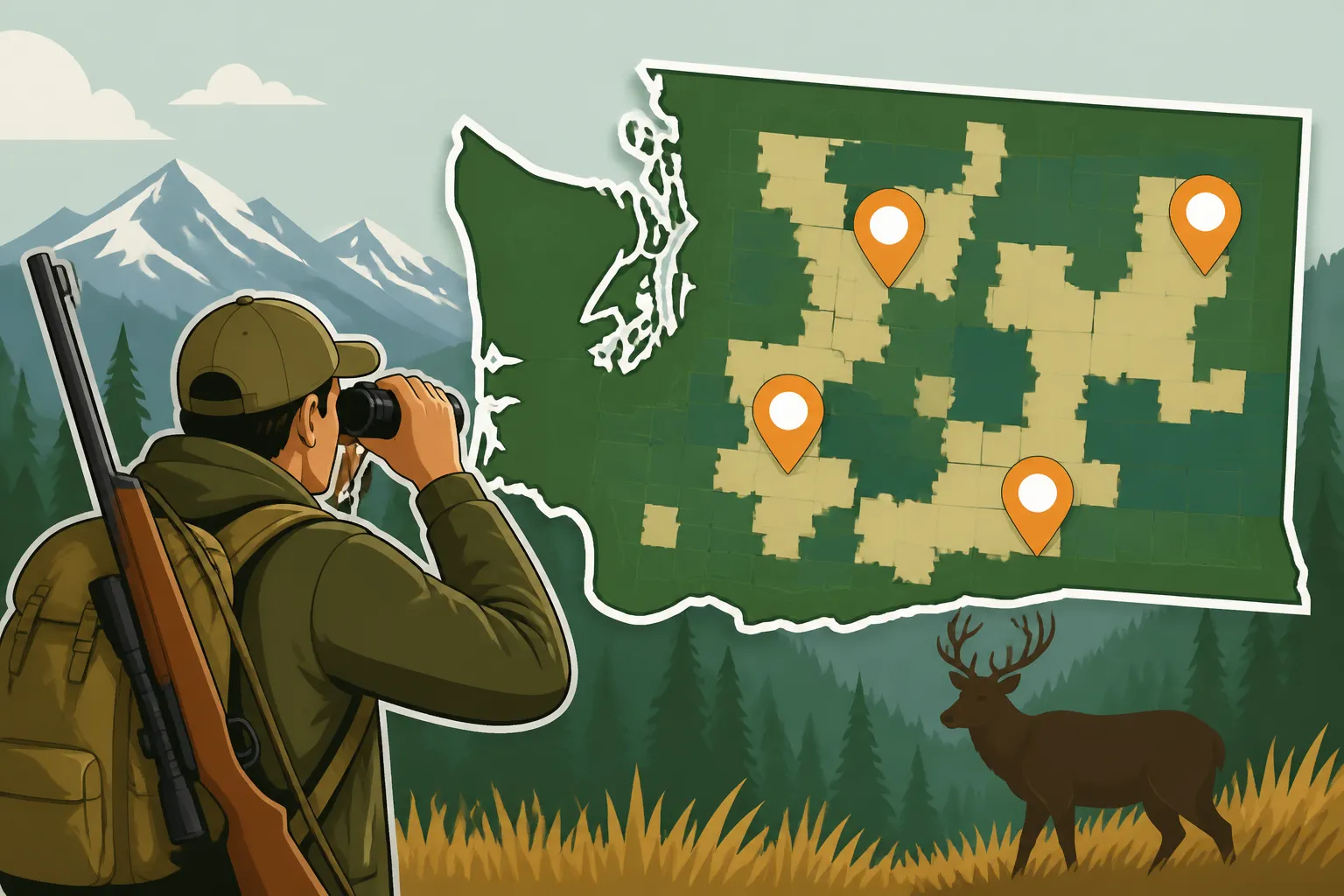
Finding Enrolled Private Lands in Washington
Finding enough open hunting land in Washington can feel like a never-ending puzzle, especially when public lands are getting more crowded every year. It's frustrating to drive past prime-looking habitat only to see "No Trespassing" signs. But here's the good news: Washington actually has various programs that open up private lands to hunters, often offering incredible opportunities if you know how to find them and play by the rules. This guide will help you uncover those enrolled private lands and understand how to access them, giving you more places to pursue your passion.
Understanding Washington's Private Lands Access Programs
The Washington Department of Fish and Wildlife (WDFW) works with private landowners, from small family farms to large timber companies, to create hunting access through several structured programs. These aren't just random acts of kindness; they're designed to help landowners manage wildlife, control damage, and sometimes even generate a little income, all while providing hunters with valuable opportunities. It's a win-win, but it requires hunters to be informed and responsible.
What "Enrolled Private Land" Really Means
When we talk about "enrolled private land," we're referring to parcels of private property whose owners have voluntarily entered into an agreement with the WDFW to allow public hunting access under specific conditions. This isn't just a gentleman's agreement; it's a formalized program. Landowners might enroll for various reasons: perhaps they have a consistent issue with deer or elk damaging crops or timber, or maybe they simply want to support the hunting tradition and are willing to share their land if hunters respect their property.
For hunters, these enrolled lands can be a goldmine. They often comprise prime habitat that sees less pressure than many public lands, or they might provide crucial access routes to otherwise landlocked public sections. Imagine having access to agricultural fields where deer are frequently feeding, or timber parcels with excellent blacktail habitat, without having to navigate complicated private timber permits or worry about trespassing. These programs exist to bridge the gap between private ownership and public opportunity. Understanding these programs is key to Finding Legal Access in Washington.
The Different Flavors of Access
The WDFW has tailored several different private lands access programs to suit the diverse needs of landowners and hunters alike. It’s not a one-size-fits-all situation, and each program comes with its own set of rules, application processes, and levels of competition. Knowing the nuances of each is crucial for maximizing your chances of a successful hunt.
- Feel Free to Hunt (FFH): This is perhaps the most straightforward and open program. Landowners agree to allow public access for hunting without requiring prior contact or reservation. You essentially "feel free" to hunt these lands within the season dates and rules, much like you would public land. These areas are typically marked with specific WDFW signage.
- Register to Hunt (RTH): A slightly more controlled approach, these properties require hunters to register with the WDFW before hunting. This often involves checking in at a kiosk or online. Registration helps the landowner and WDFW monitor hunter numbers and harvest success, ensuring a quality experience and preventing overcrowding. You might be asked to provide your hunting license details and expected hunt dates. Getting a Register to Hunt Permission Slip is a common step for these lands.
- Hunt by Reservation (HBR): These are the most controlled private lands programs, often offering high-quality hunting opportunities for limited numbers of hunters. Access is granted only through an advance reservation system, usually online, and often involves a draw or lottery system due to high demand. Think of it like a mini-special permit draw for private land. These hunts are generally for specific dates and species.
- Hunt by Written Permission (HWP): While not exclusively a WDFW program in the same way as the others, the WDFW does facilitate access on some private lands where written permission is specifically required. This category often involves direct contact with the landowner to secure a signed permission slip before stepping foot on their property. This is a crucial distinction, as simply knowing a property is private and open to "permission" isn't enough; you need that formal, written approval. Getting Written Permission Before Opening Day is paramount for these situations.
It’s easy to get these confused, and a lot of hunters just assume all private land is off-limits or requires a handshake deal. But these formal programs are designed to take some of the guesswork out of it, provided you do your homework and understand the system.
How to Locate Enrolled Private Lands
Finding these elusive enrolled private lands takes a bit of research and familiarity with the tools available to you. It's not always as simple as seeing a big sign from the highway, though sometimes it is! The WDFW has resources, and modern technology can significantly boost your scouting efforts.
Official WDFW Resources
Your first and most authoritative source for identifying enrolled private lands will always be the Washington Department of Fish and Wildlife. They are the administrators of these programs, and their information is the most up-to-date.
The WDFW website is where you'll spend a good chunk of your time. They typically have a dedicated section for private lands access, often referred to as "Private Lands Public Access" or similar. Here, you'll find maps, lists of properties, and detailed rules for each program. It's not always the most intuitive website, but with a bit of patience, you can usually find what you need. Look for interactive maps or downloadable PDF maps that outline specific properties and their associated access rules. These maps will often indicate whether a property is "Feel Free to Hunt," "Register to Hunt," or "Hunt by Reservation."
Another critical resource is the annual WDFW Big Game Hunting Seasons and Regulations pamphlet. While it focuses heavily on general season dates and regulations, it also contains information about private lands programs, including how to apply for Washington Special Hunt Permits and How to Apply on certain private lands or specific instructions for Register to Hunt properties. Always download or pick up a current copy of the pamphlet, as rules and properties can change from year to year. Make sure you read the fine print for any property you're interested in, as specific game species, weapon types, and dates might be restricted.
Leveraging Mapping Apps and Technology
In today's hunting world, mapping apps have become indispensable, and they are incredibly powerful tools for finding and understanding enrolled private lands. These apps take the static WDFW maps and overlay them with satellite imagery, topographical data, and crucially, property ownership information.
Brands like onX Hunt and GoHunt have revolutionized how hunters scout and navigate. These apps include layers that show public vs. private land, and often, more specific layers that identify WDFW-enrolled properties. With onX Hunt, for example, you can switch on a layer that highlights "WDFW Access" or "Private Timber Lands" which are under agreement. This immediately visually identifies where these opportunities exist. You can zoom in, see property boundaries, and even check the landowner's name, which is invaluable if you need to seek direct Getting Written Permission on Private Land. This capability is far more efficient than cross-referencing a WDFW PDF with a physical map or simply driving around hoping to see a sign.
What makes these apps so valuable is the ability to download offline maps. Cell service in Washington's hunting country can be notoriously spotty, especially in the thick timber of the west side or the remote breaks of the east. Having your map, property lines, and enrolled land information accessible without a signal is not just convenient; it's a safety essential. Before you head out, make sure your planned hunting area is downloaded to your device.
Here's a quick comparison of how you might use these resources:
| Feature/Program | WDFW Website/Pamphlet | Mapping Apps (e.g., onX Hunt, GoHunt) |
|---|---|---|
| Locating Properties | Official lists, static PDF maps, interactive web maps | Visual overlay on satellite/topo, dynamic boundaries |
| Understanding Rules | Detailed program rules, season dates, species | Often links to WDFW rules, but primary source is WDFW |
| Navigation | Limited navigation, requires cross-referencing | Real-time GPS tracking, current location, custom waypoints |
| Boundary Accuracy | Official legal boundaries | Highly accurate property lines, often color-coded |
| Offline Access | Typically none for web maps, PDFs can be downloaded | Excellent offline map capabilities, crucial for remote areas |
| Contact Info | Sometimes provides registration/reservation links | May show landowner names for direct permission inquiries |
Using a combination of WDFW's official data for the rules and regulations, and a robust mapping app like onX Hunt for visual scouting and in-field navigation, gives you the best chance to successfully find and hunt enrolled private lands.
Navigating the Specific Access Programs
Each of Washington's private land access programs has its own distinct requirements and procedures. It's not enough to simply know a piece of land is "open"; you need to understand the how of gaining access to ensure you're hunting legally and ethically.
"Feel Free to Hunt" – Your Easiest Bet
The "Feel Free to Hunt" (FFH) program is, as its name suggests, the most accessible for hunters. These properties are identified by specific WDFW signs that indicate public hunting is allowed without prior permission or registration. This is about as close as you get to hunting public land on private ground.
Typically, you'll find these FFH properties integrated into broader landscapes, sometimes adjacent to existing public lands, or as stand-alone parcels near agricultural areas. The key to hunting these successfully is to confirm their status through the WDFW website or a mapping app like GoHunt before you go, and then look for the official signage when you arrive. These signs are critical. If you don't see WDFW signage explicitly stating "Feel Free to Hunt," assume permission is required, even if your map shows it as an enrolled property in the general sense.
While easy to access, these areas can still see significant hunting pressure, especially on opening day or during peak season. Treat these lands with the utmost respect. Pack out all your trash, stay on established roads or trails unless otherwise permitted, and be mindful of any agricultural operations or livestock. Your responsible behavior directly influences the landowner's willingness to remain in the program.
"Register to Hunt" – A Step Up in Commitment
The "Register to Hunt" (RTH) program provides a bit more control for landowners and WDFW. Access usually requires you to register your presence, either online or at a physical kiosk located at the property entrance. This might involve signing in with your WDFW WILD ID, providing your license number, and indicating your hunting party size and target species.
The registration process serves a few purposes:
- Hunter Density Management: It helps WDFW and the landowner track how many hunters are on the property, preventing overcrowding and ensuring a quality experience.
- Harvest Monitoring: It can contribute to better data collection on game harvest from these specific private lands.
- Accountability: Knowing who is on their land adds a layer of accountability for landowners.
To hunt an RTH property, you'll need to check the WDFW Private Lands Public Access section on their website. They'll list the specific properties, the dates they are open, and crucially, the registration method. Some might have a simple QR code to scan with your phone, linking you to an online form. Others might have a physical sign-in sheet at a designated entry point. Always carry your hunting license and identification, as you might need them for registration.
Remember that registration doesn't guarantee you'll have the place to yourself, but it's a step toward managing access. Adhere strictly to any rules posted at the registration site, which might include specific parking areas, walk-in only access, or even designated hunting zones.
"Hunt by Reservation" – Planning Ahead is Key
The "Hunt by Reservation" (HBR) program is often where you'll find some of the highest quality hunting opportunities on private land, precisely because access is so tightly controlled. These properties are typically limited to a very small number of hunters for specific dates, often through a lottery or first-come, first-served reservation window. Think of these as almost mini Washington Special Hunt Permits and How to Apply, just for private land.
Access to HBR properties is highly competitive. You'll need to pay close attention to the WDFW website for announcements about reservation periods. These can open well in advance of the hunting season, and popular spots fill up incredibly fast. The process usually involves:
- Finding the Opportunity: Identifying HBR properties and their specific hunt offerings (species, dates, number of hunters allowed).
- Applying/Reserving: Submitting an application or making a reservation through the WDFW online portal. This might be a draw or a timed release where you need to be quick.
- Confirmation: Receiving official confirmation of your reservation, which you'll need to carry with you while hunting.
Because these hunts are so restricted, the experience can be exceptional. You'll often find less pressured animals and a more serene hunting environment. However, the strict nature of the reservations means you must follow all rules to the letter. Missing your reservation, showing up with extra hunters, or violating any conditions can jeopardize future access for yourself and for other hunters who rely on these programs. It's a privilege, not a right, to hunt these lands. For instance, some of these might be highly sought-after for species like Washington Moose, Sheep and Mountain Goat, depending on the property's location and specific agreements.
"Hunt by Written Permission" – Direct Landowner Contact
While not always a formal WDFW program in the same vein as FFH or HBR, obtaining "Written Permission" directly from a landowner is a time-honored tradition and still a vital way to access private lands in Washington. The WDFW does sometimes facilitate or list properties where written permission is the specific requirement.
This approach requires more initiative and social skill on your part. It often involves identifying private land you're interested in (using tools like onX Hunt to find landowner information), and then making direct contact. This could mean knocking on doors, writing letters, or calling.
Here are some tips for approaching landowners for written permission:
- Be Respectful and Prepared: Always be polite, introduce yourself, and clearly state your intentions. Have your hunting license ready to show.
- Offer to Help: Sometimes, offering to help with a task – fixing a fence, clearing brush, or even just checking on the property regularly – can go a long way in building trust.
- Provide References: If you have them, provide references from other landowners you've hunted with or from local hunting organizations.
- Be Specific: Clearly state what you want to hunt, when, and with what weapon.
- Understand Their Concerns: Landowners often worry about liability, property damage, and safety. Be prepared to address these concerns. You might offer to sign a liability waiver.
- Get It in Writing: This is non-negotiable. A handshake is nice, but for legal purposes, you need a signed document outlining the terms of access, dates, species, and any specific rules (e.g., parking, gates, no-go zones). The WDFW often provides sample permission forms on their website. This is crucial, especially when hunting close to Washington Tribal Land Boundaries or other sensitive areas where clear permission is vital.
Successfully obtaining written permission builds relationships that can last for years, often leading to exclusive access to excellent hunting ground. It's an investment of time and effort, but the rewards can be significant.
Tips for Respectful and Successful Private Land Hunting
Gaining access to private land through these programs is a privilege, not a right. Your behavior, and the behavior of every hunter who follows you, directly impacts whether these programs continue to exist and whether landowners remain willing participants. Adopting a respectful and responsible approach is paramount.
The Importance of Scouting and Communication
Just because you have permission or an open access sign doesn't mean you can just show up on opening morning without a plan. Thorough scouting, both before and sometimes during your hunt, is critical for success and for demonstrating respect to the landowner.
- Pre-Season Scouting: Use your onX Hunt or GoHunt app to study the terrain, identify potential bedding areas, food sources, and travel corridors. Look for access points, parking areas, and any potential areas that might be off-limits (e.g., around homesteads, livestock fields, or sensitive agricultural operations). Knowing these details ahead of time prevents you from inadvertently trespassing or disturbing the landowner's activities. This is also a good time to confirm road access and any Washington Winter Range Closures That End Late Hunts or other seasonal restrictions.
- Respecting Boundaries: Private land boundaries, even enrolled ones, are sacrosanct. Always know exactly where you are relative to the property lines. A GPS-enabled mapping app is your best friend here. Don't push a retrieve into an adjacent private property without explicit permission, even if you see your game on the other side of the fence.
- Communication is Key (Especially for RTH/HBR/HWP): If you have specific permission or a reservation, communicate your plans. Let the landowner know when you expect to arrive, how long you plan to hunt, and when you've left. If you harvest an animal, inform them. This simple act of communication builds trust and goodwill. If you notice anything unusual on their property (a downed fence, suspicious activity), it can be a good idea to let them know, showing you're a responsible visitor.
Leaving No Trace and Beyond
The concept of "Leaving No Trace" is standard for public lands, but on private property, you should aim to go beyond it. Your goal should be to leave the property in a better condition than you found it, or at the very least, completely undisturbed.
- Pack It In, Pack It Out (and then some): This means all your trash, spent casings, food wrappers, and anything else you brought in. But consider going a step further: if you spot any trash left by others, pick it up. A small gesture like this speaks volumes.
- Gate Etiquette: If you encounter a closed gate, close it behind you. If it's open, leave it open (unless the landowner specified otherwise). This seems minor, but gates are critical for livestock management and property security. Never block a gate or access road, even temporarily.
- Vehicle Use: Stick to designated roads and parking areas. Off-roading or driving on wet, soft ground can cause significant damage and erosion, which landowners understandably dislike. If an area is walk-in only, respect that. Many timber companies, for example, have very strict rules about Roads Closed to Motor Vehicles in a Washington Unit.
- Wildlife Management: Adhere strictly to the WDFW regulations for the area, including bag limits, antler point restrictions (if any), and weapon specific rules. If the landowner has specific requests regarding species or animal size, discuss this respectfully. Remember, they are allowing you to help them manage their local wildlife population.
By being an exemplary hunter, you not only ensure your own future access but also help maintain and even expand these valuable private land hunting programs for everyone. These relationships are built on trust and respect, and every hunter plays a part in upholding that.
Disclaimer
This article is for general informational purposes only and does not constitute professional advice. Laws, prices and regulations vary by location and change over time. Consult a qualified professional for guidance on your specific situation.