Satellite Messengers for Solo Washington Hunts
Heading out into Washington's vast and wild lands for a solo hunt is an incredible experience, but it also comes with a unique set of anxieties – not just for you, but for the folks back home. When you step beyond the reach of cell towers, that little device in your pocket becomes useless, and the thought of an unexpected injury, a sudden change in weather, or simply getting turned around in dense timber can be daunting. This guide is all about giving you the peace of mind and critical lifeline you need: the satellite messenger, and how it transforms solo hunting from a risky endeavor into a much safer, more connected adventure.
Why Satellite Messengers Are Essential for Solo Hunters in Washington
Let's be real, the wild places we love to hunt in Washington State are often the very places where cell service goes to die. You might have a bar or two on a high ridge overlooking a clearcut, but drop down into a valley or dense timber, and you're instantly cut off. This isn't just an inconvenience; for a solo hunter, it can be a serious safety concern. Thinking about hitting a remote corner of the Blue Mountains or deep into the Gifford Pinchot? Your phone simply isn't going to cut it.
The reality is, accidents happen. You could twist an ankle miles from the truck, fall and hit your head on a steep, rocky slope, or even suffer a sudden medical emergency. Without a way to call for help, even a minor incident can quickly escalate into a life-threatening situation. That feeling of vulnerability, of being completely isolated, is a major frustration for many solo hunters. A satellite messenger directly addresses this by providing a reliable way to communicate when your phone has long given up. It's not just a fancy gadget; it's a fundamental shift in how safe and connected you can be.
The Real Risks of Going Solo in Remote Washington
Washington's hunting grounds are incredibly diverse, from the rain-soaked, brushy slopes of the westside Cascades to the vast, open sagebrush country and timbered breaks of the eastside. Each environment presents its own challenges, and when you're out there alone, those challenges are amplified. Imagine you're still-hunting blacktails in a thick clearcut on the Olympic Peninsula, moving quietly through wet brush. Suddenly, you slip on a mossy log and your leg goes sideways. You're down, your ankle throbbing, miles from a road, and it’s getting dark. No cell service. What then?
Or maybe you’re glassing a deep canyon for mule deer in Eastern Washington, miles from any designated trail, when a sudden, unexpected snow squall rolls in, dropping visibility to almost zero and temperatures plummeting. You’re prepared for typical conditions, but this is worse. Disorientation sets in quickly. These aren't just hypothetical scenarios; they're the kinds of things that can happen to anyone, especially when pushing into more remote areas. The sheer scale of Washington's public lands means that help can be a long way off, and every hour without communication in a serious situation increases the risk significantly. Solo Hunting Safety Precautions are paramount, and a satellite messenger forms a critical part of that.
Beyond the "What If": Peace of Mind for You and Yours
It’s not just about what could go wrong; it’s also about what goes right when you can communicate. As solo hunters, we often carry the burden of worry from our loved ones back home. "Did they make it to camp?" "Are they okay?" "I haven't heard from them in two days." These thoughts can be incredibly stressful for family and friends. A satellite messenger alleviates much of that by allowing you to send regular "I'm okay" messages or quick updates on your location.
Think about the simple act of checking in from your Backpack Camps in Washington Wilderness after a long day’s hike. A quick text to your spouse saying you're safe, you found a good spot, and you'll call when you're out. It means they don't have to wonder, to jump at every news report, or to imagine the worst. This peace of mind isn't just for them; it’s for you too. Knowing that if something does happen, you have a direct line to emergency services, and that your family will be notified, allows you to focus more intently on your hunt and enjoy the solitude without that underlying hum of anxiety.
How Satellite Messengers Work (And Why They're Different from Your Phone)
A common misconception is that a satellite messenger is just a rugged cell phone. That's simply not the case. While both connect to networks, the type of network and how they function are vastly different, especially in the remote environments we hunt. Your cell phone relies on terrestrial towers, which have a limited range and are concentrated around populated areas. As soon as you move beyond that line of sight, your phone becomes little more than a camera and a mapping device (if you've downloaded offline maps, that is!).
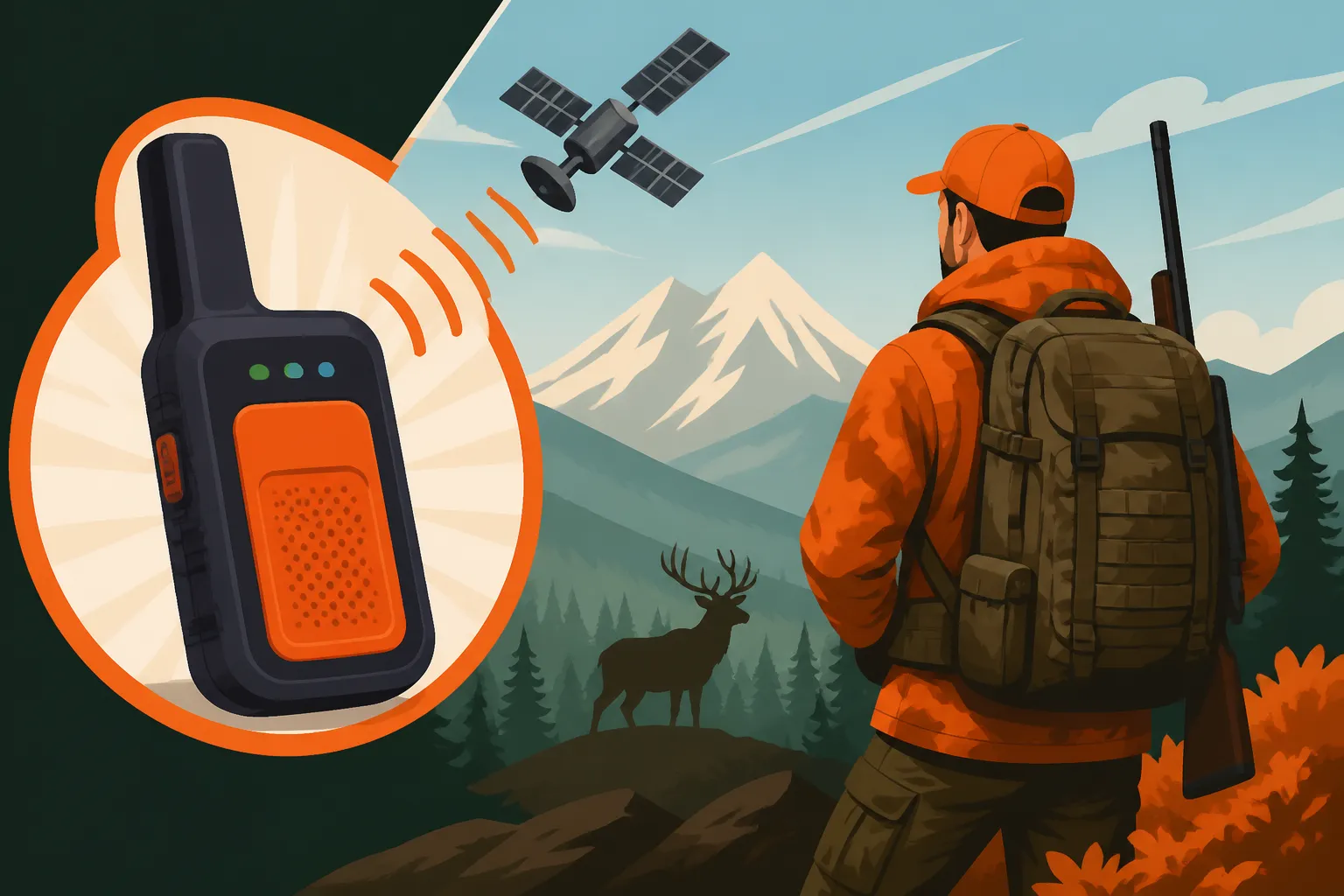
Satellite messengers, on the other hand, connect directly to orbiting satellites. These satellites cover the entire globe, meaning that as long as you have a clear view of the sky, you can send and receive messages from almost anywhere. This fundamental difference is what makes them indispensable for anyone venturing into true wilderness, far from the conveniences of civilization. It's this direct, unhindered connection that makes all the difference when you're miles deep in Washington's backcountry.
The Satellite Network Advantage
Imagine a constellation of tiny, silent sentinels orbiting hundreds of miles above the Earth. That's essentially what a satellite messenger taps into. Unlike cell towers, which are fixed and local, these satellites are constantly moving, ensuring that at any given time, one or more are likely to be in view to receive your signal. This means that whether you're in the deep canyons of the Wenaha-Tucannon Wilderness or the vast, rolling hills east of Omak, you can get a signal out.
The signal from your messenger travels straight up to a satellite, then bounces back down to a ground station, and from there, your message is routed through regular communication channels (like email or SMS) to your contacts. This process, while seemingly complex, happens very quickly. It's a robust system designed for reliability in situations where traditional infrastructure doesn't exist. This is the core reason why a device like a satellite messenger is a non-negotiable piece of gear for serious solo hunting, particularly when considering Washington's Multi-Season Tags and Three Chances that can lead you into diverse and remote landscapes throughout the year.
Communication Types: Messages, Tracking, and SOS
Satellite messengers aren't just one-trick ponies; they offer a range of communication options tailored for backcountry use:
- Two-Way Messaging: This is perhaps the most frequently used feature. You can send custom text messages to pre-set contacts (or often any email/SMS address), and they can reply directly to your device. This is perfect for those "I'm okay" messages, brief updates on your location, or coordinating a pickup. You can communicate with family, hunting partners, or even logistics support.
- Location Tracking: Many devices offer a tracking feature that sends your GPS coordinates at regular intervals (e.g., every 10 minutes, 30 minutes, or hour) to a web-based map that your designated contacts can view. This allows them to see your progress and general whereabouts, which is a massive relief for those waiting back home. It also creates a breadcrumb trail that could be crucial for search and rescue if you go missing.
- SOS/Emergency Button: This is the big one, the reason many hunters invest in these devices. With a single press of a dedicated SOS button, your device sends an emergency signal, along with your precise GPS coordinates, to a 24/7 global emergency response center. These centers are staffed by professionals who will contact your designated emergency contacts and coordinate with local search and rescue teams (like those in Washington State) to get help to your exact location. This is an absolute game-changer for critical situations and is the ultimate safety net. It’s the difference between hoping someone notices you’re overdue and actively summoning help.
Key Features to Look for in a Satellite Messenger for Washington Hunts
Choosing the right satellite messenger isn't just about grabbing the first one you see. Washington’s diverse terrain and weather demand specific considerations. You need a device that can withstand abuse, last for days without a charge, and perform reliably when you need it most. This isn't a purchase to skimp on or rush through; it's an investment in your safety and success.
When I’m E-Scouting a Washington GMU From Home, I’m thinking about the terrain, the remoteness, and what gear I’ll need. My messenger is always at the top of that list.
Durability and Battery Life in Rugged Terrain
Imagine navigating through a blowdown from a recent windstorm, or clambering over rocky scree in the North Cascades. Your gear is going to get bumped, jostled, and potentially dropped. Therefore, robust construction is non-negotiable. Look for devices that are rated for impact resistance and waterproofness. An IPX7 or IPX8 rating means it can handle a dunking in a creek or a full day of Washington’s notorious rain.
Battery life is another huge factor, especially for multi-day hunts. You're not going to have access to outlets in the backcountry. Look for devices with long battery life in tracking mode, and consider models that can be charged via portable power banks or even small solar panels to extend their longevity. Phone Battery Management in Cold is a challenge, but a good satellite messenger will often outperform a phone in terms of battery efficiency, especially when only performing core functions. This ensures your lifeline doesn't die on you just when you need it most.
Ease of Use and Interface
When you're cold, tired, or possibly injured, fumbling with complicated menus is the last thing you want. A good satellite messenger should be intuitive and easy to operate, even with gloves on or under stressful conditions. Look for clear displays, well-spaced buttons, and a user interface that makes sending messages or hitting the SOS button straightforward. Some models feature a dedicated SOS button that's often covered to prevent accidental activation, but easily accessible when needed.
Consider how you’ll type messages. Some devices have full QWERTY keyboards, others use an on-screen virtual keyboard with directional buttons, and some allow you to compose messages on your smartphone via Bluetooth and send them through the messenger. The latter can be a great compromise for easier typing while still leveraging the satellite network. Test out the interface before you rely on it in the field.
Subscription Plans and Costs
This is often where people get tripped up. A satellite messenger isn't a one-time purchase; it requires a monthly or annual subscription plan to access the satellite network. These plans vary significantly in price and features, so you'll need to research what each provider offers.
Typically, plans range from basic emergency-only services to more comprehensive options that include unlimited texting, frequent tracking updates, and additional features like weather forecasts. The more features and usage you want, generally the higher the monthly fee. Some companies offer seasonal plans, which can be great if you only hunt for a few months out of the year, allowing you to suspend service during the off-season. Always check the provider's specific terms for activation fees, cancellation policies, and the cost structure for sending messages or tracking points beyond your plan's limits. It’s worth sitting down and figuring out your likely usage to pick the most cost-effective plan for your hunting habits.
GPS Mapping and Navigation Capabilities
Many modern satellite messengers aren't just for communication; they also offer robust GPS features. This can range from basic waypoint marking and breadcrumb trails to full-fledged topographic mapping and route planning capabilities. Some models can even integrate with digital mapping platforms like GoHunt, allowing you to load your pre-planned routes and waypoints directly onto your device. This is a game-changer for navigating unfamiliar terrain, especially when Downloading Offline Maps for Washington on your primary device, as the messenger can act as a crucial backup.
Having your route and marked points visible on your messenger means you can verify your position, backtrack if you get lost, or navigate to a pre-scouted location even if your phone dies. This redundancy in navigation is incredibly valuable for solo hunters. Being able to see your own tracking points on a map helps you maintain situational awareness, ensuring you stay within your planned hunting area and can find your way back to camp or the truck efficiently.
Integrating Your Satellite Messenger into Your Solo Hunt Plan
Having the gear is one thing; effectively integrating it into your hunt plan is another. A satellite messenger is most effective when it’s part of a broader strategy for safety and communication, not just something you toss in your pack and hope you never have to use. Proactive planning can make all the difference, especially when you're hunting in challenging environments like Washington's deep timber or remote mountains.
Think about how you'd manage a serious emergency. A well-stocked First Aid Kit for a Remote Hunt is vital, but so is the ability to call for help when that kit isn't enough.
Pre-Hunt Setup and Communication Protocol
Before you even leave your driveway, your satellite messenger needs to be fully set up and tested.
- Update Firmware and Charge: Ensure the device's software is current and it's fully charged.
- Test Messages: Send a few test messages to your emergency contacts to confirm they are receiving them and can reply.
- Create a Trip Plan: This is crucial. Share your detailed itinerary with your emergency contacts. This includes your GMU, entry and exit points, planned routes, expected check-in times, and your estimated return. Explicitly state what to do if they don't hear from you by a certain time (e.g., "If you don't hear from me by X time on Y date, activate search and rescue and use my messenger's tracking link"). Leaving a Trip Plan at Home ensures that if the worst happens, there's a clear process in place.
- Program Messages: Pre-program quick messages like "I'm okay," "Reached camp," "Delayed but safe," or "Need non-emergency assistance." This saves time and ensures clarity under pressure.
- Identify Emergency Contacts: Make sure your emergency contacts understand how the device works, how to access your tracking page, and their role in an emergency.
In-Field Practices: Regular Check-ins and Emergency Readiness
While you're out hunting, a consistent routine makes your messenger much more effective.
- Regular Check-ins: Stick to your agreed-upon check-in schedule. Even a quick "all good" message at the end of the day can prevent unnecessary worry. This builds confidence with your contacts that you're safe and establishes a baseline for when an emergency signal might truly be needed.
- Keep it Accessible: Don't bury your messenger at the bottom of your pack. Keep it in an easily accessible pocket or harness, especially when moving through challenging terrain. If you fall and can't reach your pack, it won't do you any good.
- Clear View of Sky: For optimal performance, always try to use your messenger with a clear view of the sky. Dense timber or steep canyon walls can sometimes block the signal, so move to a more open spot if your message isn't sending.
- Battery Conservation: While modern devices have good battery life, conserve power by only sending messages when necessary and adjusting tracking intervals if you're stationary for long periods.
- Emergency Protocol: Rehearse what you would do if you had to hit the SOS button. Know who would be contacted and what information you’d want to relay. Understand that pressing the SOS button connects you to a professional emergency monitoring center, not directly to your family. They will then notify your family as part of their protocol.
Remember, a satellite messenger is a safety tool first and foremost. It's your direct link to help when all other options fail. Paired with careful planning and awareness of your surroundings, it dramatically improves your safety in the remote areas of Washington State. GoHunt's detailed maps can assist in planning routes and marking potential hazards, which you can then leverage with your satellite messenger's GPS capabilities to navigate and communicate your position precisely. Whether you are using it for basic messages or as a last resort in a critical situation like battling Hypothermia Risk on a Wet Hunt, it’s an indispensable piece of your gear.
| Feature Category | Basic Messenger (e.g., Messaging-Only) | Mid-Range Messenger (e.g., Messaging + Basic GPS) | Advanced Messenger (e.g., Full Navigation + Messaging) |
|---|---|---|---|
| Primary Function | Two-way text messaging, SOS | Two-way text messaging, SOS, basic tracking, simple navigation | Two-way text messaging, SOS, advanced tracking, detailed mapping |
| GPS Capabilities | Sends exact coordinates with messages/SOS | Shows basic route/waypoints, sends coordinates | Detailed topo maps, route planning, advanced waypoint management |
| Screen Type | Small, often monochrome, text-based | Small to medium, often monochrome or basic color | Larger, full-color, high-resolution display |
| Connectivity | Global satellite network (e.g., Iridium, Globalstar) | Global satellite network | Global satellite network, often Bluetooth to smartphone |
| Battery Life (typical) | Very long (many days to weeks) | Long (several days to a week) | Moderate (1-3 days with heavy GPS use), often rechargeable |
| Durability | High (rugged, waterproof, simple design) | High (rugged, waterproof) | High (rugged, waterproof, though screen can be a point of vulnerability) |
| Subscription Needs | Required for all messaging/SOS functions | Required for all messaging/SOS functions | Required for all messaging/SOS functions |
| Ideal For | Emergency communication only, basic check-ins | Solo hunters wanting more situational awareness, backcountry trips | Expedition hunters, intricate route planning, frequent GPS users |
Disclaimer
This article is for general informational purposes only and does not constitute professional advice. Laws, prices and regulations vary by location and change over time. Consult a qualified professional for guidance on your specific situation.