Trekking Poles for Heavy Loads
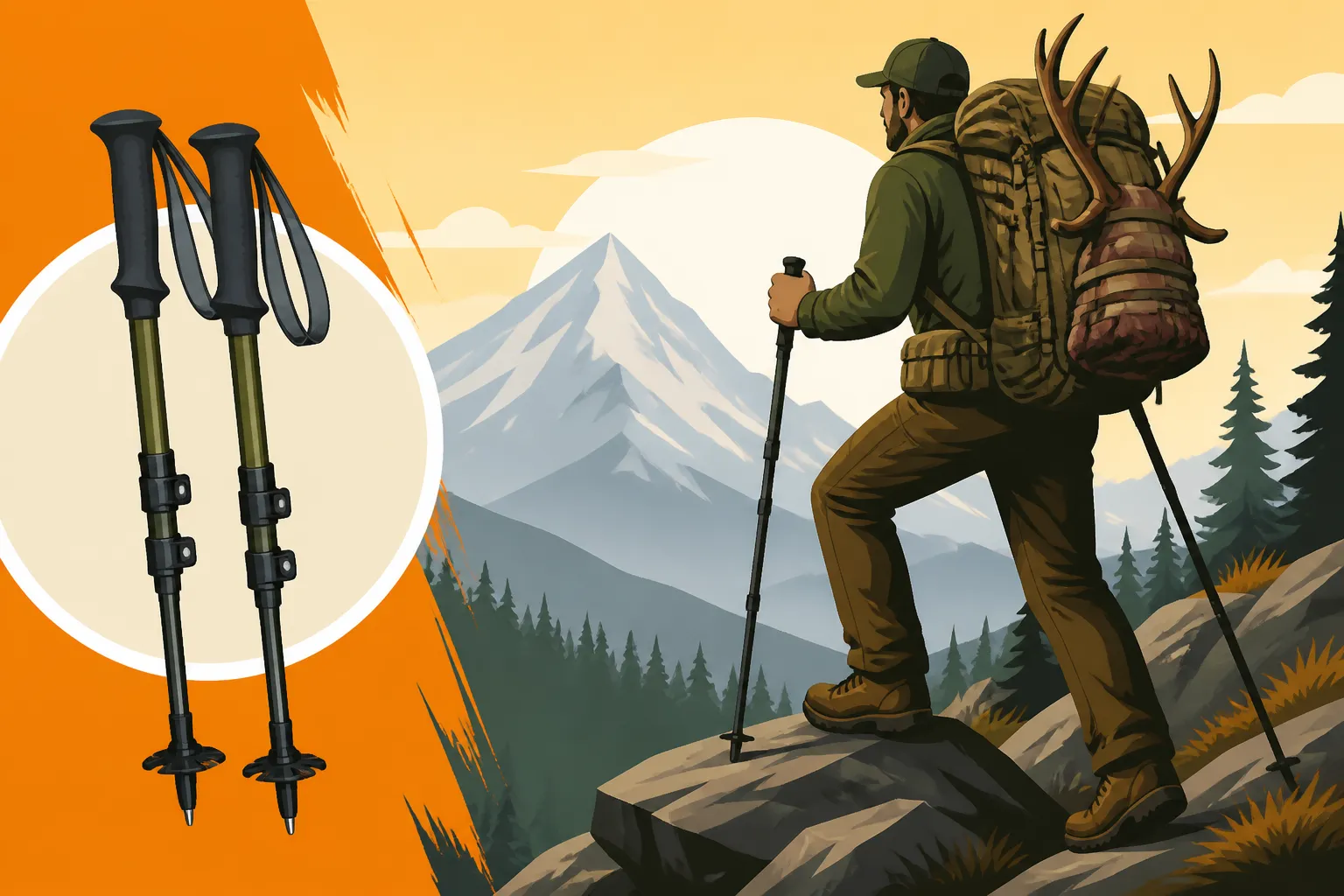
Hauling a heavy pack through Washington's steep, often slick, and unforgiving terrain can feel like an impossible task. Whether you’re packing out an elk quarter, a boned-out deer, or simply a week's worth of gear to a remote spike camp, the strain on your knees, back, and ankles is immense, and a single slip can turn a successful hunt into a painful ordeal. This guide is all about how quality trekking poles become your absolute best friend, transforming those brutal pack-outs into manageable, safer treks, preserving your body for seasons to come.
Why Trekking Poles Are Non-Negotiable for Heavy Loads in Washington
When you’re deep in the Gifford Pinchot National Forest or navigating the scree fields of the Okanogan-Wenatchee, every step with a heavy pack matters. It's not just about getting from point A to point B; it's about doing it efficiently, safely, and without completely wrecking your body. This is where trekking poles shine, offering benefits that go far beyond what most hunters initially realize.
Reduced Strain and Enhanced Stability
Imagine strapping 80, 90, or even 100 pounds to your back. The weight compresses your spine, puts immense pressure on your knees and ankles, and throws your center of gravity off-kilter. Trekking poles effectively give you two additional points of contact with the ground, transforming you from a bipedal walker into a quadripedal powerhouse. This might sound a bit over the top, but it's true. By planting your poles, you distribute some of that vertical load horizontally, taking stress off your lower body joints. When you’re slogging up a steep incline in the Blue Mountains, those poles allow you to push off with your arms and shoulders, engaging your upper body and core muscles. This means your legs aren't doing all the work, which translates to less fatigue, less muscle soreness, and a significantly reduced risk of injury. It's like having an extra set of sturdy legs to lean on, especially when you're moving carefully with Packing an Elk Out of Washington's Backcountry.
On a recent hunt near the Colockum, I witnessed a buddy nearly take a nasty spill with a quarter-bagged spike elk. His boots hit a patch of loose shale, and without thinking, he instinctively jammed his trekking pole down, catching himself just before his knees buckled. That momentary instability, if unchecked, could have led to a sprained ankle or worse. The poles provided that instant, reactive stability that saved his hunt – and probably a trip to the emergency room.
Improved Balance and Safety on Treacherous Terrain
Washington's hunting grounds are notoriously diverse and often treacherous. From the slick, moss-covered logs and muddy river crossings of the Olympic Peninsula to the loose, rocky scree and steep game trails of eastern Washington, finding solid footing is a constant challenge. Add a heavy pack to that equation, and your balance becomes incredibly compromised. Trekking poles act as advanced feelers, allowing you to probe the ground ahead, test questionable footing, and gauge the depth of puddles or mud before you commit your full weight.
Think about traversing a steep, dew-soaked side-hill in the early morning, where one foot is higher than the other, and the ground beneath you is a mix of duff and hidden roots. Without poles, a stumble is almost inevitable. With poles, you can plant them strategically above and below you, creating a stable triangle of support. This is particularly crucial when you're trying to quickly extract an animal and need to make good time getting Meat Off the Mountain Before Dark. The confidence they instill allows you to move with greater purpose and less hesitation, which ultimately makes you a safer and more efficient hunter. They’re like an extension of your proprioception, giving you a better sense of your body’s position relative to the challenging ground.
Uphill Propulsion and Downhill Braking Power
The physics of moving a heavy load uphill and downhill are entirely different, and trekking poles excel at both. When you’re climbing, they provide a powerful assist. Instead of just pulling yourself up with your legs, you can plant your poles ahead of you and push, engaging your triceps and lats to propel yourself forward. This not only conserves leg energy but also helps maintain a steady rhythm, which is vital for sustained climbs. It’s a bit like cross-country skiing, but instead of gliding, you’re powering up a mountain face. You’ll find you can maintain a much more consistent pace, especially after a long day of still-hunting or packing gear to a Backcountry Camps in Washington Wilderness.
Conversely, descending with a heavy pack can be brutal on your knees and quadriceps. Each step is a controlled fall, and the impact can be jarring. Trekking poles act as shock absorbers and braking mechanisms. By planting them in front of you and slightly to the side, you can absorb a significant portion of the downward force, effectively softening your landing and reducing the impact on your joints. They allow you to maintain control, especially on steep, loose slopes where a slide could quickly get out of hand. You can even use them to check your speed on a slick, muddy descent, preventing you from pitching forward. This is where Boots for Steep Eastside Country combined with good poles make a world of difference.
Choosing the Right Trekking Poles for Hauling Weight
Not all trekking poles are created equal, especially when you plan on relying on them to bear significant weight and punishment from Washington's rugged terrain. Investing in the right pair is crucial for both comfort and safety. You'll want to think about materials, locking mechanisms, and the overall ergonomics of the pole itself. Many hunters find resources like GoHunt invaluable for comparing models and reading real-world reviews from other hunters.
Materials and Durability for Tough Conditions
The primary materials for trekking poles are aluminum and carbon fiber, each with distinct advantages and disadvantages when you’re facing heavy loads and tough Washington conditions.
-
Aluminum Poles: These are generally heavier but incredibly durable. They can take a serious beating, bend under extreme pressure rather than snapping, and often cost less. For a hunter consistently carrying heavy packs, especially across sharp rocks, through thick timber, or in situations where a fall is possible, aluminum's resilience is a huge plus. If you accidentally wedge one between rocks or use it to brace against a tumble with an elk quarter on your back, it's more likely to dent or bend slightly than fail catastrophically. The extra weight might seem like a deterrent, but the peace of mind and the ability to truly lean on them without worry often outweigh the few ounces. I’ve seen aluminum poles get flattened by a truck tire and still be somewhat usable after a bit of persuasion – you won't get that from carbon fiber.
-
Carbon Fiber Poles: These are significantly lighter, making them attractive for those obsessed with ounce-shaving. They also tend to absorb vibrations better, which can be a comfort benefit on long treks. However, carbon fiber is more brittle under impact. While strong in its intended direction of force, a sharp side impact – like getting snagged on a rock during a fall or trying to pry something – can cause it to snap cleanly. With a substantial load on your back, a snapped pole can instantly throw you off balance, potentially leading to a much worse situation. For lighter loads or less extreme terrain, they're fantastic, but when you're trusting them with heavy weight and your safety on a Quartering and Packing an Elk Solo venture, the risk of breakage is something to consider.
Ultimately, for most Washington hunters dealing with heavy pack weights, aluminum often presents a more reliable and confidence-inspiring choice.
Locking Mechanisms You Can Trust
The locking mechanism is arguably the most critical component of a trekking pole, especially when it's supporting a heavy load. A failing lock means a collapsing pole, which means a sudden loss of support – a recipe for disaster with 100 pounds on your back.
-
External Lever Locks (Flip Locks): These are generally considered the most reliable and user-friendly. They consist of an external clamp that you can easily open and close, often with a tension adjustment screw. The beauty of lever locks is their visibility; you can quickly see if they're engaged, and they’re simple to adjust even with gloved hands or in cold weather. They maintain their grip exceptionally well under heavy, continuous pressure and are less prone to slipping than twist locks. If they do start to slip over time, a quick turn of the tension screw usually brings them back to full power. This is the gold standard for heavy-duty poles.
-
Internal Twist Locks: These mechanisms work by twisting the pole sections against each other to create friction and lock them in place. While they offer a sleek profile, they have several downsides for heavy loads. They can be difficult to tighten sufficiently, especially with cold or wet hands. More importantly, they are prone to slowly compressing and slipping under constant heavy pressure, especially if grit or moisture gets inside the pole sections. A pole that slowly shortens itself under load is not only annoying but also dangerous. The friction connection can also degrade over time, leading to less reliable locking. For heavy pack-outs, avoid twist locks if possible.
When looking at poles, make sure the locking mechanisms feel robust and secure. Test them in the store by putting downward pressure on them. If there's any give, move on.
Grips, Straps, and Baskets
These seemingly minor details contribute significantly to your comfort and the pole’s effectiveness.
-
Grips: Ergonomic grips are essential to prevent blisters and fatigue. Cork and foam are popular materials. Cork molds to your hand over time and wicks sweat well, making it great for warm, dry conditions. Foam is lighter, softer, and performs well in wet conditions, which is a major factor in much of Washington. Consider an extended foam grip below the main handle; this allows you to quickly choke down on the pole for short uphill sections without needing to adjust the pole length.
-
Straps: The wrist strap isn't just for retention; it's an integral part of your propulsion and support system. Properly used, the strap transfers some of the load from your grip to your forearm, reducing hand fatigue. Look for wide, padded straps that are easily adjustable. You should be able to push down on the top of the strap with your palm, engaging it fully. Cheap, thin straps will dig into your wrists and become incredibly uncomfortable over miles with a heavy pack.
-
Baskets: Baskets are small, removable discs near the tip of the pole. Most poles come with small, all-season baskets, which are sufficient for general hiking. For soft ground, mud, or snow, larger baskets prevent the pole from sinking too deeply, offering more purchase. While often overlooked, the right basket can prevent your pole from disappearing into a hidden mud puddle on a rainy Western Washington hunt. Some hunters prefer no baskets in rocky, technical terrain to avoid snagging. Make sure the poles you choose have interchangeable baskets so you can adapt to different conditions, especially if you plan to use them for Late-Season Hunting in Washington Snow.
Techniques for Using Trekking Poles with a Heavy Pack
Having the right poles is only half the battle; knowing how to use them effectively with a heavy load is just as important. It’s not just about walking with them; it’s about leveraging them as tools for efficiency, balance, and injury prevention.
Mastering the Uphill Stride
Climbing steep hills with a heavy pack can be utterly draining. Trekking poles can transform this into a more manageable, full-body workout rather than a purely leg-intensive grind. The key is to establish a rhythm and engage your upper body.
First, adjust your poles so your elbows are at roughly a 90-degree angle when your hands are on the grips, planted slightly ahead of you. As you step forward with one foot, plant the opposite pole ahead of you. Then, as you push off with your back leg, simultaneously push down and back with your arm on the planted pole. This creates a powerful propulsion system. Imagine you're pushing the ground away from you with your poles. Your body should lean slightly into the incline, and your poles should act like pistons.
For extremely steep sections, you can employ a "double plant" technique: plant both poles in front of you, then push off with both arms as you step forward. This offers maximum propulsion and stability on truly nasty climbs, allowing you to essentially hoist yourself up. This technique is particularly effective when navigating steep, loose game trails where you need every bit of traction. Remember to breathe deeply and maintain a steady, sustainable pace. Don’t try to sprint up the hill; consistent effort wins the race. This rhythmic, assisted climb helps you cover ground more efficiently, which is critical when you're trying to reach an Elk Behavior in Deep Snow location before prime hunting time.
Controlled Descents and Knee Protection
Descending steep terrain with a heavy pack can be more damaging to your body than climbing, especially for your knees. Trekking poles are your best defense against jarring impacts and uncontrolled slides.
Lengthen your poles slightly for descents. This allows you to plant them further ahead of you, creating a wider base of support and absorbing more impact. Instead of taking long, uncontrolled strides, aim for shorter, deliberate steps. As you step down, plant your poles firmly in front of you. Your arms and poles will act as shock absorbers, cushioning the impact as your feet hit the ground. Focus on letting your knees bend naturally and absorbing the shock through your muscles, not locking your legs straight.
On very steep or slippery descents, consider a zig-zag pattern, much like you would ski or snowshoe. This reduces the effective steepness of the slope and allows you to plant your poles more securely. Use your poles to brake your momentum, especially when encountering loose rock or slick mud. If you feel yourself starting to slide, jam the poles into the ground firmly. They are your primary point of balance and control. This technique drastically reduces the strain on your knees and quadriceps, preventing that painful post-hunt soreness and reducing the risk of a fall. It's a critical skill for navigating areas like the rugged Coweeman Unit after a rain, where even small steps can be treacherous.
Navigating Tricky Cross-Slopes and Obstacles
Washington's backcountry is rarely a straight line. You’ll encounter countless cross-slopes, blowdowns, stream crossings, and areas of thick brush. Trekking poles are incredibly versatile for these situations.
When side-hilling on a steep slope, adjust the length of your poles so the uphill pole is shorter and the downhill pole is longer. This allows your hands to remain at an even height, improving comfort and balance. Plant the uphill pole firmly above you for stability and the downhill pole slightly out and below you to prevent an uncontrolled slide. It’s like having two extra legs to prevent you from tumbling down the mountain.
For blowdowns and stream crossings, poles become crucial for probing and stability. Before stepping on a slick log or into murky water, use a pole to test its stability and depth. When crossing a stream, plant one or both poles firmly downstream to brace against the current, then move your feet. This prevents a misstep that could result in a cold, wet, and potentially dangerous situation. For navigating dense thickets, you can use a pole to push aside brush, clear spiderwebs, or check for hidden holes or obstacles on the ground. When moving through areas of Blood Trailing in Thick Understory, a pole can help you keep your balance while focusing on the track. The versatility of poles in these varied conditions makes them indispensable.
Maintenance and Care for Your Trekking Poles
Your trekking poles are critical pieces of gear that literally support you when carrying heavy loads in challenging Washington terrain. Just like your rifle or bow, they deserve regular care and maintenance to ensure they perform reliably when you need them most. Neglecting them can lead to a sticky lock, a bent section, or a complete failure at the worst possible moment.
Post-Hunt Cleaning and Inspection
After every hunt, especially one involving mud, grit, or exposure to moisture, take the time to clean and inspect your poles. Extend them fully and wipe down each section with a damp cloth to remove any dirt, mud, or debris. Pay particular attention to the locking mechanisms. For lever locks, ensure no grit is interfering with the clamp. For twist locks (though generally not recommended for heavy loads), disassemble the sections and clean the internal components thoroughly to prevent seizing.
While cleaning, inspect each section for signs of damage. Look for dents, cracks, or excessive wear on the pole shafts. Check the pole tips for wear or damage, and ensure the baskets are securely attached. Examine the grips for any tears or signs of separation, and inspect the wrist straps for fraying or loose stitching. A small tear can quickly become a large one. This routine inspection is crucial for catching minor issues before they become major problems. A bent section, if caught early, might be gently straightened, but if left unaddressed, it could lead to total failure under load. This simple habit can dramatically extend the life of your poles, much like regularly checking your Rifle Setup for Washington Elk and Deer before a season.
Locking Mechanism Tune-Ups and Replacements
The locking mechanisms are the heart of your trekking poles' reliability. For external lever locks, the tension screw is key. Over time, or with repeated heavy use, the tension can loosen, causing the pole to slip. If you notice any give or shortening under load, tighten the screw a quarter turn at a time until the lock feels secure again. Don't overtighten, as this can damage the plastic components. Periodically, you might want to apply a tiny drop of silicone-based lubricant to the lever's pivot point to ensure smooth operation, but keep it away from the clamping surface itself.
If parts of your locking mechanism, like the plastic lever or the small cam inside, become damaged, many manufacturers offer replacement parts. Don't throw away an otherwise perfectly good pole because of a broken lock! Reach out to the manufacturer or check with gear shops. For instance, reputable outdoor gear retailers often carry spare parts, or you can find them through resources like GoHunt, which sometimes lists common replacement parts for popular brands. Knowing how to quickly service your poles in the field, even with basic tools, can save a hunt if a lock starts to falter miles deep in the backcountry.
Proper Storage for Longevity
How you store your trekking poles between seasons can significantly impact their lifespan. The worst thing you can do is store them fully extended, especially with the locks engaged. This puts unnecessary stress on the locking mechanisms and can lead to stretching or weakening over time.
Instead, fully collapse your poles and disengage the locks before storing them. This releases tension on the internal components and allows any moisture that might have gotten inside to evaporate. Store them in a cool, dry place, ideally hanging them or laying them flat where they won't be bent or crushed. Avoid storing them in direct sunlight or extreme heat, which can degrade plastic components and adhesives over time. If your poles came with a storage bag, use it to keep them clean and protected.
By following these simple care and maintenance steps, your trekking poles will remain a reliable companion on countless Washington hunts, providing the stability and support you need to carry heavy loads safely and efficiently, hunt after hunt. They’re an investment in your comfort and safety, and treating them well ensures they’ll be there for you when the going gets tough.
| Feature | Aluminum Poles | Carbon Fiber Poles |
|---|---|---|
| Weight | Heavier | Lighter |
| Durability | Very high; bend rather than snap | Moderate; can snap under sharp impact |
| Cost | Generally less expensive | Generally more expensive |
| Shock Absorption | Good | Excellent (better vibration dampening) |
| Ideal Use (Heavy) | Best for heavy loads, rugged, unpredictable terrain | Lighter loads, less extreme or smoother terrain |
| Resistance to Flex | Moderate | High |
Disclaimer
This article is for general informational purposes only and does not constitute professional advice. Laws, prices and regulations vary by location and change over time. Consult a qualified professional for guidance on your specific situation.