Late-Season Hunting in Washington Snow
The crisp, often unforgiving beauty of Washington's late season can be a hunter's ultimate test. When the snow starts to fly and blanket the landscape, many hunters hang up their gear, but for those who brave the cold and silence, it can be the most rewarding time to be in the woods. This comprehensive guide is designed to help you understand the unique challenges and incredible opportunities that come with hunting Washington's majestic big game in the snow, from understanding animal behavior to mastering the specialized gear and tactics needed for success.
Understanding Washington's Late-Season Snow Dynamics
Hunting in Washington when the snow flies isn't just about bundling up; it's about understanding a whole new environment. The arrival of significant snowfall fundamentally alters the landscape, animal behavior, and human access, turning familiar hunting grounds into entirely different beasts.
When the Snow Starts to Fly and Stick
Predicting exactly when and where the snow will become a factor in Washington's late seasons is always a guessing game, but general patterns emerge. In the higher elevations of the Cascade Mountains, Blue Mountains, and the Selkirk range in northeast Washington, consistent snow can begin as early as late October or early November. By mid-November into December, it's a near certainty in many of the prime hunting units above 3,000-4,000 feet.
Lower elevation areas, particularly on the west side of the Cascades, might see only intermittent dusting or wet snow that quickly melts. However, a significant cold snap or a strong system can bring feet of snow even to these areas, albeit less frequently. On the east side, below the major mountain ranges, snow can accumulate and stick, especially in the coulees and draws of the Columbia Basin and the timbered hills of northeast Washington. This early or unexpected snow can drastically change animal movement patterns, sometimes pushing herds down before the general season even opens, or making access a nightmare halfway through your hunt. Paying close attention to weather forecasts for specific elevations, not just general valley temperatures, is absolutely critical.
Reading Snowpack and Its Impact on Access
Not all snow is created equal, and understanding the type of snowpack is key to both animal movement and your ability to navigate the terrain. Light, fluffy powder might be beautiful, but it can quickly deepen, making travel difficult on foot and impassable for vehicles. A heavy, wet snow, on the other hand, can create a dense, hard-packed layer that offers better traction but can also weigh down trees, leading to increased blowdown and road obstructions. Later in the season, you might encounter crusted snow, where a hard layer forms on top, making for noisy walking for both you and the animals.
The depth and type of snowpack directly dictate road accessibility. Many forest service and Department of Natural Resources (DNR) roads, particularly in higher elevations, are not plowed and become impassable once significant snow falls. Even main access routes can be closed due to snow, ice, or fallen trees. This means anticipating these closures and planning your access points accordingly. Often, the best late-season hunting is found behind these closed gates, requiring you to go in on foot, skis, or snowshoes. Before heading out, it’s imperative to check the Washington Department of Fish and Wildlife (WDFW) website for specific road and area closures, as well as the U.S. Forest Service or DNR district offices for the most up-to-date conditions. Ignoring these warnings can lead to getting stranded, or worse, facing fines for unauthorized access. For more in-depth information on navigating these challenges, check out our guide on Late-Season Snow and Road Access.
Washington Winter Range Closures and Regulations
One of the most critical aspects of late-season hunting in Washington is understanding and respecting winter range closures. These areas, typically at lower elevations and on south-facing slopes, are vital for big game animals to survive the harsh winter months. They provide crucial forage, thermal cover, and a sanctuary where animals can conserve energy. WDFW proactively closes many of these areas to human entry, including hunting, during specific dates to minimize disturbance to vulnerable wildlife.
The boundaries for these closures are usually well-marked on WDFW hunting regulations pamphlets and online mapping tools. However, it's your responsibility to know and understand them. Ignorance is not an excuse. Straying into a closed winter range, even inadvertently, can result in significant fines and loss of hunting privileges. These closures are not arbitrary; they are based on biological data and years of observation of animal behavior and winter survival needs. Respecting these boundaries not only keeps you legal but also contributes to the health and sustainability of Washington's big game herds for future generations. These closures can significantly impact where you can and cannot hunt, effectively ending some hunts prematurely if the animals move into these protected zones. Learn more about these vital protections in our detailed article on Washington Winter Range Closures That End Late Hunts.
Elk Behavior in Deep Snow and Cold Conditions
Elk are magnificent animals, and their ability to adapt to changing seasons is truly remarkable. However, deep snow and bitter cold drastically alter their daily routines and movement patterns, often creating predictable opportunities for the late-season hunter.
Migration Patterns Triggered by Snow
The most significant change in elk behavior during periods of deep snow is their migration from high-elevation summer ranges to lower-elevation wintering grounds. This isn't just a casual stroll; it's a survival imperative. As snow depths increase in the high country, covering up vital forage, elk are pushed down to areas where snow is shallower, or where south-facing slopes melt faster, exposing grasses, shrubs, and even lichens.
These migrations often follow established routes that have been used for generations, sometimes for miles down ridges, through drainages, and across saddles. Identifying these classic migration corridors can be a late-season goldmine. Look for heavily used game trails, rubbed trees, and fresh tracks funneling down from higher elevations. Early season snows can trigger these migrations sooner than usual, catching some hunters off guard. Understanding the typical "triggers" – usually a persistent foot or more of snow at higher elevations, combined with sustained cold temperatures – is key to anticipating their movements. Once the migration is in full swing, elk will often concentrate in these lower areas, making them easier to locate, but also more sensitive to pressure. You can dive deeper into this fascinating topic by reading about Elk Behavior in Deep Snow.
Feeding and Bedding in Winter
When deep snow covers the landscape, an elk's primary focus shifts dramatically to energy conservation and finding accessible forage. Their diet becomes more specialized, relying on browse like various shrubs, tree bark, and any exposed grasses. South-facing slopes become magnets for elk because the sun melts the snow faster, exposing precious food sources. These slopes also offer warmer microclimates, further aiding in energy conservation. Therefore, targeting south-facing aspects with a mix of timber and open patches can be highly productive.
Bedding sites in winter are chosen for maximum protection from the elements. Elk will seek out thick timber stands, particularly dense conifer groves, that provide a thermal canopy, blocking wind and trapping what little warmth there is. They'll often bed on benches or slight rises within these timber blocks, allowing them a vantage point while remaining concealed. In deep snow, elk will create "beds" by pawing away the snow, sometimes returning to the same beds for several days. These areas will show heavily matted snow, droppings, and sometimes hair. Locating these bedding areas and understanding how elk travel between them and their feeding grounds is a cornerstone of late-season elk hunting.
Tracking Elk in Fresh Snow
Fresh snow transforms the hunting experience, turning it into a giant, open book. The ability to track animals, identifying their direction of travel, the age of the tracks, and even the size and gait of the animal, becomes a primary late-season skill. Fresh tracks are a direct invitation to follow, offering a clear path to your quarry. Look for crisp edges, undisturbed snow within the print, and an absence of refrozen ice. Older tracks will be softer, sometimes wind-blown, or have a thin layer of ice if temperatures fluctuated.
When tracking, focus not just on the tracks themselves, but on the story they tell. Is the elk walking casually, feeding as it goes? Are the tracks spread out, indicating a running animal? Are there drag marks from hooves in deep snow, suggesting a larger, heavier animal? Pay attention to the surrounding terrain as you track. Elk will often use terrain features to their advantage, paralleling ridges, moving through saddles, or circling back into the wind. The quietness of a snowy forest also gives you an advantage; your footsteps are muffled, and you can hear the crunch of an elk's hooves from a surprising distance. Patience is paramount. Follow slowly, stopping frequently to glass ahead, using the wind to your advantage. For general tracking principles, you might find our article on Tracking a Buck After a Fresh Snow helpful, which can be adapted for elk.
Deer Behavior in Late-Season Snow
Like elk, Washington's deer species also undergo significant behavioral shifts when the snow starts to pile up. While the general principle of seeking food and cover remains, the specifics vary depending on the species and their habitat.
Mule Deer Movement in Eastern Washington Snow
Mule deer in Eastern Washington, particularly in the open sagebrush country, are perhaps the most visually impacted by significant snowfall. Their distinctive bounding gait becomes less efficient in deep snow, and they are forced to find areas where forage is still accessible. This often means moving down into lower elevation river bottoms, protected coulees, and the edges of agricultural fields where wind may have blown snow clear, or where residual crops offer sustenance.
Unlike the thick timber preferred by elk, mule deer will often seek out areas with scattered sagebrush, bitterbrush, and junipers that still provide some cover and food. South-facing slopes in these environments are critical as they shed snow faster. When tracking mule deer in fresh snow, look for their characteristic "bounding" track pattern, but also notice when they switch to a more conservative walk, indicating deeper snow or a less hurried pace. The large ears and keen eyesight of mule deer make spotting them against a snowy backdrop challenging, but their tendency to move in groups in winter can sometimes aid in detection. Hunting the fringes of open areas where they can quickly duck into sparse cover if disturbed is often a good strategy. For specific advice on tracking these animals, our guide to Tracking Bucks in Fresh Eastern Washington Snow offers excellent insights.
Whitetail Deer in Northeast Washington Snow
Northeast Washington's whitetail deer are masters of adapting to thick cover, and this trait becomes even more pronounced in snowy conditions. While they may not undertake the long, dramatic migrations of some mule deer or elk, they will still move to areas offering the best combination of thermal cover and accessible food. Dense stands of conifer trees, cedar swamps, and heavy riparian zones along rivers provide crucial shelter from wind and deep snow.
Whitetails tend to "yard up" in severe winter conditions, concentrating in smaller, protected areas where they create a network of trails. This behavior can be both a blessing and a curse for hunters: easier to locate, but also extremely sensitive to pressure once found. They will browse on twigs, buds, and residual green vegetation exposed by lighter snow or melted areas. When hunting whitetails in the snow, focus on the edges of thick cover, particularly where it transitions to a food source. Their white flag is incredibly visible against a snowy backdrop, so stalking quietly and using terrain to break up your silhouette is essential.
Blacktail Deer and Coastal Snow
Columbian blacktail deer in Western Washington typically inhabit a milder, wetter climate, and don't usually contend with the same deep, persistent snows as their Eastside counterparts. However, higher elevations within their range, such as the Olympic Mountains or the western slopes of the Cascades, can certainly receive significant snowfall. When this occurs, blacktails, like other deer, will seek refuge.
Their strategy in snowy conditions is usually to drop to lower elevations where snow depth is less, or to utilize dense, multi-layered forest canopies that intercept snow. Think old-growth timber or thick second-growth stands of Douglas fir and hemlock that provide excellent thermal cover. They'll feed on evergreen huckleberry, salal, and other browse that remains available even under light snow. Tracking blacktails in the often-wet, deep leaf litter and thick underbrush of the Westside can be challenging even without snow, but a fresh layer of snow can dramatically improve visibility of their tracks. Focus on south-facing slopes, old logging roads that offer easier travel, and creek bottoms that might be slightly warmer. Their secretive nature means you'll need to move slowly and patiently, often within very close quarters.
Gear and Preparation for Cold, Wet Conditions
Late-season hunting in Washington's snow demands a serious commitment to appropriate gear and meticulous preparation. The elements are unforgiving, and being unprepared can quickly turn a challenging hunt into a dangerous ordeal.
Layering for Wet Cold Weather
The Pacific Northwest is notorious for its wet weather, and combining that with freezing temperatures creates unique challenges for hunters. The key to staying warm and dry is an effective layering system that allows you to regulate your body temperature as activity levels change. It all starts with the base layer. Choose moisture-wicking materials like merino wool or high-quality synthetics. These fabrics pull sweat away from your skin, which is crucial because wet skin cools rapidly, leading to hypothermia. Avoid cotton at all costs; it absorbs moisture and loses its insulating properties when wet.
Next, add a mid-layer for insulation. Fleece jackets or lightweight puffy jackets are excellent choices as they provide warmth without excessive bulk. The outer layer is your shield against the elements. A waterproof and windproof shell is absolutely non-negotiable. Look for jackets and pants made with Gore-Tex or similar highly breathable, waterproof membranes. This layer needs to be durable enough to withstand brush, quiet enough not to spook game, and effective enough to keep rain and snow out. The beauty of layering is its versatility: you can shed layers during strenuous climbs to avoid sweating out, and add them back on when you stop to glass or sit on stand. Remember that redundant layers are your friend; having an extra dry base layer or a lightweight puffy packed away can be a lifesaver if your primary layers get soaked. Our in-depth article on Layering for Wet Cold Weather provides even more practical advice.
Boots and Gaiters for Snow and Mud
Your feet are your foundation, and cold, wet feet can quickly ruin a hunt, or worse, lead to frostbite. Investing in high-quality, insulated, waterproof boots is paramount for late-season hunting in Washington. Look for boots with a robust rubber rand for protection against abrasion, a stiff sole for side-hilling and kicking steps in snow, and adequate insulation (often measured in grams, e.g., 400g or 800g for cold conditions). Brands like Kenetrek, Schnee's, and Crispi are popular among serious hunters for their durability and performance in rugged terrain.
Equally important, and often overlooked, are gaiters. These fabric sleeves extend from your boot tops to just below your knee, acting as a crucial barrier against snow, mud, and water. They prevent snow from getting into the top of your boots, keeping your socks dry, and protect your pant legs from moisture saturation. In deep snow or when crossing small creeks, gaiters are absolute game-changers. Make sure they are durable, waterproof, and have a good bottom strap that can withstand constant abuse. Ensure your boots are well broken in before the season, as new boots can cause blisters, which are especially debilitating in cold, wet conditions. For selecting the right footwear for varied Washington terrain, consult our guide on Boots for Steep Eastside Country.
Essential Backcountry Safety Gear
When you're venturing into Washington's snowy backcountry, especially alone, safety cannot be an afterthought. The consequences of an accident or unexpected turn in the weather are amplified by cold temperatures and remote locations. A comprehensive safety kit is non-negotiable. This should include reliable navigation tools: a GPS device loaded with offline maps (like those from GoHunt's mapping system, which allows you to mark waypoints and track your route even without cell service), a physical map of your hunting unit, and a compass, all with a thorough understanding of how to use them. Phone apps like onX Hunt are invaluable, but always carry a power bank and backup battery for your phone, as cold temperatures drain batteries quickly.
Beyond navigation, you'll need fire-starting essentials (multiple methods like a lighter, waterproof matches, and a fire steel), an emergency shelter (a lightweight tarp or bivy sack), and a well-stocked first-aid kit designed for backcountry use. Crucially, a satellite communication device like a Garmin inReach or Zoleo is highly recommended, allowing you to send messages or trigger an SOS even when out of cell service. Always leave a detailed trip plan with someone responsible back home, including your exact route, expected return time, and contingency plans. Don't skimp on extra food and water or a water filter. In a survival situation, these items become lifelines. Our article on First Aid Kit for a Remote Hunt provides a detailed list of what to pack.
Strategic Hunting Approaches in Snowy Terrain
Hunting in snow isn't just about survival; it's about leveraging the unique conditions to your advantage. The quietness, the visibility of tracks, and the way animals react to cold and snow all offer distinct strategic opportunities.
Still-Hunting and Tracking in the Snow
The quiet hush of a snow-covered forest provides an unparalleled advantage for the still-hunter. Each step is muffled, allowing you to move through the woods with an almost ghost-like silence that's rarely possible in dry conditions. This makes still-hunting, a slow, deliberate method of hunting where you move a few steps, then stop to observe and listen, incredibly effective. Your pace should be painstakingly slow – think 100 yards an hour, or even less. Every few steps, pause for several minutes, scanning the landscape not just for the animal itself, but for subtle signs like flicking ears, a patch of contrasting hair, or the horizontal line of a back among vertical trees.
When fresh snow is present, combining still-hunting with tracking is a deadly combination. You can follow fresh tracks, confident that your movement is muted, using the tracks to guide you toward the animal. Pay attention to how the tracks behave: if they suddenly change direction, quicken pace, or enter extremely dense cover, the animal may have sensed you. At this point, slow down even further, and spend more time observing ahead, preparing for a shot. Use terrain features like ridges and draws to conceal your approach and always hunt into the wind to keep your scent from drifting ahead of you. Adapting these methods from our article on Still-Hunting Pace in Wet Brush to snowy conditions will dramatically increase your odds.
Glassing Snow-Covered Slopes
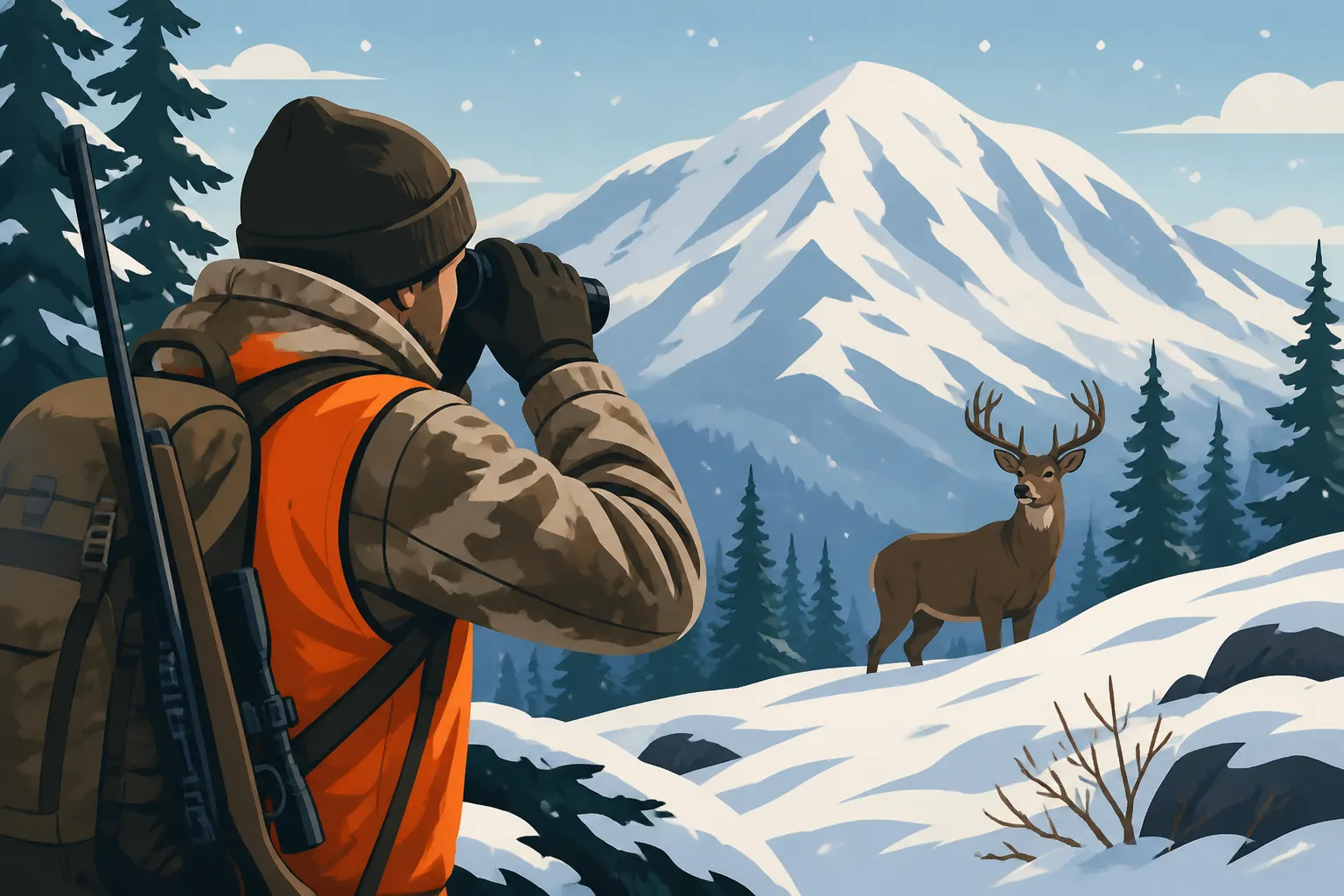
While deep timber requires still-hunting, open areas, burns, and south-facing slopes in snowy conditions are prime glassing territory. The stark white backdrop of snow provides an incredible contrast, making dark-colored animals like elk and deer stand out like magnets. However, it also demands high-quality optics and a methodical approach. A good pair of 10x or 12x binoculars, ideally mounted on a tripod for stability in the cold, is essential. For expansive country, a spotting scope can also be invaluable for picking apart distant hillsides.
Focus your glassing efforts on south-facing slopes, especially those with scattered timber or patches of exposed vegetation. These are the areas where animals will concentrate to feed and warm themselves. Start at the top of a slope and slowly work your way down, breaking the terrain into small, manageable grids. Look for anything that seems "out of place" – a horizontal line in a vertical forest, a darker patch that doesn't quite match the surrounding trees, or the tell-tale white of a deer's rump. The longer you glass, the more your eyes will adjust to subtle differences. Don't just scan; intensely scrutinize every tree, bush, and rock. GoHunt's mapping tools can be particularly useful here, allowing you to overlay topo maps with satellite imagery to identify south-facing slopes and potential bedding areas before you even step foot in the field, helping you prioritize your glassing locations. While often applied to different terrain, many of the techniques described in Glassing Breaks at First Light can be effectively adapted for snow-covered landscapes.
Navigating Road Closures and Walk-In Areas
Late-season often means locked gates and snow-choked roads. For many hunters, this is where the hunt ends. For the determined, it's where the real hunt begins. Areas behind closed roads or "Green Dot" road systems that are seasonally shut down often hold animals that have moved down from higher elevations, seeking refuge from both snow and human pressure. Accessing these areas requires a different kind of planning and effort.
You'll need to be prepared for longer pack-ins, often covering several miles just to reach huntable territory. This is where specialized winter travel gear becomes invaluable. Snowshoes are excellent for breaking trail in deep powder and for covering long distances efficiently. Cross-country skis can be even faster in certain conditions, allowing you to glide over snow instead of slogging through it. When choosing your mode of transport, consider the terrain; steep, brushy areas might favor snowshoes, while old logging roads could be perfect for skis. Be aware of private timber lands that also have gates and specific access rules; sometimes a Weyerhaeuser or Hancock permit is needed even for walk-in access. Always check the rules for any given area, as even "walk-in" might have specific regulations. Our guide on Walk-In Only Gates on Industrial Timber offers specific advice on how to navigate these often-tricky access points. The effort required is significant, but the reward of finding unpressured animals makes it truly worthwhile.
Specialized Tactics for Late Season Success
Beyond general strategies, specific tactics can significantly improve your chances of success during Washington's late-season snow hunts. These involve adapting your calling, understanding how snow funnels animals, and efficiently handling your harvest in challenging conditions.
Calling in Cold Conditions
While the boisterous bugling of the elk rut is a distant memory, calling can still be effective in the late season, though it requires a more subtle approach. Bulls, while often silent, can still be curious, especially if they are moving with cows. Soft cow calls, lonely mews, and subtle chuckles can sometimes pique their interest, drawing them closer to investigate. The key is to sound natural and unpressured. Over-calling or aggressive bugles are rarely productive. Sometimes, a quiet single cow call is all it takes to stop a moving animal or draw one out of thick cover.
For deer, late season can sometimes coincide with the tail end of the rut or secondary rut activity, particularly for whitetails in Northeast Washington. Subtle rattling of antlers or soft grunts can occasionally bring in a cruising buck looking for the last receptive doe. Again, don't overdo it. A short rattling sequence followed by grunts, then a long period of silence and observation, is often more effective than continuous noise. The cold, quiet air also means sounds carry further, so be mindful of your volume. For more on elk vocalizations, our article on Cow Calls That Pull a Bull Off His Herd provides excellent background, which can be adapted to late-season nuances.
Utilizing Natural Funnels and Bottlenecks
Snowfall, especially deep snow, can dramatically alter animal travel patterns, often concentrating them into predictable funnels and bottlenecks. This is a crucial advantage for the late-season hunter. Animals, seeking the path of least resistance, will follow drainages, ridge lines, saddles, and the edges of steep cliffs or dense timber. These natural corridors become high-traffic areas as animals move between bedding, feeding, and water sources.
Scouting for these funnels is best done from a distance, or on maps with good topographic detail. Look for narrow points in the landscape where animals would naturally be "pushed" through. A saddle connecting two ridges, a narrow creek bottom through thick brush, or a timbered finger extending into an open basin can all be prime locations. Set up your ambush point downwind, with good cover and visibility, allowing yourself time for a shot as animals move through. Consider where animals will likely enter and exit these funnels based on wind direction and time of day. This strategic placement, combined with patience, can often lead to success when other areas are barren.
Dealing with Quartering and Packing in Snow
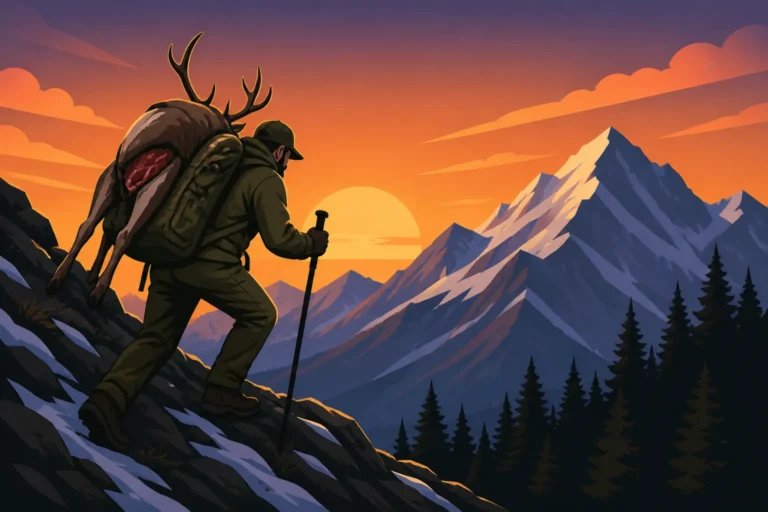
Harvesting an animal in snowy, cold conditions presents its own set of challenges, particularly when it comes to field dressing and packing out meat. While the cold temperatures are beneficial for cooling the meat quickly, keeping it clean is a primary concern. Snow can get into body cavities, and mud can cling to the hide. Many hunters opt for the gutless method in these conditions, which involves skinning and quartering the animal without opening the abdominal cavity, thus keeping the meat cleaner and eliminating the heaviest part of the animal from the pack.
Quality game bags are essential to protect the meat from snow, dirt, and scavengers. Once quartered, use your backpack's load shelf or a dedicated frame pack to transport the heavy quarters. In deep snow, a sturdy plastic sled or a game cart (if terrain and regulations allow) can be an absolute lifesaver for dragging heavy loads back to the road. This saves your back and makes multiple trips more efficient. Ensure you have proper lighting, like a powerful headlamp, if you anticipate packing out after dark. Remember, getting the meat off the mountain efficiently and cleanly is the final, crucial step in any successful hunt. Our comprehensive guide on Quartering and Packing an Elk Solo offers invaluable tips for managing this challenging but rewarding task.
Mental Toughness and Realistic Expectations
Late-season hunting in Washington's snow is not for the faint of heart. It demands a significant degree of mental toughness, a realistic understanding of the conditions, and unwavering persistence.
Managing Hypothermia Risk on a Wet Hunt
Hypothermia is a silent, insidious threat in cold, wet Washington conditions. It occurs when your body loses heat faster than it can produce it, leading to a dangerously low core body temperature. Early symptoms include shivering, confusion, slurred speech, and clumsiness. If left unchecked, it can be fatal. The best defense is prevention: dress in layers, avoid cotton, stay hydrated, and eat high-energy foods to fuel your internal furnace. If your clothes get wet, change into dry ones immediately.
If you or a hunting partner start showing signs of hypothermia, act quickly. Get out of the wind and rain, remove wet clothing, and replace it with dry layers. Share body heat if possible, and provide warm, sugary drinks. If the situation is severe, use your satellite communication device to call for help. Understanding the risks and having a plan to mitigate them is crucial for safe late-season hunting. Our article on Hypothermia Risk on a Wet Hunt delves into the specifics of recognizing and treating this serious condition.
Solo Hunting Safety Precautions in Winter
Many hunters cherish the solitude of a late-season solo hunt, but this also amplifies the risks. If you get injured or lost, there's no one immediately there to help. Therefore, heightened safety precautions are paramount. Never venture out solo without informing someone of your exact hunt plan, including your route, expected return time, and specific hunting unit. Carry a reliable satellite communication device for emergency contact.
Be brutally honest with yourself about your physical limits and skill level. Don't push too far into unknown or overly rugged terrain, especially late in the day. Always carry extra survival essentials – a fire starter, emergency shelter, extra food, and water. Make conservative decisions, especially regarding crossing swollen creeks or navigating steep, icy slopes. It’s always better to turn back and hunt another day than to take an unnecessary risk. Remember, the goal is to make it home safely, meat or no meat. For more essential advice, check out our guide on Solo Hunting Safety Precautions.
Patience and Persistence in Challenging Conditions
Let's be realistic: late-season hunting in snow is often tough. Animals are pressured, wary, and focused on survival. The weather can be brutal, and days are short. You will likely spend long hours in discomfort, see few animals, and question your sanity more than once. This is where patience and persistence become your greatest assets. Don't get discouraged by slow days or difficult conditions. Every day in the field, every track you follow, every ridge you glass, teaches you something new.
The rewards of a successful late-season hunt in the snow are immense, far beyond just the meat. It's the challenge, the grit, the profound connection with nature, and the sheer accomplishment of enduring and succeeding in the elements. Celebrate the small victories – a fresh track, a glimpse of distant game, a quiet moment in a snow-covered forest. Utilize all the available resources; platforms like GoHunt provide valuable draw odds, harvest reports, and mapping tools that can help you scout and plan, managing your expectations for specific units. Embrace the grind, stay positive, and remember that even an unsuccessful hunt is a successful adventure when you've given it your all and learned along the way.
Late-Season Hunting Gear Comparison: Mild vs. Snowy Conditions
Here's a quick comparison of how your gear choices might shift between a milder late season (perhaps early November with light snow) and a full-on snowy, cold late season (late November/December).
| Gear Category | Mild Late Season (Light Snow/Cold Rain) | Snowy Late Season (Deep Snow/Freezing Temps) |
|---|---|---|
| Outerwear | Waterproof/breathable shell, often uninsulated | Insulated, waterproof/breathable outer shell (e.g., puffy under shell) |
| Base Layers | Mid-weight merino or synthetic | Heavy-weight merino or synthetic |
| Mid Layers | Fleece jacket, light puffy vest | Thick fleece, insulated puffy jacket (down or synthetic) |
| Boots | Waterproof, 400g insulation, medium stiffness | Fully waterproof, 800g+ insulation, stiff sole, robust rand |
| Gaiters | Optional, good for wet brush | Essential, tall and durable for deep snow |
| Headwear | Beanie or ball cap, light gloves | Insulated beanie, balaclava, heavy waterproof gloves/mittens |
| Pack | Day pack with rain cover | Frame pack with waterproof dry bags/liner for meat and gear |
| Navigation | Phone app (onX), map, compass | Dedicated GPS, phone app (onX/GoHunt), map, compass, satellite communicator |
| Shelter | Small tarp or emergency bivy | Emergency bivy, space blanket, possibly small stove/hot tent |
| Fire Starter | Lighter, waterproof matches | Multiple lighters, ferro rod, fire paste, cotton balls/Vaseline |
| Footwear Spares | Extra socks | Multiple pairs of heavy socks, dry camp socks |
| Travel Aids | Trekking poles | Snowshoes or backcountry skis, trekking poles |
| Meat Care | Breathable game bags | Durable game bags, plastic sled/game cart (if permitted) |
Disclaimer
The information provided in this guide is for general informational purposes only and does not constitute professional advice. Hunting regulations, safety guidelines, and environmental conditions can change rapidly. Always consult the most current Washington Department of Fish and Wildlife (WDFW) regulations, local weather forecasts, and land management agency rules before embarking on any hunting trip. Hunting involves inherent risks, and hunters are responsible for their own safety and for adhering to all applicable laws and regulations.