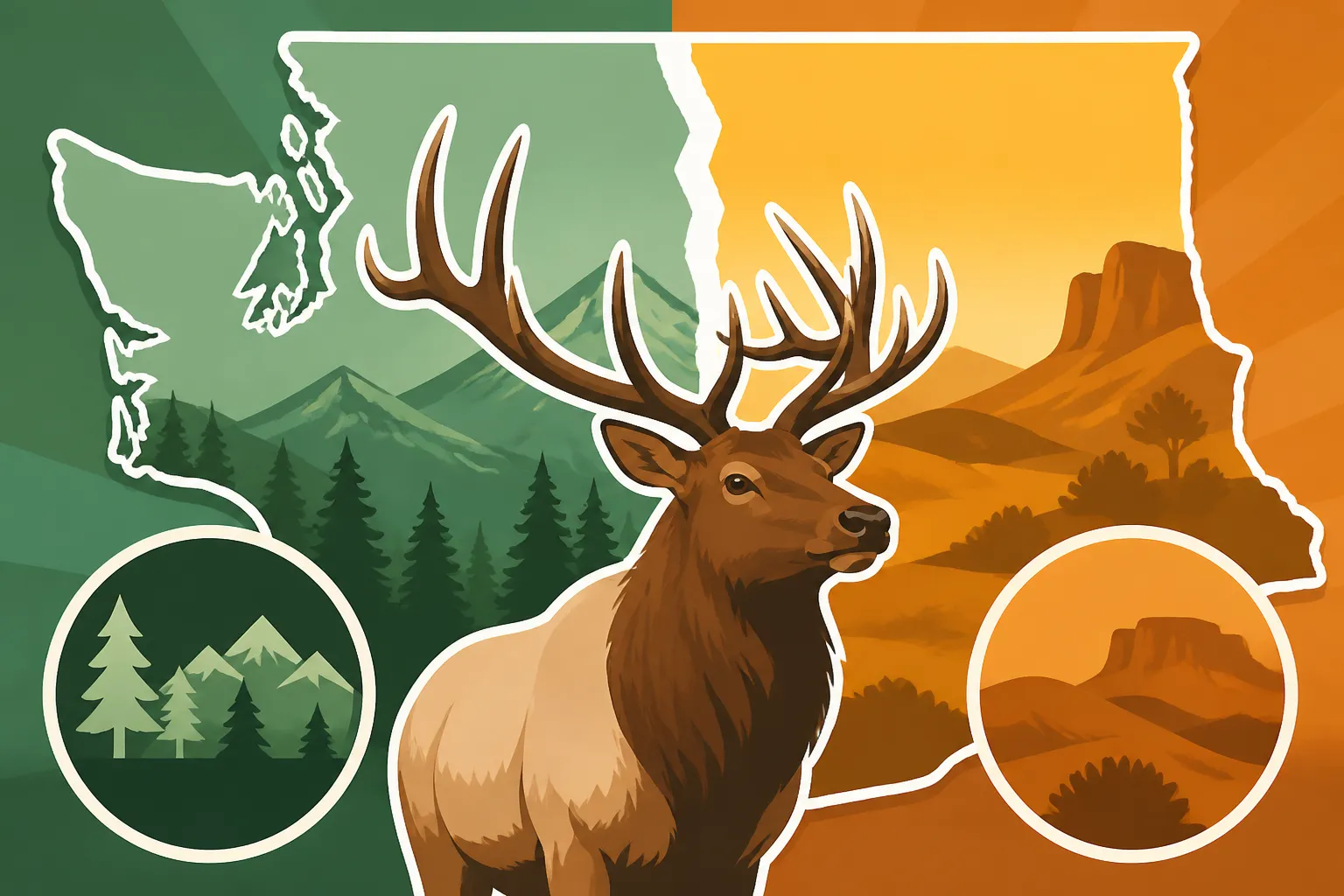
Declaring East or West Side on a Washington Elk Tag
It's a familiar knot in the stomach for any Washington elk hunter: that moment you have to declare "East Side" or "West Side" on your general season elk tag. This isn't just a casual choice; it’s a commitment that shapes your entire hunting season, determining where you can legally pursue those magnificent animals. Many hunters feel the pressure, knowing one wrong click can lock them out of prime hunting grounds or into an unfamiliar landscape. This guide will walk you through exactly what this declaration means, why it matters, and how to make the most informed decision for your next Washington elk hunt.
The Purpose Behind Washington's East/West Elk Divide
You might wonder why the Washington Department of Fish and Wildlife (WDFW) makes you choose between East and West. It’s not just to make things complicated, I promise. This system is rooted in the fundamental differences between Washington's two distinct elk subspecies and the varied landscapes they call home, as well as the overarching goal of responsible wildlife management. It’s about ensuring healthy herds and managing hunter distribution effectively across the state.
Managing Distinct Elk Populations
Washington is unique in that it hosts two primary elk subspecies: the Roosevelt elk on the west side of the Cascade mountain range and the Rocky Mountain elk to the east. These aren't just slightly different; they have evolved to thrive in vastly different environments, impacting their behavior, their size, and even their hunting dynamics. The WDFW has to manage these populations separately because their habitats, food sources, and even their social structures can vary quite a bit.
For example, our Roosevelt elk are creatures of the dense, wet forests of Western Washington, often found in thick timber or clearcuts, where visibility is limited and hunts are often up close and personal. They’re known for their impressive body size and wide, heavy antlers, perfectly adapted to crashing through the coastal rainforests. On the other hand, the Rocky Mountain elk of Eastern Washington inhabit more open country—think sagebrush flats, ponderosa pine forests, and steep mountain breaks. These elk often have taller, more symmetrical antlers and are frequently hunted by glassing vast landscapes from a distance. The east/west declaration allows the WDFW to set harvest guidelines and manage permits that specifically address the unique needs and health of each of these populations, preventing overharvest in one region while potentially allowing more opportunity in another. It’s a critical tool for species-specific conservation and population balance. You can dive deeper into the specifics of these majestic creatures by reading our guide on Washington Elk Herds and Where They Live.
Distributing Hunter Pressure and Opportunity
Another major reason for the East/West declaration is to manage hunter pressure and distribute opportunities fairly. Washington is a popular state for elk hunting, and without some form of division, certain easily accessible or historically productive areas could become severely overcrowded. Imagine hundreds of hunters converging on a single, prime elk unit; it wouldn't be good for the elk, and it certainly wouldn't be a quality experience for the hunters.
By requiring a declaration, the WDFW can better predict and control hunter numbers in specific regions. This helps to reduce overcrowding, improve the quality of the hunting experience, and minimize disturbance to the elk. For example, if too many hunters opted for a particular "general season" area on the East Side, the WDFW could theoretically adjust future permit allocations or season dates to maintain balance. It’s a balancing act between providing ample opportunities for hunters and safeguarding the health and long-term viability of our elk herds. This also ties into the larger scheme of how Washington General Season Versus Special Permit Hunts operate, as general season tags are more impacted by these broad declarations.
Geographically Defining East Side and West Side Elk Country
When WDFW talks about "East Side" and "West Side," they're not just talking generally; there’s a very specific geographic line that divides the state for elk hunting purposes. Understanding this boundary is crucial, as it dictates where your tag is valid and, consequently, where you can legally hunt. This division fundamentally changes the landscape, the type of elk you'll encounter, and the strategies you'll employ.
The Cascade Crest: Washington's Natural Divide
The primary geographical feature that serves as the dividing line for Washington's elk management is the crest of the Cascade Mountain Range. This isn't just an arbitrary line on a map; it's a significant ecological boundary that separates the wet, temperate rainforests of Western Washington from the drier, more open forests and shrub-steppe environments of Eastern Washington. Essentially, if you're west of the Cascade crest, you're in Roosevelt elk country. If you're east of it, you're in Rocky Mountain elk territory.
This crest runs roughly north to south through the middle of the state, passing through major mountain passes like Snoqualmie, Stevens, and White Pass. It's a rugged, often high-elevation landscape, and the GMU (Game Management Unit) boundaries are drawn accordingly. You absolutely must consult the official WDFW hunting regulations pamphlet or their online GMU maps to see the precise lines. Don't rely on general knowledge or assumptions; a map from a resource like GoHunt can be incredibly valuable for verifying these boundaries, especially when planning where to focus your efforts for E-Scouting Washington GMUs Before the Draw. Knowing which side of the crest a specific GMU falls into is the key to understanding if your chosen tag is valid there.
What an "East Side" Tag Unlocks
Choosing an "East Side" elk tag means you're committing to hunting Rocky Mountain elk in the more expansive, often drier, and rugged landscapes east of the Cascade crest. This region encompasses a vast array of terrain, from the high desert sagebrush and wheat fields of the Columbia Basin to the towering peaks of the Blue Mountains and the Okanogan Highlands. Think of the sprawling Colockum or Yakima units, known for their large Rocky Mountain Elk East of the Washington Cascades herds.
Hunting on the East Side often involves long hours of glassing open hillsides, canyons, and timbered draws. Shots can be considerably longer than on the West Side, making a well-practiced long-range shooting setup critical. Access can involve Forest Service roads, Bureau of Land Management (BLM) lands, and sometimes even private timberlands or farmlands with permission. Weather can be extreme, with hot, dry early seasons and bitterly cold, snowy late seasons. Packing out an animal here can mean navigating steep, exposed terrain, a significant challenge that requires proper gear and conditioning. This is where scouting techniques like Glassing Eastern Washington Breaks for Mule Deer can also be applied to elk.
What a "West Side" Tag Permits
Opting for a "West Side" elk tag means your hunt will be for Roosevelt elk within the lush, often rain-soaked, and densely forested regions west of the Cascade crest. This includes the coastal ranges, the Olympic Peninsula, and the western slopes of the Cascades. GMUs like Willapa Hills, Coweeman, or Skagit are classic examples of Western Washington Roosevelt Elk of Western Washington country.
Hunting here is generally a much more intimate affair. Visibility can be severely limited by dense timber, thick brush like salal and devil's club, and persistent fog or rain. Success often comes from still-hunting, tracking, and close-quarters encounters. Shots are typically closer, but getting an ethical shot through the vegetation requires patience and precision. Access often involves extensive logging road networks, much of which can be controlled by private timber companies such as Weyerhaeuser or Hancock, sometimes requiring permits. Weather is almost always wet and mild, demanding top-tier rain gear and a focus on staying dry and warm. The terrain, while not always as steep as the East Side, can be incredibly challenging with downed timber, slippery moss, and deep mud. Techniques like Still-Hunting Blacktails in Wet Washington Brush are very applicable to hunting Roosevelt elk.
The Process of Declaring Your Elk Tag Side
Making the choice between an East or West Side elk tag is a significant moment in your hunting season. It's not something you can easily change, so understanding the process and the finality of your decision is paramount. Many hunters have felt the sting of buyer's remorse when they realize they've locked themselves out of a promising opportunity simply by not paying close enough attention during the purchase.
When You Make This Critical Decision
The declaration for "East Side" or "West Side" elk occurs when you purchase your general season elk tag through the Washington Department of Fish and Wildlife (WDFW) licensing system. This usually happens online via your WILD account, or at an authorized license vendor. It’s part of the standard tag purchasing process, so it’s not a separate application. You'll typically be prompted to select your weapon choice (modern firearm, archery, or muzzleloader) and then, for elk, whether you intend to hunt East or West of the Cascades.
It's absolutely essential to be deliberate at this stage. Don't rush through the online forms or assume anything. Take a moment to review your selections before confirming the purchase. Many hunters purchase their licenses and tags months in advance, often right after the special hunt permit draw results are posted or even earlier. This gives them time to scout and plan, but also means their decision is set long before opening day. For those who hunt other species, remember that the choice made for your elk tag does not affect your deer tag, for instance. Each species tag may have its own specific requirements or declarations.
The Finality of Your Selection
Once you've purchased your general season elk tag and declared "East Side" or "West Side," that decision is generally final for that hunting season. The WDFW regulations are quite clear on this: your tag is valid only in the geographic region you selected. There is no provision for changing your mind halfway through the season or for swapping your tag from one side to the other. This means if you buy an East Side tag, you cannot legally hunt elk in a West Side GMU, and vice-versa.
This finality underscores the importance of proper research and planning before you buy your tag. It’s not just about picking a random side; it’s about committing to a specific hunting experience and landscape for the entire general season. Trying to hunt outside your declared area would be considered poaching, carrying severe penalties including fines, confiscation of equipment, and loss of hunting privileges. Always double-check your WDFW license details to ensure everything matches your intentions for the season.
Hunting Outside Your Declared Area: Legal Ramifications
Attempting to hunt elk in the side of the state you did not declare on your tag is a serious violation of Washington hunting regulations. This is not a minor infraction; it falls under the umbrella of unlawful hunting or poaching. The consequences can be significant and long-lasting, far outweighing any perceived benefit of trying to bend the rules.
Penalties typically include hefty fines that can range from hundreds to thousands of dollars, mandatory court appearances, and the potential for jail time. Furthermore, and perhaps most impacting for a dedicated hunter, you risk losing your hunting privileges for an extended period, possibly even for life. Your equipment, including your firearm or bow, optics, and vehicle, could also be confiscated. Wildlife enforcement officers are vigilant, and with modern technology like trail cameras and increased public awareness, the chances of being caught for unlawful hunting are higher than ever. Always carry your license and tag and be absolutely certain you are within the legal boundaries of your declared hunting area and chosen GMU. Resources like GoHunt's mapping layers can help ensure you're always on the right side of the line, literally and legally.
Strategic Considerations for Choosing Your Elk Tag Side
Deciding between an East Side or West Side elk tag isn't just about geography; it's about aligning your hunting goals, preferences, and capabilities with the realities of the landscape. There's no single "better" choice; the best option depends entirely on you. Thinking through these strategic points before you buy your tag can make all the difference between a frustrating season and a rewarding one.
Evaluating Your Hunting Style and Experience
Consider what kind of hunting you truly enjoy and what you're good at. Are you a patient still-hunter who excels at navigating dense timber, picking apart brushy hillsides for a subtle movement, and making a close-range shot? Then the West Side and its Roosevelt elk might be your calling. Hunting Roosevelt elk often involves pushing through thick vegetation, tracking in the wet forest, and being prepared for quick, close-quarter shots, as detailed in our guide on Blacktail Deer Hunting in Western Washington Timber – many of those techniques cross over.
Alternatively, do you prefer to cover vast distances with your binoculars, glassing open country from a vantage point, identifying distant animals, and executing strategic spot-and-stalk maneuvers across varied terrain? If so, the East Side and its Rocky Mountain elk might be a better fit. These hunts often involve longer hikes into remote areas, ranging significant distances with your rifle, and being prepared for longer shots across canyons or open slopes. Understanding your personal strengths and weaknesses as a hunter is the first step in making an informed decision.
Researching Unit Specifics and Hunting Opportunities
Beyond the general East/West divide, you need to drill down into specific Game Management Units (GMUs). Each GMU has its own unique characteristics: elk densities, harvest statistics, access challenges, and even local antler point restrictions (like those in Washington's Three-Point Minimum Units). It’s not enough to say "I'll hunt the East Side;" you need to know which unit within the East Side.
Start by poring over the WDFW hunting pamphlet for the current year. Look at general season dates, success rates for different weapon types in various GMUs, and any specific unit rules. Online resources are invaluable here. Websites and apps like GoHunt offer detailed mapping tools and data layers that show public land boundaries, historical harvest data, and even recent satellite imagery to help you scout from home. This e-scouting can save you countless hours in the field and give you a huge advantage when planning your hunt. Look at the data for both Roosevelt Elk of Western Washington and Rocky Mountain Elk East of the Washington Cascades. Consider whether you're interested in pursuing a Washington Multi-Season Deer and Elk Tags in the same unit if the opportunity allows, which can influence your broader season strategy.
When researching, also look at things like road access. Are there Green Dot roads for vehicle travel, or are large sections walk-in only? What are the public land percentages? Does the unit contain any designated wilderness areas, which prohibit motorized vehicles and wheeled carts, potentially making for a much tougher Pack-ing an Elk Out of Washington's Backcountry? All these details will influence not just your tag choice, but your entire hunting strategy.
| Feature | East Side Hunting (Rocky Mountain Elk) | West Side Hunting (Roosevelt Elk) |
|---|---|---|
| Primary Terrain | Open Ponderosa, Sagebrush, Mountain Breaks | Dense Timber, Rain Forests, Clearcuts |
| Typical Elevation | Higher elevations, often significant climbs | Lower elevations, coastal and foothills |
| Elk Subspecies | Rocky Mountain Elk (larger, often taller antlers) | Roosevelt Elk (bulkier body, wider antlers) |
| Hunting Style | Glassing, long-range spot-and-stalk | Still-hunting, tracking, ambush |
| Typical Shots | Longer ranges (150-400+ yards) | Shorter ranges (50-150 yards) |
| Dominant Weather | Drier, colder winters, hot/dry summers | Wet, mild winters, persistent rain/fog |
| Access Challenges | Forest Service roads, large private ranches | Extensive logging roads, timber company fees |
| Physical Demands | High (steep climbs, long walks, elevation) | High (thick brush, slick terrain, mud) |
| Key Gear | High-powered optics, long-range rifle, trekking poles | Quality rain gear, sturdy boots, sharp knife |
| General Season Dates | Typically later in fall | Often earlier, some late archery/muzzleloader |
Access, Terrain, and Logistical Challenges
The practicalities of hunting on either side of Washington are vastly different. Consider how you'll get to your hunting area, how you'll navigate the terrain, and how you'll pack out an animal.
Eastern Washington often presents vast tracts of public land (National Forests, BLM) but can also involve large private land holdings, especially in the agricultural areas. Access typically involves a network of Forest Service roads, though many are gated seasonally or permanently. The terrain is often steep, rocky, and can involve significant elevation changes. Carrying enough water in the dry early season is critical, and navigating deep snow in the late season can cut off access entirely. If you're planning to hunt in areas like the Blue Mountains or the Okanogan, expect serious elevation gains and potentially long pack-outs over rugged country. Always check current road closures and fire restrictions before heading out.
Western Washington, while offering some National Forest land, is largely dominated by private timber company lands. Gaining access often requires purchasing permits from companies like Weyerhaeuser or Hancock Forest Management, or hunting areas managed under WDFW access programs. Many of these areas are behind locked gates, making them walk-in only, which means longer treks. The terrain is relentless: steep, brushy, wet, and often covered in blown-down timber. Packing an elk out of this environment is a brutal chore, often involving slogging through mud and fighting through dense undergrowth. Rain is almost a given, so reliable rain gear and waterproof boots are non-negotiable. It’s also wise to research Washington Public Land Hunting: Forest, DNR and BLM for general access rules.
Ultimately, your choice should reflect a realistic assessment of what you're prepared for, both physically and in terms of the style of hunt you want to experience. Research, preparation, and honesty with yourself about your capabilities will lead to the most satisfying elk hunting season in Washington, no matter which side of the Cascades you choose.
Disclaimer
The information provided in this guide is for general informational purposes only and is not intended as legal advice. Hunting regulations and access rules in Washington are subject to change. Always consult the current Washington Department of Fish and Wildlife (WDFW) hunting regulations pamphlet and relevant land management agency rules before planning or embarking on any hunting activity. Failure to do so could result in fines, penalties, or loss of hunting privileges.