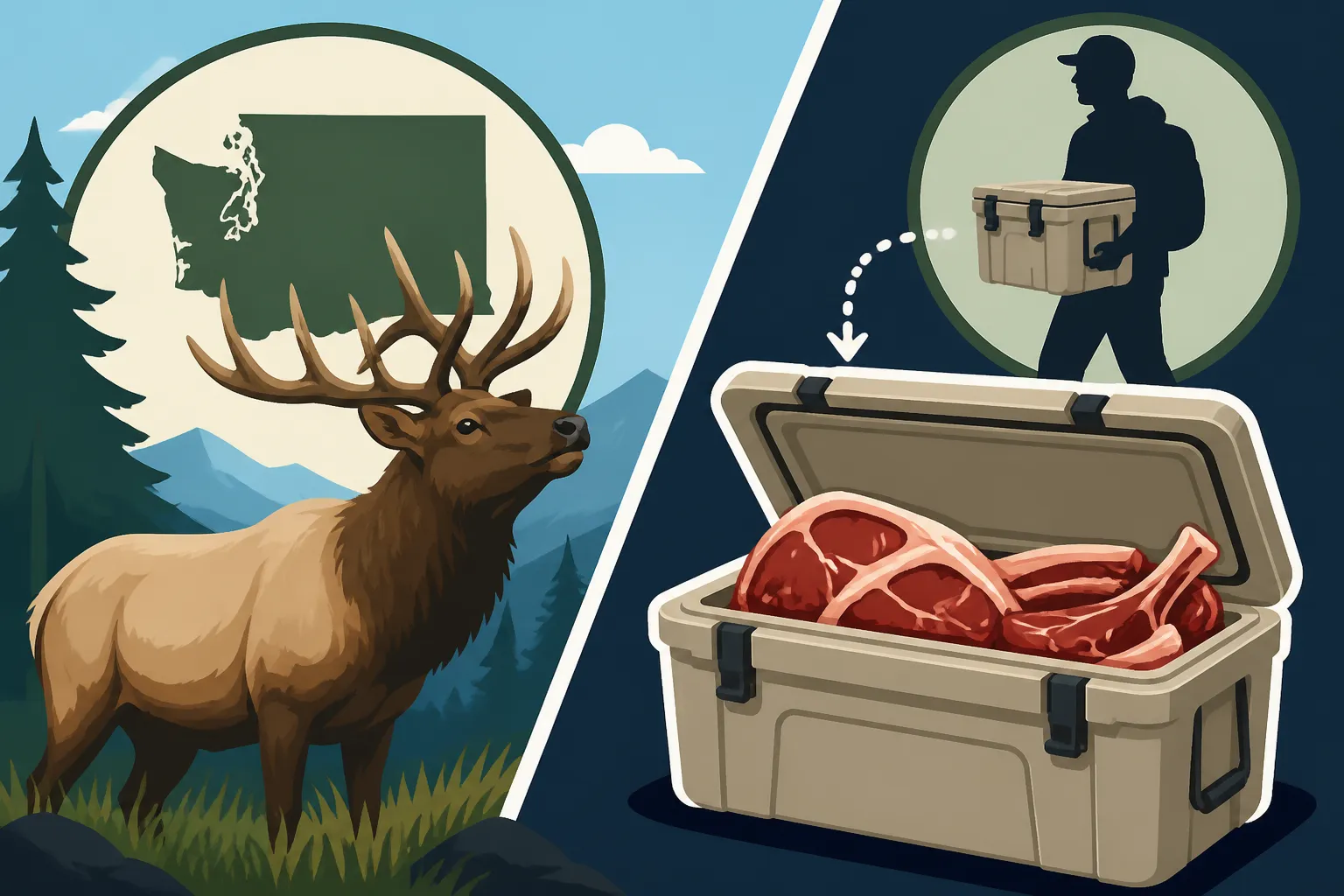
Cooler Size for a Bull Elk
You've just put in the hard work, the miles, and maybe even endured a few choice words aimed at a stubborn mountain, and finally, you've got your Washington bull elk on the ground. The rush is incredible, but then the practical side of the hunt kicks in: how on earth are you going to get all that magnificent meat home without spoiling it? One of the biggest hurdles many hunters face is simply having enough cooler space. This guide will walk you through calculating the right cooler size for your bull elk, ensuring your hard-earned harvest is preserved perfectly.
Understanding Elk Meat Yield from a Washington Bull
When you're dreaming of that freezer full of prime elk steaks, it's easy to underestimate the sheer volume of meat a bull elk provides. The reality is, a mature bull elk, whether it's a massive Rocky Mountain bull from Eastern Washington's Blue Mountains or a robust Roosevelt from the dense timber of the Olympic Peninsula, is a truly substantial animal. Their size directly dictates how much cooler space you'll need, and misjudging this can lead to serious headaches or, worse, spoiled meat.
First, let's talk about the difference between live weight, field-dressed weight, and actual meat yield. A bull elk can easily weigh anywhere from 600 to 900 pounds live weight, with some larger Roosevelt bulls pushing beyond that in certain areas. Once you've field dressed the animal, removing the guts, you're usually looking at a weight reduction of about 25-30%. So, a 700-pound live weight bull might be around 500 pounds field-dressed. However, that's still not the weight of the meat you'll be packing into coolers. The real variable here is whether you're going bone-in or boneless. If you're using the gutless method, which is often a lifesaver when you're packing an elk out of Washington's backcountry, you'll generally be removing the meat in larger, bone-in sections initially, but for long-term storage and easier transport, most hunters eventually debone.
When we talk about actual boneless meat yield, you can typically expect about 35-45% of the live weight to end up in your freezer, depending on the bull's condition, your processing precision, and whether you're including all the trim for burger. For a 700-pound live weight bull, that's roughly 245 to 315 pounds of boneless meat. That's a lot of protein! If you plan to keep some cuts bone-in (like the hindquarters for roasts or the backstraps with ribs attached), the volume requirement will increase even further. It’s critical to have a clear understanding of this yield before you even head out, so you can plan your cooler strategy effectively.
Calculating Cooler Capacity Needs for Your Elk Meat
Now that you have a ballpark idea of how much meat you'll be dealing with, the next step is to translate that into cooler capacity. This is where many hunters get stumped, trying to visualize a few hundred pounds of meat in terms of quarts or cubic feet. A common rule of thumb for cooler capacity when packing meat is to allow approximately 1 to 1.5 quarts of cooler space per pound of boneless meat. If you plan on keeping your meat bone-in, especially larger cuts like hindquarters or shoulders, you'll need significantly more space, perhaps closer to 2 quarts per pound, because the bone adds bulk without being edible meat.
Let’s run an example. Imagine you've harvested a 700-pound Rocky Mountain bull from the Yakima unit. You estimate you'll get about 300 pounds of boneless meat. Using our rule of thumb, you'd need roughly 300 pounds x 1.5 quarts/pound = 450 quarts of cooler space. That’s a substantial amount! But wait, there's a critical factor: ice. You can't just fill your coolers with meat; you need plenty of ice to keep that meat cold, especially if you're going to be driving for hours or if you plan on aging meat in a spare refrigerator before processing. Ice can easily take up 25-40% of your cooler's volume. So, you effectively need even more cooler space than just the meat's volume alone. Many veteran hunters often budget for 2 quarts of cooler space for every 1 pound of boneless meat, to comfortably account for both the meat and the necessary ice. Using this more generous figure, our 300-pound boneless yield would require closer to 600 quarts of cooler capacity. This might sound like an excessive number, but trust me, when you're looking at a mountain of fresh elk meat, you'll be thankful for every extra quart.
Types of Coolers and Their Practicalities for Elk Hunters
Choosing the right type of cooler for your Washington elk hunt isn't just about capacity; it's also about insulation, durability, and how well it will stand up to the rigors of the field. From high-performance rotomolded giants to more humble ice chests, each has its place, but not all are created equal when it comes to preserving hundreds of pounds of prime game meat.
High-Performance Rotomolded Coolers
These are the workhorses of the hunting world, designed for extreme durability and exceptional ice retention. Brands like YETI, RTIC, Orca, and many others have popularized the rotomolded cooler. They feature thick, insulated walls, heavy-duty latches, and gasketed lids that create an airtight seal, allowing them to keep ice for days, sometimes even over a week, depending on conditions. For a bull elk, you're likely looking at multiple large rotomolded coolers. A single 150-quart or 200-quart cooler is a great start, but you’ll probably need two or three of these to accommodate all the meat and ice from an entire bull elk. Their robust construction means they can take a beating, which is essential when loading them into truck beds, trailers, or even carrying them short distances from your vehicle. While planning your hunt, especially using tools like GoHunt for mapping or species information, don't forget the crucial post-harvest logistics, and the investment in quality coolers will pay off.
Standard Recreational Coolers
Coolers from brands like Igloo or Coleman are often more affordable and readily available. They serve well for weekend camping trips or carrying a few drinks, but their insulation and ice retention typically fall short for the demanding task of preserving an entire elk, especially in warmer early-season Washington weather. While you might be able to get by with several of these for a deer, a bull elk requires a higher level of performance. If these are your only option, you'll need a lot more of them, and you'll have to be much more diligent about replenishing ice and monitoring meat temperatures. They are prone to faster ice melt, which means more frequent trips for fresh ice, adding time and potential risk to your meat preservation efforts. However, they can still be useful for smaller, specialized cuts or as backup for overflow if you’re meticulous with ice management.
Specialized Meat Bags and Cooler Alternatives
Beyond traditional coolers, many hunters utilize specialized game bags (like those from Argali or KUIU) which are crucial for getting meat off the mountain cleanly, especially when employing methods like the gutless method on an elk. These bags protect the meat from dirt and flies and allow it to breathe, which is vital for initial cooling. Once the meat is quartered and bagged, it needs to be placed into coolers. For the initial cool-down or short-term transport before processing, some hunters even use large, insulated kill bags, like those from reliable brands, which can hold an impressive amount of meat and offer good insulation. These are often used in conjunction with traditional hard coolers. Regardless of your cooler choice, ensuring you have enough capacity and insulation to keep your meat cool on the drive home is paramount. You can even use scouting platforms like GoHunt to mark potential game processors or places to buy ice near your hunting unit.
Here's a quick comparison of cooler types:
| Cooler Type | Capacity Range (Typical) | Ice Retention (Days) | Durability | Cost (Relative) | Best Use Case for Elk Hunters |
|---|---|---|---|---|---|
| High-Performance Rotomolded | 50-250+ quarts | 5-10+ | Excellent | $$$$ | Primary storage for all elk meat; long drives, aging. |
| Standard Hard-Sided | 25-150 quarts | 2-4 | Good | $$ | Supplemental storage, smaller cuts, short distances, backup. |
| Insulated Kill Bag | 150-300+ quarts | 2-5 | Moderate-Good | $$$ | Initial field cooling, short-term transport from kill site to truck. |
| Soft-Sided/Collapsible | 10-50 quarts | 1-2 | Fair | $ | Small trim, bringing fresh ice to camp, overflow. |
Packing Strategies and Ice Management for Elk Meat
Having the right coolers is only half the battle; knowing how to pack them effectively and manage your ice is just as crucial. Proper packing can extend your ice life, prevent spoilage, and ensure your meat arrives at the processor or your home in pristine condition. This is especially true when facing Washington's varied weather, from warm early-season openers to frigid late-season hunting in Washington snow.
The first step, even before you head out on your hunt, is to pre-chill your coolers. A cooler that starts at ambient air temperature will melt ice much faster than one that's already cold. Load your empty coolers with a sacrificial bag of ice the night before your hunt, or at least several hours beforehand. This cools down the cooler's insulation, making it more efficient when you load your precious cargo.
Once you have your elk quartered and in game bags, which is critical for hygiene and cooling, the goal is to get that meat cooled down as rapidly as possible. Whether you're using the gutless method or traditional quartering, ensuring the meat is off the bone and exposed to air will help it cool quicker. For more details on this, check out our guide on Field Dressing in Warm Early-Season Weather. Once the meat is in your coolers, layer it strategically with ice. Don't just dump ice on top; try to create layers of meat and ice so that cold is distributed evenly. Block ice melts slower than cubed ice, making it a superior choice for long-term cooling. Many hunters will freeze gallon jugs of water to use as block ice; these have the added benefit of providing potable water as they melt, or simply less messy frozen blocks that can be refrozen. Remember, you can read more about Getting Meat Off the Mountain Before Dark to ensure optimal initial cooling.
As the ice melts, water will accumulate in the bottom of your coolers. While some cold water on the meat isn't immediately detrimental, prolonged submersion in standing water can lead to "waterlogging" and negatively impact meat quality. Most high-performance coolers have drain plugs, and it’s a good practice to drain off meltwater periodically. This also allows the remaining ice to work more efficiently. However, be cautious not to drain all the cold water if you're low on ice, as the cold water itself provides some cooling.
Finally, think about your transport. For longer drives home from, say, the Colockum elk herd area, consider securing your coolers in the coolest part of your vehicle, perhaps under a tonneau cover or even inside the cab if space allows. Avoid direct sunlight as much as possible. When you arrive home, even if you plan on Finding a Processor in Hunting Season, get that meat into another cold environment immediately. Transfer it to a walk-in cooler, a spare refrigerator for Aging Meat in a Spare Refrigerator, or straight to a local processor. GoHunt often highlights the importance of being prepared for every stage of a hunt, and that absolutely includes meat care from the moment of harvest until it's in your freezer. Don't let your incredible effort go to waste because of poor cooler planning!
Disclaimer
This information is for educational purposes only and should not be considered legal advice. Always consult the current Washington Department of Fish and Wildlife regulations and local laws before planning or engaging in any hunting activities. Hunting can be dangerous, and proper safety precautions, training, and equipment are essential.