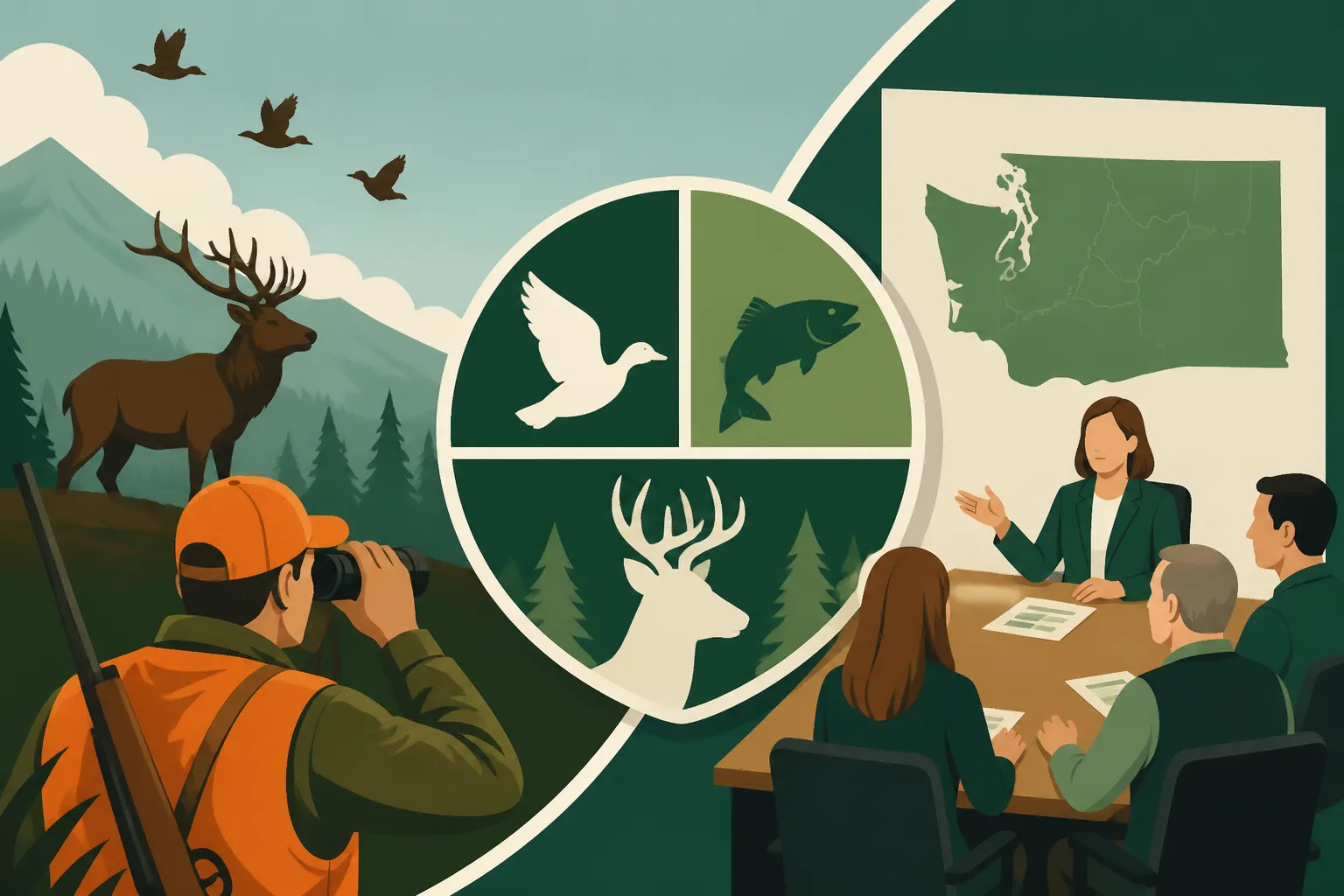
Washington Fish and Wildlife Commission Rule Meetings
As a Washington hunter, it can feel like the ground is constantly shifting under your feet. One season you're planning your dream hunt, the next there's a new regulation, a season closure, or a permit change that throws everything off. This often happens because the Washington Fish and Wildlife Commission is busy at work, shaping the future of hunting and fishing in our state. This guide will demystify their rule-making meetings and show you how to stay informed and even influence these critical decisions.
Understanding the Washington Fish and Wildlife Commission's Role
The Washington Fish and Wildlife Commission (WFWC) is a nine-member citizen board appointed by the Governor. They serve as the policy-making body for the Washington Department of Fish and Wildlife (WDFW), which is the state agency responsible for implementing those policies. Think of them as the ultimate decision-makers for how hunting, fishing, and wildlife management happen across our beautiful state. It's a huge responsibility, and their decisions directly impact everything from when you can hunt deer in the Washington Modern Firearm Deer Seasons to how many elk tags are available in the Blue Mountains.
This commission doesn't just rubber-stamp WDFW proposals. They hold public meetings, consider scientific data, listen to stakeholder input – that's us, the hunters, anglers, and conservationists – and then vote on rule changes. These changes can cover a vast array of topics, including season dates, bag limits, weapon restrictions, new hunting areas, or even modifications to existing ones. Their authority is broad, and understanding their function is the first step in comprehending why our hunting landscape shifts.
It’s easy to feel disconnected from these high-level decisions, especially when you’re just trying to figure out if you can even get a tag this year. But these meetings are where the framework for every hunt in Washington is built, debated, and ultimately approved. They also weigh in on significant issues like wildlife disease management or critical habitat protection, all of which indirectly affect herd health and hunting opportunities down the line. It's not just about setting dates; it's about charting the course for Washington's wildlife for years to come.
Why These Meetings Are Crucial for Washington Hunters
If you've ever found yourself scratching your head at a sudden season change, a new restriction on a beloved hunting area, or a shift in tag allocations, chances are it originated in a Commission meeting. These gatherings are not just formalities; they are the crucible where the future of Washington hunting is forged. For us on the ground, missing out on what's happening at this level means potentially being blindsided by regulations that can drastically alter our hunting plans and opportunities.
For instance, consider the process of setting seasons and tag numbers. The WDFW staff collects data on herd populations, habitat conditions, and harvest success, then develops proposals. These proposals go before the Commission, where they can be debated, modified, or even rejected. If you’re tracking a specific GMU for Washington General Season Versus Special Permit Hunts, knowing what's being discussed can give you a significant head start in your planning. Imagine spending months scouting a unit only to find out the season dates have changed, or it's now a spike-only unit when you were hoping for a branch-antlered bull. This kind of information is invaluable.
The Commission also handles larger, multi-year policy initiatives, such as the Washington Three-Year Rule Package Cycle. These packages can introduce significant, sweeping changes to hunting regulations that impact entire species or regions for an extended period. Staying informed through the Commission meetings allows you to see these long-term shifts coming and adapt your strategies. Whether it's changes to Washington's Weapon Choice Rule for Deer and Elk or alterations to Washington Wildlife Area Rules, these decisions directly shape our access and methods. Tools like GoHunt can be incredibly useful for researching these changes and their historical context, helping you understand the implications for your own hunting grounds.
How to Participate and Make Your Voice Heard
Many hunters feel like their concerns don't reach the ears of decision-makers, and it's a valid frustration. The good news is, the Washington Fish and Wildlife Commission actively solicits public input, and there are several ways you can participate to ensure your perspective is considered. Your voice truly matters, especially when commissioners are deliberating on controversial or impactful rule changes.
Submitting Written Comments
One of the easiest and most effective ways to provide input is through written comments. For every proposed rule change or policy decision, the Commission opens a public comment period. This allows you to articulate your thoughts, concerns, or support for a particular proposal. You can submit these comments via email, through online forms on the WDFW website, or even via traditional mail.
When you're submitting comments, it's best to be clear, concise, and respectful. State your position, explain why you hold that position (e.g., how a particular rule change would impact your ability to hunt safely or successfully, or how it might affect wildlife populations in your experience), and offer constructive suggestions if possible. For example, if a proposal impacts access to a specific area because of a new road closure, you could explain how that closure would limit opportunities for elderly hunters or those with disabilities, or suggest alternative access points. Making your comments personal and specific to your experiences as a Washington hunter often resonates more than generic complaints. Keeping an eye on the WDFW website for upcoming meeting agendas and proposed rule changes is key to knowing when to submit.
Attending and Testifying at Public Meetings
If you want to take your involvement a step further, consider attending Commission meetings in person or virtually. The WFWC typically holds monthly meetings, often rotating locations around the state to allow different communities to participate, though many meetings also have a virtual option. Attending in person allows you to engage directly with the commissioners and WDFW staff, and to hear the full breadth of public opinion. Testifying during the public comment portion of a meeting provides an opportunity to speak directly to the Commission.
When testifying, aim for brevity and focus on your key points, as time is usually limited (often 2-3 minutes per person). Prepare what you want to say in advance, and again, be specific about how a proposed rule affects you or the hunting community. For example, if they're discussing changes to Washington's Multi-Season Deer and Elk Tags, you could explain your experiences using the current system and how proposed changes might improve or hinder your hunting success. Even if you can't attend, watching the meetings online can be incredibly enlightening, helping you understand the diverse viewpoints and the complex factors that influence decisions. This direct engagement can truly make a difference, especially when a significant number of hunters voice similar concerns or support. This process is essential for Commenting on a Washington Hunting Rule.
The Rule-Making Timeline and What to Expect
Navigating the rule-making process can feel like deciphering a secret code, but once you understand the basic timeline, it becomes much easier to track and participate. The process isn't always linear, and sometimes unforeseen circumstances like Washington Emergency Season Closures can fast-track or delay decisions, but generally, there's a predictable flow.
Annual Rule-Making Cycle
The WDFW operates on a fairly consistent annual cycle for establishing hunting seasons and regulations. Typically, proposals for the upcoming hunting seasons, including everything from general deer and elk seasons to specific special permits, begin to take shape in the late fall and winter of the year prior to the seasons they affect. For example, discussions and proposals for the 2025 seasons would likely begin in late 2024. This early start allows time for biological review, public input, and multiple Commission meetings.
Throughout the winter and early spring, WDFW staff present various options to the Commission, often called "alternatives." These alternatives are based on biological data, hunter harvest reports (which is why submitting your Washington Harvest Reporting Requirements is so important!), and input from advisory groups. This is a critical period for hunters to pay attention, as it's when the foundation of the upcoming seasons is laid. You'll often see initial proposals that might be refined several times before a final vote. Keeping an eye on the WDFW website and using resources like GoHunt to track proposals can help you anticipate what's coming.
Key Milestones and Decision Points
The Commission will typically hold several meetings dedicated to hunting season proposals. Here’s a general overview of the milestones:
| Milestone | Typical Timeframe | Description |
|---|---|---|
| Initial Briefing | Late Fall/Early Winter | WDFW staff introduce initial data, herd status, and potential season setting challenges to the Commission. Public input is usually informal. |
| Proposed Rules Released | Early Spring | Specific rule change language and season options are published. This marks the beginning of formal public comment periods. |
| Public Hearings | Mid-Spring | Dedicated meetings or portions of meetings where the public can provide formal oral testimony on proposed rules. |
| Commission Vote | Late Spring | The Commission reviews all input and proposals, debates any modifications, and takes a final vote to adopt the hunting seasons and rules. |
| Regulation Pamphlet Release | Late Spring/Early Summer | The official Washington Big Game Pamphlet Release is published, detailing all adopted seasons and rules. |
Once the Commission votes, the rules are officially adopted and will be published in the annual hunting pamphlet. This often happens by late May or early June, giving hunters a few months to finalize their plans for the fall. It's important to remember that sometimes, a particularly contentious issue might see a proposal delayed or sent back for more work. This process, while sometimes slow, ensures that a wide range of factors are considered, even if the final outcome isn't always what every individual hunter hoped for. Understanding these steps empowers you to engage strategically and effectively, rather than just reacting to the final outcome.
Conclusion
The Washington Fish and Wildlife Commission rule meetings are far more than just bureaucratic gatherings; they are the bedrock upon which all our hunting seasons and opportunities are built. While it can feel overwhelming to keep up with every proposed change, understanding the Commission's role, why these meetings are so critical, and how to effectively participate can empower you as a hunter. Your input helps shape the future of wildlife management in Washington, ensuring that decisions are well-informed and reflect the values and experiences of those who cherish our state's wild places and game species.
Disclaimer
Please remember that hunting regulations, season dates, and access rules in Washington State can change. Always consult the official Washington Department of Fish and Wildlife (WDFW) regulations pamphlet and website for the most current and accurate information before planning any hunting trip. This guide is for informational purposes only and should not be considered legal advice.