Mule Deer Numbers in Eastern Washington
It can be incredibly frustrating to head out to your favorite Eastern Washington mule deer spot, only to find the numbers aren't what they used to be, or conversely, to miss out on a prime area because you didn't know the herd was thriving. Understanding the intricate dance of mule deer populations in this diverse landscape is key to consistent success, and this guide is here to shed light on exactly what influences these majestic animals and how you can adapt your approach.
The Current State of Eastern Washington Mule Deer Populations
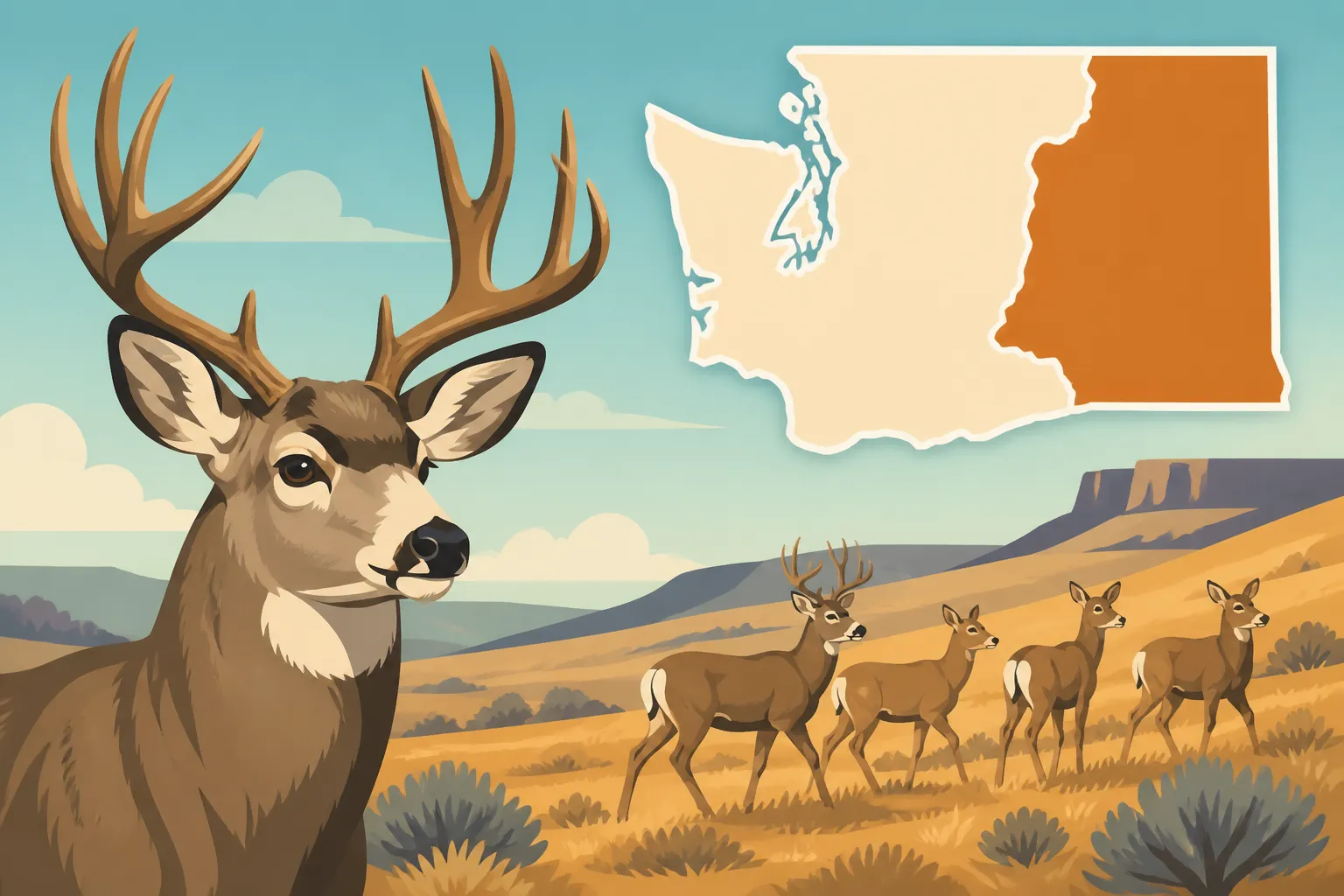
Mule deer in Eastern Washington are a true icon of the shrub-steppe, timbered draws, and rolling hills east of the Cascades. But their populations aren't static; they ebb and flow with a complex interplay of environmental factors and management decisions. For those of us who cherish chasing these big-eared bucks, keeping a pulse on their numbers is crucial.
Overall Population Trends and Recent Surveys
Generally speaking, mule deer numbers in Eastern Washington have seen their ups and downs over the past few decades. While some areas might show stable or even slightly increasing trends, others have experienced significant declines due to various pressures. The Washington Department of Fish and Wildlife (WDFW) works hard to monitor these populations, primarily through methods like aerial surveys, often conducted in late winter or early spring when deer are concentrated on winter range, and pellet group counts which provide an index of deer density in specific habitats. These surveys help wildlife managers estimate overall herd size, assess herd health, and track crucial metrics like fawn-to-doe and buck-to-doe ratios.
For instance, after a series of mild winters, you might see a rebound in fawn survival, leading to a bump in overall numbers a few years down the line. Conversely, a particularly harsh winter or widespread habitat disturbance can set a herd back. Hunters often feel this firsthand; a season where you're seeing bucks everywhere is usually a lagging indicator of good fawn recruitment years prior. It’s a dynamic system, and while WDFW aims for stability, nature always has the final say. Keeping tabs on these reports, often available through WDFW’s annual game pamphlets and website, is a smart move for any dedicated hunter.
Regional Differences Across Eastern Washington GMUs
Eastern Washington is a vast and varied landscape, and mule deer populations reflect that diversity. What's happening in the Okanogan Highlands might be entirely different from the conditions in the Blue Mountains or the Columbia Basin. Some Game Management Units (GMUs) are historically known for robust mule deer populations, while others are more marginal. For instance, areas like the Okanogan Unit Mule Deer Country, Methow, or Chelan units often hold good numbers, benefiting from a mix of forest and shrub-steppe habitat, as well as a legacy of mule deer presence. These regions tend to have more consistent winter range and less fragmented habitats, which are critical for supporting larger herds.
On the other hand, GMUs in the drier, more agricultural Columbia Basin, while they might hold some impressive bucks, generally have lower overall densities. Here, deer rely heavily on pockets of riparian habitat, uncultivated draws, and edges of wheat fields. Access can also be a significant factor, with more private land complicating hunting efforts. Even within a larger region, microclimates and specific habitat conditions can lead to pockets of higher or lower deer density. Using resources like GoHunt or other mapping tools can help you understand public land boundaries and identify potential hotspots within various units, allowing you to tailor your scouting efforts more effectively.
Key Factors Influencing Mule Deer Numbers
Mule deer are incredibly resilient creatures, but their populations are constantly being shaped by a handful of powerful forces. Understanding these elements isn't just academic; it's vital intelligence for anyone hoping to successfully hunt them year after year.
Habitat Quality and Loss
When we talk about mule deer, habitat is everything. These animals need specific types of forage, cover, and water sources throughout the year. Their winter range, often lower elevation shrub-steppe, is absolutely critical. If mule deer can't access enough good quality browse during the cold months, they enter spring in poor condition, which directly impacts fawn production and survival. Similarly, their summer range in higher elevation forests and aspens provides crucial nutrition for antler growth and fawn rearing. The migration corridors between these seasonal ranges are equally important. When these corridors are fragmented by development, highways, or fences, deer are forced into suboptimal routes, increasing their energy expenditure and exposure to predators.
Unfortunately, habitat loss and degradation are ongoing challenges. Human encroachment, expanding agriculture, and changes in land use patterns chip away at vital deer country. While wildfires can initially be devastating, in the long term, they can sometimes create beneficial new growth for deer if managed properly. However, intense, large-scale fires can wipe out critical winter range or summer forage for years. WDFW, along with various conservation groups, invests heavily in habitat restoration projects, from reseeding bitterbrush and sagebrush to enhancing riparian areas. These efforts are crucial because without quality habitat, mule deer simply can't thrive, no matter how many other factors align.
Predation and Disease
Nature is a harsh mistress, and predation plays a significant role in mule deer population dynamics. Cougars are apex predators of deer, and their populations, particularly in areas with good deer numbers, can exert considerable pressure, especially on fawns and vulnerable adults. While coyotes rarely take down healthy adult mule deer, they are highly effective at preying on fawns, particularly during their first few weeks of life. And of course, in parts of Eastern Washington, the re-establishment of wolf packs adds another layer of predation pressure. The balance here is delicate; too many predators can depress deer numbers, but a healthy predator-prey relationship is also a sign of a functioning ecosystem.
Disease can also be a silent killer. While Washington has thankfully not yet detected Chronic Wasting Disease (CWD) in its deer herds, it's a constant threat and a major concern for wildlife managers. Other diseases, like Epizootic Hemorrhagic Disease (EHD), periodically occur, especially in warmer, drier years, leading to localized die-offs. Hunters need to be vigilant; if you see a deer acting strangely or looking emaciated, it's important to report it to WDFW, as this aids in their Washington Wildlife Disease Surveillance efforts. While individual hunters can't control disease outbreaks, understanding their potential impact helps explain population fluctuations.
Weather and Environmental Conditions
If there's one thing that can swing mule deer numbers dramatically, it's the weather. Eastern Washington experiences wide climatic variations, from scorching, dry summers to brutal, snowy winters, and each extreme has consequences. A severe winter, especially one with deep, persistent snowpack that limits access to forage, can lead to significant winter kill, particularly among fawns and older does. Deer deplete their fat reserves trying to survive, and many simply don't make it to spring. When a winter is tough, the ramifications can be felt for years, impacting fawn recruitment and overall herd growth.
Conversely, mild winters can be a boon, allowing more deer to survive and enter spring in better condition, leading to higher fawn survival rates. But even good conditions have their limits. Prolonged drought during the summer can reduce forage quality and availability, especially for lactating does, which in turn affects fawn growth and survival. A dry summer followed by a harsh winter creates a deadly one-two punch for deer. Think back to 2017, when a terrible winter led to significant mule deer losses in certain areas of the state. These events are a stark reminder of how interconnected mule deer health is with the environment. Checking long-term weather forecasts and understanding how past seasons might affect the upcoming hunt is crucial.
Understanding Mule Deer Dynamics: Fawn Recruitment and Buck Ratios
Beyond just raw numbers, understanding the health and potential growth of a mule deer herd requires a closer look at key demographic indicators: fawn recruitment and buck-to-doe ratios. These aren't just statistics; they tell the story of a herd's vitality and future.
The Critical Role of Fawn Survival
If you want to know how a mule deer population is doing, look at its fawns. Fawn recruitment—the number of fawns that survive to their first winter per 100 does—is the absolute bedrock of herd growth. Without a consistent influx of new, young deer, a population cannot sustain itself, let alone expand. Factors like predator density, forage quality, and the severity of the previous winter all play monumental roles in how many fawns make it through their first perilous months. If does enter the fawning season in poor condition due to a tough winter, they might have weaker fawns, or fewer of them, reducing their chances of survival.
Predation pressure during the fawning period is immense. Newborn fawns are incredibly vulnerable, relying on their camouflage and their mother's vigilance to evade coyotes, cougars, and even bears. A high fawn recruitment rate, typically above 60-70 fawns per 100 does, indicates a healthy, growing population. If these numbers dip significantly, it's a red flag that the herd is either shrinking or struggling to replace itself. As hunters, we might not always see fawns during our hunts, but knowing that their survival ultimately dictates the number of bucks available in future years gives us a deeper appreciation for the complex ecosystem we hunt in.
Buck-to-Doe Ratios and Management Goals
While fawn recruitment tells us about the future, buck-to-doe ratios tell us about the present hunting opportunity and the overall balance of the herd. This ratio, often expressed as the number of bucks per 100 does, is a key management metric for WDFW. In general season hunts, WDFW aims to maintain a healthy buck population to ensure genetic diversity and breeding success, while also providing reasonable hunter opportunity. If the buck-to-doe ratio drops too low, it can indicate overharvest or other pressures on the buck segment of the population, potentially impacting breeding efficiency.
Conversely, a very high ratio might suggest less hunting pressure on bucks or exceptionally good survival. For quality hunts, WDFW often manages for higher buck-to-doe ratios, sometimes through special permit draws or antler restrictions, like the three-point minimum units found in some areas. A balanced ratio ensures that there are enough mature bucks in the population to fulfill their reproductive role and provide exciting hunting experiences. Hunters often gauge a unit's potential by researching these ratios; a unit with a strong buck-to-doe ratio often means a better chance of encountering mature animals. This data can often be found in WDFW hunt planning materials, which can be invaluable when you're looking to apply for Washington Special Hunt Permits and How to Apply.
Impact on Hunting Strategy and Success
Understanding mule deer numbers and the factors affecting them isn't just for wildlife biologists; it's a crucial component of any successful hunting strategy. The more informed you are, the better you can adapt your approach and increase your odds.
Adapting to Fluctuating Populations
Let's be real, going into a hunt with outdated information is like bringing a knife to a gunfight. If the mule deer numbers in your favorite Eastern Washington GMU have taken a hit due to a harsh winter or increased predation, simply showing up with the same old plan isn't going to cut it. You need to adapt. This might mean adjusting your expectations – perhaps focusing on finding a single mature buck instead of seeing dozens of deer. It could also mean changing your hunting style entirely, moving from wide-open glassing to more intensive still-hunting in thicker cover, or even scouting a different unit altogether if your research suggests better prospects elsewhere.
Flexibility is your greatest asset. Use tools like the WDFW Hunt Planner and combine it with platforms like GoHunt that integrate various data points, including harvest statistics and herd trends, to get the most current picture. If a specific area had poor fawn recruitment a few years ago, the number of two-and-a-half-year-old bucks (which make up a significant portion of the harvest) might be lower. Knowing this ahead of time can inform whether you apply for a special permit in that unit or focus on general season opportunities in a different area. Don't be afraid to put in the time for E-Scouting Washington GMUs Before the Draw to truly understand the landscape before you even set foot in the field.
Best Practices for Locating Mule Deer
Regardless of population size, there are timeless strategies for finding mule deer in Eastern Washington. Glassing remains paramount. These animals often blend seamlessly into their environment, and powerful optics are your best friend. Get to a vantage point before first light and spend hours systematically picking apart the landscape. Focus on north-facing slopes, edges of timber, and areas where open sagebrush transitions into more broken terrain. Knowing how to effectively use your binoculars and spotting scope can make all the difference, particularly when you're Glassing Eastern Washington Breaks for Mule Deer.
During the early season, mule deer might still be higher up, utilizing cooler timbered areas and seeking out green feed. As the season progresses and temperatures drop, they'll often move toward lower elevation winter ranges, which become critical areas for concentration. Pay close attention to subtle changes in topography, small pockets of aspens, or even isolated wheat stubble edges that offer both food and cover. Understanding Mule Deer Winter Range and Survival is key, as deer will predictably gravitate to these areas as snow begins to fall. In regions with significant agricultural influence, don't overlook Finding Mule Deer in Wheat Stubble Edges, especially at dawn and dusk. Also, pay attention to the Reading a Washington GMU Boundary, as deer often use these lines for security or movement.
Here's a quick comparison of general mule deer conditions across a few Eastern Washington GMUs:
| GMU/Region | Primary Habitat | General Population Trend | Key Challenges | Hunting Strategy Focus |
|---|---|---|---|---|
| Okanogan | Forest, Shrub-steppe | Stable to Increasing | Predation, occasional harsh winters | High elevation early, transition to draws |
| Blue Mountains | Forest, Timbered canyons | Stable | Winter range, limited access | Spot & stalk, focusing on timbered slopes |
| Columbia Basin | Shrub-steppe, Agriculture | Localized fluctuations | Habitat fragmentation, dry conditions | Glassing edges, identifying water sources |
| Colockum | Shrub-steppe, Forested ridgelines | Stable | Winter range, competition with elk | Accessing remote draws, understanding migration |
Future Outlook and Conservation Efforts
The future of mule deer hunting in Eastern Washington hinges on effective management and the dedicated efforts of both state agencies and passionate individuals. It’s not just about today’s hunt, but ensuring these opportunities exist for generations to come.
WDFW Management Strategies
The Washington Department of Fish and Wildlife (WDFW) plays the lead role in managing mule deer populations. Their strategies are multifaceted, designed to maintain healthy herds while providing sustainable hunting opportunities. This involves setting harvest quotas based on population assessments, adjusting season dates, and implementing specific rules like antler point restrictions in certain GMUs to protect younger bucks and allow them to mature. WDFW also works tirelessly on habitat improvement projects. This can range from prescribed burns to enhance forage, to planting native shrubs in degraded areas, to partnering with private landowners to improve winter range.
Predator management is another complex but essential component, particularly where local predator populations might be impacting deer fawn survival. WDFW strives for a balanced approach, recognizing the ecological role of predators while also ensuring that deer herds are not unduly suppressed. They continually analyze data on How WDFW Counts Big Game and adjust their strategies. As hunters, staying informed about these management decisions, attending public meetings, and providing thoughtful comments on proposed rule changes are vital ways we can contribute to the future of Washington hunting.
How Hunters Can Contribute to Conservation
Hunting isn't just a pursuit; it's a profound connection to the landscape and a powerful force for conservation. As mule deer hunters, we have a critical role to play in ensuring the health and abundance of these animals. First and foremost, timely and accurate harvest reporting is paramount. Every hunter’s harvest report provides WDFW with invaluable data that directly informs population models and future management decisions. Missing your Washington Harvest Report Deadline not only incurs penalties but, more importantly, creates gaps in crucial data.
Beyond reporting, consider supporting conservation organizations that are actively working on mule deer habitat and research. Groups like the Mule Deer Foundation, Rocky Mountain Elk Foundation, and Washington Backcountry Hunters & Anglers often run projects specifically aimed at improving habitat, securing access, or funding research that benefits mule deer. Simply put, these organizations turn your membership dues and donations into boots-on-the-ground work that helps deer thrive. Participating in volunteer work parties to improve winter range or clean up public lands is another fantastic way to give back. By being responsible, ethical, and engaged hunters, we become true stewards of Washington's incredible mule deer heritage.
Disclaimer
Please note that hunting regulations, seasons, and access can change. Always consult the most current Washington Department of Fish and Wildlife (WDFW) hunting regulations pamphlet and check for emergency rule changes before planning any hunt. This guide is for informational purposes only and should not replace official WDFW resources.