Washington DNR Recreation Passes
Navigating Washington's vast public lands for hunting can feel like a maze, especially when it comes to understanding which passes you need just to park your truck. It's frustrating to drive hours, find the perfect spot, only to wonder if you're about to get a ticket just for being there. This guide is going to walk you through everything you need to know about Washington Department of Natural Resources (DNR) Recreation Passes, focusing on how they impact you, the hunter, so you can focus on the hunt, not the fear of a fine.
Demystifying Washington DNR Recreation Passes for Hunters
Let's be honest, the various public land agencies in Washington can be a bit of a head-scratcher. You've got National Forests, Bureau of Land Management (BLM), Washington Department of Fish and Wildlife (WDFW) lands, and then there's the Washington Department of Natural Resources (DNR). Each one has its own set of rules, and for hunters, getting it wrong can cost you more than just time. DNR lands, in particular, are incredibly valuable for hunting, offering vast tracts of forest and open country, but they almost always require a specific pass.
What is DNR Land and Why Hunters Use It?
First off, let's clarify what DNR land is. Unlike National Forests (managed by the U.S. Forest Service) or BLM lands (federal lands), DNR lands are state-owned. The Washington State Department of Natural Resources manages over 5 million acres of forest, range, and aquatic lands. A huge chunk of this land is working forest, meaning it's managed for timber production, which generates revenue for schools and other public services. However, this management also creates diverse habitat that's fantastic for big game, small game, and even upland birds.
For hunters, DNR lands are a treasure trove. They often feature a network of logging roads that can provide excellent access, as well as clearcuts and younger timber stands that are prime spots for deer and elk. You'll find everything from dense western Washington rainforests where Roosevelt Elk of Western Washington roam, to drier eastern Washington pine forests that hold Mule Deer of Eastern Washington. It's not uncommon to find yourself hunting a section of DNR that borders a National Forest or private timber, offering a patchwork of opportunities. These lands are an essential part of Washington's hunting landscape, providing access that might otherwise be unavailable.
The Cornerstone: The Discover Pass Explained
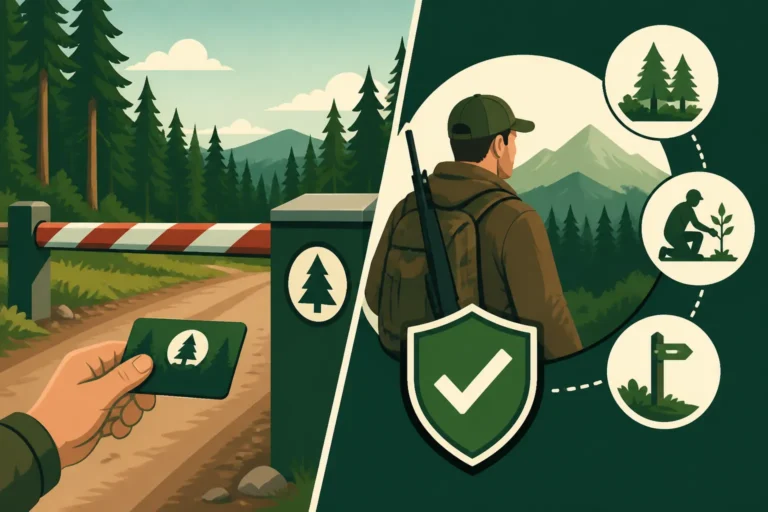
When we talk about DNR recreation passes for hunters, we are almost always talking about the Discover Pass. This pass is the cornerstone of access for most state-managed recreation lands in Washington, and DNR lands are a primary example. The Discover Pass was created to help fund the maintenance and operation of state recreation lands and facilities, ensuring that places like DNR forests remain open and accessible for activities like hunting, hiking, and fishing.
Many hunters, myself included, have had that moment of panic when pulling up to a trailhead sign, only to see "Discover Pass Required" staring back at you. It's easy to forget, especially if you're accustomed to federal lands where different passes (like the Northwest Forest Pass) might apply, or where no pass is needed at all for dispersed recreation. The Discover Pass ensures that the places we love to hunt are taken care of, but it also places the responsibility on us to have it. Think of it as your entry ticket to some of Washington's best hunting grounds. Without it, you could face a citation, which is definitely not the souvenir you want to bring home from a hunt.
Navigating the Nuances of Access: Discover Pass and Beyond
Understanding when and where you need a Discover Pass can be confusing, especially with so many different land managers in Washington. It's not a "one pass fits all" situation for all public lands, and knowing the distinctions is key to a smooth hunting trip.
Who Needs a Discover Pass and When?
The Discover Pass is generally required for vehicle access to recreation lands and water access sites managed by Washington State Parks, the Washington Department of Fish and Wildlife (WDFW), and the Washington Department of Natural Resources (DNR). As a hunter, this means if you drive onto a DNR road system, or park your vehicle at a DNR trailhead or designated parking area to access hunting grounds, you likely need a Discover Pass displayed prominently in your vehicle.
Consider a common scenario: You're E-Scouting Washington GMUs Before the Draw and you've identified a promising clearcut deep within a DNR unit. You drive down an old logging road, part of the extensive Washington Green Dot Road Systems that often crisscross DNR lands, and park your truck at a widening in the road to start your walk-in hunt. If that road, or the land you're parked on, is managed by DNR, you need a Discover Pass. Even if you only park briefly, or if you believe you're just "on the shoulder" of a road, if you're physically on DNR property that requires a pass, it's mandatory. This is why always checking the land status with tools like onX Layers for Washington Land Status is so vital—it can prevent a nasty surprise in the form of a parking ticket.
However, there are some exceptions. If you're parking on a county road or a state highway shoulder that simply borders DNR land, and not actually on DNR property, you typically wouldn't need a Discover Pass. The key is where your vehicle is physically located. If it's on a DNR-managed access point or within DNR recreation boundaries, the pass is required. It's truly a matter of being precise with your mapping and understanding your exact location.
Differentiating DNR from WDFW Lands
This is where a lot of hunters get tripped up. Many assume that if it's "state land" and open to hunting, one pass covers it all. But Washington state manages its lands through different agencies, each with slightly different rules.
Washington Department of Fish and Wildlife (WDFW) manages over a million acres of wildlife areas and access sites across the state, specifically for wildlife conservation and public recreation, including hunting and fishing. For many of these WDFW-managed properties, particularly the larger wildlife areas, a WDFW Vehicle Access Pass is required, not a Discover Pass. This WDFW pass often comes bundled with your hunting license, or can be purchased separately. It can be easy to confuse the two, especially if you hunt both DNR and WDFW lands.
To make it clearer, think of it this way:
- DNR Lands: Primarily managed for timber and natural resources, but open for recreation. Require a Discover Pass.
- WDFW Wildlife Areas: Primarily managed for wildlife conservation and public access. May require a Washington Wildlife Area Parking Permits which often comes with your hunting license.
- National Forests / BLM Lands: Federal lands. Do not require a state Discover Pass, but some areas may require federal passes like the Northwest Forest Pass for developed recreation sites. For general dispersed hunting, no pass is usually needed.
This distinction is crucial. If you're heading out to hunt Washington DNR Land Open to Hunting, make sure you have your Discover Pass. If you're planning on hunting in, say, the Wenas Wildlife Area (a WDFW property), you'll need the WDFW Vehicle Access Pass. Always double-check the signs at your access point or use your mapping apps to confirm the land manager and associated pass requirements. Getting this right is a fundamental part of Finding Legal Access in Washington and ensuring your hunt goes off without a hitch.
Here's a quick comparison of the two main state passes hunters encounter:
| Feature | Discover Pass | WDFW Vehicle Access Pass |
|---|---|---|
| Required For | Most state-managed recreation lands (DNR, State Parks, some WDFW) | WDFW-managed Wildlife Areas and some water access sites |
| Purpose | Funds operations & maintenance of state recreation lands | Funds WDFW wildlife area management & access |
| Cost Type | Annual or one-day options available | Often bundled with hunting/fishing licenses; also available separately |
| Who Manages | Washington State Parks, DNR, WDFW (specific sites) | Washington Department of Fish and Wildlife |
| Example Use | Parking to hunt a DNR timber sale | Parking to hunt the Wenas Wildlife Area |
| Display | Must be clearly displayed in vehicle windshield | Often printed on your license or a separate hangtag |
Practicalities of Acquisition and Display
So, you know you need a Discover Pass for your next DNR hunt. But how do you actually get one, and once you have it, where does it go? These seemingly simple questions can cause unnecessary stress when you're trying to get out the door for opening day.
How to Get Your Discover Pass
The good news is that getting a Discover Pass is pretty straightforward. You have a few convenient options:
- Online: The easiest way for many is to purchase it through the official Discover Pass website. You can buy an annual pass or a one-day pass. Once purchased, you can often print a temporary pass right away, which is super handy if you're heading out the next morning. The physical pass will then be mailed to you.
- In-Person: Many outdoor retailers, like sporting goods stores, and even some grocery stores that sell hunting and fishing licenses, are authorized vendors for the Discover Pass. This is great if you realize you need one last-minute while picking up some snacks for the trip. You can also purchase them at state parks offices and some WDFW regional offices.
- WDFW License System: When you purchase your Washington Big Game Licence and Tag Costs, you may also have the option to add a Discover Pass at the same time through the WDFW licensing system, which can simplify the process of gathering all your necessary documents. This is a common method for hunters, ensuring all their bases are covered for state lands.
The cost structure typically offers two main choices: an annual pass that covers you for a full year from the date of purchase, or a one-day pass if you only plan a single visit to a state recreation site. While I can't give you exact figures, generally, the annual pass offers better value if you plan to hunt DNR lands more than a few times a year, or if you use state parks for other recreational activities. Always check the official WDFW or Discover Pass websites for the most current pricing and purchasing options before your trip.
Proper Display and Enforcement
Once you have your Discover Pass, whether it's the printed temporary one or the physical hangtag, proper display is critical. The law requires that the pass be clearly visible in the front windshield of your vehicle. Typically, this means hanging it from your rearview mirror, or placing it face-up on your dashboard so the relevant information (like the expiration date and pass number) is easily readable from outside the vehicle. This is not just a suggestion; it's a requirement to avoid a citation.
Enforcement of the Discover Pass falls to park rangers, WDFW enforcement officers, and sometimes even county sheriffs' deputies. They regularly patrol popular access points, particularly during hunting seasons when vehicle traffic is higher. Imagine this scenario: You've just spent a grueling day on Packing an Elk Out of Washington's Backcountry, you're exhausted, cold, and wet, and the last thing you want to see is a ticket on your windshield because you forgot to display your pass. That kind of frustration can truly sour an otherwise successful hunt.
It's also worth noting that if you use an alternative vehicle to access DNR lands—say, an ATV or dirt bike—the pass requirement still applies if that vehicle is parked on DNR land where a pass is required. While you can't display a hangtag on an ATV in the same way, the pass is tied to the vehicle registration or you might need to carry proof of purchase on your person. Always refer to the specific regulations for ORVs on DNR lands, as rules can vary and often require additional permits beyond the Discover Pass.
Maximizing Your Hunt on DNR Lands
DNR lands offer some fantastic hunting opportunities, but like any public land, making the most of them requires preparation and respect for the rules. Beyond just having your pass, a smart hunter considers access, scouting, and ethical conduct.
Planning Your Access and Scouting Smarter
Successful hunting on DNR lands often boils down to smart planning. These lands are managed for multiple uses, including timber harvest, which means road systems can change frequently. What was a drivable logging road last year might now be gated, decommissioned, or part of a Washington Winter Range Closures That End Late Hunts. Before you ever leave home, leverage modern tools to understand the lay of the land.
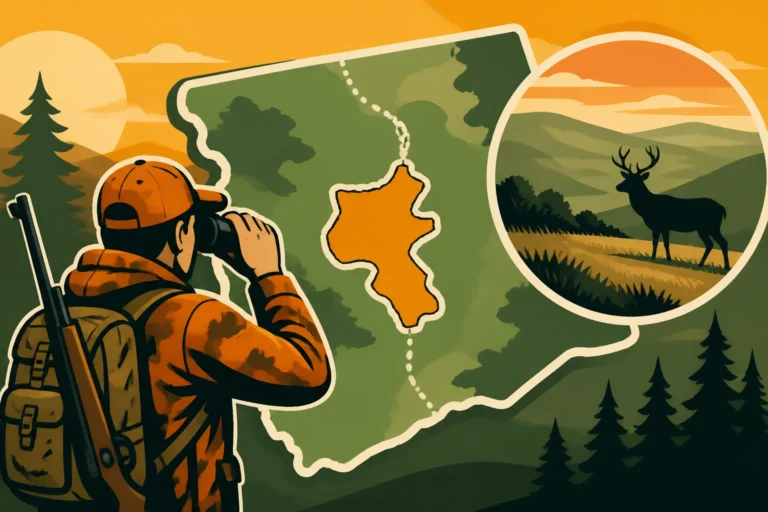
Using apps like onX Hunt or GoHunt is invaluable. They allow you to view detailed land ownership maps, showing you exactly where DNR property lines are. You can overlay these with topo maps, satellite imagery, and even layers that show Washington Green Dot Road Systems status. This is crucial for determining legal access points, understanding potential closures, and identifying walk-in only areas. For example, some DNR parcels might be landlocked by private property, making them inaccessible without specific written permission from the private landowner. Don't waste valuable hunting time driving to a promising spot only to find it's inaccessible.
When you're E-Scouting Washington GMUs Before the Draw, pay close attention to DNR sections. Look for clearcuts (often prime deer and elk browse), areas of young replanted timber (reprod), and drainages that might offer bedding cover. Remember that these are working forests, so active logging operations might be underway, which can temporarily impact access or animal behavior. The WDFW website and the DNR's own recreation maps are excellent resources for general information, but for on-the-ground accuracy, a good mapping app with Downloading Offline Maps for Washington capabilities is your best friend, especially since cell service is often nonexistent in deeper timber.
Responsible Use and Respecting the Resource
As hunters, we are stewards of the land and its wildlife. Our actions on DNR lands not only reflect on us personally but on the entire hunting community. Always practice Leave No Trace principles. This means packing out everything you pack in, and often more. Don't leave spent casings, trash, or anything else that doesn't belong.
Be aware of specific regulations regarding Camping on Washington DNR Land. While dispersed camping is generally allowed in many areas, there might be specific rules about length of stay, fire restrictions (especially during dry fall seasons), or designated camping spots. Always check the current Washington Big Game Pamphlet Release for any updates to regulations or restrictions in your chosen hunting unit, as these can change annually.
It's also worth noting that some DNR properties might fall under larger timber company holdings or be managed in conjunction with them. While the Discover Pass covers DNR access, you might occasionally encounter situations where DNR land is behind Hunting Behind Timber Company Gates that require separate permits or keys from those private companies. This is less common but something to be aware of if you're exploring particularly remote or checkerboarded ownership areas. Always respect signage and private property boundaries.
By being informed, prepared, and respectful, we ensure that DNR lands remain a viable and enjoyable resource for hunting for generations to come. Your attention to these details helps maintain Washington DNR Land Open to Hunting for everyone.
Disclaimer
This article is for general informational purposes only and does not constitute professional advice. Laws, prices and regulations vary by location and change over time. Consult a qualified professional for guidance on your specific situation.