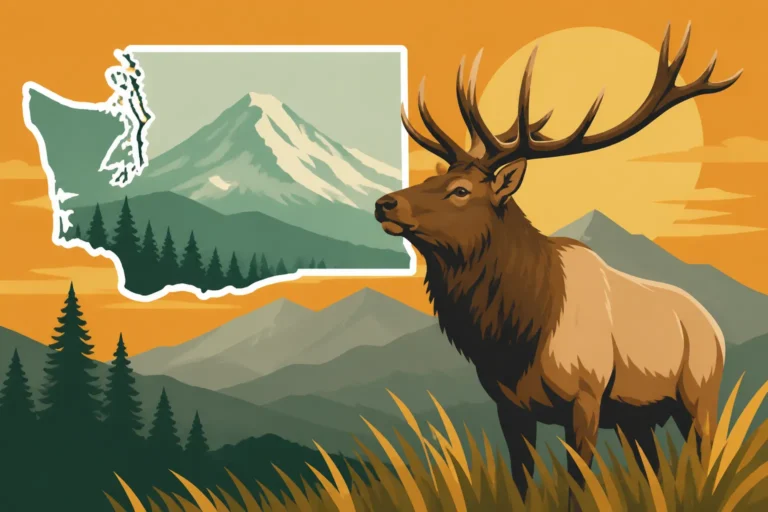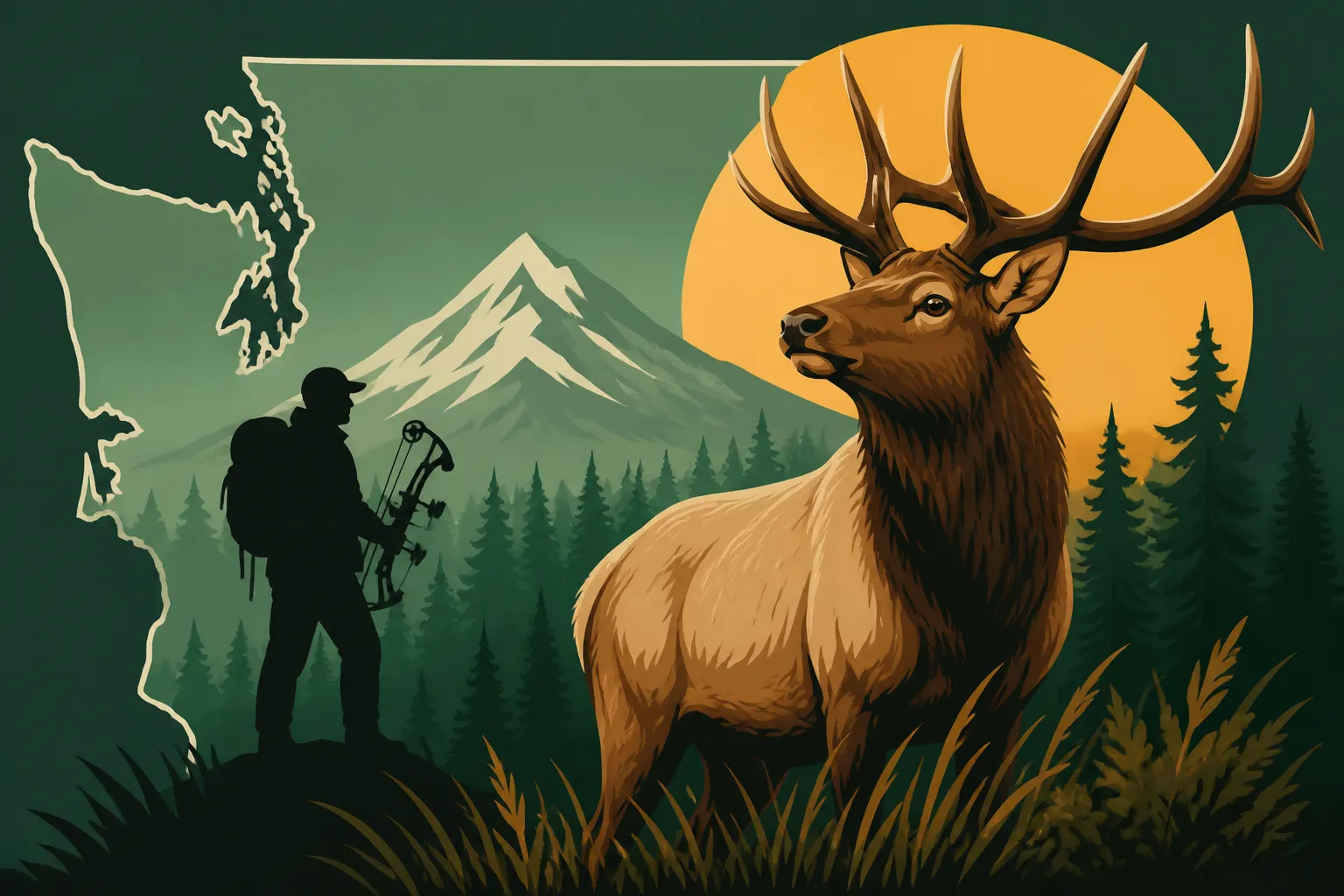
Roosevelt Elk of Western Washington
Hunting Roosevelt elk in Western Washington isn't just a challenge; it's an immersive experience that tests every fiber of a hunter's being. The dense rainforests, the relentless rain, the steep, brush-choked hillsides – it's a world away from the open country glassing many imagine. This comprehensive guide is dedicated to equipping you with the knowledge, strategies, and mindset needed to successfully pursue the majestic Roosevelt elk in their rugged Western Washington domain, addressing the unique frustrations and rewards this pursuit offers.
Understanding the Roosevelt Elk: Distinct Characteristics and Habitat
When we talk about elk in Washington, it's crucial to understand that we're dealing with two distinct subspecies: the Rocky Mountain elk, primarily found east of the Cascades, and the Roosevelt elk, which calls the dense, wet forests of Western Washington home. While both are impressive animals, the Roosevelt offers a unique set of challenges and experiences that are truly its own.
Physical Traits and Adaptations
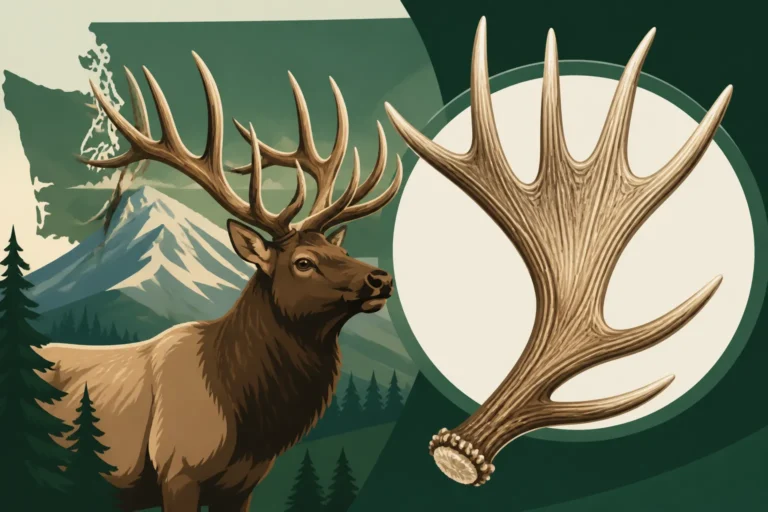
Roosevelt elk are often considered the largest-bodied of the North American elk subspecies. A mature bull can easily tip the scales at over 1,000 pounds, making them an incredible sight and an even more incredible packing job. Their color tends to be a darker, rich brown compared to the lighter tan of Rocky Mountain elk, a coloration that helps them blend into the deep shadows and moss-draped forests they inhabit.
Their antlers are distinctive too. While Rocky Mountain bulls often grow massive, wide racks with long tines, Roosevelt bulls typically grow denser, more compact antlers. They're often heavier in mass, with shorter, thicker tines that can really pack a punch. This antler configuration is an adaptation to their environment, allowing them to navigate the tight timber and brush without getting tangled. The sheer size of their bodies and the robust nature of their antlers are clear indicators of a life spent pushing through the formidable undergrowth of the Pacific Northwest.
Living in an environment characterized by persistent rainfall, dense timber, and rugged topography means Roosevelt elk have evolved to be incredibly hardy. Their thick coats offer excellent insulation against the cold and wet, allowing them to thrive where other animals might struggle. They are masters of stealth, capable of disappearing into the thickest cover with surprising grace despite their immense size, making them incredibly difficult to locate and approach.
Preferred Habitat and Food Sources
Roosevelt elk are creatures of the forest, specifically the coastal rainforests and mixed coniferous woodlands west of the Cascade crest. You'll find them ranging from sea level up to the subalpine zones, but their preference is for areas with a mosaic of dense old-growth timber, younger clearcuts, and riparian zones. These diverse habitats provide everything they need: dense cover for security and bedding, clearcuts and forest edges for abundant forage, and water sources year-round.
They thrive in the same places that make hunting them so challenging: areas thick with salal, huckleberry, sword fern, and devil's club. These plants, while a nightmare to walk through, are essential food sources and offer impenetrable bedding areas. They also frequent the edges of new growth in clearcuts, where pioneer plants provide rich sustenance. You might find them browsing on evergreen huckleberry, salmonberry, or various grasses and forbs that flourish in disturbed areas or along old logging roads.
River bottoms and drainages, often choked with alder and vine maple, also draw elk, especially during dryer periods or when they seek thermal cover. These areas, while providing critical habitat, also present some of the most difficult hunting conditions due to the nearly impossible visibility and incredibly noisy walking. Understanding these habitat preferences is key to predicting their movements and finding areas where they might be feeding or bedding.
Roosevelt vs. Rocky Mountain Elk
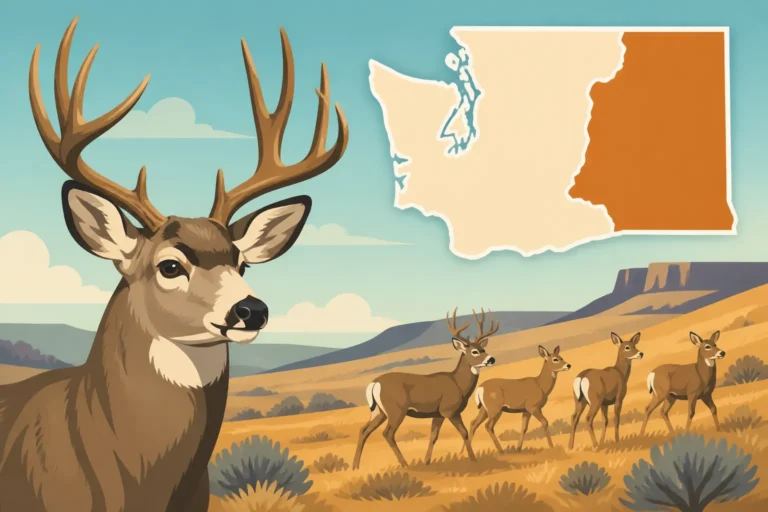
The dividing line between Roosevelt and Rocky Mountain elk in Washington is generally considered to be the Cascade Mountain range. East of the Cascades, you'll primarily find Rocky Mountain elk, known for their preference for more open forests, sagebrush flats, and high mountain meadows. West of the Cascades, it's almost exclusively Roosevelt elk. This geographical split leads to significant differences in their behavior, physical appearance, and of course, hunting strategies.
| Feature | Roosevelt Elk (Western Washington) | Rocky Mountain Elk (Eastern Washington) |
|---|---|---|
| Primary Habitat | Dense rainforests, coastal forests, thick timber, clearcuts | Open forests, sagebrush, mountains, meadows |
| Body Size | Larger body mass, often over 1,000 lbs for a bull | Generally smaller body mass, often 700-900 lbs for a bull |
| Antler Type | Shorter, heavier mass, dense racks, compact and branched | Longer, wider, more slender tines, often wider spread |
| Coloration | Darker, richer brown coat | Lighter, tan body with dark brown head/neck |
| Vocalizations | Generally less vocal, bugle less frequently or less intensely | More vocal, bugle frequently and loudly, especially during the rut |
| Movement | Stealthy, move through thick cover, often less visible | May be more visible in open areas, cover large distances |
| Hunting Style | Still-hunting, tracking, close-quarters calling, heavy pack outs | Glassing, spot-and-stalk, long-range calling, open country |
Rocky Mountain elk are far more likely to respond aggressively to a bugle, especially during the peak of the rut, and can be seen covering miles in open country. Roosevelt elk, on the other hand, are often more subdued. Their bugles might be softer, less frequent, and they're less inclined to expose themselves. This makes locating them a much more intimate, slow-paced affair, relying more on subtle signs, scent, and careful listening than on long-range glassing. The terrain alone dictates much of this difference; in a dense forest, loud, prolonged bugling might not carry far and could put them at a disadvantage.
Key Roosevelt Elk Herds in Western Washington
Western Washington is home to several distinct Roosevelt elk herds, each with its own characteristics, challenges, and hunting opportunities. Understanding where these herds are, their population trends, and the specific terrain they inhabit is crucial for any hunter planning a Western Washington elk hunt.
Willapa Hills Elk Herd
The Willapa Hills elk herd, primarily found in Wahkiakum, Pacific, and Grays Harbor counties, is one of Washington's largest and most famous Roosevelt herds. This region is a mosaic of steep, heavily timbered hills, clearcuts in various stages of regrowth, and river valleys. Access can be a mix of state land (DNR), federal forest, and extensive private timber company lands. Many hunters rely on finding Timber Company Permits in Western Washington for access here, as private industrial timber dominates much of the prime habitat.
Hunting in the Willapas often means navigating a labyrinth of logging roads, both open and gated, and then plunging into incredibly thick second-growth timber or old-growth pockets. Elk density can be high in certain areas, but their ability to vanish into the brush is legendary. Hunters here must contend with consistent rain, steep terrain, and the omnipresent challenge of Elk Hoof Disease Symptoms, which has unfortunately impacted parts of this herd in recent years. Despite these challenges, the Willapa Hills remains a top destination for serious Roosevelt elk hunters, offering the chance at truly impressive bulls if you're willing to put in the work.
Olympic Peninsula Herds
The Olympic Peninsula is synonymous with ancient rainforests, rugged mountains, and some of the most iconic Roosevelt elk country in the world. Herds here, often referred to collectively as the Olympic herd, are scattered across a vast and diverse landscape, from the coastal strip of Clallam and Jefferson counties to the slopes of the Olympic Mountains. Units like Olympic, Matheny, Sol Duc, and Clearwater are all part of this wild domain.
Hunting the Olympic Peninsula is often a wilderness experience. While there are some accessible areas via National Forest roads, much of the best elk habitat lies deep within the Olympic National Forest or on difficult-to-access state lands. The undergrowth here is notoriously thick, characterized by massive ferns, salal, and the seemingly impenetrable walls of second-growth. Elk density can vary, but the sheer size and wildness of the bulls here are a major draw. Success on the Olympic Peninsula often demands significant physical exertion, excellent navigation skills, and a willingness to spend days deep in the backcountry. It's a true test of a hunter's endurance and woodsmanship.
Southwest Washington Herds (Coweeman, Toutle, Lewis River)
Moving south from the Olympic Peninsula, into the heart of Southwest Washington, you'll find other significant Roosevelt elk herds in areas like the Coweeman, Toutle, and Lewis River units. These areas are characterized by extensive timber company lands, often managed for short-rotation timber harvest, leading to a dynamic landscape of clearcuts, young reprod, and scattered mature timber. Cowlitz and Lewis counties are prime examples of this region.
Hunting in these units frequently involves working through recently logged areas and dense, young Douglas fir plantations. The terrain is often steep and broken, with numerous drainages and creeks. Access, similar to the Willapa Hills, is heavily influenced by private timberland ownership, so knowing the regulations and obtaining necessary permits (sometimes through services like GoHunt for specific land access programs) is absolutely essential. These herds, while facing their own pressures, continue to provide consistent hunting opportunities for those who understand how to navigate the ever-changing timber landscape and can adapt their strategies to the constantly regenerating forest. The Coweeman, in particular, has a strong reputation for producing solid bulls for dedicated hunters.
Roosevelt Elk Behavior and Rut Dynamics
Understanding how Roosevelt elk behave throughout the year and, crucially, how their rut differs from their Rocky Mountain cousins, is paramount to planning a successful hunt. These animals are deeply tied to their dense, wet environment, and their actions reflect that.
Seasonal Movements and Patterns
Roosevelt elk, like most big game, exhibit seasonal movement patterns, but these are often dictated by the availability of food and cover within their Western Washington habitat rather than dramatic, long-distance migrations. In spring, after calving, cows and calves will often seek out lush, green forage in new growth areas, such as recent clearcuts or burns, where tender plants are abundant. Bulls, often solitary or in small bachelor groups, will also be focused on feeding to rebuild body condition and grow their antlers.
As summer progresses, the elk will often move into higher elevations where temperatures are cooler and forage remains green. They'll utilize the dense shade of mature timber for bedding during the day, moving to edges and openings to feed during cooler periods. Come fall, leading up to the rut, they consolidate, and their movements become more focused on breeding grounds. Post-rut and into winter, they'll typically move to lower elevations, often seeking out areas with less snow and residual browse in sheltered drainages or south-facing slopes. However, in many Western Washington units, elk might stay relatively resident year-round if food and cover are consistently available, simply shifting between different patches of habitat.
The Roosevelt Rut: When and How It Differs
The Roosevelt rut is a fascinating spectacle, albeit often more subdued than the dramatic, wide-open country displays of Rocky Mountain elk. Generally, the rut for Roosevelt elk in Western Washington peaks from late September through early October, though some activity can extend into mid-October. The key difference lies in the intensity and vocalization. Roosevelt bulls tend to bugle less frequently and with less volume than their eastern counterparts. This isn't to say they don't bugle – they absolutely do – but it's often a more localized sound, perhaps a series of soft chuckles, grunts, and a short, raspy bugle rather than the screaming, resonant calls that echo for miles.
This quieter rut behavior is a direct adaptation to their dense environment. Loud, continuous bugling in thick timber might not travel far and could expose them to predators. Instead, Roosevelt bulls rely more on scent marking, wallowing, and close-quarters displays of dominance. As a hunter, this means you need to be in their living room to hear them. You might catch a faint bugle, a series of grunts, or the distinct sound of a bull raking a tree, giving away his presence. Mastering Cow Calls That Pull a Bull Off His Herd can be incredibly effective during this time, as a subtle, pleading cow call can often draw a curious bull in without spooking him. It requires extreme patience and a deep understanding of their localized communication.
Social Structure and Herd Dynamics
Roosevelt elk herds in Western Washington exhibit a social structure similar to other elk subspecies, but again, adapted to their habitat. During much of the year, cows, calves, and young bulls form cohesive matriarchal groups. These cow-calf bands rely on group vigilance for safety and share knowledge about food sources and safe bedding areas. Bachelor groups of mature bulls are common outside the rut, where they can be found feeding and growing their antlers together in secluded spots.
As the rut approaches, these dynamics shift dramatically. Mature bulls will break from their bachelor groups and begin to seek out cow herds. Dominant bulls will gather harems of cows, defending them vigorously from rival bulls. The bull-to-cow ratios in some Western Washington herds are carefully managed by the Washington Department of Fish and Wildlife (WDFW) to ensure healthy reproduction and provide quality hunting opportunities. Younger bulls, often referred to as satellite bulls, will linger on the periphery of these harems, hoping for an opportunity to breed when the herd bull is distracted or challenged. Understanding these social dynamics helps hunters predict where to find elk and how they might react to calling or encounters.
Navigating Western Washington's Terrain for Roosevelt Elk
Hunting Roosevelt elk isn't just about finding the animals; it's about conquering the landscape itself. Western Washington's terrain is notoriously rugged, wet, and choked with vegetation, presenting a unique set of challenges that demand respect and preparation.
Dense Forests and Undergrowth
If you've never hunted Western Washington, prepare for a shock. The term "dense" doesn't quite capture it. Imagine walking through a jungle, but one covered in thorns and slick moss. The undergrowth is a relentless tangle of salal, huckleberry, sword fern, and the infamous devil's club, often growing taller than a man. This creates a visibility challenge like no other. You might be within bow range of an elk and never see it. The noise you make pushing through this vegetation is also a significant concern, making stealth incredibly difficult.
This thick cover is precisely why Roosevelt elk thrive here; it offers unparalleled security from predators, including humans. To navigate it, you need to develop a patient, methodical approach. It's often referred to as "still-hunting," though it's more like a slow crawl. Focus on placing each foot silently, using existing game trails, and constantly scanning for the smallest flicker of movement or a patch of hide. It's a game of inches, where an unexpected sound or a shift in the wind can instantly blow your chances. This is where the principles of Still-Hunting Blacktails in Wet Washington Brush become critical, as the tactics for stealthily moving through westside cover are very similar.
Wet Conditions and Steep Slopes
Rain isn't just a possibility in Western Washington; it's a way of life. Hunters must be prepared for persistent drizzle, heavy downpours, and everything in between. This constant moisture turns trails into muddy rivers, makes rocks and logs treacherously slick, and saturates clothing in minutes if you're not properly outfitted. The mud can be deep and clingy, making every step an effort and adding significant weight to your boots.
Compounding this are the steep, often broken slopes. Many drainages are deeply incised, requiring arduous climbs and descents. These slopes, combined with the wet, muddy conditions and thick undergrowth, can be incredibly taxing physically. Footing is rarely secure, and a single slip can lead to a nasty fall. This terrain demands exceptional physical fitness, strong ankles, and a relentless attitude. It's not uncommon to gain and lose thousands of feet of elevation in a single day, all while pushing through dense brush in the pouring rain.
Road Systems and Access Points
Accessing prime Roosevelt elk habitat in Western Washington is a complex puzzle. Much of the land is managed by the U.S. Forest Service, Washington Department of Natural Resources (DNR), or private timber companies. The road systems, particularly the "Green Dot" road system on federal and state lands, are critical for gaining entry, but they also come with specific rules and closures. Public Land Scouting in Washington Before Opening Day is essential here, as road statuses can change frequently.
Private timber companies, like Weyerhaeuser and Hancock Forest Management, own vast tracts of prime elk country. While some areas might be open for walk-in access or have designated fee-based access points, many require permits or are entirely closed to public entry. This means you must do your homework well in advance, understand property boundaries, and comply with all regulations. GoHunt's mapping tools can be invaluable for identifying land ownership and access points, helping you navigate the patchwork of public and private land. Without proper planning, you could find yourself cut off from prime hunting grounds or inadvertently trespassing. Knowing the rules for each specific area is not just a suggestion; it's a requirement for a successful and legal hunt.
Hunting Strategies for Roosevelt Elk in Dense Cover
Hunting Roosevelt elk in the thick, wet forests of Western Washington requires a fundamentally different approach than pursuing elk in more open country. Forget long-range glassing; here, it's about intimate encounters, stealth, and adapting to the limitations of your environment.
Still-Hunting and Tracking
In the dense, low-visibility world of Western Washington, still-hunting is often the most productive strategy. This involves moving incredibly slowly and deliberately, taking only a few steps at a time, then stopping to observe, listen, and scan your surroundings. The goal isn't to cover ground quickly, but to move so quietly that you might encounter an elk before it detects you. This means paying close attention to the wind, using thermal currents to your advantage, and trying to predict where elk might be bedding or feeding.
Tracking is another invaluable skill for Roosevelt hunters. The soft, damp forest floor often holds clear tracks, and learning to interpret fresh elk sign – tracks, droppings, rubs, and beds – can lead you directly to animals. A fresh track in the mud, especially a large bull track, can be like gold. The challenge, of course, is that a track can lead you through some of the thickest, nastiest cover imaginable. It takes immense patience and discipline to follow a track for hours, sometimes miles, through a dense jungle. You must be prepared to crawl, duck, and weave, all while maintaining absolute silence and vigilance. This intimate style of hunting is a true test of woodsmanship and physical endurance.
Calling Strategies for Roosevelt Elk
While Roosevelt bulls are generally less vocal than Rocky Mountain elk, calling can still be a highly effective strategy, especially during the rut. The key is to understand that their calls are often softer, less frequent, and more localized. Forget screaming bugles that carry for miles; here, you're often aiming for a soft chuckle, a series of estrus cow calls, or a quiet grunt to pique a bull's curiosity.
Subtlety is your friend. A series of soft Cow Calls That Pull a Bull Off His Herd can be incredibly enticing to a bull looking for a hot cow, or a satellite bull trying to sneak in. Sometimes, simply mimicking the sounds of a contented cow herd (mewing, chirping) can draw in an interested bull. When a bull does bugle, listen carefully to determine his tone and location. A soft, questioning bugle might invite a challenge, while a louder, more aggressive bugle might mean he's confident and coming your way. Be prepared for him to approach silently, using the thick cover to his advantage. A good calling setup often involves one caller and one shooter positioned quietly 50-100 yards ahead, ready for a silent approach.
Spot-and-Stalk in Clearcuts and Edges
Even in Western Washington's dense timber, there are opportunities for spot-and-stalk hunting, primarily in clearcuts, old burns, or along the edges where timber meets open areas. These spots offer rare glimpses into more open country where elk might be feeding, especially at first light or last light. However, "open" here is relative; a clearcut might still be choked with brush and new growth.
The strategy involves finding a vantage point, however small, that overlooks a promising clearcut or a natural opening in the timber. This might mean climbing a ridge or finding a small knoll. Use your binoculars to systematically pick apart the vegetation, looking for a patch of hide, the flicker of an ear, or the tell-tale shape of an antler. Once an elk is spotted, the real work begins: planning a silent, downwind stalk through the remaining cover to get into shooting range. This requires incredible patience, map reading skills, and the ability to move through dense brush without being detected. It's a high-reward, high-difficulty strategy that can pay off if you're meticulous and persistent.
Equipment and Gear for Western Washington Roosevelt Hunts
Hunting Roosevelt elk in Western Washington isn't just a physical and mental challenge; it's a gear test of epic proportions. The relentless rain, the abrasive brush, and the steep, muddy terrain will push your equipment to its limits. Skimping on quality here is a recipe for a miserable, and potentially dangerous, hunt.
Rain Gear and Layering for the Wet Climate
This is not a drill: good rain gear is non-negotiable for Western Washington. You will get wet. The goal is to manage that wetness, keeping your core body temperature stable and staying as dry as possible. Invest in a high-quality, durable rain jacket and pants that are truly waterproof and breathable. Fabrics like Gore-Tex Pro or eVent are designed to handle sustained downpours. Critically, your rain gear needs to be quiet enough not to spook elk when you're moving through the brush. Forget crinkly cheap stuff; it'll be ripped to shreds and make you sound like a potato chip bag. Consider companies like Sitka, Kuiu, or First Lite for reliable options. You can learn more specific recommendations for Rain Gear for Westside Hunting to help with your decision.
Beneath that, a good layering system is essential. Start with a moisture-wicking base layer (merino wool or synthetic, never cotton) to pull sweat away from your skin. Add a mid-layer for insulation – a fleece jacket or a puffy vest works well. On top goes your shell. The ability to add or shed layers quickly as your activity level changes (climbing a ridge versus sitting on a stand) is key to managing your body temperature and preventing dangerous hypothermia in the cold, wet conditions.
Footwear and Packs for Tough Terrain
Your feet will take an absolute beating in Western Washington. You need boots that are waterproof, durable, offer excellent ankle support, and have aggressive traction for mud, slick roots, and steep, rocky slopes. Look for full-grain leather or synthetic boots with a sturdy rand and a stiff sole. Breaking in your boots well before the hunt is crucial; blisters in the backcountry are not just uncomfortable, they can end your hunt. Brands like Kenetrek, Crispi, and Schnee's are popular for a reason – they hold up to the abuse.
A quality pack is equally vital. Whether you're planning day hunts or spike camps, you'll need a pack capable of comfortably carrying your gear and, crucially, a heavy load of elk meat. A dedicated meat-hauling frame pack is ideal for packing out quarters of a Roosevelt bull. These packs are designed to distribute weight efficiently and protect your gear from blood and grime. Look for a pack with a strong external or internal frame, durable fabric, and plenty of compression straps. Capacity-wise, for a multi-day hunt or hauling out meat, aim for a 6,000 to 7,500 cubic inch pack. Even for day hunts, a pack around 3,000 cubic inches with a solid frame for an emergency meat haul is a smart choice. Consider options like Mystery Ranch, Kifaru, or Stone Glacier. For specific recommendations, check out a guide on Packs Sized for a Washington Elk Quarter.
Weapon Choices and Optics
Weapon choice for Roosevelt elk depends on your tag. For rifle hunters, a hard-hitting, accurate rifle in a caliber suited for large game is essential. Given the dense timber, shots are often close-range, but having the capability for a longer shot if an elk steps out in a clearcut is wise. Calibers like .30-06, .300 Win Mag, .338 Win Mag, or 7mm Rem Mag are popular and effective. Ensure your rifle is sighted in and you've practiced shooting from various field positions. A good article on Rifle Setup for Washington Elk and Deer can offer more detailed advice.
For archery hunters, Washington regulations require a broadhead width of at least 7/8 inch and a minimum arrow weight of 350 grains for elk. A powerful compound bow with a draw weight suitable for quickly and cleanly dispatching a large animal is necessary. Practice extensively, especially in wet conditions, to ensure your form holds up. Muzzleloader hunters must use a .45 caliber or larger projectile, and specific rules apply to ignition types and optics, so always check the current WDFW regulations.
Optics for Roosevelt hunting tend to be more modest than for open-country hunts. While a good pair of 10x binoculars is invaluable for picking apart dense cover, a massive spotting scope is often overkill given the limited visibility. A quality rangefinder is always useful, especially in broken terrain where judging distance can be tricky. Headlamps with red-light options are critical for early morning hikes and, more often than not, for packing out after dark.
Conservation Challenges and Future of Roosevelt Elk Hunting
The pursuit of Roosevelt elk in Western Washington is not without its complexities, as various challenges impact herd health and habitat. Understanding these issues is key to appreciating the efforts in place to sustain these magnificent animals.
Elk Hoof Disease and Its Impact
One of the most significant conservation challenges facing Roosevelt elk in Western Washington is Elk Hoof Disease (EHD). This debilitating bacterial infection causes severe lesions and deformities in an elk's hooves, often leading to lameness, reduced mobility, and increased vulnerability to predation or starvation. The disease has been observed in various Western Washington herds, including the Willapa Hills, and continues to be a concern for WDFW and hunters alike.
The specific bacteria involved, Treponema spp., is related to the bacteria that cause digital dermatitis in cattle. Infected elk often display limping, overgrown or misshapen hooves, and can have difficulty traveling, foraging, or escaping threats. While WDFW monitors the spread and impact of EHD, managing it in wild populations is incredibly difficult. Hunters are often the first line of defense in identifying affected animals and are encouraged to report any observations of limping or diseased elk to the WDFW. This collective vigilance helps the department track the prevalence and distribution of the disease. A detailed look at Elk Hoof Disease Symptoms reveals the true struggle these animals face.
The impact of EHD on elk populations is multifaceted. It can reduce herd productivity by making it harder for cows to raise calves and for bulls to participate in the rut. It also affects the quality of the hunting experience, as hunters naturally prefer to harvest healthy animals. Ongoing research by WDFW and university partners aims to better understand the disease and explore potential management strategies, but for now, it remains a persistent challenge for Western Washington's Roosevelt elk.
Habitat Loss and Human Encroachment
Beyond disease, Roosevelt elk populations face ongoing pressure from habitat loss and human encroachment. Western Washington is a rapidly developing region, with increasing urbanization and expansion of human infrastructure. This leads to fragmentation of elk habitat, reducing the amount of contiguous land available for their year-round needs. Roads, housing developments, and agricultural expansion all chip away at critical calving grounds, winter range, and migratory corridors.
Timber harvest practices also play a significant role. While clearcuts can initially provide abundant forage, the subsequent replanting often results in dense, monoculture forests that eventually offer poor forage quality and limited escape cover for elk as they mature. The shift towards shorter rotation timber cycles means less older, diverse forest habitat that elk rely on for security and specific food sources. Furthermore, increased human recreation in elk country, from hiking and mountain biking to off-roading, can disrupt elk behavior and push them into less optimal areas, increasing stress and energy expenditure.
Management Efforts and Hunter's Role
The Washington Department of Fish and Wildlife actively manages Roosevelt elk populations through a combination of harvest regulations, habitat enhancement projects, and disease monitoring. Harvest quotas and permit allocations are carefully set to ensure sustainable populations while providing recreational opportunities for hunters. WDFW also works with private landowners and other agencies to maintain and improve elk habitat, including prescribed burns, forage planting, and protecting critical winter range.
Hunters play an indispensable role in the conservation of Roosevelt elk. Through the purchase of licenses and tags, hunters directly fund WDFW's management and research efforts. Furthermore, hunter harvest data is crucial for WDFW to monitor herd health, population trends, and the impact of diseases like EHD. Every hunter who fills out their harvest report, whether successful or not, contributes valuable data that informs future management decisions. Organizations like GoHunt provide resources that can help hunters understand these regulations and contribute to responsible hunting practices, emphasizing ethical engagement with wildlife. By adhering to regulations, reporting observations, and advocating for habitat protection, hunters are truly stewards of Washington's Roosevelt elk resource.
Ethical Hunting and Meat Care in Western Washington
Successfully harvesting a Roosevelt elk is just one part of the equation. What follows – ethical shot placement, efficient blood trailing, and meticulous meat care – is equally, if not more, important, especially in the challenging environment of Western Washington.
Shot Placement and Blood Trailing in Dense Cover
Given the dense cover and the size of Roosevelt elk, precise shot placement is absolutely critical. Ethical hunters strive for a clean, quick kill, aiming for the vitals (heart and lungs) located just behind the shoulder. However, with limited visibility and often fleeting shot opportunities, judgment becomes paramount. It's often better to pass on a marginal shot than to risk wounding an animal. Patience is a virtue, and waiting for the elk to present a clear, broadside or quartering-away shot is always the best approach.
Even with a perfect shot, blood trailing in Western Washington's thick undergrowth can be incredibly difficult. The lush vegetation can absorb blood, and the constant rain can wash it away. It's a frustrating reality for many hunters. Take careful note of the exact spot the elk was standing when hit, its reaction to the shot, and its direction of travel. Then, advance slowly and methodically, marking the last visible sign of blood or track. A good light source is indispensable, especially if you're tracking into evening. For those tough scenarios, a thorough understanding of Blood Trailing in Salal and Devil's Club can be the difference between finding your animal and losing it. Never rush a blood trail; give the animal time if you suspect a marginal hit, and always bring a buddy to help grid-search if needed.
Field Dressing and Meat Care in Wet, Warm Conditions
Western Washington's hunting seasons, particularly the early archery and modern firearm openers, can often coincide with mild or even warm temperatures, compounded by high humidity and frequent rain. This combination creates a perfect storm for rapid meat spoilage if not handled correctly. Once your elk is down, the priority is to get it field-dressed as quickly and cleanly as possible to initiate the cooling process. Removing the entrails immediately allows the body cavity to cool, preventing bacterial growth.
If possible, prop the carcass open to maximize airflow. In warm conditions, the gutless method, where you quarter the animal and remove the meat without opening the body cavity, can be incredibly efficient and keep the meat cleaner. You can learn more about this approach through guides like Field Dressing in Warm Early-Season Weather. Get the hide off the meat as soon as you can, as it acts as insulation. Pack the meat into good quality game bags (synthetic is preferable as they breathe better than canvas and protect against flies and dirt), then get it out of the field and into a cooler as quickly as possible. Having plenty of ice on hand, or frozen gallon jugs, is essential.
Packing Out Heavy Loads
A Roosevelt bull is an enormous animal, and getting its meat off the mountain is perhaps the most physically demanding aspect of the hunt. This is where a quality frame pack truly shines. Most hunters will quarter an elk, meaning they'll take the four leg quarters, the backstraps, tenderloins, neck meat, and sometimes rib meat. A mature Roosevelt can yield hundreds of pounds of bone-in meat, often requiring multiple trips, even with a strong partner. For a solo hunter, strategies discussed in Quartering and Packing an Elk Solo become critical, as it truly is a monumental task.
The combination of heavy weight, steep terrain, and slick, brush-choked trails makes each step an effort. Distribute the weight evenly in your pack, use trekking poles for stability, and take frequent breaks. Staying hydrated and fueled is also crucial. Plan your extraction route carefully, considering the easiest path of descent, which might not be the most direct. Remember, the goal is to get the meat cooled and processed safely and ethically. This grueling pack-out is a badge of honor for Roosevelt hunters and a testament to the effort required to earn that freezer full of wild game.
Disclaimer
Please note: Hunting regulations and conditions can change rapidly. Always consult the most current Washington Department of Fish and Wildlife (WDFW) regulations pamphlet for specific season dates, GMU rules, and licensing requirements before planning any hunt. This guide is for informational purposes only and does not supersede official WDFW regulations.