Hunting Behind Timber Company Gates
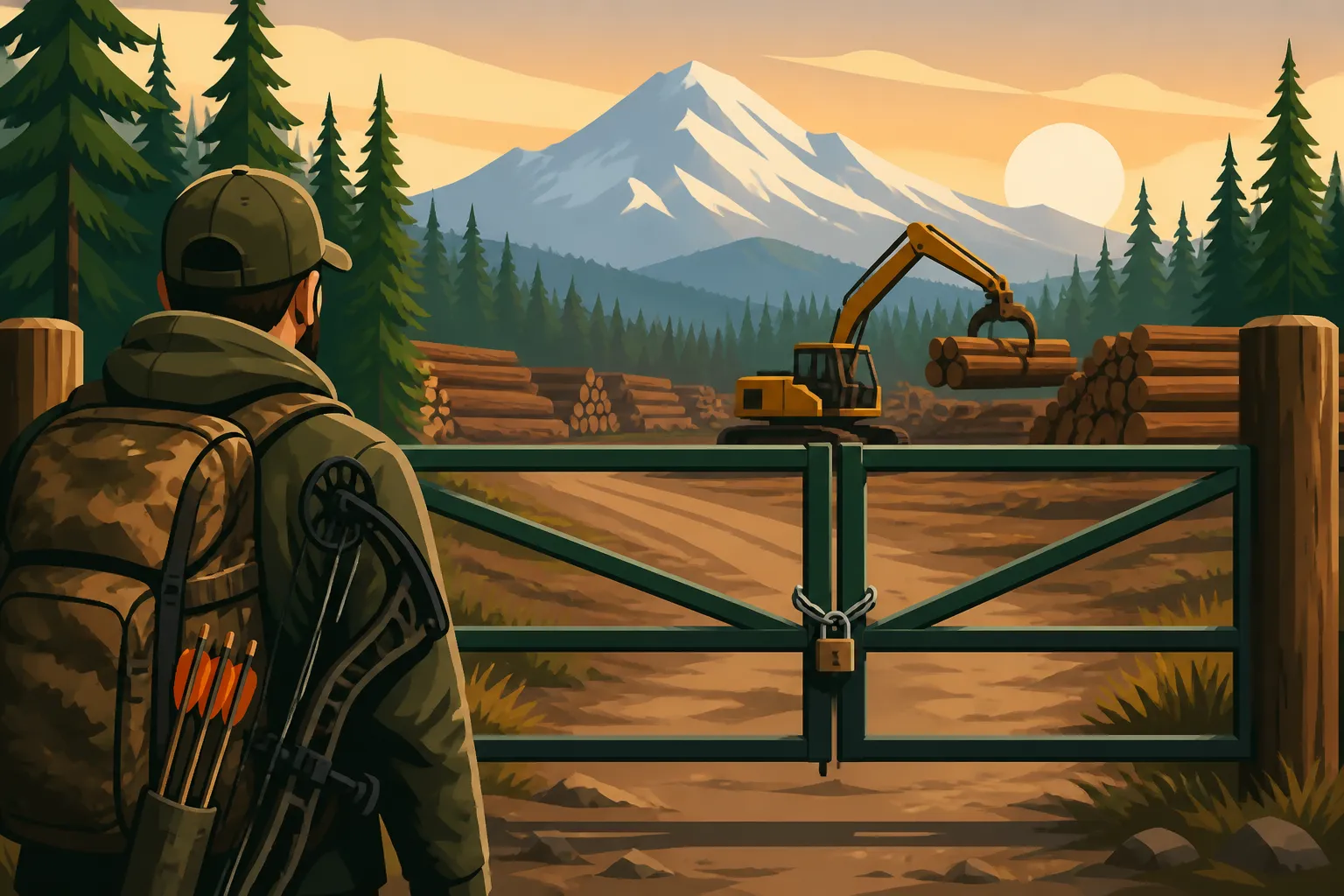
For many hunters in Washington, the quest for accessible land feels like a never-ending battle, especially with sprawling private timber holdings often locking up prime habitat. It's incredibly frustrating to see excellent elk and deer country behind a locked gate, knowing the game is there but the access is limited. This comprehensive guide is here to shed light on exactly how to navigate the complex world of hunting behind timber company gates in Washington, helping you understand the rules, opportunities, and strategies for success.
The Reality of Hunting Washington's Private Timber Lands
When you look at a map of Washington, particularly west of the Cascades, you'll see vast swaths of land marked as private timber. It's not just a few scattered parcels; it's a significant portion of our landscape, often directly bordering or intermingling with public lands. This reality shapes the hunting experience for countless Washington sportsmen and women.
Why Private Timber is So Prevalent in Washington
Washington's history is deeply intertwined with its timber industry. For generations, large corporations acquired massive tracts of forestland for logging operations, which continue to this day. These lands are managed primarily for timber production, meaning everything from road networks to reforestation efforts serves that commercial purpose. While these companies own the land, they often share it, under specific conditions, with the public for recreational activities like hunting. However, the primary objective is not recreation, and access rules can change frequently based on logging schedules, fire danger, or economic factors. Understanding this fundamental difference is key to navigating access.
The sheer scale of these private holdings means they encompass diverse habitats, from dense, regenerating clearcuts to mature timber stands and river bottoms. This makes them incredibly attractive to game animals, especially deer and elk who seek refuge in the varied cover and forage found in these managed landscapes. The challenge, of course, is gaining legal and ethical entry.
The Double-Edged Sword of Gate Access
Hunting behind a timber company gate presents a fascinating paradox. On one hand, it can offer an unparalleled hunting experience. Imagine miles of gated roads, often with less human pressure than readily accessible public land. This can translate into healthier game populations, bigger animals, and a more solitary hunting adventure. For hunters willing to put in the effort, these areas can be incredibly productive, giving you a chance to chase elk or blacktail deer without seeing another truck all day.
However, this privilege comes with its own set of challenges. Most timber company lands are not free-for-all public access. They often require permits, which can range from inexpensive annual passes to costly, limited-entry permits for specific areas or seasons. These permits come with strict rules regarding vehicle access, camping, fire restrictions, and even specific hunting dates. The application process can be competitive, and the rules are subject to change, sometimes without much notice. For many hunters, the frustration comes from the feeling of being locked out or having to pay for access to what feels like traditional hunting grounds.
Understanding Washington's Major Timber Land Owners and Their Access Rules
Navigating private timberlands in Washington means understanding the players. The state has several major timber companies, and each has its own unique approach to public access. Getting familiar with their programs is the first step to potentially hunting these valuable properties.
Weyerhaeuser Access Programs and Permits
Weyerhaeuser is one of the largest private landowners in Washington, and their access policies are probably the most well-known, and sometimes, the most debated, among hunters. They manage their lands for timber production but also offer recreational access through various permit systems. Historically, they've had different permit levels, from general access passes to more exclusive, limited-entry hunting permits for specific "Weyerhaeuser Permit Draw Timing in Washington" areas.
These permits are typically sold for a fee and often cover specific regions or "units" of their land. The application periods usually open early in the year, sometimes as early as January or February, and spots can be highly coveted. Hunters need to check the Weyerhaeuser website regularly for updates on their specific permit offerings each year. Restrictions commonly include no overnight camping, strict gate hours, and limits on the number of vehicles allowed in certain areas. It's crucial to read every detail of their permit agreements carefully, as violating terms can lead to revocation and future bans.
Hancock Forest Management Access
Another significant player in Washington's private timber landscape is Hancock Forest Management. Like Weyerhaeuser, Hancock also offers access to portions of its vast holdings, often through paid permits. Their programs tend to be geographically specific, with permits available for certain regions or blocks of timberland. These permits often grant access to gated roads and provide opportunities to hunt deer, elk, and bear.
Hancock's system typically involves purchasing a permit for a specific access area, which might be valid for a defined period, such as a general hunting season. Information regarding their permit availability, pricing, and application process is usually posted on their recreational access website. Hunters interested in these lands should monitor the Hancock website, often called the "Hancock Permit Availability in Washington" section, for details. While generally restrictive on vehicle access beyond main gates, many Hancock permits allow walk-in access once inside the larger permitted area, giving hunters a chance to explore remote sections on foot. Always confirm specific rules, as they can vary by region and year.
Other Private Timber Companies
Beyond the major players like Weyerhaeuser and Hancock, there are numerous smaller private timber companies and individual landowners across Washington. Their access policies can vary wildly. Some smaller companies might have no public access programs at all, while others might be open to granting "Getting Written Permission on Private Land" on a case-by-case basis if approached respectfully and well in advance of the season.
It's not uncommon to find local timber companies, even family-owned operations, that manage significant chunks of land. For these, networking and direct communication can sometimes open doors. However, you should always assume private land is closed unless explicitly stated otherwise or you have written permission. Never trespass, as it not only jeopardizes your hunting future but also damages the reputation of all hunters. Always use resources like county plat maps or online mapping tools to identify landowners and then seek permission through official channels.
Navigating Permit Applications and Fees
Once you understand who owns the land, the next step is figuring out how to legally get onto it. This often involves navigating permit applications, understanding costs, and being strategic about your choices. It can feel like a bureaucratic maze, but it's a necessary hurdle to unlock some fantastic hunting opportunities.
The Application Process: Timelines and Strategies
Applying for private timber land permits is a process that demands attention to detail and good timing. Most of the major timber companies open their application periods much earlier than you might expect for hunting season – often in late winter or early spring. For example, Weyerhaeuser often has application windows that can begin in January or February, with draws typically happening in spring. Hancock's process can also start early, sometimes by April or May, for the upcoming fall seasons. Missing these deadlines means missing out entirely.
My best advice here is to treat these applications like a special hunt permit application. Set calendar reminders, regularly check the companies' recreation websites, and be prepared to submit your application as soon as the window opens. Some permits are first-come, first-served, while others go into a draw system. Being organized and proactive is your best strategy. Utilizing online resources, like the mapping and permit information layers on platforms like GoHunt, can be incredibly helpful for tracking these critical dates and understanding what's available in specific areas. It’s also wise to research past years’ offerings to get a feel for what might be available, even though programs can change.
Understanding Permit Costs and What They Cover
The cost of private timber permits varies dramatically, from under a hundred dollars for general access passes to several hundred or even a thousand dollars or more for exclusive, limited-entry hunting units. It's important to understand what your money is actually buying. A general recreational permit might grant you access to walk or bike on specific roads but might not allow vehicle entry beyond primary gates, or it might be for general recreation excluding hunting. A dedicated hunting permit, however, will typically grant more specific hunting access.
These permits usually cover vehicle access to certain gated roads within a defined area, often for a specific duration (e.g., an entire general season, or a specific three-day hunt). Always double-check if the permit covers specific species or if there are limits on the number of hunters per vehicle. Some companies, like Weyerhaeuser, have had programs where you might pay for a key to a specific gate, giving you exclusive access to a smaller, defined area for a premium. Don't be surprised by the "Timber Permit Cost in Western Washington"; these fees help timber companies manage roads, reduce liability, and cover administrative costs, allowing them to keep these lands open to any degree. Compare the cost to what you'd pay for a guided hunt or the amount you spend on other gear, and it can often be a worthwhile investment for unique access.
Walk-In Only Access: A Hidden Opportunity
While many private timber lands are behind locked gates that require vehicle permits, some areas offer "walk-in only" access, which can be a fantastic, budget-friendly option for determined hunters. These are often lands managed by the Washington Department of Natural Resources (DNR) that are surrounded or accessed through private timber company lands, or even some private timber parcels themselves. The DNR sometimes partners with private landowners to allow "Walk-In Only Gates on Industrial Timber" by foot, often requiring only a Discover Pass for parking.
These opportunities are gold for hunters who enjoy covering ground on foot and are willing to pack in their gear. While you won't be driving your truck to your hunting spot, the reduced vehicle access usually means significantly less hunting pressure. This can make them ideal for "Still-Hunting Blacktails in Wet Washington Brush" or for pursuing elk in quieter, undisturbed areas. Identifying these areas requires careful map study, often utilizing tools like the WDFW Hunt Planner or OnX Maps, which show land ownership and walk-in boundaries. Be prepared for a physical challenge, as you might be carrying your pack and eventually, meat, for several miles from the nearest legal parking area.
| Timber Company | Typical Access Type | Application Window (Approx.) | Common Restrictions | Focus for Hunters |
|---|---|---|---|---|
| Weyerhaeuser | Fee-based permits, draw systems | Jan – Mar | Gated roads, no camping, specific units | Elk, Deer, Bear, specific hunt areas |
| Hancock Forest Mgmt. | Fee-based permits, region-specific | Apr – May | Gated roads, no camping, area boundaries | Elk, Deer, Bear, general season access |
| Smaller Companies | Varies (permission, no access, etc.) | Year-round (direct contact) | Highly variable | Localized, specific game if permission granted |
| DNR (Managed Timber) | Discover Pass (for walk-in) | N/A | Walk-in only, no vehicle access past gates | General big game, less pressure |
Rules of the Road and Respecting Private Land
Even with a permit in hand, remember that you are a guest on private land. Adhering to the rules isn't just about avoiding a fine; it's about maintaining access for all hunters. The relationship between timber companies and the hunting community is often fragile, and a few bad actors can spoil it for everyone.
Adhering to Company Regulations and Public Land Laws
When you purchase a timber company permit, you are agreeing to a specific set of terms and conditions. These regulations often go above and beyond standard state hunting laws. For instance, while state law might allow camping on certain public lands, a timber company permit almost universally prohibits overnight camping on their property. Fires are typically banned entirely, especially during dry seasons. Gate hours are strictly enforced, meaning you can't enter before a certain time in the morning or must exit by a specific time in the evening.
It's absolutely paramount to read and understand all the rules that come with your specific permit. Carry a copy of your permit, identification, and your "Washington Hunter Education and Licensing" documentation with you at all times. If you encounter a problem or witness a violation, report it to the timber company or WDFW rather than confronting individuals yourself. Respecting the property means leaving no trace, packing out all trash, and refraining from any activities not explicitly covered by your permit. This demonstrates responsibility and helps ensure these opportunities remain available for future seasons.
Road Systems, Gates, and Vehicle Use
One of the primary benefits of private timber access is often the extensive network of logging roads. However, these roads come with strict rules. The most critical rule is often related to gates. Never block a gate, even if you have a key or permit for that area. Emergency vehicles or timber operations might need access at any time. Always park in a way that allows other vehicles to pass safely.
Many permits specifically limit vehicle use to designated roads. This means no off-roading, no driving on skid trails, and certainly no creating new roads. This also includes avoiding areas that are clearly marked for active logging operations. Timber companies implement closures and limit vehicle access for several reasons: minimizing road maintenance costs, preventing illegal dumping, reducing fire danger, and mitigating liability. Some companies utilize "Washington Green Dot Road Systems" or similar designations, but on truly private timberlands, you'll need to rely on their specific mapping and signage. Using an advanced mapping app like GoHunt can help you identify legal roads versus those off-limits, even behind locked gates, making sure you stay within bounds and avoid costly mistakes or permit revocation. Remember, while you might have a permit for a particular block of land, not all roads within that block may be open to public vehicle traffic.
Scouting and Hunting Tactics for Timber Gate Country
Once you've secured your permit and understand the rules, the real work begins. Hunting behind timber company gates requires diligent scouting and adaptable tactics, just like any other successful hunt. The unique landscape of managed timber provides specific challenges and opportunities.
E-Scouting and Boots-on-the-Ground Reconnaissance
Before you even step foot on the property, "E-Scouting Washington GMUs Before the Draw" is your best friend. Utilize online mapping tools like OnX Hunt, GoHunt, or the WDFW Hunt Planner. Look for distinct features:
- Clear-cuts of varying ages: Younger clear-cuts provide browse, older ones offer cover.
- Edge habitat: Where clear-cuts meet mature timber, or where different ages of regeneration meet. This is where deer and elk love to travel and feed.
- Logging roads and skid trails: These are natural travel corridors for game and often offer good vantage points.
- Topography: Look for saddles, ridges, and drainages that animals will use to navigate the landscape.
Once you have your permit, boots-on-the-ground scouting is essential. Drive or walk the main access roads and pay close attention to fresh sign: tracks, scat, rubs, and beds. Use binoculars or a spotting scope to glass clear-cuts and open areas from a distance, especially at dawn and dusk. Understand the lay of the land, identify potential ambush points, and pinpoint escape routes for game. Remember, these lands are actively managed, so logging operations might have changed the landscape since the last satellite image update.
Targeting Game in Managed Forests
Hunting in timber company land often means hunting regenerating forests, which can be thick, steep, and challenging. However, these environments are incredibly productive for deer and elk.
For elk, focus on areas with a mosaic of cover and forage. Look for recently logged areas (3-7 years old) that offer lush browse, especially if they are adjacent to dense thermal cover or water sources. During early seasons, elk might be higher up, seeking cooler temperatures and specific forage. Later in the season, they'll often drop to lower elevations. Utilize old logging roads for silent travel, and consider focusing on benches, saddles, and ridge lines where elk tend to travel between bedding and feeding areas. Learning to call effectively, whether with a bugle or cow calls, can be very productive in these thick environments. For more insights, check out "Setting Up on a Herd Bull in Dark Timber".
For blacktail deer, regenerating clear-cuts and dense reprod (reproduction) are key. Blacktails are masters of hiding in thick cover. Look for "Reading Clearcuts and Reprod for Blacktail Bucks" on sunny slopes or within a few hundred yards of dense timber. They'll often bed just inside the edge of cover, soaking up the sun or escaping the wind. Still-hunting slowly and meticulously through dense young timber is often the most effective tactic. Pay close attention to subtle movements and listen for rustling in the brush. In these conditions, patience and keen observation skills are more valuable than covering vast distances.
Safety and Preparedness When Hunting Behind Gates
Hunting behind timber company gates often means hunting in remote areas where cell service might be nonexistent and help is far away. Therefore, safety and preparedness are paramount. Always "Leaving a Trip Plan at Home" with someone who knows your exact hunting area, your expected return time, and who to contact if you don't check in.
Carry a well-stocked "First Aid Kit for a Remote Hunt" that includes items for major trauma, as well as blister care and pain relief. A satellite messenger (like a Garmin inReach or Zoleo) is a highly recommended piece of gear for communicating in areas without cell service, allowing you to send check-in messages or call for emergency help. Be mindful of changing weather conditions; Washington's mountains are notorious for sudden shifts. Carry enough water, food, and emergency shelter. Let someone in your group know your route if you split up, and consider carrying two-way radios for short-range communication. Being self-sufficient is the name of the game when you're miles behind a locked gate.
Disclaimer
Please remember that hunting regulations and private land access rules can change frequently. Always consult the most current Washington Department of Fish and Wildlife (WDFW) regulations pamphlet and directly verify access policies with the specific timber companies before planning your hunt. This guide is for informational purposes only and should not replace official sources.