Washington National Park Hunting Closures
It's incredibly frustrating to spend hours, days even, poring over maps, planning your hunt, only to realize you've inadvertently stumbled into a zone where your tag is completely worthless. For many Washington hunters, the majestic beauty of our National Parks can be a powerful draw, but understanding where the lines are drawn—literally and legally—between huntable public land and protected parkland is absolutely critical. This guide is here to untangle that confusion, ensuring you know exactly why and where hunting is off-limits within Washington's National Park system, and how to successfully navigate the boundaries that matter.
The Fundamental Difference: National Parks Versus Other Public Lands
Let's get one thing straight from the start: National Parks are not like other public lands you might typically hunt in Washington. I know, it sounds simple, but it's a distinction that trips up a lot of folks, especially those new to hunting in our beautiful state. When you think of hunting on public land, your mind probably goes to places like National Forests, lands managed by the Department of Natural Resources (DNR), or even Bureau of Land Management (BLM) property. These are generally open to hunting, often requiring little more than your valid license and tag, and adherence to specific Game Management Unit (GMU) rules.
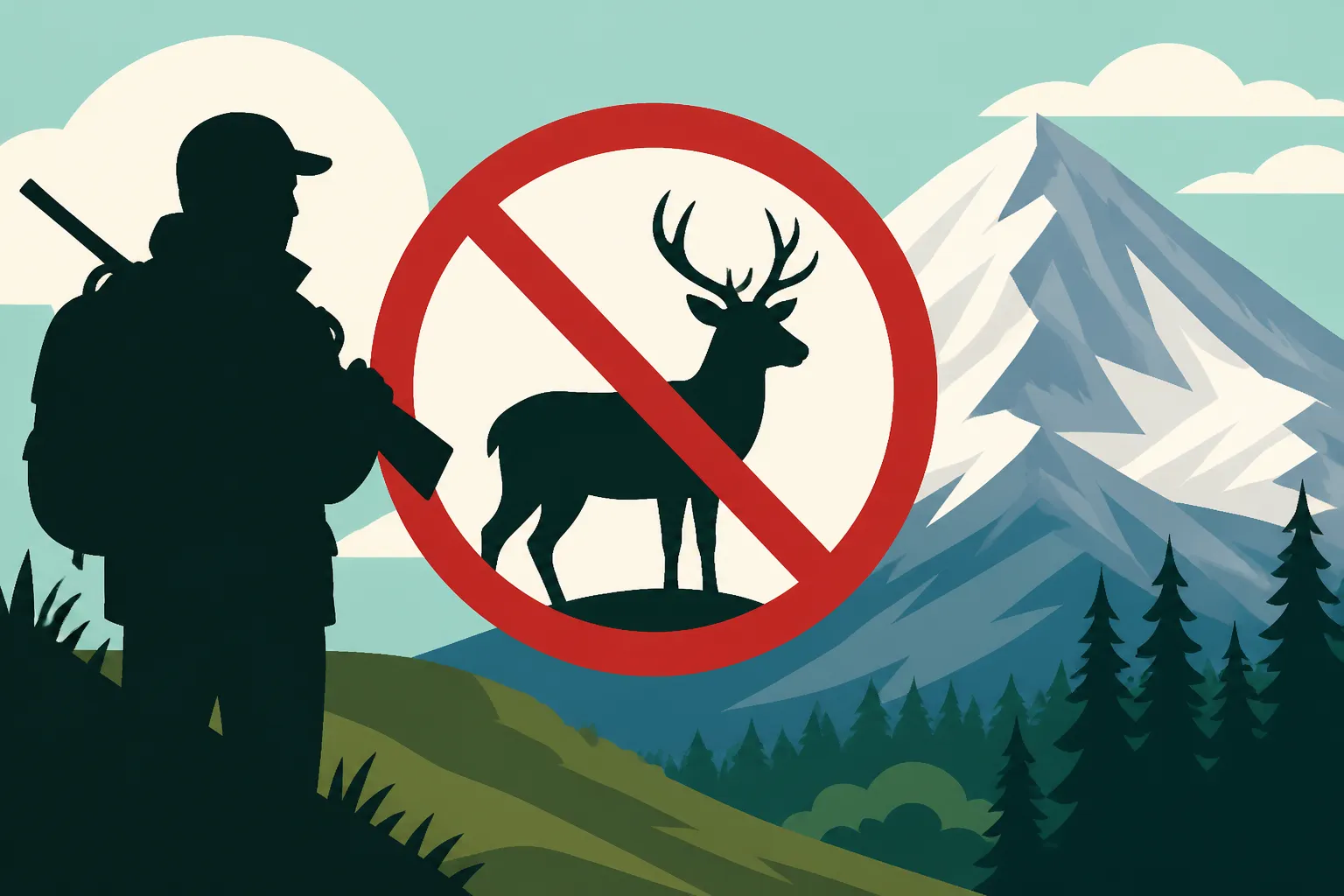
The core mission of the National Park Service is fundamentally different. Their mandate, established over a century ago, is about preservation—about protecting natural and cultural resources for future generations, and providing for public enjoyment in a way that leaves them "unimpaired." This means that within the boundaries of a National Park, the landscape, the wildlife, and all natural processes are to be left as undisturbed as possible by human intervention, especially lethal take. Unlike a National Forest, where timber harvesting, mining, and, yes, hunting are often permitted under careful management, National Parks are essentially hands-off for hunters. This isn't a state-level decision; it's federal law, rooted in the foundational principles of the National Park system. So, while you might find yourself in vast, wild country that looks like prime elk or deer habitat, if it's within a National Park boundary, your rifle or bow has to stay cased. It's a hard line, and there's generally no wiggle room or special season exceptions. This clear-cut difference is why it's so important to scrutinize your maps and really understand the land designations before you even put boots on the ground. You might be near a Washington Wilderness Areas Open to Hunting area, which often allows hunting, but a National Park nearby will be a different story entirely.
Washington's National Parks and Their Hunting Status
Washington State is home to three magnificent National Parks, each renowned for its unique wilderness, towering peaks, ancient forests, and abundant wildlife. However, for hunters, this splendor comes with a crucial caveat: hunting is strictly prohibited within the official boundaries of all three. This includes Mount Rainier National Park, Olympic National Park, and North Cascades National Park.
Mount Rainier National Park Hunting Rules
Mount Rainier, our iconic volcano, is a beacon for outdoor enthusiasts, but not for hunters. The entire park, from its alpine meadows to its old-growth forests, is a wildlife sanctuary. This means no hunting for elk, deer, bear, or anything else within its designated perimeter. The park's boundaries are extensive, covering over 236,000 acres, and they butt up against National Forest lands, primarily the Gifford Pinchot National Forest and the Mount Baker-Snoqualmie National Forest. This creates a fascinating situation where animals, particularly elk, will often use the park's protective bubble as a refuge, moving into and out of huntable areas depending on pressure and season. Hunters need to be hyper-aware of these lines. I've heard too many stories of hunters unknowingly crossing into parkland, which can lead to hefty fines and even confiscation of gear. If you're planning a hunt near this majestic peak, pay very close attention to the Mount Rainier Boundary and Washington Hunting details, as the difference between legal hunting ground and off-limits territory can be as subtle as a faded boundary marker.
Olympic National Park Hunting Closures
Out on the Olympic Peninsula, Olympic National Park encompasses nearly a million acres of unparalleled wilderness, including temperate rainforests, rugged coastlines, and glacier-capped mountains. Much like Mount Rainier, this entire area is closed to hunting. The park is a critical habitat for the Roosevelt elk, blacktail deer, and black bears, all of which thrive within its protected borders. The challenge here is that Olympic National Park is surrounded by Olympic National Forest, creating a complex patchwork of public lands. It's easy to mistakenly believe that because you're on federal land, you're good to go. This is a common misconception. The National Forest lands surrounding the park are generally open to hunting during specified seasons, but the park itself is not. This makes detailed map work absolutely essential. Understanding the nuances of Olympic National Park Versus Forest Hunting is paramount to avoiding a costly mistake. Animals will move freely between the park and the forest, offering opportunities on the forest side, but never within the park's sanctuary.
North Cascades National Park Complex and Hunting
The North Cascades National Park Complex, which includes North Cascades National Park, Ross Lake National Recreation Area, and Lake Chelan National Recreation Area, presents a slightly different, though equally important, set of rules. While the National Park portion is unequivocally closed to hunting, the National Recreation Areas (Ross Lake and Lake Chelan) do allow hunting in specific, designated zones under state game laws, primarily for Roosevelt Elk of Western Washington and Columbian Blacktail Deer in Western Washington. This is a rare exception within the National Park Service's purview, designed to allow for compatible recreation. However, it's not a blanket permission slip. You must consult the specific regulations for those recreation areas, often found in the Washington Department of Fish and Wildlife (WDFW) hunting pamphlets, as well as on the National Park Service website. The vast majority of the "park complex" is still a no-go for hunters. Given the rugged, remote nature of the North Cascades, accidental incursions are a real risk if you're not meticulous with your navigation. For anyone considering hunting this area, studying the North Cascades Park Hunting Rules thoroughly is your first step.
To summarize the hunting status of Washington's primary National Park designations:
| National Park Designation | Hunting Status | Notes |
|---|---|---|
| Mount Rainier National Park | Prohibited | Entire park is a no-hunting zone. |
| Olympic National Park | Prohibited | Entire park is a no-hunting zone. |
| North Cascades National Park | Prohibited | Core park area is a no-hunting zone. |
| Ross Lake National Recreation Area | Permitted in Specific Zones | Consult WDFW and NPS for exact regulations and boundaries. |
| Lake Chelan National Recreation Area | Permitted in Specific Zones | Consult WDFW and NPS for exact regulations and boundaries. |
Navigating Boundaries and Access
The biggest headache for hunters around National Parks isn't usually why hunting is closed, but where exactly that closure begins and ends. Park boundaries are often not marked with obvious fences or clear signage, especially in remote backcountry areas. You might be deep in timber, focused on a fresh track, and easily cross an invisible line that could land you in serious trouble. This is where meticulous planning and modern technology become your best friends.
First off, you need to understand that different agencies manage different types of land, and each has its own rules. National Parks are distinct from National Forests, which are distinct from DNR lands, and so on. Your primary tool for discerning these boundaries should be a high-quality map. Physical maps from the Forest Service or USGS are excellent, but in today's world, digital mapping apps have become indispensable. I personally rely heavily on tools like onX Hunt. Its layered maps clearly show land ownership, including National Parks, National Forests, state lands, and even private timber company holdings. This visual clarity, right on your phone or GPS device, can be a game-changer. You can see the distinct boundary lines in real-time as you move through the terrain, eliminating much of the guesswork. Always make sure to download offline maps before you head into areas with no cell service—which, let's be honest, is most of Washington's good hunting country! Downloading Offline Maps for Washington is a skill every backcountry hunter needs to master.
Before you even leave home, spend significant time e-scouting. This involves using online mapping tools, satellite imagery, and resources like GoHunt to identify potential hunting areas adjacent to park boundaries. Look for Forest Service roads, trail systems, and natural features that might serve as landmarks for the boundary. Understanding the Washington Game Management Units Explained is also crucial, as these GMUs often overlap with various land designations. Many park boundaries align with ridges, rivers, or specific elevation contours, but just as often, they're arbitrary survey lines through dense forest. Knowing what kind of terrain features to expect on the boundary can help you stay on the right side of the law. Mark potential boundary crossings on your map and GPS, creating waypoints or lines that warn you before you get too close. This proactive approach is far better than finding out the hard way.
Tools and Tips for Boundary Awareness:
- Digital Mapping Apps: onX Hunt is fantastic for its land ownership layers. Other apps also offer similar functionality. Learn to use them proficiently.
- GPS Devices: Handheld GPS units are robust and reliable, often having better battery life in cold weather than phones. Upload your planned routes and marked boundaries.
- Physical Maps: Always carry a topographic map and a compass as a backup, even if you rely on electronics. Batteries die, and screens crack.
- Boundary Markers: Look for official boundary signs, painted blazes on trees, or survey markers, though these can be sparse and faded in remote areas. Never rely solely on these.
- E-Scouting Washington GMUs Before the Draw: This practice extends to identifying all land designations, not just GMUs. Researching the exact boundaries of your chosen GMU and any adjacent National Parks is paramount.
- Know Your Location Constantly: Don't just check your map when you're lost. Periodically confirm your position, especially when moving through thick cover or unfamiliar terrain.
Strategies for Hunting Adjacent to National Park Lands
The fact that National Parks are closed to hunting doesn't mean they're entirely irrelevant to your hunting strategy. Quite the opposite, actually! Animals, particularly elk and deer, don't read boundary signs. They follow feed, water, and instinct. Often, these protected areas act as critical sanctuaries, especially when hunting pressure builds up on surrounding public lands. This presents both a challenge and an opportunity for the savvy Washington hunter.
Understanding Animal Behavior Near Sanctuaries
Big game animals learn quickly where they are safe. During opening day or high-pressure weekends, you'll often see animals retreat into the relative safety of National Park lands. This means that lands immediately adjacent to park boundaries can be excellent hunting spots, particularly during the shoulder periods of the day (first and last light) or after intense pressure has pushed animals out of more accessible areas. For Blacktail Deer Hunting in Western Washington Timber, you might find them just inside the National Forest boundary, right next to the park, after being bumped from a nearby clearcut. The same goes for elk that might feed in peripheral areas of the park overnight and then move into the dense cover of a National Forest unit bordering the park to bed down during the day.
Your strategy should involve studying these "edge" habitats. Look for areas where the terrain or vegetation changes significantly right near a park boundary. These transition zones are often travel corridors. For example, a saddle or ridge system that leads into a park, or a creek bottom that provides cover, could be a highway for animals moving between huntable and unhuntable land. Focusing your efforts on these fringes can be incredibly productive, but it requires patience and a keen understanding of game movement.
Accessing Bordering Public Lands
The lands surrounding Washington's National Parks are typically National Forests, such as the Gifford Pinchot, Okanogan-Wenatchee, and Olympic National Forests, along with some state DNR lands. These areas are generally open to hunting, adhering to state regulations. Accessing these areas often involves a network of Finding Old Logging Roads on Satellite, trails, and sometimes even designated walk-in areas. You'll need to check the specific GMU regulations for the areas you plan to hunt, as well as Forest Service or DNR motor vehicle use maps to understand road closures and access points. Some timber companies also own land adjacent to these public forests, and they may require permits for access.
When hunting close to a park boundary, always err on the side of caution. Give yourself a wide buffer zone. If an animal is right on the line, or appears to cross it after the shot, you absolutely cannot pursue it into the park. Retrieving an animal from a National Park, even if shot legally outside its boundaries, is often prohibited or requires specific, complicated permissions from the Park Service, which are rarely granted and only under strict supervision. It's a risk most hunters are unwilling to take, and rightfully so. Therefore, practicing your shot placement and understanding your effective range becomes even more critical when hunting near a boundary.
Leveraging Resources and Local Knowledge
Don't underestimate the power of local knowledge. Talk to WDFW biologists, Forest Service rangers, or seasoned local hunters (respectfully, of course) who are familiar with the area. They can often provide insights into animal patterns near park boundaries, historical movement corridors, and specific access points. Online hunting forums and resources like GoHunt can also offer valuable discussions and trip reports related to specific GMUs bordering the parks. This community intelligence, combined with your own rigorous e-scouting and on-the-ground reconnaissance, forms a powerful toolkit for ethical and successful hunting near Washington's magnificent, but restricted, National Park lands. Remember, a successful hunt isn't just about taking an animal, it's about respecting the land, the rules, and the animals themselves.
Disclaimer
This article is for general informational purposes only and does not constitute professional advice. Laws, prices and regulations vary by location and change over time. Consult a qualified professional for guidance on your specific situation.