Washington’s Muzzleloader Equipment Rules
Hunting with a muzzleloader in Washington is a truly unique experience, offering a blend of tradition, challenge, and often, less crowded hunting opportunities. However, for many hunters, especially those new to the black powder game or coming from other states, the specific equipment rules laid out by the Washington Department of Fish and Wildlife (WDFW) can feel incredibly complex and even a bit frustrating. It’s easy to get lost in the nuances of what's allowed versus what's considered a modern firearm accessory. This guide is designed to cut through that confusion, giving you a clear, comprehensive breakdown of Washington's muzzleloader equipment rules so you can confidently prepare for your next hunt.
Understanding Washington's Muzzleloader Philosophy
Before diving into the nitty-gritty of specific gear, it’s helpful to understand the underlying philosophy behind Washington's muzzleloader regulations. These aren't just arbitrary rules; they're crafted to preserve a particular type of hunting experience and to provide distinct seasons that differ significantly from modern firearm or archery hunts.
Why Muzzleloader Seasons Exist
Muzzleloader seasons are a fantastic way to extend hunting opportunities and often provide access to game during periods when other weapon types are restricted. Think about those early fall elk hunts, when the air is crisp, but the full rush of general rifle season hasn't yet descended. These seasons are a deliberate choice by WDFW to create a more traditional hunting experience, one that emphasizes stalking, patience, and a deep understanding of your firearm's capabilities and limitations. The slower loading process, reduced effective range, and sometimes less reliable ignition of a muzzleloader all contribute to a hunting style that harks back to earlier eras. It pushes you to become a more skilled and deliberate hunter. You're not just pulling a trigger; you're engaging with a piece of history. For many, this challenge is precisely the appeal, allowing a chance at big game without the intense pressure of peak rifle seasons.
The Spirit of the Rule
The core idea behind Washington's muzzleloader regulations is to maintain a level playing field that promotes fair chase within the spirit of traditional muzzleloading. WDFW's rules are designed to prevent muzzleloaders from becoming simply "single-shot rifles" with modern conveniences that erase the traditional challenges. This means restrictions on advanced optics, certain loading practices, and even specific projectiles. The intent is to encourage closer shots, better tracking skills, and a more intimate connection with the hunt. When you're limited to open sights and a single, carefully loaded shot, every decision, every stalk, and every movement in the field takes on greater significance. It truly makes you slow down and think about your approach to the game.
Key Differences from Modern Firearm Seasons
The distinctions between muzzleloader and modern firearm seasons are significant and often lead to misunderstandings. Unlike a modern rifle hunter who might carry a magazine full of cartridges and use a powerful variable-magnification scope, a muzzleloader hunter faces limitations at almost every turn. For instance, the ability to quickly reload is severely hampered, forcing you to make that first shot count. Muzzleloader Loading and Ignition in Rain can highlight just how different the process is. The effective range of most legal muzzleloader setups in Washington is also considerably shorter than that of many modern rifles, demanding that you get much closer to your quarry. Furthermore, the recoil can be substantial, and managing it with a traditional stock and iron sights is a skill in itself. These differences aren't meant to punish hunters, but rather to define a specific type of hunt—one that rewards patience, stealth, and a deep appreciation for the historical roots of hunting.
Muzzleloader Specifics: Ignition and Loading
The very heart of a muzzleloader is its ignition and loading system. Washington has very particular rules about how these firearms are constructed and how they operate during hunting season. Knowing these details is non-negotiable for staying legal.
Permitted Ignition Types
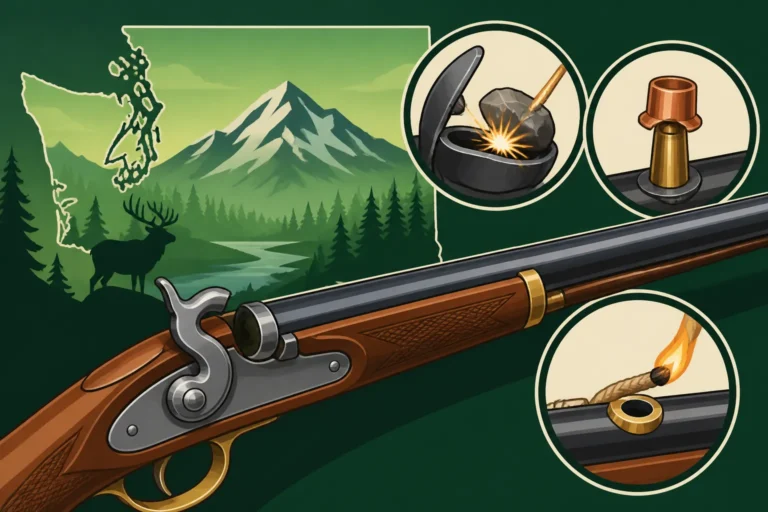
Washington state rules specify that only certain ignition systems are allowed for muzzleloaders during designated seasons. Specifically, you're looking at flintlock and percussion cap systems. This includes both traditional percussion caps (like No. 11 or musket caps) and the more modern 209 primers, which are typically used in inline muzzleloaders. The key here is that the primer must be exposed or visible when the gun is loaded. This regulation is a critical component of the "traditional" aspect of muzzleloading. It prevents the use of fully enclosed ignition systems that might offer a more weather-resistant and reliable firing, thus blurring the line between a true muzzleloader and a modern rifle. If your muzzleloader has an enclosed breach where the primer is not visible, it's generally not considered legal for Washington's muzzleloader seasons. Check your specific firearm carefully to ensure it complies. Muzzleloader Ignition Types Washington Allows delves deeper into these specific mechanisms.
Powder and Projectile Rules
When it comes to what you put down the barrel, Washington also has strict guidelines. For powder, both black powder and approved black powder substitutes (like Pyrodex or Triple Seven) are allowed. You absolutely cannot use smokeless powder in a muzzleloader during hunting season in Washington, even if your firearm is rated for it. Smokeless powder generates much higher pressures and velocities, which again, deviates from the traditional muzzleloader experience.
Regarding projectiles, you have some options, but with important caveats. You can use sabots (a plastic sleeve that allows a smaller diameter bullet to be fired from a larger bore muzzleloader) with non-jacketed lead projectiles. However, fully jacketed bullets (like those used in modern rifle cartridges) are generally prohibited. This means copper solids or heavily jacketed lead core bullets are out. The rules typically favor lead or lead alloy bullets, whether they are patched round balls, conical bullets, or those used with sabots. The intent is to keep the projectiles within a performance envelope consistent with traditional muzzleloading.
Loading Requirements
This might seem obvious, but it's a critical point often overlooked: the firearm must be loaded from the muzzle. This means no pre-loaded cartridges, no removable breech plugs that contain the charge and projectile ready to go, and absolutely no multi-shot magazines or cylinders that can be quickly swapped out. Your muzzleloader must be a single-shot, muzzle-loaded firearm.
The essence of a muzzleloader hunt is that each shot is a deliberate, time-consuming process involving pouring powder, seating a projectile, and then capping or priming the ignition. This slow, methodical reloading process is central to the challenge and spirit of muzzleloader hunting. Carrying multiple pre-loaded speedloaders is generally permitted for convenience in the field, but they must be loaded into the muzzle of the firearm one at a time. This rule emphasizes the single-shot nature of the hunt and ensures that no hunter gains an unfair advantage through rapid reloading capabilities that a modern firearm would offer.
| Equipment Feature | Permitted for Muzzleloader Season | Not Permitted for Muzzleloader Season |
|---|---|---|
| Ignition System | Flintlock, Percussion Cap, 209 Primer (exposed) | Enclosed Ignition Systems |
| Powder Type | Black Powder, Approved Substitutes (Pyrodex, Triple Seven) | Smokeless Powder |
| Projectile Type | Lead, Lead Alloys, Saboted Non-Jacketed Lead | Fully Jacketed Bullets, Hard-Cast Solids (non-lead) |
| Loading Method | Muzzle-loaded only | Breech-loaded, Magazine-fed, Pre-loaded Cylinders |
| Minimum Caliber | .45 caliber for big game | Below .45 caliber for big game |
Optics and Sights: What You Can and Cannot Use
The topic of optics is often where the most confusion lies for muzzleloader hunters in Washington. Many states have different rules, and what you might be used to elsewhere might not fly here. WDFW's goal is to maintain the "traditional" aspect of muzzleloading, which means keeping optical aids fairly basic.
Scope Restrictions
Here's a big one: if you're hunting during a designated muzzleloader season, your scope options are severely limited. Washington generally prohibits any scope that offers magnification. This means no variable power scopes (e.g., 3-9×40) and no fixed power scopes (e.g., 4x). The only exception typically allowed would be a non-magnifying "peep sight" or a simple "dot sight" which projects a red dot but doesn't magnify the target. These types of sights are often referred to as 1x or non-magnifying optical sights. The logic here is clear: magnified optics significantly extend the effective range and ease of target acquisition, moving away from the traditional challenge. Why Washington Restricts Muzzleloader Scopes provides further context on this rule. You are meant to be getting closer, relying on your stalking skills, rather than reaching out with powerful optics.
Open Sights and Fiber Optics
For most Washington muzzleloader hunters, open sights are the order of the day. This typically means a front post sight paired with a rear notch or buckhorn sight. These are simple, robust, and require a good sight picture and steady hand. They embody the traditional hunting experience. Many modern muzzleloaders come equipped with, or can be fitted with, fiber optic sights. These are essentially open sights where the front and/or rear sight elements incorporate small fiber optic rods that gather ambient light, making them glow brightly. This greatly enhances visibility, especially in low light conditions or against dark backgrounds like timber. Fiber optic sights are generally permissible in Washington as they do not provide magnification and are considered an enhancement to traditional open sights, rather than a departure from them. They give you a little edge without breaking the spirit of the hunt.
Illuminated and Electronic Sights
This is another area ripe for misunderstanding. While fiber optic sights that gather ambient light are usually fine, electronically illuminated sights that require batteries to light up a reticle or dot are generally not permitted during muzzleloader seasons. This includes red dot sights that are battery-powered, unless specifically exempted as non-magnifying. The reason, again, is to maintain the traditional aspect and avoid giving hunters an electronic advantage that departs from the historical nature of the weapon. Laser sights, rangefinding reticles, and any other battery-powered optical enhancements are typically off-limits. The overarching theme is that if it needs a battery to function, or it magnifies your target, it's probably not legal for a Washington muzzleloader hunt. Always double-check the current WDFW regulations pamphlet before heading afield, as rules can sometimes see minor clarifications or changes. For those looking to maximize their odds, tools often found on platforms like GoHunt can help you stay on top of the latest regulations and plan your hunt accordingly.
Ammunition and Bullet Specifications
Just like the rules for the firearm itself, what you load into your muzzleloader is also subject to specific regulations. These rules are in place to ensure fair chase and to prevent hunters from using projectiles that would transform the muzzleloader into something akin to a modern rifle.
Minimum Caliber Requirements
For hunting big game in Washington with a muzzleloader, there's a strict minimum caliber requirement of .45 caliber. This means your muzzleloader must be at least .45 caliber to pursue species like deer, elk, bear, or cougar during muzzleloader seasons. You cannot use a .40 caliber, a .36 caliber, or any smaller bore muzzleloader for big game. While smaller calibers might be perfectly legal for small game or target shooting, they do not meet the legal requirements for big game hunting in Washington. This rule is designed to ensure sufficient kinetic energy and bullet mass for a humane kill on larger animals, reflecting the traditional power of such firearms. Washington's .45 Caliber Muzzleloader Minimum expands on this important regulation.
Bullet Type and Construction
As mentioned earlier, the bullet type and construction are also regulated. Washington generally requires non-jacketed lead or lead alloy projectiles. This includes traditional round balls, conical bullets, and saboted bullets where the actual bullet inside the sabot is non-jacketed lead. The key distinction is "non-jacketed." Fully jacketed bullets, like those used in modern centerfire rifle cartridges (which often have a copper jacket encasing a lead core), are typically prohibited. This is to prevent hunters from gaining the deep penetration and ballistic advantages associated with modern rifle bullets, which would again stray from the traditional muzzleloader experience. Some hunters also wonder about non-lead alternatives. While the focus has historically been on lead, if you opt for a non-lead bullet, it must generally be a solid, non-jacketed design, such as a solid copper conical. Always consult the most current WDFW regulations for any updates on non-lead projectile allowances, as these can sometimes evolve.
Sabots and Conical Projectiles
Let's talk a bit more about sabots and conical projectiles as they are quite common.
Conical Projectiles: These are essentially elongated lead bullets designed to be loaded directly down the muzzle without a patching material, relying on their soft lead skirt to engage the rifling. They come in various shapes and weights and are a very traditional choice. Many hunters prefer conicals for their simplicity and the historical feel they offer. They are certainly legal and widely used in Washington.
Sabots: Sabots allow a bullet smaller than the bore diameter to be fired accurately. For instance, a .40 or .42 caliber lead bullet might be encased in a plastic sabot to be fired from a .50 caliber muzzleloader. Washington does allow sabots, but with the crucial stipulation that the actual bullet within the sabot must be a non-jacketed lead or lead alloy projectile. This means you cannot put a modern, fully jacketed rifle bullet inside a sabot and use it during muzzleloader season. The sabot itself is simply a carrier; the bullet it carries must meet the specified non-jacketed lead criteria. This distinction is vital for compliance. Many hunters find that saboted projectiles offer better accuracy than traditional conicals, especially at the longer end of a muzzleloader's effective range, making them a popular choice.
Practical Considerations for Washington Muzzleloader Hunters
Beyond the letter of the law, there are many practical considerations that every Washington muzzleloader hunter needs to embrace. The equipment rules force certain realities upon you in the field, and being prepared for them makes all the difference.
Keeping Your Muzzleloader Dry in Washington Rain
Ah, Washington weather! Especially west of the Cascades, rain is not just a possibility; it's practically a guarantee during many hunting seasons. And nothing ruins a muzzleloader hunt faster than a wet charge or a failed ignition. Keeping your muzzleloader dry is paramount. This means taking proactive measures like using rubber caps or specialized waterproof covers over the muzzle and breech to protect the powder and primer. Many hunters will wrap the breach area with electrical tape or use dedicated waterproof covers. Some even carry small plastic bags to slip over the entire action during heavy downpours or while traversing thick brush.
Even a slight drizzle can work its way into the pan of a flintlock or around a percussion cap, rendering your firearm useless when that trophy animal steps out. When you're sitting on stand or still-hunting through wet timber, keeping the elements at bay needs to be a constant thought. It's a skill learned through experience, often a frustrating one, but crucial for success. Keeping a Muzzleloader Dry in Washington Rain offers more tactical advice on this common challenge.
Cleaning and Maintenance in the Field
Muzzleloaders, particularly those using traditional black powder, get dirty quickly. Black powder leaves behind a corrosive residue that can foul the bore and action, impacting accuracy and eventually preventing reliable firing. While a full cleaning is usually reserved for camp or home, some basic field maintenance might be necessary, especially if you plan on taking multiple shots or hunting for several days without a complete breakdown.
Carrying a small cleaning kit with patches, a cleaning jag, and a bottle of suitable solvent (like Ballistol or a dedicated black powder cleaner) is a good idea. A quick swipe down the bore after a shot, or even at the end of a rainy day, can prevent significant fouling. It's also wise to check and clean the nipple or flintlock pan regularly to ensure clear ignition. A stiff brush for the breech area can remove built-up crud. This isn't just about weapon longevity; it's about reliability when it matters most.
Practice and Accuracy
Hunting with a muzzleloader, especially with open sights, demands more rigorous practice than hunting with a scoped modern rifle. Your effective range will be shorter, and precise shot placement becomes even more critical. Spend significant time at the range, not just shooting from a bench, but practicing various field positions: standing, kneeling, and braced against a tree. Understand your firearm's limitations and your own.
Work on smooth trigger pulls and consistent sight pictures. Pay attention to how different powders and projectiles group at various distances. Many muzzleloaders are incredibly accurate within their effective range, but it takes dedicated practice to achieve that consistency. Don't just sight in at 50 yards; push it out to 75 or 100 yards to truly understand your rifle's capabilities and your own ability to place a shot. A platform like GoHunt can provide maps and resources that help locate suitable shooting ranges or public lands where practice is permitted, allowing you to master your muzzleloader before the season opens.
Navigating WDFW Regulations and Resources
Understanding Washington's muzzleloader rules isn't a one-and-done deal. Regulations can be complex, and staying informed is an ongoing responsibility for every ethical hunter.
Where to Find the Official Rules
The absolute best and most authoritative source for Washington's muzzleloader equipment rules is the WDFW Big Game Hunting Seasons and Regulations pamphlet. This pamphlet is released annually and is available both digitally on the WDFW website and in print at license vendors across the state. Do not rely solely on hearsay, forum posts, or what worked in another state. Always download or pick up the most current pamphlet for the season you are hunting.
Beyond the main pamphlet, the WDFW website (wdfw.wa.gov) is a treasure trove of information. Look for specific sections on muzzleloader regulations, often found under "Hunting" then "Big Game" or "Regulations." This website often provides additional clarifications or emergency rule changes that might not be in the printed pamphlet if something shifts mid-season. Regularly checking this site, especially as the season approaches, is a smart move. Washington Big Game Pamphlet Release is a good resource for understanding when to look for the updated regulations.
Common Misconceptions and How to Avoid Them
There are several common misconceptions that muzzleloader hunters often fall prey to. One is assuming that a "primitive weapon" season means anything goes as long as it's a muzzleloader; this is simply not true. Another is the belief that if an item is sold in a hunting store, it must be legal. Many products are sold nationally and may not comply with Washington's specific rules. For example, some optics marketed for muzzleloaders might have magnification, making them illegal here.
To avoid these pitfalls, read the regulations carefully, word for word. Don't skim. If you're unsure about a specific piece of equipment, contact WDFW directly. A quick call to their regional office or sending an email can get you a definitive answer. It's far better to clarify beforehand than to face a citation in the field. Always err on the side of caution. If it feels like it might be pushing the rules, it probably is.
Planning Your Muzzleloader Hunt
Integrating equipment rules into your overall hunt strategy is crucial. Knowing that you'll be limited to open sights and a single shot means you need to adjust your approach to the game. You'll likely need to focus more on calling strategies, perfecting your still-hunting technique, and becoming a master of scouting.
When you're planning your hunt, consider the terrain and cover. In dense Western Washington timber, open sights might be less of a disadvantage than in the wide-open sagebrush of Eastern Washington. Your target species also plays a role; Roosevelt Bulls and Why They Bugle Less might influence your approach compared to more vocal Rocky Mountain elk. Think about where you can realistically get within 100 yards of an animal. This means spending extra time E-scouting and on the ground, identifying pinch points, bedding areas, and feeding zones where close encounters are more likely. Understanding these equipment restrictions early in your planning process, and using resources like GoHunt to visualize GMU boundaries and terrain, helps shape a realistic and successful muzzleloader hunting strategy.
Disclaimer
This article is for general informational purposes only and does not constitute professional advice. Laws, prices and regulations vary by location and change over time. Consult a qualified professional for guidance on your specific situation.