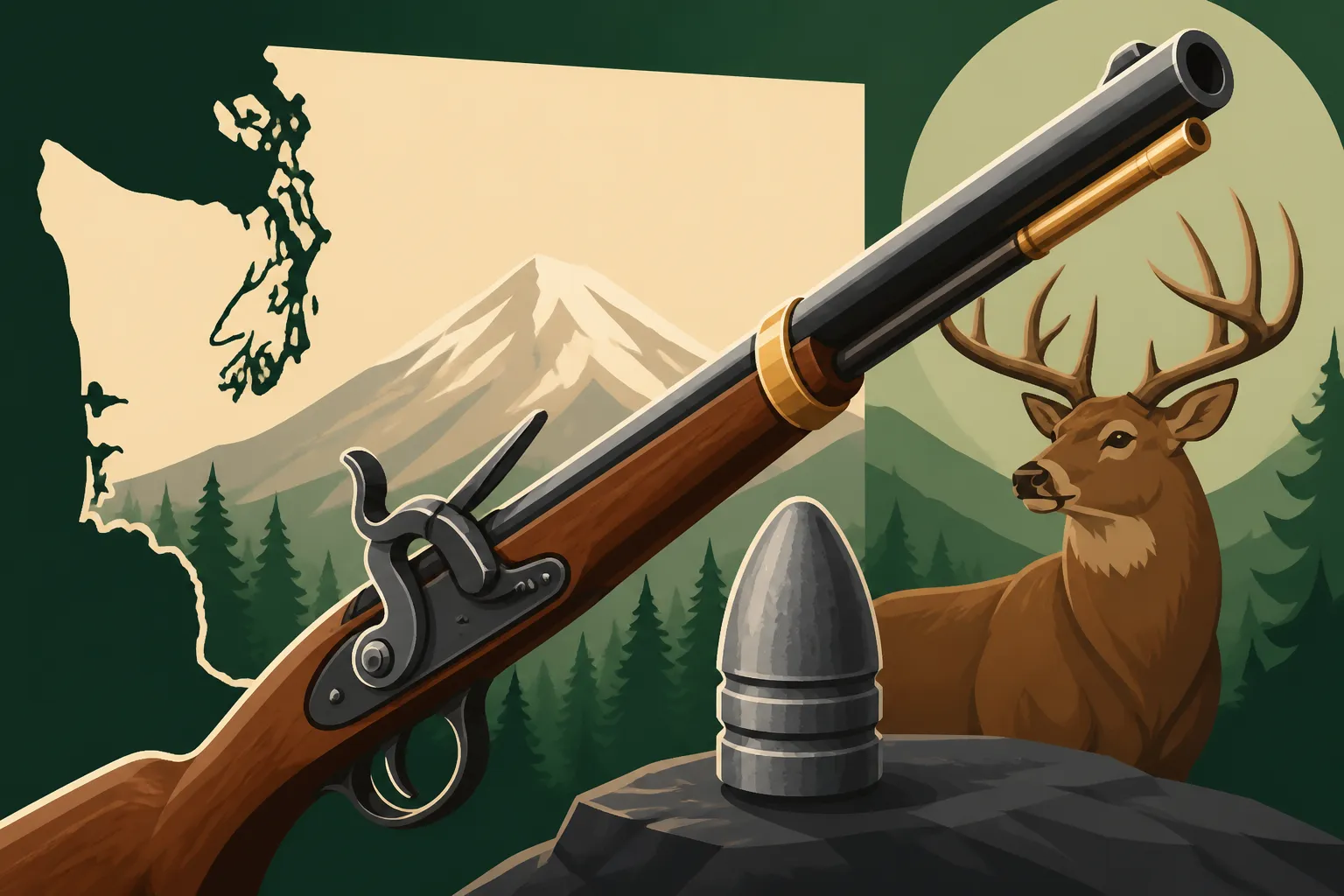
Washington’s .45 Caliber Muzzleloader Minimum
The crisp autumn air, the scent of damp earth, and the unique challenge of a muzzleloader hunt in Washington – it's a truly special experience. But if you're like many hunters, you might find yourself scratching your head over the specific regulations, especially when it comes to legal calibers. The Washington Department of Fish and Wildlife (WDFW) has clear rules, and one that often trips people up is the .45 caliber minimum for muzzleloaders. This guide will cut through the confusion, explaining exactly what that minimum means for your Washington hunt and how to ensure you're squared away and ready to hit the field legally and ethically.
Understanding Washington's Muzzleloader Regulations
Navigating hunting regulations can feel like trying to track a ghost in a blizzard – confusing and often frustrating. You just want to know what's legal so you can focus on the hunt itself. Washington state has specific rules for muzzleloaders, and they're designed to ensure an ethical harvest for big game while also providing a unique hunting opportunity distinct from modern firearms. It's not just about what you can shoot, but what you should shoot to make a clean kill.
The .45 Caliber Minimum for Big Game
Let's get right to it: for big game in Washington, your muzzleloader must be .45 caliber or larger. This isn't just a suggestion; it's a hard rule. The reason behind it is simple: ethical hunting. A .45 caliber projectile, when loaded appropriately, is generally considered to deliver sufficient energy and wound channel diameter to dispatch larger animals like deer and elk humanely. Using a smaller caliber, even with modern propellants, risks inadequate penetration or hydrostatic shock, leading to wounded animals and prolonged suffering – something no ethical hunter wants.
What exactly constitutes "big game" in Washington? We're talking about deer (Blacktail, Mule Deer, Whitetail), elk (Roosevelt and Rocky Mountain), black bear, cougar, moose, bighorn sheep, and mountain goat. If you're pursuing any of these incredible animals with a muzzleloader, that .45 caliber rule applies. You might have a trusty .36 or .40 caliber muzzleloader for small game or target shooting, but for a Washington big game hunt, it needs to stay in the safe. The WDFW outlines these requirements in detail, often found in the annual hunting pamphlet. It's always a good idea to cross-reference with their official publications or even online tools like GoHunt, which often compile these regulations for easier access.
Implications for Projectile Choice
The .45 caliber minimum impacts more than just the bore size of your rifle; it also dictates your projectile options. While a .45 caliber barrel might sound restrictive, the innovation in muzzleloader technology, particularly with sabots, offers a surprising amount of versatility.
Historically, .45 caliber muzzleloaders would fire a pure lead conical bullet, often weighing 300-500 grains, or a patched round ball. These are still viable, but many hunters today opt for saboted projectiles. A sabot is a plastic sleeve that holds a smaller diameter bullet – say, a .40, .429 (like a .44 caliber pistol bullet), or .451 (.45 caliber pistol bullet) – allowing it to be fired through a larger .45 caliber bore. The sabot seals the bore, engages the rifling, and then falls away shortly after leaving the barrel, sending the smaller, often more aerodynamic bullet downrange. This effectively means you can use a .44 caliber bullet in a .45 caliber muzzleloader, and it still counts as meeting the .45 caliber minimum rule because the bore is .45 caliber.
However, you can't just use any projectile. Even with sabots, you'll want to ensure the actual bullet you're launching is designed for big game. Pistol bullets, while technically fitting in a sabot, might not have the construction necessary for deep penetration on an elk. Look for bullets specifically designed for hunting, with good sectional density and controlled expansion characteristics.
Why the Rules Can Feel Confusing
It’s easy to feel overwhelmed by all the regulations, and you're not alone. The rules surrounding muzzleloaders, like many hunting laws, can sometimes feel like they were written by lawyers for lawyers. You might have hunted in Idaho or Oregon where the rules are slightly different, leading to honest confusion when you cross state lines. Plus, regulations can evolve, making it tough to keep up.
One of the biggest sources of confusion is often the difference between "caliber" and "projectile diameter." When WDFW says ".45 caliber minimum," they are referring to the bore diameter of your firearm. If your gun is stamped ".45 cal," you're good to go, even if you're using a sabot to shoot a .40 or .429 diameter bullet through it. The spirit of the law is about the potential energy and wound channel that a .45 caliber system can deliver.
Another common point of contention is comparing muzzleloader rules to modern firearm rules. With a rifle, you're looking at a .24 caliber minimum for big game. It might seem odd that muzzleloaders need a much larger bore. This disparity stems from the different ballistic properties of muzzleloading projectiles (slower velocities, heavier bullets) compared to high-velocity rifle cartridges. The larger caliber helps compensate for the lower velocity, ensuring sufficient tissue damage and penetration. Always remember to check the current Washington's Muzzleloader Equipment Rules directly from WDFW to avoid any surprises.
Choosing a Muzzleloader for Washington Hunts
So, you understand the .45 caliber minimum. Now, what kind of muzzleloader should you be looking at to meet this requirement and be successful in the diverse landscapes of Washington? From the dense timber of the Olympic Peninsula to the open plains of Eastern Washington, your choice of muzzleloader and its setup can make a real difference.
Popular .45 Caliber Muzzleloader Types
When we talk about modern muzzleloaders for big game, most hunters are referring to in-line muzzleloaders. These are the workhorses of today's black powder seasons, favored for their reliability, ease of use, and often, their improved accuracy compared to traditional designs. In-lines use a closed breech system where the primer is in-line with the powder charge, leading to more consistent ignition. Many models are specifically built around the .45 or .50 caliber requirement, making them ideal for Washington. Brands like CVA, Traditions, and Thompson/Center all offer excellent .45 caliber options that can handle Washington's conditions.
While less common for big game due to some of the specific regulations and the practicalities of field hunting, traditional percussion cap rifles (like Hawken or Kentucky rifle styles) can also be found in .45 caliber. However, they typically use slower twist rates and are often designed for patched round balls or specific conicals, which might limit your projectile choices for optimal performance on larger game. Flintlock rifles are even more traditional and rarely seen for big game hunting in Washington, primarily due to their ignition reliability in wet weather and the challenge of consistently achieving the necessary power for ethical big game harvest. For serious big game hunting in Washington, an in-line .45 caliber is almost always the pragmatic choice.
Essential Muzzleloader Accessories and Setup
Getting the right muzzleloader is only half the battle; the other half is setting it up correctly and having all the necessary accessories. A muzzleloader hunt involves a bit more gear than a modern rifle hunt, and skipping any of it can leave you in a bind.
First, powder. You'll need either traditional black powder (like Goex or Schuetzen) or a black powder substitute (like Triple Seven, Pyrodex, or Blackhorn 209). Each has its own characteristics regarding cleanliness, ignition, and energy. Make sure your chosen powder is compatible with your muzzleloader and primers. Blackhorn 209, for example, is very popular for its clean burn and consistency, but it requires a 209 shotshell primer.
Speaking of primers and ignition, modern in-line muzzleloaders almost universally use 209 shotshell primers, which provide hot, reliable ignition even in damp conditions. Traditional percussion rifles use percussion caps. Always carry plenty of spares, kept dry in a small, waterproof container. Nothing's worse than having a great shot opportunity only to hear a "click" instead of a "boom" because of a damp primer. You can find more tips on keeping things firing reliably in Muzzleloader Loading and Ignition in Rain.
Bullet selection for your .45 caliber is critical. As discussed, you can use saboted bullets with various bullet diameters inside (like .40, .429, .451) or full-bore conicals. Match your bullet weight and construction to the game you're pursuing. For Washington elk, you'll want a heavy-for-caliber bullet (typically 250 grains and up, sometimes much heavier with conicals) with good penetration. For deer, a slightly lighter bullet might be acceptable, but consistency is key. Don't forget your bullet starter, loading rod, and powder measure! And of course, a proper cleaning kit for your specific muzzleloader, including solvents, patches, and a bore brush, is non-negotiable for after-hunt maintenance and even occasional cleaning in the field.
Navigating Projectile Options for .45 Caliber
The .45 caliber minimum for muzzleloaders in Washington offers a few distinct paths when it comes to the actual projectile you send downrange. Understanding these options, their pros, and their cons is key to making an informed decision that suits your hunting style and the game you're pursuing. It’s not just about what fits, but what performs.
Sabots: Expanding Your Bullet Choices
Sabots are truly a game-changer for muzzleloader hunters, offering a bridge between the traditional bore size and modern bullet performance. Essentially, a sabot is a plastic cup or sleeve that encapsulates a smaller-diameter bullet, allowing it to fit snugly into your .45 caliber barrel. When fired, the sabot engages the rifling, imparting spin to the bullet, and then separates from the bullet a short distance after exiting the muzzle. This means you can use bullets originally designed for other calibers, such as:
- .40 caliber bullets: Often used in .45 caliber sabots, these can be very accurate and have good ballistic coefficients for flatter trajectories, especially with longer, more aerodynamic designs.
- .429-.430 caliber bullets: These are typically .44 caliber handgun bullets. Many proven hunting bullets in this diameter work exceptionally well when saboted in a .45 caliber muzzleloader, offering excellent expansion and weight retention.
- .451-.452 caliber bullets: These are .45 caliber handgun bullets. While the difference from the bore (.450) is small, the sabot still ensures a tighter seal and better engagement with the rifling than a bare lead conical might, especially with jacketed designs.
The primary pros of using sabots include:
- Wider bullet selection: Access to a vast array of jacketed and bonded bullets designed for handguns, many of which offer superior terminal performance (expansion, weight retention) compared to pure lead conicals.
- Improved accuracy: Sabots often provide better accuracy, especially at longer ranges, because the bullets themselves are often more uniform and aerodynamic, and the sabot ensures a consistent gas seal.
- Cleaner bore: Some saboted setups can lead to less lead fouling in the bore, though the plastic sabot residue needs to be cleaned.
The cons can include:
- Plastic fouling: Sabots can leave plastic residue in your barrel, which can impact accuracy if not cleaned regularly, especially in the field between shots.
- Cost: Quality saboted bullets can be more expensive than casting your own conicals or buying bulk lead bullets.
- Legal nuances: While legal in Washington as long as your bore is .45 caliber or larger, always double-check specific state regulations, as some states have tighter restrictions on sabots.
Ultimately, sabots give you flexibility to choose a bullet that's a perfect match for Washington's deer or the larger, tougher Roosevelt elk. This is where researching Powder, Bullets and Sabots becomes really important.
Full-Bore Projectiles for .45 Caliber
Before sabots became prevalent, full-bore projectiles were the standard. For a .45 caliber muzzleloader, this typically means two main types:
- Lead Conicals: These are solid lead bullets that are .45 caliber in diameter and are designed to be loaded directly down the barrel without a sabot. They often have lubricating grooves and are designed to expand slightly upon firing to grip the rifling. Popular options include PowerBelt (which have a small plastic gas check but are largely full-bore) or traditional Maxi-Ball style conicals. They can be very effective, especially at moderate ranges. Their heavy weight for caliber provides excellent penetration, which is crucial for animals like elk.
- Patched Round Balls: While primarily a historical projectile, a patched round ball consists of a pure lead spherical ball slightly smaller than the bore, wrapped in a lubricated cloth patch. The patch seals the bore and engages the rifling. While highly accurate at close range, round balls typically lack the ballistic efficiency and terminal energy for ethical big game hunting beyond very short distances, especially for larger species. Given the .45 caliber minimum, this projectile choice would be very niche for big game in Washington.
The pros of full-bore conicals:
- Simplicity: No sabot to deal with, sometimes easier to load.
- Deep penetration: Heavy lead conicals often provide excellent straight-line penetration, especially important for large animals.
- Traditional feel: Appeals to hunters who prefer a more traditional muzzleloading experience.
The cons of full-bore conicals:
- Limited aerodynamics: Many traditional conicals are not as aerodynamic as modern jacketed bullets, leading to more significant bullet drop and wind drift at longer ranges.
- Lead fouling: Can lead to more lead fouling in the barrel compared to jacketed bullets in sabots.
- Accuracy: While some conicals are very accurate, achieving top-tier precision can sometimes be more challenging than with sabot-loaded bullets, though this varies greatly by rifle and load.
When it comes to comparing these options, a lot of it boils down to personal preference and what your specific muzzleloader shoots best. For a deeper dive, check out Sabot Versus Conical Projectiles.
The Washington Legal Broadhead Rule Parallel
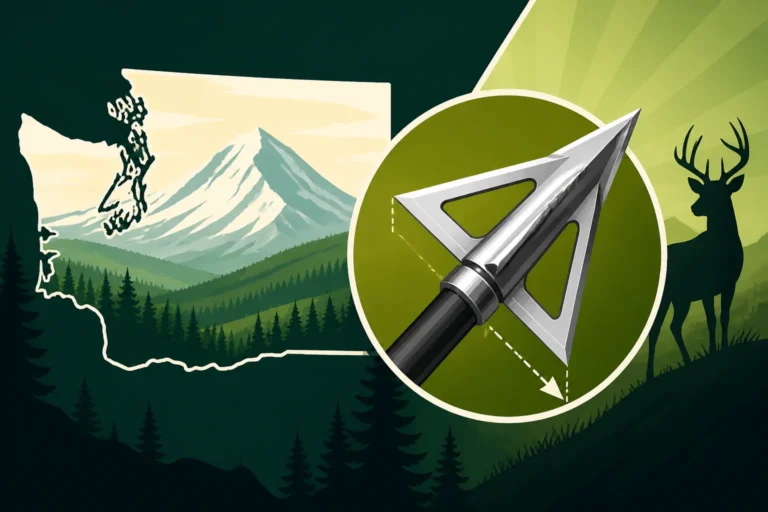
It’s interesting to note that Washington’s approach to muzzleloader caliber has a parallel in its archery regulations, specifically with broadheads. Just as WDFW sets a minimum caliber for muzzleloaders to ensure an ethical harvest, they also have a minimum width requirement for broadheads. For instance, Washington's Seven-Eighths Inch Broadhead Rule ensures that archers use a broadhead with sufficient cutting diameter to create an effective wound channel. Both rules reflect the state's commitment to humane hunting practices, regardless of the weapon used. Understanding these parallels helps illustrate the underlying philosophy behind many of Washington's hunting regulations – a commitment to animal welfare and responsible hunting.
Practical Considerations for Your Washington Muzzleloader Hunt
You've got the right caliber, chosen your projectiles, and maybe even got a multi-season tag. Now it's time to think about the practical aspects of putting all that preparation to good use in the field. Washington's terrain and weather can be challenging, and a muzzleloader adds its own unique set of considerations to the mix.
Practice, Practice, Practice
This isn't just a suggestion; it's absolutely crucial for muzzleloader hunting, perhaps even more so than with a modern rifle. Muzzleloaders, by their nature, have different ballistics and recoil characteristics, and mastering them takes dedication.
- Familiarize yourself with your rifle: Shoot your specific muzzleloader, with the exact powder charge and projectile you intend to hunt with, repeatedly. Get comfortable with the loading process under various conditions. How does it feel to load when your hands are cold or wet? Can you do it smoothly and efficiently? These are real-world scenarios you'll face in Washington's unpredictable weather.
- Shoot from hunting positions: Don't just practice from a bench rest. Practice shooting offhand, kneeling, and from improvised rests like fallen logs or steep hillsides. Washington's hunting country, from the thick western Washington timber to the steep, rocky breaks of the east side, rarely offers a flat, stable shooting platform. Practicing in positions that mimic real hunting situations will build confidence and accuracy when it counts most.
- Understand your range: Muzzleloaders generally have a much more pronounced bullet drop than high-velocity centerfire rifles. Knowing your maximum ethical range is paramount. For many, this might be 100-150 yards for deer and perhaps a bit less for elk, depending on the load and individual proficiency. Pushing beyond that risks a marginal hit. This is where apps like GoHunt can be invaluable for researching specific GMUs and understanding the typical shot distances you might encounter.
Sighting In and Ballistics
Once you've settled on your load, proper sighting in is non-negotiable. Muzzleloader ballistics are unique, and ignoring them can lead to a missed opportunity or, worse, a wounded animal.
- Zero at a responsible distance: Many hunters choose to zero their .45 caliber muzzleloader at 75-100 yards. This provides a manageable point-blank range for common hunting distances. Beyond that, you'll need to know your holdovers.
- Chart your drops: Take the time at the range to shoot at 50, 75, 100, 125, and 150 yards. Note the exact point of impact for each distance. This information is your ballistic bible for your hunt. Tape a small chart to your stock or scope if you're using one. For tips on ensuring your scope is dialed, refer to Sighting In Before the Opener.
- Account for trajectory: The slower velocity of muzzleloader projectiles means a more parabolic trajectory. An animal that might be "point and shoot" at 200 yards with a rifle could require a significant holdover with a muzzleloader. Practice judging distance accurately with a rangefinder and applying the correct holdover for your specific load.
- Check your zero after travel: A bumpy truck ride into the backcountry can sometimes shift a scope or sights. If possible, fire a confirmation shot or two at a safe backstop once you're in camp, just to be sure your point of impact hasn't changed.
Field Care and Cleaning
Washington weather can be notoriously damp, especially on the west side. Proper field care of your muzzleloader is essential to prevent misfires and ensure reliability.
- Keep powder and primers dry: This is absolutely critical. Store your powder flask or pre-measured charges in waterproof containers. Primers should be in a separate, sealed container. Moisture is the enemy of black powder and substitutes.
- Protect from rain and snow: A good gun cover or even a simple piece of electrical tape over the muzzle can prevent moisture from getting into your barrel. While hunting, keeping the action covered as much as possible is wise. You can find excellent advice on this in Keeping a Muzzleloader Dry in Washington Rain.
- Load and clean carefully: After firing, if you're not going to immediately reload and hunt, it's often best to clean your barrel as soon as practical. Black powder and its substitutes are corrosive. Even a quick swab with a cleaning patch and some water or a specialized solvent can prevent significant fouling and corrosion. If you're on a multi-day hunt, a basic field cleaning kit (patches, solvent, loading rod extension) is a must.
By taking these practical steps, you'll not only be compliant with Washington's .45 caliber minimum, but you'll also be a more effective, ethical, and confident muzzleloader hunter. The challenges of this traditional weapon make the successful harvest that much more rewarding.
Comparison of .45 Caliber Muzzleloader Projectile Types
To help you visualize the differences and benefits, here's a quick comparison of the main projectile types you'll consider for your .45 caliber muzzleloader in Washington.
| Feature | Saboted Projectile (e.g., .429 bullet in .45 sabot) | Full-Bore Lead Conical (e.g., Maxi-Ball, PowerBelt) |
|---|---|---|
| Bore Fit | Smaller bullet held by plastic sabot in .45 cal bore | .45 Caliber solid lead, fits directly in bore |
| Primary Advantage | Wide selection of modern, jacketed bullets; often excellent accuracy and terminal performance; cleaner burning | Deep penetration on large game; traditional feel; can be very accurate |
| Primary Disadvantage | Plastic sabot fouling; can be more expensive; less traditional | More lead fouling; limited aerodynamics for long range; often less consistent expansion |
| Typical Weight Range | 200-300+ grains (bullet weight) | 300-500+ grains |
| Best For | All big game, especially when seeking modern bullet performance and accuracy at slightly longer ranges | All big game, particularly for powerful penetration on elk at moderate ranges, or for traditional hunting |
| Ignition System | Typically 209 primer, in-line | Percussion cap or 209 primer |
| Washington Legal | Yes (as long as bore is .45 cal or larger) | Yes (as long as bore is .45 cal or larger) |
Remember, the best projectile for you will depend on your specific muzzleloader, the type of game you're after, and how well you practice with it.
Getting a handle on Washington's .45 caliber muzzleloader minimum might seem like a small detail, but it's a foundational element for a successful and legal hunt. By understanding why this rule exists, how it influences your gear choices, and the practical steps to prepare, you're setting yourself up for an incredible experience in the field. From the careful selection of your projectile to diligent practice and field care, every detail contributes to an ethical and rewarding hunting season. Always remember to consult the latest WDFW regulations before heading out, as they are the final word on what's legal. Happy hunting!
Disclaimer
This article is for general informational purposes only and does not constitute professional advice. Laws, prices and regulations vary by location and change over time. Consult a qualified professional for guidance on your specific situation.