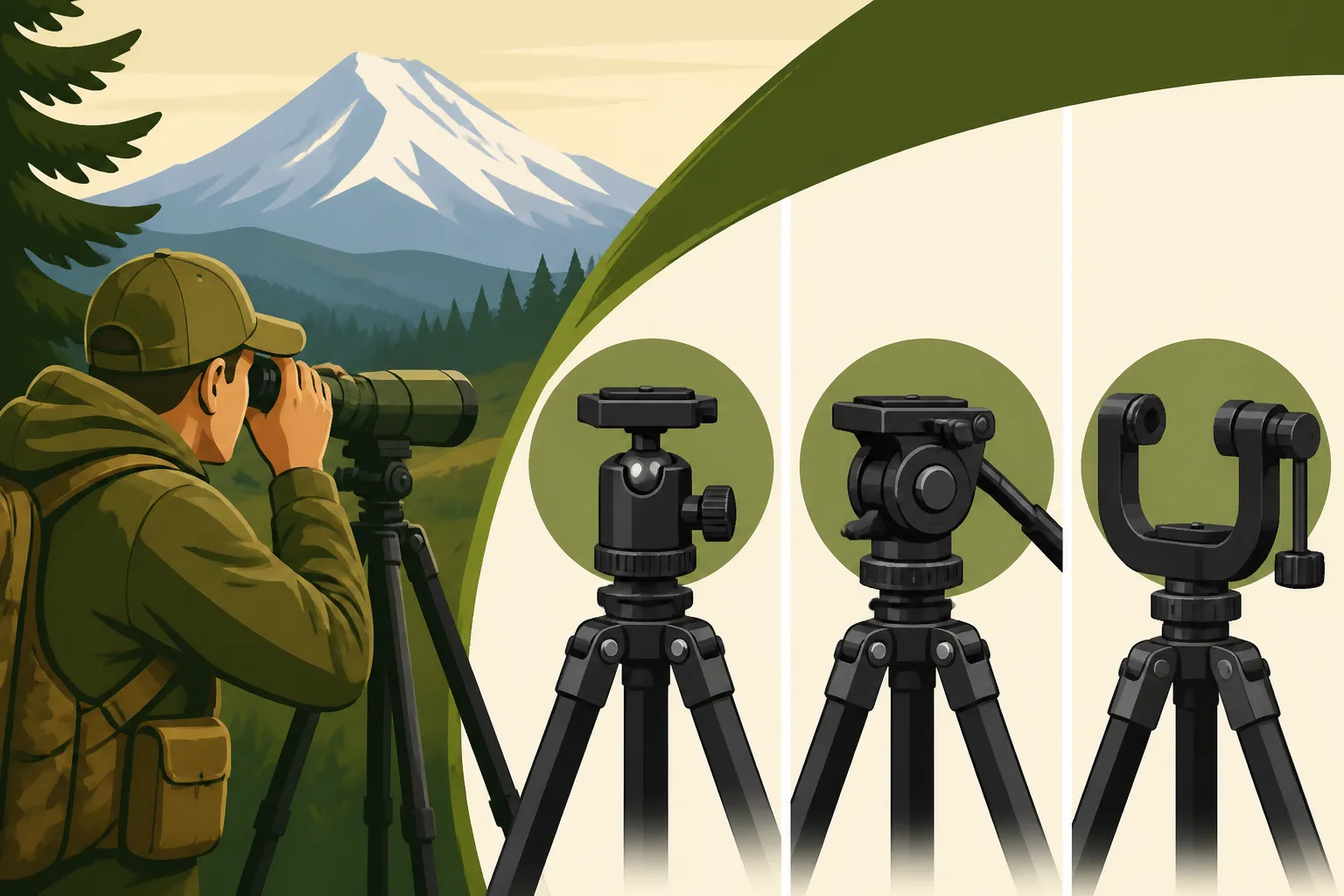
Tripod Head Types for Glassing
Trying to keep your binoculars steady, or get that spotting scope perfectly dialed in on a distant hillside for what feels like an eternity, is a struggle every Washington hunter knows well. The slightest breeze, the tremor in your hand after a long hike, or the uneven ground can turn a potential trophy into a blurry frustration. The right tripod, specifically the right tripod head, isn't just a luxury; it's a game-changer for effective glassing in our diverse Washington hunting grounds, and this guide will walk you through the options to make your next hunt clearer and more successful.
Understanding the Core Need: Stability for Washington Glassing
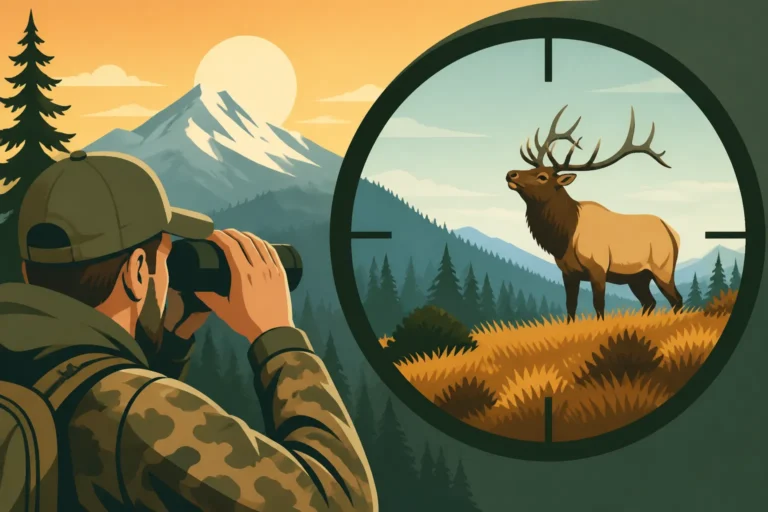
It's easy to dismiss a tripod as extra weight, especially when you're already loaded down with gear for a Washington hunt. But think about it: how many times have you squinted through shaky binoculars, trying to determine if that distant dark spot is a shadow, a rock, or the antler tip of a bedded bull? The answer to that frustration often lies in a solid base and a dependable tripod head. Stability is paramount, not just for comfort, but for genuine identification. The sharper the image, the more details you can pick out, which means less wasted time hiking to investigate false alarms.
Why a Tripod Isn't Just for Spotting Scopes
Many hunters initially associate tripods solely with spotting scopes, and for good reason – those high-magnification instruments are practically unusable freehand. However, the true value of a tripod extends far beyond that. Even your trusty 10×42 binoculars become exponentially more effective when mounted. The slight tremors from your hands, the subtle sway of your body, all become magnified through optics. Mounting them to a tripod eliminates this human factor, allowing the optical quality of your binoculars to truly shine. You'll be amazed at the details you can pick out with a steady image, helping you find deer and elk that would otherwise remain hidden. This becomes even more critical when you're doing extensive grid glassing, methodically picking apart a distant clearcut or a sagebrush hillside.
The Challenge of Washington's Terrain and Wind
Washington's hunting landscapes are incredibly varied, from the dense, wet forests of the west side to the open, windswept coulees and timbered breaks of the east. Each presents unique stability challenges. On the west side, you might be setting up in thick undergrowth, needing to get your optics just above the salal or huckleberry bushes. Here, a tripod needs to be versatile, able to extend and retract quickly, and hold steady on uneven, slippery ground. Blacktail Deer Hunting in Western Washington Timber often demands quick adjustments and a low profile.
Out east, especially in areas like the Colockum or the Blues, you're often exposed to significant wind. A lightweight tripod, while appealing for packing, can become a liability when a gust whips through, making your optics vibrate. This is where the stability offered by a robust tripod and the right head truly pays off. Long hours Glassing Eastern Washington Breaks for Mule Deer require not just clear optics, but the ability to hold them steady against the elements, preventing eye strain and ensuring you don't miss that subtle flicker of an ear or the gleam of an antler hundreds of yards away.
The Main Contenders: Pan-and-Tilt, Ball Head, and Gimbal
When it comes to tripod heads for hunting, there are three primary designs you'll encounter, each with its own strengths and weaknesses. Understanding these differences is crucial to picking the right tool for your specific hunting style and the optics you'll be using. It's not a "one size fits all" situation, and what works for one hunter might be a source of endless frustration for another.
Pan-and-Tilt Heads: Simple, Reliable, and Familiar
The pan-and-tilt head is probably what most people picture when they think of a camera tripod. It features separate controls for horizontal (pan) and vertical (tilt) movement. You typically loosen a knob or lever to pan left or right, tighten it, then loosen another for tilt up or down, and tighten that one. This design offers very precise, deliberate control over each axis of movement.
- Pros: Pan-and-tilt heads are generally very robust and can handle heavier optics well. Their separate controls make for very controlled, slow, and precise adjustments, which can be fantastic when you're trying to stay on a distant animal that's moving slowly or just making tiny shifts in position. They're also often more intuitive for beginners, as the movements are clearly defined. For hunters who do a lot of fixed-position glassing from a blind or a stationary perch, this can be an excellent, no-nonsense choice.
- Cons: The biggest drawback is speed. If you need to quickly sweep a large area or respond to a fast-moving animal, you're constantly loosening and tightening two separate controls. This can be cumbersome and frustrating, especially in a moment of truth when an animal suddenly appears or moves. They also tend to be bulkier and heavier than many ball heads, which is a consideration for Tripod Weight for Backpack Hunting.
Ball Heads: Fast, Flexible, but Can Be Fiddly
Ball heads are characterized by a single large ball-and-socket mechanism that allows for extremely fluid, multi-directional movement. A single lever or knob loosens the ball, letting you reposition your optics in virtually any direction at once. Once you're in position, you tighten the knob, locking everything down.
- Pros: Speed and flexibility are the ball head's superpowers. You can move your binoculars or spotting scope from horizon to zenith, and anywhere in between, with one swift motion. This makes them excellent for quickly scanning varied terrain or tracking an animal that's moving erratically. They're often more compact and lighter than pan-and-tilt heads, making them a popular choice for mobile hunters. Many modern ball heads feature tension control, allowing you to adjust how easily the ball moves before it's fully locked, which can prevent your expensive optics from flopping over if you let go.
- Cons: Precision can be a challenge. Because all movement happens at once, it can be tricky to make tiny, incremental adjustments without accidentally shifting in an unwanted direction. This "flop factor" is particularly noticeable with heavier optics or when the tension isn't set just right. Learning to use a ball head smoothly takes practice, and some hunters never quite get comfortable with the simultaneous axis movement. For really precise, long-range glassing, some find them less stable than a good pan-and-tilt or gimbal.
Gimbal Heads: Specialized for Heavy Optics and Smooth Tracking
Gimbal heads are a bit more specialized and less common in general hunting setups, but they excel in specific scenarios. Originally designed for large telephoto camera lenses, they support optics at their natural balance point, allowing for incredibly smooth, effortless movement, especially along a horizontal plane. They literally "gimbal" the weight.
- Pros: If you're using a very large spotting scope or heavy binoculars for extended periods, a gimbal head is a dream. It handles weight like no other, making even cumbersome optics feel light and easy to maneuver. The balance point design means there's virtually no flop, and you can track moving animals with buttery smoothness, making it perfect for studying animal behavior without fighting your gear. This can be invaluable for certain types of Washington Elk Hunting Tactics by Weapon Season where observing herd dynamics is key.
- Cons: Gimbals are generally the largest, heaviest, and most expensive of the three types. Their specialized design means they're overkill for most standard binoculars or smaller spotting scopes. They're also less versatile for extreme up-and-down adjustments compared to a ball head, though they still offer plenty of vertical tilt. They really shine when staying relatively level and tracking across a wide field of view. For hunters covering vast distances in the backcountry, the added bulk and weight can be a significant deterrent.
Choosing the Right Head for Your Washington Hunt
Deciding on the perfect tripod head isn't about finding the "best" one universally, but rather the best one for your specific needs as a Washington hunter. Your choice will largely depend on the type of hunting you do, the optics you primarily use, and your personal preferences for how you like to operate your gear in the field. Don't rush into a decision; consider your typical hunting scenarios and what kind of glassing you do most often.
Considerations for Different Hunting Scenarios
Let's break down how different hunting styles in Washington might influence your head choice:
- Backcountry Elk Hunter (e.g., Packing an Elk Out of Washington's Backcountry): Weight is a critical factor here. You're already hauling a substantial load, and every ounce counts. A lightweight ball head often makes the most sense. It's compact, offers quick adjustments for glassing from various impromptu vantage points, and can handle a set of 10x or 12x binoculars and a mid-sized spotting scope. The speed of a ball head is also beneficial when you're quickly checking new drainages or trying to relocate an animal that's slipped into timber.
- Eastern Washington Mule Deer Hunter (e.g., Glassing Sage and Wheat Edges for Washington Mule Deer): Here, extended periods of glassing are the norm. You might be sitting for hours, meticulously picking apart distant hillsides. Precision and comfort are key. A sturdy pan-and-tilt head could be excellent, allowing you to lock down on a distant point and only make minute adjustments without wrestling with a ball head. If you use a larger spotting scope, a ball head with excellent tension control or even a lightweight gimbal might be considered for ultimate stability and smoothness. The ability to use 15×56 for Washington Open Country binoculars benefits greatly from this stability.
- Western Washington Blacktail Hunter (e.g., Still-Hunting Blacktails in Wet Washington Brush): This is often a more dynamic, close-quarters hunt where quick peeks and short glassing sessions are common. A lightweight, fast-adjusting ball head is likely ideal. You might be standing, kneeling, or sitting, and the flexibility to rapidly reposition your optics to peek through small openings in the brush is invaluable. Precision isn't as critical as speed when an animal might only be visible for a few seconds.
- Sitting a Bear Stand (e.g., Spot-and-Stalk Bear on Washington Green-Up Slopes): If you're stationary for long periods, like on a bear bait (where legal, which isn't the case in Washington, but for comparison with other states) or watching a known feeding area, precision and comfort come to the forefront. A pan-and-tilt head would allow you to methodically scan and then lock onto any movement for detailed observation without fatigue. If using a large spotter for judging bears, a gimbal could also be an option, but the weight penalty is usually not worth it for general hunting unless specific situations call for it.
Balancing Weight, Cost, and Performance
The "perfect" tripod head is always a compromise.
- Weight: As discussed, this is critical for mobile hunters. Carbon fiber tripods and compact ball heads can significantly reduce carry weight. However, lighter often means less stable under heavy loads or in high winds.
- Cost: Tripod heads range from budget-friendly options to high-end precision instruments. While it's tempting to save money, remember that your optics are only as good as the platform they sit on. A cheap, flimsy head will negate the performance of expensive binoculars or a spotting scope. Invest in quality if your budget allows.
- Performance: Consider how much precision you need versus how much speed. If you're mostly still-hunting and taking quick peeks, a fast ball head is better. If you're sitting for hours glassing vast landscapes, a more deliberate pan-and-tilt or even a gimbal might offer superior performance and less fatigue. Think about the types of optics you'll be mounting – a heavy 95mm spotting scope demands a more robust head than a pair of compact 10x binos. Research platforms like GoHunt for reviews and comparisons from other hunters who operate in similar conditions.
| Head Type | Pros | Cons | Best Use Case for Washington Hunters |
|---|---|---|---|
| Pan-and-Tilt | Precise, deliberate control; good for heavy optics | Slower to adjust; bulkier; less fluid | Stationary glassing, long-range observation, fixed positions in open country |
| Ball Head | Fast, fluid movement; compact; lighter | Can be less precise; "flop factor" with heavy optics | Mobile hunting, quick scans, varied terrain, all-around versatility |
| Gimbal Head | Excellent for heavy optics; super smooth tracking | Bulky, heavy, expensive; specialized | Very large spotting scopes, extended high-magnification observation, tracking |
Beyond the Head: Features and Accessories That Matter
While the tripod head itself is crucial, a few other features and accessories can significantly enhance your glassing experience in Washington's challenging environments. These often go hand-in-hand with your head choice and can make a big difference in how efficiently and comfortably you operate your optics in the field.
Quick Release Plates and Arca-Swiss Compatibility
This might seem like a small detail, but it's a huge convenience. A quick-release plate attaches to the base of your binoculars or spotting scope, and then it simply clicks into the tripod head. This allows you to rapidly attach and detach your optics from the tripod without fumbling with screw threads every time. There are several quick-release systems, but the Arca-Swiss standard has become extremely popular and is widely adopted by many manufacturers, including those making hunting optics adapters.
- Why it matters: Imagine you've just spotted a magnificent bull at the edge of a timber patch through your binoculars on the tripod. You need to quickly switch to your spotting scope to get a closer look and confirm antler points for Hunting Washington's Three-Point Minimum Units. With an Arca-Swiss plate on both your binos and your spotter, it's a matter of seconds to swap them out. No screwing, no fumbling, no lost opportunities. Conversely, if you're stalking in thick cover and need to quickly remove your binoculars from the tripod to move through a tight spot, a quick-release system is invaluable. It reduces frustration and keeps your focus on the hunt, not on fiddling with gear.
Tripod Material and Leg Design for Washington's Elements
The head is only as good as the legs it sits on, especially when dealing with Washington's variable weather and terrain.
- Material:
- Aluminum: Generally more affordable and robust, but also heavier. It can also get quite cold to the touch in freezing weather, and prone to "ringing" in high winds.
- Carbon Fiber: Lighter, stiffer, and dampens vibrations better. It's less affected by temperature and generally more comfortable to handle in extreme cold. The trade-off is a higher price point. For backpack hunters in the Okanogan and North Cascades Hunting Areas or those venturing into Washington's Wilderness Areas, carbon fiber is often the preferred choice despite the cost, due to the significant weight savings.
- Leg Design:
- Twist Locks vs. Lever Locks: Twist locks are generally more compact and less prone to snagging on brush, but can sometimes be slower to deploy or require more effort in cold, wet conditions. Lever locks are fast and easy to use, even with gloves, but can be bulkier and might catch on things. Consider what you prefer for speed and ease of use when your hands are cold and wet, which is a frequent reality in places like the Olympic Peninsula Hunting Access.
- Sections: More leg sections generally mean a more compact folded size, which is great for packing. However, fewer sections can mean greater stability and faster setup. A good balance for most hunting is 3-4 sections.
- Foot Type: Rubber feet are standard, offering good grip on most surfaces. Some tripods come with interchangeable spiked feet, which can be fantastic for icy or soft ground, providing extra stability on slippery slopes or muddy trails common throughout Washington's hunting seasons.
Ultimately, your tripod and head are an investment in better glassing, which directly translates to more effective scouting and hunting. Take the time to consider your needs, try out different options if possible, and don't be afraid to invest in quality gear that will serve you well for many seasons to come.
Disclaimer
This article is for general informational purposes only and does not constitute professional advice. Laws, prices and regulations vary by location and change over time. Consult a qualified professional for guidance on your specific situation.