Broadhead Width Rules in Washington
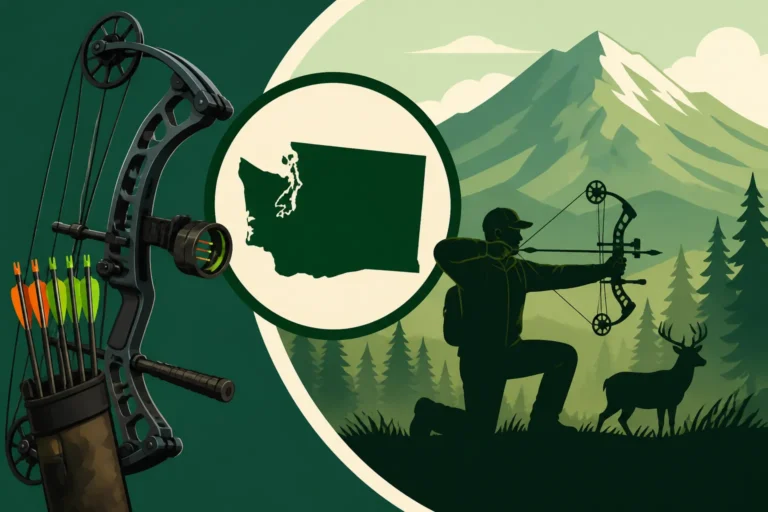
Navigating the specific gear requirements for archery hunting in Washington can feel like deciphering ancient scrolls, especially when you're trying to figure out if your favorite broadheads are actually legal. It's not always as straightforward as it seems, and making a mistake could cost you more than just a missed opportunity in the field. This guide is here to untangle the nuances of Washington's broadhead width rules, ensuring you're confidently equipped and fully compliant before you ever draw back on an animal.
Understanding Washington's Broadhead Basics
When it comes to archery hunting in Washington, the state takes a pretty clear stance on what constitutes a legal broadhead. This isn't just about making things complicated; it's rooted in ensuring humane and ethical harvests. As hunters, it's our responsibility to use gear that gives us the best chance at a quick, clean kill, and broadhead design plays a huge role in that.
The Core Broadhead Width Rule
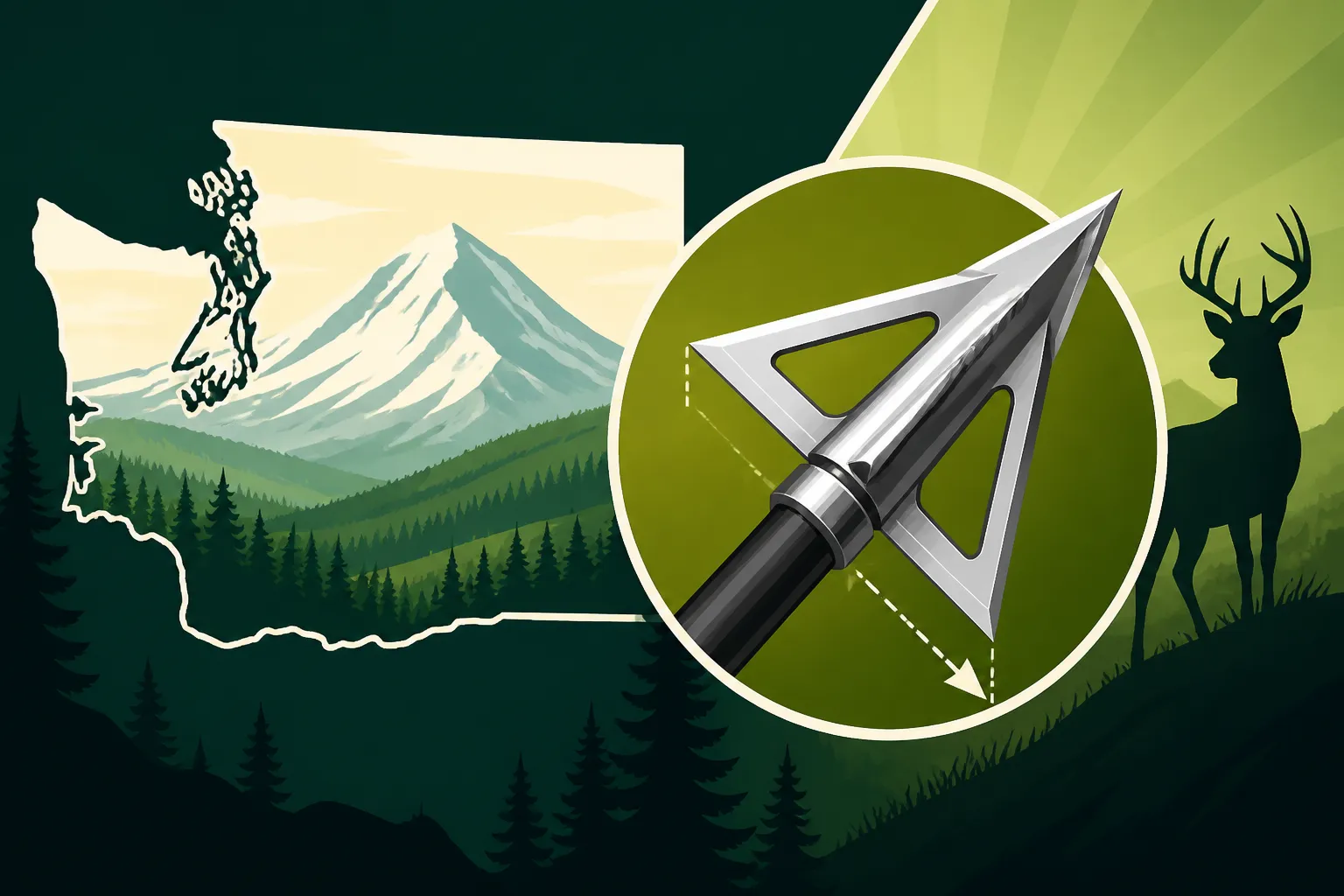
The fundamental rule for broadheads in Washington is that they "must have at least two sharp cutting edges and measure no less than seven-eighths inch in width." That "seven-eighths inch" is the magic number, and it's absolutely crucial. This means that from tip to tail, the cutting surface needs to be substantial enough to create a significant wound channel upon impact. Think about it: a wider cut means more tissue disruption, more blood loss, and ultimately, a faster, more humane dispatch of the animal.
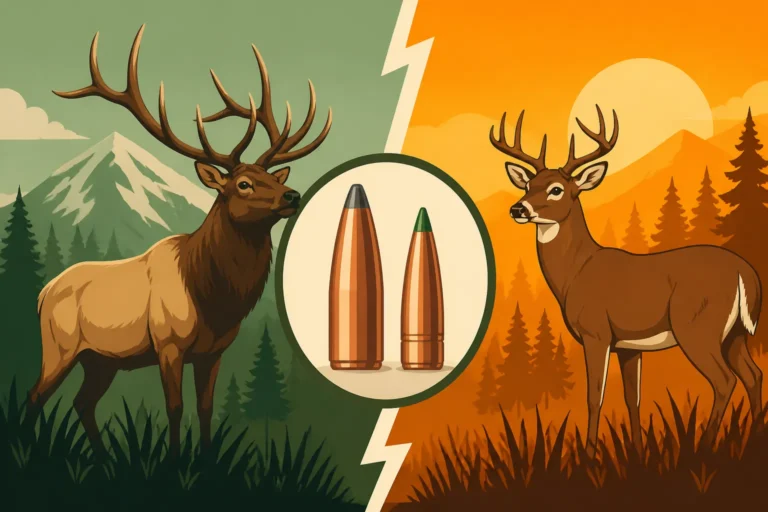
This rule is designed to prevent the use of broadheads that might pencil-hole an animal, leading to a prolonged recovery and a lost animal. It's about maximizing the efficiency of your shot, whether you're aiming for a big Roosevelt Elk of Western Washington or a cunning Columbian Blacktail Deer in Western Washington. Hunters need to be diligent about checking their broadheads, as many popular options on the market might fall just shy of this minimum if you're not paying attention to the exact specifications.
Fixed Blade Versus Mechanical Broadheads and the Rule
The seven-eighths inch rule applies to both fixed blade and mechanical broadheads, but how you measure them for compliance can differ slightly. For fixed blade broadheads, it’s usually quite simple: you measure the cutting width directly from one edge to the other at its widest point. Most fixed blades are designed with this minimum in mind, but it’s always wise to double-check with a caliper.
Mechanical broadheads, on the other hand, require a bit more attention. The key question often arises: do you measure the broadhead in its closed, un-deployed state, or in its fully deployed, cutting state? Washington's wording focuses on the "measure no less than seven-eighths inch in width," which generally refers to the effective cutting width once the broadhead has done its job and opened up. So, if your mechanical broadhead expands to a 1-inch or 1.5-inch cutting diameter, you're likely in the clear, even if its closed profile is much narrower. Always consult the manufacturer's stated cutting diameter for deployed mechanicals.
Why Washington Has Specific Broadhead Regulations
It might seem like an arbitrary number, this seven-eighths inch, but there's a very good reason Washington, like many other states, has these precise regulations in place. It all boils down to ethics, animal welfare, and maintaining the integrity of hunting as a responsible and respected outdoor pursuit. We owe it to the animals we pursue to make every effort for a clean, swift harvest.
Ethical Hunting and Humane Harvest
At the heart of any hunting regulation is the principle of ethical hunting. The broadhead width rule directly supports this by promoting humane harvest. A broadhead that is too narrow might penetrate, but it won't create the necessary damage to vitals for a rapid and ethical take-down. Wider broadheads create a larger wound channel, leading to quicker blood loss and a more immediate expiration. This minimizes suffering for the animal, which is paramount for any ethical hunter.
Consider the energy transfer: your bow delivers a certain amount of kinetic energy to the arrow. A broadhead's job is to efficiently transfer that energy into tissue damage. A wider cutting surface, once it hits its mark, causes significantly more trauma to arteries, veins, and organs. This direct impact on the animal’s ability to survive is why the minimum width is enforced. It’s not just about getting an arrow through an animal; it’s about getting it through effectively.
Preventing Unnecessary Wounding
Beyond the ethics of a humane kill, broadhead regulations also aim to reduce the incidence of wounded and lost animals. A poorly performing broadhead, or one that's too narrow, can lead to a shallow wound, or one that doesn't hit critical organs effectively. This often results in an animal that runs off, potentially to die a slow, agonizing death far from where it was shot, or to recover with a debilitating injury. Nobody wants that outcome.
Washington's diverse terrain, from the dense coastal rainforests to the expansive eastern sagebrush, can make blood trailing incredibly challenging, even with a solid hit. A wide, sharp broadhead increases the likelihood of a robust blood trail, making recovery easier and more reliable. This regulation helps ensure that hunters are using equipment that supports successful recovery, preventing animals from being unnecessarily wounded and leaving a negative impact on the local herd population and the reputation of hunters.
Measuring Your Broadheads Correctly
So, you've got your broadheads, but are they actually legal in Washington? Don't just eyeball it; grab some tools and make sure. Accuracy here is key, and guessing can lead to issues if you're ever checked by a game warden, or worse, if you wound an animal because your gear wasn't up to snuff.
Techniques for Fixed Blade Broadheads
For fixed blade broadheads, the process is usually pretty straightforward. You'll want a reliable measuring tool, like a set of digital calipers, or at the very least, a precise ruler with clear markings for fractions of an inch. Simply place the broadhead on a flat surface or hold it steady, and measure the distance across its widest point, from cutting edge to cutting edge. This is typically perpendicular to the arrow shaft, but ensure you're capturing the maximum cutting width.
A common mistake is to measure from a point that isn't the absolute widest or to just hold it against a tape measure, which isn't precise enough for seven-eighths of an inch. Remember, 7/8 inch is 0.875 inches. A digital caliper can give you that exact decimal reading, leaving no room for doubt. If your broadhead measures 0.875 inches or more, you're good on width. If it's 0.874 inches, it's technically illegal. Precision matters.
Verifying Mechanical Broadhead Compliance
Mechanical broadheads can be a bit trickier to verify, as their blades deploy upon impact. The key is understanding that Washington's rule about "no less than seven-eighths inch in width" refers to the effective cutting diameter once the broadhead is fully open and doing its job. This means you'll need to know the manufacturer's stated cutting diameter, which is usually prominently displayed on the packaging or in the product description.
While you don't typically measure a mechanical broadhead in its closed state against this rule, it's a good practice to still understand its mechanics. Some hunters worry that the blades might not fully deploy, but reputable brands design their mechanicals for consistent performance. Always check that your mechanicals are deploying cleanly and fully during practice. Trusting the manufacturer's stated deployed cutting diameter for compliance is generally the accepted method, as long as it meets or exceeds the 7/8 inch minimum.
Choosing the Right Broadhead for Washington Big Game
Meeting the minimum broadhead width is just the starting point. Beyond legality, you want a broadhead that performs optimally for the game you're pursuing and the conditions you'll face in Washington's diverse hunting landscapes. There's a lot to consider to truly set yourself up for success and ethical hunting.
Broadhead Selection Beyond the Minimum Width
Once you've confirmed your broadhead meets the 7/8 inch minimum, you can start to think about other critical factors. Durability is huge, especially if you're hitting bone on an elk. Some broadheads are known for their rugged construction, designed to maintain integrity even after punching through ribs. Penetration is another major consideration; a broadhead needs to drive deep into the vitals, and factors like tip design (cut-on-contact vs. chisel tip) and blade angle will influence this.
Then there's flight. Some broadheads, particularly fixed blades with larger cutting diameters, can be notoriously difficult to tune to fly exactly like your field points. This is where testing and practice become paramount. You might find that a certain design flies perfectly out of your bow, while another, despite its impressive cutting width, destabilizes your arrow mid-flight. For a deeper dive into broadhead types, check out Mechanical Versus Fixed Broadheads in Washington. Remember, a broadhead that doesn't fly true is useless, no matter its cutting diameter.
Matching Broadhead to Bow Setup and Game
Your broadhead choice should also be compatible with your bow setup and the specific game you're hunting. A heavy-hitting compound bow with a high kinetic energy output can often handle larger, more aggressive broadheads. However, if you're shooting a lower draw weight or shorter draw length, you might prioritize a more aerodynamic, efficient-penetrating broadhead to maximize the energy you have. Similarly, an Arrow Weight Minimum for Washington Big Game exists for a reason, as heavier arrows typically carry more momentum and aid in penetration.
For smaller game like deer, many legal broadheads will work effectively, but for tough animals like elk, you'll want something that can really punch through muscle and bone. Practicing with your chosen broadheads is non-negotiable. Don't just screw them on the day before the hunt. Shoot them, tune your bow to them if necessary, and ensure you're confident in their flight and accuracy at various distances. This preparation will not only make you a more ethical hunter but also a more confident and successful one.
Common Broadhead Mistakes and Misconceptions
Even experienced archers can make mistakes or hold onto misconceptions about broadheads. It's easy to get complacent or to simply not know what you don't know. Being aware of these common pitfalls can save you a lot of headache and ensure you're always on the right side of the rules and ethical practices.
Ignoring the "Sharpness" Requirement
While this guide focuses on width, it's critical to remember that Washington's regulations also mandate that broadheads have "sharp cutting edges." A broadhead that meets the 7/8 inch width but is dull as a butter knife is utterly useless and unethical. A truly sharp broadhead will slice through tissue with minimal resistance, causing maximum damage and a quick, clean kill. A dull broadhead will push and tear, causing far less trauma and a much more agonizing experience for the animal.
Never underestimate the importance of broadhead sharpness. Always check your broadheads before heading into the field. You should be able to cleanly shave hair off your arm with them, or at least glide them across a fingernail without slipping. Many hunters will sharpen factory broadheads to an even finer edge or use replaceable blade systems to ensure razor sharpness every time. For detailed advice on this, you can refer to Washington Broadhead Sharpness Requirements. Don't let a dull blade ruin your hunt or compromise an animal's welfare.
Assuming All Broadheads Are Legal
One of the biggest misconceptions hunters fall into is assuming that if a broadhead is sold in a sporting goods store, it must be legal everywhere. This is simply not true. Hunting regulations vary drastically from state to state, and what's perfectly fine in Oregon might be illegal in Washington, or vice-versa. Relying solely on what's available on the shelf without doing your own research is a recipe for trouble.
It's your responsibility, as the hunter, to know and abide by Washington's specific regulations. Don't just trust hearsay or online forums. Always consult the official Washington Department of Fish and Wildlife (WDFW) hunting regulations pamphlet for the current season. These pamphlets are the definitive source of truth and are updated annually. Ignoring them is not an excuse if you're caught using non-compliant gear.
Staying Informed and Legal
The world of hunting regulations is constantly evolving, and staying on top of the latest rules is part of being a responsible hunter. It’s not a "set it and forget it" kind of deal. Being proactive about understanding the nuances of broadhead width and other archery equipment rules will ensure your hunts are always lawful and ethical.
Consulting Official Washington Resources
The most authoritative source for Washington's hunting regulations is always the Washington Department of Fish and Wildlife (WDFW). Their website is a treasure trove of information, and they release an annual hunting pamphlet that covers all the specific rules, including those for archery equipment. Make it a habit to review this pamphlet every year, even if you think you know the rules by heart. Small changes can occur, or clarifications might be added that directly impact your gear choices.
Remember, laws, including those governing hunting equipment, can change without you realizing it. Don't rely on old pamphlets or information from previous seasons. Get the most current version. Companies like GoHunt often provide valuable resources and up-to-date summaries for various state regulations, which can be an excellent supplement, but always cross-reference with the official WDFW documentation. It's a small investment of time that prevents major headaches down the road. You can usually find information on the Washington Big Game Pamphlet Release dates through WDFW.
The Role of Hunter Education
Hunter education plays a vital role in instilling the importance of knowing and following regulations, including those pertaining to broadheads. It's not just about gun safety or field dressing; it's about understanding the entire framework of ethical and legal hunting. If you're a new hunter, or if it's been a while since your course, revisiting some of those principles can be incredibly beneficial.
The lessons learned in Washington Hunter Education and Licensing courses often cover equipment restrictions, animal anatomy, and shot placement – all factors that tie directly into broadhead effectiveness and legality. These courses emphasize that responsible hunting involves thorough preparation, not just for the hunt itself, but for understanding and complying with every rule designed to protect both the wildlife and the future of our hunting heritage. Being a well-informed hunter is the best defense against accidental violations and the most proactive way to ensure ethical practices.
| Broadhead Type | Typical Width (Deployed) | Washington 7/8" Rule Compliance | Key Considerations |
|---|---|---|---|
| Fixed Blade | 7/8" to 1.5"+ | Generally easy to meet | Durable, often excellent penetration, can require bow tuning. |
| Mechanical | 1" to 2"+ | Measured at deployed width | Excellent flight, large wound channels, ensure robust deployment. |
| Hybrid | Varies | Measured at deployed width | Combines features, ensure minimum width is met when open. |
Disclaimer
This article is for general informational purposes only and does not constitute professional advice. Laws, prices and regulations vary by location and change over time. Consult a qualified professional for guidance on your specific situation.