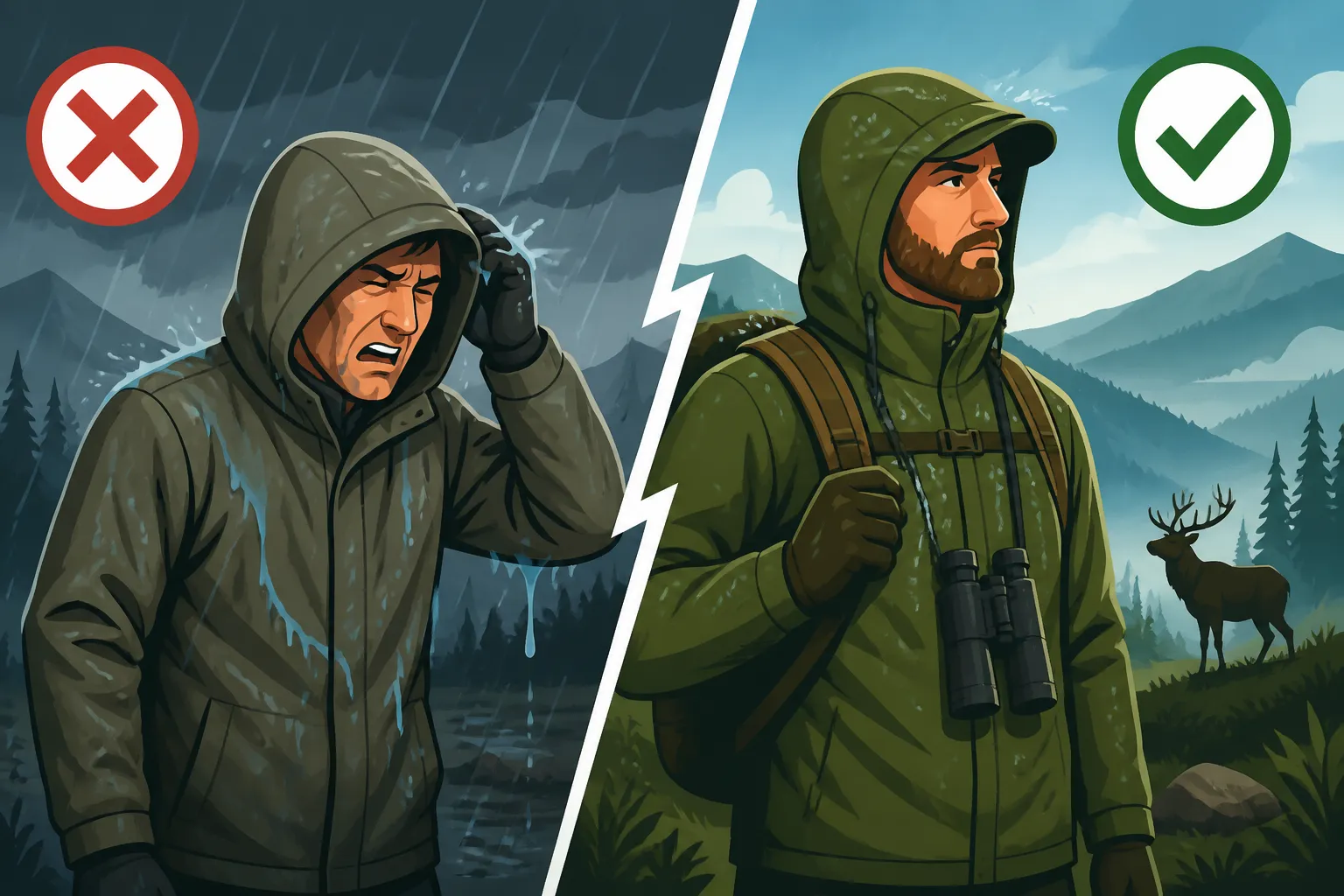
Why Cheap Rain Gear Fails in Washington
Anyone who has spent even a few days chasing elk or deer in Washington state knows that the weather here is a beast of its own. It's not just rain; it's persistent wet, often combined with wind, cold, and thick brush that seems intent on soaking you to the bone. If you've ever invested in what seemed like a good deal on rain gear, only to find yourself shivering and miserable after an hour in the woods, you're not alone. This guide will walk you through exactly why those budget-friendly options often fall short in Washington's unforgiving environment and what to look for instead.
The Unforgiving Nature of Washington's Climate for Hunters
Washington hunting isn't just a sport; it's often a test of endurance against the elements. From the dense, dripping rainforests of the Olympic Peninsula to the wind-driven snow of the Blue Mountains, the state throws a diverse array of challenges at hunters. Many come from areas where "rain" means a passing shower, but here, it's a way of life, and your gear needs to be up to the challenge of prolonged exposure.
Persistent Wetness and Humidity
One of the biggest differences is the sheer duration of wet conditions. It’s not uncommon to experience days, even weeks, of continuous drizzle, mist, or steady rain, especially west of the Cascades. This constant humidity and saturation mean that any material not truly waterproof will eventually "wet out," allowing moisture to seep through. Think about still-hunting for blacktails in a thick clearcut where every branch you brush against sends a shower down your neck. A light coating on cheap gear might resist a brief sprinkle, but a full day of this will leave you soaked and chilled. Still-Hunting Blacktails in Wet Washington Brush explores this further, highlighting just how much moisture you encounter.
Abrasion from Dense Vegetation
Our hunting grounds, particularly in western Washington, are often choked with salal, devil's club, sword ferns, and dense conifer saplings. These aren't just pretty plants; they're abrasive, pointy, and excellent at tearing flimsy fabrics. Cheap rain gear often uses thin, delicate face fabrics that simply can't stand up to this kind of abuse. A single bushwhack can leave you with a gaping hole, turning your "waterproof" shell into a sieve. Eastern Washington isn't immune either; traversing sagebrush flats can be equally tough on gear.
Wind Chill and Temperature Fluctuations
Even when the rain isn't coming down in sheets, the wind can be a major factor, especially in exposed areas or at higher elevations. Cheap rain gear often lacks adequate windproofing, or its thin material offers little insulation against biting gusts. Couple this with the wild temperature swings Washington can experience – a warm, muggy morning turning into a freezing, wet afternoon – and subpar gear means you're fighting not just the wet but also dangerous drops in core temperature. Staying dry is paramount to staying warm, as a cold, wet hunter is an inefficient and potentially unsafe hunter.
Common Failure Points of Cheap Rain Gear
It's easy to look at two rain jackets side-by-side and assume they're similar, but the devil is truly in the details. When manufacturers cut costs, they often do it in ways that are invisible to the casual shopper but become painfully obvious in the field. This isn't just about brand names; it's about fundamental differences in material science and construction.
Inadequate Waterproofing Coatings and Membranes
Many affordable rain jackets rely on a simple DWR (Durable Water Repellent) coating or a basic PU (polyurethane) coating applied to the fabric. While these might initially repel water, they are far from truly waterproof. Over time, and with minimal abrasion, these coatings wear off or break down, especially if not cared for properly. Instead of a robust, multi-layer membrane designed to breathe while keeping water out, you get a glorified windbreaker that quickly "wets out." This means the outer fabric absorbs water, making the jacket heavier, colder, and eventually allowing water to pass right through.
For genuine waterproofing, you need a proper membrane, like Gore-Tex or one of the many high-quality proprietary membranes from companies dedicated to outdoor gear. These membranes have microscopic pores that are small enough to block liquid water molecules from entering but large enough to allow water vapor (sweat) to escape. This is the magic ingredient in truly breathable, waterproof gear, and it's where cheap options consistently fall short. You might stay dry from the outside for a short while, but you'll be soaked from sweat on the inside because the garment doesn't breathe.
Weak Seam Sealing and Zippers
The best waterproof fabric in the world is useless if the seams leak. On cheap rain gear, seam sealing is often minimal, inconsistent, or uses low-quality tape that delaminates after a few uses or washes. Water has an uncanny ability to find the path of least resistance, and that path is usually through a poorly sealed seam. Imagine crouching down to gut a deer, and suddenly you feel a trickle of cold water down your back where the shoulder seam gave way.
Similarly, zippers are a major weak point. Basic zippers, even those with a storm flap, rarely offer true waterproof protection. High-quality rain gear uses laminated, water-resistant zippers or substantial storm flaps with overlapping teeth that prevent water ingress. Cheap zippers also tend to snag, break, and seize up far more quickly, especially when covered in mud or used in freezing conditions. The frustration of a broken zipper mid-hunt is a special kind of misery.
Lack of Durability and Poor Fit
As mentioned earlier, the outer fabric on budget rain gear is typically thin and prone to tearing. This isn't just about comfort; it's about longevity and performance. A tear in your rain jacket compromises its waterproof integrity completely. Beyond fabric, the overall construction is often inferior, with weak stitching, poorly reinforced stress points, and flimsy toggles or closures that break easily.
Fit is another often-overlooked aspect. Cheap rain gear often has a generic, baggy cut that doesn't allow for proper layering underneath without restricting movement, nor does it seal effectively around the wrists, neck, and waist. A good fit ensures water can't easily run up your sleeves when you reach, or drip down your collar when you look up. When you’re packing an elk quarter out of the backcountry, the last thing you need is your jacket bunching up uncomfortably or catching on every branch. Packing an Elk Out of Washington's Backcountry details the physical demands where good gear truly shines.
| Feature | Cheap Rain Gear | Quality Rain Gear |
|---|---|---|
| Waterproofing | Basic DWR coating, PU laminate | Durable membrane (e.g., Gore-Tex, proprietary) |
| Breathability | Very low, leads to internal sweat buildup | High, allows sweat vapor to escape |
| Seam Sealing | Minimal or inconsistent taped seams, prone to failure | Fully taped seams with durable, high-quality tape |
| Zippers | Standard coil, often with basic storm flaps | Water-resistant, laminated, or robust storm flaps |
| Face Fabric | Thin, easily snagged or torn, loud | Durable, often ripstop or reinforced, quieter |
| Fit | Generic, baggy, limited adjustability | Articulated, allows layering, good adjustability |
| Durability | Low; short lifespan, prone to breakdown | High; built to withstand abuse, extended lifespan |
| Typical Lifespan | 1-2 seasons with moderate use | 5+ seasons with proper care and heavy use |
Investing in Proper Rain Gear: What to Look For
Okay, so you’re convinced. That cheap poncho isn’t going to cut it when the Washington skies open up. But what should you look for? Investing in proper rain gear isn't just about comfort; it's about safety, endurance, and ultimately, success in the field. When your gear fails, your hunt can be cut short, or worse, you could be facing real risks of hypothermia.
Waterproof and Breathable Membranes
This is the cornerstone. Look for jackets and pants that feature well-known waterproof/breathable membranes. Brands like Gore-Tex are famous for a reason, but many reputable outdoor companies also have excellent proprietary technologies. These membranes are designed to be a barrier against external water while allowing internal moisture (sweat) to escape. This dual function is critical. Without breathability, even if you stay dry from the rain, you'll get soaked from the inside out, leading to the same chilling effect. When researching options, I often use resources like GoHunt to dive into reviews and compare technologies, making sure I'm getting the best bang for my buck for the specific conditions I hunt.
Look for a garment with a good DWR finish on the outer fabric. This causes water to bead up and roll off, preventing the face fabric from becoming saturated and allowing the membrane to do its job more effectively. A good DWR also aids in breathability by not letting the outer layer "wet out."
Fully Taped Seams and High-Quality Zippers
Always check for "fully taped seams." This means every stitch hole, where water could potentially seep through, is sealed with a waterproof tape on the inside. Partial taping is a red flag. For zippers, seek out YKK AquaGuard or similar water-resistant laminated zippers. These are designed to shed water and prevent leaks. If a zipper isn't water-resistant, ensure it has a robust storm flap that effectively covers the zipper and is secured with snaps or velcro to prevent wind and rain from getting in. This attention to detail is crucial.
Don't forget the pockets. Are they protected by storm flaps or water-resistant zippers? Nothing is more frustrating than a wet phone or map. Consider the placement of pockets too – are they accessible even when wearing a backpack with a hip belt? This is a small but important detail when you're loaded down on a long hike.
Durable Face Fabrics and Articulated Fit
A durable face fabric is non-negotiable for Washington hunting. Look for ripstop nylon or polyester with a denier rating that indicates its resistance to abrasion. Thicker fabrics generally mean more durability, though they can also mean more weight and less packability. There's a balance to be struck. The fabric should also be reasonably quiet. While no hard shell is completely silent, some are notably better than others, which is critical for close-quarters hunting, especially for species like blacktails in dense timber.
An articulated fit means the garment is designed with specific cuts and gussets that allow for a full range of motion without binding or exposing skin. This is particularly important for activities like climbing, glassing, or drawing a bow. Look for adjustable cuffs, an adjustable hood (preferably one that moves with your head and allows for peripheral vision), and a hem that can be cinched down to keep out drafts and moisture. The ability to layer effectively underneath is also key. If you're planning a late-season hunt, you'll need room for a heavy fleece or puffy jacket. For more on this, check out Layering for Wet Cold.
Maintaining Your Rain Gear for Longevity
Even the best rain gear won't perform optimally if it's not cared for properly. Many hunters make the mistake of treating their expensive shells like any other piece of clothing, and then wonder why it starts to fail. Regular maintenance is key to extending the life of your gear and ensuring it performs when you need it most.
Proper Washing and Re-Applying DWR
One of the most common reasons rain gear "fails" isn't a defect, but a clogged membrane or a worn-out DWR. Dirt, sweat, body oils, and campfire smoke can clog the microscopic pores of your waterproof/breathable membrane, reducing its ability to breathe. When the DWR wears off, the outer fabric absorbs water, becoming heavy and making it harder for sweat vapor to escape.
To maintain your gear, wash it regularly with a technical fabric cleaner, like those offered by Nikwax or Granger's. Avoid conventional detergents, as they can leave residues that clog membranes and strip DWR. Follow the garment's care instructions, typically using warm water on a gentle cycle. After washing, you can often reactivate the DWR by tumble drying on a low heat setting. If the DWR is truly gone (water no longer beads up), you can apply a spray-on or wash-in DWR treatment specifically designed for waterproof breathable fabrics. This simple step can dramatically improve your gear's performance and extend its lifespan. For tips on keeping other gear dry, you might find Keeping a Muzzleloader Dry in Washington Rain helpful.
Repairing Tears and Storing Correctly
Accidents happen. A snag on a barbed wire fence or a sharp branch can lead to a tear. Don't despair! Small tears in rain gear can often be repaired effectively with waterproof repair patches. Tenacious Tape is a popular choice and works wonders for field repairs or semi-permanent fixes. For larger or more critical damage, consider sending it to a professional repair service or contacting the manufacturer, as many offer repair options. Prompt repair prevents small tears from becoming large, unmanageable holes.
When storing your rain gear, make sure it's clean and completely dry. Storing wet gear can lead to mildew and degradation of the fabric and seams. Hang it loosely in a cool, dry place away from direct sunlight or extreme heat, which can damage membranes and DWR coatings. Avoid compressing it tightly for long periods, as this can put stress on the waterproof membranes and taped seams. Proper storage ensures your gear is ready to go when the next season rolls around.
Field Care and Inspection
A quick inspection before and after each hunt can catch potential issues early. Check for any small tears, loose seam tape, or failing zippers. Addressing these problems proactively prevents them from becoming major headaches in the field. Carry a small repair kit with you – a few pieces of tenacious tape and maybe a needle and thread can save a hunt if you get a tear far from the truck.
Think about how you use your gear in the field. Avoid sitting directly on wet ground without a barrier, which can force water through the fabric. Be mindful of sharp objects in your pockets or backpack that could abrade the lining. Even simple practices like shaking off excess water before stepping into a tent or vehicle can contribute to the longevity and performance of your rain gear. Ultimately, your rain gear is an investment in your comfort and safety in Washington's wild places, so treat it with the respect it deserves. Knowing your gear is solid, as detailed in Washington Elk Hunting Tactics by Weapon Season, can make all the difference when you're miles from anywhere.
Disclaimer
This article is for general informational purposes only and does not constitute professional advice. Laws, prices and regulations vary by location and change over time. Consult a qualified professional for guidance on your specific situation.