Boots for Washington’s Eastside Rock and Westside Mud
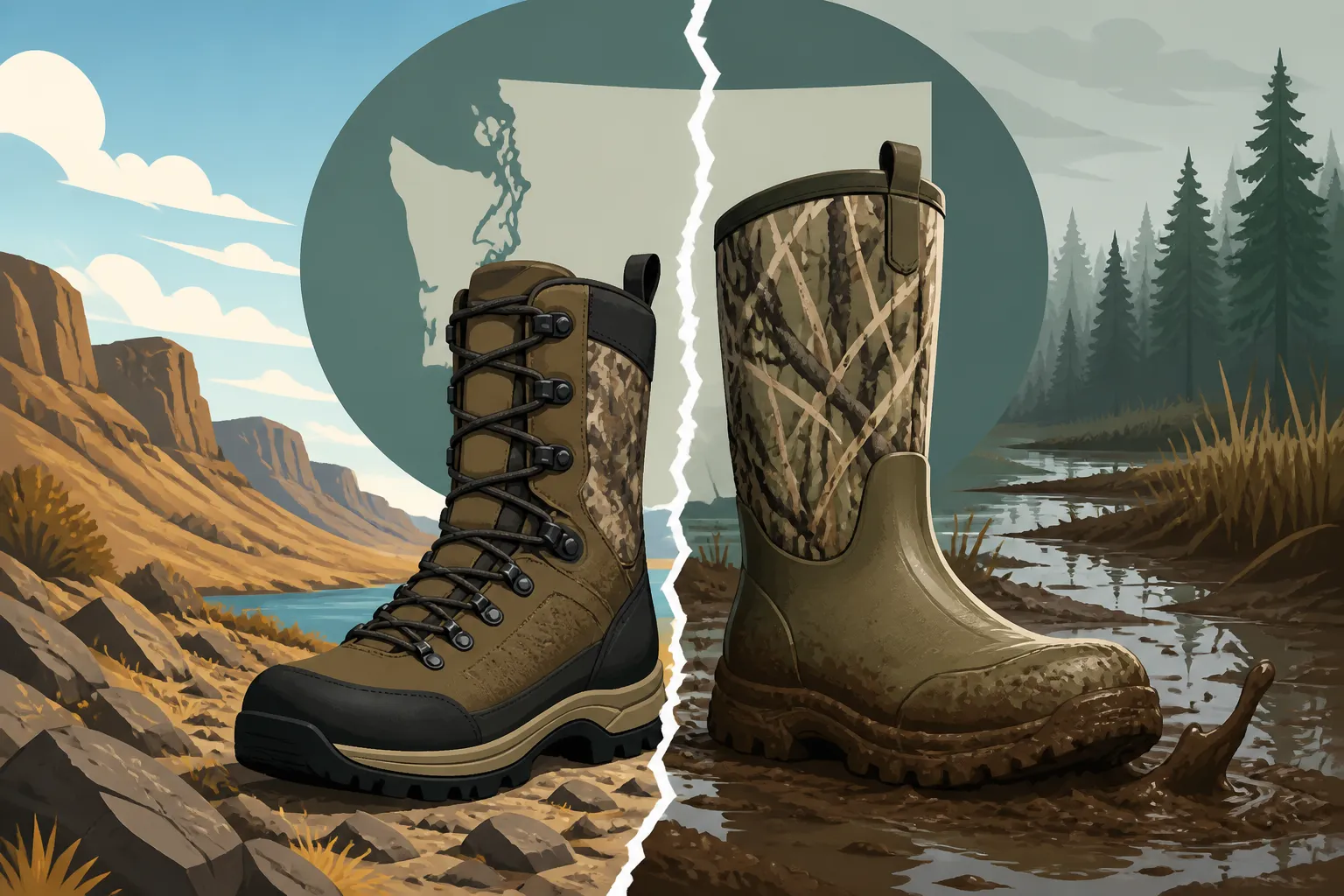
Oh, the age-old Washington hunting boot dilemma! If you've spent any time chasing elk or deer across our incredible state, you know the frustration: the perfect boot for chasing mule deer through the scablands east of the Cascades feels like a clumsy brick sloggin' through the coastal rainforest, and vice-versa. It’s like Washington itself is two different states, and your footwear needs to reflect that wildly diverse terrain. This guide is all about helping you navigate those choices, ensuring your feet stay comfortable, supported, and ready for whatever Washington throws at you, from jagged rockfalls to ankle-deep mud bogs.
Understanding Washington's Diverse Terrain Demands
Washington isn't just one type of hunting country; it's a tapestry woven from dramatically different landscapes. What works for one side of the state often falls short on the other, leading to blisters, wet feet, or even twisted ankles if you're not properly equipped. It's a reality that every hunter who ventures beyond their backyard unit quickly discovers, and it's why a "one-boot-fits-all" approach rarely cuts it here.
The Eastside's Rocky Challenges
Head east of the Cascade crest, and the world changes completely. Think sagebrush-covered hills, basalt coulees, and the sprawling, arid breaks of the Columbia Basin. Here, your primary enemies are sharp rocks, relentless friction, and often, scorching heat during early season hunts. The ground is hard, unforgiving, and studded with loose scree that loves to shift underfoot. You're often covering vast distances, navigating steep, uneven slopes that demand exceptional stability and protection from punctures or bruising. Imagine picking your way through a basalt rockslide in the Colockum or hiking the rocky rimrock near the Okanogan, and you'll understand why flimsy boots just won't cut it. The kind of boot that thrives here needs to be a fortress for your feet, prioritizing rigidity and robust construction.
The Westside's Boggy Realities
Now, point yourself west towards the Olympic Peninsula or the dense timber country of the Willapa Hills, and you're entering a different universe. Rain, moss, mud, and water-logged ground define the landscape. Here, you're less worried about sharp rocks and more about constant dampness, slippery roots, and sinking into the soft earth. Think of still-hunting through a clearcut on the coast, or climbing through saturated, mossy old-growth forests—your feet are going to get wet if your boots aren't up to snuff. The terrain might not be as overtly 'rocky' but it's often steep, slick, and requires a different kind of grip and waterproofing to keep you moving silently and safely. The challenges are less about abrasion and more about sealing out moisture and providing grip on treacherous, wet surfaces.
Key Features to Look For in Hunting Boots
When you're shelling out good money for a pair of hunting boots, you want to make sure they're going to hold up and perform when it matters most. It's not just about comfort; it's about safety, endurance, and ensuring your hunt isn't cut short by foot issues. Getting these features right is paramount, especially in a state with such varied conditions.
Waterproofing and Breathability
This is arguably the most critical feature for any Washington hunter. For the westside, true waterproofness is non-negotiable. You’re going to be crossing streams, wading through wet grass, and dealing with persistent rain. Look for boots with reliable waterproof membranes like Gore-Tex or similar proprietary technologies. But here's the kicker: excellent waterproofing often comes at the expense of breathability. On the eastside, especially during warmer early seasons, your feet can get hot and sweaty, leading to blisters even if they're technically dry from the outside. A good balance, or even prioritizing breathability on the eastside if you primarily hunt dry conditions, is key. Nobody wants trench foot on a multi-day backcountry hunt. It's a delicate balance, and Rain Gear That Survives a Washington Westside Season addresses similar challenges with outer layers.
Support and Stability
Whether you're scrambling over loose talus in the Blues or navigating blown-down timber in the Gifford Pinchot, ankle support and overall foot stability are vital. A stiff sole helps protect your feet from bruising on rocky terrain and reduces fatigue over long distances, especially when carrying a heavy pack. High-cut boots offer better ankle support, which is crucial when side-hilling or traversing uneven ground. This is particularly important for avoiding nasty sprains that can end a hunt early. Think of the stability a quality boot provides as a foundation for your entire body, especially when you're loaded down with gear, or even an elk quarter. Boots and Packs for Washington Backcountry dives deeper into how these two critical gear items work in tandem.
Traction and Outsole Design
The sole of your boot is your direct connection to the ground, and its design dictates how well you'll stick to it. Aggressive lug patterns are excellent for digging into mud and soft earth, providing much-needed grip on slippery westside trails. However, on hard, rocky eastside terrain, lugs that are too soft can wear down quickly and offer less stable contact. Look for a durable rubber compound that can withstand abrasion while still providing grip. Some boots feature different rubber compounds in various areas of the sole to optimize for both grip and durability. Pay attention to how the lugs are spaced and their depth; deeper, more widely spaced lugs shed mud better, while shallower, denser lugs offer more contact area on smoother surfaces.
Durability and Materials
Hunting boots take a beating. They're dragged through brush, scraped against rocks, and constantly exposed to moisture and temperature extremes. Full-grain leather is a classic choice, known for its durability and ability to mold to your foot over time. However, it requires more maintenance, like regular conditioning and Waterproofing Leather Boots, to stay supple and waterproof. Synthetic materials, often lighter and quicker to dry, have made huge advancements in durability and are frequently used in modern boot designs. Reinforced toe caps and heel counters protect against impacts and extend the life of the boot. The stitching and bonding of the sole to the upper are also critical failure points; examine these closely, as a well-constructed boot will have robust, often double-stitched seams.
Boots for Eastern Washington's Rocky, Arid Landscapes
Hunting the eastside is often about covering ground, spotting game from afar, and then making a strategic move. This involves a lot of walking on hard, often steep, and unforgiving surfaces. Your boots need to be able to handle that abuse day in and day out without turning your feet into a painful mess.
Stiff Soles and Ankle Support
For the rocky, broken terrain of Eastern Washington, a stiff sole is your best friend. This rigidity protects the bottom of your feet from sharp rocks and uneven ground, preventing bruising and reducing foot fatigue over long days. Imagine hiking up a steep, shale-covered ridge in the Blue Mountains; a stiff sole lets your foot roll less, conserving energy and making each step more secure. Boots with a rigid shank (a stiff piece inserted between the insole and outsole) are ideal. High-cut boots are also paramount for excellent ankle support, crucial when traversing sidehills or scrambling through draw bottoms filled with loose rock. Brands known for mountaineering-inspired hunting boots often excel in this category, offering the kind of robust support that makes crossing a talus slope feel manageable rather than like a guaranteed twisted ankle. When you're making long pushes across units like the Colockum or the Wenaha-Tucannon, that stiffness and support will pay dividends.
Abrasion Resistance and Breathability
While westside boots battle water, eastside boots battle friction and heat. The dry, abrasive environment can quickly shred softer materials, so look for boots constructed with durable, thick full-grain leather or heavy-duty synthetic fabrics. Reinforced randing around the base of the boot provides an extra layer of protection against scrapes and impacts from rocks. Breathability is also key, especially for early season hunts where temperatures can soar. Sweaty feet lead to blisters, plain and simple. Boots with good moisture-wicking liners and breathable membranes (or even non-waterproof options for truly dry conditions) can make a huge difference. If you're going to be Glassing Sage and Wheat Edges for Washington Mule Deer for hours under the sun, your feet need to breathe. Many hunters opt for lighter insulation, or no insulation at all, in their eastside boots to manage heat better, relying on their socks for warmth if needed.
Boots for Western Washington's Wet, Muddy Forests
The westside demands a different breed of boot. Here, waterproofing isn't a luxury; it's a necessity. The dense, wet forests and often-saturated terrain can quickly turn a hunt into a miserable experience if your feet aren't adequately protected.
Aggressive Tread and Water Sealing
When you're slipping and sliding on mossy logs, slick roots, and deep mud, an aggressive outsole tread pattern is paramount. Deep, widely spaced lugs are excellent for digging into soft ground and shedding mud, preventing buildup that can reduce traction. Think of the kind of tread you'd want on a mud tire – that's the principle here. The rubber compound should also be designed for grip on wet surfaces, often being a bit softer than what you'd find on an eastside boot. Beyond the tread, absolute water sealing is critical. Full-height rubber rands, minimal exposed stitching, and high-quality waterproof membranes like Gore-Tex are essential. Some hunters even prefer taller boots, sometimes reaching 10-12 inches, for extra protection against deeper puddles or stream crossings that are common in units like the Olympic or Willapa Hills. This is where you might find yourself Still-Hunting Blacktails in Wet Washington Brush, and every step demands confidence.
Flexibility and Comfort for Long Miles
While eastside boots prioritize stiffness, westside boots often benefit from a bit more flexibility in the sole and upper. This allows for better articulation when navigating uneven, obstacle-laden terrain, like climbing over blowdown or sinking into soft mud. A more flexible boot can feel more comfortable over long miles of varied terrain, reducing strain on your feet and ankles as they adapt to constant changes in surface. However, this flexibility shouldn't come at the expense of adequate ankle support; a good westside boot strikes a balance, offering enough flex for agility while still cradling your ankle. Comfort is also deeply tied to fit, and a properly fitting boot, even a waterproof one, will prevent hot spots and blisters. The importance of proper fit extends to all hunting footwear, but especially for the often-arduous treks through wet, dense westside cover.
Break-In, Fit, and Maintenance for Longevity
It doesn't matter how expensive or feature-rich your boots are if they don't fit right or you don't take care of them. These often-overlooked aspects are just as crucial as the initial purchase, determining your comfort and how long your investment lasts. Many a hunt has been ruined by an ill-fitting boot or one that failed due to neglect.
The Importance of Proper Fit
Let's be real: trying on boots in a store is one thing, but hiking steep terrain with a pack is another. A proper fit is non-negotiable, and it's far more nuanced than just "your shoe size." Your feet swell throughout the day, so try on boots in the afternoon or evening. Always wear the type of hunting socks you plan to use—this makes a huge difference. You want enough room in the toe box for your toes to wiggle, but your heel should be secure with minimal lift when you take a step. Too tight, and you'll get pressure points and numbness. Too loose, and you'll get excessive rubbing and blisters, especially on descents where your foot slides forward. Don't be afraid to try on multiple pairs and different brands, even if it feels like a chore. Spend time walking around the store, especially on any incline ramps if they have them. Remember, Boot Fit for Steep Sidehills is especially critical for maintaining stability and preventing painful rubbing on Washington's varied terrain. Consider visiting an outdoor outfitter where staff are trained to help with proper boot fitting.
Care and Maintenance Routines
Just like your rifle or bow, your boots need regular care. After every hunt, especially in wet or muddy conditions, clean them thoroughly. Remove mud, dirt, and debris from the uppers and soles. For leather boots, allow them to air dry slowly at room temperature, away from direct heat sources like campfires or heaters, which can dry out and crack the leather. Once dry, reapply appropriate leather conditioners and waterproofing treatments to keep the leather supple and the boot's waterproof membrane effective. For synthetic boots, a good rinse and air dry are usually sufficient, but always check manufacturer recommendations for specific cleaning and re-waterproofing sprays. Regularly inspecting your laces, eyelets, and stitching can catch minor issues before they become major failures. A little proactive maintenance can significantly extend the life of your boots, saving you money and discomfort in the long run. GoHunt often shares great tips on gear longevity, highlighting that preventative care is always cheaper than replacement.
Making Your Final Boot Decision
The sheer number of hunting boots available can be overwhelming, and it's easy to get caught up in the marketing hype. But by understanding your specific needs and the demands of your hunting style in Washington, you can cut through the noise and make an informed choice that will serve you well for seasons to come.
Considering Your Specific Hunt Type
Before you even start looking, consider the specific type of hunting you do most often in Washington. Are you primarily a westside archery elk hunter, spending September bugling in the rainforest, or do you spend late rifle season chasing mule deer in the snow-covered eastside breaks? Your typical season (early warm vs. late cold), your primary weapon (which dictates where and when you hunt), and the species you pursue will all influence your ideal boot. For example, if you're a multi-season hunter who finds yourself in dramatically different environments, you might find that one "do-it-all" pair of boots compromises too much. It might actually be more practical and comfortable to invest in two specialized pairs: one for the rugged east and one for the wet west. Many hunters find themselves owning a lighter, more breathable boot for early season Archery Elk Hunting in Washington's September Season and a heavier, insulated, and more rigid pair for Late-Season Hunting in Washington Snow.
The Value of Trying Before Buying
I can't stress this enough: you have to try on boots before you buy them. Online reviews are great for narrowing down choices, and sites like GoHunt offer incredible gear breakdowns, but nothing replaces putting a pair on your own feet. As mentioned, wear your hunting socks, walk around, climb stairs, mimic side-hilling if you can. If you buy online, make sure the retailer has a generous return policy so you can try them on at home and walk around your house (keeping them clean, of course) before committing. Even then, plan for a break-in period. New boots rarely feel perfect right out of the box, and you'll want to take them on several shorter hikes before tackling a multi-day backcountry hunt. Breaking In Boots Before a Hunt is a crucial step that many eager hunters rush, only to pay the price in the field with painful blisters and hot spots. Don't let enthusiasm override practicality!
Washington Hunting Boot Comparison
To help you visualize the different priorities for each region, here's a quick comparison:
| Feature | Eastern Washington (Rocky, Arid) | Western Washington (Wet, Muddy) |
|---|---|---|
| Sole Stiffness | High (Rigid for rock protection, stability) | Moderate to High (Good support, some flex) |
| Traction | Durable, medium-depth lugs (abrasion resistance) | Aggressive, deep, widely spaced lugs (mud shedding) |
| Waterproofing | Important (morning dew, light rain), but breathability often prioritized for heat | Critical (constant rain, streams, bogs) |
| Breathability | High (prevents sweat, blisters in heat) | Moderate (compromised by waterproofing, still desired) |
| Ankle Support | High (side-hilling, loose rock) | High (uneven terrain, slippery roots) |
| Material Durability | Abrasion-resistant (thick leather, reinforced synthetics) | Water-resistant, puncture-resistant (full-grain leather, rubber rands) |
| Insulation | Low to None (early season), Moderate (late season snow) | Low to Moderate (wet insulation is heavy), High (deep winter) |
| Weight | Can be heavier for durability/stiffness | Moderate (lighter for flexibility, less fatigue) |
Disclaimer
This article is for general informational purposes only and does not constitute professional advice. Laws, prices and regulations vary by location and change over time. Consult a qualified professional for guidance on your specific situation.