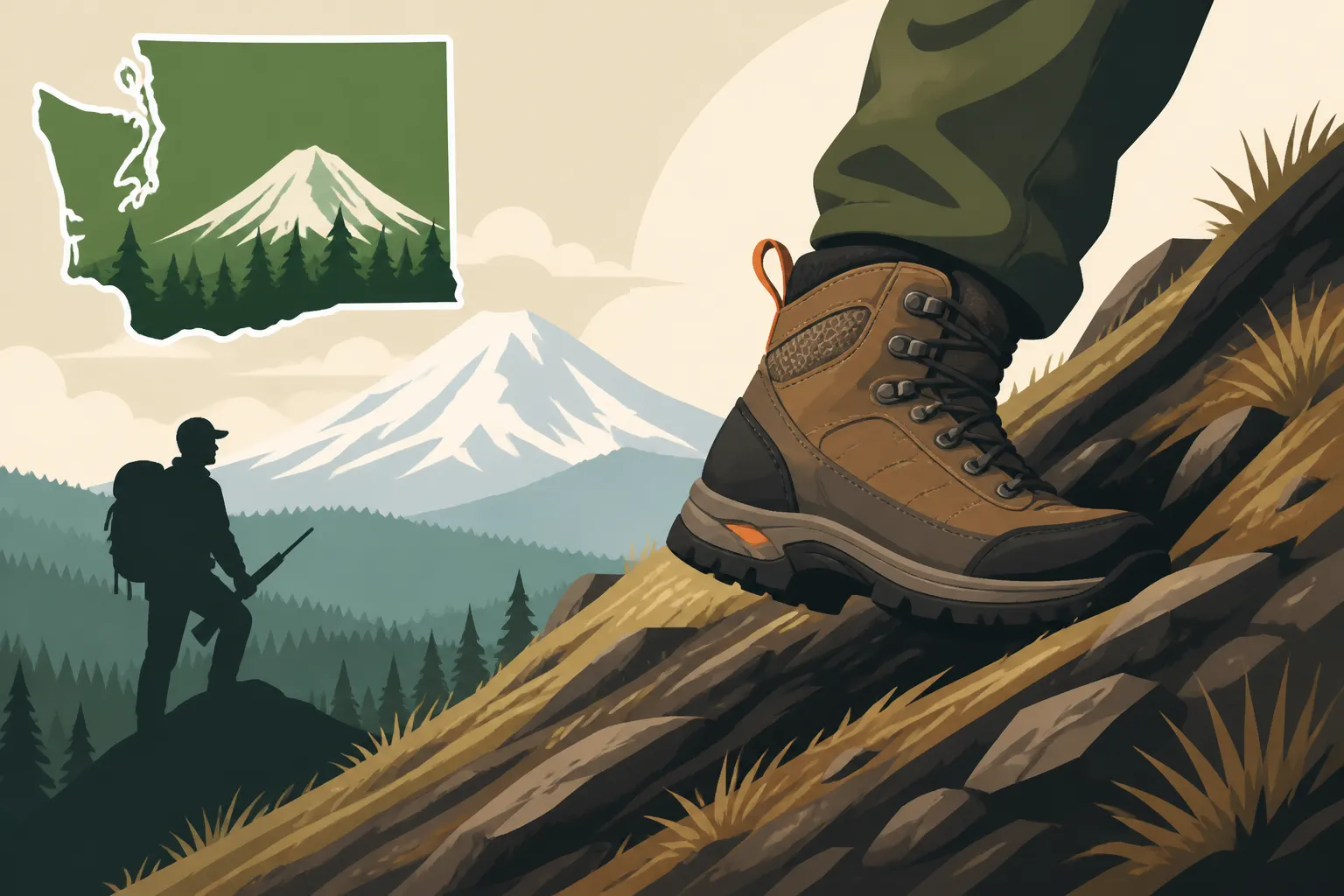
Boot Fit for Steep Sidehills
There's nothing quite like the burning agony of your toes jamming into the front of your boots as you sidehill a steep descent, or the insidious rub of a lifting heel gnawing away at your skin on a grueling ascent. In Washington, where our hunting grounds range from the steep, rocky scree slopes of the eastern Cascades to the slick, muddy sidehills of the Olympic Peninsula, a poorly fitting boot isn't just an annoyance – it's a direct threat to your comfort, your safety, and the success of your hunt. This guide is all about diving deep into the nuances of finding that perfect boot fit, specifically for tackling those relentless sidehills that define so much of our Washington hunting experience, ensuring your feet stay happy and your focus remains on the game.
The Unforgiving Nature of Washington's Sidehills
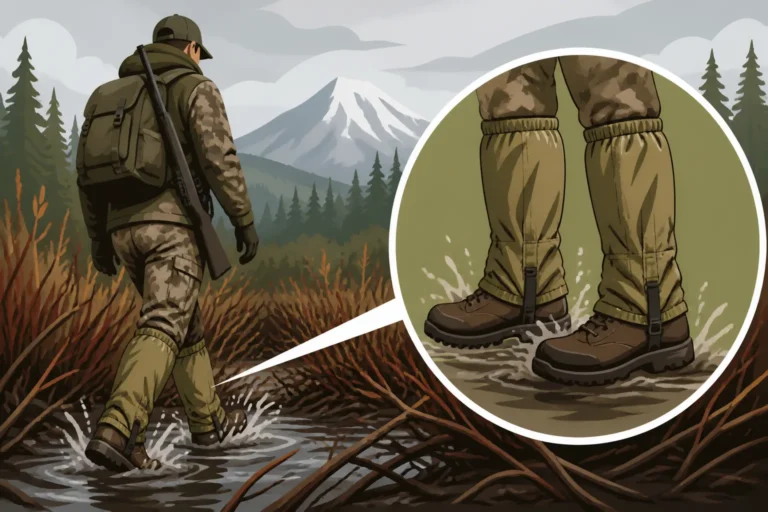
Washington's diverse landscapes are breathtaking, but they are also relentlessly challenging, especially when it comes to traversing steep, uneven terrain. Whether you're chasing mule deer in the rocky, broken country east of the Cascades or still-hunting blacktails through the wet, timbered slopes of western Washington, you're going to spend a significant amount of time walking at an angle. This isn't like walking on flat ground or even just going straight up and down a hill; sidehilling puts a unique kind of stress on your feet and ankles, and your boots need to be up to the task.
When you're moving across a slope, one foot is always higher than the other, and your weight is constantly shifting. The uphill side of your boot is often bearing more pressure, while the downhill side is trying to prevent your foot from sliding forward or twisting. This continuous, uneven pressure is what can quickly expose flaws in boot fit that might go unnoticed on flatter ground. If your boots aren't locking your foot in properly, or if there's too much internal volume, you'll feel every single weakness. It's a prime recipe for hot spots, blisters, and an overall loss of confidence in your footing, which is the last thing you want when you're miles from the truck with a heavy pack.
Beyond Comfort: Safety and Performance on the Slope
While comfort is undeniably crucial, especially on multi-day hunts in the backcountry, the impact of proper boot fit on sidehills extends far beyond merely preventing blisters. It's fundamentally about safety and optimizing your hunting performance. A boot that allows your foot to slide internally is essentially creating a dangerous disconnect between your foot and the ground. This lack of stability significantly increases your risk of an ankle roll, a knee injury, or a full-blown fall – any of which can end your hunt prematurely, or worse, lead to a serious wilderness emergency.
Think about trying to maintain your balance on a slick, moss-covered log while your foot is sloshing around inside your boot. It’s nearly impossible to move with confidence and precision. The same principle applies to sidehilling. Good boot fit means your foot and ankle move as one with the boot, providing maximum support and tactile feedback from the terrain. This allows you to place your feet precisely, trust your steps on precarious ground, and move quietly and efficiently. When your boots are truly dialed in, you can focus on reading the sign, glassing for game, and planning your next move, instead of constantly worrying about your feet. It frees up mental energy that's vital for a successful hunt. For more insights on general gear, you might find articles like Rifle Setup for Washington Elk and Deer helpful in ensuring your whole kit is cohesive.
Common Fit Issues and Their Sidehill Consequences
Let's get down to the common problems we all face with boots and how they manifest on those tricky Washington sidehills. These aren't just minor inconveniences; they're deal-breakers that can turn an epic hunt into a pain-filled death march.
Toe Bang and Forward Slide
This is probably the most common and acutely painful issue hunters experience on steep descents, especially when traversing angled terrain. Toe bang occurs when your foot slides forward inside the boot, causing your toes – particularly the big toe – to repeatedly ram against the front of the toe box. On a steep sidehill, gravity and the angle of the slope conspire to push your foot forward with every step. If there's too much length in the boot, or if your foot isn't locked down properly in the midfoot and heel, that forward slide becomes inevitable.
The consequences are brutal: bruised toenails, lost toenails, blisters on the tips of your toes, and general foot soreness that can cripple your ability to descend safely and comfortably. Imagine trying to creep down a shale slide in the Blue Mountains, trying to keep quiet, but every step sends a shockwave of pain through your toes. It forces you to slow down, take unnatural steps, and focus on the pain rather than your surroundings. This can also lead to compensatory movements, straining other parts of your legs and back. It's a vicious cycle that can quickly turn a hunter sour.
Heel Lift and Blisters
While toe bang is largely a descending problem, heel lift is the bane of ascents and sidehilling, and it's a guaranteed blister generator. Heel lift happens when your heel isn't securely held in the heel pocket of the boot, allowing it to slide up and down with each step. On an uphill climb, or when your foot is angled on a sidehill, the natural motion of your foot creates friction. If that friction is concentrated on your heel, a hot spot rapidly develops, which then erupts into a blister.
Blisters aren't just uncomfortable; they can be debilitating. A large, open blister on your heel makes every step excruciating and can become infected in the field. Beyond the pain, constant heel lift also indicates a lack of control and stability. Your foot isn't properly anchored, meaning you're working harder to maintain traction and balance. This leads to increased fatigue in your feet, ankles, and calves, diminishing your stamina and overall effectiveness in the field. Many hunters find resources like GoHunt's gear reviews invaluable when researching boots designed for minimal heel lift and maximum stability on tough inclines.
Arch and Midfoot Fatigue
Often overlooked but equally important is the support your boot offers to your arch and midfoot. On flat ground, slight arch discomfort might be tolerable, but when you're constantly fighting gravity on a sidehill, poor arch support can lead to significant fatigue and even pain across the sole of your foot and up into your lower leg. Your arch acts as a natural shock absorber and provides stability; if it's not adequately supported, the muscles and ligaments in your foot have to work overtime to compensate.
This constant strain, especially over miles of uneven terrain, can lead to conditions like plantar fasciitis or general foot soreness that feels like a deep ache. It affects your gait, making you walk less efficiently and quietly. If your foot is collapsing internally or your arch is unsupported, you'll also notice a general feeling of instability, as if your foot is rolling inside the boot. This is particularly problematic on rocky or root-strewn sidehills where precise foot placement is critical. Articles about Boots for Washington's Eastside Rock and Westside Mud often delve into specific features that address these issues.
Finding the Right Fit: Key Considerations
So, how do we avoid these pitfalls and find that elusive perfect fit? It's not a one-size-fits-all answer, but rather a process of understanding your own feet and the boots designed for the terrain you hunt.
Understanding Your Foot Shape and Boot Lasts
Every foot is unique, and so is every boot. Boot manufacturers build their footwear around a "last," which is essentially a mold of a foot. Different brands and even different models within the same brand will use different lasts, resulting in varying internal shapes and volumes. This is why a size 10 from one brand might fit you perfectly, while a size 10 from another feels completely wrong.
- Length: You generally want about a thumb's width (your thumb, not the salesperson's!) between your longest toe and the end of the boot when your heel is firmly seated. This prevents toe bang on descents.
- Width: Your foot should feel snug but not compressed. There should be enough room for your foot to splay naturally under load, but not so much that it slides side-to-side.
- Volume: This refers to the overall space inside the boot, particularly over the arch and instep. If you have high arches, you'll need more volume. If you have low volume feet, too much space can lead to a sloppy fit, even if the length and width are okay.
- Heel Pocket: This is crucial for sidehilling. Your heel should feel securely cradled with minimal lift (a tiny bit is acceptable, but it shouldn't rub).
Don't be afraid to try on multiple brands and models. What works for your buddy might not work for you. Many hunters find GoHunt's comprehensive database of gear reviews and user experiences incredibly helpful for narrowing down brands that tend to fit certain foot types. It's an investment in your hunt, so take the time to compare.
The Role of Socks and Lacing Techniques
The socks you wear are not an afterthought; they are an integral part of your boot system. Avoid cotton at all costs; it holds moisture, leading to blisters and cold feet. Opt for merino wool or high-quality synthetics that wick moisture away from your skin. The thickness of your socks also plays a role in fit. Always try on boots with the specific socks you intend to hunt in. A thicker sock can take up volume in a boot that might otherwise be too large, while a thinner sock might be necessary if a boot feels too snug.
Lacing is another powerful tool for fine-tuning boot fit, especially for sidehilling. Most modern hunting boots have a lacing system that allows for differential tensioning. This means you can lace the lower part of the boot (over your forefoot) tighter or looser than the upper part (around your ankle).
- Heel Lock Lacing: For minimizing heel lift, many hunters employ a "heel lock" lacing technique. This involves creating a knot or loop at the ankle bend, allowing you to pull the laces extremely tight over the instep to really seat your heel, while still keeping the forefoot comfortable.
- Differential Tension: When sidehilling, you might want to lace your boots tighter over the instep and midfoot to prevent forward slide and heel lift, but slightly looser around the ankle collar to allow for natural ankle flex and reduce rubbing on the top of your foot.
- Skipping Eyelets: If you have a specific pressure point on the top of your foot, you can skip an eyelet or cross-over a different way to relieve pressure in that area.
Experiment with different lacing patterns. What feels good for a steep uphill might need a slight adjustment for a long downhill trek.
Stiffness and Support: When More is Better
For the kind of steep, uneven terrain we encounter in Washington, a stiffer boot generally outperforms a flexible one. This is particularly true for sidehilling and carrying heavy loads, like a quarter of a Packing an Elk Out of Washington's Backcountry.
- Shank Stiffness: The shank is an internal plate, often made of steel, nylon, or fiberglass, that runs between the insole and outsole. A stiffer shank provides better support for your arches, reduces foot fatigue by preventing your foot from over-flexing on uneven ground, and offers protection from sharp rocks and roots. For serious mountain hunting, look for boots with a full or 3/4 length stiff shank. This rigidity helps the boot conform to the uneven ground, rather than your foot trying to conform to the ground through a flexible boot.
- Ankle Support: High-cuff boots with good ankle support are crucial for stability on sidehills. They help prevent ankle rolls and provide confidence when stepping on loose or angled ground. The ankle collar should be snug but allow for natural movement without pinching or rubbing. When you're constantly twisting your body to compensate for the slope, strong ankle support keeps your foot properly aligned with your lower leg. You'll definitely want this kind of robust support if you're venturing into Hunting Washington's Wilderness Areas.
While more flexible boots might be lighter and feel more comfortable initially on flat ground, their lack of support will quickly become a liability on challenging sidehills, accelerating fatigue and increasing injury risk.
| Boot Feature | Benefit for Sidehilling | Risk of Poor Fit |
|---|---|---|
| Length | Prevents toe bang on descents | Bruised toes, lost toenails |
| Heel Lock | Eliminates heel lift, prevents blisters on ascents | Blisters, reduced stability |
| Midfoot Snugness | Secures foot, prevents forward/lateral slide | Foot fatigue, arch pain, general instability |
| Arch Support | Reduces foot fatigue, maintains natural foot mechanics | Plantar fasciitis, arch collapse, over-pronation |
| Ankle Stiffness | Prevents ankle rolls, provides lateral support | Increased risk of sprains, loss of confidence in footing |
| Outsole Aggression | Superior grip on varied terrain (mud, rock, loose soil) | Slipping, falls, wasted energy on insecure footing |
Testing and Breaking In for Washington's Terrain
Finding the right boot isn't just about trying it on in the store. It's about putting it through its paces in conditions that simulate your hunt.
In-Store and Home Testing Methods
When you're in the store, don't just walk around on the carpet. Ask if they have an incline board or a ramp. Walk up and down it repeatedly. If they don't, find a staircase. Pay close attention to any movement of your foot inside the boot, especially your heel and toes.
- The Downhill Test: Stand on an incline board or staircase facing downhill. Kick your heel back into the boot to seat it. Then, lean forward, putting pressure on the ball of your foot. Wiggle your toes. If your toes touch the end, even slightly, that boot is likely too long or lacks proper heel retention for steep descents.
- The Uphill Test: Face uphill on the incline. Your heel should remain securely in the heel pocket. Any significant lift will lead to blisters.
- Side-to-Side Test: Walk on the incline board sideways. How does your foot feel when angled? Is it sliding laterally? Is there too much pressure on the uphill side or not enough support on the downhill side?
Once you get boots home, wear them around the house for short periods. Then, gradually increase the time, walking up and down local hills, trails, and stairs with a loaded pack. This is where you can fine-tune your lacing and identify any hot spots before they become serious problems.
The Crucial Break-In Period
This cannot be stressed enough: do not take brand new boots on a demanding Washington hunt. No matter how well they fit in the store, new boots need a proper break-in period. This allows the boot materials to conform to your unique foot shape, softens any stiff spots, and lets you identify potential issues in a controlled environment.
Start with short walks, then gradually increase the distance and terrain difficulty. Wear your hunting socks. Carry your loaded pack. A good rule of thumb is to put at least 20-30 miles on your boots before the season opener. For very stiff mountaineering boots, it might be even more. This isn't just about breaking in the boot; it's about conditioning your feet to the boots. Your feet will toughen up in the right places, and you'll learn how to best lace and adjust your boots for maximum comfort and performance. I often hear hunters talking about using the break-in periods to familiarize themselves with their boots, often consulting tips and tricks found on hunting community sites, or even in forum discussions linked through GoHunt about proper boot prep. For context, don't forget to also consider Archery Practice for Wet Coastal Conditions, as all your gear needs to perform optimally.
When to Say No to a Boot
Sometimes, despite all your efforts with lacing and break-in, a boot just isn't going to work. Don't force it. If you're consistently getting hot spots in the same area, if your toes are still banging, or if your heel is still lifting significantly after a good break-in period, it's time to cut your losses. A bad boot fit can ruin a hunt and even lead to injury, costing you far more than the price of a new pair of boots.
Red flags that indicate a boot is a poor choice for you might include:
- Persistent hot spots: After a few miles, if specific areas are always rubbing or feeling hot.
- Numbness or tingling: This suggests pressure points that are cutting off circulation or irritating nerves.
- Excessive foot fatigue: If your feet feel abnormally tired after relatively short distances on moderate terrain, the boot might not be providing adequate support.
- Feeling unstable: If you constantly feel like you're going to roll an ankle or lose your footing, the boot isn't giving you the confidence you need.
It's better to invest in another pair that truly fits than to suffer through a hunt with ill-fitting footwear. Your feet are your most important hunting tool, especially in Washington's demanding terrain.
Ultimately, finding the right boot fit for Washington's steep sidehills is a journey, not a destination. It requires patience, research, and diligent testing. But the reward – miles of comfortable, confident hiking through incredible country – is absolutely worth every step.
Disclaimer
This article is for general informational purposes only and does not constitute professional advice. Laws, prices and regulations vary by location and change over time. Consult a qualified professional for guidance on your specific situation.