Gaiters for Wet Brush
There's nothing quite like the sudden chill that sets in when water sneaks into your boots, soaking your socks and turning what was a hopeful morning hunt into a miserable slog. For anyone who's spent time chasing game in Washington State, especially on the perpetually damp west side or during an autumn rainstorm east of the Cascades, the battle against wet brush is a constant one. This guide is all about how a simple, often overlooked piece of gear—gaiters—can be your best friend in keeping you dry, comfortable, and focused on the hunt, not your soggy feet.
Why Gaiters Are a Non-Negotiable in Washington's Wet Brush
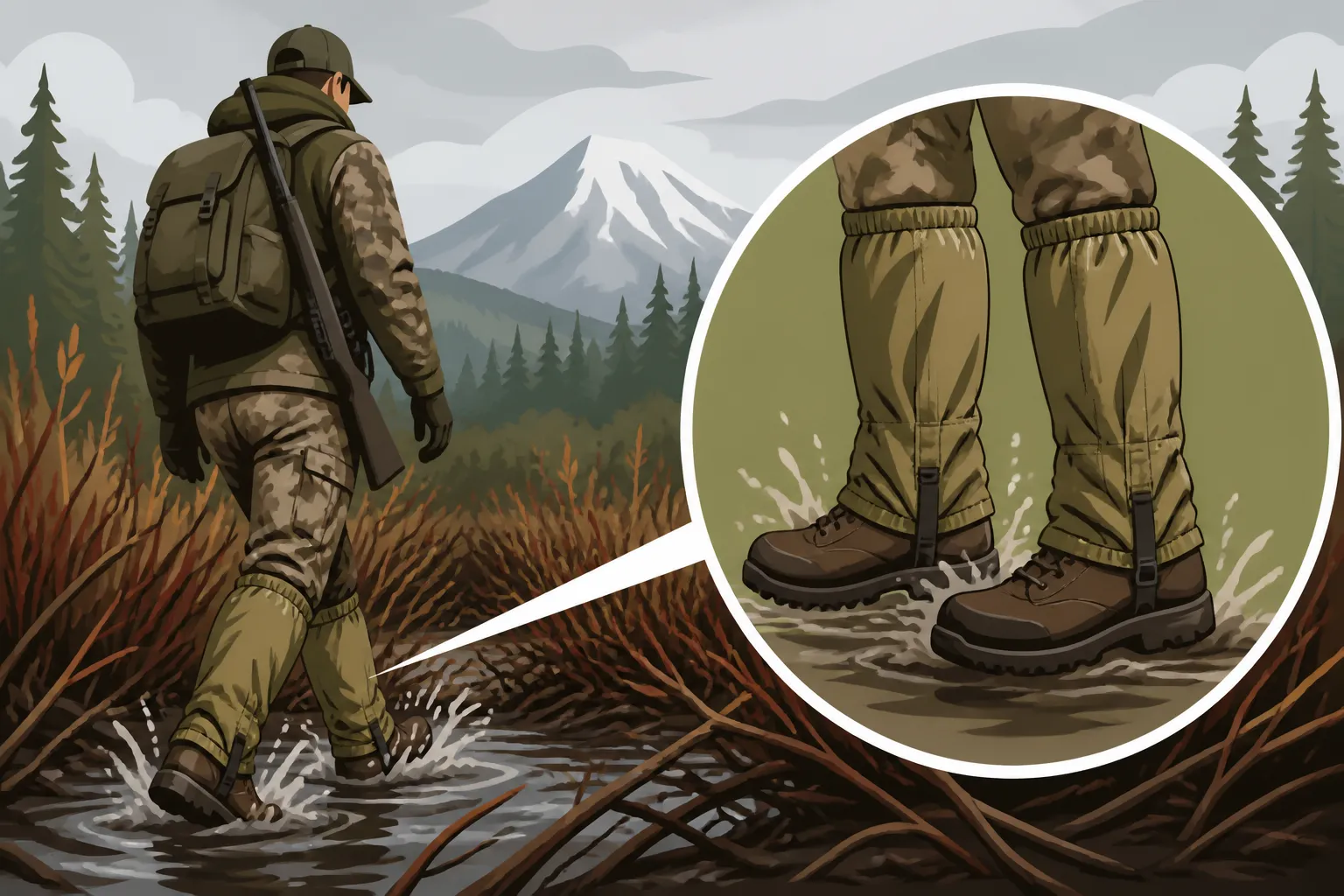
Let's be honest, we've all been there. You step into a clearcut thick with dew-laden salal, or push through a patch of wet huckleberry, and within minutes, the cuffs of your pants are saturated, and soon after, your socks feel like sponges. It's a quick trip from excited hunter to shivering mess, and it can absolutely derail a hunt.
The Misery of Soaked Boots and Pants
The immediate discomfort of wet feet and lower legs is just the start. Imagine still-hunting through a dense western Washington jungle, trying to move silently when every step squishes, and your pants cling to your legs, making noise with every brush of fabric. It’s impossible to be stealthy when you’re constantly aware of how cold and damp you are. Beyond the discomfort, prolonged exposure to wetness can lead to real problems. Chafing becomes inevitable, especially on longer hunts. Your skin softens, making it prone to blisters, which can quickly turn a multi-day trip into an exercise in pain management.
Even more seriously, wet clothing significantly compromises your body's ability to regulate temperature. In Washington's variable climate, especially during late season hunts, temperatures can drop rapidly. What starts as discomfort can escalate into mild hypothermia if you're not careful, leading to impaired judgment, muscle cramps, and a potentially dangerous situation. Staying dry isn't just about comfort; it's about safety and effectiveness in the field. Every time I've skipped gaiters in marginally wet conditions, I've regretted it about an hour later.
Protecting Your Investment: Boots and Pants
Hunting gear, especially good quality boots and waterproof pants, represents a significant investment. You spend good money on boots that offer support and traction, and on pants designed for durability and quiet movement. Constantly exposing them to abrasive wet brush, mud, and debris can drastically shorten their lifespan. Gaiters act as a protective shield, taking the brunt of the abuse.
Think about the stitching on your boots, where the sole meets the upper, or the fabric of your pants where they rub against each other or the undergrowth. These areas are vulnerable. Gaiters create a barrier, preventing thorns, stickers, and sharp branches from snagging your pants or abrading your boot laces. They also keep mud, fine silt, and snow from packing into boot eyelets and zippers, which can cause premature wear and tear. By deflecting moisture and debris, gaiters help maintain the integrity of your primary hunting apparel, meaning your expensive waterproof boots and tough hunting pants will last longer, saving you money in the long run. It’s an easy way to extend the life of your most critical outer layers.
Choosing the Right Gaiters for Washington's Diverse Terrain
Picking the right gaiters isn't a "one-size-fits-all" scenario. Washington's hunting environments are incredibly diverse, from the rain-soaked rainforests of the Olympic Peninsula to the dry, rocky breaks of eastern Washington, and each demands a slightly different approach to gear. What works for a late-season mule deer hunt in crunchy snow might be overkill, or even insufficient, for an early archery elk hunt in dense, dewy timber.
Material Matters: Waterproofing and Breathability
When it comes to gaiter materials, you're primarily looking at a trade-off between absolute waterproofing and breathability, often balanced with durability. Many high-end gaiters feature fabrics with a waterproof/breathable membrane, like those found in quality rain gear. Rain Gear for Westside Hunting is a great resource for understanding these fabrics. These materials excel at keeping external moisture out while allowing internal perspiration vapor to escape, preventing that clammy feeling. Look for reputable brands that use Gore-Tex or their own proprietary membranes, which are usually a good indicator of performance.
For extreme conditions, such as deep snow or relentless downpours, a fully waterproof gaiter, even if less breathable, might be preferable. Conversely, for lighter use—like protecting against morning dew or light drizzle in warmer temperatures—a highly breathable, water-resistant material might be sufficient. Canvas or heavy nylon options offer exceptional durability against thorns and brush, which is crucial when Still-Hunting Blacktails in Wet Washington Brush, but might not be as completely waterproof as a membrane-lined option. It's about matching the gaiter's properties to the conditions you anticipate. You can find many detailed gear reviews on sites like GoHunt to help you sort through the options and see how different materials perform in real-world scenarios.
Height and Coverage: From Ankle to Knee
Gaiters come in various heights, each suited for different conditions and levels of brush density.
- Ankle Gaiters: These are the shortest, typically covering just the top of your boots and the bottom of your pants. They're great for light protection against morning dew, dust, or small pebbles from entering your boots. If you're hunting in relatively open terrain with minimal moisture, these can offer just enough protection without adding bulk.
- Calf-Height Gaiters: Falling somewhere between ankle and knee, these offer more substantial protection, usually extending up to the mid-calf. They are a good all-around choice for many Washington hunting scenarios, offering excellent defense against moderate brush, mud, and shallow stream crossings. They strike a balance between coverage and freedom of movement, making them a popular choice for deer or elk hunting in varied terrain.
- Knee-Height Gaiters: These are the heavy hitters, providing maximum protection by extending up to just below your knee. They are absolutely essential for navigating deep snow, crossing swollen creeks, or pushing through the dense, soaking-wet undergrowth often found in western Washington's timber. If you're anticipating serious precipitation or thick vegetation, like when Hunting Blacktails in Fog and Rain on the Olympic Peninsula, knee-high gaiters are your best bet. While they offer the most coverage, ensure they don't restrict your movement too much, especially when climbing steep inclines or traversing sidehills.
Attachment Systems and Durability Features
The effectiveness and longevity of your gaiters often come down to their design and the quality of their attachment systems. A gaiter that constantly sags or comes undone is more of a hindrance than a help.
- Under-Boot Straps: This is a critical component. Look for durable materials like hypalon (a heavy-duty rubberized fabric) or steel cables. Hypalon is flexible and resistant to abrasion, while steel cables offer superior cut resistance, which can be invaluable when scrambling over sharp rocks or through downed timber. Cheaper gaiters might use fabric straps that wear out quickly. Ensure the buckle system for these straps is robust and easy to adjust, even with cold fingers or gloves.
- Top Closures: The top of the gaiter needs to seal tightly around your leg to prevent water, snow, and debris from falling in. Most gaiters use a combination of a cinch cord with a toggle, a buckle strap, or even elastic. A secure and easily adjustable closure is vital, especially when wearing multiple layers. Layering for Wet Cold Weather is key, and your gaiters need to integrate seamlessly.
- Front Openings: Many gaiters feature a front opening that runs the length of the gaiter, secured by a heavy-duty zipper, Velcro, or a combination of both. Zippers should be robust and ideally covered by a storm flap to prevent water ingress. Velcro is convenient but can accumulate debris and lose effectiveness over time, especially in very wet or muddy conditions. A combination of both, with a solid snap closure at the bottom, often provides the most secure and reliable seal.
- Reinforced Insteps: The inner ankle area of a gaiter, where it meets your boot, is a high-wear zone. Look for gaiters that feature reinforced fabric, often a tougher material, in this area to prevent tears and punctures from boot abrasion or sharp objects. This small detail can make a huge difference in how long your gaiters last.
Practical Tips for Using and Maintaining Gaiters in the Field
Gaiters are simple in concept, but getting the most out of them requires a little bit of know-how regarding fit, field care, and how they integrate with your overall hunting system. After all, even the best gear is useless if it's not used correctly or allowed to fall into disrepair.
Proper Fit and Donning Techniques
A well-fitting gaiter should feel snug but not restrictive, allowing for a full range of motion. When you first put them on, make sure the under-boot strap is taut enough to keep the gaiter from riding up, but not so tight that it creates uncomfortable pressure points on your foot or restricts ankle flex. The top closure should be snug against your calf or just below your knee, creating a seal that prevents debris and moisture from entering from above.
Most gaiters are designed to be worn over your pants, which is generally the most effective way to shed water. The gaiter then creates a continuous waterproof barrier from your boot up past the hem of your pant leg. Some hunters prefer to wear them under their rain pants for a cleaner look or to minimize noise from fabric rubbing, but this can create a channel for water to seep between layers, defeating the purpose. Experiment to find what works best for your specific gear and body type, but always prioritize a good seal against moisture. Make sure the front opening (zipper/velcro) is perfectly aligned with the front of your boot.
Field Care and Troubleshooting
Out in the field, gaiters take a beating. It’s important to give them a quick check each morning and evening. Clear any accumulated mud, burrs, or small twigs from the fabric and especially around the under-boot strap. A small stick or rock caught under the strap can quickly wear a hole through it or cause discomfort. If you notice any minor tears, a piece of tenacious tape can offer a temporary repair to keep you going.
After the hunt, give your gaiters a thorough cleaning. Don't just toss them in a corner, covered in mud and grime. Dirt and oils can degrade waterproof coatings and membranes over time. Most gaiters can be gently hand-washed with a mild soap or a technical gear cleaner, then air-dried. If they seem to be losing their water repellency, a DWR (Durable Water Repellent) spray-on or wash-in treatment can often restore their performance. Just like your waterproof boots, like those discussed in Waterproofing Leather Boots, proper care extends their life. You can also consult resources like GoHunt for specific product care instructions, as different materials may have different needs.
Integrating Gaiters with Your Layering System
Gaiters are a crucial component of an effective layering system for hunting in Washington, particularly in wet conditions. They work in tandem with your waterproof boots and rain pants (if you're wearing them) to create a comprehensive defense against moisture. Think of them as the bridge between your boots and your outer pants layer.
When you’re setting up your Boots for Washington's Eastside Rock and Westside Mud and trying to stay dry in camp or on the move, gaiters ensure that water running down your rain pants doesn't simply channel into your boots. They also protect the lower portion of any insulated mid-layers you might be wearing. If you're not wearing full rain pants, gaiters protect your regular hunting pants, preventing them from becoming saturated and wicking moisture up your leg. This helps keep your core temperature stable, making for a much more enjoyable and safer hunt. Without gaiters, even the best Why Cheap Rain Gear Fails in Washington will leave you with wet socks and cold feet. They’re a simple, yet highly effective barrier in your quest to Staying Dry in a Spike Camp or on a long day hunt.
Disclaimer
This article is for general informational purposes only and does not constitute professional advice. Laws, prices and regulations vary by location and change over time. Consult a qualified professional for guidance on your specific situation.