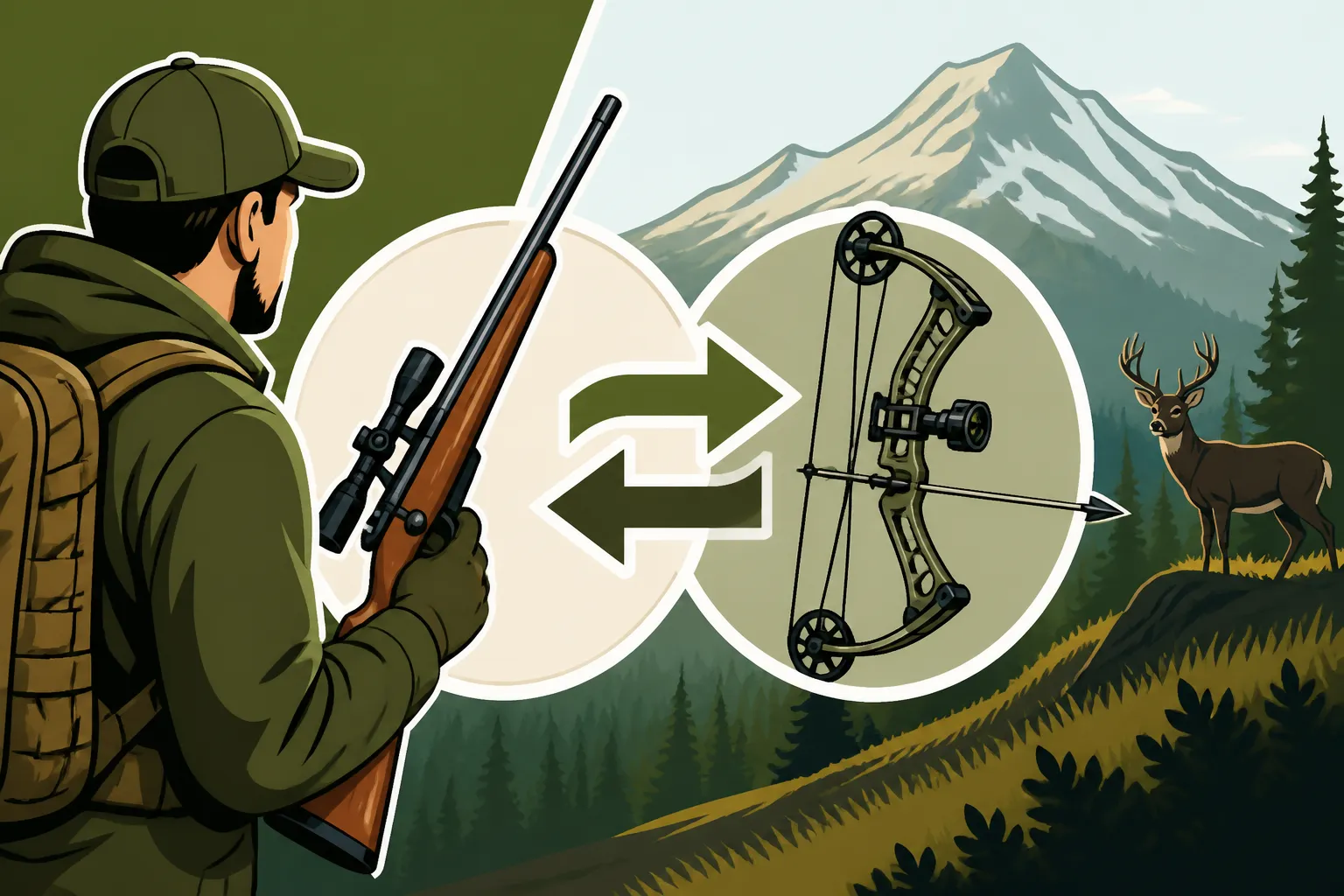
Changing Your Washington Weapon Choice
It’s a scenario many of us have faced: you buy your Washington hunting tag with a specific weapon in mind, perhaps a modern firearm for deer, only to later second-guess your decision. Maybe a friend convinced you to try archery, or you suddenly landed an opportunity for a late muzzleloader hunt. The burning question becomes, "Can I actually change my weapon choice on my Washington tag?" This guide will clear up the common confusion surrounding weapon declarations, explain the very limited circumstances where a change might be possible, and, most importantly, equip you with the knowledge to make the right choice from the start.
Understanding Washington's Weapon Declaration Rules
When you purchase a big game hunting tag in Washington state, whether for deer or elk, you're essentially making a commitment. This commitment isn't just about the species or the general area; it's also about the specific weapon you intend to use. This declaration is a fundamental part of the Washington Department of Fish and Wildlife (WDFW) system and plays a crucial role in how seasons are structured, how harvest quotas are managed, and ultimately, your hunting experience.
The Immutable Nature of Your Initial Choice
For most general season tags, once you declare your weapon type – be it archery, muzzleloader, or modern firearm – that choice is fixed. It's not like picking out a candy bar and then swapping it for another at the checkout. The system is designed to allocate hunting opportunities within specific season frameworks. For instance, if you purchase an archery elk tag, you are restricted to hunting during the designated archery seasons with legal archery equipment. This means you can't decide, a week before the modern firearm season, that you'd rather carry your rifle instead. The tag is explicitly tied to that weapon type. This is clearly outlined in the annual WDFW Big Game Hunting Seasons and Rules pamphlet, which is your go-to source for all regulations.
Imagine you've been practicing diligently for the archery season, focusing on the nuances of Archery Practice for Wet Coastal Conditions. You purchase your archery deer tag, full of anticipation. Later, you realize that your work schedule only allows you to hunt during the modern firearm season. Unfortunately, that archery tag won't do you any good for rifle hunting. You’re bound by the initial declaration. This inflexibility can be frustrating, especially for new hunters still learning the ropes or those whose circumstances change unexpectedly. It really emphasizes the importance of understanding Choosing a Weapon Season for a Washington Elk Tag well in advance.
How Different Tag Types Affect Weapon Choices
The rigidity of your weapon choice varies slightly depending on the type of tag you hold.
General Season Tags
These are the most common tags, purchased over the counter (OTC) or online, and they are almost universally tied to a specific weapon.
- Modern Firearm Tags: Allow you to hunt during the modern firearm seasons. You can carry a rifle, shotgun, or handgun that meets minimum caliber and energy requirements. This is typically the most popular choice, offering a wide range of hunting opportunities.
- Archery Tags: Restrict you to archery-only seasons and mandate the use of legal archery equipment, including specific broadhead requirements and minimum draw weights. Many hunters choose these tags for the challenge and extended season dates, but they come with strict limitations on what you can carry, as detailed in What an Archery Tag Lets You Hunt in Washington.
- Muzzleloader Tags: Confine you to muzzleloader-only seasons. Washington has specific rules regarding muzzleloader ignition types, scopes, and bullet types, making these seasons unique. Carrying a modern firearm while holding a muzzleloader tag during a muzzleloader season would be a violation. Be sure you understand What a Muzzleloader Tag Lets You Carry in Washington before committing.
Special Permit Hunts
For special permit hunts, like those for quality elk or deer, the weapon choice is often declared during the application process itself. When you apply for a special permit, you're usually applying for a specific GMU and a specific weapon type (e.g., "Naneum Archery Bull Elk"). If you draw that permit, your weapon choice is inherently part of the permit. You cannot simply decide to hunt that special permit unit with a modern firearm if you applied for and drew an archery permit. This further reinforces the need for careful consideration during the application period. GoHunt often provides excellent resources for researching draw odds and unit specifics for various weapon types, helping you make informed decisions during this critical application window.
The Reality of Changing Your Weapon Choice in Washington
Let's get straight to it: for the vast majority of Washington hunters, changing your declared weapon choice on a purchased tag is simply not an option. This might sound harsh, but it's the reality of the WDFW's licensing and season structure. They are not in the business of reissuing tags or amending licenses because a hunter had a change of heart or didn't read the regulations carefully enough.
Why Changing is So Difficult
The primary reason for this inflexibility lies in wildlife management. Each weapon season (archery, muzzleloader, modern firearm) has distinct dates, regulations, and hunter participation levels, all designed to manage harvest numbers and ensure healthy game populations. If hunters could freely switch their weapon choice, it would throw off these management models, making it incredibly difficult for WDFW to predict harvest pressure and sustain quality hunting opportunities.
Consider the draw for special permits, for example. If you applied for and drew a coveted Quality Elk Hunt Choice Limits in Washington using a muzzleloader, allowing you to suddenly switch to a modern firearm could unfairly impact other hunters who applied for the modern firearm permit in that same unit, or it could push the modern firearm harvest over its intended quota. The system relies on these declarations to distribute opportunities fairly and effectively.
Extremely Rare Exceptions and What They Entail
While the rule is generally "no changes," there are hypothetical, extremely rare circumstances where an amendment might occur, though these are typically not initiated by the hunter's desire for a different weapon.
- WDFW Administrative Error: If, and this is a big if, there was a verifiable administrative error on the part of WDFW or a license vendor that resulted in you receiving a tag with the incorrect weapon declaration (e.g., you explicitly requested a modern firearm tag, and the vendor accidentally issued an archery tag, and you have proof), you might have grounds to request a correction. This would involve a significant process, likely requiring documentation and direct communication with WDFW licensing. It's not a guarantee, and it's certainly not for "buyer's remorse."
- Major Rule Changes or Emergency Closures: In extremely rare cases, WDFW might issue an emergency rule change or season closure that impacts a specific weapon type, and as part of their response, they might offer very limited options for tag holders. This is not about choosing a different weapon; it's about reacting to unforeseen circumstances like severe fire closures or disease outbreaks that necessitate a change in hunting opportunities. These are not commonplace and are typically announced broadly by WDFW if they occur.
Beyond these incredibly narrow scenarios, you should operate under the assumption that your weapon choice, once made and purchased, is final. This is why thorough research and planning are paramount, perhaps even more so than for other aspects of your hunt. Before you click "buy" on that tag, consider using platforms like GoHunt to pore over season dates, GMU regulations, and historical harvest data for each weapon type. This kind of research can save you a world of heartache down the line.
Strategic Planning to Avoid Needing to Change
Since changing your weapon choice after the fact is generally not possible, the real solution lies in making the right choice upfront. This requires careful planning, diligent research, and a clear understanding of your hunting goals and the regulations.
Research, Research, Research
The most critical step in avoiding weapon choice regret is to immerse yourself in the details of Washington's hunting regulations. The WDFW Big Game Hunting Seasons and Rules pamphlet is your bible. Read it cover to cover, paying special attention to the weapon regulations and season dates for the GMUs you're considering.
- Understand Weapon-Specific Seasons: Note that seasons for archery, muzzleloader, and modern firearm typically do not overlap in the same areas. Each has its own dedicated timeframe. If you want to hunt during the early archery season, you need an archery tag. If you want to hunt in late October with a rifle, you need a modern firearm tag. Don't assume overlap.
- GMU Specifics: Some GMUs might have different regulations or restrictions for certain weapon types. For example, some units might have "shotgun/muzzleloader only" rules, or specific antler point restrictions that apply only to certain weapon seasons, as discussed in Washington's Three-Point Rule and What Counts. Always check the specific unit information.
- Draw Odds and Opportunity: For special permits, understanding Washington Draw Odds for Quality Elk by weapon type can heavily influence your application strategy. If you're dead set on hunting a certain unit, you might find that your odds are better with one weapon type over another. GoHunt is an invaluable tool here, providing comprehensive data and analytics to help you strategize your special permit applications, often breaking down success rates by weapon, unit, and species.
Considering a Multi-Season Tag
If you're truly torn between weapon choices or desire maximum flexibility, Washington offers a potential solution: the Multi-Season Tag. These are special tags that, if drawn, allow you to hunt during general seasons for all three weapon types (archery, muzzleloader, and modern firearm) for either deer or elk.
- How it Works: You apply for a multi-season tag during the special permit application period. If you are successful in the draw, you receive a special tag that essentially gives you three chances to harvest an animal during any of the general seasons for your chosen species, using the appropriate legal weapon for that season. This means you could potentially hunt the archery season, not fill your tag, then hunt the muzzleloader season, and if still unsuccessful, hunt the modern firearm season, all with that one multi-season tag.
- Pros and Cons:
- Pro: Unparalleled flexibility. If you miss the archery opener, you still have muzzleloader and modern firearm seasons to fall back on. This is the closest you'll get to "changing your weapon choice" because it allows you to utilize multiple weapons across multiple seasons. You can learn more about this in Washington Multi-Season Deer and Elk Tags.
- Con: Multi-season tags are highly sought after, and the draw odds can be challenging. They also typically come with a higher initial cost compared to a single general season tag. You need to weigh the value of this flexibility against the investment and the odds of drawing one.
- Planning with a Multi-Season Tag: Even with a multi-season tag, careful planning is essential. You’ll still want to know which seasons offer the best chance in your chosen GMU. Using E-Scouting a Washington GMU From Home and other resources can help you pinpoint peak times and locations for each weapon season.
| Key Consideration | Archery Tag | Muzzleloader Tag | Modern Firearm Tag | Multi-Season Tag (if drawn) |
|---|---|---|---|---|
| Season Dates | Earliest, often longest | Specific, often mid-fall | Typically shortest, sometimes late-fall | All general seasons, specific to species |
| Weapon Flexibility | Very Low (archery only) | Very Low (muzzleloader only) | Very Low (modern firearm only) | Very High (all legal weapon types by season) |
| Required Equipment | Bow, specific broadheads, arrows | Muzzleloader, black powder, specific projectiles | Rifle/shotgun/handgun, ammunition | All legal equipment for applicable seasons |
| Hunting Style | Close-range, stealthy | Moderate range, patience | Longer range, diverse | Adaptable to all styles |
| **Draw Odds (Special Permits) | Varies by unit, often better than modern firearm | Varies by unit, often better than modern firearm | Varies by unit, often most competitive | Highly competitive draw |
| General Cost | Standard tag price | Standard tag price | Standard tag price | Higher initial cost |
| Primary Advantage | Extended early season, close encounters | Unique season experience, often good weather | Versatility, longer range | Maximum flexibility, multiple opportunities |
Final Checks Before Buying Your Tag
Before you commit to a weapon choice, take a moment for a final verification:
- Confirm Your Hunt Plan: Have you scouted the area? Do you know the access points? Do you have your gear ready for your chosen weapon? Don't make a weapon choice in isolation.
- Review the Pamphlet (Again!): Double-check the general season dates and any GMU-specific rules for your chosen weapon. Make sure there haven't been any last-minute emergency rule changes from WDFW.
- Consider Your Equipment: Do you have the necessary and legal equipment for the weapon you're declaring? For example, if you declare muzzleloader, do you have a legal muzzleloader and all the specific accessories for Muzzleloader Loading and Ignition in Rain?
- Talk to Experienced Hunters: Sometimes, simply talking through your options with a seasoned Washington hunter can illuminate considerations you might have overlooked.
Ultimately, preventing the need to change your Washington weapon choice boils down to being a well-informed, proactive hunter. The WDFW system is clear about its expectations, and by understanding them from the outset, you can ensure your tag is perfectly aligned with your hunting aspirations for the season.
Disclaimer
This article provides general information about Washington hunting regulations regarding weapon choices. While every effort has been made to ensure accuracy, hunting regulations can change, and specific situations may vary. It is always the hunter's responsibility to consult the most current Washington Department of Fish and Wildlife (WDFW) Big Game Hunting Seasons and Rules pamphlet, available on the WDFW website, or contact WDFW directly for the most up-to-date and authoritative information before hunting. Failure to do so could result in penalties or legal issues.