Washington East Side Versus West Side Elk Tag
Navigating Washington's elk hunting regulations can feel like trying to find your way through a dense fog, especially when it comes to the crucial decision of declaring your elk tag for the East or West Side. This choice isn't just a formality; it fundamentally shapes your hunting experience, dictating everything from the type of terrain you'll encounter to the subspecies of elk you'll pursue. This guide aims to clear up that confusion, helping you understand the distinct characteristics of each region and empowering you to make the most informed decision for your upcoming elk hunt.
Understanding Washington's Geographic Divide for Elk Tags
Washington is a state of incredible topographical diversity, a fact that profoundly impacts its wildlife and, consequently, its hunting seasons. The very spine of the state, the Cascade Mountain Range, acts as a natural divider, creating two vastly different ecological zones that support distinct elk populations. When you purchase a Washington elk tag, you're not just buying a license to hunt elk; you're committing to a specific geographic area with its own challenges, rewards, and rules. This choice is fundamental because once declared, you generally can't switch your tag between the East and West sides.
The Cascade Mountain Range as the Dividing Line
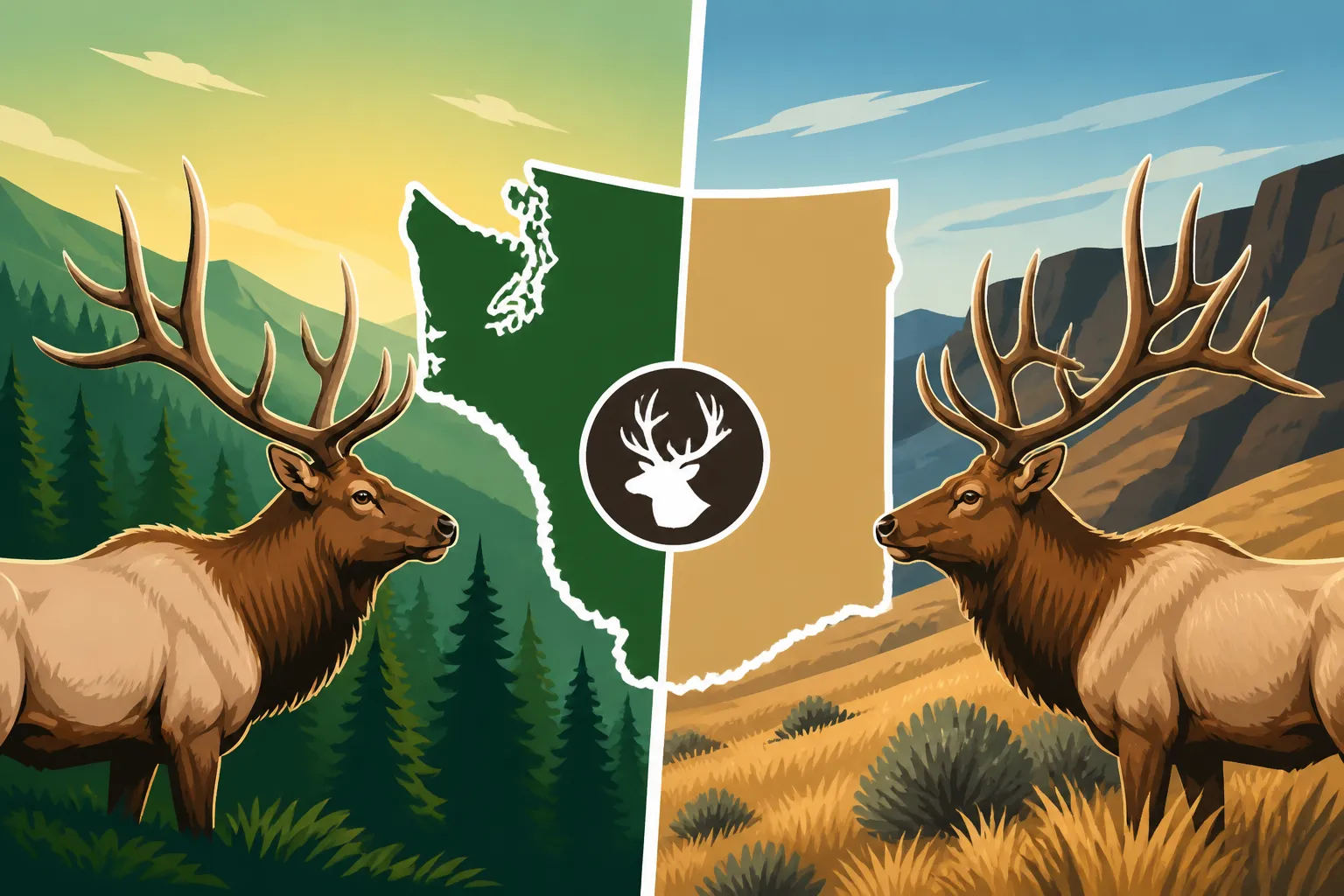
Imagine drawing a line right down the middle of Washington state, roughly following the Cascade Crest. Everything west of this crest is considered "West Side," and everything east is "East Side." This mountain range isn't just a pretty backdrop; it's a massive barrier that creates a rain shadow effect. The West Side gets a deluge of moisture from the Pacific Ocean, leading to lush, dense temperate rainforests, while the East Side is significantly drier, characterized by vast expanses of sagebrush, Ponderosa pine forests, and agricultural lands.
This stark difference in environment directly influences elk behavior, habitat, and how hunters approach the game. It means that the skills and gear you might use effectively on one side could be completely out of place on the other. It's not uncommon for hunters to specialize in one side or the other, developing a deep understanding of the specific challenges and nuances that come with each.
Fundamental Differences Between East and West Side Elk Hunting
Beyond the obvious climatic differences, the nature of elk hunting itself changes drastically depending on which side of the Cascades you choose. On the West Side, you're primarily pursuing Roosevelt Elk of Western Washington, known for their larger body size and preference for thick, dark timber and dense brush. This often means hunting up close and personal, relying heavily on still-hunting techniques, keen woodsmanship, and sometimes, just plain grit to push through the incredibly dense vegetation. The landscape can be steep, wet, and often involves navigating clearcuts and regenerating forests.
Conversely, the East Side is home to Rocky Mountain Elk East of the Washington Cascades. While still formidable animals, they tend to inhabit more open country, including expansive sagebrush flats, broken timber, and agricultural fringes. Hunting here often involves more glassing, longer shots, and covering significant ground with optics. It's a different game, requiring patience and the ability to spot animals from a distance, then execute a careful stalk. These fundamental differences extend to everything from scouting strategies to the types of boots you'll want to wear.
East Side Elk Tag Specifics
Opting for an East Side elk tag means you're diving into a world of big sky, varied terrain, and the majestic Rocky Mountain elk. This choice opens up opportunities in some of Washington's most renowned elk hunting units, but it also comes with its own set of considerations regarding tag selection and season structure.
Rocky Mountain Elk and Their Habitat
Rocky Mountain elk are creatures of diverse landscapes, adapting to the wide-open spaces and coniferous forests found throughout eastern Washington. You'll find them ranging from the high country of the Blue Mountains down to the lower elevation timbered draws that border agricultural fields. Their diet and movement patterns are heavily influenced by the availability of forage, water, and cover, which varies significantly across units. For instance, in units like the Colockum or Yakima, elk might spend their days in vast timbered canyons, only to descend to private land at night to feed in alfalfa fields.
Hunting these elk often demands a good set of optics and the patience to spend hours glassing distant hillsides and timber patches. Their larger herds can be a spectacular sight, but they also mean more eyes and ears to contend with. Understanding Washington Elk Herds and Where They Live can give you a significant advantage in pinpointing their seasonal movements and preferred bedding areas. The terrain can be brutally steep and rocky in places, but also include more rolling hills or expansive flats.
Tag Selection and Season Structure on the East Side
When considering an East Side elk tag, you'll generally encounter options for both general seasons and special permit hunts. General seasons, which are open to anyone who purchases the appropriate tag, usually have specific weapon types attached: modern firearm, archery, or muzzleloader. For example, Washington's general archery season for elk often runs through September, coinciding with the peak of the rut, offering exciting opportunities to call in bulls. Muzzleloader seasons typically fall later, in October, providing a unique challenge with primitive weapons.
However, many of the premier East Side hunts are allocated through the special permit draw. These permits offer access to specific units or later seasons with higher success rates, often for branch-antlered bulls. If you're planning for an East Side hunt, it's crucial to consult the WDFW hunting regulations pamphlet for detailed information on Washington Elk Season Dates East of the Cascades and to understand the specific rules for each Game Management Unit (GMU). Platforms like GoHunt are invaluable for researching historical draw odds, harvest statistics, and unit boundaries, helping you strategize your application if you're aiming for a special permit. Don't forget that choosing a specific weapon type for your Washington elk tag is a critical decision that dictates which general seasons you can participate in.
West Side Elk Tag Specifics
A West Side elk tag throws you into a different world entirely—one of towering trees, persistent rain, and the robust Roosevelt elk. This is a hunt that tests your endurance, your willingness to get wet, and your ability to navigate dense, unforgiving terrain.
Roosevelt Elk and Their Dense Forest Homes
Roosevelt elk, often referred to as "Roosie" by hunters, are the largest subspecies of elk in North America, with bulls often sporting impressive, sweeping antlers. They thrive in the moist, dense coastal and Cascade forests of western Washington, particularly in areas like the Olympic Peninsula and the Willapa Hills. Their habitat is characterized by thick rainforests, heavy regenerating timber, and often deep canyons carved by mountain streams. This environment offers abundant cover, making these elk notoriously difficult to spot from a distance.
Hunting Roosies often means still-hunting through thick brush, tracking fresh sign, and engaging in close-quarters encounters. It's a physically demanding hunt where silence and stealth are paramount. You'll spend less time glassing vast landscapes and more time peering into the gloom of the forest, hoping to catch a glimpse of an antler or the flick of an ear. Understanding Roosevelt Elk of Western Washington behavior and preferred cover is key to success in these challenging environments. They are masters of their domain, using the dense cover to their advantage, often disappearing as quickly as they appear.
Tag Selection and Season Structure on the West Side
Similar to the East Side, West Side elk tags are available for general seasons and through special permit draws. General seasons for modern firearm hunters on the West Side typically occur in November, often after the rut, meaning you're primarily focusing on post-rut feeding patterns. Archery season, however, still offers prime rut hunting in September, with bulls bugling through the thick timber. Muzzleloader seasons typically offer a mid-October hunt, often in less competitive periods.
The West Side also has its share of special permit opportunities, which can be highly coveted due to their potential for mature bulls or unique season dates. When planning your West Side hunt, diligently check the WDFW regulations for specific Washington Elk Season Dates West of the Cascades and any GMU-specific rules. Access can be a significant factor on the West Side, with a mix of national forest, state land, and extensive private timber holdings. Some of these timberlands might require permits, so understanding access regulations is crucial. The WDFW website, as well as resources from GoHunt, can provide critical details on specific GMU boundaries and regulations, which are essential when you're considering Washington Game Management Units Explained.
Making Your Choice: East vs. West Elk Tag
The decision to declare your Washington elk tag for the East or West Side is a deeply personal one, influenced by your hunting style, physical capabilities, and what kind of experience you're truly seeking. It's not about one side being inherently "better" than the other, but rather about which side aligns best with your hunting aspirations and readiness.
Factors to Consider When Declaring Your Side
Before you click that button and declare your side, take a moment to honestly assess several key factors:
- Hunting Style Preference: Do you love long-range glassing, spotting animals from afar, and executing calculated stalks across open country? Then the East Side might call to you. Are you drawn to the challenge of still-hunting through dense cover, getting up close and personal, and relying on your woodsmanship in heavy timber? The West Side might be your arena. There are no right or wrong answers, just different experiences.
- Physical Fitness and Endurance: Both sides demand physical fitness, but in different ways. The East Side often involves extensive hiking over rocky, steep terrain at higher elevations, sometimes with rapid elevation changes. The West Side, while it might not always have the same extreme elevation, often requires pushing through incredibly dense, wet vegetation, climbing over downed logs, and navigating slippery, muddy conditions. Consider the boots you'll need; Boots for Washington's Eastside Rock and Westside Mud are very different.
- Weapon Choice: While you can use any legal weapon on both sides, certain weapon types might lend themselves better to one environment over the other. Long-range rifles are certainly more at home in the open vistas of the East Side, while archery or muzzleloader hunters might find the close-quarters nature of West Side timber more appealing. This feeds directly into Choosing a Weapon Season for a Washington Elk Tag.
- Experience Level: If you're new to elk hunting in Washington, research is your best friend. General season success rates can be low on both sides, but understanding the differences can help set realistic expectations. For instance, the challenges of Public Land Scouting in Washington Before Opening Day differ significantly between open Eastern landscapes and dense Western timber.
Researching GMUs and Herd Numbers
Once you have a general idea of which side appeals to you, it's time to dive into the specifics of individual GMUs. This is where the real work begins. The WDFW website is your primary source for official regulations, harvest reports, and GMU maps. However, augmenting this with tools from companies like GoHunt can supercharge your research. Their platform often aggregates WDFW data into more digestible formats, allowing you to quickly compare draw odds, historical success rates, and even unit characteristics like public land percentages or road access.
Pay close attention to herd numbers and population trends. While WDFW provides general herd estimates for regions, diving into specific GMU harvest data can tell you a lot about elk density and hunter success. Look at the breakdown of bull-to-cow ratios and calf recruitment to get a sense of herd health. This detailed research is essential for making an educated decision, especially if you're applying for Washington General Season Versus Special Permit Hunts. Utilizing resources like E-Scouting a Washington GMU From Home can save you countless hours in the field by helping you identify potential hunting areas, access points, and terrain features long before the season begins. Ultimately, whichever side you choose, remember that proper preparation, both mental and physical, is the cornerstone of a successful and rewarding hunt. And don't forget the importance of knowing how to handle your harvest, especially when it comes to Packing an Elk Out of Washington's Backcountry.
Disclaimer
The information provided in this guide is for general informational purposes only and does not constitute legal advice. Hunting regulations in Washington are subject to change, and it is the hunter's sole responsibility to consult the official Washington Department of Fish and Wildlife (WDFW) regulations pamphlet and website for the most current and accurate information before engaging in any hunting activities. Always be aware of and abide by all local, state, and federal laws and regulations.