Picking a Weapon Type for Your Elk Tag
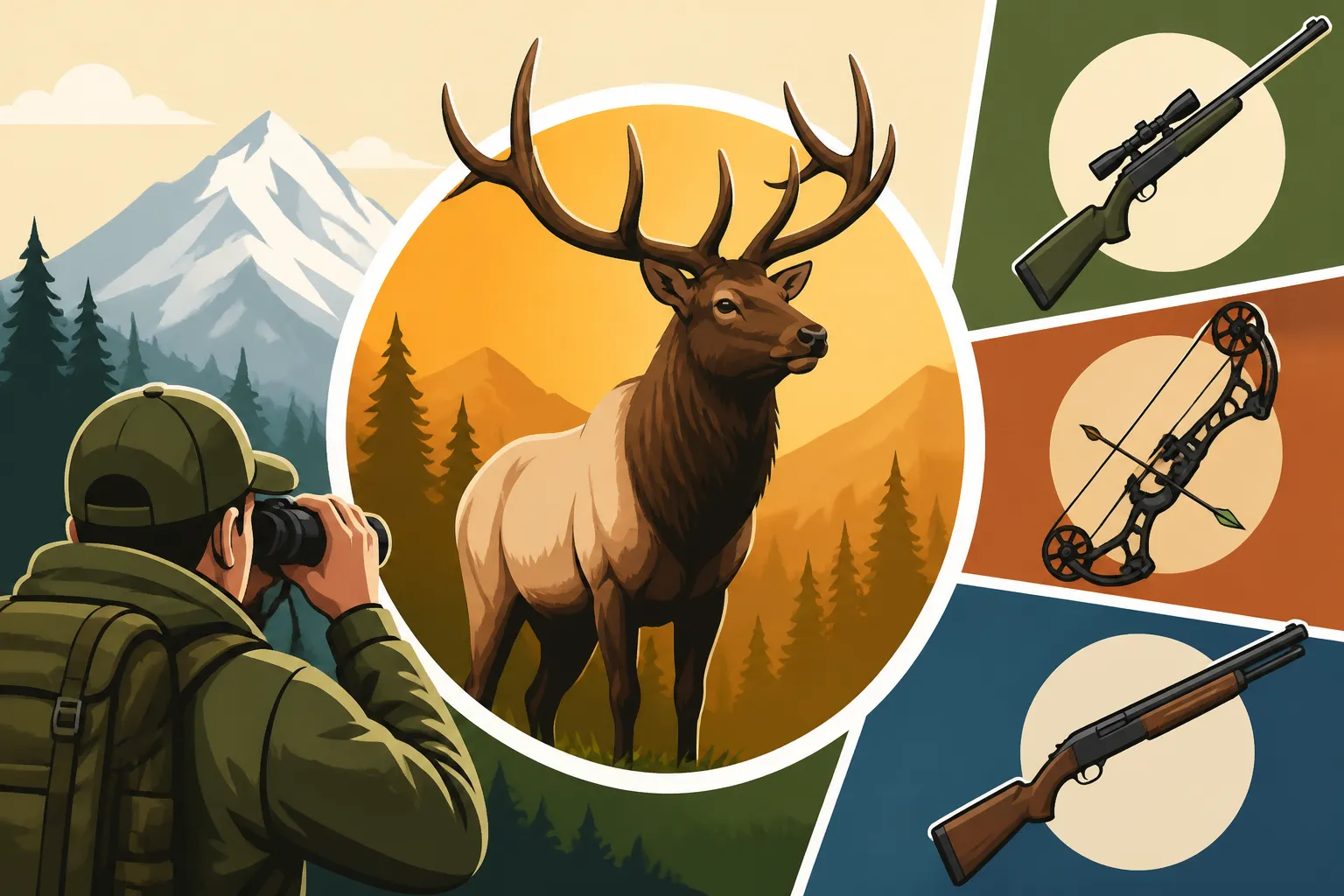
Deciding which weapon type to choose for your Washington elk tag can feel like you're committing to a whole year's worth of strategy before you even step foot in the woods. It's a huge decision because each choice – archery, muzzleloader, or modern firearm – opens up a completely different set of seasons, challenges, and opportunities. This guide will walk you through the nuances of each weapon type in Washington, helping you understand the trade-offs and ultimately make the best choice for your hunting style and goals.
The Weight of Your Weapon Choice for Washington Elk
Before you even think about buying a tag, or especially before you apply for any special permits, you've got to wrestle with the fundamental question: what weapon will you be carrying? This isn't just about personal preference; in Washington, your weapon choice dictates your entire hunting season. It sets the dates you can hunt, the units you can enter, and even the type of tag you might be eligible for. Many new hunters get caught off guard by just how rigid these rules are. You can't just decide to grab your rifle during archery season if you bought an archery tag, or vice versa. It’s a declaration you make at the point of purchase, and it locks you into a specific experience.
This decision carries real weight because Washington's hunting regulations are designed to spread hunting pressure and manage harvests across different seasons. What might seem like a simple gear choice actually opens or closes entire windows of opportunity and challenges. Do you want the solitude of early archery? The unique challenge and shorter range of a muzzleloader? Or the extended reach and popularity of modern firearm season? Each path offers a distinct adventure, and knowing what you're signing up for is half the battle. This choice impacts everything from your scouting efforts to your gear prep, so let’s dig into the details.
Embracing the Challenge of Archery Elk Season
Archery season for elk in Washington is often the earliest opportunity to get into the woods, usually kicking off in September when the bugles of rutting bulls are echoing through the timber. For many, it's the ultimate pursuit, demanding incredible patience, stealth, and a deep understanding of elk behavior. The biggest frustration for archers often stems from the incredibly close distances required for an ethical shot, which means getting busted by a wary elk is a constant reality.
The Allure of Early September Bugles
There's nothing quite like the crisp air of a September morning, the first hints of fall color on the vine maples, and the spine-tingling sound of a bull elk bugling just over the ridge. This is the prime time for archery hunting, coinciding with the peak of the elk rut in many areas. It’s when bulls are most vocal and, often, most vulnerable to calling strategies. Hunters willing to put in the effort to learn to read elk sign and communicate with them can experience some truly unforgettable encounters. The ability to engage with the animals on such an intimate level is what draws many to this season. You're not just hunting; you're having a conversation, or at least attempting to.
However, this early season also means warmer temperatures. Field dressing an elk in seventy-degree heat requires a quick, efficient process to ensure meat quality. Hunters must be prepared with game bags and a plan for rapid cooling. If you're considering Archery Elk Hunting in Washington's September Season, you'll quickly realize that the success often hinges on mastering both the calling game and quick meat care. While the sounds of a bull ripping a tree or a cow chirping close by are exhilarating, the close proximity also means a higher chance of getting winded or spotted, sending your target crashing through the brush. It's a high-reward, high-frustration game.
Washington's Specific Archery Equipment Rules
Washington has strict regulations for archery equipment, designed to ensure ethical and humane harvesting. It’s not just about having a bow; it’s about having the right bow and accessories. For starters, broadheads must have at least seven-eighths of an inch cutting width and must be sharp. Mechanical broadheads are legal, but they must meet that minimum cutting width when open. Your arrow, or bolt if you’re using a crossbow (which has specific limitations, generally requiring a disability permit or being 65+ years old), must weigh at least 350 grains.
These rules emphasize kinetic energy and penetration, which are crucial for taking down a large animal like an elk. For new archers, this means choosing appropriate gear and spending significant time practicing. You need to be able to consistently place arrows accurately out to your effective range, which for most, is far less than what they practice on a flat range. Practicing offhand and kneeling shots can make all the difference when a bull steps out unexpectedly in a real-world scenario. Furthermore, consider the wet conditions on the west side of the state; you'll need to know how to keep a bowstring dry on the Washington Coast to maintain performance. Organizations like GoHunt provide excellent resources and mapping tools that can help archers identify prime areas, often showing terrain features that funnel elk into bow range.
The Unique Challenge of Muzzleloader Elk Season
Muzzleloader season in Washington typically falls between archery and modern firearm seasons, often in October. It’s a fascinating blend of primitive hunting methods with a dash of modern technology, offering a different kind of challenge and often a quieter woods than the rifle seasons. If you're looking for a slightly more forgiving range than archery but still want to feel a deeper connection to the hunt, muzzleloader season might be for you.
Navigating Shorter Ranges and Smoke
Muzzleloaders, by their nature, are single-shot firearms with shorter effective ranges compared to modern rifles. This means hunters must still exercise good stalk craft, trying to close the distance on elk before taking a shot. The maximum effective range for most muzzleloaders is typically within 100-150 yards, although with practice and good equipment, some hunters extend this. This shorter range forces a more active, engaged hunting style, similar to archery but with a bit more leeway.
One of the most unique aspects is the cloud of smoke that erupts after a shot. This smoke can obscure your view, making it difficult to immediately see the elk's reaction or mark the spot for blood trailing. Hunters must mentally prepare for this and be quick to cycle their eyes to the target area post-shot. You also have to consider muzzleloader loading and ignition in rain, which can be a real factor in Washington's often damp October weather. Ensuring your powder stays dry and your primer fires reliably is paramount. This season really tests your grit and preparation, adding another layer of skill to the hunt.
Washington's Muzzleloader Equipment Rules
Washington's regulations for muzzleloaders are quite specific, aiming to keep the season traditional while allowing for some advancements. The minimum caliber for elk is .45, but most hunters opt for .50 caliber or larger for increased knockdown power. Crucially, in Washington, you're generally restricted to open sights or a 1x power scope (no magnification). This means no high-power variable scopes that are common on modern rifles, reinforcing the shorter-range requirement.
Ignition systems typically allowed include flintlock and percussion caps. In-line muzzleloaders are permitted, but they must use loose powder (pellets are generally not allowed during general muzzleloader seasons for big game) and sabot or conical projectiles. Understanding these specific rules is vital. For instance, the restriction on magnified optics significantly impacts how you approach a shot, demanding a closer approach and confident target acquisition. GoHunt's detailed unit statistics can be incredibly helpful for muzzleloader hunters, providing insights into elk distribution in units that often have specific muzzleloader seasons, allowing you to prioritize your scouting. Knowing What a Muzzleloader Tag Lets You Carry in Washington is foundational to a successful hunt.
The Popularity of Modern Firearm Elk Season
Modern firearm season for elk in Washington is by far the most popular and often the most successful season for harvesting an animal. These seasons typically occur later in the fall, from late October through November, after the rut, when elk are often in larger herds and beginning to transition to winter ranges. This is the season where the most tags are sold and the most elk are harvested, drawing the largest number of hunters to the woods.
The Reach and Power of Modern Rifles
The primary advantage of modern firearm season is the extended effective range and terminal performance of contemporary hunting rifles and cartridges. This means hunters can often take shots at greater distances than with archery or muzzleloader equipment, reducing the need for extreme stealth or lengthy stalks in some terrain. However, this doesn't mean it's easy. Washington's terrain can be incredibly challenging, from the dense timber of the west side to the vast, open expanses and steep breaks of the east side. Even with a powerful rifle, shot placement on a quartering elk is critical, and knowing your rifle's capabilities is paramount.
The later timing of these seasons also introduces different environmental challenges. You might encounter late-season hunting in Washington snow, which can make tracking easier but also make access more difficult and demand better cold-weather gear. Elk behavior changes post-rut; they are less vocal and more focused on feeding, making different scouting and hunting tactics necessary. While a rifle offers more range, the increased hunter pressure in many units means elk are often warier and more nocturnal. GoHunt's comprehensive harvest data by unit can give you a realistic picture of success rates and help you identify less pressured areas or units with higher populations, even during busy general rifle seasons.
Washington's Modern Firearm Regulations
Washington's rules for modern firearms are relatively straightforward compared to the other weapon types. For big game like elk, the minimum legal caliber is .24 (6mm). Rimfire cartridges are illegal for big game. There are no restrictions on scope magnification, allowing hunters to utilize the full capability of their rifles and optics. Hunters will typically choose cartridges known for their effectiveness on elk, such as .30-06 Springfield, .300 Winchester Magnum, 7mm Remington Magnum, or similar. Bullet weight and construction for elk are also crucial, focusing on controlled expansion and deep penetration.
The ability to carry powerful optics and cartridges means hunters can be more versatile in varied terrain, from dense timber where quick, close shots might be necessary, to open glassing situations in Eastern Washington breaks for mule deer where longer shots are common. However, with the higher success rates and popularity comes increased competition for hunting spots. Understanding the nuances of Washington's specific regulations, such as checking for Washington Firearm Restriction Areas where only shotguns or archery may be permitted, is critical to avoid legal issues. Having a reliable rifle setup for Washington elk and deer, sighted in correctly for your chosen ammunition, is non-negotiable for an ethical hunt.
Comparing Your Washington Elk Weapon Choices
To help consolidate the information, here's a table comparing the key aspects of each weapon type for Washington elk hunting. This should give you a clear overview of the pros and cons to consider when making your choice.
| Feature | Archery Season (Bow) | Muzzleloader Season | Modern Firearm Season (Rifle) |
|---|---|---|---|
| Typical Season Dates | September (early rut) | October (post-rut, pre-rifle) | Late October – November (post-rut, winter prep) |
| Primary Advantage | Early season, rut activity, solitude, primitive challenge | Quieter woods, unique challenge, medium range | Long range, high success rate, versatility |
| Required Skill Set | Extreme stealth, calling, close-range accuracy | Stalking, short-medium range accuracy, weatherproofing | Range estimation, shooting proficiency, ethical shot placement |
| Average Shot Range | 20-60 yards | 75-150 yards | 100-400+ yards (depending on terrain/skill) |
| Equipment Rules | Min 7/8" broadhead, 350gr arrow. Crossbows restricted. | Min .45 cal, open sights/1x scope, loose powder/sabot. | Min .24 cal, no scope restrictions, any legal ammo. |
| Hunter Pressure | Low to Moderate | Moderate | High |
| Challenges | Warm weather meat care, close encounters, high physical demand | Smoke obscures view, ignition reliability in wet, limited range | High hunter numbers, wary elk, often later, colder weather |
| Tag Costs | Generally included in combo licenses; specific tag declaration needed. | Generally included in combo licenses; specific tag declaration needed. | Generally included in combo licenses; specific tag declaration needed. |
This table provides a snapshot, but remember, the actual experience can vary greatly depending on the specific Game Management Unit (GMU) you hunt and your own preparation. Websites like GoHunt offer advanced filtering for units by weapon type and season, which can be invaluable for planning.
Making Your Final Decision
The choice of weapon for your Washington elk tag is a deeply personal one, but it should also be an informed one. There’s no single "best" option; only the best option for you.
Consider your experience level: If you're new to hunting, modern firearm season might offer a higher chance of success as you learn the ropes of elk hunting, although hunter numbers can be daunting. If you're a seasoned hunter looking for a unique challenge, muzzleloader or archery might be more appealing.
Think about your physical capabilities: Archery hunting, especially during the rut, often involves significant hiking, calling, and intense close-range encounters. Packing an elk out of Washington's backcountry is physically demanding no matter the weapon, but getting close enough with a bow often means getting into nastier country.
Evaluate your time commitment: Each season demands a different kind of preparation. Archery requires extensive practice to become proficient at close range. Muzzleloader hunting adds specific challenges for cleaning and maintenance in the field. Modern firearm hunting often means more scouting to find less pressured elk, especially in popular units.
Ultimately, picking a weapon type means picking an adventure. It means deciding if you want the thrill of a whispered cow call to a bull in September, the historical feel of a muzzleloader shot in October, or the broader reach and opportunities of a rifle in November. Whatever you choose, commit to it, prepare thoroughly, and embrace the unique journey that Washington elk hunting offers. Resources like GoHunt can further assist you by breaking down draw odds for quality elk or even helping you narrow down units where you might consider hunting the same unit across three weapon seasons if you're lucky enough to draw a multi-season tag.
Disclaimer
The information provided in this guide is for general informational purposes only and does not constitute legal advice. Hunting regulations in Washington can change, and it is the responsibility of every hunter to consult the most current Washington Department of Fish and Wildlife (WDFW) hunting regulations pamphlet and any emergency rule changes before heading afield. Always verify season dates, bag limits, weapon restrictions, and access rules for your specific Game Management Unit (GMU).