Snow Geese in the Skagit Valley
Hunting snow geese in Washington's Skagit Valley can feel like an entirely different ballgame than pursuing other species. These birds are legendary for their wariness, their sheer numbers, and the unique challenges of hunting them in a heavily agricultural area with varying access rules. If you've ever felt overwhelmed trying to figure out where to start, what gear you truly need, or how to even approach these magnificent white birds, you're not alone. This guide aims to cut through the confusion and arm you with the knowledge you need to chase snow geese successfully in this iconic Washington locale.
The Skagit Valley's Unique Appeal for Snow Geese
The Skagit Valley isn't just a picturesque agricultural hub; it's an internationally recognized haven for migratory waterfowl, and snow geese in particular. These fields and estuaries aren't just convenient pit stops; they're vital wintering grounds for thousands upon thousands of these birds, offering a unique hunting experience unlike almost anywhere else in the state.
Why the Skagit is a Snow Goose Magnet
So, what makes the Skagit such an irresistible draw for snow geese? It boils down to a perfect combination of prime feeding grounds and safe roosting areas. The valley floor is a patchwork of agricultural fields—think corn stubble, potato fields, and lush pastures of grass—all offering a smorgasbord of calories for geese that have flown thousands of miles. They absolutely gorge themselves here, building up reserves to fuel their eventual spring migration.
Beyond the food, the Skagit's estuarine environment, with its expansive tidal flats and protected bays like Skagit Bay, provides secure roosting sites where the geese can rest and regroup away from predators. This combination of abundant sustenance and sanctuary creates a self-reinforcing cycle, drawing successive generations of snow geese back to the valley year after year. Hunters understand this intrinsic connection between food, water, and rest for migratory birds, and the Skagit Valley provides it all in spades.
Identifying Snow Geese and Their Behavior
When you're out in the Skagit, you're primarily going to encounter Lesser Snow Geese, though the occasional Greater Snow Goose might be mixed in. They're hard to miss: brilliant white bodies with black wingtips. You'll often see "blue phase" snow geese mixed in, which appear mottled gray or bluish, but they're the same species. Their calls are unmistakable—a cacophony of high-pitched, honking sounds that can fill the sky and carry for miles, often signaling their presence long before you see them.
Observing their behavior is crucial. Snow geese are highly social birds, traveling and feeding in massive flocks that can number in the thousands. They'll often feed intensely in fields for a period, then lift off en masse, swirling in the sky before settling into another field or heading back to their roost. They're incredibly wary, and once they've been shot at a few times in a particular field, they'll often abandon it for less pressured areas. Understanding these feeding and loafing patterns, especially how they use different fields throughout the day, is the foundation of a successful Skagit hunt.
Timing Your Hunt and Understanding Migration Patterns
Knowing when to be in the Skagit Valley for snow geese is just as important as knowing where. These birds are migrants, and their presence is dictated by the rhythms of the seasons and, often, the immediate whims of the weather.
When Snow Geese Arrive and Depart
Generally speaking, snow geese begin to arrive in the Skagit Valley in late October and November, with numbers steadily building through the late fall and early winter. The peak season for hunting, when the largest concentrations of birds are typically present, usually runs from mid-December through February. By March and April, as the days lengthen and temperatures warm, the geese begin their northward migration, heading towards their Arctic breeding grounds.
However, these dates aren't set in stone. A sudden cold snap and heavy snow in northern British Columbia or even Alaska can push birds south earlier, creating a surge of new arrivals. Conversely, mild winters can sometimes delay the main push, or cause birds to spread out more widely. Paying attention to weather forecasts and scouting reports, or using tools like GoHunt's migration tracking features, can give you an edge in pinpointing the best windows of opportunity each season. It’s all about being flexible and ready to adapt to what the birds and the weather are doing.
Daily Movements and Roosting Habits
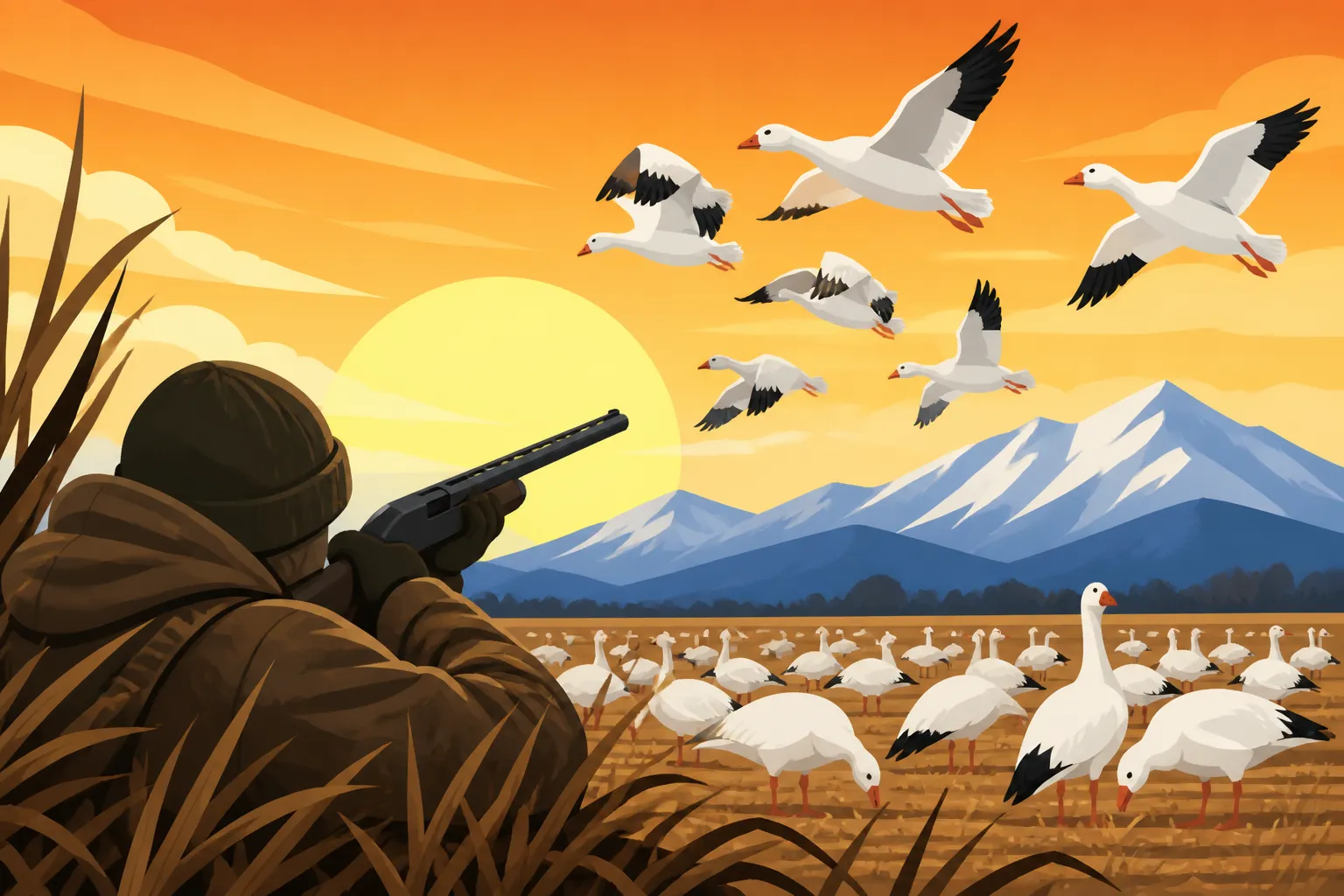
Snow geese operate on a fairly predictable daily schedule, which hunters can exploit. At first light, often just before sunrise, massive flocks will "lift off" from their nocturnal roosts, typically large bodies of water like Skagit Bay or the protected areas of Fir Island Farms Wildlife Area. They'll fly out to surrounding agricultural fields to feed for several hours. This morning flight can be an incredible spectacle, with thousands of birds filling the sky.
After a morning of feeding, they might continue to feed, or they might move to a "loafing" area—a quiet field or open water where they can digest, preen, and rest. Later in the afternoon, they'll often feed again before making their evening flight back to the roost as dusk approaches. Successful hunting often hinges on intercepting these flights between roosts and feeding areas, or setting up directly in a field where they are currently feeding. This means scouting is non-negotiable. You need to drive the backroads, observe flight lines, and identify which fields are currently holding birds, because what worked yesterday might not work today.
Strategies for Hunting Skagit Valley Snow Geese
Hunting snow geese in the Skagit Valley requires dedication, the right gear, and a good understanding of both bird behavior and local regulations. It's a different game than duck hunting, often demanding bigger spreads and different tactics.
Decoy Spreads and Blinds
When it comes to snow goose decoys, the common wisdom is "more is better." These birds are used to seeing massive flocks, so a spread of 50-100 decoys might get overlooked. Serious hunters often run spreads of 300, 500, or even 1,000+ decoys. The most effective spreads often incorporate a mix of full-body decoys, which offer realistic dimension, with lightweight and portable Sillosocks or shell decoys to bulk up numbers. The goal is to create the visual impression of a huge, happy flock of feeding geese.
For concealment, layout blinds are king in the open agricultural fields of the Skagit. These low-profile blinds allow you to lie down flat in the decoy spread, minimizing your silhouette. Some hunters get creative with ditch blinds, digging into field edges, or using natural cover if available. Regardless of your blind choice, wearing white clothing or white camo can further help you blend into your all-white decoy spread, especially when the ground is frosted or has residual snow. Remember, these birds have incredibly sharp eyesight, and anything out of place will send them flaring.
Calling and Field Selection
Snow geese are vocal birds, and calling plays a crucial role. You'll need loud, aggressive calls to get their attention, mimicking the clamor of a large flock. Electronic calls (e-callers) are often employed by guides and serious hunters, where legal, to create the sheer volume needed to compete with the real birds and grab their attention from afar. If using mouth calls, practice making a variety of loud honks, murmurs, and feeding calls to sound as natural as possible.
Field selection is paramount and often the biggest hurdle. The vast majority of the productive agricultural land in the Skagit Valley is privately owned. This means you absolutely must secure permission from landowners before setting foot on their property. This can be a challenge, requiring polite persistence and often building relationships over time. Getting Written Permission on Private Land is not just good practice, it's the law and vital for maintaining a positive hunter image. Alternatively, public access is available at spots like Fir Island Farms Wildlife Area or other WDFW properties in the Skagit, but these areas can be heavily pressured. GoHunt's detailed maps can be incredibly helpful in identifying land ownership boundaries, allowing you to focus your efforts on seeking permission from the right parties.
Essential Gear and Regulations
Beyond decoys and blinds, a few other gear items are crucial for Skagit snow goose hunting. A 10 or 12 gauge shotgun, often with an extended magazine tube (where legal for hunting migratory birds), is standard. You'll need plenty of non-toxic shot—steel, bismuth, or tungsten-matrix—in larger sizes like BB, BBB, or T shot to bring down these robust birds reliably. Good camouflage, warm layering (the Skagit can be damp and chilly), and waterproof outer layers are also non-negotiable.
Of course, knowing the regulations is absolutely vital. All migratory bird hunters in Washington need a valid hunting license, a Washington Migratory Bird Permit, and a federal duck stamp. You'll also need to be aware of specific season dates, bag limits, and any special restrictions that apply to Skagit County, such as designated hunting zones or firearm restriction areas. Always consult the current Washington Big Game Hunting Seasons & Regulations pamphlet, which covers waterfowl, for the most up-to-date information. After a successful hunt, Washington Harvest Reporting Requirements are mandatory, so make sure you understand how and when to report your take. Being informed protects you and contributes to good wildlife management.
Here's a quick look at common snow goose decoy types:
| Decoy Type | Pros | Cons | Best Use |
|---|---|---|---|
| Full-Body | Highly realistic, good motion (some types) | Expensive, bulky, heavy to transport | Critical for the "kill hole" and realistic core |
| Shells / Half-Shells | Lighter than full-bodies, stackable | Less realistic, can look flat | Bulking up numbers, especially on field edges |
| Sillosocks | Extremely lightweight, compact, inexpensive | Less durable, can tangle, less realistic up close | Filling out large spreads quickly, creating movement |
| Windsocks | Excellent movement, very lightweight | Less durable, can look unnatural in low wind | Adding realism and motion on windy days |
Navigating Access and Conservation Challenges
Hunting snow geese in the Skagit Valley, like many prime hunting areas, involves navigating a blend of public and private land, understanding constantly evolving regulations, and appreciating the critical role of conservation.
Public vs. Private Land Access
The challenge of access is a real one for Skagit Valley snow goose hunters. While there are some invaluable public lands managed by the Washington Department of Fish and Wildlife (WDFW), such as Fir Island Farms Wildlife Area and portions of the Skagit Wildlife Area Hunting, these spots can be very popular and experience significant hunting pressure. Public access areas often require a Discover Pass or a WDFW Vehicle Access Pass for parking, so be sure to check those requirements. Washington Wildlife Area Rules are often very specific for these areas, including regulations on hunting hours, specific zones, and even shot shell limits, so always do your homework.
For many, the dream hunt involves securing access to private agricultural fields. This is where persistence, respect, and good old-fashioned networking come into play. Driving around, observing fields, and then knocking on doors to politely ask for permission is often the most effective route. Building a reputation as a responsible, ethical hunter can open doors for future seasons. Tools like GoHunt's mapping overlays are invaluable here, allowing you to instantly identify property boundaries and landowner information, saving you countless hours of guesswork and ensuring you're contacting the correct party. Remember, access is a privilege, not a right, and treating private land with utmost respect is paramount.
Understanding Harvest Guidelines and Closures
Unlike some other game species with fixed season dates, snow goose seasons in the Skagit Valley (and other specific management areas) are often governed by harvest guidelines. This means the season might have a projected end date, but it can close early if a certain number of birds have been harvested by hunters across the region. This management strategy helps ensure that healthy numbers of snow geese can continue their migration.
This system puts the onus on hunters to stay incredibly informed. WDFW will announce these early closures via press releases, their website, and often through email lists. Failing to check for updates can lead to inadvertent violations, which nobody wants. It’s also crucial to accurately identify your target. While snow geese are abundant, other species of geese or ducks might be present, some of which are protected or have different bag limits. Misidentification could lead to serious consequences. Understanding Washington Duck and Goose Numbers is part of the larger conservation picture.
Conservation Efforts and the Future of Skagit Geese
The robust snow goose populations we see today are a testament to ongoing conservation efforts, funded in large part by hunters through license fees and excise taxes on equipment. However, maintaining this balance is an ongoing challenge. Changing agricultural practices, urban sprawl, and even shifts in migration patterns due to climate change all impact waterfowl habitat.
Hunters are a critical component of conservation, both through their financial contributions and their on-the-ground observations. By adhering to regulations, reporting harvests accurately, and being good stewards of the land, we all contribute to the health of the snow goose population and the preservation of hunting opportunities in places like the Skagit Valley. Continuing education, perhaps through programs like Washington Hunter Education and Licensing, fosters a deeper understanding of these complex ecosystems and our role within them.
Disclaimer
This article is for general informational purposes only and does not constitute professional advice. Laws, prices and regulations vary by location and change over time. Consult a qualified professional for guidance on your specific situation.