Sandhill Cranes in Washington
There's something truly ancient and awe-inspiring about the call of a Sandhill Crane echoing across an open field. For many of us who spend time outdoors in Washington, hearing that distinct, rattling bugle is a special moment. But if you're like most hunters and outdoor enthusiasts, you might wonder exactly where these magnificent birds fit into the landscape, how to find them, and what their status is in our state. This guide will walk you through everything you need to know about Sandhill Cranes in Washington, from identification to the rare opportunities to pursue them.
The Majestic Sandhill Crane in Washington's Skies
Few birds command attention quite like the Sandhill Crane. They possess an almost prehistoric grace, a testament to their long evolutionary history. Spotting one, or better yet, hearing their unmistakable call, is an experience that stays with you. It’s no wonder they hold a special place in the hearts of many Washingtonians who cherish our state’s diverse wildlife.
Identifying Sandhill Cranes by Sight and Sound
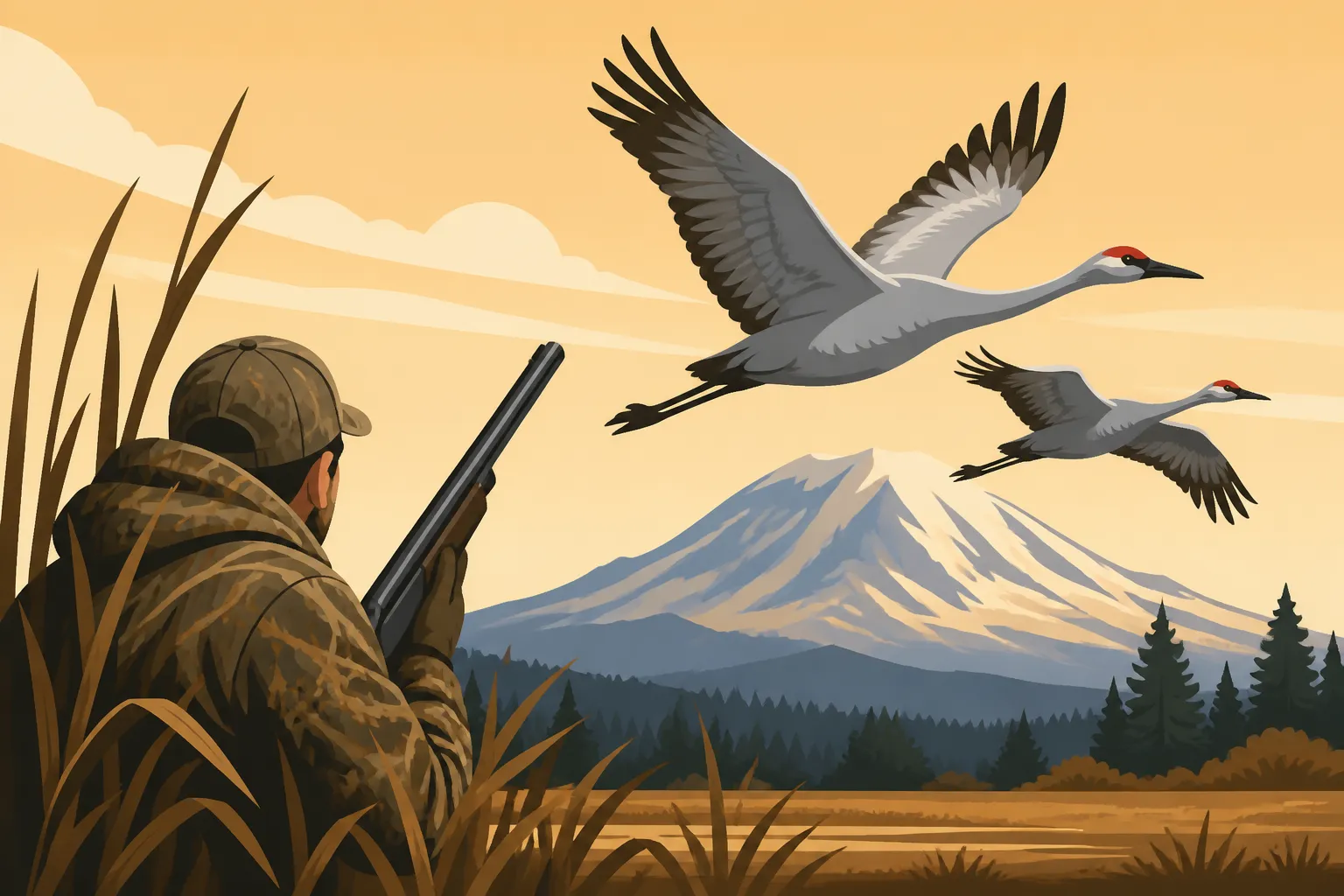
When you're out in the vast open spaces of eastern Washington, distinguishing one large bird from another can sometimes be a challenge, especially at a distance. Sandhill Cranes, however, have several distinctive features that make them easier to identify once you know what to look for. They are very tall birds, often standing three to four feet high, with incredibly long legs and an equally long neck. Their plumage is predominantly a soft, brownish-grey, which can sometimes appear rusty due to iron staining from the wetlands they frequent. The most striking visual cue, though, is the patch of bare, reddish skin on their forehead and crown, which becomes more vibrant during breeding season.
But perhaps even more iconic than their appearance is their voice. Sandhill Cranes are known for their loud, trumpeting or bugling call, which has a distinct rolling or rattling quality. This call is produced by their unusually long trachea, which coils into their sternum like a French horn, allowing for that rich, resonant sound. You can often hear them long before you see them, especially when they're communicating as a flock on the ground or during migration. Imagine being in a vast wheat field near the Columbia River, the sun just kissing the horizon, and suddenly that unforgettable sound drifts across the stillness. You crane your neck, scanning the skies, knowing something truly special is making its way. Their wingspan is also impressive, reaching up to six or seven feet, and they fly with their necks and legs extended straight out, which helps differentiate them from herons that typically fly with their necks tucked in.
| Feature | Sandhill Crane | Great Blue Heron | Canada Goose |
|---|---|---|---|
| Size (Height) | 3-4 feet | 3-4.5 feet | 2-3 feet |
| Plumage Color | Brownish-grey, rusty tinges | Grey-blue, white/black accents | Grey-brown, black neck/head |
| Head Markings | Red patch on forehead/crown | Black cap, white face | Black head/neck, white chin strap |
| Legs | Very long, black | Long, dark | Shorter, orange |
| Neck in Flight | Extended straight | S-curved | Extended straight |
| Voice | Loud, rattling bugle/trill | Deep croak, guttural | Honk, hiss |
| Typical Habitat | Open wetlands, agricultural fields | Shallow water, shores, marshes | Water, open fields |
Subspecies and Their Presence in Washington
Globally, there are several subspecies of Sandhill Cranes, but in Washington, our focus is primarily on the Greater Sandhill Crane (Grus canadensis tabida). These are the largest of the subspecies and the ones most commonly observed breeding and staging in our state. While you might encounter a stray Lesser Sandhill Crane (Grus canadensis canadensis) during migration, especially further east, the Greater Sandhill is the resident and breeding population we talk about here. They are truly magnificent birds, and their presence is a good indicator of healthy wetland ecosystems.
It’s easy to get confused when you’re out in the field. I’ve had many conversations with fellow hunters and birdwatchers who spot a large, grey bird and wonder if it’s a Sandhill, a heron, or even a distant goose. The key is to look for that unmistakable combination of height, the rusty-grey plumage, and especially the red cap. The Lesser Sandhill, though similar, is noticeably smaller, but unless you have both subspecies side-by-side, it can be tough to be certain. For practical purposes in Washington, when you see a crane, it’s almost certainly the Greater Sandhill, a bird that travels incredible distances and relies on specific habitats to survive and thrive. Understanding their subspecies helps us appreciate their migratory journeys and the specific conservation needs of the populations that grace our Washington skies.
Where and When to Find Sandhill Cranes in Washington
Finding Sandhill Cranes in Washington isn't like stumbling upon a flock of ducks on any random pond. These birds have specific preferences for habitat and follow predictable migratory patterns that will guide your search. If you know where and when to look, your chances of a successful encounter skyrocket.
Key Habitats and Migration Patterns
For the best chance to spot Sandhill Cranes in Washington, your eyes need to be turned towards the eastern side of the Cascade Mountains. This is prime Sandhill Crane country, particularly in the vast, open landscapes of the Columbia Basin. Areas around the Tri-Cities (Pasco, Kennewick, Richland), the Yakima Valley, and the larger Potholes Reservoir area are critical staging and breeding grounds. These regions offer the perfect mix of agricultural fields—especially corn and wheat stubble—for foraging, and secluded wetlands or shallow water bodies for roosting and nesting. You'll find them scattered across private farmlands, but there are also public access points near wetlands and wildlife areas where you can observe them. When you are looking into potential areas, a tool like GoHunt can be invaluable for pinpointing specific agricultural parcels or public land boundaries that intersect with known crane habitats.
Their migration patterns are fascinating. Generally, the Greater Sandhill Cranes that breed in Washington spend their winters further south, often in California's Central Valley or even Mexico. They typically begin their northward migration in late February to early March, arriving in Washington as the snow starts to recede and spring planting begins. This is a fantastic time for birdwatching, as thousands of birds can congregate in staging areas, creating a truly spectacular sight and soundscape. The fall migration usually kicks off in late September and continues through October, as they gather their young and head south again before winter truly sets in. If you're planning an outdoor trip specifically to see them, aiming for these shoulder seasons in the Columbia Basin will give you the best odds. You might use resources like E-Scouting Washington GMUs Before the Draw to analyze terrain and potential crane haunts from your computer before you even set foot outside.
Seasonal Movements and Foraging Behavior
Once they arrive in Washington during the spring, Sandhill Cranes quickly disperse to their nesting grounds. They are fairly secretive during the nesting period, typically laying one or two eggs in a shallow nest built on the ground amidst dense vegetation in wetlands. After the chicks (called colts) hatch, the family groups remain together. As summer progresses, you'll see them foraging more openly in agricultural fields. Their diet is quite varied, but they are particularly fond of grains, such as corn and wheat, which they glean from harvested fields. They also consume insects, small vertebrates, and plant tubers, using their long bills to probe the soil. This dietary preference for agricultural crops can sometimes put them at odds with farmers, leading to efforts to manage their populations and mitigate crop damage.
By late summer and early fall, as the young colts gain strength, family groups and non-breeding cranes begin to congregate in larger numbers. These staging areas, often large open fields or shallow marshes, are critical for feeding up and resting before the arduous southern migration. If you were lucky enough to see cranes in April, but then they seemed to vanish by August, it's likely they were nesting in a more secluded wetland, and by late summer, they'd regrouped in larger numbers, preparing for their journey south. Hunters familiar with Eastern Washington Hunting Country know these landscapes well, and understanding crane movement patterns is just another layer of appreciating the local wildlife.
Conservation and Management of Sandhill Cranes in Washington
The story of the Sandhill Crane in North America is one of both challenge and remarkable recovery. While they are now a relatively common sight in many parts of their range, there was a time when their future looked uncertain. In Washington, these magnificent birds continue to receive careful management and conservation attention to ensure their populations remain healthy.
Population Trends and Conservation Efforts
Historically, Sandhill Crane populations faced significant declines due to habitat loss, primarily the draining of wetlands for agriculture and development, and unregulated hunting pressure in the past. Fortunately, sustained conservation efforts over many decades have allowed their numbers to rebound significantly. In Washington, the Greater Sandhill Crane population, while not as abundant as some other game species, is stable and even showing slight increases in some areas. This success is largely attributable to focused habitat protection and restoration, particularly of critical wetland ecosystems and agricultural lands that provide essential foraging grounds. State and federal agencies, often working with private landowners, manage various wildlife areas and refuges that benefit these cranes.
It's natural to wonder why these birds often enjoy more protected status than, say, a Mallard or a Canada Goose, both of which are common targets for waterfowl hunters. The simple truth is that while Sandhill Cranes are widely distributed, their populations are still more vulnerable in some regions, and they have a lower reproductive rate than many other waterfowl. Most areas manage them on a permit-only basis to ensure that harvest levels are sustainable and don't jeopardize the overall population. The Washington Department of Fish and Wildlife (WDFW) continuously monitors population trends through aerial surveys and ground counts to inform their management decisions. This careful approach helps balance the interests of conservation with the potential for limited recreational opportunities, a balance that is always at the forefront of wildlife management, especially for species like the Sandhill Crane.
Viewing Opportunities and Ethical Considerations
For most people, the interaction with Sandhill Cranes in Washington will be through viewing and photography, which is an incredible experience in itself. There are numerous state wildlife areas and national wildlife refuges in eastern Washington that offer excellent crane viewing opportunities, particularly during their spring and fall migrations. Places like the Potholes Wildlife Area or areas around the Columbia National Wildlife Refuge can be hotspots, though always check specific refuge rules, as access or certain activities might be restricted. If you're a serious birdwatcher or just enjoy observing wildlife, these locations provide fantastic vantage points.
When viewing cranes, or any wildlife for that matter, ethical considerations are paramount. Always give the birds plenty of space, especially if they are nesting or exhibiting signs of stress. Avoid flushing them unnecessarily, as this expends their valuable energy and can disrupt their feeding or resting. If you're venturing onto private land that is open to the public through programs or by explicit permission, always respect the landowner's wishes and property. Tools like GoHunt can display land ownership, helping you identify public access points and avoid inadvertent trespass, which is crucial for maintaining good relationships between outdoor enthusiasts and landowners. Joining local Audubon chapters or birding groups can also provide you with up-to-date information on where the cranes are and how best to view them responsibly.
Sandhill Crane Hunting in Washington: A Limited Opportunity
For hunters, the Sandhill Crane represents an incredibly unique and challenging pursuit. Unlike many waterfowl or upland bird species, hunting Sandhill Cranes in Washington is not a general season opportunity available to everyone. It's a highly coveted and very limited permit hunt, making success in the draw as much a trophy as the bird itself.
The Draw System and Specific Hunt Areas
If you're dreaming of hunting Sandhill Cranes in Washington, you need to understand one crucial fact: it's an extremely limited, special permit draw hunt. This means you can't just buy a tag over the counter and head out. Each year, the WDFW offers a very small number of tags, typically in specific Game Management Units (GMUs) within the Columbia Basin. These units are carefully chosen based on crane concentrations, population objectives, and crop depredation concerns. The sheer demand for these tags far outweighs the supply, making the draw odds incredibly low. Many dedicated hunters apply for years, even decades, without drawing a tag.
The application process usually runs concurrently with other big game special hunt applications, generally in the spring (often with a deadline around April 20-May 27). You'll need to submit your application through the WDFW's online system, selecting your preferred hunt choices, much like you would for quality elk or deer permits. For serious applicants, GoHunt can offer data and insights into past draw odds and unit breakdowns, potentially helping you refine your application strategy, though with crane permits, it's largely a game of chance. Understanding the process for Washington Special Hunt Permits and How to Apply is absolutely essential here. It's not a hunt for the faint of heart, or for those expecting easy access; it’s a commitment to a long-shot dream.
Legal Requirements and Hunter Responsibilities
Should you be one of the fortunate few to draw a Sandhill Crane permit, the responsibilities are significant. The WDFW sets very specific season dates, typically short, and often during the fall migration in September or October. Bag limits are usually very conservative, often one bird per season, reflecting the limited nature of the hunt and the conservation goals. You'll need to strictly adhere to shooting hours, which are generally from one half-hour before sunrise to sunset. Beyond the state hunting license and the special permit, you will also need a valid Washington Migratory Bird Permit, as Sandhill Cranes are migratory birds.
Hunter responsibility extends beyond just following the letter of the law. Because these hunts are so rare and observed by many non-hunters, ethical hunting practices are paramount. This means making clean, quick kills, retrieving all downed birds, and showing respect for the animals and the landscape. You'll also be required to report your harvest, often within a very short timeframe after taking a bird. This harvest reporting is critical data for WDFW to monitor the population and assess the impact of the hunt. Remember, the privilege of hunting such a magnificent bird is a direct result of ongoing conservation efforts, and every hunter has a role to play in upholding that legacy. If you're successful, reporting your take via the Washington Harvest Reporting Requirements is not just a rule, it's a vital contribution to future opportunities.
Disclaimer
This article is for general informational purposes only and does not constitute professional advice. Laws, prices and regulations vary by location and change over time. Consult a qualified professional for guidance on your specific situation.