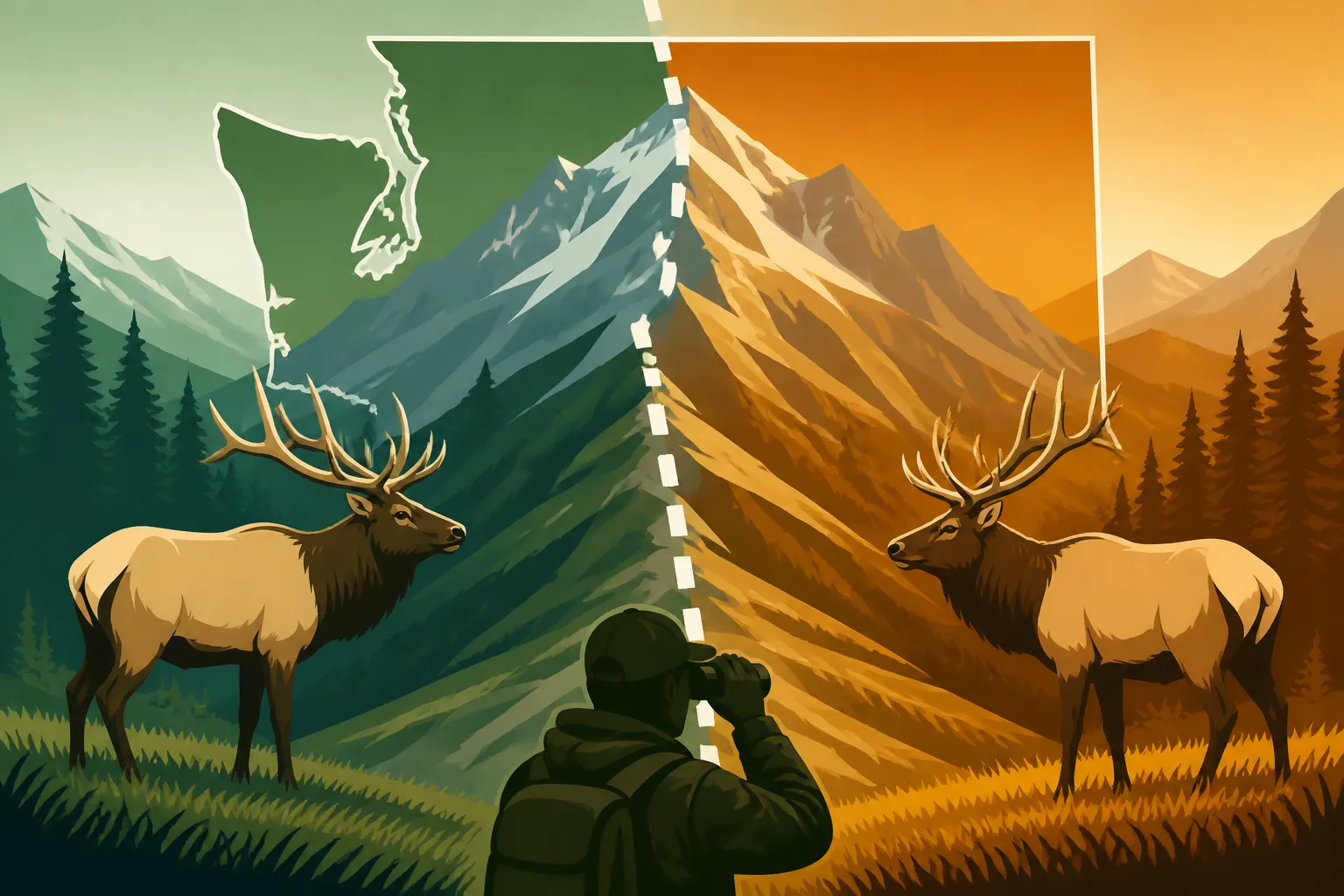
Where the Cascade Crest Divides Elk Subspecies
It's a common question among Washington hunters, and a source of real head-scratching sometimes: "Are all elk in Washington the same?" The simple answer is no, and the mighty Cascade Mountain range is the definitive line in the sand—or rather, the snow-capped peak—that divides two distinct subspecies of elk in our state. This guide will walk you through the fascinating geographical and biological distinctions, helping you understand the unique characteristics and hunting approaches for each.
The Mighty Cascade Crest: Washington's Natural Divide
When you talk about Washington elk, you're really talking about two different worlds, separated by a towering, rugged, and often snow-bound geological feature: the Cascade Crest. This isn't just a line on a map; it's a monumental natural barrier that has, over countless generations, shaped the very genetics and behaviors of our state's elk populations. For hunters, understanding this divide isn't just academic; it profoundly impacts where you hunt, how you hunt, and what you expect to find when you finally lay eyes on an elk.
Geographical Significance as a Barrier
The Cascade Range, running north to south through Washington, is more than just a mountain chain; it's a dramatic climatic and ecological boundary. On the west side, you have the temperate rainforests, heavy rainfall, and mild winters, a landscape dominated by dense timber, thick undergrowth, and a relatively stable, wet climate. East of the crest, the environment shifts drastically to the rain shadow desert and drier Ponderosa pine forests, characterized by sagebrush flats, open breaks, and extreme temperature fluctuations. Think of it like two entirely different continents separated by an ocean of rock and ice. This natural barrier has effectively limited the intermingling of elk populations for centuries, fostering the evolution of distinct traits adapted to their respective environments. While a few adventurous individuals might occasionally cross the lower passes or river valleys, the majority of elk remain within their historical ranges, molded by the landscape.
Historical Migration Patterns and Isolation
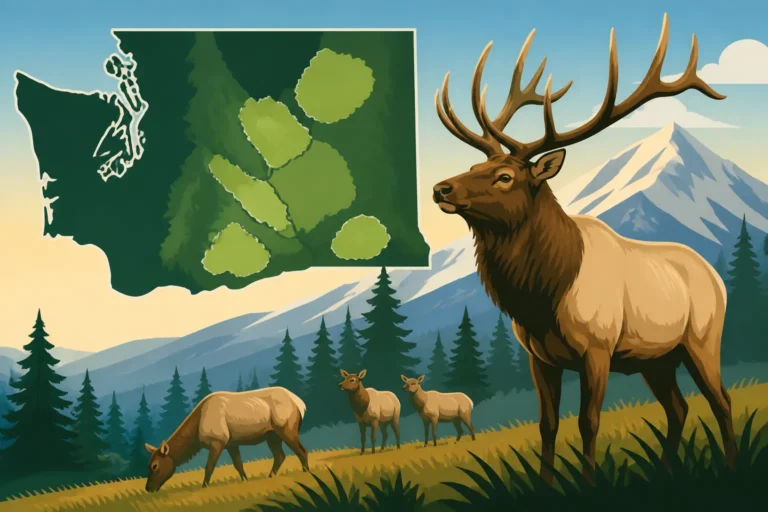
Before human intervention and modern roads, the Cascades were an even more formidable obstacle. Elk populations that found themselves on the western slopes adapted to the lush, wet conditions, while those on the eastern side adapted to the drier, more open, and often colder climate. Over millennia, this geographical isolation led to genetic divergence, resulting in the two subspecies we recognize today. Their seasonal migrations also differ; western elk might move up and down slopes within their dense forest homes, while eastern elk often undertake longer migrations from high summer ranges to lower, snow-free wintering grounds. This historical isolation is why, even today, if you look at a map of Washington's ten major elk herds, you'll see a clear distinction along that crest. Many hunters consult detailed mapping tools like GoHunt when planning their hunt, to really understand these boundaries and the specific habitat features within them.
Roosevelt Elk: Western Washington's Rainforest Giants
When you venture west of the Cascades, you enter the domain of the Roosevelt elk (Cervus canadensis roosevelti). These magnificent animals are truly a product of their environment, perfectly adapted to the dense, wet forests that characterize Western Washington.
Key Characteristics and Habitat
Roosevelt elk are often described as the largest-bodied elk subspecies in North America. They tend to have a darker, almost chocolate-brown coat compared to their eastern cousins, which helps them blend into the deep shadows of the temperate rainforest. Their antlers are also distinct: while they might not achieve the massive spread seen in some Rocky Mountain bulls, they are incredibly dense, heavy, and often sport numerous points clustered towards the ends, giving them a "club-like" appearance. A mature Roosevelt bull is a truly impressive sight, often weighing over a thousand pounds.
Their habitat is typically thick, dark timber, often intermixed with regenerating clearcuts and riparian zones. You'll find them in the coastal mountains, the Olympic Peninsula, and the western slopes of the Cascades, in areas like the Willapa Hills Elk Herd or the Coweeman Unit. The vegetation is incredibly thick here—think salal, devil's club, sword ferns, and dense conifer saplings. These elk thrive on the abundant forage found in these rich, wet environments. The challenges of hunting these animals are directly tied to their habitat; visibility is often limited to mere yards, and still-hunting is a common tactic, much like you might employ when Still-Hunting Blacktails in Wet Washington Brush.
Hunting Considerations for Roosevelt Elk
Hunting Roosevelt elk is an experience unlike any other. It's often a game of patience, stealth, and intimate knowledge of the terrain. Forget long-range glassing; here, you're typically looking for tracks, scat, rubs, and fresh beds in tight quarters. The dense cover means you often won't see an elk until it's very close, making quick, decisive shots paramount. Calling can be effective, but Roosevelt bulls are often less vocal than their eastern counterparts, especially during the peak of the rut. Understanding Roosevelt Bull Antler Shape before you head out can also help with identification in these dim, timbered environments.
When they do bugle, it's a sound that resonates through the heavy timber, but they can be notoriously difficult to pinpoint. You might hear them, only for them to vanish silently into the brush. Navigating this terrain requires durable rain gear, stout boots, and an intimate understanding of the wind in dense forests. Be prepared for relentless moisture and steep, slippery ground. Also, keep in mind that Elk Hoof Disease in Western Washington is a management concern in some of these areas, and hunters are encouraged to report any observations to WDFW.
Rocky Mountain Elk: Eastern Washington's Open Country Roamers
Crossing the Cascade Crest eastward, the landscape transforms, and with it, the elk. The Rocky Mountain elk (Cervus canadensis nelsoni) are perfectly suited to the drier, more open environments of Eastern Washington, from the rolling hills of the Okanogan to the vast Ponderosa forests and agricultural lands of the Blue Mountains.
Key Characteristics and Habitat
Rocky Mountain elk generally have a lighter, often tan or reddish-brown coat, which serves as excellent camouflage against the sun-baked grasses and Ponderosa pines. While individual size can vary greatly, their antlers are often characterized by impressive spread and long, elegant tines, designed for display in more open country. A mature bull with a wide rack sweeping back is the quintessential image of a Rocky Mountain elk. You'll find strong populations in areas like the Colockum Elk Herd, the Yakima Elk Herd, and the Blue Mountains Elk Herd.
Their preferred habitat includes diverse terrain: high mountain meadows, open Ponderosa pine forests, clear-cut timber with good visibility, sagebrush steppe, and even agricultural lands where they feed on crops. Unlike their Roosevelt cousins, Rocky Mountain elk often travel great distances between feeding and bedding areas, and their social groups can be quite large, especially outside the rut. Scouting these vast areas can be a significant undertaking, but modern tools like those offered by GoHunt, which integrate satellite imagery and public land boundaries, can be invaluable for E-Scouting Washington GMUs Before the Draw.
Hunting Considerations for Rocky Mountain Elk
Hunting Rocky Mountain elk in Eastern Washington often involves covering vast tracts of land and utilizing optics to locate animals at a distance. Techniques like Glassing Eastern Washington Breaks for Mule Deer are highly applicable here, scanning distant slopes and clearcuts at first and last light. Long-range shooting skills can be crucial, as shots often present themselves at greater distances than on the west side.
Bugling and cow calling are frequently more effective tactics in these environments, as the sound travels further, and bulls are often more responsive. Learning effective calling sequences for different situations, like those discussed in Bugling and Cow Calling in Washington's Archery Elk Season, can dramatically increase your success rate. Physical fitness is key, as you might hike miles across rugged terrain, often with significant elevation changes, to get into position. Understanding Rocky Mountain Bull Antler Score can also be important, especially in units with specific antler restrictions.
The Overlap and the Exceptions: Where Lines Blur
While the Cascade Crest serves as a powerful boundary, nature is rarely perfectly neat. There are always interesting nuances and exceptions to the rule, especially at the edges of the divide.
Transition Zones and Intergrade Areas
Along the lower elevations of the Cascades, particularly in major river valleys that cut through the range, there can be areas where the range of Roosevelt and Rocky Mountain elk populations meet or even slightly overlap. In these "intergrade" zones, it's theoretically possible for elk from both subspecies to occasionally interbreed. Hunters might encounter animals that exhibit a mix of characteristics—perhaps a lighter-colored elk with a denser, more Roosevelt-like antler configuration, or vice versa. These areas are not common, and the distinct characteristics generally hold true, but it's a fascinating reminder of the dynamic nature of wildlife.
For the vast majority of Washington's Washington Elk Herds and Where They Live, the separation is clear. Most of the time, if you're hunting east of the crest, you're after a Rocky Mountain elk, and if you're west of it, you're pursuing a Roosevelt. But keeping an open mind to these rare transition zones can add another layer of intrigue to your hunt.
Management and Hybridization
The Washington Department of Fish and Wildlife (WDFW) manages these elk populations based on their distinct subspecies and ecological needs. For management purposes, the Cascade Crest is generally accepted as the dividing line. This distinction plays a role in research, habitat preservation, and even harvest strategies. While instances of hybridization might occur, they are not widespread enough to significantly blur the overall genetic integrity of the two subspecies across their respective primary ranges. The focus remains on maintaining healthy, robust populations of both Roosevelt Elk of Western Washington and Rocky Mountain Elk East of the Washington Cascades, ensuring that Washington continues to offer diverse and exciting elk hunting opportunities for generations to come. This foundational understanding is key, no matter if you're considering Choosing a Weapon Season for a Washington Elk Tag or even exploring Washington Multi-Season Deer and Elk Tags which might involve hunting different regions.
Comparing Washington's Elk Subspecies
To summarize the key differences, here's a quick comparison of the Roosevelt and Rocky Mountain elk you'll find divided by the Cascade Crest:
| Characteristic | Roosevelt Elk (West of Cascades) | Rocky Mountain Elk (East of Cascades) |
|---|---|---|
| Coat Color | Darker, rich chocolate-brown | Lighter, tan to reddish-brown |
| Antler Shape | Dense, heavy, often club-like, less spread | Wide spread, longer, more elegant tines |
| Body Size | Generally larger and heavier-bodied | Typically slightly smaller, but can be large |
| Primary Habitat | Dense temperate rainforest, thick timber | Open Ponderosa forests, sagebrush, clearcuts |
| Typical Behavior | More elusive, less vocal, smaller groups | More vocal, often in larger herds, more visible |
| Hunting Style | Still-hunting, tracking, close-quarters calls | Glassing, long-range shots, more vocal calls |
| Key Challenges | Thick cover, heavy rain, steep, muddy terrain | Vast distances, diverse terrain, temperature extremes |
Disclaimer
This article is for general informational purposes only and does not constitute professional advice. Laws, prices and regulations vary by location and change over time. Consult a qualified professional for guidance on your specific situation.