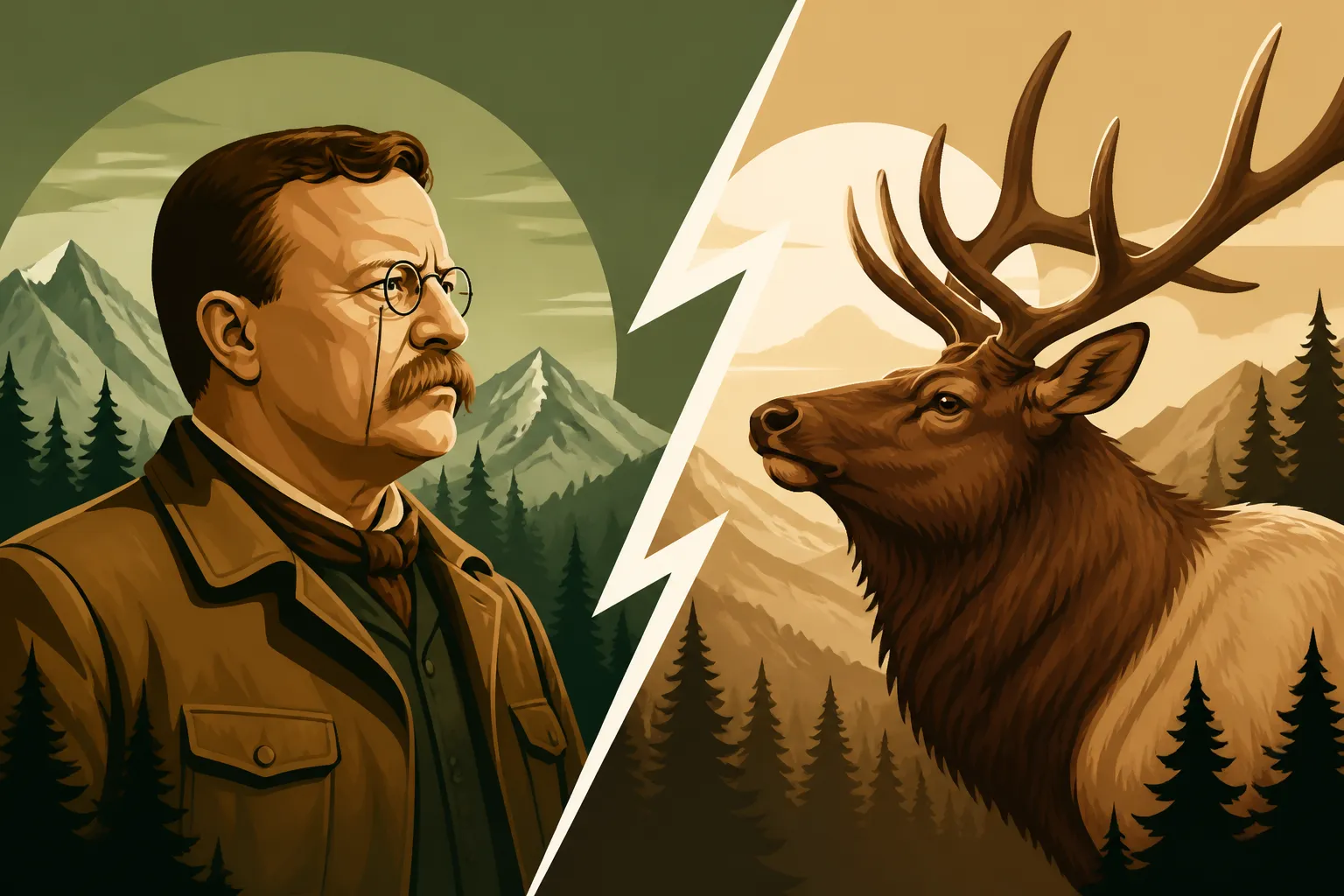
Roosevelt Versus Rocky Mountain Elk in Washington
It’s easy to get caught up in the excitement of elk season in Washington, but if you’re not clear on the difference between a Roosevelt and a Rocky Mountain elk, you might be missing out on crucial details that can make or break your hunt. Many hunters, especially those new to our diverse state, struggle to understand not just where these magnificent animals live, but how their distinct traits impact everything from scouting strategies to shot placement. This comprehensive guide will untangle the nuances between these two magnificent elk subspecies, helping you understand their biology, behavior, and where to find them across Washington’s incredibly varied landscapes.
Where Washington's Elk Herds Roam
Washington is a truly unique state, split by the towering Cascade Mountain Range, which creates two vastly different ecosystems. This natural divide dictates where our two major elk subspecies—the Roosevelt and the Rocky Mountain elk—primarily live, influencing everything from their diet to their behavior. Understanding this geographical separation is the first crucial step for any aspiring elk hunter in the Evergreen State.
Western Washington: Roosevelt Territory
Step foot into the verdant, often rain-soaked forests west of the Cascade Crest, and you’re firmly in Roosevelt elk country. These majestic animals thrive in the dense, old-growth timber, vast clear-cuts, and regenerating brush of areas like the Olympic Peninsula, the Willapa Hills, and the Southwest Washington volcanic regions. Picture constant moisture, thick undergrowth like salal and devil's club, and a landscape that often feels like a jungle, and you’ve got their home.
Hunting Roosevelts here is a completely different ballgame than chasing their eastern counterparts. Visibility is often measured in yards, not miles, and the challenges are immense. You're often still-hunting, tracking, or trying to intercept animals moving through extremely thick cover. The Willapa Hills Elk Herd, for instance, is notorious for disappearing into the dense reprod, making them ghost-like even to experienced hunters. It demands patience, quiet movement, and an intimate knowledge of the local terrain. If you're considering a hunt here, learning more about the specific characteristics of Roosevelt Elk of Western Washington will be invaluable.
Eastern Washington: Rocky Mountain Domain
Cross over to the east side of the Cascades, and the landscape shifts dramatically. Here, you'll find the more arid, open, yet still mountainous terrain that defines Rocky Mountain elk habitat. This includes the sprawling Okanogan highlands, the rugged Colockum, the vast expanses of the Yakima unit, and the deeply cut drainages of the Blue Mountains. These regions are characterized by ponderosa pine forests, sagebrush-steppe, agricultural lands, and more distinct seasonal changes with colder, snowy winters and hot, dry summers.
Rocky Mountain elk often frequent higher elevations in the summer months, descending to lower winter ranges as the snow piles up. Hunting here typically involves a lot more glassing, spotting animals from afar, and planning long stalks across open slopes or through patchy timber. You'll find yourself studying maps, looking for water sources in dry country, and often dealing with significant elevation changes. Units like the Colockum Elk Herd and the Yakima Elk Herd are prime examples of this landscape, offering different challenges than their western cousins.
The Cascade Crest as a Natural Divide
For all intents and purposes, the Cascade Crest serves as a hard boundary, effectively dividing the ranges of these two subspecies. While you might find some genetic mixing in the narrow transition zones along the spine of the Cascades, for the most part, a Roosevelt elk won't wander into traditional Rocky Mountain territory, and vice-versa. This geographical split is a critical factor for the Washington Department of Fish and Wildlife (WDFW) in their management strategies, creating distinct Game Management Units Explained and hunting opportunities on either side.
This natural division means that when you buy an elk tag in Washington, you're usually declaring an Eastside or Westside preference, which inherently dictates which subspecies you'll be pursuing. The habitat, weather patterns, and even the hunting culture can feel like two different states entirely. It's a key distinction that informs everything from your gear choices to your scouting plans. For a deeper dive into the specific boundary lines, looking at Where the Cascade Crest Divides Elk Subspecies can provide invaluable context.
Tale of Two Elk: Physical Differences
Beyond their geographical separation, Roosevelt and Rocky Mountain elk exhibit clear physical distinctions. These aren't just subtle nuances for biologists to debate; they are tangible differences that hunters can identify in the field and that impact the logistical considerations of a successful hunt.
Size and Stature: A Clear Contrast
One of the most noticeable differences between the two subspecies lies in their sheer size and build. Roosevelt elk are generally larger, more massive, and heavier-bodied animals. A mature Roosevelt bull can easily weigh 800 to 1,000 pounds, with some exceptional specimens pushing even higher. They have a more compact, barrel-chested appearance, built for navigating dense timber and absorbing impacts in their rugged environment. Their formidable size means that when you're fortunate enough to take one down, you're looking at a serious pack-out. Getting a Roosevelt bull off the mountain often involves multiple trips, especially if you're Packing an Elk Out of Washington's Backcountry solo.
Rocky Mountain elk, while still immense, tend to be a bit taller, with a more graceful, athletic build. Mature bulls typically weigh between 600 and 800 pounds, making them slightly lighter on average than their Roosevelt cousins. They are built for covering vast distances quickly, traversing steep, rocky terrain, and outmaneuvering predators in more open country. While they might be "smaller" than Roosevelts, don't be fooled—they still represent an enormous amount of work in the field. Understanding the potential Elk Meat Yield From a Roosevelt Bull versus a Rocky Mountain bull can help you plan your logistics, from cooler space to the number of game bags you'll need.
Antler Configuration and Growth
Perhaps the most striking visual difference for many hunters lies in the antlers. Roosevelt elk typically sport antlers that are wide, heavy, and often have a more compact, "clubby" appearance. The main beams tend to be thicker, and while they can grow impressive lengths, they often don't have the same towering height or multitude of long tines seen in many Rocky Mountain bulls. Often, their top tines can form a "crown" or mass of points that are quite distinctive. This unique characteristic is a hallmark of the Roosevelt Bull Antler Shape.
Rocky Mountain elk, on the other hand, are renowned for their long, slender main beams that sweep back and up, often with impressive length and numerous, sharply pointed tines. Their antlers tend to be taller and more symmetrical, contributing to higher scores in record books like Boone and Crockett. The overall impression is one of elegance and grandeur. Genetics, age, and nutrition all play a role, of course, but the general pattern is quite distinct. For those aiming for a trophy, understanding the Rocky Mountain Bull Antler Score is often a key consideration.
Coat Color and Markings
While less dramatic than size or antlers, subtle differences in coat color and markings can also help distinguish the two subspecies. Roosevelt elk often have a slightly darker, more uniformly brownish coat, especially their bodies, which can appear quite dark against the lush green of their habitat. Their neck manes might be a darker chocolate brown or black.
Rocky Mountain elk tend to have a lighter, more tawny body color, often with a distinct yellowish or grayish hue, particularly in the summer. Their rump patches are typically larger and more prominent, a bright buff or yellowish-white, which stands out against their darker neck and head. These subtle variations in color can sometimes aid in identification, especially when trying to count points on a live animal or distinguish an elk from other game at a distance.
Behavioral Distinctions and Hunting Implications
The diverse environments these elk inhabit have sculpted their behavior over millennia, leading to distinct habits that directly influence how hunters approach them. What works for a Roosevelt in a rainforest might be utterly ineffective for a Rocky Mountain bull in open timber.
Roosevelt: Forest Dwellers' Habits
Roosevelt elk are truly creatures of the dense forest. Their world is one of limited visibility, constant moisture, and thick cover. Because of this, they tend to be more secretive, elusive, and generally less vocal than their Rocky Mountain cousins. You won't often hear a full-blown bugling concert from a Roosevelt bull unless you're very close and perhaps during the peak of the rut. Their movements are often more subtle, utilizing game trails that can be barely perceptible to the human eye, moving quietly through the understory.
Hunting Roosevelts often demands still-hunting, slow-walking, and keen tracking skills. You need to immerse yourself in their world, moving with the wind, listening intently for the snap of a twig or the rustle of leaves. It’s a game of inches, where getting How Close You Get in Coastal Reprod can determine success. Your primary senses – hearing and smell – become paramount, as your vision is constantly obstructed. This style of hunting suits methods like Archery Elk Hunting in Washington's September Season, where close-quarters encounters are the norm, or Muzzleloader Hunting Washington's Special Seasons when you can capitalize on specific conditions.
Rocky Mountain: Open Country Adaptations
Rocky Mountain elk, conversely, have adapted to more open, expansive landscapes. They are accustomed to utilizing elevation for security, often feeding in open meadows or clearcuts and retreating to timbered ridges for bedding. This means they are generally more visible from a distance, making glassing an essential skill. They are also, for lack of a better term, more "chatty." During the rut, Rocky Mountain bulls are known for their magnificent and frequent bugles, challenging rivals and gathering their harems.
Hunting Rocky Mountain elk often involves extensive glassing Eastern Washington Breaks for Mule Deer, (a technique applicable to elk), long hikes to access remote areas, and then carefully planning a stalk once an animal is spotted. Rifle setups for Washington Elk and Deer for longer shots are common here. Their more vocal nature also makes calling more effective in many situations. You might hear them from a ridge away, giving you a starting point for your hunt. The wide-open spaces mean you're more likely to see multiple animals, but also more likely to be seen if you're not careful with your approach.
Calling Differences and Rut Activity
The rut behavior also differs significantly, influencing calling strategies. Roosevelt elk have a rut that can feel more spread out and less intense in terms of sheer vocalizations. While bulls will bugle, it's often more subdued, and they respond well to soft cow calls or glunks that mimic a cow searching for a bull. The dense cover means close-range calling and patience are key. Sometimes, the best strategy is to simply listen and locate, then sneak in, rather than aggressively call them in.
Rocky Mountain elk, especially in prime units, can be much more responsive to aggressive bugling and cow calling during their rut. Bulls are often challenging each other openly, and a well-executed Bugling and Cow Calling in Washington's Archery Elk Season can draw a bull in from a considerable distance. Understanding the Best Bugle Sequence for Early September can lead to incredible encounters. However, knowing When Bulls Stop Answering in Late Archery is also crucial, as their vocalizations taper off. Using a resource like GoHunt can help you understand historical rut timing and behavior for specific GMUs, giving you an edge in planning your calling strategies.
Habitat Preferences and Seasonal Movements
The environment shapes not just their physical traits and behavior, but also their preferred habitats throughout the year and how they move between them. These patterns are vital for successful scouting and hunting.
Coastal Rainforests vs. Arid Shrub-Steppe
Roosevelt elk thrive in the high rainfall, lush vegetation, and relatively mild, maritime climate of western Washington. Their preferred habitat is characterized by a mix of mature timber, regenerating clear-cuts (often called "reprod"), and dense undergrowth. They rely on the thick cover for security and the abundant forage, including ferns, salal, and huckleberry, that flourishes in this moist environment. Water is never an issue here; staying dry yourself is the primary concern.
Eastern Washington's Rocky Mountain elk, by contrast, are adapted to a more continental climate: colder, snowier winters and hotter, drier summers. Their habitat spans from the lower elevation sagebrush-steppe and wheat fields to the higher reaches of ponderosa pine and fir forests. They graze on grasses, forbs, and browse from shrubs like bitterbrush and serviceberry. In these drier conditions, finding Water Holes That Hold Deer in Dry Country (a principle also applicable to elk) can be a critical scouting strategy, especially during early-season hunts.
Impact of Logging and Forest Management
Forest management practices, particularly logging, have a profound impact on both subspecies, albeit in different ways. In western Washington, extensive clear-cutting creates vast areas of early successional growth that provide abundant forage for Roosevelt elk. However, as these areas mature into dense reprod, they become incredibly thick, creating almost impenetrable cover while also limiting travel. Hunters often find themselves navigating a maze of old logging roads and trying to interpret Reading Clearcuts and Reprod for Blacktail Bucks – a skill equally useful for finding elk. Sustainable timber practices are essential for maintaining a healthy balance of forage and cover.
East of the Cascades, forest management also plays a role. Timber sales create openings that provide new forage, while older timber offers thermal cover and bedding areas. The checkerboard pattern of public and private timber lands influences access, and understanding whether you need a permit to hunt behind Timber Company Gates is crucial. Both subspecies benefit from a mosaic of forest ages, but the specific dynamics of how they use these areas differ based on the density of the surrounding vegetation.
Winter Range and Migratory Patterns
Roosevelt elk in western Washington generally experience milder winters, leading to shorter, less dramatic migratory patterns. They might move from higher elevations down into lower river valleys or coastal plains as snow accumulates, but their movements are often more localized. However, even these movements are significant, with elk congregating in sheltered valleys or old-growth stands that offer protection from the elements. Understanding these movements is key to hunting Late-Season Hunting in Washington Snow.
Rocky Mountain elk, particularly in units like the Blue Mountains or the Okanogan, often undertake significant seasonal migrations. They spend their summers high in the mountains, feasting on abundant forage, then descend to lower elevation winter ranges as snow forces them out. These migrations can cover many miles, moving along traditional corridors. These lower elevations are often critical habitat and are protected by Washington Winter Range Closures That End Late Hunts. Observing Elk Migration Timing in November can provide valuable clues for late-season hunting success. For hunters, knowing these seasonal movements and using tools like GoHunt to analyze winter range maps and historical data is invaluable for predicting where the elk will be.
Managing Washington's Elk Herds
The WDFW works tirelessly to manage these distinct elk populations, facing unique challenges and implementing different strategies to ensure healthy herds and sustainable hunting opportunities. This includes managing habitat, controlling herd numbers, and dealing with various environmental pressures.
Conservation Challenges for Each Subspecies
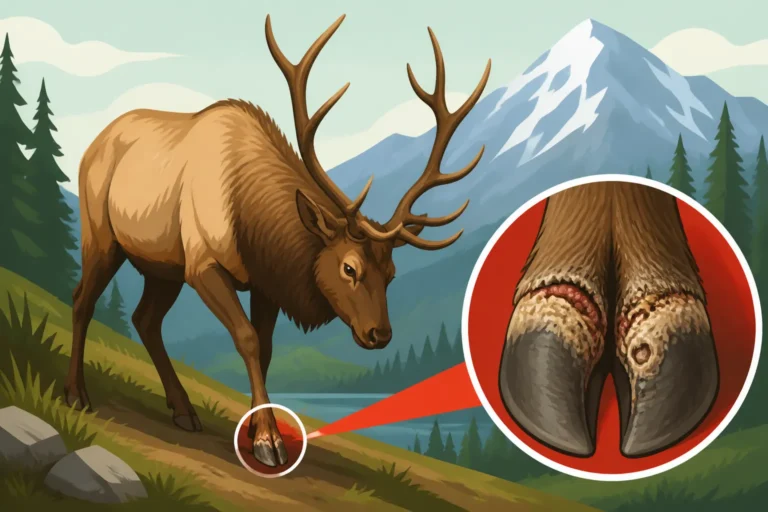
Roosevelt elk in western Washington face a suite of specific conservation challenges. Habitat fragmentation due to development, increased human encroachment, and the spread of Elk Hoof Disease in Western Washington are significant concerns. This debilitating disease, while not always fatal, can severely impact an elk's ability to forage and escape predators. Additionally, pressure from predators like cougars, bears, and increasingly, wolves, adds another layer of complexity. Learning about Elk Hoof Disease Symptoms can help hunters report affected animals to WDFW, contributing to monitoring efforts.
Rocky Mountain elk, in contrast, often grapple with challenges like drought, which impacts forage quality and water availability, and the potential for severe winters that can lead to high calf mortality. While Chronic Wasting Disease is not currently detected in Washington, WDFW maintains rigorous surveillance to prevent its spread, which could devastate herds. Maintaining healthy bull-to-cow ratios in Washington Herds is also a constant balancing act for wildlife managers, as it affects herd productivity and hunter success.
WDFW Management Zones and Harvest Strategies
To effectively manage these distinct populations, WDFW divides the state into numerous Game Management Units (GMUs), each with specific regulations tailored to the local elk population. These units often have different tag allocations, season dates, and antler restrictions (e.g., spike-only, three-point minimum, antlerless permits) designed to manage herd numbers, age structures, and gender ratios within that particular elk population. For example, some units might focus on reducing cow numbers to control herd size, while others aim to protect younger bulls to improve trophy potential.
Understanding these specific regulations for each GMU is paramount. Hunters need to pore over the Washington Big Game Pamphlet, paying close attention to the rules for their chosen unit and weapon season. Using resources like GoHunt's insider information on draw odds and unit breakdowns can help hunters make informed decisions when applying for Special Hunt Permits.
Hunter Opportunities and Tag Allocations
Washington offers a variety of hunting opportunities for both Roosevelt and Rocky Mountain elk, ranging from general season tags to highly coveted special permits. General season tags are available over-the-counter for specific GMUs and weapon types, providing broad access. However, for hunters seeking a higher quality experience or a better chance at a mature bull, the Washington Special Hunt Permits and How to Apply process is critical. These permits are drawn through a lottery system and often offer access to specific units, earlier seasons, or a wider range of legal animals (e.g., any legal bull).
The draw odds for these special permits can be incredibly low, especially for trophy units. This is where tools like GoHunt become invaluable, providing data-driven insights into draw odds, success rates, and unit characteristics, helping hunters choose wisely from their four hunt choices on a Washington Application. Whether you're considering a rifle, archery, or muzzleloader season, the choice of weapon for a Washington Elk Tag also influences your opportunities and the units you can hunt. Ultimately, understanding both the general season structure and the special permit system is key to maximizing your chances of a successful hunt for either subspecies.
Here’s a quick overview of the key differences:
| Feature | Roosevelt Elk | Rocky Mountain Elk |
|---|---|---|
| Primary Range | West of Cascade Crest (Olympic Peninsula, SW WA) | East of Cascade Crest (Okanogan, Blues, Yakima) |
| Habitat | Dense rainforest, thick timber, heavy undergrowth | Open timber, sagebrush-steppe, mountainous terrain |
| Average Weight | 800-1000+ lbs (bull) | 600-800 lbs (bull) |
| Antlers | Wider, thicker beams, more compact, "clubby" | Taller, more slender, longer tines, often symmetrical |
| Coat Color | Often darker, more uniform brown | Lighter, tawny body, larger, brighter rump patch |
| Vocalizations | Generally less vocal, more subtle bugles | More vocal, frequent and aggressive bugling |
| Hunting Style | Still-hunting, tracking, close-quarters calling | Glassing, long stalks, aggressive calling |
| Key Challenges | Hoof disease, habitat fragmentation, dense cover | Drought, harsh winters, open terrain, long distances |
Disclaimer
Please remember that hunting regulations and conditions can change rapidly. Always consult the official Washington Department of Fish and Wildlife (WDFW) hunting regulations pamphlet for the current year before planning any hunt. This guide is for informational purposes only and should not replace official WDFW resources or professional advice. Stay safe and hunt ethically.