Ruffed Grouse in Washington Forests
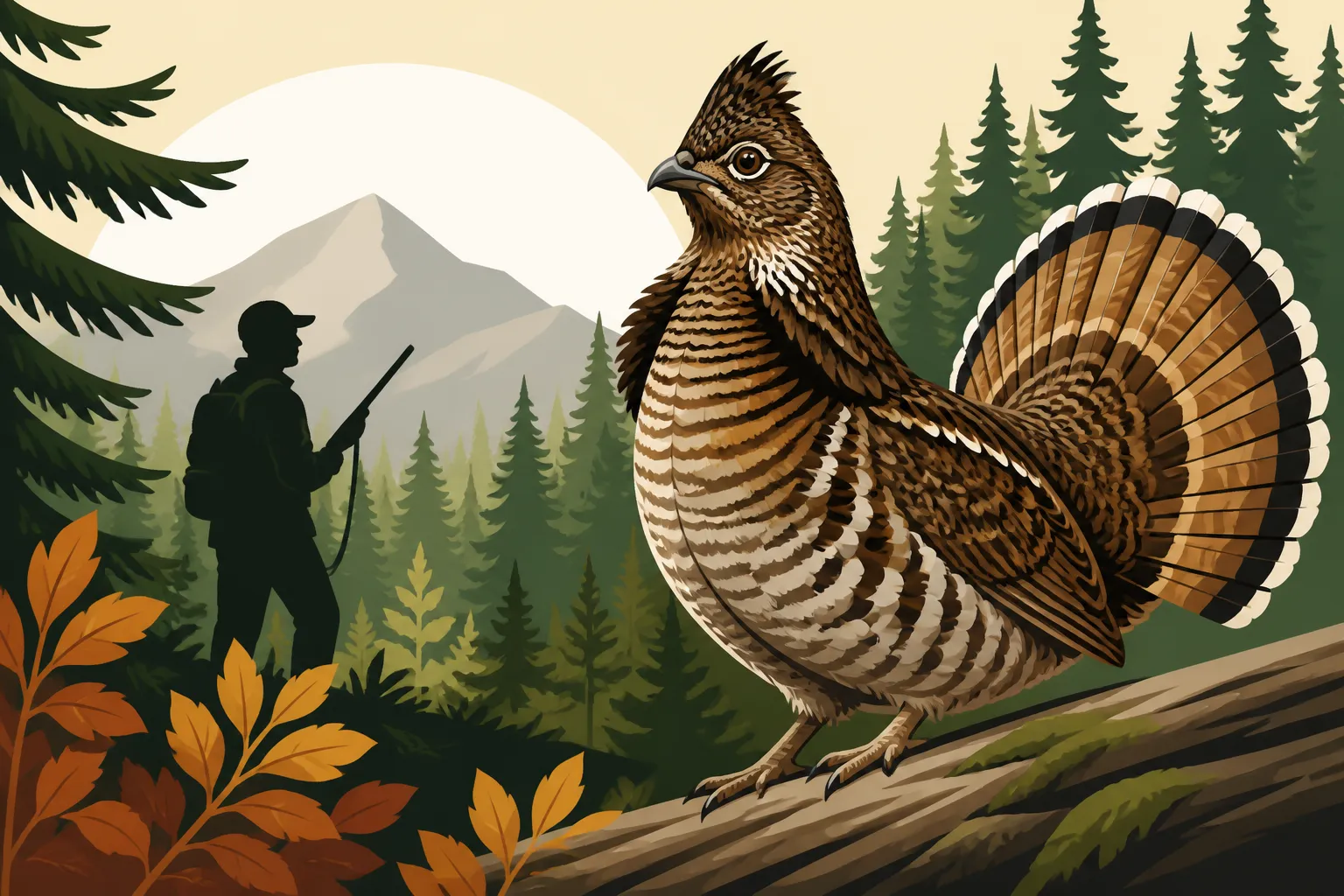
For many hunters in Washington, ruffed grouse can feel like an elusive phantom, a sudden burst of wings and a fleeting glimpse disappearing into the dense forest. It's easy to dismiss them as an accidental encounter while chasing bigger game, but consistent success with these challenging upland birds requires a specific understanding of their habits and habitat. This guide will help you decipher the patterns of ruffed grouse, turning those chance encounters into deliberate and rewarding hunts across Washington's diverse woodlands.
Understanding Ruffed Grouse Habitat in Washington
Ruffed grouse are true creatures of the forest, thriving in specific types of woodlands that offer both food and escape cover. If you know what to look for, you'll start seeing the forest through their eyes, increasing your chances of finding them.
Preferred Forest Types and Cover
Ruffed grouse aren't fond of wide-open spaces or perfectly manicured monoculture forests. They crave diversity and density. Think young, regenerating forests – what we often call "reprod" – with a mix of deciduous and coniferous trees. Aspen groves, alder thickets, and mixed conifer stands with a good understory of shrubs and saplings are prime real estate. They love areas where sunlight penetrates enough to encourage ground vegetation, but the canopy overhead still provides security from aerial predators.
Look for areas with dense brush, fallen logs, and pockets of conifers that create thermal cover in colder months. Old logging roads, forgotten skid trails, and the edges of clearcuts that have started to grow back in are often hotbeds for grouse activity. The transition zones between different forest types are particularly attractive, as they offer a buffet of food options and varied cover. For instance, the interface where a dense conifer stand meets a brushy deciduous patch is often a winner.
Food Sources Throughout the Seasons
A grouse's diet changes with the seasons, and understanding this is key to finding them. In spring and summer, they feast on tender greens, berries, and insects. As fall approaches, their diet shifts to fruits, seeds, and the buds and catkins of deciduous trees like aspen, alder, and birch. Look for areas rich in huckleberries, salal, wild rose hips, and even clover patches along old logging roads.
In late fall and winter, when other food sources become scarce, buds and twigs become critically important. Aspens, birch, and even willow catkins provide essential sustenance. If you find a stand of aspen, especially one with varying age classes, you're likely in a good spot. They'll also feed on the soft needles and buds of certain conifers. Knowing what they're eating right now can narrow down your search considerably. Ruffed Grouse in Washington Forests themselves are quite adaptable, but their food preferences are a constant.
Water and Elevation Preferences
While grouse don't usually need open water sources like deer or elk, they thrive in habitats that retain moisture, which encourages the lush undergrowth they depend on. You'll often find them near small creeks, seeps, or in damp draws where the vegetation stays green longer. Areas with a higher water table tend to have more diverse plant life, which translates to more food and cover for grouse.
Elevation-wise, ruffed grouse are pretty widespread in Washington. You can find them from the low-elevation river bottoms on the west side, especially in places like the Olympic National Forest or the Gifford Pinchot, all the way up into the mid-elevations of the Cascades and the Okanogan-Wenatchee National Forest. They generally stick to areas with good forest cover, avoiding the truly high, exposed alpine zones. However, don't overlook brushy edges where clearcuts meet denser timber, even at higher elevations, as long as there's a good mix of food and cover.
Hunting Techniques for Ruffed Grouse
Hunting ruffed grouse is less about long-range shooting and more about keen observation, stealth, and quick reflexes. It's an active hunt that often involves covering a lot of ground.
Still-Hunting and Flushing Strategies
Still-hunting for grouse is an art. It's about moving slowly through the woods, pausing frequently, and using your eyes and ears to detect subtle signs. You're not just looking for the bird itself, but for movement, disturbed leaves, or even the flick of a tail. Walk at a snail's pace, stopping every few steps to scan the ground ahead, the branches above, and the dense cover to your sides. Often, a grouse will hold tight, relying on its camouflage, and will only flush when you're almost on top of it. This is where the "sudden burst of wings" comes in.
When a bird flushes, be ready! Your gun should be mounted quickly and smoothly. Try to pick a clear lane through the trees for your shot. Many times, the bird will fly just a short distance and then land in another tree or thicket. If you mark where it landed, you can often get a second opportunity. This is a common tactic, especially if you hear the distinct wing beats of a "treeing" grouse. This type of hunting shares a lot in common with Still-Hunting Blacktails in Wet Washington Brush, requiring patience and quiet movement.
Using Dogs for Grouse Hunting
For many, hunting ruffed grouse with a good bird dog is the quintessential experience. A well-trained pointing dog, like a German Shorthaired Pointer or an English Setter, can make an enormous difference. The dog works ahead, sniffing out scent and pointing the bird before it flushes wildly. This gives you time to get into position and prepare for the shot. Flushing dogs, such as various Spaniel breeds, will push birds out of cover, but it requires a different kind of readiness.
Hunting with a dog not only increases your success rate but also adds another layer of enjoyment to the hunt. Watching a dog work is a beautiful thing. It also helps you cover ground more efficiently and find birds you'd otherwise walk right past. Make sure your dog is trained for upland birds, is comfortable in dense cover, and responds well to commands, especially given the thick brush these birds inhabit.
Weapon Choices and Shot Placement
For ruffed grouse, a lightweight shotgun is generally preferred. A 20-gauge or even a 28-gauge is ideal, as grouse are not heavily armored birds, and the lighter gun is easier to carry all day and bring to bear quickly in tight quarters. Many hunters opt for an open choke, like cylinder or improved cylinder, to get a wider shot pattern for those close, fast-flying flushes in the timber. Shot size #7.5 or #8 is typically sufficient.
Shot placement is crucial, especially if you want to salvage as much meat as possible. Aim for the head and neck if you can, as this often results in a clean kill with minimal meat damage. However, in the chaos of a flushing bird, a body shot is often what you get. The key is to swing through the bird and fire as soon as you have a clear shot. Remember, these birds are small, so precision matters even with a shotgun pattern. Always be mindful of your surroundings and what's beyond your target.
Timing Your Ruffed Grouse Hunt
Washington's diverse seasons offer different opportunities and challenges for ruffed grouse hunters. Understanding the seasonal behavior of these birds will help you plan your hunts for maximum success.
Early Season Opportunities
The early season, typically starting in September, offers some of the best opportunities for ruffed grouse. The foliage is still thick, providing excellent cover, and young birds are often less wary than mature ones. Look for them along the edges of old logging roads, in brushy clearcuts, and near berry patches where they are actively feeding. The weather is usually mild, making for pleasant days in the woods.
One advantage of early season is that birds are often in family groups, so flushing one might mean there are more nearby. Focus on moist areas with abundant food sources. Tools like GoHunt can be invaluable here, allowing you to scout satellite imagery for clearcuts, logging roads, and changes in forest density, helping you identify prime early-season habitat before you even lace up your boots. The downside is that the dense vegetation can make spotting flushed birds and retrieving them challenging. It can be like Hunting Blacktails in Fog and Rain – visibility is limited, and you need to be constantly alert.
Mid-Season Strategies as Cover Changes
As fall progresses into October and November, the deciduous leaves begin to drop, drastically changing the landscape. While this reduces cover for the grouse, it can also make them easier to spot. They will often shift their focus to denser conifer stands or thickets of evergreens for protection, especially on colder or windier days. They'll also be more reliant on buds and catkins as ground-level food diminishes.
During mid-season, focus your efforts on areas where deciduous and coniferous trees mix, or in riparian zones that still offer dense cover. Old growth edges adjacent to younger, brushier areas are often productive. The birds will still be active, but they'll be more cautious. This is a great time to implement thorough still-hunting techniques, moving slowly and deliberately. The quiet rustle of fallen leaves can make stealth difficult, so pay extra attention to your foot placement.
Late Season Challenges and Rewards
Late season, generally from November through January, presents the toughest challenge but can also be the most rewarding. Snowfall can push birds down to lower elevations or into specific thermal cover. They rely almost entirely on buds and catkins for food. Finding them requires an intimate knowledge of their winter habits. Look for dense conifer stands, especially those with good overhead canopy, which offer protection from snow and cold. South-facing slopes that receive more sunlight can also hold birds.
The advantage of late season is that the reduced cover, especially with snow on the ground, can make birds much easier to spot against the white backdrop. Their tracks in fresh snow can also lead you directly to them. This is where sturdy Boots for Washington's Eastside Rock and Westside Mud become critical, as you'll be traversing potentially icy and rugged terrain. While there are fewer active birds to be found, those you do locate are often concentrated, offering multiple shot opportunities.
Washington Regulations and Best Practices
Like all hunting in Washington, pursuing ruffed grouse requires adherence to regulations and a commitment to ethical practices. Understanding these rules is fundamental to a responsible hunt.
Licence Requirements and Bag Limits
To hunt ruffed grouse in Washington, you'll need a valid Washington hunting license, specifically one that includes small game or upland bird privileges. You do not need a separate permit for ruffed grouse, but it's always wise to check the current WDFW regulations pamphlet for any changes. The bag limit for ruffed grouse is generally quite generous, often allowing for several birds per day with a possession limit.
It's crucial to consult the most recent regulations pamphlet before each hunting season, as rules can change. This pamphlet outlines not only bag limits but also season dates, shooting hours, and any special restrictions for specific areas. You can often find this information readily available through the WDFW website or by utilizing mapping platforms like GoHunt that integrate regulatory overlays, which can be super helpful for planning. Be sure to report your harvest as required by WDFW. Washington Small Game Licence Cost and Washington Small Game Season Dates are essential details to check before you head out.
Ethical Hunting and Public Land Access
Ethical hunting for ruffed grouse means respecting the game, the land, and other users. Always ensure you have a safe backdrop before taking a shot, especially in forested areas where other hunters or recreationists might be present. Retrieve every bird you shoot, even if it means a thorough search through dense brush. Don't waste the meat.
Access to good ruffed grouse habitat in Washington is often excellent, with vast tracts of national forest land, DNR (Department of Natural Resources) lands, and even some timber company lands offering opportunities. Before heading out, make sure you understand the access rules for the specific area you plan to hunt. National Forests are generally open, but DNR lands may require a Discover Pass for parking. Timber company lands may require permits or be designated as Hunting Behind Timber Company Gates, so always check. Maps, like those found on the WDFW Hunt Planner or through third-party apps, are invaluable for determining land ownership and access routes. Many of these areas are part of Washington DNR Land Open to Hunting or Washington's Register to Hunt Properties.
Hunting ruffed grouse is an engaging and rewarding pursuit that connects you deeply with Washington's diverse forest ecosystems. By understanding their habitat, employing effective hunting techniques, and respecting regulations, you'll be well on your way to enjoying many successful days in the timber.
| Season Phase | Typical Conditions | Primary Habitat Focus | Recommended Tactics |
|---|---|---|---|
| Early Season | Mild weather, thick foliage, abundant berries | Brushy clearcuts, logging roads, berry patches | Still-hunt slowly, focus on food sources, follow flushes |
| Mid-Season | Falling leaves, cooler temps, some ground cover | Mixed conifer/deciduous, denser thickets | Deliberate still-hunting, target evergreen cover |
| Late Season | Cold, snow, sparse deciduous cover | Dense conifer stands, south-facing slopes | Track in snow, focus on thermal cover, very slow movement |
Disclaimer
This article is for general informational purposes only and does not constitute professional advice. Laws, prices and regulations vary by location and change over time. Consult a qualified professional for guidance on your specific situation.