Washington Turkey Subspecies
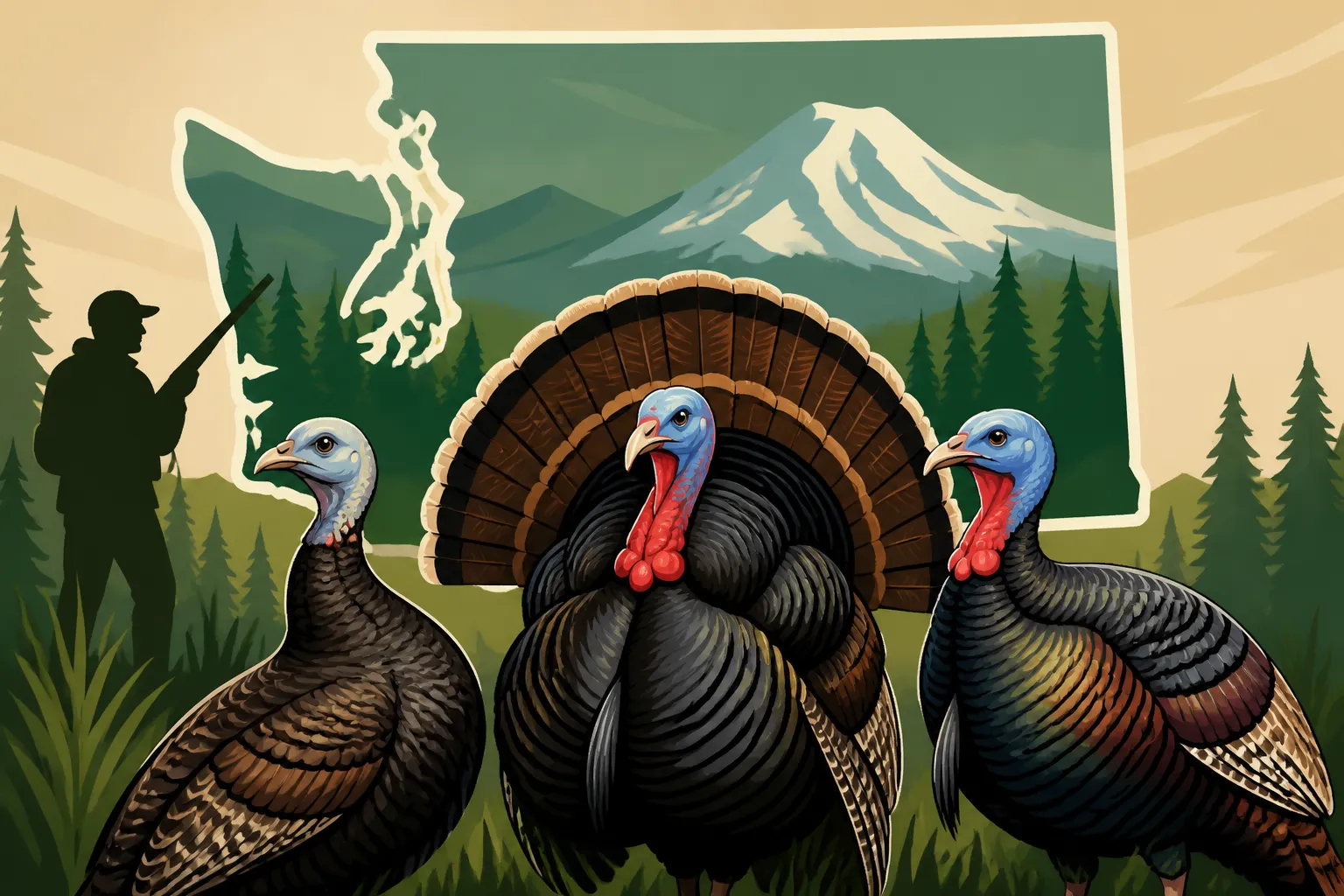
It can feel like a real puzzle sometimes, trying to figure out which wild turkey you're looking at when you're out in the field, or even which specific type you should be targeting in a particular corner of Washington. Many hunters just think a turkey is a turkey, but these magnificent birds have distinct characteristics and preferred habitats that can really impact your hunting strategy. This guide aims to clear up the confusion, walking you through the distinct wild turkey subspecies found across our state, detailing how to identify them, where they typically live, and why understanding these differences is key to a successful hunt.
The Wild Turkeys of Washington: An Overview
Washington is home to some incredible wild turkey hunting opportunities, offering a chance to pursue these wary birds across a diverse landscape, from arid sagebrush to dense timber. But what many hunters don't realize is that "wild turkey" isn't a single, uniform animal across the state. We have different subspecies, each with its own quirks and preferences. Understanding these nuances isn't just for ornithologists; it's a practical skill for any dedicated turkey hunter.
Why Subspecies Matter to Hunters
Knowing your subspecies might seem like an academic exercise, but it genuinely impacts your hunting success. Imagine you're gearing up for a hunt in the Blue Mountains, expecting to find birds roosting high in Ponderosa pines, only to discover a different subspecies that prefers riparian corridors and feeds in agricultural fields. Suddenly, your calling setup, camouflage, and even your e-scouting efforts are all off. Different subspecies often exhibit subtle differences in their calls, their tolerance for human presence, and their daily routines. For instance, some might be more inclined to respond to aggressive calling, while others prefer a more subtle approach. Knowing these distinctions allows you to tailor your strategy, making you a more effective and adaptable hunter. It helps you anticipate where they'll be, what they'll be doing, and how they might react to your presence.
A Brief History of Turkey Introductions
Wild turkeys weren't always widespread in Washington. The story of their presence here is largely one of successful conservation and reintroduction efforts. Historically, turkeys weren't native to Washington, but through thoughtful transplant programs beginning in the 1960s, various subspecies were introduced from other states to establish viable populations. These initial stockings were carefully chosen to match the available habitat types, leading to the distribution we see today. Different areas received different strains, which is why we have distinct populations now. These efforts were a testament to the dedication of wildlife managers and hunters alike, ensuring that future generations could experience the thrill of a spring gobbler hunt right here in Washington. It's a reminder that our hunting opportunities are often the result of careful, long-term planning and management.
The Majestic Merriam's Turkey: Eastern Washington's Icon
If you've hunted turkeys in the higher elevations or pine forests of Eastern Washington, chances are you've encountered the Merriam's turkey. These birds are often considered the quintessential Western turkey, perfectly at home in the rugged, forested landscapes. They're striking birds, known for their bold appearance and often spirited gobbling.
Identifying the Merriam's
The Merriam's turkey is truly a sight to behold, standing out with its distinctive appearance. The most defining characteristic is the white or buff-colored tips on their tail feathers and lower back feathers. This is a crucial identifier, as it contrasts sharply with the other subspecies. Their primary wing feathers also typically have distinct white bars. Looking closely, you'll often see iridescent bronze and purple hues on their body feathers, shimmering in the sunlight. The breast feathers tend to be black with a bronze sheen, but that white on the tail is your most reliable marker. Hens are generally duller in coloration, with more subdued markings, but still display those characteristic white tail tips. When a big Merriam's gobbler struts in front of you, those white tail feathers fanning out against the green of a ponderosa pine forest are truly unmistakable.
Preferred Habitat and Behavior
Merriam's turkeys thrive in diverse forested environments, particularly those dominated by ponderosa pine, fir, and spruce. You'll often find them in areas with mixed conifer and deciduous trees, as long as there are open meadows or clearings nearby for foraging. They prefer mountainous terrain, often using ridgelines for travel and seeking out south-facing slopes in early spring to soak up the sun. Roosting typically occurs high in tall conifers, offering them security from predators. Their daily routine often involves flying down from the roost at first light, feeding in open areas like meadows or logged units, then moving to shaded timber during the heat of the day. They have a reputation for being quite vocal, especially in the mornings, and can sometimes be more responsive to aggressive calling than their lowland counterparts. Understanding this pattern is crucial when you're scouting; knowing where they might fly down to feed can help you set up an ambush.
Where to Find Merriam's in Washington
The core strongholds for Merriam's turkeys in Washington are primarily found in the northeastern part of the state and extending south into the Blue Mountains. Think areas like Pend Oreille, Stevens, Ferry, and Spokane counties, where the landscape is characterized by rolling hills, timbered mountains, and scattered agricultural fields. Further south, the Blue Mountains offer another prime habitat, with their vast expanses of timber and grassy openings. You'll also find Merriam's populations in parts of the Okanogan, inhabiting the mosaic of pine forests and sagebrush. When you're planning a hunt in these regions, you'll be specifically targeting Merriam's. Using tools like GoHunt can be invaluable here, as you can overlay habitat maps with public land boundaries to identify potential areas that perfectly match the Merriam's preferred environment. Look for those elevated timbered areas with good access to open foraging grounds. If you're looking for Merriam's Turkeys in Northeast Washington, these regions are your best bet.
The Elusive Rio Grande Turkey: Columbia Basin's Resident
Moving westward and into the more open, arid landscapes of Washington, you're more likely to encounter the Rio Grande turkey. These birds have adapted to environments vastly different from the dense forests preferred by Merriam's, and their behavior often reflects this adaptation. They can be incredibly challenging and rewarding to hunt, requiring a different set of tactics.
Identifying the Rio Grande
While also magnificent birds, Rio Grande turkeys present a distinct visual profile compared to the Merriam's. The key identifier for the Rio Grande is the buff or tan-colored tips on their tail feathers and lower back, rather than the bright white of the Merriam's. Their body feathers often display a rich, copper-bronze iridescence. Their primary wing feathers will have distinct black and white barring, similar to other subspecies, but it's that buff tail tip that truly gives them away. Overall, their plumage can appear a bit darker than a Merriam's, especially in the breast area, with less of the stark white contrast. Again, hens will be more camouflaged, but the tail feather tips remain the most reliable clue for identification. When you spot a gobbler strutting against the backdrop of an open field or river bottom, notice the color of those fanned feathers – if they're buff, you've found your Rio Grande.
Preferred Habitat and Behavior
Rio Grande turkeys are creatures of the open country, favoring riparian zones, agricultural edges, and rolling sagebrush-steppe landscapes. Unlike the forest-dwelling Merriam's, they are often found along river and creek bottoms, where they utilize cottonwood groves and other deciduous trees for roosting and cover. These areas provide crucial water sources, dense cover for security, and access to food sources from adjacent fields or natural vegetation. Their diet often includes a higher proportion of agricultural grains, seeds, and insects found in these open environments. Because they inhabit more open terrain, Rio Grandes can be incredibly wary and will often spot approaching hunters from a considerable distance. They're known for covering vast amounts of ground, especially when pressured, and might be less inclined to commit to aggressive calling sequences in wide-open spaces. They rely on their keen eyesight and the ability to run or fly long distances to escape danger.
Where to Find Rio Grandes in Washington
The primary range for Rio Grande turkeys in Washington is concentrated within the Columbia Basin and its associated river systems. Think areas with significant agricultural activity interspersed with riverine habitats, particularly along the Columbia, Snake, and Yakima Rivers. Counties like Yakima, Benton, Franklin, and Walla Walla often hold good populations. They thrive in these mosaics of irrigated fields, dryland farming, and the critical cover provided by stream bottoms and brushy draws. When scouting these areas, focus your efforts along these water features and field edges. Access can sometimes be tricky as much of this land is private, but dedicated hunters can often find opportunities through landowner permission or by hunting public lands adjacent to these agricultural areas. If your hunt plans lead you to the drier, open country east of the Cascades, you're likely targeting the elusive Rio Grande Turkeys in Washington.
The Mystery of the Eastern Turkey and Hybridization
When discussing Washington's turkey subspecies, the Eastern turkey often comes up, but its presence as a pure strain is a bit more complicated. While the Eastern subspecies is prevalent in, well, the Eastern United States, its role in Washington is primarily through historical introductions that have since led to widespread hybridization. This creates a fascinating, yet sometimes confusing, scenario for hunters.
Are Pure Eastern Turkeys in Washington?
The short answer is: probably not in any significant, genetically pure populations that were directly established and maintained as Easterns. While some initial introductions to Washington and neighboring states may have included Eastern genetics or birds that were considered Eastern subspecies, the prevailing understanding is that our established populations are predominantly Merriam's and Rio Grande. Any "Eastern" characteristics you might observe in a Washington bird are far more likely to be the result of interbreeding with the introduced Merriam's or Rio Grandes, creating hybrid birds. The habitat preferences of the true Eastern turkey – dense, mature hardwood forests – are also less common as vast, contiguous landscapes in Washington compared to the environments preferred by Merriam's and Rio Grandes. This ecological mismatch further limits the establishment of pure Eastern populations.
The Blurring Lines: Identifying Hybrid Birds
This brings us to the fascinating, and sometimes frustrating, reality of hybridization. When different subspecies interbreed, their offspring can display a mix of characteristics from both parents. For a hunter, this means you might encounter a bird with the white tail tips of a Merriam's, but with some of the buff coloration of a Rio Grande, or perhaps a darker body plumage reminiscent of an Eastern. These "blended" birds can make definitive subspecies identification in the field quite challenging. You might see a bird with varying degrees of white, buff, or even chestnut tipping on their tail feathers. Body coloration can also be a mix of the coppery iridescence of a Rio Grande and the bronze tones of a Merriam's. The key is to look for these inconsistent traits rather than a pure expression of one subspecies. Genetically, these birds are a mix, carrying alleles from more than one ancestral population. This genetic mixing is a natural process when different populations come into contact, especially in areas where they weren't historically separated.
Implications for Hunting
Hybridization doesn't necessarily mean a less challenging or less rewarding hunt, but it does mean that the textbook behaviors for a "pure" subspecies might not always apply perfectly. A hybrid bird might exhibit a mix of wariness from its Rio Grande lineage and vocal tendencies from its Merriam's side. This means hunters need to be even more adaptable and observant. While you can still use habitat as a strong indicator (e.g., if you're in open sagebrush, it's likely a Rio Grande or a hybrid with strong Rio Grande influence), don't be surprised if a bird in that environment responds to a calling sequence you thought was "better" for a Merriam's. The best approach is to be flexible with your calling, vary your setups, and pay close attention to the birds' immediate reactions. Rely on your knowledge of general turkey behavior and let the individual bird dictate your strategy, rather than rigidly adhering to a specific subspecies playbook. Tools like GoHunt can still help you identify likely habitat, but a keen eye and ear will be your best assets when dealing with these mixed populations.
Hunting Strategies Tailored to Subspecies and Habitat
Regardless of the specific subspecies, successful turkey hunting always boils down to understanding your quarry, knowing their habitat, and adapting your tactics. However, recognizing the subtle differences between Merriam's and Rio Grandes, or even hybrid birds, can give you a significant edge. It's about playing to their strengths and weaknesses based on where and what they are.
Scouting for Specific Subspecies
Scouting is paramount for any turkey hunt, but it becomes even more strategic when you're aware of the different subspecies and their habitat preferences. For Merriam's, you'll want to focus your pre-season efforts on timbered ridges, higher elevation meadows, and the edges of clearcuts in Eastern Washington's conifer forests. Look for tracks in dusty logging roads, droppings around potential roosting sites, and listen for distant gobblers at dawn and dusk. For Rio Grandes, shift your focus to riparian corridors, creek bottoms, and agricultural field edges in the Columbia Basin. Here, you'll be looking for tracks in soft soil near water, dust bowls in dry fields, and birds feeding in stubble or along greening up draws.
This is where e-scouting tools like GoHunt really shine. You can use their mapping layers to identify public lands, private land ownership, and even topographical features that indicate prime habitat for each subspecies. For example, you can pinpoint areas with dense pine stands and adjacent clearings for Merriam's, or trace river systems and identify agricultural parcels for Rio Grandes. Comparing these maps to historical harvest data, if available, can also give you clues about where populations are concentrated. A good e-scouting session can save you days of boots-on-the-ground searching by narrowing down your focus to high-probability areas. Remember, turkey populations can shift, so always verify your e-scouting with some real-world reconnaissance before the season opens.
Calling Techniques and Roosting Habits
Calling is arguably the most exciting part of turkey hunting, but different subspecies, or even individual birds, might respond differently. Merriam's turkeys, often found in more broken terrain, can sometimes be more responsive to aggressive calling. Loud yelps, cuts, and even fly-down cackles can pique their interest, especially in the mornings as they fly down from their high conifer roosts. Their high-elevation roosting sites often provide excellent acoustic carrying distances, allowing your calls to reach further. On the other hand, Rio Grandes, accustomed to more open landscapes, can be incredibly wary. Overly aggressive calling in wide-open country might make them shy off. A softer, more seductive approach with subtle clucks, purrs, and soft yelps might be more effective. Their roosts are often in cottonwoods or other large trees along river bottoms, and knowing these specific areas can inform your early morning setup. If you're struggling to locate birds, focusing on Where Washington Turkeys Roost by scouting potential trees along water sources or ridge lines can give you a massive advantage. Practice a variety of calls, from box calls to slate calls to mouth calls, so you can adapt to the bird's mood and the situation.
The Importance of Adaptability
Ultimately, while knowing subspecies characteristics is incredibly helpful, remember that turkeys are still wild animals with individual personalities. Weather, hunting pressure, and the breeding cycle all play a huge role in their daily behavior. A Merriam's might act like a Rio Grande one day, and a Rio Grande might suddenly become super vocal. The most successful turkey hunters are those who are constantly observing, listening, and adapting. Don't be afraid to change your setup, alter your calling sequence, or even pick up and move if a strategy isn't working. If a gobbler hangs up at 100 yards, try a softer call, or move to a more concealed position. If they're completely silent, switch to a spot-and-stalk approach, or focus on finding fresh sign. This fluid, responsive approach, combined with your subspecies knowledge, will dramatically increase your odds of punching your tag.
Washington Turkey Management and Conservation
The vibrant wild turkey populations we enjoy today in Washington are not by accident. They are a direct result of ongoing management efforts, hunter participation, and conservation funding. Understanding these broader aspects of turkey management helps us appreciate the resource and ensures we continue to be responsible stewards of this incredible game bird.
Washington Turkey Population Growth
The story of wild turkeys in Washington is largely one of remarkable success. From initial introductions in the mid-20th century, turkey populations have expanded significantly, establishing themselves in diverse habitats across the eastern part of the state. This success is a testament to the hardiness of the birds, effective habitat management, and the dedication of wildlife agencies. Factors like mild winters, successful brood rearing, and the creation of habitat through forestry practices have all contributed to a robust and growing turkey population. This growth has allowed the Washington Department of Fish and Wildlife (WDFW) to offer increasingly generous hunting opportunities, expanding seasons and unit availability. This upward trend in Washington Turkey Population Growth highlights the positive impact of science-based wildlife management and the cooperative efforts of conservation organizations.
Season Structures and Tagging
Washington offers distinct turkey hunting seasons, primarily focused on spring gobbler hunts, but with limited fall opportunities as well. The spring season, often highly anticipated, typically runs from April to May, with specific dates varying by GMU and year. Hunters generally need a small game license and a turkey tag. There might also be special permit draws for specific areas or antlerless hunts in the fall, depending on population management goals. The regulations aim to provide ample hunting opportunities while ensuring sustainable populations. For specific dates, bag limits, and unit information, always consult the current WDFW Hunting and Fishing Regulations pamphlet. It's your ultimate guide to staying legal and informed. If you're interested in all the specifics regarding Washington Turkey Seasons and Tags, you'll find everything you need in the official regulations. Knowing when and where you can hunt, and understanding the cost of a Washington Turkey Tag Cost, is crucial before you head into the field.
Table: Washington Wild Turkey Subspecies Comparison
| Feature | Merriam's Turkey | Rio Grande Turkey | Eastern Turkey (Hybrid) |
|---|---|---|---|
| Primary Range WA | Northeast, Blue Mountains, Okanogan | Columbia Basin, river corridors, agricultural edges | Very limited pure populations; primarily hybrid zones |
| Tail Feather Tips | White to light buff | Buff to tan | Dark chestnut to chocolate brown (on pure Easterns) |
| Lower Back Feathers | White or light buff-tipped | Buff or tan-tipped | Dark chestnut to chocolate brown (on pure Easterns) |
| Body Iridescence | Bronze, purple, often brighter | Coppery-bronze, darker overall | Richer, darker bronze-green (on pure Easterns) |
| Preferred Habitat | Ponderosa pine forests, mountain meadows | Riparian zones, agricultural edges, sagebrush-steppe | Dense hardwood forests (not dominant in WA) |
| Typical Behavior | Can be vocal, responsive to aggressive calling | Wary, excellent eyesight, covers ground | Varied, dependent on hybrid mix, can be less predictable |
| Roosting Habit | High in conifers | Cottonwoods, large deciduous trees along water | Mature deciduous trees (not prominent in WA) |
This table provides a quick visual reference for distinguishing the primary turkey subspecies you'll encounter in Washington. Remember, hybridization can blur these lines, so always be prepared for a mix of traits!
Disclaimer
This article is for general informational purposes only and does not constitute professional advice. Laws, prices and regulations vary by location and change over time. Consult a qualified professional for guidance on your specific situation.