Washington Nonresident Big Game Combo Price
Navigating the world of out-of-state hunting regulations and license fees can feel like deciphering ancient scrolls, especially when you're dreaming of Washington's majestic elk or elusive deer. Many non-residents get frustrated trying to piece together the true cost and what’s actually included in a Washington hunting license. This comprehensive guide is here to untangle the complexities and give you a clear, realistic breakdown of the Washington Nonresident Big Game Combo price, ensuring you know exactly what to budget for your next adventure.
Understanding the Washington Nonresident Big Game Combo
For those coming from outside the Evergreen State, the Washington Department of Fish and Wildlife (WDFW) offers a Nonresident Big Game Combo license that, at first glance, seems like a fantastic deal. It's designed to bundle several popular big game species into one convenient package, saving you the hassle (and often, the expense) of buying individual tags. However, understanding exactly what this "combo" entails is crucial before you commit.
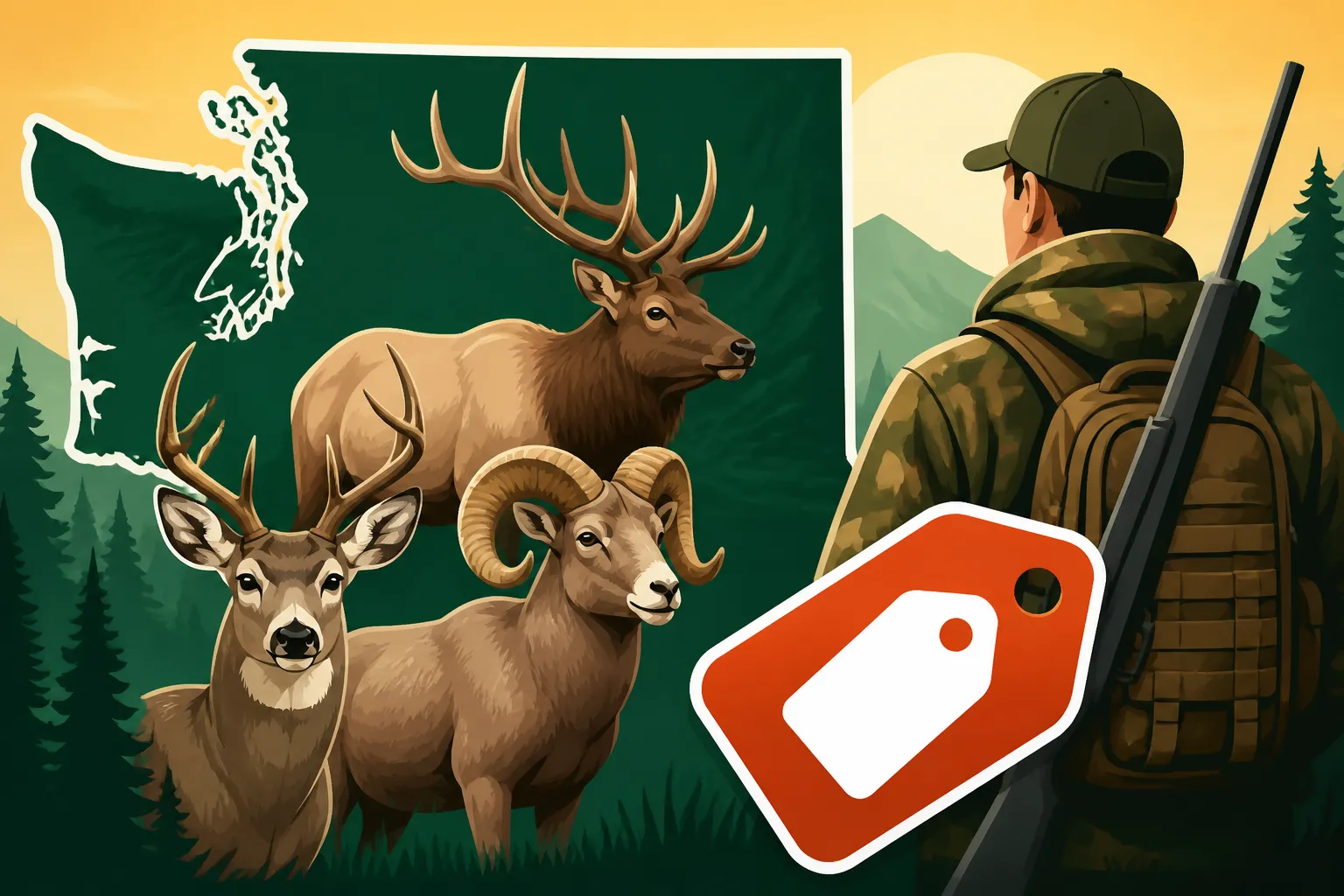
Essentially, this combo license is your all-in-one ticket to pursue general season deer and elk, along with the opportunity to hunt black bear and cougar. It’s a package created with the traveling hunter in mind, aiming to provide a broad range of opportunities without forcing you to choose just one species. Think of it as a starter pack for your Washington big game experience. Unlike some states that use a preference point system, Washington operates on a random draw for special permits, meaning every applicant, resident or nonresident, has an equal chance for those coveted tags. While the combo license is for general seasons, understanding how the overall system works can help you strategize future hunts, perhaps even applying for a special permit later. You can learn more about Washington's unique approach by checking out Washington's Random Draw and No Preference Points.
The true value of the Nonresident Big Game Combo lies in its flexibility for general seasons. While you won't be drawing a once-in-a-lifetime special permit with this specific purchase, you'll have access to a vast amount of public land for general season opportunities. This can be particularly appealing if you're exploring Washington for the first time and want to experience both sides of the Cascades or different game units. Many hunters use this combo to get their feet wet in Washington, scouting new areas and learning the local terrain without the pressure of a limited, specialized tag.
What the Combo License Includes and What it Doesn't
When you purchase the Washington Nonresident Big Game Combo, you're not just getting a piece of paper; you're getting specific authorizations to hunt. But what exactly are those authorizations, and what are the limitations? Let’s break it down to avoid any unwelcome surprises when you’re out in the field.
Included Species and General Season Opportunities
The cornerstone of the Nonresident Big Game Combo is its inclusion of general season deer and elk tags. This means you typically get one general season deer tag and one general season elk tag. For deer, this often translates to either-sex blacktail or whitetail in designated units, or a 3-point minimum mule deer in specific eastern Washington GMUs, all during the designated general season dates for your chosen weapon (archery, muzzleloader, or modern firearm). Similarly, your elk tag will allow you to pursue either spike bulls or antlerless elk, depending on the specific Game Management Unit (GMU) and season you are hunting. It’s vital to consult the current WDFW Big Game Hunting Seasons and Regulations pamphlet to understand the specific rules for the GMU you plan to hunt.
Beyond deer and elk, the combo truly shines by including tags for black bear and cougar. This is a significant addition, as purchasing these tags separately can add considerable cost. Having these predators included means you can seize an opportunistic encounter while deer or elk hunting, or even plan dedicated hunts for them within their open seasons. Washington’s bear season dates vary, with many opening in early August and running through November, offering a wide window of opportunity. The Washington Bear and Cougar Seasons article provides more detail on when and where you can pursue these exciting species. The idea is to give you maximum flexibility for a multi-species hunt without buying a slew of individual licenses.
Exclusions and Potential Additional Purchases
While the combo is generous, it's not an all-encompassing golden ticket. The most significant exclusion is special hunt permits. The Nonresident Big Game Combo only covers general season hunting. If you dream of hunting a trophy branch-antlered bull elk in a quality unit, or a specific antlerless deer permit in a limited draw area, you'll need to apply for those special permits separately. The application process for special permits is distinct, usually occurring in April and May, and requires additional application fees. These are highly sought-after tags, and the odds can be long, so understand that your combo license is for general seasons. For a deeper understanding of the differences, you might want to read Washington General Season Versus Special Permit Hunts.
Another important consideration is the weapon choice. When you buy your big game tags, you’ll declare a weapon choice (archery, muzzleloader, or modern firearm). This choice dictates which general seasons you can participate in. While the combo provides the tags, it doesn't give you access to all seasons simultaneously unless you upgrade to a multi-season tag, which is a separate purchase and often requires applying in a draw of its own. If you’re considering hunting the same unit across multiple weapon seasons, you’ll need to look into Washington Multi-Season Deer and Elk Tags.
Finally, remember that the combo license doesn’t cover small game, waterfowl, or fishing. If you plan to extend your trip to include some upland bird hunting, chasing ducks, or wetting a line in one of Washington’s many lakes or rivers, you’ll need to purchase additional licenses and endorsements for those activities.
Breaking Down the Costs: License, Tags, and Fees
Now for the part everyone wants to know: what's the bottom line? The price of the Washington Nonresident Big Game Combo can seem substantial at first glance, but when you break it down, it often represents a good value compared to purchasing each component separately. It's crucial to remember that license fees are subject to change by the WDFW, so always verify the latest information on their official website. My goal here is to give you a realistic current estimate and what factors contribute to the total.
The Core Combo Price
The main cost of the Nonresident Big Game Combo is a consolidated fee that includes your nonresident hunting license, one general season deer tag, one general season elk tag, one black bear tag, and one cougar tag. As of recent publications, the combined price for the Nonresident Big Game Combo is typically in the range of $700 to $800. This often includes the base hunting license fee itself, which is a prerequisite for buying any tags. For comparison, a standalone nonresident hunting license alone can be over $150, and individual tags for deer, elk, bear, and cougar would each add significant costs. The combo provides a clear discount over buying these a la carte.
Here's a simplified breakdown, acknowledging that exact figures can fluctuate slightly year to year:
| Item | Approximate Nonresident Cost (Individual) | Approximate Nonresident Big Game Combo Cost |
|---|---|---|
| Annual Hunting License | $160 – $170 | Included in Combo |
| General Season Deer Tag | $200 – $220 | Included in Combo |
| General Season Elk Tag | $400 – $450 | Included in Combo |
| Black Bear Tag | $40 – $50 | Included in Combo |
| Cougar Tag | $40 – $50 | Included in Combo |
| Total Individual Cost Estimate | $840 – $940+ | $700 – $800 |
| Approximate Savings with Combo | $100 – $200+ |
This table illustrates the financial benefit of choosing the combo package if you plan to hunt multiple species. This is a general estimate, so please check the WDFW website for the most current figures, as fees can be adjusted. For broader context on state fees, you can refer to Washington Big Game Licence and Tag Costs.
Additional Fees and Considerations
Beyond the core combo price, there are a few other costs you need to factor into your budget:
- Transaction Fees: WDFW, like many state agencies, often charges a small transaction fee for online purchases or through vendor systems. This is usually a few dollars, but it adds up.
- Discover Pass: If you plan on accessing Washington State Parks, Department of Natural Resources (DNR) lands, or Department of Fish and Wildlife (WDFW) lands for parking, you will very likely need a Discover Pass. This pass costs around $30 for an annual pass or a daily pass for about $10. Many prime hunting areas are on DNR or WDFW property, so consider this an essential expense.
- Special Permit Application Fees: If you decide to apply for any special permits in addition to your general season combo, there's a non-refundable application fee per species, typically around $10-15. Even if you don't draw, you still pay this fee.
- Hunter Education: If you haven't completed a hunter education course or don't have proof of a prior hunting license from another state, you'll need to complete Washington’s hunter education requirements. The course itself has a fee, and if you opt for an online course, there are often associated costs. Details on this can be found at Washington Hunter Education and Licensing.
- Harvest Reporting: While not a direct upfront cost, neglecting to report your harvest (even if you didn't tag an animal) can lead to penalties and fines, which are definitely a cost you want to avoid! Make sure you understand Washington Harvest Reporting Requirements.
As you can see, the stated price for the combo is the largest chunk, but careful planning means accounting for these smaller, yet essential, additions to your overall hunting budget.
Maximizing Value and Planning Your Nonresident Hunt
Investing in a Washington Nonresident Big Game Combo is a commitment, and you want to make sure you get the most out of it. Effective planning and smart strategies can significantly increase your chances of success and ensure a memorable hunting experience.
Strategic Unit Selection and E-Scouting
One of the biggest advantages of the general season combo is the sheer volume of accessible public land. However, "accessible" doesn't always mean "easy." You'll need to research specific Game Management Units (GMUs) that align with the species you want to hunt, your preferred weapon, and the type of terrain you're willing to tackle. Do you want to brave the dense, wet forests of Western Washington for Roosevelt elk, or are the open breaks of Eastern Washington for Rocky Mountain elk and mule deer more your style? Each GMU has unique characteristics, access points, and game densities.
This is where advanced scouting tools become invaluable. Online platforms like GoHunt provide incredibly detailed maps and unit data that can help you pour over terrain from your living room. You can identify potential bedding areas, water sources, natural funnels, and historical game patterns. GoHunt's filters allow you to narrow down GMUs based on species, weapon choice, and even harvest statistics, which is a huge advantage for a nonresident unfamiliar with the vastness of Washington's hunting landscape. Using such resources for E-Scouting a Washington GMU From Home is highly recommended. Pay close attention to public land boundaries on national forests, DNR lands, and even BLM parcels. Understanding Washington Game Management Units Explained is the first step in successful planning.
Logistics, Gear, and Physical Preparation
Washington hunting can be physically demanding, especially if you're targeting elk in steep, unforgiving terrain. Your preparation should go beyond just understanding the regulations. Consider the following:
- Physical Fitness: Whether you're still-hunting the brush for blacktails or climbing mountains for mule deer, a high level of fitness will make your hunt safer and more enjoyable. The ability to pack an elk out of Washington's backcountry is a serious consideration, especially if you're hunting solo.
- Gear: Washington's weather is notoriously unpredictable. Quality rain gear, moisture-wicking layers, and durable waterproof boots are not luxuries; they are necessities. For Western Washington, expect rain, mud, and dense vegetation. For Eastern Washington, prepare for arid conditions, rocky slopes, and significant temperature swings. Always ensure your rifle setup for Washington big game is sighted in and capable of ethical shots at the ranges you anticipate.
- Access: Many prime hunting areas, particularly in Western Washington, are on timber company lands that might require permits or have specific access rules. National Forests and DNR lands also have varying road statuses, some of which are gated or seasonally closed. Use tools like GoHunt and WDFW maps to verify access routes and potential road closures before you hit the road. Public Land Scouting in Washington Before Opening Day is a great resource to help you plan.
- Emergency Preparedness: Cell service can be spotty to non-existent in much of Washington’s backcountry. Always carry a reliable GPS device, a satellite messenger (like a Garmin inReach or Zoleo), and a comprehensive first-aid kit. Leave a detailed trip plan with someone reliable back home.
By proactively addressing these elements, you're not just buying a tag; you're investing in a well-rounded and potentially successful hunting expedition. The Nonresident Big Game Combo provides the opportunity, but your preparation unlocks its full potential.
Disclaimer
The information provided in this guide is for general informational purposes only and is subject to change. Hunting regulations, season dates, and license fees in Washington State are determined by the Washington Department of Fish and Wildlife (WDFW) and can be updated at any time. It is the hunter's sole responsibility to consult the most current official WDFW hunting regulations pamphlet and website before purchasing licenses, applying for permits, or going afield.