Washington Bear and Cougar Seasons
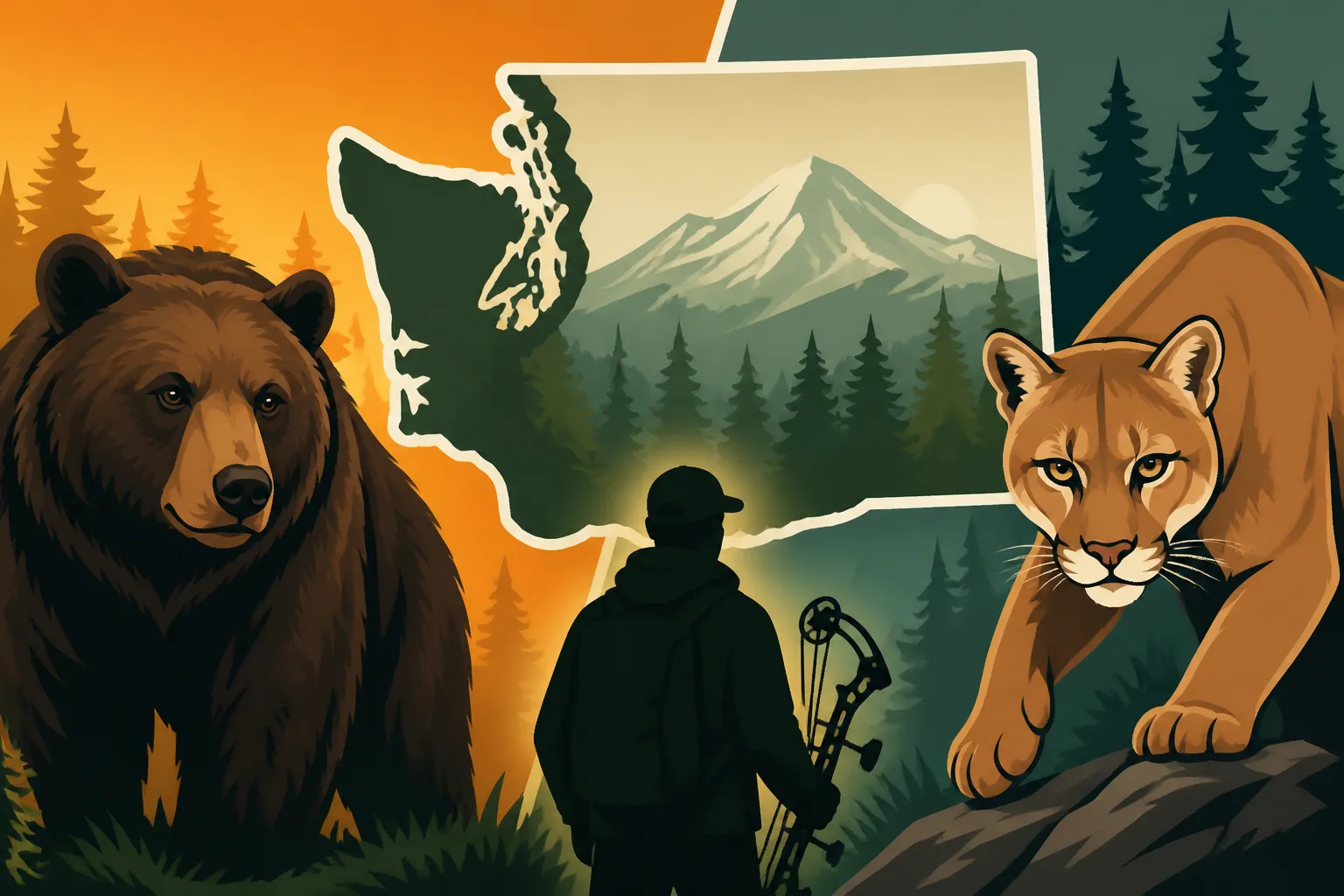
Navigating the ever-shifting landscape of Washington's hunting regulations can feel like trying to track a ghost in a blizzard, especially when it comes to species like black bear and cougar. With seasons that vary by Game Management Unit (GMU), evolving harvest guidelines, and unique restrictions like the ban on hounds or bait, it's easy to feel overwhelmed and unsure if you're even legally pursuing your target. This comprehensive guide is designed to cut through that confusion, providing clear, in-depth information on Washington's black bear and cougar seasons, rules, and strategies to help you hunt confidently and responsibly.
Understanding Washington's Black Bear Seasons
Washington's black bear seasons offer an exciting challenge, but they're structured quite differently than deer or elk hunts, primarily influenced by local bear populations and human-wildlife conflict considerations. Hunters often find themselves scratching their heads over the staggered openers and regional nuances, making it crucial to dive into the specifics.
General Black Bear Season Dates
Unlike some states with a spring bear season, Washington focuses its bear hunting opportunities exclusively in the fall. The general season typically kicks off in early August or September, depending on the specific GMU, and can run as late as mid-November. This staggered approach is a key component of Washington Department of Fish and Wildlife (WDFW) management, aiming to distribute hunter pressure and target specific population segments.
For instance, hunters in Western Washington's coastal and Cascade regions might see seasons opening in mid-August in some areas, designed to coincide with berry crops and other early food sources when bears are most active and accessible. These early seasons are often a favorite for those who enjoy Spot-and-Stalk Bear Hunting in Washington Without Bait, as the vegetation is still relatively green, and bears are focused on putting on weight before denning. On the other hand, Eastern Washington GMUs might have later openers, perhaps in September, extending into October or even November in higher elevation units where bears are feasting on acorns and other mast crops. Always double-check the current year's WDFW hunting pamphlet for the exact dates in your chosen GMU, as these can shift slightly from year to year based on population trends and habitat conditions. A quick check on a platform like GoHunt can often give you preliminary dates, but the official pamphlet is your gospel.
Bag Limits and Tagging Requirements
For black bear in Washington, the standard bag limit is one bear per hunter per license year. This means once you've successfully harvested and reported a bear, your season for that species is typically over until the next license year begins. It's a straightforward rule, but one that demands careful planning and shot selection, as you only get one opportunity.
To legally hunt black bear, you must possess a valid Washington hunting license and a separate black bear tag. Most resident and non-resident hunters opt for the Big Game Combination License, which includes a bear tag. However, if you purchase a general license, you'll need to add the bear tag separately. This tag is a physical document that must be immediately validated and attached to your bear upon harvest, before you move it from the kill site. The process involves signing and dating the tag, then securely fastening it to the carcass. Harvest reporting is also mandatory and critical for WDFW's population management. You typically have within 10 days of harvest to report your success, either online through your WILD account or by phone. Failing to report a harvest can result in penalties, and it deprives WDFW of crucial data needed to set future seasons, so it's not a step to overlook.
Equipment and Methods for Bear Hunting
Washington has very specific rules about how you can and cannot hunt black bears, primarily aimed at promoting fair chase and ethical harvesting. The most significant restriction is the statewide ban on baiting and the use of hounds. This means methods popular in other parts of the country are simply not an option here, which often surprises hunters new to the state.
Hunters can use modern firearms (rifles, shotguns with slugs), archery equipment (recurve, longbow, compound bows, and legal crossbows), or muzzleloaders during their respective seasons. Each weapon type has its own set of legal requirements regarding caliber, draw weight, broadhead type, and so on, which are detailed in the WDFW hunting pamphlet. For modern firearms, ensure your rifle meets the minimum .24 caliber requirement for big game. For archery, broadheads must be at least 7/8 inch wide. Given the dense terrain often preferred by bears, hunters frequently opt for cartridges like the .30-06, .300 Win Mag, or .308 Winchester, which offer a good balance of power and trajectory for varied shot distances. Without bait or hounds, hunters rely heavily on tactics like still-hunting, glassing clearcuts and avalanche chutes, and focusing on areas with abundant natural food sources. Success often comes down to patience, meticulous scouting, and being able to identify Where Bears Feed in Early Fall, such as huckleberry patches, oak groves, or even recent burn areas.
Navigating Washington's Cougar Seasons
Cougar hunting in Washington is perhaps one of the most dynamic and often confusing seasons due to its unique harvest guideline system. Unlike fixed seasons for most other big game, cougar seasons are closely monitored by WDFW and can close without much prior notice once specific harvest thresholds are met in a given GMU.
General Cougar Season Dates and Structure
Washington technically has a year-round cougar season, but it's crucial to understand that this is only in theory and is heavily managed through a two-phase system and harvest guidelines. The first phase, often referred to as the "general season," typically runs from September 1st through December 31st. During this period, hunters can pursue cougars in most GMUs, provided they hold the correct license and tag.
The second phase, the "late season," can extend from January 1st through April 30th of the following year. However, this late season is contingent upon specific harvest guidelines not being met during the general season. If a GMU hits its harvest limit early, that area will close to cougar hunting, sometimes well before the general season even ends. This unpredictable nature means that diligent hunters must constantly check WDFW's official harvest reports and announcements. It's not uncommon for a GMU to be open one week and closed the next, leaving hunters who don't stay informed out of luck or, worse, in violation of regulations.
Cougar Harvest Guidelines and Closures
The core of Washington's cougar management strategy revolves around GMU-specific harvest guidelines, often referred to as "quotas." These guidelines are set annually by WDFW based on population estimates, depredation complaints, and human-cougar conflict levels. Each GMU, or sometimes a cluster of GMUs, has a predetermined number of cougars that can be harvested before the season closes in that area.
WDFW actively monitors reported cougar harvests. Once the number of reported kills approaches the guideline for a particular GMU, WDFW will issue an emergency closure for that area. This means hunters must be hyper-vigilant about checking the WDFW website or using reliable apps like GoHunt for real-time updates. Imagine planning a cougar hunt, driving for hours to your chosen GMU, only to find it closed because the guideline was met yesterday. It happens, and it's frustrating, which is why platforms that offer up-to-date GMU status are invaluable. These closures are typically announced with short notice, so having a backup plan or a few different GMUs in mind can be a wise strategy. The goal of these guidelines is to manage cougar populations effectively while minimizing conflicts with humans and livestock, but it places a significant burden on hunters to stay informed.
Legal Methods and Restrictions for Cougar Hunting
Just like with black bears, Washington enforces strict rules on cougar hunting methods, primarily shaped by public initiatives. The most impactful is the statewide ban on using hounds for cougar hunting, a result of Initiative 655 passed by voters in 1996. This legislative act fundamentally changed cougar hunting in the state, shifting it from an active pursuit with dogs to a more passive, opportunistic endeavor.
Hunters are permitted to use modern firearms, archery equipment, or muzzleloaders, all subject to the same general big game equipment requirements. This means hunters must rely on traditional methods such as calling, still-hunting, and tracking. Effective cougar hunting without dogs often involves understanding Cougar Territory and Movement, knowing where to set up for a calling sequence, and being proficient at Reading Cougar Sign in the Snow when conditions allow. For instance, using distress calls mimicking a fawn or rabbit can sometimes draw a curious cougar into range. Many hunters spend hours meticulously walking logging roads or old trails after a fresh snowfall, looking for tracks that indicate a cougar's presence. When a track is found, the challenge becomes still-hunting through dense cover to intercept the animal, a demanding and often slow process that requires immense patience and skill.
Why Washington's Bear and Cougar Seasons Are Unique
The management and historical context of Washington's bear and cougar seasons are deeply rooted in unique legislative actions and ongoing conservation debates. Understanding these foundational elements helps to explain why hunting for these predators operates under a different set of rules compared to deer or elk.
The End of Spring Bear Season
One of the most significant changes to bear hunting in Washington occurred with the termination of the spring bear season. For many years, Washington offered a limited spring season in specific GMUs, often through a permit draw system. This season was popular for several reasons: bears emerging from dens are often more visible, their coats are in prime condition, and it provided an early hunting opportunity. However, in 2022, the Washington Fish and Wildlife Commission voted to end the spring bear hunt, a decision that sparked considerable debate among hunters, conservationists, and wildlife managers.
The primary reason cited for the decision to end the spring bear hunt involved concerns about cub survival and the potential for increased orphan rates. Opponents argued that misidentifying a sow with cubs could lead to cubs being left without a mother, particularly in early spring when cubs are still young and dependent. While WDFW staff had always implemented strict regulations and educational materials to minimize this risk, and data often showed low rates of cub mortality directly attributable to spring hunting, public and political pressure ultimately led to the season's cessation. The loss of the spring season has meant that all bear hunting is now concentrated in the fall, intensifying focus on the remaining opportunities and impacting overall hunter participation and success rates. For a deeper dive into the reasons, you can explore resources like Why Washington Has No Spring Bear Season.
The Hound Ban's Lasting Impact on Cougar Hunting
The use of hounds for cougar hunting in Washington was banned by voter initiative (I-655) in 1996. This was a direct result of public sentiment against the practice, driven by animal welfare concerns and a perception that using dogs constituted an unfair chase. Prior to the ban, hound hunting was a primary method for pursuing cougars, especially in the state's rugged and heavily timbered terrain, where tracking and locating a cougar without dogs is incredibly challenging.
The impact of the hound ban cannot be overstated. It effectively removed a highly effective and traditional hunting method, forcing a complete paradigm shift for cougar hunters. Those who once relied on packs of well-trained dogs to tree a cougar now had to adapt to more challenging techniques like still-hunting, tracking, and calling. This has significantly reduced hunter success rates and overall cougar harvest numbers, particularly in Western Washington's dense forests where tracking without snow is often impossible. The ban continues to be a contentious issue, with many hunters advocating for its repeal or modification, citing its negative impact on population control and the ability to mitigate depredation issues. Understanding What I-655 Banned for Cougar Hunters is fundamental to grasping the current state of cougar hunting in Washington.
Conservation Goals and Public Perception
The unique regulations surrounding bear and cougar hunting in Washington are a delicate balance between biological conservation goals and prevailing public perception. WDFW's primary mandate is to manage wildlife populations for long-term health and sustainability, which often includes regulating harvest to achieve specific population objectives. However, for charismatic predators like bears and cougars, these scientific goals often intersect with strong public opinions and ethical considerations.
For bears, management aims to maintain healthy populations while minimizing conflicts with humans, such as property damage or encounters in residential areas. Hunting is a tool used to help achieve these goals by regulating numbers and distributing pressure. Cougar management, in particular, involves a tightrope walk. WDFW sets harvest guidelines not just to manage the cougar population itself, but also to address concerns about their impact on deer and elk herds, as well as livestock depredation. The strict harvest guideline system, with its real-time closures, is a direct response to both the biological need for control and the public's desire for careful, monitored management. Ultimately, public input, legislative action, and voter initiatives play a much larger role in shaping Washington's predator hunting seasons than they do for many other game species, creating a dynamic and often complex regulatory environment.
Essential Preparation for Your Hunt
A successful and ethical bear or cougar hunt in Washington begins long before you ever step foot in the woods. Diligent preparation, from understanding licensing to scouting your chosen GMU, is paramount. The unique challenges of hunting these predators in Washington's varied terrain demand a proactive approach.
Licensing and Tag Acquisition
Before you can even dream of heading out, you need to ensure all your legal ducks are in a row. For Washington residents, the first step is to obtain a general hunting license. Once that's secured, you'll need to add specific tags for bear and/or cougar. The most convenient option for most big game hunters is the "Big Game Combination License," which often bundles a general hunting license with tags for deer, elk, bear, and cougar. This is typically the most cost-effective route if you plan to hunt multiple species.
For those simply targeting bear or cougar, individual tags can be purchased after acquiring a general hunting license. Non-residents face higher fees, but the process for acquiring licenses and tags is similar. You can purchase your Washington Big Game Licence and Tag Costs and tags online through the WDFW WILD system or in person at various license vendors across the state. It's crucial to complete this process well in advance of your hunt, especially if you're a first-time hunter who might also need to complete a hunter education course. Always confirm the current year's Washington Resident Licence and Tag Prices and regulations, as fees and offerings can change.
Scouting and E-Scouting for Success
With baiting and hounds prohibited, successful bear and cougar hunting in Washington relies heavily on thorough scouting. This means not just walking the ground but also leveraging modern technology. E-scouting, using online mapping tools, is an indispensable first step. Platforms like GoHunt and WDFW's own online mapping tools allow you to analyze terrain, identify potential bedding and feeding areas, locate water sources, and pinpoint access roads and potential travel corridors from the comfort of your home.
Look for areas with dense cover adjacent to open slopes, clearcuts, or natural openings where bears might feed on berries, acorns, or other vegetation. Identifying Where Bears Feed in Early Fall is a critical component of successful bear hunting. For cougars, focus on areas with high deer or elk densities, as these are their primary prey. Understanding Cougar Territory and Movement patterns through e-scouting can reveal pinch points or natural funnels they might use. Once you have identified promising areas on a map, real-world scouting is essential. Hike into these areas, look for fresh tracks, scat, rub trees, and other signs of animal activity. Pay attention to game trails and natural travel routes. Knowing your unit intimately before the season opens significantly increases your chances of success. For more information on using technology to plan your hunt, check out our guide on E-Scouting Washington GMUs Before the Draw.
Gear Considerations for Washington Conditions
Washington's diverse climate, from the wet coastal forests to the dry, rocky eastern breaks, demands a versatile and robust gear list. Being unprepared for the elements can quickly turn a hunt into a miserable experience, or worse, a dangerous one.
Your clothing system needs to be adaptable. Layering is key, allowing you to shed or add insulation as temperatures fluctuate and exertion levels change. Quality rain gear is non-negotiable, particularly on the west side of the Cascades, where you can expect drizzle or downpours even in late summer. Look for durable, waterproof-breathable fabrics that can stand up to thick brush without tearing. Our guide on Rain Gear and Layering for Washington Hunts offers excellent advice on this. Footwear is equally important; choose sturdy, waterproof boots with good ankle support and aggressive tread for navigating steep, uneven terrain. For optics, a good pair of 10×42 binoculars is a standard for general use, but serious bear and cougar hunters, especially on the more open east side, might consider 15×56 binoculars or a spotting scope for extended glassing sessions. Our article on Optics for Washington Elk and Deer Hunting provides detailed recommendations. Don't forget essential safety gear: a first-aid kit, fire starter, navigation tools (GPS or mapping app on your phone with downloaded offline maps), and a way to communicate in emergencies, such as a satellite messenger.
Tactics and Strategies for Western Washington Hunts
Hunting black bear and cougar in Western Washington presents a distinct set of challenges due to the dense rainforests, steep terrain, and notoriously wet weather. Success here often relies on stealth, patience, and an intimate understanding of the unique environment.
Hunting Black Bear in Dense Coastal Forests
Western Washington's bear habitat, particularly in areas like the Olympic Peninsula or the Willapa Hills, is characterized by extremely thick timber, brushy clearcuts, and deep river drainages. This isn't wide-open country where you can glass for miles. Instead, bear hunting here often becomes a game of close quarters and keen observation.
Still-hunting is a primary tactic. This involves moving incredibly slowly, taking only a few steps at a time, then stopping to scan, listen, and glass every nook and cranny. Bears here often feed on huckleberries, salmonberries, and other vegetation in the understory, or root around in moist areas for grubs and roots. Listen intently for the sounds of a bear raking berries, rustling through brush, or even the subtle thump of a paw. Focus on older clearcuts that have begun to grow back, providing both food and cover. River bottoms and the fringes of dense reprod stands can also be productive. Areas like the Coweeman Unit or the Olympic Unit are known for their Roosevelt elk, and where you find elk, you'll often find bears. Early mornings and late evenings, when bears are most active, are prime times. Remember, shots are typically close in this dense environment, often within 50 yards, so practice quick, quiet target acquisition.
Pursuing Cougars in Western Washington's Terrain
Tracking and pursuing cougars in Western Washington's rainforests is arguably one of the most difficult hunting endeavors in the state. The thick undergrowth, mossy forest floor, and frequent rain mean that fresh tracks are quickly obscured, and visual sightings are incredibly rare. Without the aid of hounds, hunters must become master naturalists.
Success often starts by focusing on prey-rich areas. Locate fresh deer or elk sign – particularly recent kills or concentrations of animals – as cougars will follow their food source. Hiking logging roads and old skid trails after a rare snowfall is the most effective way to find fresh tracks. Even then, the tracks might only persist for a short time before melting or becoming indistinguishable. When a track is found, the challenge begins. Still-hunt along the cougar's suspected path, moving slowly and scanning ahead and to the sides. Look for subtle signs like disturbed leaves, bent twigs, or fresh scat. Calling can also be a viable tactic. Setting up with a fawn distress or rabbit-in-distress call in areas with good visibility (for cougar hunting, good visibility might only be 30-40 yards in this country) and waiting patiently for 30-45 minutes can sometimes draw in a curious cat. However, be prepared for long periods of walking and observation with very few actual encounters. It's a hunt that truly tests patience and persistence.
Tactics and Strategies for Eastern Washington Hunts
Eastern Washington offers a stark contrast to the dense forests of the west side, with its open sagebrush hills, ponderosa pine forests, and agricultural lands. This environment dictates entirely different strategies for hunting black bear and cougar.
Bear Hunting in Eastern Washington's Diverse Habitats
The open landscapes of Eastern Washington lend themselves well to glassing techniques for black bear. GMUs like the Colockum, Naneum, or Blue Mountains offer expansive views where hunters can sit and systematically pick apart distant hillsides and clearcuts. This is where high-quality optics truly shine.
Focus your efforts on areas where bears will be actively feeding. In early season, look for bears on open, south-facing slopes, particularly those with berry bushes, or near agricultural fields like wheat or corn where bears might be scavenging. As the season progresses, shift your attention to oak groves for acorns or ponderosa pine stands where bears might be feeding on pine nuts. Glassing Eastern Washington Breaks for Mule Deer offers excellent advice that can be directly applied to bear hunting in similar open country. Setting up on a vantage point at first light or last light, using a sturdy tripod for your binoculars or spotting scope, and patiently scanning known bear habitat can pay dividends. Once a bear is spotted, the challenge becomes planning a careful stalk, utilizing terrain features to remain concealed. Shots in this open country can often be at longer ranges, so practicing your marksmanship at various distances and angles is crucial. Remember to always use a rangefinder to confirm distances, especially in steep terrain where distances can be deceiving.
Cougar Hunting in Eastern Washington's Snow and Open Areas
While still challenging, cougar hunting in Eastern Washington can offer slightly better odds, particularly when snow is on the ground. The more open terrain, coupled with distinct winter ranges for deer and elk, creates more predictable patterns of cougar activity.
Snow is a cougar hunter's best friend. After a fresh snowfall, head to logging roads, trails, and ridgelines in areas known for deer or elk wintering. Look for fresh cougar tracks, paying close attention to their size and stride. A large, purposeful track in fresh snow is a strong indicator of a cat on the move. Our article on Tracking Bucks in Fresh Eastern Washington Snow provides excellent principles that can be adapted for cougars. Once a track is found, you can often follow it, albeit slowly and methodically, hoping to eventually spot the cat or determine its general travel direction. Calling can also be effective here, especially in areas with moderate cover where your sounds can carry. Set up in a location where you have good visibility downwind and crosswind, as cougars often circle to get downwind of a call. The Methow and Okanogan units, with their mix of timber and open slopes, are classic Eastern Washington cougar country. Always check for current cougar harvest guidelines and closures for your chosen GMU on GoHunt or the WDFW website before heading out.
Responsible Hunting and Ethical Practices
Beyond tags and tactics, responsible hunting for bear and cougar in Washington is deeply rooted in ethical practices, a commitment to a clean harvest, and meticulous post-harvest care. These principles not only honor the animal but also ensure the sustainability and public perception of hunting.
Shot Placement and Ethical Harvest
For any hunter, ensuring a quick, humane kill is the paramount ethical responsibility. This is especially true for large, tough animals like bears and cougars, where a poor shot can lead to a long, agonizing tracking job or, worse, a lost animal. Understanding the anatomy of these animals is critical for precise shot placement.
For black bears, the most effective shot is typically a broadside shot aimed at the vital triangle behind the shoulder, targeting the heart and lungs. A quartering-away shot can also be effective if you know exactly where the bullet will exit, aiming for the opposite shoulder. Avoid head-on or extreme quartering shots, as these offer small, vital targets and a higher risk of non-lethal wounding. With cougars, their flexible bone structure can make shot placement tricky. Again, a broadside shot into the vitals is preferred. Due to their relatively smaller size compared to bears, even a slight error can result in a gut shot. Practicing with your chosen weapon, knowing its limitations, and being able to make an accurate shot under pressure are essential. Our guide on Shot Placement on a Quartering Elk discusses principles that are highly relevant to all big game animals, including bears and cougars. If you have any doubt about making a clean shot, wait for a better opportunity.
Field Care and Meat Salvage
After a successful harvest, the ethical responsibility shifts to proper field care and meat salvage. In Washington, regulations mandate that all edible portions of harvested big game animals, including bear and cougar, must be retained and salvaged. This means you can't just take the hide and skull; the meat must be cared for and utilized.
Field dressing quickly is crucial, especially during the warmer early bear seasons. Removing the entrails immediately helps the carcass cool down, which is vital for meat quality. For bears, skinning and quartering can often be done on site. Bears, particularly during early fall, can carry a significant amount of fat, which can insulate the meat and lead to spoilage if not cooled rapidly. Consider the "gutless method" for larger animals, which allows you to quarter the animal and remove the meat without traditional evisceration, often quicker and cleaner in the field. Our article on Field Dressing in Warm Early-Season Weather offers excellent advice. Proper game bags are essential to protect the meat from dirt, flies, and debris during the pack out. It's important to remember that bear meat, like pork, can carry trichinosis, so it must be cooked thoroughly to a safe internal temperature. While cougar meat is perfectly edible and often praised for its taste, it should also be handled with care. For specific regulations and advice on utilizing the meat, refer to our articles on Bear Meat and Trichinosis Risk and Cougar Meat Salvage in Washington.
Reporting Your Harvest and Contributing to Conservation
The hunt doesn't truly end until your harvest is reported to WDFW. This isn't just a formality; it's a critical component of wildlife management and conservation in Washington. For both bear and cougar, harvest reporting is mandatory.
You typically have 10 days from the date of kill to report your harvest. This can be done conveniently online through your WDFW WILD account or by calling the reporting line. When reporting, you'll need details such as the GMU where the animal was taken, the date of kill, the sex of the animal, and your license/tag information. For cougars, this information is particularly vital as it directly feeds into the real-time harvest guideline system, triggering closures in specific GMUs. Accurate and timely reporting allows WDFW biologists to track population trends, assess harvest impacts, and make informed decisions about future seasons and bag limits. Failing to report a harvest is not only illegal but also deprives wildlife managers of essential data, potentially leading to less effective management strategies. By diligently reporting your success (or even lack thereof, as some surveys ask), you become an active participant in the ongoing conservation efforts that ensure healthy wildlife populations for future generations of hunters. Find more details on Washington Harvest Reporting Requirements.
Washington Bear and Cougar Hunting Season Comparison
Here's a quick overview contrasting the key aspects of black bear and cougar hunting in Washington:
| Feature | Black Bear | Cougar |
|---|---|---|
| Primary Season | Fall (typically Aug-Nov) | Year-round (managed by harvest guidelines) |
| Bag Limit | One bear per hunter per license year | One cougar per hunter per license year |
| Hound Use | Prohibited | Prohibited (Initiative 655) |
| Baiting | Prohibited | Prohibited (not a common cougar hunting method anyway) |
| Harvest Reporting | Mandatory, within 10 days | Mandatory, within 10 days (crucial for GMU closures) |
| Season Structure | Fixed dates, varies by GMU, mostly open/closed | Dynamic, GMU-specific harvest guidelines, real-time closures |
| Key Tactics West WA | Still-hunting, glassing clearcuts/drainages | Still-hunting, tracking (difficult), calling |
| Key Tactics East WA | Glassing open slopes, hunting food sources | Tracking in snow, calling |
| Meat Salvage | Mandatory, cook thoroughly due to trichinosis risk | Mandatory, considered excellent table fare |
Disclaimer
The information provided in this guide is for general informational purposes only and is not intended to be legal advice. Hunting regulations in Washington are complex and subject to change. Always consult the official Washington Department of Fish and Wildlife (WDFW) hunting pamphlets, regulations, and website for the most current and accurate information before planning or engaging in any hunting activity. It is the hunter's sole responsibility to know and obey all applicable laws and regulations.