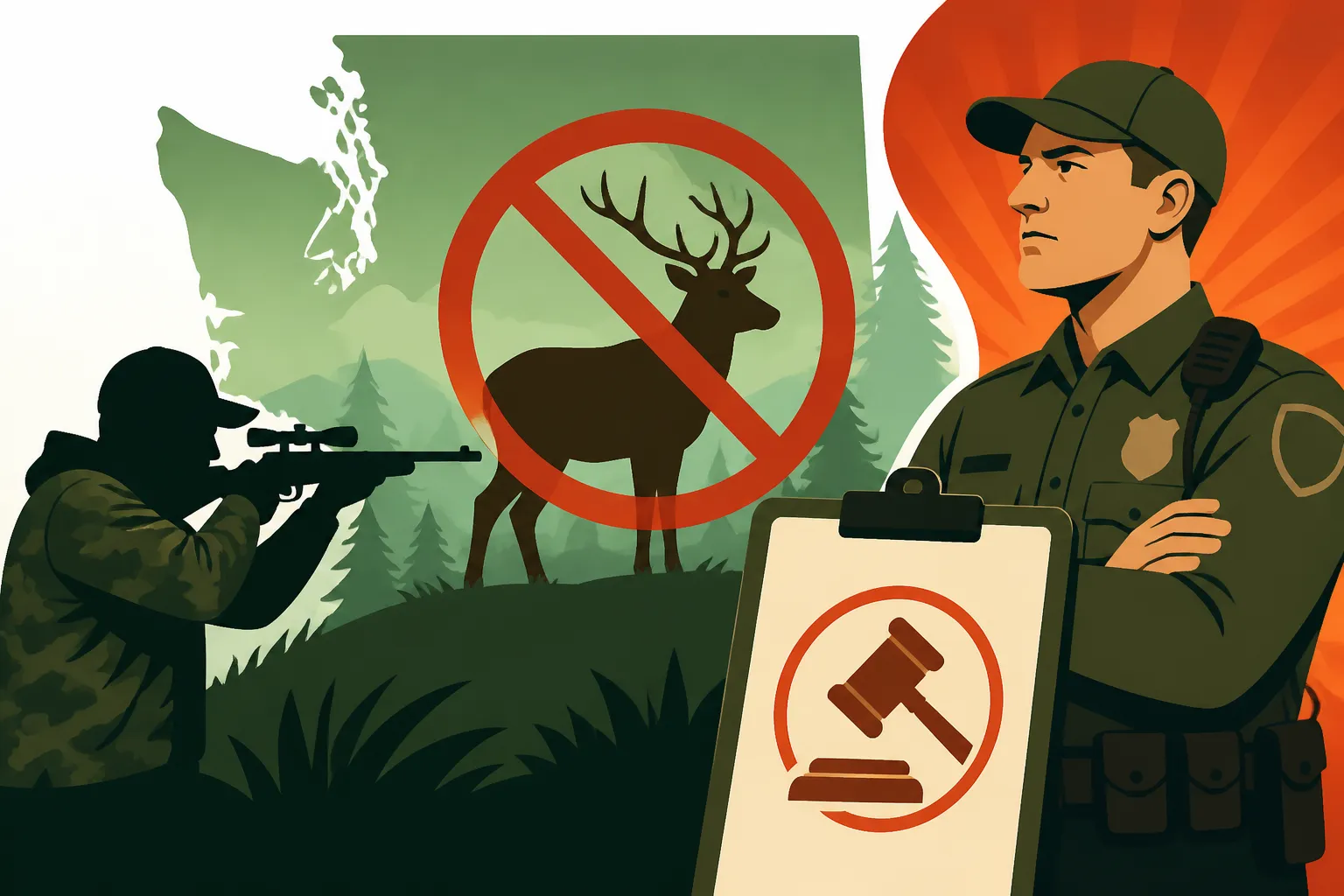
Washington Wildlife Violation Penalties
A common fear for any hunter is unknowingly crossing a line and facing serious repercussions for a wildlife violation. The rules and regulations in Washington can feel like a labyrinth, and a simple mistake can lead to hefty fines, loss of privileges, and even jail time. This comprehensive guide will walk you through the various penalties for wildlife violations in Washington, helping you understand the stakes and how to avoid costly errors.
Understanding Washington's Wildlife Laws
Navigating the complexities of Washington's hunting regulations can be a daunting task, even for seasoned outdoors enthusiasts. It's not just about knowing when the season opens and closes; it's about understanding the nuances of legal equipment, reporting requirements, and specific unit boundaries. Many hunters find themselves frustrated by the sheer volume of information, but unfortunately, ignorance is rarely an acceptable defense in the eyes of the law.
The WDFW Rule-Making Process
It's important to remember that the Washington Department of Fish and Wildlife (WDFW) doesn't just pull rules out of a hat. There's a formal and often lengthy process involved in establishing hunting seasons, bag limits, and other regulations. This process frequently includes public input, with opportunities for hunters and other stakeholders to voice their opinions. For those who want to be more involved, understanding how to comment on a Washington hunting rule can be a powerful way to influence future regulations. These rules are then meticulously laid out in the annual hunting pamphlets, which are critical documents for staying compliant each season. It’s absolutely essential to consult the most recent Washington Big Game Pamphlet Release every year, as regulations can and do change. These changes, no matter how minor, can impact your hunt, from season dates to specific unit restrictions or even legal gear.
The complexity of these rules can vary dramatically depending on the species and Game Management Unit (GMU) you're targeting. For instance, elk hunting regulations in the Blue Mountains can differ significantly from those on the Olympic Peninsula. What's legal for a mule deer in Eastern Washington might not be for a blacktail in Western Washington. These specific details are why a thorough review of the regulations for your planned hunting area is non-negotiable.
Why Ignorance Isn't an Excuse
While the regulations can be dense and, at times, confusing, the stern reality for hunters is that "I didn't know" won't hold up in court. Every hunter, by purchasing a license, accepts the responsibility to know and abide by all applicable laws and regulations. This can be a frustrating pill to swallow, especially when you're trying to balance work, family, and scouting time, but it’s the expectation. Law enforcement officers, while sometimes using discretion for minor, unintentional errors, are fundamentally tasked with upholding the law. Relying on their leniency is not a strategy.
To build a solid foundation of legal knowledge, especially for new hunters or those venturing into new areas or species, completing a course like the Washington Hunter Education Online Course is invaluable. These courses cover far more than just firearm safety; they delve deep into ethics, conservation, and, crucially, the legal framework of hunting in Washington. Furthermore, ongoing due diligence is key. Many modern hunting resources, including platforms like GoHunt, provide access to regulatory information and planning tools that can help hunters stay informed and cross-reference official WDFW documents. While these third-party resources are incredibly helpful, always remember to verify critical details with the official WDFW regulations directly.
Common Violations and Their Consequences
Wildlife violations in Washington span a wide spectrum, from administrative oversights to serious criminal offenses. The severity of the penalty directly correlates with the nature and impact of the violation, ranging from minor fines to significant jail time and permanent loss of hunting privileges.
Minor Infractions: Licensing and Reporting Errors
These are often administrative in nature but can still lead to financial penalties and headaches. Simple oversights like forgetting to sign your tag, not having your physical hunting license or tag readily accessible, or making minor errors when filling out required documentation can result in a ticket. Forgetting your identification or license at home, even if you possess a valid license, can lead to a fine because you failed to present it upon demand. These might seem like small details, but they are part of the legal framework designed to ensure accountability and proper management of wildlife resources.
Another frequently encountered minor infraction relates to proper harvest reporting. Washington Harvest Reporting Requirements are mandatory for all big game tags, whether you filled them or not. Missing the deadline for reporting a specific animal, or even reporting an unfilled tag, can have real consequences. Specifically, there's a Penalty for Missing a Washington Harvest Report which can include a monetary fine and, perhaps more painfully for a dedicated hunter, the ineligibility to apply for or draw special permits in subsequent years. Imagine missing out on a coveted elk tag drawing because you forgot to click a button online for a deer you didn't even get. It’s a bitter pill to swallow, highlighting the importance of meticulous record-keeping and attention to detail.
Misdemeanors: Poaching and Unlawful Take
This category marks a significant jump in severity, moving beyond simple administrative errors to actions that directly violate the principles of fair chase and wildlife conservation. Taking game out of season, hunting without a valid tag for the specific species or area, or exceeding established bag limits are all considered serious misdemeanors. These offenses directly impact wildlife populations and fair distribution among hunters. For example, if you hunt in a unit designated as "spike-only" for elk and mistakenly or intentionally take a branch-antlered bull, you've committed an unlawful take. Similarly, hunting in an area that is clearly marked closed within a specific Washington Game Management Units Explained boundary, even if the general season is open, falls into this category.
Another critical area concerns equipment. Washington has strict Washington's Legal Equipment Rules by Weapon for different seasons. Using a modern firearm during an archery-only elk season, for instance, isn't just a technicality; it’s a significant violation that carries substantial penalties. This extends to things like using illegal broadheads for archery, or an unapproved scope on a muzzleloader during a primitive weapons season. These rules are in place to maintain a level playing field and uphold the sporting integrity of specific hunting methods, and violating them will likely result in a gross misdemeanor charge.
Gross Misdemeanors: More Egregious Offenses
Gross misdemeanors are a step below a felony but carry much heavier penalties than standard misdemeanors. These typically involve actions that demonstrate a clear intent to violate hunting laws, often providing an unfair advantage or posing a significant threat to wildlife. Examples include hunting at night, using artificial light (spotlighting) to locate or take game, or employing illegal methods such as hunting from a vehicle. These acts are universally condemned within the hunting community because they completely disregard ethical hunting practices and fair chase.
Another serious offense in this category is making false statements on license applications or intentionally acquiring more Washington Multi-Season Deer and Elk Tags than legally allowed. Such actions are seen as a deliberate attempt to circumvent the system and gain an unfair advantage, undermining the integrity of the permit and draw system. WDFW takes these violations very seriously, as they directly impact wildlife management and equitable hunting opportunities. Furthermore, the illegal commercialization of game meat, such as selling venison or elk quarters taken outside of regulated channels, is a particularly severe gross misdemeanor, often resulting in significant fines, potential jail time, and permanent loss of hunting privileges, as it goes against the fundamental principle that wildlife is a public resource, not a commodity for personal profit.
The Escalation of Penalties: From Fines to Felony
The consequences for wildlife violations in Washington can escalate rapidly, moving from substantial financial burdens to the severe impact of losing your hunting freedom and even facing incarceration. It's a stark reminder that these aren't just "hunting rules"; they are laws with serious ramifications.
Monetary Fines and Restitution
Almost all wildlife violations will involve monetary fines, and for big game, these can be substantial. Beyond the base fine, courts often impose restitution. Restitution is essentially a mandatory payment to the state for the intrinsic value of the illegally taken animal. The WDFW has established values for various species, and for a trophy elk or a prized deer, this can easily run into thousands, or even tens of thousands, of dollars. For instance, the restitution for an unlawfully harvested bull elk can be several thousand dollars, added on top of a base fine that might also be several thousand dollars. This makes even a single unlawful take an enormous financial burden, often surprising violators who underestimated the true cost.
Consider a scenario where a hunter unlawfully takes a mature mule deer in Eastern Washington. They might face a fine of $1,000 to $2,000 for the misdemeanor, plus an additional restitution fee of $4,000 to $8,000, depending on the trophy potential and specific regulations. This combined financial hit can be devastating, far outweighing any perceived benefit of the illegal act. Courts frequently combine these fines with restitution, meaning the total financial penalty for even a single violation can be incredibly high, sending a clear message about the value of Washington's wildlife.
License Revocation and Hunting Bans
For many dedicated hunters, losing their hunting privileges is a far more painful penalty than any fine. License revocation can range from one year to a lifetime ban, depending on the severity and number of previous violations. This means not only losing the ability to purchase a Washington Big Game Licence and Tag Costs but also being barred from applying for any special permits.
What's more, a violation in Washington can lead to your hunting privileges being revoked in other states as well. Washington is part of the Wildlife Violator Compact, an interstate agreement that recognizes hunting and fishing license revocations across participating states. So, if you lose your hunting rights in Washington, you could find yourself banned from hunting in dozens of other states across the U.S. and Canada, effectively ending your hunting career for a considerable period. Beyond criminal court proceedings, WDFW often conducts its own administrative review after a conviction, which can lead to additional, sometimes longer, license suspensions, further emphasizing the seriousness of these infractions.
Jail Time and Felony Charges
While less common for a first-time, minor offense, jail time is a very real possibility for more severe wildlife violations, especially those involving commercial poaching, repeat offenses, or egregious waste of game meat. For example, organized poaching rings that traffic in illegally harvested wildlife frequently face significant jail sentences, demonstrating the state's zero-tolerance stance on exploiting its natural resources for illicit gain.
The most severe violations can even result in felony charges. These are typically reserved for the most serious offenses, such as large-scale commercial poaching operations, repeat offenders who show a disregard for law, or the unlawful taking of endangered or threatened species. A felony conviction for a wildlife violation carries lifelong consequences that extend far beyond hunting. It can affect your employment opportunities, your ability to own firearms, and severely damage your reputation within your community and among your peers. For a hunter, it’s not just about losing the privilege to hunt; it’s about the profound and lasting impact on every aspect of their life.
Preventing Violations and Staying Informed
Given the severe penalties associated with wildlife violations, proactive prevention and diligent information gathering are paramount for any responsible hunter. The responsibility rests squarely on the individual to understand and adhere to the regulations.
Consult the Hunting Pamphlet and WDFW Website
The annual Washington Big Game Hunting Seasons and Rules pamphlet is, without exaggeration, your most important piece of hunting gear. It's not enough to skim it or rely on what you "heard" from a buddy. You absolutely must read it cover to cover every single year, paying close attention to any changes from previous seasons. Regulations regarding specific Game Management Units (GMUs), weapon restrictions, and season dates can shift, and these changes are clearly outlined in the pamphlet. Don't wait until opening day; read it well in advance, and re-read it before your hunt.
Beyond the physical or digital pamphlet, the official WDFW website is an indispensable resource. It’s where you'll find the most up-to-date information, including emergency rule changes, in-season closures, and critical updates that might occur after the pamphlet has been printed. For example, specific areas might close due to fire danger, wildlife disease outbreaks (which can lead to specific Washington Wildlife Disease Surveillance rules), or unforeseen conservation needs. Regularly checking the WDFW site, especially for your specific unit, is vital. Remember, understanding the specific regulations for your chosen E-Scouting Washington GMUs Before the Draw and species is not just a suggestion; it's a legal obligation. When in doubt, call your local WDFW office; it's always better to clarify a rule than to guess and face a violation.
Utilizing Online Tools and Resources
In the digital age, hunters have access to an array of online tools and applications that can significantly aid in understanding regulations and planning hunts. Mapping applications with land ownership layers, for instance, can help prevent accidental trespass. Many popular hunting platforms, such as GoHunt, often provide detailed breakdowns of regulations and seasons for different states, including Washington, offering an intuitive way to cross-reference official documents and visually understand complex rules. These tools can highlight season dates, specific harvest requirements, and even access restrictions for various GMUs, helping you plan your hunt with confidence.
However, it's crucial to understand that while these third-party tools are incredibly helpful for planning and quick reference, they should always be cross-referenced with the official WDFW regulations. Technology can sometimes have errors or outdated information, and the official WDFW pamphlet and website are the ultimate legal authority. Use these digital aids as powerful complements to your understanding, not as sole replacements for the official word. Finally, fostering a community of responsible hunters is also a key preventive measure. Discussing rules with experienced peers, attending local hunter education refresher courses, and actively participating in conservation efforts all contribute to a culture of compliance and ethical hunting. If you ever witness a violation, remember that Reporting Poaching in Washington is a critical act of conservation that protects our shared wildlife resources for future generations.
| Violation Type | Example | Typical Penalty | Additional Consequences |
|---|---|---|---|
| Minor Infraction | Failure to carry license/tag | Small fine ($50-$250) | Minor impact on future draws if reporting related |
| Reporting Violation | Missing Washington Harvest Report Deadline | Fine ($100-$500) | Ineligibility for special permits, potential license suspension |
| Unlawful Take (Misdemeanor) | Hunting out of season, exceeding bag limit | Fine ($250-$1,000+), restitution | License revocation (1-5 years), potential jail time |
| Gross Misdemeanor | Spotlighting, hunting at night, false license info | Fine ($1,000-$5,000+), restitution | License revocation (3-10 years), jail time, interstate ban |
| Felony (Aggravated Violations) | Commercial poaching, repeat offenses, endangered species | Fine ($5,000+), restitution, prison | Permanent license revocation, long prison sentences, severe reputation damage |
Disclaimer
The information provided in this guide is intended for general informational purposes only and does not constitute legal advice. Hunting regulations are complex and subject to change. Always consult the official Washington Department of Fish and Wildlife (WDFW) regulations, laws, and proclamations for the most accurate and up-to-date information before participating in any hunting activity.