Washington Elk General Seasons East and West
Trying to wrap your head around Washington's elk general seasons can feel like deciphering ancient hieroglyphs, especially when you factor in the stark differences between hunting east and west of the Cascade crest. Many hunters, even seasoned ones, find themselves scratching their heads over season dates, weapon restrictions, and the distinct behaviors of the elk themselves. This guide is here to untangle that complexity, giving you a clear roadmap to navigate Washington's diverse general elk hunting opportunities without the usual headache.
Understanding Washington's Geographic Divide for Elk
Washington is a state of incredible ecological diversity, and nowhere is this more apparent than when you look at its elk populations. The very landscape dictates not only where the elk live but also how and when we can hunt them. Ignoring this fundamental divide is like trying to hunt a desert mule deer with tactics meant for a rainforest blacktail – it just doesn't work.
The Cascade Curtain A Natural Barrier
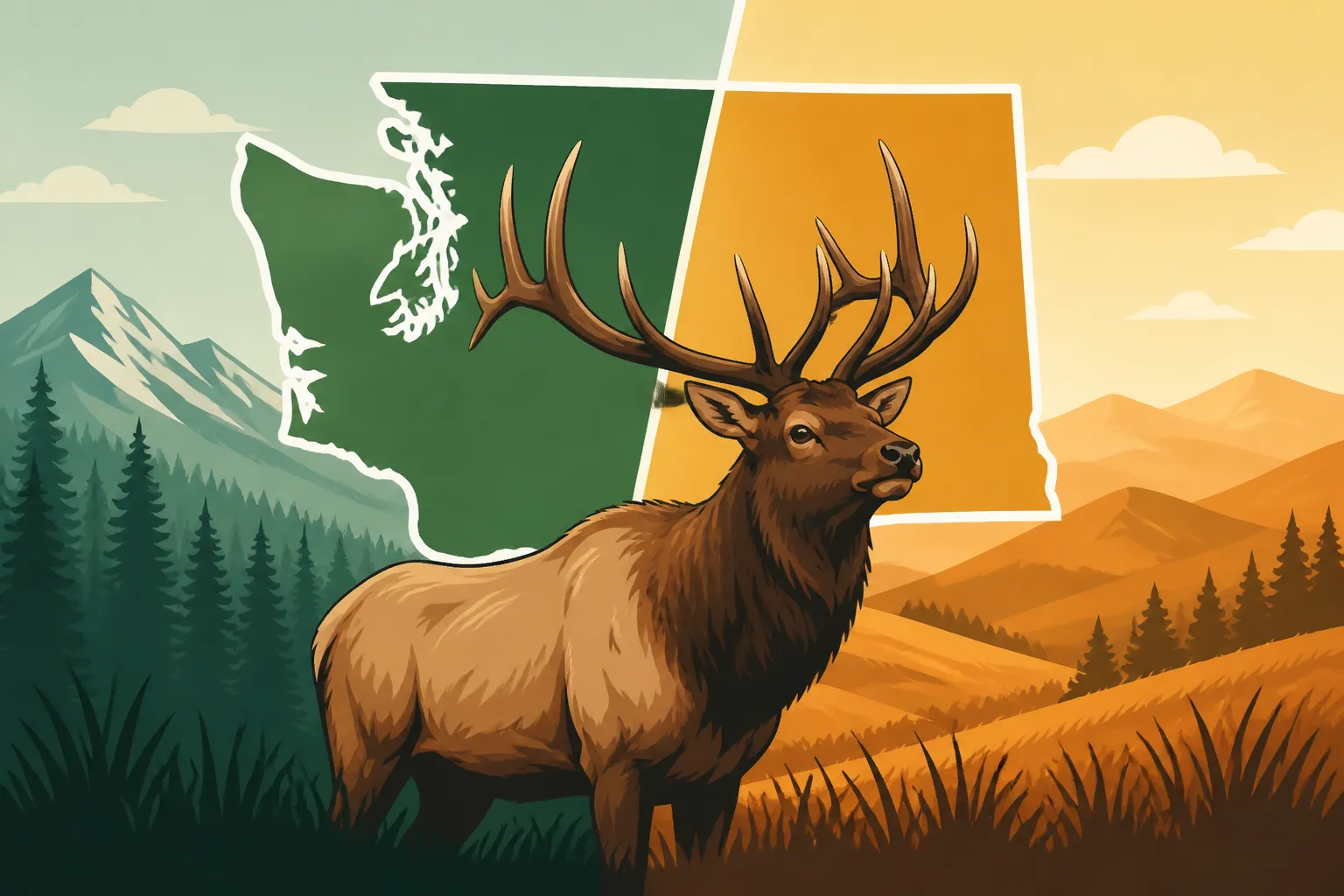
The towering Cascade Mountain Range isn't just a pretty backdrop; it's a massive, natural barrier that fundamentally separates Washington's ecosystems. To the west, you have the wet, dense rainforests and vast timberlands of the Olympic Peninsula and the western slopes. To the east, the landscape quickly transitions into the arid sagebrush flats, ponderosa pine forests, and agricultural lands of Eastern Washington. This "Cascade Curtain" isn't just a geological feature; it's the invisible line that dictates almost everything about elk hunting in the state, from the subspecies of elk you'll encounter to the specific season dates. It's truly a tale of two different hunting worlds.
This geographical split means that even within the "general season" framework, the challenges, opportunities, and even the gear you choose will vary dramatically. Many a hunter has shown up on the "wrong" side of the Cascades with the wrong mindset or equipment, quickly realizing their carefully laid plans needed a serious re-think. Understanding this divide is your first, most crucial step to success.
Roosevelt Versus Rocky Mountain Elk Different Worlds
The most significant biological consequence of the Cascade Curtain is the presence of two distinct elk subspecies: the Roosevelt elk to the west and the Rocky Mountain elk to the east. These aren't just different names; they are genetically and behaviorally distinct animals adapted to their unique environments. You can learn more about Washington's diverse herds in our comprehensive guide on Washington Elk Herds and Where They Live.
Roosevelt elk, found primarily in the dense, wet forests of Western Washington, are generally larger in body size than their eastern counterparts, but often sport a more compact antler configuration, better suited for navigating thick timber. They are notorious for being reclusive, preferring to hide in the deep cover rather than venturing into wide-open spaces. Hunting Roosevelt elk often involves still-hunting through relentless brush, relying on stealth and patience. Check out our deep dive into Roosevelt Elk of Western Washington for more specifics.
On the flip side, Rocky Mountain elk inhabit the more open, mountainous, and often drier landscapes east of the Cascades. These elk are often more visible, but also more prone to moving long distances and can be found in larger herds. Their antlers tend to be wider and more expansive, adapted for display in less obstructed environments. Hunting Rocky Mountain elk frequently involves more glassing, longer shots, and covering vast distances, often at higher elevations. To really understand these impressive animals, take a look at our article Rocky Mountain Elk East of the Washington Cascades. The difference in terrain and elk behavior means that even if you have a general season tag, your approach will need to be tailored to the specific subspecies you're pursuing.
GMU Boundaries and Season Splits
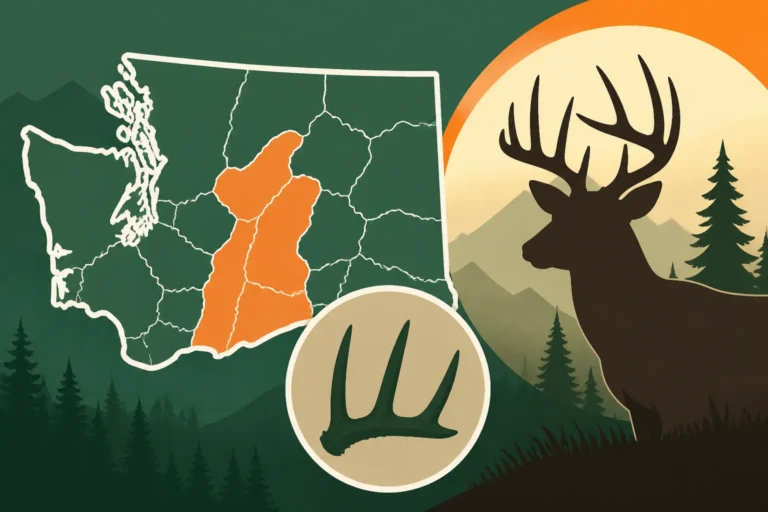
While the Cascade crest provides a broad division, the Washington Department of Fish and Wildlife (WDFW) further refines hunting areas into Game Management Units (GMUs). These units are the legal boundaries that define specific hunting seasons, regulations, and often, the exact split between east and west side rules. It's not always a clean, straight line down the crest; some GMUs might straddle the divide, or their boundaries might follow major rivers, roads, or mountain passes.
This means you can't just assume "east is east" or "west is west" without consulting the WDFW regulations pamphlet and a detailed map. For instance, a GMU might be technically west of the main crest but adhere to "east side" elk rules due to its specific habitat or elk population management goals. When purchasing your tag, you'll need to specify if it's an "Eastside" or "Westside" tag, and this declaration is binding. Making the wrong choice can mean your tag is invalid for the area you intended to hunt. Don't skip our article on Declaring East or West Side on a Washington Elk Tag for critical details on this process. This complexity is why using mapping tools and cross-referencing with the official WDFW regulations is absolutely vital before you ever set foot in the field.
General Season Specifics: East of the Cascades
Hunting elk east of the Cascades offers a completely different flavor of adventure compared to the west. The landscape is generally more open, often drier, and the Rocky Mountain elk tend to be found in larger herds, sometimes covering expansive territories. This side of the state presents unique challenges and opportunities that demand a distinct approach to scouting and hunting.
Modern Firearm Seasons Dates and Opportunities
Eastern Washington's general modern firearm elk seasons are often characterized by their duration and the sheer scale of the landscape they encompass. While specific dates vary year to year, modern firearm seasons typically fall in October or November, sometimes with a late-season opportunity in December. These seasons usually follow the early archery and muzzleloader hunts, meaning the elk have already experienced some hunting pressure. The typical Eastside modern firearm seasons usually run for about 7-10 days, though some units might have shorter or longer windows.
For many hunters, this is the prime opportunity to pursue Rocky Mountain elk. The relatively open terrain allows for longer shots, making a well-tuned rifle setup crucial. Many hunters prepare for these seasons by practicing shots out to 300 or 400 yards, a stark contrast to the often 50-yard shots in Western Washington timber. Units like the Colockum or Blue Mountains (while a separate, specific permit area, it has general season elements for elk in some GMUs for deer) are popular destinations, but they also see significant hunting pressure. Being prepared to hike miles into roadless areas or access private timber lands with proper permits is often the key to finding less disturbed animals.
Archery Seasons Early and Late Chances
Archery elk hunting east of the Cascades provides both early and late season opportunities, each with its own character. The early archery season, typically in September, is often the most anticipated. This is when the rut is in full swing, and the bugles of mature bulls echo through the canyons and timbered slopes. It's a truly exhilarating time, where hunters can try calling techniques like those discussed in Bugling and Cow Calling in Washington's Archery Elk Season to draw bulls in close. Temperatures can still be quite warm, especially in early September, which requires careful meat care considerations immediately after a harvest.
Late archery seasons, often in November or December, are a completely different ballgame. The rut is long over, and elk have moved into their winter range, often at lower elevations or on private agricultural lands. Bugling is rare, and hunters must shift to more silent, still-hunting tactics, focusing on tracking and ambushing elk moving between bedding and feeding areas. Snow can be a significant factor in these late seasons, aiding in tracking but making travel difficult. These seasons can be incredibly challenging but also immensely rewarding for those willing to brave the cold and adapt their strategies.
Muzzleloader Seasons Limited but Potentially Productive
Muzzleloader seasons east of the Cascades are generally quite limited in duration, often only a few days to a week, and usually take place in late September or early October, nestled between archery and modern firearm hunts. This can be a strategic time to hunt, as the elk have settled back down somewhat after the initial archery pressure, but haven't yet been fully pushed by rifle hunters. The unique challenge of muzzleloader hunting adds an extra layer of skill and dedication.
Hunters often have to contend with unpredictable weather—from warm, dusty conditions to early snow—and the inherent limitations of muzzleloader equipment. However, the reward for this dedication can be a less crowded hunting experience and opportunities at elk that are less wary than during the later rifle seasons. It's a season that demands precision, commitment, and a deep understanding of your chosen firearm, as detailed in our guide on Muzzleloader Loading and Ignition in Rain. The pursuit of a bull with a muzzleloader in the rugged Eastern Washington landscape is a truly traditional and deeply satisfying experience.
General Season Specifics: West of the Cascades
Hunting elk in Western Washington is an entirely different beast than hunting east of the Cascades. The dense, wet forests, steep terrain, and the elusive nature of Roosevelt elk present a unique set of challenges. Success here often hinges on mastering close-quarters hunting, navigating relentless vegetation, and being prepared for consistently damp conditions.
Modern Firearm Seasons Often Shorter and Unit-Specific
Western Washington general modern firearm elk seasons are typically shorter and can be much more restrictive than their Eastside counterparts. Most modern firearm seasons for Roosevelt elk are condensed into a week or less, often in November, to manage pressure on these more timber-dependent herds. Specific dates and antler restrictions (like spike-only or 3-point minimums) vary significantly by GMU, making it crucial to meticulously check the regulations pamphlet for your chosen area. These units are often characterized by extensive private timber lands, requiring hunters to secure permits or utilize "Feel Free to Hunt" programs.
The hunting pressure can be intense, particularly in accessible areas. Elk here often seek refuge in the thickest reprod and timbered canyons, making long-range shooting opportunities rare. Instead, hunters focus on still-hunting logging roads, clearcuts, and dense forest stands, or setting up ambushes along known travel corridors. Your Rifle Setup for Washington Elk and Deer needs to be optimized for quick, close-range shots through brush, not necessarily for open-country precision. This means having a rifle that handles well in tight spaces and a scope with a wide field of view.
Archery Seasons Long Windows and Thick Timber
Archery elk season in Western Washington offers arguably the longest and most challenging opportunities for general season hunters. The early archery season typically spans the entire month of September, aligning with the peak of the Roosevelt elk rut. This extended period allows for multiple trips and adapting to changing elk behavior and weather conditions. However, the thick timber and dense undergrowth make it incredibly difficult to locate and stalk Roosevelt elk, even when they are bugling. Unlike their Rocky Mountain cousins, Roosevelt bulls are often less vocal and harder to pinpoint, especially when trying to pinpoint their location from the article Roosevelt Bulls and Why They Bugle Less.
Late archery seasons, usually in November or December, push hunters to their limits with cold, wet weather and silent elk. Success in these later seasons relies heavily on tracking fresh sign in the mud or light snow, and patiently still-hunting through the ever-present rain-soaked vegetation. Hunters must be prepared for extreme wetness, which demands reliable Archery Practice for Wet Coastal Conditions and rain gear that truly holds up to the relentless Western Washington downpours. It's a grind, but the reward of harvesting a wary Roosevelt bull in his domain is unparalleled.
Muzzleloader Seasons Wetter Conditions, Unique Challenges
Muzzleloader seasons on the west side are often short, typically a few days in early October, nestled between the archery and modern firearm hunts. These seasons inherit the dense timber and often wet conditions that define Western Washington hunting. Keeping your muzzleloader dry and reliable is a paramount concern, as a single misfire can ruin a hunt. The article Muzzleloader Loading and Ignition in Rain offers valuable insights into preparing your firearm for these challenging conditions.
Hunting during this window means dealing with the tail end of the rut in some areas, or elk that are beginning to transition into their post-rut patterns. The limited range and single-shot nature of a muzzleloader mean shot placement is even more critical, and opportunities can be fleeting. While the numbers of muzzleloader hunters are generally lower than modern firearm hunters, the challenge is amplified by the environment. Success comes from meticulous preparation, patience, and a willingness to get into the thickest cover where these elusive Roosevelt elk prefer to hide.
Weapon Choices and Their Impact on General Seasons
The weapon you choose for your Washington elk hunt isn't just a matter of preference; it fundamentally dictates which seasons you can hunt, the regulations you must follow, and even the type of hunting experience you'll have. Washington's rules for equipment are quite specific, so understanding the nuances before you buy your tag is non-negotiable.
Declaring Your Weapon A Critical Decision
When you purchase your general elk tag in Washington, you must declare your weapon choice: modern firearm, archery, or muzzleloader. This declaration is a binding decision. You cannot simply switch your weapon type mid-season or decide to carry a rifle during an archery season without a specific multi-season tag (which is a different permit and draw process). This initial choice dictates the specific set of general season dates available to you, for both Eastside and Westside elk. For example, if you declare an archery tag, you can only hunt during the designated archery seasons with archery equipment. You cannot then pick up a rifle and hunt during the modern firearm season, even if you have a general elk tag valid for that unit. Our piece on Washington's Weapon Choice Rule for Deer and Elk goes into more detail about these specific restrictions and how they apply across species. Many a hunter has made the mistake of not understanding this upfront, leading to significant disappointment or even legal issues in the field.
The Modern Firearm Advantage and Disadvantages
Modern firearm seasons are often the most popular choice for general season elk hunters, primarily due to the versatility and range offered by rifles. This advantage is particularly pronounced in the more open landscapes east of the Cascades, where shots can be long. A hunter with a modern firearm can cover more ground and potentially take shots at greater distances, increasing the odds of success. However, this popularity also comes with a significant disadvantage: increased hunting pressure. General modern firearm seasons, especially in accessible areas, can feel crowded.
On the Westside, while rifles offer stopping power, the dense timber often negates the long-range advantage, reducing shot distances significantly. Modern firearm hunters in Washington also face specific regulations regarding caliber, ammunition, and magazine capacity, which must be strictly adhered to. It's crucial to ensure your chosen firearm meets all Washington state legal requirements before you even head to the range. While perceived as the "easiest" route, general modern firearm hunting demands scouting, skill, and often a willingness to out-hike the crowds.
Archery's Flexibility and Discipline
Archery hunting, while demanding a high level of skill and discipline, offers some of the longest and earliest general season opportunities, particularly during the September rut. The ability to hunt during the prime bugling season, when elk are most vocal and active, is a huge draw. Archery seasons typically have less hunting pressure than modern firearm seasons, offering a more wilderness-like experience, especially in the thick timber of Western Washington. The challenge of getting within bow range—typically 40-60 yards or less—requires immense stealth, patience, and proficiency with your bow.
However, archery also comes with strict equipment rules, including minimum broadhead width and arrow weight, as highlighted in our guide on Washington Archery Equipment Rules. Ethical shot placement is paramount, and the consequences of a poor hit can be devastating. Archery hunting truly tests a hunter's dedication and woodsmanship, forcing a deeper connection with the environment and the animals. It's not for the faint of heart, but the satisfaction of calling in a bull or silently stalking one to within spitting distance is a profound reward.
Muzzleloader A Dedicated Pursuer's Choice
Muzzleloader hunting occupies a unique niche in Washington's general elk seasons, combining elements of both modern firearm and archery. These seasons are generally shorter than archery, but often occur during a valuable window between archery and rifle seasons, where elk might be less pressured. The inherent limitations of a muzzleloader—single shot, shorter effective range, and more complex loading—demand a higher level of commitment and specialized knowledge from the hunter.
Washington has specific regulations regarding muzzleloader equipment, including minimum caliber and restrictions on optics and ignition types. For example, open sights are often required, making shots beyond 100-150 yards incredibly challenging. Despite these limitations, muzzleloader hunting can offer a unique connection to traditional hunting methods and a rewarding pursuit. The learning curve is steeper, and the demands on preparedness are higher, especially in the often-wet conditions of Western Washington or the cold, late-season hunts in the east. It's a choice for those who value the process and the challenge as much as the outcome, and who are willing to put in the effort to master this specialized equipment.
Key Considerations for Planning Your General Season Hunt
Successful general season elk hunting in Washington doesn't just happen; it's the result of meticulous planning, research, and adaptation. With the state's diverse geography and varying regulations, leaving things to chance is a recipe for frustration.
Navigating the WDFW Regulations Pamphlet
The single most important tool in your planning arsenal is the current year's WDFW Big Game Hunting Seasons and Regulations pamphlet. You absolutely cannot hunt in Washington without understanding this document inside and out. It's not light reading, but it's the law. This pamphlet details season dates for every GMU, weapon restrictions, antler point requirements, specific hunt codes, and any special closures or rules. It's easy to overlook a subtle nuance that could invalidate your hunt or lead to a violation.
Don't just skim it; read it carefully, especially the sections pertaining to your chosen GMU, weapon, and the East/West side definitions. Pay close attention to any changes from previous years, as regulations can and do evolve. While online resources and mapping apps are incredibly helpful, the official WDFW pamphlet is the ultimate authority. Our guide on Washington Big Game Pamphlet Release gives you the heads-up on when to expect the new regulations each year. Trust me, spending a few hours with this document before the season opens will save you a world of trouble and greatly improve your chances of a legal and successful hunt.
Scouting for Eastside Versus Westside Elk
The vast differences between Eastside and Westside elk hunting mean your scouting approach must be tailored to the specific environment and elk subspecies. For Eastern Washington, where Rocky Mountain elk often inhabit more open country, effective scouting might involve extensive glassing of distant hillsides, identifying bedding and feeding areas, and locating migration corridors. Using tools like GoHunt's mapping features can be incredibly beneficial for e-scouting from home, helping you pinpoint potential water sources, access roads, and public land boundaries long before you physically set foot in the unit. Satellite imagery is your best friend here, revealing hidden canyons, timber patches, and old burns that could hold elk. Our article on E-Scouting Washington GMUs Before the Draw provides an excellent starting point for this digital reconnaissance.
Conversely, scouting for Roosevelt elk in Western Washington is often a much more boots-on-the-ground endeavor. The dense cover makes long-range glassing largely ineffective. Instead, you'll be looking for fresh sign—tracks, droppings, rubs, and wallows—in the thick timber, along old logging roads, and within clearcuts. Listening for bugles during the early archery season or cow calls can help locate animals, but often requires entering the thick stuff yourself. Physical scouting involves navigating challenging terrain and often requires more physical effort, as detailed in Public Land Scouting in Washington Before Opening Day. Understanding these distinct scouting methodologies is critical for finding elk, regardless of which side of the Cascades you plan to hunt.
Harvest Reporting and Its Importance
Once you've successfully harvested an elk during the general season, your responsibilities don't end there. Washington requires all hunters to report their harvest, even if you don't fill your tag. This isn't just a bureaucratic formality; it's a vital component of wildlife management. The data collected from harvest reports helps WDFW biologists assess herd health, population trends, and hunter success rates, which in turn influences future season setting and management decisions.
Failing to report your harvest by the specified deadline can result in penalties, including fines or even being unable to purchase a license or tag in subsequent years. The reporting process is typically straightforward and can often be completed online through your WILD account or by phone. Our guide on Washington Harvest Reporting Requirements explains the process in detail. Don't let your hard-earned success be marred by overlooking this crucial final step. It's a small task that contributes significantly to the conservation efforts that make Washington a fantastic state to hunt elk.
Common Misconceptions and Troubleshooting
Even with all the regulations and information available, hunters often fall prey to common misconceptions or face unexpected hurdles during their general season elk hunts in Washington. Let's clear up some of these areas of confusion.
"It's Just Elk Hunting" Why the Divide Matters
One of the biggest pitfalls for new (and sometimes even experienced) hunters is the assumption that "elk hunting is elk hunting," regardless of where you are in Washington. Nothing could be further from the truth. The profound differences between the Eastside and Westside, stemming from the distinct subspecies, habitats, and weather patterns, mean that tactics, gear, and expectations must be completely different. A hunter accustomed to spotting Rocky Mountain elk across open canyons in the Blues will be utterly bewildered by the dense, often impenetrable rainforests where Roosevelt elk hide.
Similarly, a Westside hunter, used to tracking in mud and making close-range shots in thick cover, might be unprepared for the vastness, longer shot opportunities, and drier conditions of Eastern Washington. The frustration often stems from trying to apply one set of experiences to a completely different environment. Understanding that you're essentially hunting two different "games" when you cross the Cascades is the first step to setting realistic expectations and developing appropriate strategies. This foundational understanding will save you a lot of headache and greatly increase your enjoyment of the hunt, even if it doesn't always put an elk in your freezer.
Tag Changes and Declared Areas
A frequent source of confusion revolves around changing your tag or hunting in an area different from your initial declaration. As mentioned, when you buy a general season elk tag, you declare it as either "Eastside" or "Westside." This declaration is critical and largely irreversible for that specific general season tag. You cannot buy an "Eastside" general elk tag and then decide to go hunt the Olympic Peninsula for Roosevelt elk, even if the dates happen to overlap with a Westside general season. Each side has its own management objectives, and your tag is tied to that specific geographic region.
Similarly, once you've declared your weapon choice (archery, muzzleloader, or modern firearm), you are locked into that choice for that general season tag. There's no flexibility to swap between weapon types within the general season framework. The only exception to this is if you purchase a separate Multi-Season tag, which is a permit drawn in a separate lottery, allowing you to hunt all three weapon seasons with appropriate equipment. But for a standard general season tag, what you declare is what you hunt. This rigid structure can be frustrating for hunters who find themselves with a last-minute opportunity on the "other side" of the state, but it's a rule designed for wildlife management, and it's essential to respect it.
The Myth of Easy General Season Access
Another common misconception is that general season hunting means easy access and plentiful animals. While Washington offers vast amounts of public land, especially national forests, finding "easy" access to unpressured elk during general seasons is becoming increasingly rare. Many readily accessible areas, particularly near major population centers, experience intense hunting pressure. Hunters often find themselves sharing popular spots with numerous others, which can make elk incredibly wary.
Furthermore, a significant portion of prime Western Washington elk habitat lies on private timber lands. While some of these lands participate in access programs like "Feel Free to Hunt" or offer paid permits (e.g., Weyerhaeuser or Hancock Forest Management), access isn't always guaranteed, and permits can be expensive or limited. In Eastern Washington, vast tracts of private land are also off-limits without explicit permission. Therefore, planning for general season success often involves significant legwork to find less-pressured areas, whether that means hiking deep into wilderness, navigating complex land ownership maps (which mapping apps like GoHunt can help with), or securing private land access well in advance. Don't underestimate the challenge of simply getting to the elk, particularly the unpressured ones, during general season.
Comparing Washington's General Elk Seasons
To help distill the key differences, here's a quick comparison of what you can generally expect when chasing elk on either side of the Cascade mountain range during Washington's general seasons.
| Feature | East of the Cascades (Rocky Mountain Elk) | West of the Cascades (Roosevelt Elk) |
|---|---|---|
| Typical Terrain | Open ponderosa forests, sagebrush flats, agricultural lands, high mountain basins. | Dense coniferous rainforests, thick clearcuts, reprod, steep, wet timbered slopes. |
| Elk Behavior | Often in larger herds, more visible, can cover large distances, more vocal (rut). | More solitary or smaller groups, reclusive, prefer dense cover, less vocal (rut). |
| Modern Firearm | Seasons: Often 7-10 days, Oct/Nov. Tactics: Long-range glassing, spot-and-stalk, ambushing migration corridors. Challenges: High pressure in accessible areas, long shots. |
Seasons: Often 3-7 days, Nov. Tactics: Still-hunting dense timber/reprod, tracking, ambushing logging roads. Challenges: Extreme density, short shooting lanes, intense pressure. |
| Archery | Seasons: Early (Sept, rut) & Late (Nov/Dec). Tactics: Calling during rut, silent still-hunting later, tracking. Challenges: Warm September weather, vast distances. |
Seasons: Early (Sept, rut) & Late (Nov/Dec). Tactics: Silent still-hunting, tracking, patience in dense cover. Calling is harder. Challenges: Relentless rain, impenetrable brush, elk are extremely wary. |
| Muzzleloader | Seasons: Usually short, late Sept/early Oct. Tactics: Similar to modern firearm but closer range, focus on known elk areas. Challenges: Limited range, weather variability (dust/early snow). |
Seasons: Usually short, early Oct. Tactics: Very close-quarters still-hunting, tracking in wet conditions. Challenges: Extreme wetness, visibility, short range in dense cover. |
| Access | National Forests (NF), DNR lands, private lands (some WDFW programs, permits). | National Forests (NF), DNR lands, extensive private timber (permits often required). |
| Gear Focus | Quality optics (10x, 15x binos, spotter), long-range rifle setup, sturdy hiking boots. | Reliable rain gear (gore-tex), quiet clothing, durable boots, close-range weapon. |
Disclaimer
The information provided in this guide is for general informational purposes only and is not a substitute for the official Washington Department of Fish and Wildlife (WDFW) hunting regulations. Hunting regulations, season dates, and GMU boundaries can change annually. It is the hunter's sole responsibility to review and comply with all current WDFW regulations and local ordinances before engaging in any hunting activities. Always prioritize safety, ethical hunting practices, and respect for wildlife and private property.