Washington’s .24 Caliber Minimum Explained
It can be incredibly frustrating to sift through all the hunting regulations in Washington, especially when it comes to something as fundamental as what caliber rifle you can even use. You've got your heart set on a deer or elk hunt, you've invested in gear, but then you hit the wall of confusing legal jargon about firearm minimums. This guide is here to clear up the mystery of Washington's .24 caliber minimum, breaking down what it means for your big game pursuits and helping you make informed decisions about your hunting rifle.
Understanding Washington's Caliber Requirements for Big Game
Navigating the Washington Department of Fish and Wildlife (WDFW) regulations can feel like trying to track a ghost through a blizzard sometimes. One of the most critical pieces of information for any modern firearm hunter, especially when targeting larger game, is understanding the legal minimum caliber for your rifle. These aren't arbitrary rules; they're put in place for very important reasons, primarily focused on ethical hunting and ensuring a quick, humane harvest. No one wants to wound an animal and have it suffer, and appropriate caliber selection plays a huge role in preventing that.
Why Caliber Minimums Exist
The core principle behind caliber minimums is energy transfer and bullet penetration. When you're hunting big game like deer, elk, or bear, you need a projectile that can deliver enough kinetic energy and penetrate deep enough to reach vital organs, ensuring a swift and clean kill. Smaller calibers, while sometimes capable of killing, often lack the consistent energy and mass to achieve this reliably, especially if the shot isn't absolutely perfect or if the animal is quartering away. The state of Washington, like many others, has determined a minimum threshold to uphold ethical hunting standards and minimize the chance of a wounded animal escaping. It's about respecting the animal and ensuring you have the tools for a humane harvest. It can be a steep learning curve to choose a weapon that is both effective and legal; thankfully, there are resources like Washington's Legal Equipment Rules by Weapon that break down the nuances.
The .24 Caliber Minimum Explained
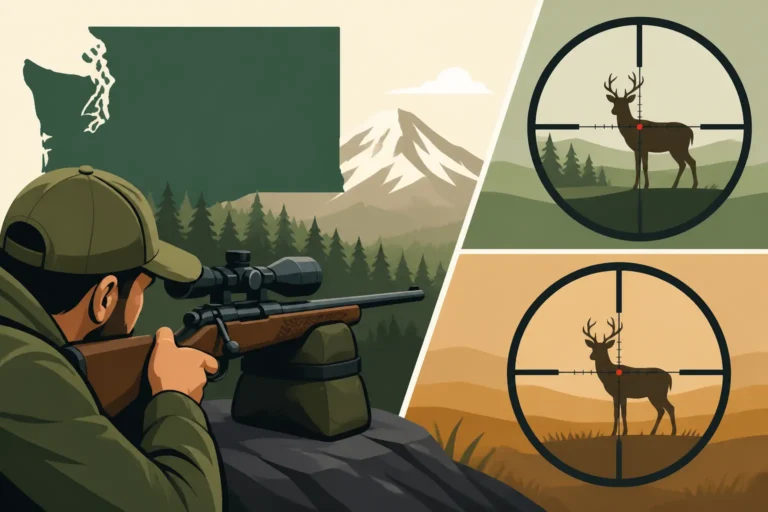
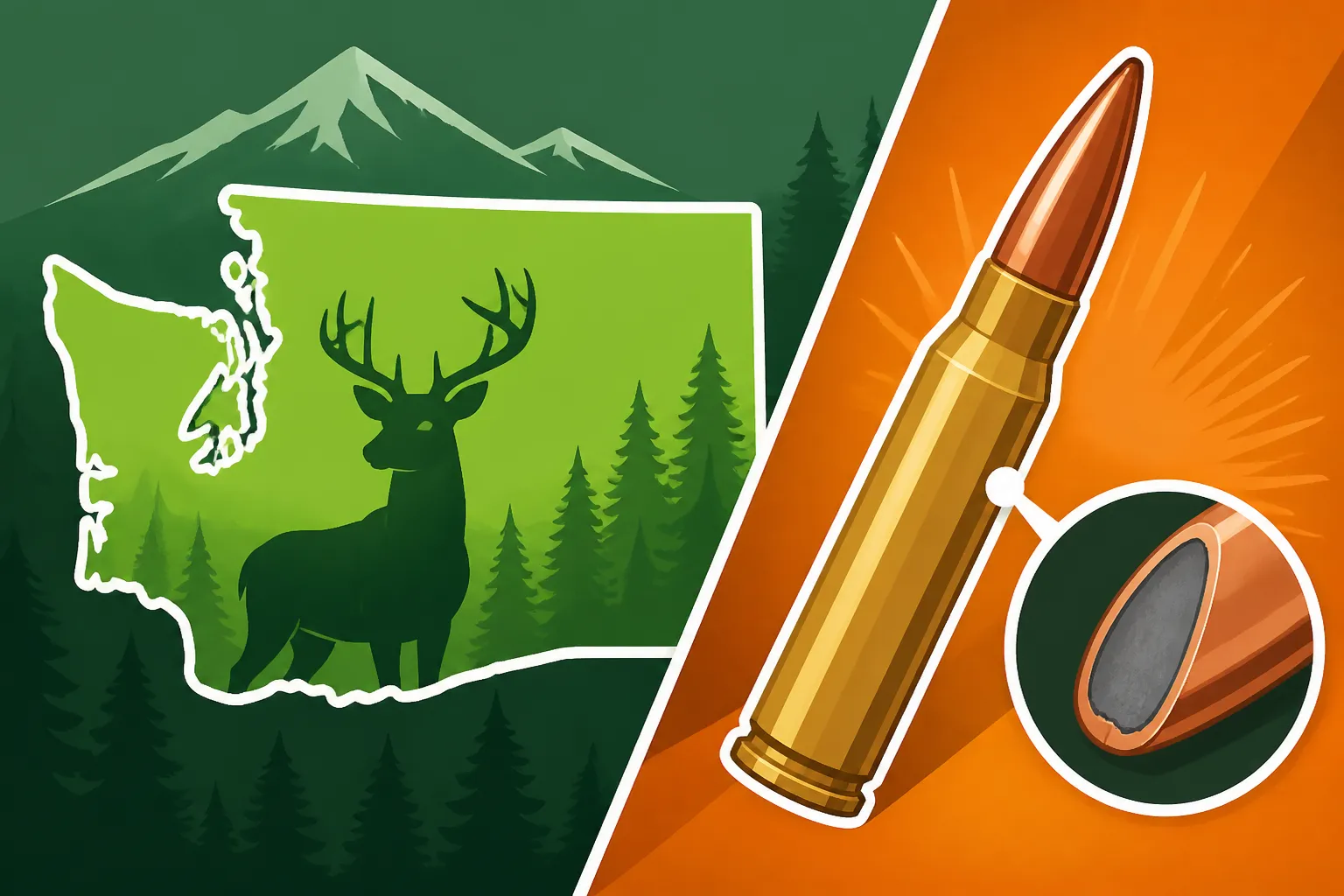
For most big game in Washington, specifically deer, elk, moose, bighorn sheep, and mountain goat, the regulations state that you must use a rifle firing a centerfire cartridge that is at least .24 caliber (6mm). This means any cartridge that measures .243 inches or 6mm in bullet diameter is the smallest legal option. This rule is particularly important because it immediately excludes a very popular family of cartridges: the .22 caliber centerfires, such as the .223 Remington or 5.56x45mm NATO. While these smaller calibers are incredibly common for varmint hunting or target shooting, they simply do not meet the legal minimum for Washington's larger big game species. So, if you're planning on chasing a trophy mule deer in Eastern Washington or a Roosevelt elk in the Olympic Peninsula, leave the .223 at home. You'll need something bigger to stay on the right side of the law and, more importantly, to ensure you can ethically take your animal.
What Doesn't Qualify
Let's make this crystal clear: anything smaller than a true .24 caliber will not cut it for most big game in Washington. This includes:
- .22 Long Rifle (LR) and other rimfire cartridges: These are absolutely out of the question for big game due to their significantly lower power and range.
- .223 Remington / 5.56x45mm NATO: This is perhaps the most common mistake made by new hunters or those transitioning from varmint hunting. Despite their popularity, these cartridges are not .24 caliber and therefore are illegal for deer, elk, and other standard big game animals.
- .17 caliber cartridges: Another popular varmint round, like the .17 HMR or .17 Hornet, is far too small for big game.
It's vital to check the exact caliber marking on your firearm and ammunition. A .243 Winchester, for example, is explicitly a .24 caliber cartridge, meeting the minimum. A .22-250 Remington, while a powerful .22 caliber round, still measures .224 inches and does not meet the .24 minimum. Knowing these distinctions upfront can save you a lot of headache and potential legal trouble in the field.
Why .24 Caliber and What It Means for Hunters
The .24 caliber minimum isn't some arbitrary number pulled from thin air. It represents a practical balance between manageable recoil, effective range, and sufficient terminal performance for medium to large game. When a bullet of .24 caliber or larger, traveling at appropriate velocities, impacts an animal, it's designed to transfer a significant amount of energy and create a wound channel that quickly incapacitates the animal.
Ballistics and Energy Transfer
Think about a common .24 caliber cartridge like the .243 Winchester. It typically fires bullets weighing between 80 to 100 grains (though lighter and heavier options exist). These bullets, when paired with a good hunting construction, are designed to expand reliably upon impact, creating a larger wound cavity and maximizing tissue damage to vital organs. While a .22 caliber bullet might also expand, it often lacks the mass to penetrate deeply through bone or heavy muscle, especially on an animal as robust as an elk or even a large mule deer buck. The added diameter and weight of a .24 caliber bullet significantly increase its sectional density and kinetic energy, leading to more consistent penetration and hydrostatic shock within the animal. This combination is what truly promotes a clean, ethical harvest. For deeper dives into bullet performance, consider looking into specific Bullet Weight and Construction for Elk articles to fine-tune your understanding.
Common .24 Caliber Cartridges
Luckily, there are many excellent and popular .24 caliber cartridges available to Washington hunters, offering a range of performance characteristics suitable for various big game situations:
- .243 Winchester: This is arguably the most common and versatile .24 caliber cartridge. It's renowned for its flat trajectory, moderate recoil, and effectiveness on deer-sized game. With proper bullet selection, many hunters confidently use it for elk, especially younger or smaller animals, though it's often considered on the lighter side for mature bulls. Its widespread availability of rifles and ammunition makes it a fantastic starting point.
- 6mm Creedmoor: A newer entry, the 6mm Creedmoor has gained immense popularity, particularly among precision shooters, but it also makes a superb hunting round. It offers slightly better ballistics than the .243 Winchester, particularly at longer ranges, and usually handles heavier bullets better. Its mild recoil and excellent accuracy make it a joy to shoot.
- 6mm ARC (Advanced Rifle Cartridge): While primarily designed for AR-15 platforms, the 6mm ARC is a legitimate .24 caliber hunting round. It offers impressive performance for its small case size and is legal for Washington big game. If you prefer an AR platform for hunting, this is a viable option to stay legal and effective.
- .240 Weatherby Magnum: For those seeking maximum velocity and flatter trajectories, the .240 Weatherby Magnum delivers impressive speed. It's a powerful cartridge that certainly meets and exceeds the .24 caliber minimum, often favored for open-country hunting where longer shots might be possible.
Choosing the right cartridge within the .24 caliber family often comes down to personal preference, hunting style, and the specific game you're after. What feels comfortable and shoots accurately for you is often the most important factor.
Practical Implications for Choosing a Rifle
For a new hunter or someone looking to buy their first big game rifle in Washington, the .24 caliber minimum essentially sets your starting point. You can't just pick up any rifle. You need to ensure it's chambered for one of these legal cartridges or something larger. This means:
- Doing your homework: Research different calibers, their ballistics, and their suitability for the game you intend to hunt. Resources like GoHunt can be invaluable for understanding specific GMU regulations and species information, helping you tailor your rifle choice to your hunt plans.
- Considering recoil: While a .243 Winchester has very manageable recoil, stepping up to something like a .30-06 or .300 Winchester Magnum (both well above the .24 minimum) will significantly increase felt recoil. Choose a caliber you can comfortably shoot accurately, as shot placement is always paramount.
- Ammunition availability: Popular cartridges like the .243 Winchester, .270 Winchester, and .30-06 Springfield are almost always readily available, which is a huge plus when you need to stock up for practice or the season.
- Future proofing: If you plan to hunt a variety of game, consider a caliber that can handle everything from small deer to larger elk. While a .243 is legal for elk, many experienced elk hunters prefer something with a bit more punch, like a .270, 7mm Rem Mag, or .30-06.
Here’s a quick overview of some common rifle calibers and their general legality for Washington big game:
| Caliber | Bullet Diameter (inches) | Legal for Deer? | Legal for Elk? | Legal for Bear? | Legal for Cougar? | Notes |
|---|---|---|---|---|---|---|
| .223 Remington/5.56 NATO | .224 | No | No | No | Yes (exception) | Legal only for cougar (centerfire), otherwise too small for big game |
| .243 Winchester | .243 | Yes | Yes | Yes | Yes | Good all-around deer cartridge, marginal but legal for elk |
| 6mm Creedmoor | .243 | Yes | Yes | Yes | Yes | Excellent ballistics, low recoil, effective for similar game |
| .270 Winchester | .277 | Yes | Yes | Yes | Yes | Very popular, excellent for deer and elk |
| 7mm-08 Remington | .284 | Yes | Yes | Yes | Yes | Moderate recoil, great for deer and elk |
| .30-30 Winchester | .308 | Yes | Yes | Yes | Yes | Classic lever action, effective at shorter ranges |
| .308 Winchester | .308 | Yes | Yes | Yes | Yes | Popular, versatile, good for all Washington big game |
| .30-06 Springfield | .308 | Yes | Yes | Yes | Yes | Highly versatile, excellent for all Washington big game |
| .300 Winchester Magnum | .308 | Yes | Yes | Yes | Yes | Powerful, longer range, more recoil, excellent for elk |
Note: For cougar, a .22 centerfire cartridge is an explicit exception to the .24 caliber rule.
Exceptions and Other Weapon Types
While the .24 caliber minimum is a cornerstone for modern firearm big game hunting in Washington, it's not the only rule in the book. There are specific exceptions and different regulations for other weapon types that are just as crucial to understand. It’s never just a single, simple rule; hunting regulations are often a patchwork of specific scenarios and weapon types.
The .22 Centerfire Exception for Cougar
Here’s where things get interesting and where a common misconception can arise. For cougar hunting, Washington state regulations explicitly allow the use of a .22 caliber centerfire cartridge. This is a unique exception to the general .24 caliber minimum for other big game. So, while your trusty .223 Remington is a no-go for deer or elk, it is perfectly legal for pursuing cougar. This acknowledges the difference in size and typical hunting scenarios for cougars compared to, say, a mature bull elk. Cougar hunting often involves calling and closer range shots, and the ballistics of a .22 centerfire are considered adequate for the task. Just remember, this exception applies only to cougars, not bears, deer, or elk. Always double-check your target species against the regulation.
Muzzleloader and Archery Minimums
It's worth briefly mentioning that if you're venturing into muzzleloader or archery seasons, entirely different equipment rules come into play. These weapon types have their own distinct minimums and restrictions that hunters must adhere to.
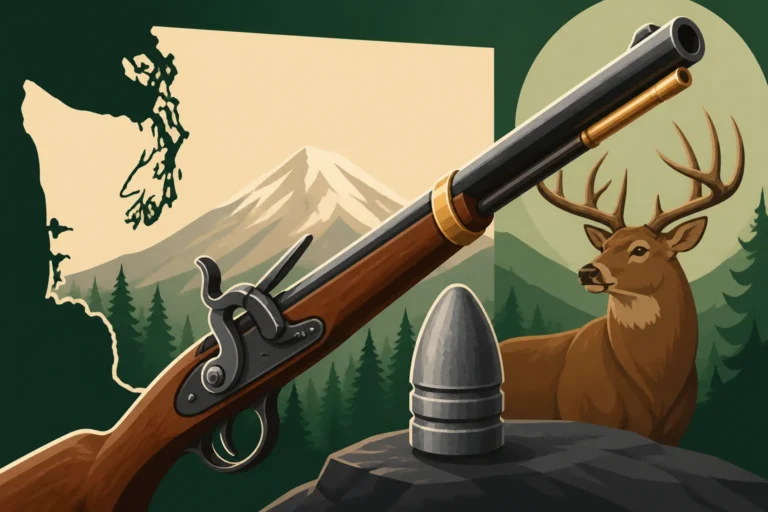
For muzzleloaders, Washington sets a minimum bore diameter of .45 caliber for deer, bear, and cougar, and .50 caliber for elk, moose, and mountain goat. There are also specific rules about projectile type (only saboted or non-saboted conical bullets are allowed for big game), powder (black powder or equivalent), and optics (scopes are generally restricted). This means you can't just slap a modern scope on a .45 caliber muzzleloader and go deer hunting; you need to understand the specifics. Check out Washington's Muzzleloader Equipment Rules for a full breakdown.
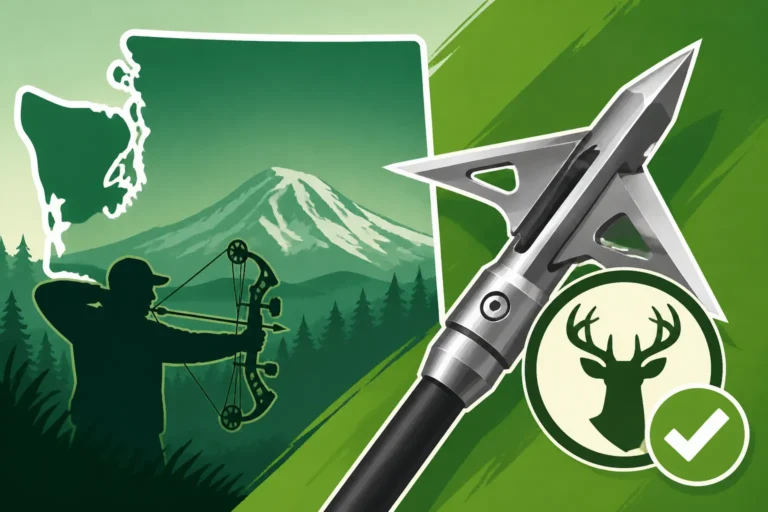
For archery, the rules focus on draw weight, arrow weight, and broadhead design. For big game, the minimum draw weight for a longbow or recurve bow is 40 pounds, and for a compound bow, it's 50 pounds. Arrows must weigh a minimum of 6 grains per pound of draw weight, and broadheads must be fixed-blade or mechanical with specific cutting diameter minimums. Again, your choice of arrow and broadhead is just as important as your bow's draw weight. Washington Archery Equipment Rules will have all the details you need to ensure your bow setup is legal.
Understanding these parallel sets of regulations is crucial. Just because your rifle is legal doesn't mean your muzzleloader or bow setup is, and vice-versa. Each weapon type operates under its own specific framework designed to ensure humane dispatch.
Making the Right Choice for Your Washington Hunt
Choosing the right rifle and cartridge for your Washington hunt is a multifaceted decision that goes beyond just legal minimums. It involves balancing ethical considerations, personal comfort, and the specific demands of the terrain and game you'll be pursuing.
Matching Caliber to Species
While the .24 caliber (.243 Winchester, 6mm Creedmoor) is legal for all big game in Washington (with the cougar exception), many experienced hunters will tell you it's often considered on the lighter side for elk, especially a mature bull. For deer, bear, and cougar, a .243 Winchester is widely regarded as an excellent choice, offering sufficient power without excessive recoil, making it easier for hunters to shoot accurately. However, when you step up to elk, particularly large Roosevelt bulls on the west side or Rocky Mountain bulls on the east side, you're dealing with a significantly larger, tougher animal.
Many elk hunters prefer cartridges in the .270, 7mm, or .30 caliber range (e.g., .270 Winchester, 7mm-08 Remington, .308 Winchester, .30-06 Springfield, or various magnum cartridges like the 7mm Rem Mag or .300 Win Mag). These offer a heavier bullet and often more kinetic energy, increasing the margin for error and improving the likelihood of a quick, clean kill, even if the shot isn't perfectly placed or if the animal is angled awkwardly. Consider the typical shot distances in your chosen GMU. Are you hunting dense timber where shots are usually under 100 yards, or open country in Eastern Washington where longer shots might be the norm? Your cartridge choice can influence your effective range. Reading up on Rifle Setup for Washington Elk and Deer can help you narrow down your choices based on common scenarios.
The Importance of Shot Placement and Bullet Construction
Regardless of caliber, nothing — and I mean nothing — replaces precise shot placement. A perfectly placed shot with a .243 Winchester will always be more effective than a poorly placed shot with a .300 Win Mag. Knowing your rifle, practicing regularly, and understanding the anatomy of the animal you're hunting are paramount. This is where diligent practice at the range, shooting from various positions you might encounter in the field, truly pays off.
Equally important is bullet construction. Not all bullets are created equal. For big game, you want a bullet designed for controlled expansion and deep penetration. Cheap, frangible bullets designed for varmints will not perform reliably on big game, regardless of the caliber. Look for bullets with bonded cores, heavy jackets, or monolithic construction (like copper bullets) that are specifically designed to retain weight and penetrate through hide, muscle, and bone. These are often labeled as "big game" or "controlled expansion" bullets. Even with the legal minimum of .24 caliber, selecting a premium bullet can significantly enhance your cartridge's effectiveness on larger game. Make sure you read up on Bullet Construction for Heavy Bone to really dial in your ammunition.
Checking Current WDFW Regulations and Resources
Hunting regulations can change from year to year. While the .24 caliber minimum has been a long-standing rule for modern firearms, it’s absolutely essential to consult the most current Washington State Big Game Hunting Seasons and Regulations pamphlet before every hunting season. This pamphlet is your bible for legal questions. You can usually find it online on the WDFW website or at any license vendor.
Additionally, don't underestimate the power of digital tools. Platforms like GoHunt offer detailed GMU-specific information, including regulations, maps, and even draw odds, which can be immensely helpful in planning your hunt and ensuring you're compliant with all the rules. Engaging with local hunting communities, whether online forums or in-person clubs, can also provide valuable insights and practical advice from seasoned Washington hunters. They've navigated these rules for years and can often share real-world scenarios and experiences that clarify ambiguities. Being proactive and thorough in your research is the best defense against unintentional violations and ensures a responsible and enjoyable hunt.
Disclaimer
This article is for general informational purposes only and does not constitute professional advice. Laws, prices and regulations vary by location and change over time. Consult a qualified professional for guidance on your specific situation.