What a Permission Slip Gets You on Enrolled Land
Finding reliable, accessible hunting land in Washington can feel like a constant uphill battle, especially when public lands are pressured and private landowners are often hesitant. This guide aims to thoroughly demystify what a permission slip truly entails when hunting on enrolled private lands within Washington State, detailing the specific rights, responsibilities, and benefits it grants you.
Understanding Washington's Private Land Access Programs
Washington State, through its Department of Fish and Wildlife (WDFW), offers several programs designed to connect hunters with private landowners willing to allow access. These programs are a lifeline for many hunters, providing opportunities beyond the often crowded public lands. Understanding the nuances of these programs is crucial before you even think about a permission slip.
What "Enrolled Land" Really Means
When we talk about "enrolled land," we're referring to private properties that landowners have voluntarily chosen to participate in one of the WDFW's access programs. These programs are diverse, offering different levels of public access and management for landowners. The primary goal is to provide recreational access while balancing landowner objectives and wildlife management. For instance, some landowners might enroll in a "Feel Free to Hunt Properties Explained" program, which means you typically don't need a specific permission slip beyond adhering to general program rules. Other programs, like "Hunt by Written Permission Lands," explicitly require a physical permission slip signed by the landowner or their representative.
The key distinction is that these lands are not open to the public by default. They are private, and the enrollment simply means the landowner has agreed to allow some form of hunting access under WDFW's framework. Tools like GoHunt's mapping features can be incredibly helpful for identifying these enrolled properties, as they often layer WDFW access data directly onto their maps, showing you exactly where these opportunities exist. It's not just a handshake agreement; it's a formal acknowledgment between the landowner and the state, and between the landowner and the hunter, of specific terms of use. Without this enrollment and the subsequent permission, you'd be trespassing, plain and simple, even if the land looks like a great spot. These programs are constantly evolving, so always check the latest WDFW regulations and maps before planning your hunt.
The Legal Backing of a Permission Slip
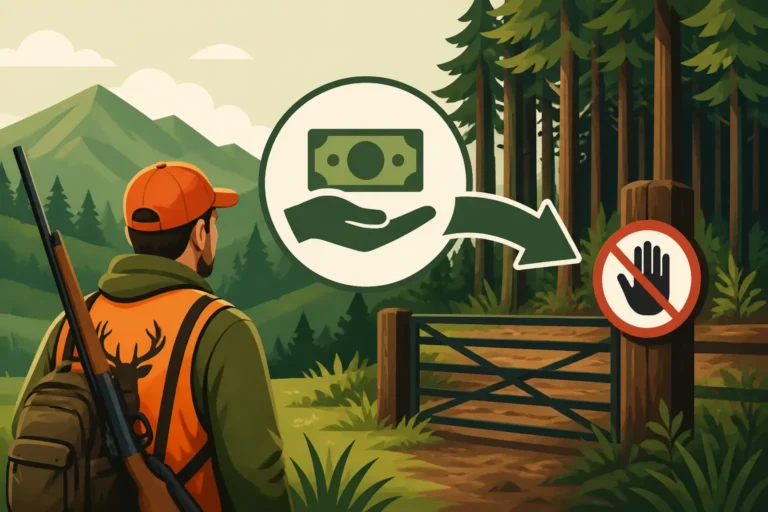
A signed permission slip, especially one obtained through a WDFW-enrolled program, isn't just a courtesy; it's a legally significant document. It serves as your explicit authorization to be on that private property for hunting purposes, mitigating the risk of inadvertent trespass. Without it, you could face legal repercussions, even if you genuinely believed you had verbal permission, or if boundaries were unclear. It provides a clear line of communication and agreement between you and the landowner.
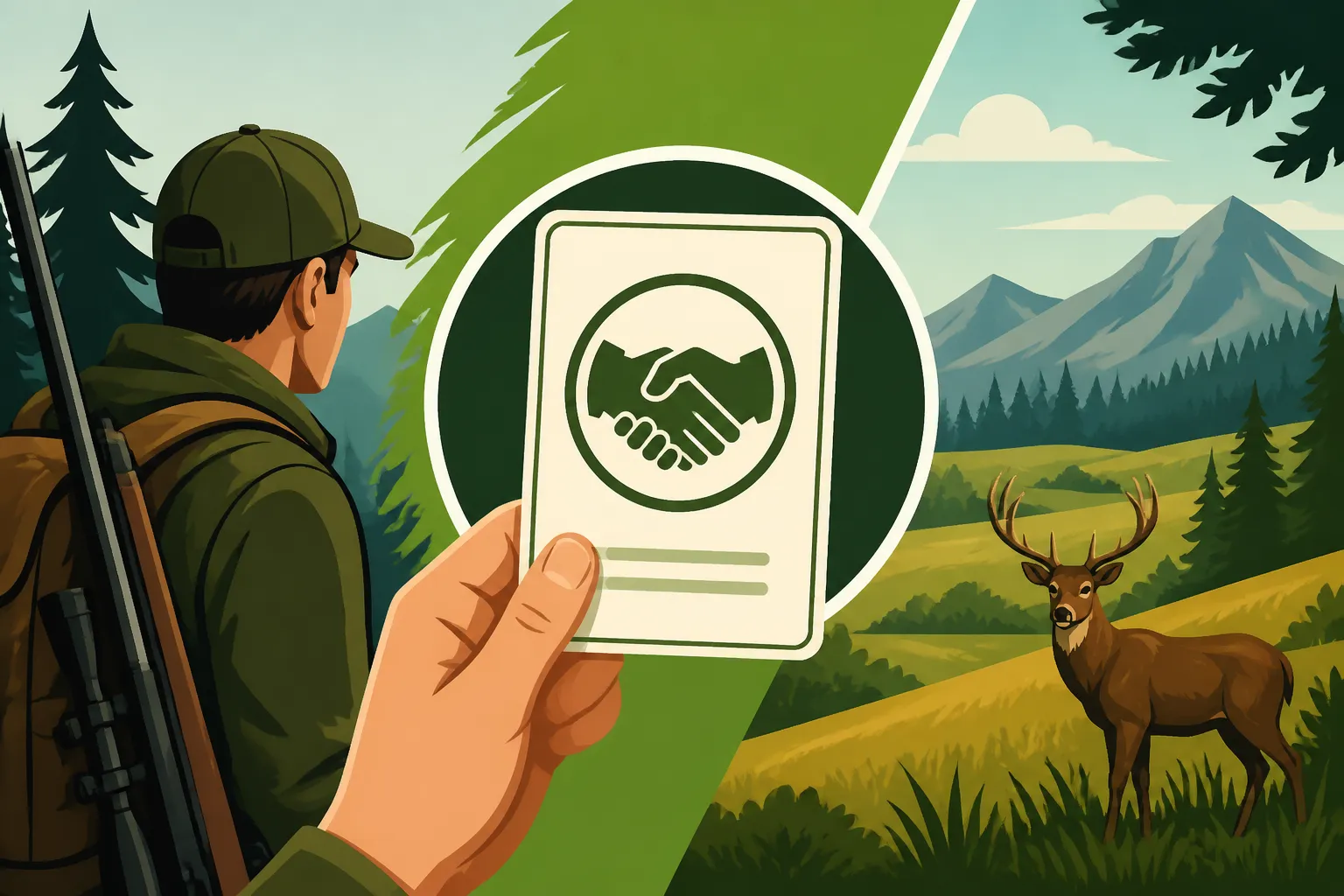
Contrast this with simply knocking on doors, which can be hit-or-miss. While "Asking Permission Before Washington's Opener" is a valid strategy, a formal slip from an enrolled property provides a much higher level of legal clarity and protection for both parties. The landowner typically signs off on the type of hunting, the dates, and any specific rules, and your signature acknowledges you understand and agree to abide by those terms. This shared understanding helps build trust, which is invaluable in securing future access. It essentially transforms what would otherwise be private property—and thus, off-limits—into a temporary, authorized hunting ground for you, under specific conditions.
Specific Privileges a Permission Slip Grants You
A permission slip is more than just a pass; it's a detailed agreement that outlines precisely what you can and cannot do on a given piece of private land. It's your blueprint for a legal and ethical hunt.
Access and Boundary Clarity
One of the most immediate and valuable benefits of a permission slip is crystal-clear direction on where you can hunt. Many slips from enrolled lands will specify exact parcels, delineate huntable areas within a larger property, or even mark specific entry and exit points. This is crucial because private properties can have complex boundaries, sometimes bordering other private lands or even public parcels. Without this clarity, you risk unknowingly stepping onto unpermitted land, which can lead to charges of "Trespass Law on Posted Washington Land."
Mapping tools, especially those that integrate land ownership data like GoHunt or onX, become incredibly powerful in conjunction with your permission slip. You can overlay the permitted boundaries from your slip onto your digital map, ensuring you stay within the designated hunting area. Furthermore, the slip often dictates specific access points, parking locations, and even routes you are allowed to use on the property. This prevents conflict with landowners, ensures you don't block farm equipment or private drives, and respects the landowner's privacy and operational needs. It eliminates guesswork and reduces the anxiety of whether you're in the right place, allowing you to focus on the hunt itself.
Hunting Seasons and Species Authorization
It’s important to understand that while a permission slip grants you access, it doesn't magically override statewide hunting regulations. You still must possess the correct "Washington Big Game Licence and Tag Costs" and adhere to all "Washington Deer Season Opening Day" dates, bag limits, and legal weapon types as set by WDFW for that specific "Washington Game Management Units Explained" (GMU). What the permission slip does is confirm that the landowner is allowing you to exercise those legal hunting privileges on their land during the established seasons.
Often, the slip will explicitly state which species you are authorized to hunt (e.g., "deer only," "elk only," or "deer and bear"). If the slip only mentions deer, but you encounter a legal elk, you cannot harvest that elk without separate permission that explicitly includes elk. Similarly, the slip might restrict weapon types beyond what WDFW allows (e.g., "archery only" on a property otherwise open to modern firearm during general season). Always review your permission slip carefully for these details. If there's any ambiguity, always err on the side of caution and clarify directly with the landowner before your hunt. This prevents misunderstandings and ensures you don't violate the terms of your hard-won access.
Operational Restrictions and Landowner Rules
Beyond access and species, permission slips on enrolled lands frequently include a host of operational rules designed to protect the landowner's property, livestock, and other interests. These are not WDFW regulations but specific conditions imposed by the private owner that you must follow. Common restrictions include:
- Weapon Type: While WDFW may allow rifles, the landowner might stipulate "shotgun or archery only" due to proximity to buildings or livestock.
- Time of Day: Hunters may be restricted to daylight hours, or specific entry/exit times to avoid disturbing residents or farm operations.
- Guest Policy: Some slips are for the named individual only, while others may allow a specific number of guests, but usually require their names to be included on the slip.
- Gate Protocols: You'll likely be instructed to leave gates as you found them – if it was closed, close it behind you; if it was open, leave it open. This is crucial for livestock management.
- Vehicle Access: Often, vehicles are restricted to main access roads, with no driving off-road, especially on agricultural fields or sensitive habitats.
- Retrieval of Wounded Game: While you are legally obligated to retrieve wounded game, the landowner may have specific protocols for tracking into areas not explicitly covered by the original permission. Clarify this before you hunt.
- No Fires/Camping: Many landowners prohibit campfires or overnight camping to reduce fire risk and maintain privacy.
- Reporting Requirements: You might be asked to report your harvest directly to the landowner in addition to the "Washington Harvest Reporting Requirements" for WDFW.
These rules are not arbitrary; they are there for a reason, reflecting the landowner's needs and concerns. Adhering to them demonstrates respect and responsibility, which are key to maintaining access for yourself and other hunters in the future. Ignoring these rules is a sure-fire way to lose your privilege and potentially jeopardize WDFW's entire private land access program in that area.
Maximizing Your Opportunity with a Permission Slip
Getting a permission slip is a fantastic first step, but how you handle that privilege determines whether it's a one-time opportunity or a gateway to sustained access. It's about more than just the hunt; it's about stewardship and relationship building.
Pre-Season Scouting and Communication
Once you have that signed permission slip in hand, the real work begins. Your first priority should be to thoroughly scout the permitted area. This isn't just about finding game sign; it's about understanding the land itself and ensuring you adhere to the boundaries. Utilize "E-Scouting a Washington GMU From Home" tools like satellite imagery and topographical maps, often found on platforms like GoHunt, to identify potential travel corridors, bedding areas, and water sources within your specific permitted boundaries. Then, if allowed, conduct physical scouting, walking the property lines to understand the terrain and confirm what you've seen on maps.
Crucially, maintain open communication with the landowner. Before the season, give them a call or send a text to confirm your planned hunting dates. If possible, a pre-season walk-through with the landowner can be invaluable. This allows them to point out specific no-go zones, explain particular gate operations, or highlight recent changes on the property you might not be aware of. This proactive communication demonstrates your commitment and respect, reinforcing the trust that led them to grant you permission in the first place. Remember, these are their homes and livelihoods, and being a thoughtful guest goes a long way.
Building and Maintaining a Good Relationship
The permission slip is a foot in the door; your behavior on the land is what keeps that door open. Treat the property with the utmost respect, as if it were your own—or even better, as if it were a fragile ecosystem you are privileged to visit. This means going above and beyond minimal requirements. Always close gates securely, even if you find them open, to prevent livestock from escaping. Pack out all your trash, and then some – if you see stray litter, pick it up. Leave absolutely no trace of your presence.
Consider offering the landowner a portion of your harvest, whether it's some venison or elk steaks, as a gesture of gratitude. Sharing photos of your hunt (especially if successful) can also be a nice touch, allowing them to see the wildlife thriving on their land. If you notice anything unusual – like damaged fences, downed trees, or signs of disease in the local wildlife – report it promptly to the landowner. This kind of communication shows you care about their property and are a responsible partner, not just someone looking for a place to hunt. Long-term access to quality "Washington Private Lands Access Programs" often hinges on building these strong, trusting relationships. A respectful, conscientious hunter is a rare commodity, and once you prove yourself to be one, you might find those private gates open for years to come.
Comparing Washington Private Land Access Programs
Here's a quick overview of what a permission slip generally gets you across different WDFW private land access programs in Washington:
| Program Type | Permission Slip Required? | General Access Level | Common Restrictions/Details | GoHunt / Mapping Tool Value |
|---|---|---|---|---|
| Feel Free to Hunt | No (usually) | Open public access during legal seasons | Specific boundaries, weapon restrictions, parking rules | Excellent for identifying boundaries and zones. |
| Hunt by Reservation | Yes (booking confirmation) | Specific dates/times for limited hunters | Strict schedule, species, weapon, party size limits | Shows enrolled areas, booking portal link. |
| Register to Hunt | Yes (registration confirmation) | Designated access points, self-check-in | May require online registration, specific dates/species | Helps locate properties and link to registration platforms. |
| Hunt by Written Permission | Yes (physical slip) | Explicit permission from landowner/WDFW | Highly variable, specific to landowner wishes: species, dates, areas, vehicles, etc. | Identifies enrolled land, but the slip dictates exact use. Critical for boundary confirmation. |
| Private Timber Permits | Yes (purchased permit) | Access to industrial timberlands | Fees, gate codes, specific roads, sometimes walk-in only | Shows permit areas, links to company permit sales (e.g., Weyerhaeuser, Hancock). |
Disclaimer
The information provided in this guide is for general informational purposes only and is not intended as legal advice. Hunting regulations and private land access rules in Washington State can change frequently. Always consult the most current Washington Department of Fish and Wildlife (WDFW) regulations pamphlet, specific landowner agreements, and local laws before engaging in any hunting activities. It is your responsibility to know and abide by all applicable rules and regulations.