Why Washington Ended the Spring Bear Hunt
Many hunters in Washington felt a significant punch to the gut when the long-standing spring bear hunt was suddenly canceled. It wasn't just about losing a hunting opportunity; it was about the confusion, the frustration of a sudden rule change, and the feeling that their voices weren't fully heard. This guide aims to thoroughly break down the complex reasons behind the Washington Department of Fish and Wildlife (WDFW) Commission's decision to end the spring bear hunt, exploring the controversies, the biological concerns, and the ethical debates that led to this pivotal change.
A Controversial Decision: The End of Washington's Spring Bear Hunt
For decades, the spring bear hunt was a fixture on Washington's hunting calendar, offering a unique opportunity to pursue black bears as they emerged from their dens, often focusing on areas where bears could cause significant damage to timber plantations or orchards. Its abrupt termination left many veteran hunters scratching their heads, wondering how a season that had been managed for so long could be so swiftly overturned. Understanding this decision requires a deep dive into its history, the motivations behind its practice, and the eventual mechanism that brought it to a halt.
The Historical Context of Spring Bear Hunting
Historically, spring bear hunting in Washington served multiple purposes. For many, it was a cherished tradition, a chance to shake off the winter blues and get back into the woods. Biologically, the season was often justified as a management tool, primarily to mitigate timber damage. In spring, bears are ravenously hungry after hibernation, and their search for food can lead them to strip bark from young conifers, particularly Douglas firs, which are rich in sugary sap during their rapid spring growth. This can girdle and kill trees, causing substantial economic losses for the timber industry.
Beyond timber protection, spring hunts were also seen as a way to manage bear populations and reduce potential human-bear conflicts, especially in areas with growing development near wildlands. The season was generally held from late spring into early summer, varying slightly by Game Management Unit (GMU), and usually involved either spot-and-stalk or still-hunting methods, as baiting and hounds are not permitted for bear hunting in Washington. Hunters would spend countless hours glassing clearcuts and green-up slopes, looking for the tell-tale black blob of a bear in the vibrant spring landscape. This blend of tradition, economic benefit, and wildlife management formed the backbone of the spring bear hunt for many years, making its cancellation all the more impactful for those who participated.
The WDFW Commission's Role and the Vote
The Washington Department of Fish and Wildlife (WDFW) Commission is the ultimate authority responsible for setting hunting and fishing seasons, and for establishing policy for the department. This nine-member citizen board, appointed by the Governor, weighs scientific data, public input, and management goals to make decisions that affect all wildlife resources in the state. The specific vote that led to the end of the spring bear hunt occurred in March 2022, following a period of intense public debate. The Commission ultimately voted 4-4 on a proposal to maintain a limited spring bear season, with one commissioner abstaining, effectively failing to pass the rule and thus canceling the season.
This vote was not taken lightly, nor was it without significant pressure from various interest groups. Animal welfare organizations had long advocated for ending the spring hunt, citing ethical concerns and potential impacts on cubs. Conservation groups, too, voiced concerns about population stability, while many hunters passionately argued for the season's continuation, emphasizing its role in timber damage control and the opportunities it provided. The tie vote, and the abstention, highlighted the deeply divisive nature of the issue. For hunters who had already purchased their tags, the cancellation was sudden and left them without a season they had planned for, underscoring the immediate and often bewildering impact of such high-level policy changes. It brought to the forefront the challenges of balancing diverse public values with scientific wildlife management.
The Core Arguments for Ending the Season
The decision to end Washington's spring bear hunt was not a simple one, nor was it based on a single factor. Instead, it emerged from a confluence of biological concerns, ethical considerations, and public perception issues that ultimately swayed the WDFW Commission. For many hunters, these arguments felt abstract or even unfair, especially given the state's healthy black bear population. However, delving into these core arguments reveals the multifaceted pressures that led to the controversial outcome.
Concerns Over Orphaned Cubs
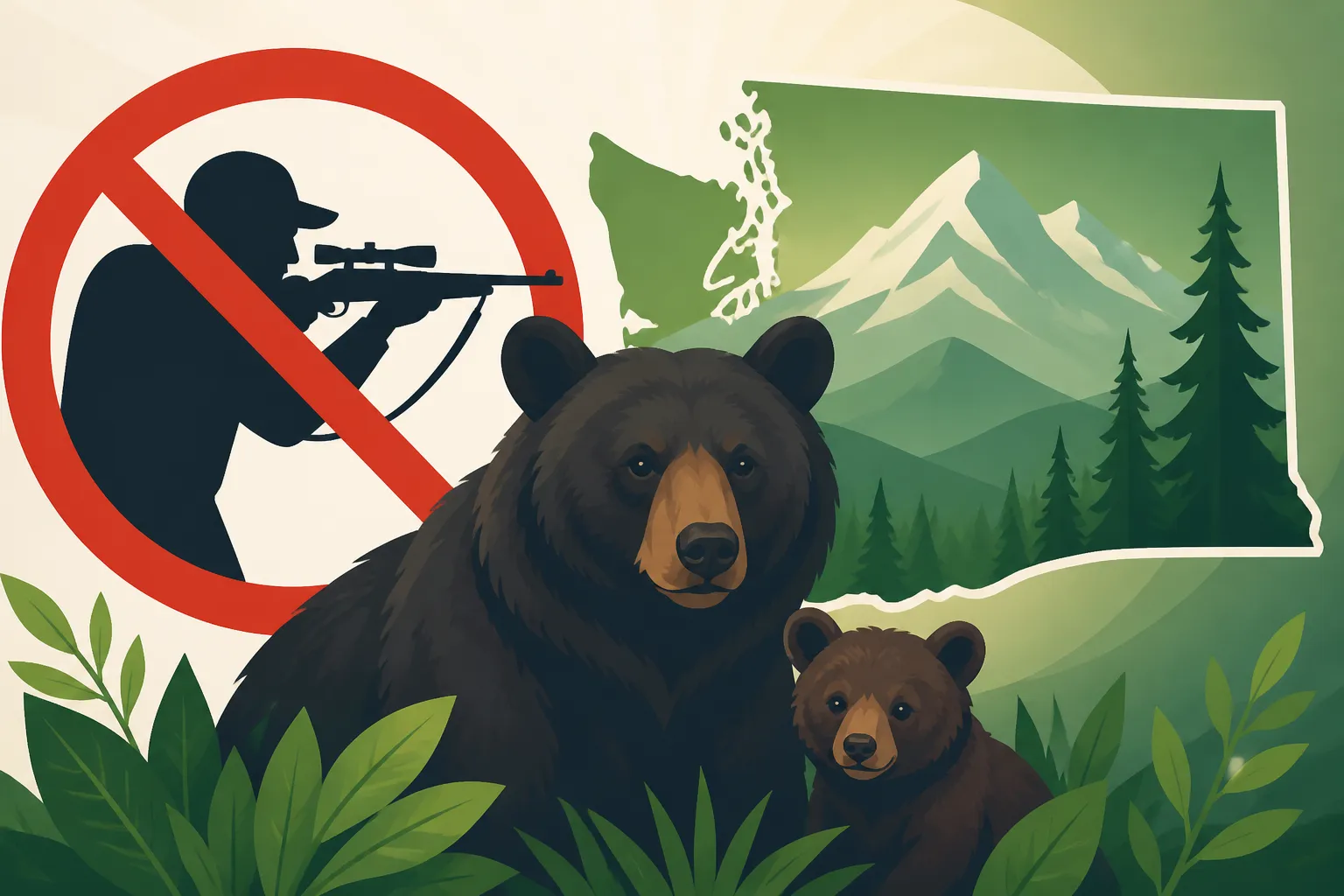
The most significant and frequently cited biological concern driving the decision was the risk of accidentally orphaning bear cubs. In the spring, sows emerge from their dens with newborn cubs, which are tiny and entirely dependent on their mothers for survival. While hunters are legally required to identify their target and avoid shooting sows with cubs, distinguishing a sow from a boar, or even seeing small cubs hidden in dense undergrowth, can be incredibly challenging in early spring conditions. Bears often emerge with coats still thick and shaggy from hibernation, making physical differences subtle.
A hunter might spot what appears to be a solitary bear, only to discover too late that a cub was trailing behind or waiting nearby. Orphaned cubs, especially very young ones, face extremely low survival rates. Without their mother's milk, protection, and guidance in finding food, they are highly vulnerable to starvation, predation, and exposure. This concern raised significant ethical flags for many, including some within the WDFW, who felt the potential for unintended harm to the youngest and most vulnerable members of the bear population was too great to justify the hunt. While many experienced hunters are meticulous in their identification, the inherent difficulty, coupled with the critical developmental stage of spring cubs, made this a powerful argument against the season.
Ethical and Public Perception Debates
Beyond the biological concerns, a substantial portion of the debate revolved around ethical considerations and public perception. Animal welfare organizations argued that hunting bears shortly after they emerge from hibernation, when they might be lethargic and focused on finding their first spring meals, was inherently unethical. The image of a bear freshly out of its den, sometimes still groggy, struck many as an unfair advantage for the hunter. The most potent ethical argument, however, was tied directly to the cub issue: the idea of potentially killing a nursing mother, even accidentally, generated considerable public opposition.
This moral dimension wasn't just about animal rights; it touched on broader societal views about hunting and wildlife. As society becomes increasingly urbanized, public understanding of hunting's role in conservation can sometimes wane, and emotional arguments about individual animals often gain traction. The WDFW Commission, as a public body, must consider these perceptions, as they influence legislative support, funding, and the overall social license to hunt. Even if the science suggests a sustainable harvest, if public opinion heavily opposes a particular season on ethical grounds, it can become politically untenable. This clash between traditional hunting values and evolving public ethics played a critical role in shaping the final decision, highlighting that wildlife management in a diverse society is as much about people as it is about animals.
Data and Management Uncertainty
Another significant factor contributing to the cancellation was a perceived lack of sufficiently robust and granular data specifically related to the spring bear hunt's impact. While the WDFW generally tracks bear populations through various methods, the specific effects of a spring harvest on cub survival rates or localized population dynamics were debated. Critics argued that the WDFW lacked sufficiently precise tools to monitor and manage the spring hunt in a way that fully guaranteed the avoidance of significant impacts on sow and cub survival.
For example, accurately determining the exact number of sows with cubs in specific hunting units, or the precise proportion of sows being taken during a spring season, can be complex. Bear population surveys, often relying on hair snares or sightability models, are generally conducted across broader areas and might not offer the fine-tuned data needed to assess the spring hunt's unique risks. This uncertainty, whether real or perceived, played into the hands of those advocating for the season's cancellation. In the absence of overwhelmingly clear data demonstrating minimal risk to cubs and population stability under spring hunting conditions, the Commission leaned towards a more conservative approach. This emphasizes the critical role data plays in modern wildlife management and how gaps in information, or debates over its sufficiency, can lead to significant policy shifts.
The Shift to Fall Bear Management and Future Considerations
With the spring bear hunt now a part of Washington's hunting history, the focus has entirely shifted to the fall bear season for population management and hunter opportunity. This change has necessitated an adjustment for hunters and a renewed emphasis on understanding bear behavior throughout the fall. It also highlights the ongoing dialogue between hunters, wildlife managers, and the broader public about the future of hunting in Washington.
Enhanced Fall Bear Opportunities
Following the termination of the spring season, the WDFW has redirected its management efforts primarily towards the fall bear hunts. These seasons are generally longer, often running from August through November or even into December in some areas, offering a much wider window of opportunity for hunters. The geographical scope of fall bear seasons is also quite broad, encompassing a large portion of the state where black bears are present, from the dense timber of Western Washington to the more open country of the Eastside. This extended period allows hunters more flexibility in their schedules and more time to scout and pursue bears.
One of the key advantages of a fall hunt, from a management perspective, is that cubs are typically much older, larger, and more independent by this time, significantly reducing the risk of orphaning them. This aligns better with the ethical concerns raised during the spring debate. Hunters often find success in the fall by targeting areas rich in seasonal food sources like berries (huckleberries, blackberries), acorns, and apples, or by glassing clearcuts where bears forage. Platforms like GoHunt become invaluable here, allowing hunters to research specific Washington Black Bear Season Dates for their chosen GMUs and to understand historical harvest data. While the tactics for a fall hunt differ from spring, involving more focus on late-season feeding patterns and less on freshly emerged bears, the plentiful opportunities ensure that hunters can still participate in managing Washington's healthy black bear population. For those looking to get out, understanding Spot-and-Stalk Bear Hunting in Washington Without Bait is crucial for success.
Understanding Bear Ecology and Management Goals
Washington is home to a robust and healthy black bear population, estimated to be between 25,000 and 30,000 animals. These bears are incredibly adaptable, inhabiting diverse landscapes across the state, from sea level rainforests to high-elevation mountain slopes. Their annual life cycle is intrinsically linked to seasonal food availability. They emerge from dens in late winter or early spring, driven by intense hunger, initially seeking out green vegetation, roots, and grasses. As spring progresses, they move to areas rich in berries, and by late summer and fall, they are hyperphagic, meaning they eat almost constantly to lay down fat reserves for the upcoming hibernation. This is why targeting areas Where Bears Feed in Early Fall is so effective.
The overall goals of bear management in Washington are multifaceted. They include maintaining healthy and viable bear populations, minimizing human-bear conflicts, protecting timber and agricultural interests, and providing sustainable hunting opportunities. While the spring hunt's primary justification often revolved around timber damage mitigation, the WDFW now focuses on achieving these goals through a robust fall season and other non-lethal management strategies. The emphasis is on proactive management to prevent problems before they start, such as educating the public on how to "bear-proof" their properties and manage attractants. The discontinuation of the spring hunt reflects a shift towards management strategies that, while still providing hunter access, more explicitly address public concerns about cub vulnerability during certain times of the year, underscoring the dynamic nature of wildlife conservation in the modern era.
Advocacy and Future Advocacy
The debate surrounding the spring bear hunt was a powerful demonstration of the influence that various advocacy groups wield in shaping wildlife policy in Washington. From well-organized animal welfare organizations to passionate hunting and conservation groups, each plays a vital role in bringing different perspectives to the WDFW Commission. For hunters, it highlighted the critical importance of being informed and engaged in the rule-making process. The WDFW Commission holds regular Washington Fish and Wildlife Commission Rule Meetings where policies are discussed, and the public has opportunities to provide input.
If you care deeply about hunting opportunities and sound wildlife management, actively participating in these processes is paramount. This can involve attending meetings, submitting written comments, or working with organizations like the Washington Wildlife Federation, which advocate for hunting and conservation. Platforms like GoHunt also track changes in regulations and provide insights into potential future rule-making, serving as an excellent resource for staying current. It's a continuous conversation, and the outcome of the spring bear hunt vote demonstrates that public engagement, whether from a pro-hunting or animal welfare stance, can significantly influence decisions. Understanding how to navigate these processes and make your voice heard, whether by Commenting on a Washington Hunting Rule or engaging with local representatives, is essential for shaping the future of hunting in Washington. Moreover, fulfilling your Washington Harvest Reporting Requirements is a simple but crucial way to contribute to the data that informs future management decisions, ensuring the WDFW has the most accurate picture of harvest rates and population health.
Here's a quick comparison of spring versus fall bear hunting in Washington:
| Feature | Traditional Spring Bear Hunt (Pre-2022) | Current Fall Bear Hunt (Post-2022) |
|---|---|---|
| Primary Driver | Timber damage mitigation, population control, hunting opportunity | Population control, human-bear conflict reduction, hunting opportunity |
| Cub Risk | Higher risk of accidentally orphaning cubs (primary concern for cancellation) | Significantly lower risk of orphaning cubs (older, more independent) |
| Bear Behavior | Emerging from dens, seeking early greens, often lethargic | Hyperphagic, actively feeding on berries/mast to build fat reserves |
| Season Length | Shorter, specific periods, often late spring/early summer | Longer, typically August through November/December, widespread |
| Hunting Tactics | Spot-and-stalk on green-up slopes, still-hunting | Spot-and-stalk on feeding areas (berries, acorns), glassing clearcuts |
| WDFW Management Focus | Balanced with other seasons; now fully shifted to fall | Primary season for harvest goals and population management |
| Public Perception | Significant ethical concerns due to cub vulnerability | Generally more accepted, less public controversy over ethical concerns |
Disclaimer
The information provided in this article is for general guidance and informational purposes only. Hunting regulations, seasons, and access rules in Washington are subject to change by the Washington Department of Fish and Wildlife (WDFW). Always consult the most current WDFW hunting pamphlets, regulations, and official online resources before planning or engaging in any hunting activities. Hunters are responsible for knowing and adhering to all applicable laws and regulations.