Washington Cougar Season Length
Trying to figure out Washington's cougar season length can feel like chasing a ghost through the timber. Unlike deer or elk, there aren't many set-in-stone dates you can just circle on a calendar. Instead, you're constantly on alert, checking updates, and hoping your chosen unit stays open long enough to get out there. This guide is all about cutting through that confusion, explaining exactly how Washington manages its cougar seasons, and helping you understand what it takes to be ready when opportunity knocks.
Understanding Washington's Unique Cougar Management System
Washington's approach to cougar hunting seasons is probably one of the most dynamic and, frankly, frustrating systems for hunters to navigate. We don't have static, month-long seasons that run from opening to closing day regardless of harvest. Instead, the Washington Department of Fish and Wildlife (WDFW) uses what are called "harvest guidelines" or quotas for specific Game Management Units (GMUs). This means the season length isn't predetermined; it depends entirely on how many cougars are harvested within a particular unit before a set threshold is met.
This adaptive management system is designed to keep cougar populations healthy and within biological objectives, but for hunters, it creates a constant sense of uncertainty. You might plan a hunt for a specific week, only to wake up and find your unit has closed overnight because the harvest guideline was reached. It's a completely different ballgame than hunting for a whitetail deer where you know the rifle season starts and ends on precise dates, no matter what.
Why Cougar Seasons Aren't Fixed Dates
The primary reason Washington cougar seasons don't have fixed dates like other big game is due to the state's reliance on harvest guidelines rather than strict season calendars. These guidelines are essentially quotas set by WDFW for specific GMUs, based on population estimates, cougar sightings, and depredation reports. Each GMU has a specific number of cougars that can be harvested by hunters, and once that number is met, the unit closes to cougar hunting, often with very little warning.
This system is a direct response to the need for precise population management. Cougars are apex predators, and their numbers can fluctuate based on prey availability, habitat, and other environmental factors. By using harvest guidelines, WDFW can actively manage cougar populations unit by unit, ensuring that local populations aren't over-harvested while still providing hunting opportunities. It also allows them to respond to situations where cougar populations might be growing too large, potentially leading to increased conflicts with livestock or other wildlife.
The Role of I-655 and Adaptive Management
The way cougar hunting is managed in Washington was significantly altered by Initiative 655 (I-655) in 1996, which effectively banned the use of hounds for cougar hunting in Washington. This legislative change forced WDFW to rethink its entire cougar management strategy, as traditional hound hunting had been a primary method for regulating cougar populations. The ban meant that WDFW could no longer rely on methods that allowed for more targeted and efficient harvest, leading to the development of the current adaptive management system. For a deeper dive, understanding What I-655 Banned for Cougar Hunters can illuminate the history.
In the years following I-655, WDFW developed protocols to manage cougar populations without hounds, emphasizing general hunting seasons and the harvest guideline system. This adaptive approach means that harvest numbers are closely monitored, and seasons can be extended or shortened based on real-time data. It's an ongoing effort to balance public safety, livestock protection, and sustainable cougar populations, all while operating under the constraints of the hound ban. The system is constantly refined, and hunters often feel like they are part of a grand, evolving experiment in predator management.
Navigating the Harvest Guidelines and Real-Time Closures
One of the biggest headaches for Washington cougar hunters is the real-time nature of season closures. You can't just buy a tag, consult a paper pamphlet from last year, and assume you're good to go. The season is open until it's not, and "not" can happen at any moment, especially in popular units. This requires hunters to be incredibly diligent, checking for updates almost daily once they start hunting or even as they prepare for a trip. The frustration is real; nobody wants to drive for hours, get into their hunting spot, and then learn their unit closed the day before.
The key to navigating this system is constant vigilance and knowing exactly where to find the most up-to-date information. WDFW does its best to disseminate closure information quickly, but it's ultimately the hunter's responsibility to verify the status of their unit before they ever pull a trigger. This proactive approach is non-negotiable for cougar hunting in Washington.
Checking WDFW for Open Units and Closures
The most critical resource for any Washington cougar hunter is the WDFW website. Specifically, you'll need to bookmark the "Cougar Hunting Seasons & Regulations" page, which typically features a real-time table or map showing the current status of each GMU's harvest guideline. This online portal is where WDFW posts whether a unit is "Open," "Closing Soon," or "Closed" to cougar hunting. They also often provide a phone hotline for updates, which can be useful if you're in an area with spotty cell service and need to confirm before heading out.
When you're actively hunting, or even just scouting, it's paramount to check this page daily, if not multiple times a day. Some GMUs, particularly those with smaller guidelines or higher hunter pressure, can meet their quota and close very rapidly. Imagine you're out in the Wenas Wildlife Area Hunting and you've found fresh cougar sign. Before you commit to a full day of tracking, a quick check of the WDFW site could save you from inadvertently violating regulations. Many hunters use services like GoHunt that integrate WDFW data and can provide real-time notifications, making the process a bit less tedious. GoHunt's mapping features can also help you visualize unit boundaries and their current status, streamlining your planning.
What Happens When a Guideline is Met
When a cougar harvest guideline is met in a particular GMU, WDFW acts swiftly to close that unit to cougar hunting. Typically, WDFW will issue a "closed" notification on their website, often effective immediately or within 24-48 hours. This quick turnaround is essential to prevent over-harvesting the local cougar population. It's a hard and fast rule: if the unit is closed, it's closed, and any cougar harvested after the effective closure time is an illegal take.
The consequences of harvesting a cougar in a closed unit can be severe, ranging from hefty fines to potential loss of hunting privileges. This is why the constant checking, even with helpful tools like GoHunt, is so vital. If you harvest a cougar, you are required to report it to WDFW within 24 hours anyway, which helps them track harvest numbers and determine if a guideline is approaching or has been met. This mandatory reporting is crucial to the success of their adaptive management strategy. For a broader look at the system, check out Washington Cougar Harvest Guideline Closures.
Here's a simplified look at how some hypothetical cougar management units might operate under harvest guidelines:
| GMU Name | Total Harvest Guideline | Cougars Harvested (Current) | Status | Notes |
|---|---|---|---|---|
| Wenaha-Tucannon | 6 | 3 | Open | Often closes in late December |
| Naneum | 10 | 9 | Closing Soon | High hunter pressure, check daily |
| Colockum | 8 | 1 | Open | Larger unit, typically stays open longer |
| Willapa Hills | 4 | 4 | Closed | Reached guideline on Nov 15th |
| Blue Creek | 5 | 0 | Open | Remote, often open until March |
Please note: The numbers and dates in this table are entirely hypothetical for illustrative purposes. Always consult the official WDFW website for real-time, accurate information.
Typical Season Framework and When to Expect Hunting Opportunities
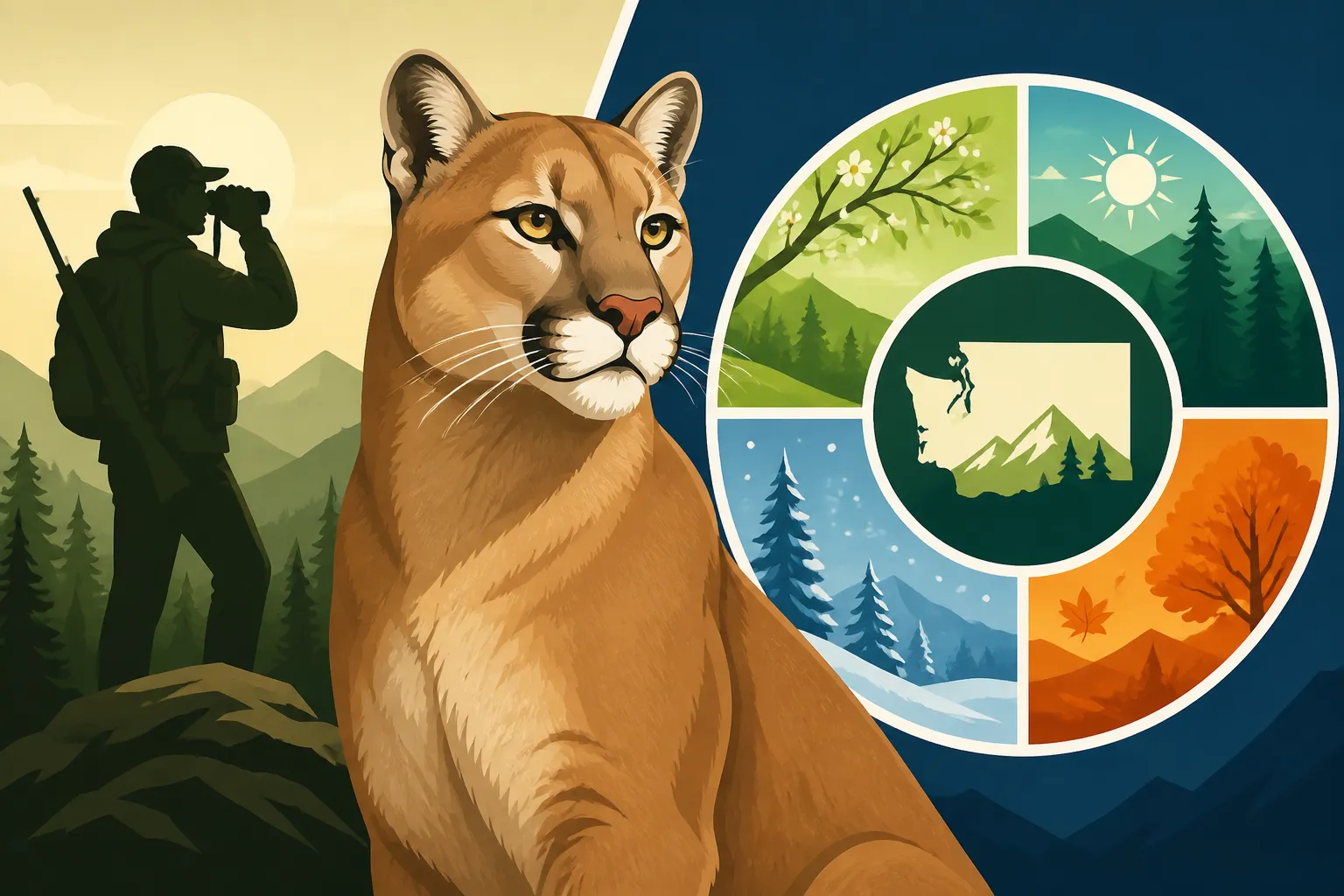
While the exact closure dates are a moving target, Washington cougar hunting generally follows a predictable framework for when seasons typically open and when they are most likely to remain open. The general cougar season often kicks off on September 1st, coinciding with many early deer and elk seasons. However, the season can extend all the way through the end of March the following year, given that a unit's harvest guideline hasn't been met.
This means you essentially have two main windows of opportunity: an early fall period and a much longer winter period. Each of these offers distinct advantages and challenges, and understanding them can help you plan your hunts more effectively, even with the uncertainty of potential closures. Many hunters prefer one period over the other based on their preferred hunting style and available time.
Early Season Opportunities and Challenges
The early cougar season in Washington typically opens on September 1st, running concurrently with archery elk, modern firearm deer, and other early big game hunts. This offers an excellent opportunity for hunters already in the field for other species to carry a cougar tag. Imagine you're out Archery Elk Hunting in Washington's September Season and you cut a fresh cougar track—if your unit is open, you've got a shot at two species. This overlap is a significant benefit, allowing hunters to maximize their time in the woods.
However, early season cougar hunting presents its own set of challenges. The dense vegetation and often warm, dry conditions in September and October make it incredibly difficult to spot cougars or find clear tracks. Without snow, finding fresh sign often means relying on game trails, scat, or kill sites. Furthermore, calling can be less effective due to the abundant natural prey and dense cover. Success in the early season often comes down to pure luck, extensive scouting, or hunting areas with high deer and elk densities where cougars are likely to be active.
Late Season Hunting and the Value of Snow
For many Washington cougar hunters, the real season begins when the snow starts to fly. The late season, generally from December through March, is often considered the prime time for cougar hunting due to the invaluable advantage that snow provides. Fresh snow cover transforms the landscape into a giant tracking board, making it exponentially easier to locate cougar tracks and follow a cat. This is where dedicated cougar hunters really come alive. For great tips, check out Finding Cougar Tracks Without Hounds.
The consistent tracking conditions offered by snow can significantly increase success rates. Finding a fresh track in the morning and committing to following it can turn into an exciting, all-day pursuit. Temperatures are also much cooler, which can keep cougars more active during daylight hours and also helps with meat care if you're successful. The challenge, of course, is navigating potentially difficult winter conditions, including road closures due to snow, cold temperatures, and limited daylight hours. However, the ability to read Reading Cougar Sign in the Snow often outweighs these difficulties, making the late season the most productive period for many.
Key Considerations for a Successful Washington Cougar Hunt
Beyond just knowing the dynamic season dates, a successful cougar hunt in Washington requires a deep understanding of the animal, its habitat, and the tactics that work in the absence of hounds. It's not a hunt for the faint of heart or the unprepared. Cougar hunting often involves long days of walking, meticulous scouting, and the patience to follow a faint track for miles. It demands a different kind of dedication than a stand hunt for deer or a road hunt for elk.
Preparation is paramount, both in terms of physical fitness and mental fortitude. Knowing your unit, understanding cougar behavior, and having the right gear can make all the difference when those rare opportunities arise. For more in-depth tactical advice, considering Cougar Hunting in Washington After the Hound Ban would be extremely beneficial.
Scouting and Understanding Cougar Behavior
Effective scouting is the bedrock of a successful Washington cougar hunt. Since you can't rely on hounds to find them, you need to understand where cougars are likely to be. This means focusing your efforts on areas with high densities of their primary prey species, particularly deer and elk. Cougar Territory and Movement is directly tied to the availability of food, so look for concentrations of deer and elk, especially on winter ranges or in areas where they funnel through narrow terrain.
Scout for cougar sign such as tracks, scat, and kill sites. Cougar kills are often cached or covered with debris, so keep an eye out for disturbed areas, fresh dirt, or piles of leaves and sticks. Learning to differentiate cougar tracks from other animals is crucial; they typically show no claw marks and have a distinct, asymmetrical paw pad. Pay attention to ambush points, benches, and thick cover near game trails—these are prime spots where a cougar might lay in wait. Using satellite imagery or tools like GoHunt can help you identify potential travel corridors, pinch points, and areas of dense cover where cougars are likely to operate.
Gear and Tactics for Washington Cougar Hunting
Given the nature of cougar hunting in Washington, your gear and tactics will differ significantly from other big game hunts. Your primary tactic will likely be still-hunting, tracking, or calling. This means a focus on quiet movement, good optics for spotting sign, and durable, comfortable footwear for covering a lot of ground. Since you're often covering vast distances in rugged terrain, a reliable GPS or mapping app with offline capabilities is essential, especially with Washington's Green Dot Road Systems.
For calling, a good quality predator call (mouth or electronic, where legal) can be effective, though it requires patience and a good understanding of how long to sit a stand. Fawn distress calls or rabbit distress sounds can sometimes draw in a curious cougar. Remember, stealth and scent control are just as important when calling cougars as they are for deer or elk. Consider packing a lightweight pack with essentials like water, snacks, a first-aid kit, and good game bags for meat care, as you'll often be far from your vehicle if you're successful. Rifles chambered in common deer/elk calibers are typically sufficient, adhering to Washington's minimum rifle caliber rules.
Disclaimer
Please be aware that hunting regulations, season dates, and harvest guidelines are subject to change. It is your sole responsibility to check the most current Washington Department of Fish and Wildlife (WDFW) regulations, laws, and emergency closures before engaging in any hunting activity. This guide is for informational purposes only and does not supersede official WDFW publications or legal requirements.