Where Bears Feed in Early Fall
Trying to pin down where Washington's black bears are feeding in early fall can feel like chasing a ghost. One day you see scat full of berries, the next you're walking through the same patch and it's empty, leaving you wondering if you're even in the right country. This guide is all about cutting through that frustration, giving you a detailed breakdown of the prime food sources and locations where black bears concentrate their efforts across our diverse Washington landscapes as summer transitions into the crisp days of early autumn.
Understanding Early Fall Bear Behavior in Washington
As the calendar pages turn from August to September, a profound shift occurs in the lives of Washington's black bears. Their entire existence becomes singularly focused on one critical mission: packing on as many calories as humanly possible before the long winter slumber. This intense feeding period, often referred to as hyperphagia, drives their movements and dictates where you'll most likely find them.
Why Early Fall is a Prime Time for Bear Activity
You see, bears aren't just casually munching on whatever they find. They're on a frantic deadline. Their survival through the lean winter months depends entirely on the fat reserves they can build up right now. This means they're spending a massive amount of their day actively foraging, sometimes for up to 20 hours a day! This urgency makes early fall a fantastic time for hunters and observers alike, as bears are often less wary and more predictable in their pursuit of food. They'll frequent the richest food patches repeatedly, sometimes ignoring human presence more than they would in other seasons, simply because the need to eat overrides their natural caution. It's a race against the clock, and they're fully committed to winning it.
The Importance of Food Sources in Bear Movement
Think of bear movement like a treasure hunt, and the treasure is high-calorie food. Unlike elk or deer that might rely heavily on specific browse throughout the year, a bear's diet is incredibly varied and opportunistic. They're literally driven by their stomachs. If a huckleberry patch is producing heavily, that's where they'll be. If a hazelnut stand is dropping nuts, they'll relocate. This makes understanding the seasonal availability of different foods absolutely paramount to finding bears. Their home range might encompass vast areas, but their current "hot spot" is always tied directly to the most abundant and calorie-dense food source available at that moment. Neglecting this fundamental truth is often why hunters struggle to consistently locate bears.
Seasonal Shifts and Their Impact on Feeding
The transition from summer to early fall is a critical period of dietary change for bears. In summer, they might be relying on tender forbs, grasses, and early ripening berries like salmonberries and thimbleberries in western Washington, or perhaps supplementing their diet with insects and carrion across the state. But as early fall arrives, a whole new suite of foods becomes available, often much richer in carbohydrates and fats. This shift isn't just about what's available, but also about what provides the most bang for their caloric buck. They'll abandon less productive areas for places exploding with high-energy forage. This means that a spot that was dead in July might be swarming with bears in September, and vice-versa. Understanding these plant phenology cycles is a huge leg up in your scouting efforts.
Key Early Fall Food Sources for Washington Black Bears
If you want to find bears, you absolutely have to think like one: where's the easiest, most calorie-rich meal to be had? In early fall across Washington, it almost always comes down to a handful of critical food sources that bears will travel miles to exploit.
Ripening Berries: A Bear's Favorite Buffet
This is hands-down the number one early fall food source for black bears in Washington. Our state is a berry paradise, and bears are well aware of it. They'll spend countless hours gorging on these sugary treats to build up their fat reserves.
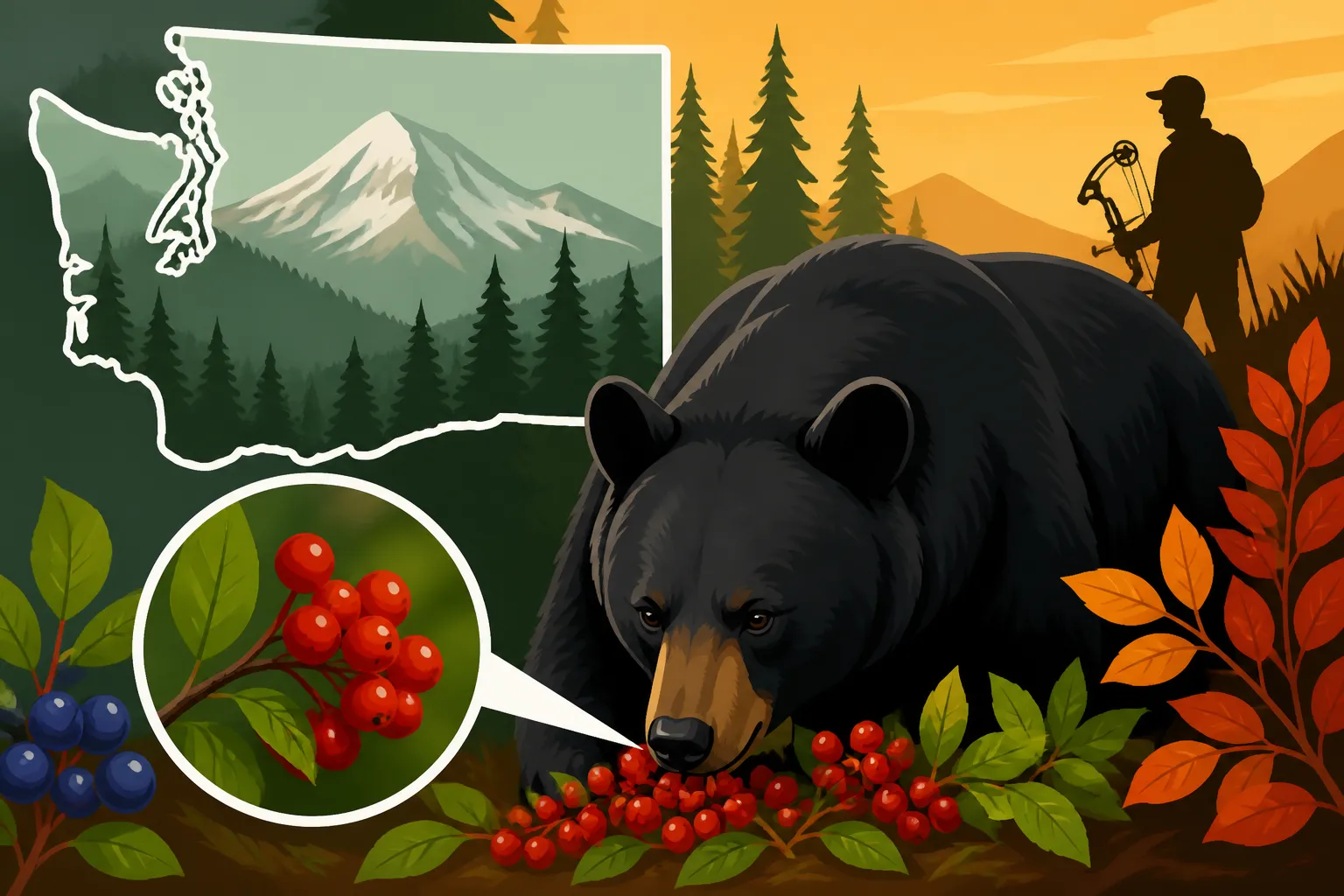
Huckleberries: These are the kings of bear food, especially in the Cascade and Blue Mountains. Huckleberries (various Vaccinium species) grow in open clearcuts, under power lines, and along old logging roads, particularly at mid to high elevations. A thriving huckleberry patch will often have disturbed bushes, piles of black or purple scat, and even broken branches where bears have climbed to reach the juiciest berries. These plants can carpet acres of ground, providing an endless feast. Early fall is peak season for many huckleberry varieties, and bears will literally camp out in these areas.
Blackberries: While often seen as a nuisance by humans, Himalayan blackberries (Rubus armeniacus) are a significant food source for bears, particularly in lower elevation, disturbed areas across Western Washington. They thrive on the edges of agricultural fields, along old fence lines, and in abandoned pastures. Bears will tear through these thorny thickets, leaving clear paths and copious amounts of berry-filled scat. The sheer volume of berries produced by these invasive plants makes them irresistible.
Elderberries and Salmonberries: These can also be important depending on the area. Elderberries (Sambucus spp.) often grow in riparian zones and forest edges, while salmonberries (Rubus spectabilis) are more common in moist, coastal environments. While not as widespread or abundant as huckleberries or blackberries, where they are present in good numbers, bears will certainly take advantage. Knowing your local flora, or what a Bear Diet Through the Washington Seasons entails, will really help here.
Acorns and Other Mast Crops
While not as universally distributed as berries, hard mast — particularly acorns — can be a critical late-season food source in certain parts of Washington.
Oak Stands: In regions like the Columbia Basin, Klickitat County, and other scattered areas where oak trees (Quercus garryana – Oregon white oak) are present, acorns become a highly sought-after food. These nutrient-dense nuts are packed with calories and fats, making them incredibly valuable for bears preparing for hibernation. Bears will congregate under oak trees, especially those with heavy acorn production, and you'll find fresh diggings, torn-up duff, and dark, pellet-like scat indicating their presence. Spotting bears on these slopes can be a challenge, so finding the trees first is key.
Hazelnut and Other Nuts: While less common or abundant than acorns, other mast crops like hazelnuts (Corylus cornuta) can provide additional calories. Bears are intelligent and adaptable, and they quickly learn where these seasonal riches can be found. Keep an eye out for these trees in your scouting efforts, especially if you're hunting areas known for them.
Agricultural Fields and Orchards
This is where human development can directly influence bear behavior, creating both opportunities and challenges for hunters.
Orchards and Fruit Trees: Washington is famous for its apples, pears, and other fruits. Abandoned orchards, old homesteads, and even the edges of active orchards can become bear magnets in early fall. Bears will raid these trees, sometimes breaking branches in their eagerness to get at the sweet fruit. You'll often find distinct bear trails leading into these areas from the surrounding timber. This can be a high-reward, high-risk situation, as bears frequenting these areas are often bolder and more habituated to humans.
Corn and Other Crops: While not as prevalent as in some other states, patches of corn or other calorie-rich crops can attract bears. They'll often enter fields at night, leaving flattened stalks and distinctive tracks. Be aware that hunting bears in or around active agricultural fields often comes with strict regulations or landowner permissions that must be meticulously followed. Always check the specific GMU regulations in the latest pamphlet.
Scavenging and Opportunistic Feeding
Bears are incredibly opportunistic, and they won't pass up an easy meal, especially when their drive to gain weight is so strong.
Roadkill and Carrion: Unfortunately, collisions with vehicles provide an unintended food source. Bears will readily feed on roadkill. While you certainly can't hunt bears over roadkill, it's a good indicator that bears are in the general area and moving across the landscape. Similarly, during early deer and elk seasons, gut piles left behind by successful hunters become irresistible attractants. These sites can be hotbeds of activity. Understanding Why Washington Bans Bear Bait is crucial here; while gut piles are legal for bears to find, you can't deliberately create one to lure a bear.
Fish Carcasses: In areas near salmon spawning streams, especially as runs begin in late summer and early fall, bears will feast on dead or dying salmon. This is more common in remote coastal drainages or larger rivers on the west side. Look for torn-up carcasses on riverbanks and fresh tracks in the mud.
Locating Bear Feeding Areas: Practical Scouting Tips
Knowing what bears eat is only half the battle; the other half is knowing where to find those foods and how to identify active bear use. This is where your scouting skills truly come into play.
Reading the Landscape for Food Signs
Successful bear hunters are keen observers of the landscape, able to pick out potential feeding areas from a distance and then confirm them on the ground.
Elevation and Aspect: Huckleberries, for example, tend to grow best on south-facing slopes at mid to high elevations, where they receive ample sunlight. Use your maps and binoculars to identify these specific terrain features. Avalanche chutes can also be great places to find early season vegetation that attracts bears; learning how to effectively scout Spotting Bears on Avalanche Chutes can really pay off. Similarly, oak stands might prefer well-drained slopes at lower elevations. Understanding these micro-habitat preferences will help you narrow down your search immensely. Don't just look for any timber; look for the right timber that supports bear food.
Clearcuts and Riparian Zones: Recent clearcuts, especially those 3-15 years old, are often prime locations for berry production. The increased sunlight allows ground cover to flourish. Overgrown logging roads and skid trails within these clearcuts can also be rich with berries. Riparian zones, or areas along streams and rivers, often hold elderberries and other moisture-loving plants. These areas also serve as natural travel corridors for bears moving between feeding areas.
Burn Areas: While fire can devastate some food sources, two to three years post-fire, many areas experience a flush of new growth, including berries and other forage that bears love. New green-up in these areas can be absolute magnets, so don't overlook old burn scars on your maps.
Identifying Bear Sign Around Food Sources
Once you've identified a promising area, it's time to get on the ground and look for undeniable proof that bears are actively using it.
Tracks and Scat: These are your most obvious indicators. Fresh bear tracks in mud or soft dirt near a berry patch or an old orchard mean a bear has been there recently. Scat (feces) full of berries, nuts, or fruit confirms not only presence but also what they're eating. The fresher the scat, the more recently the bear was there. Keep an eye out for larger piles, which often indicate an adult bear, helping you assess Judging Bear Size at Distance.
Disturbed Vegetation and Claw Marks: Bears are not dainty eaters. In a berry patch, you'll see broken branches, flattened bushes, and sometimes even a "bear bed" where they've flattened an area to rest while feeding. Around fruit trees, look for broken branches or claw marks on the bark where they've climbed. In oak stands, you might see areas where they've rooted around in the duff for fallen acorns. These visible signs tell a clear story of recent activity.
Utilizing Resources for E-Scouting and Intel
In today's hunting world, you have powerful tools at your fingertips that can drastically cut down on your scouting time and boost your success.
Mapping Software (GoHunt): Platforms like GoHunt are invaluable. They allow you to layer satellite imagery with public land boundaries, historical burn data, clearcut maps, and even specific vegetation types. You can mark potential berry patches, oak stands, or old orchards from the comfort of your home, saving countless hours of boots-on-the-ground searching. Use the topo lines to identify those south-facing slopes and elevation bands that are often prime for huckleberries. Being able to visualize the terrain and potential food sources is a game-changer for E-Scouting a Washington GMU From Home.
Trail Cameras: While not legal for baiting, strategically placed trail cameras can be excellent for monitoring travel corridors or the edges of known food sources. You can use them to confirm bear presence and even get an idea of their activity patterns around a specific berry patch or water source. Just remember to adhere to Trail Camera Rules on Washington Public Land. A camera placed on a well-used game trail leading into a huckleberry field can tell you a lot about when bears are moving.
Local Knowledge and WDFW Resources: Don't underestimate the power of talking to locals, forest service employees, or even checking WDFW resources. Sometimes, the best intel comes from someone who lives and breathes the local country. Always cross-reference with the latest Washington Big Game Pamphlet for specific season dates and regulations like Washington Black Bear Season Dates and Sows With Cubs and the Legal Line.
Safety and Ethical Considerations When Hunting Bear in Early Fall
Hunting bears, especially on the ground in dense feeding areas, requires a heightened awareness of safety and ethical responsibilities. You're in their pantry, after all.
Bear Encounters and Prevention
Coming face-to-face with a feeding bear can be startling for both you and the bear. While black bears are generally not aggressive, a surprised bear can react defensively.
Making Noise and Carrying Bear Spray: When you're still-hunting or walking through dense cover in a known bear area, make noise. Call out, sing, or talk loudly to alert any bears to your presence. This gives them time to move off. Always carry bear spray (and know how to use it!) in an easily accessible location. This is your last line of defense in a close encounter. Remember, you're looking for a Spot-and-Stalk Bear Hunting in Washington Without Bait scenario, so stealth is good for hunting, but not always for safety while moving through thick areas.
Recognizing Warning Signs: If a bear stands up, woofs, or snaps its jaws, it's giving you a warning. It feels threatened. Back away slowly, make yourself look as large as possible, and continue to speak in a calm, firm voice. Never run, as this can trigger a chase response.
Responsible Hunting Practices
Ethical bear hunting goes beyond just following the rules; it's about respect for the animal and ensuring a quick, clean harvest.
Shot Placement: Bears are incredibly tough animals. Their heavy bone structure, thick fat layers, and dense fur can make proper shot placement challenging. Aim for the vitals (lungs and heart) to ensure a humane kill. A quartering-away shot can be very effective, aiming to exit through the opposite shoulder. Avoid head shots, as the brain is small and often protected, leading to wounded animals. Practice your Rifle Setup for Washington Elk and Deer for bear too.
Meat Care: Just like any big game animal, proper meat care is paramount. Bears carry a lot of body heat, and their meat can spoil quickly, especially if the weather is warm. Get the hide off and the carcass cooled down as fast as possible. The gutless method is an excellent way to quickly break down a bear and get the meat in game bags. Trichinosis is a risk with bear meat, so always cook it thoroughly to at least 160°F (71°C).
Understanding Regulations: Always be absolutely certain of your local GMU regulations. Are there any harvest guidelines in place? Is it an open season? Are there any specific permit requirements beyond your general tag? Washington's hunting regulations are complex and vary by GMU and season. Don't rely on old information; always consult the current WDFW pamphlet.
Washington Bear Food Sources in Early Fall
| Food Source Category | Specific Examples (Washington) | Prime Location Types | Bear Sign to Look For | Typical Elevation/Habitat |
|---|---|---|---|---|
| Berries | Huckleberries (Vaccinium spp.) | Clearcuts, power lines, open forest edges, old logging roads | Purple/black scat, disturbed bushes, broken branches | Mid to high elevations (Cascades, Blues) |
| Himalayan Blackberries (Rubus armeniacus) | Field edges, fence rows, disturbed low-elevation areas | Black/red scat, flattened thorny thickets, distinct trails | Low to mid elevations (Western WA) | |
| Elderberries (Sambucus spp.) | Riparian zones, forest edges, moist areas | Dark scat, broken branches | Low to mid elevations | |
| Mast Crops | Oregon White Oak Acorns (Quercus garryana) | Well-drained slopes, oak woodlands, open timber | Dark, pellet-like scat, fresh diggings, torn duff | Lower to mid elevations (Eastern WA, Klickitat) |
| Hazelnuts (Corylus cornuta) | Forest understory, clearcut edges | Chewed nuts, disturbed ground, scat | Mid elevations | |
| Agricultural | Apples, Pears | Abandoned orchards, old homesteads, edges of active orchards | Broken branches, claw marks on trees, distinctive trails | Lower elevations, near human habitation |
| Corn | Active cornfields, adjacent cover | Flattened stalks, tracks, chewed ears | Lower elevations, agricultural zones | |
| Opportunistic | Roadkill, Gut Piles | Roadsides, fresh kill sites from early deer/elk seasons | Tracks, torn carcasses, scavenging bird activity | Any elevation, near human or hunting activity |
| Salmon Carcasses | Spawning streams, riverbanks, estuaries | Torn carcasses, tracks in mud, fresh fishy odor | Low elevations, coastal/riverine (Western WA) |
Finding bears in early fall across Washington's vast and varied landscape is a rewarding challenge. It requires a deep understanding of their seasonal behaviors, a keen eye for their preferred food sources, and diligent scouting. By focusing on areas rich in ripening berries, mast crops, and understanding their opportunistic nature, you'll significantly increase your odds of locating these incredible animals. Remember, patience, persistence, and a healthy respect for their wild nature are your best tools in the field.
Disclaimer
The information provided in this guide is for general educational and informational purposes only. Hunting regulations, seasons, and access rules can change frequently. Always consult the official Washington Department of Fish and Wildlife (WDFW) regulations, proclamations, and landowner requirements before engaging in any hunting activities. Safety should always be your top priority in the field.