Bugling and Cow Calling in Washington’s Archery Elk Season
Washington's archery elk season is a truly special time, but let's be honest, it can also be incredibly frustrating. You spend months scouting, practicing your shots, and getting in shape, only to have a bull hang up just out of range or silently ghost you after a single, hesitant bugle. The difference between packing out prime elk meat and going home empty-handed often boils down to how well you can speak their language. This comprehensive guide will equip you with the nuanced strategies for bugling and cow calling that are absolutely essential for success in Washington's diverse archery elk season, helping you communicate with greater confidence and draw those wary bulls into bow range.
Understanding Washington Elk Vocalizations
Before you even think about putting a call to your lips, you need to understand why elk call and what their various vocalizations actually mean. It's not just random noise; it's a rich language that tells you a story about their location, mood, and intentions. Misinterpreting these calls or using the wrong one at the wrong time can quickly turn a hot encounter into a frustrating silence.
The Language of the Herd Why Elk Call
Elk communicate for a myriad of reasons, just like we do. They use their voices to locate each other, warn of danger, express aggression, declare dominance, and, most importantly during the rut, to find mates. In Washington, whether you're chasing Roosevelt elk in the dense, wet timber of the Westside or Rocky Mountain elk across the more open, broken country east of the Cascades, understanding these basic motivations is paramount. A lone cow might bugle softly to locate the herd, while a herd bull might rip off an aggressive chuckle to warn off a satellite bull. Each call has a purpose, and learning to differentiate them is like learning the grammar of elk language.
Think about a crisp September morning in the Gifford Pinchot National Forest. You hear a distant bugle, and your heart jumps. Is it a bull proclaiming his territory, or just a lost calf? The context matters immensely. If it's the peak of the rut, that bugle likely has a very different meaning than one heard in the early pre-rut stages. Understanding these foundational elements of elk communication helps you decide if you should respond with a challenge, a subtle invitation, or maybe no call at all. It's about being an active listener before you become a speaker.
Interpreting Different Bugles and Their Meanings
Not all bugles are created equal, and discerning the subtle differences can be your secret weapon. The most common bugle you'll hear is likely a location bugle – a single, often drawn-out sound a bull makes to announce his presence or try to locate other elk. It's a casual "hello, I'm here." Then there's the challenge bugle, which is unmistakable. This often includes a deep growl, a powerful scream, and a series of aggressive chuckles at the end. This is a bull saying, "This is my territory, these are my cows, stay away!" or "I'm coming for you!" You'll typically hear this when bulls are sparring or a herd bull is defending his harem.
A contact bugle is a softer, often intermittent sound used by bulls trying to reconnect with a herd or a specific cow. It's less aggressive, more inquisitive. Finally, though less common in archery season, understanding a post-rut bugle can help you avoid wasting time. These are typically half-hearted, sparse bugles from bulls that are worn out and less interested in fighting or breeding. In Washington's pressured units, especially closer to population centers, bulls can become very shy with their bugles, often only making a few soft sounds to gather their cows. Tools like GoHunt can provide historical data on how vocal bulls in specific GMUs tend to be, helping you tailor your expectations.
Decoding Cow and Calf Chatter
While the bull's bugle gets all the glory, the subtle chatter of cows and calves is often what seals the deal, particularly when targeting wary bulls. Mews are the bread and butter of cow calling. They are soft, nasal sounds that communicate contentment, communication within the herd, or a searching call. A single mew can be a simple "here I am." Chirps are shorter, sharper versions, often used for close-range communication or mild alarm.
The most potent cow call, especially in late September, is the estrus buzz or bark. This is a longer, more drawn-out mew that signifies a cow in heat. It's incredibly attractive to bulls looking for breeding opportunities. Conversely, a lost calf mew or a series of distressed mews can evoke a strong maternal response from cows and draw in curious bulls hoping to find the source of the commotion. In areas with high hunting pressure, like parts of the Blue Mountains or the Naneum unit, bulls might be more responsive to these less aggressive, more natural cow sounds than to a challenging bugle. Learning these nuances is key to becoming a successful Washington archery elk hunter.
Essential Calling Tools for Washington Bowhunters
You wouldn't go to war without the right weapons, and you shouldn't go elk hunting without the right calls. The market is flooded with options, and choosing the right ones for Washington's diverse terrain and elk behavior can feel overwhelming. However, a few key types stand out for their versatility and effectiveness.
Choosing Your Bugle Open Reed, Diaphragm, or External
When it comes to bugling, you generally have three main categories to choose from, each with its own advantages and learning curve. Open reed bugles are often praised for their realistic, clear sounds and ease of use for beginners. They typically involve blowing air over a latex or mylar reed, similar to a duck call. Brands like Bugling Bull Game Calls or Primos make excellent open reed options. Their downside can be that they are not hands-free, which is a major consideration for archery hunters who need to be ready with their bow.
Diaphragm calls are arguably the most versatile and popular choice among seasoned elk hunters. These calls fit in the roof of your mouth, allowing for hands-free operation and a wide range of sounds—from soft mews to aggressive bugles. However, they have a steep learning curve. Mastering the growl, the clear note, and the chuckle takes practice, but once you do, you can produce incredibly realistic and varied sounds. Finally, external bugles combine an external reed with a large chamber. These are often the loudest and easiest to operate for powerful bugles, but they are also the most cumbersome and definitely not hands-free. For deep dives into mastering these, check out Best Bugle Sequence for Early September.
Mastering the Cow Call Diaphragm, External Reed, and Squeeze Bulb
Just like bugle calls, cow calls come in various forms, and often, having a couple of different types in your pack can make all the difference. Diaphragm cow calls offer the same hands-free versatility as their bugle counterparts, allowing you to produce soft mews, chirps, and even estrus calls without moving your hands. This is critical when a bull is closing the distance, and you need to keep your bow ready. It takes practice to achieve the desired tone, but the rewards are immense.
External reed cow calls are fantastic for realism and volume, often producing a very clear, resonant mew. They are easy to use, making them a great choice for new callers or for scenarios where you need to project sound across a larger area, such as a clearcut or open ridge. However, like open reed bugles, they require a free hand. Then there are squeeze bulb cow calls, often called "estrus calls." These are super simple: you just squeeze the bulb, and they emit a high-pitched, often desperate-sounding estrus mew. They are excellent for specific situations, like coaxing a hung-up bull those last few yards, but lack the versatility of other call types. Having a combination, perhaps a diaphragm for close work and an external reed or bulb for initial contact, is a solid strategy. For more on specific sounds, consult Cow Calls That Pull a Bull Off His Herd.
Combining Calls for Realistic Sequences
The real magic happens when you stop thinking of individual calls and start thinking in terms of conversations and sequences. Elk don't make one-off noises; they interact. A realistic calling sequence often starts softly, builds in intensity, and then fades, mirroring a natural interaction. For instance, you might begin with a couple of soft contact mews from a diaphragm call to get attention. If you get a response, you might then introduce a more assertive estrus mew from an external reed, followed by a light, inquiring bugle.
The key is realism and varying the sounds. Don't just blast out the same bugle repeatedly. Mix it up! Try to paint a picture with your calls: a lone cow wandering and calling, followed by a bull responding to her, perhaps with a soft chuckle. Incorporate sounds like tree raking (using a stick or small branch to scrape against a tree trunk) to simulate a bull thrashing his antlers. This adds another layer of realism that can convince a wary bull that he's hearing genuine elk activity, not just a hunter with a call. Remember to practice these sequences at home, not just individual calls, to make them flow naturally.
Bugling Strategies for Washington's Archery Season
Bugling is often seen as the ultimate elk call, the roar of the wild that signals dominance and draws challengers. But in Washington's archery season, it's a tool that needs to be wielded with precision and a deep understanding of the situation. Aggression can pay off, but subtlety often wins the day, especially with high-pressure animals.
Aggressive Bugling When to Challenge a Bull
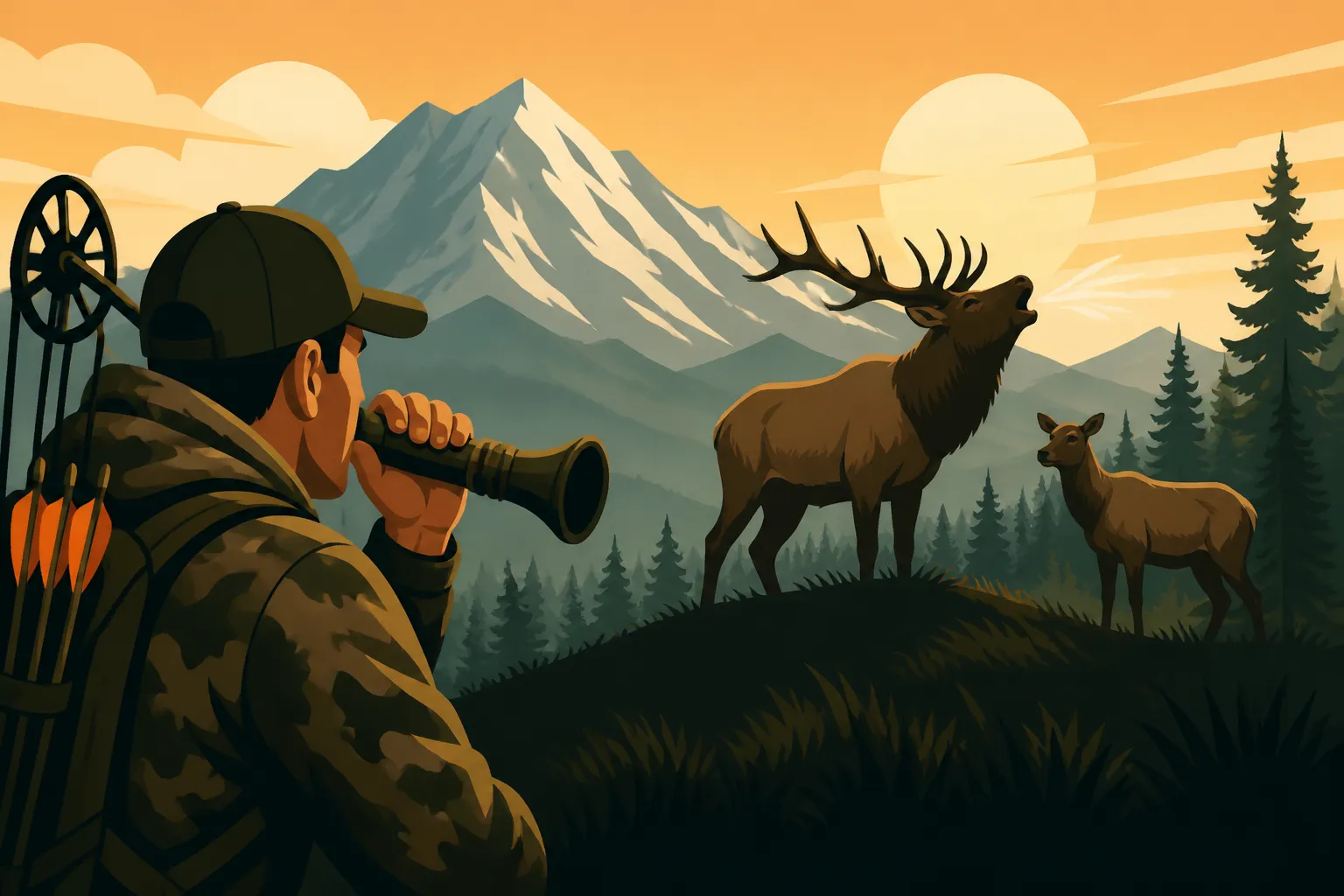
There's a time and a place for an aggressive bugle, and when you get it right, it can be exhilarating. This strategy works best during the peak of the rut (typically mid-to-late September in Washington), when bulls are actively breeding and highly territorial. If you hear a bull letting out strong, confident bugles with chuckles, particularly if he's alone or with a small satellite herd, a challenge might be exactly what's needed. You're essentially saying, "I'm coming for your cows!" or "This is my turf!"
Your challenge bugle should mimic the intensity of the bull you're hearing. A deep, guttural growl followed by a loud scream and a series of aggressive chuckles can incite a charge. However, there's significant risk. An aggressive bugle can also intimidate a smaller, less confident bull into retreating, or a smart, old herd bull might circle downwind to scent-check you, completely busting your setup. This strategy is most effective when you've already located a vocal bull, know his general direction, and can position yourself strategically. Units like the Colockum or Yakima, where bulls can be very vocal, might offer good opportunities for this, but always gauge the bull's initial response carefully.
Subtle Bugling Locating and Drawing in Bulls
For every situation that calls for aggression, there are probably three that demand subtlety. Soft, inquiring bugles are invaluable for locating bulls without immediately putting them on edge, especially in thick timber or during the early and late stages of the archery season when bulls might be less vocal. Think of a simple, single bugle without the growl or chuckles—a "hello, is anyone there?" This can elicit a response from a bull that might otherwise stay silent, allowing you to pinpoint his location without giving away yours too strongly.
This approach is particularly effective for wary bulls or those that have been pressured. In the dense, wet forests of Western Washington, such as the Willapa Hills or parts of the Olympic Peninsula, sound doesn't travel as far, and a softer bugle sounds more natural within the tight confines of the trees. It’s also excellent for late-morning or mid-day calling when bulls are typically bedded and less prone to outright challenges. Your goal here is to draw a bull closer out of curiosity, or simply to get him to respond so you can put a move on him.
Situational Bugling Timber, Openings, and Across Canyons
Understanding how sound travels in different environments is critical for effective bugling. In dense timber, sound is muffled and absorbed, so your bugle will not carry as far. Here, soft, internal-range bugles can be effective, mimicking what a bull would naturally sound like in close quarters. You want to avoid blasting a loud bugle that sounds out of place and makes the bull think something is amiss. Use the trees to your advantage; a bugle bouncing off trunks can make it hard for an elk to pinpoint your exact location.
In openings or clearcuts, your bugle will travel much farther, but it also means the bull can potentially locate you more easily. Here, you can use a bit more volume for initial contact, but then soften your calls as the bull closes the distance. Bugling across canyons requires projecting your call, but also understanding that the echo can make it sound like multiple elk. A single, clear bugle can be more effective than a complex sequence in such terrain, allowing the bull to distinguish your call from the echoes. Always consider the wind, as it dictates how and where your sound travels. Knowing where the elk are likely to be bedding or feeding at different times of day can be easily done with proper E-Scouting Washington GMUs Before the Draw.
Effective Cow Calling Tactics in Washington
While bugles are often about dominance and location, cow calls are about invitation and reassurance. They are the subtle art of seduction in the elk woods, often bringing bulls in closer and calmer than any bugle ever could. Mastering these various mews and chirps can be the key to filling your archery tag.
Maternal and Estrus Calls Drawing in Lonely Bulls
The heart of successful cow calling lies in evoking natural responses, and nothing does this better than the maternal and estrus calls. Maternal mews are soft, pleading calls that mimic a cow looking for her calf, or a cow communicating reassuringly within the herd. These calls can be incredibly effective on lonely satellite bulls or even herd bulls looking to gather more cows. They project a sense of calm and normalcy, making a wary bull feel safe approaching.
Even more potent, especially as the rut progresses through Washington's September archery season, are the estrus mews or "hot cow" calls. These are longer, more drawn-out, and often have a distinct "buzz" or "whine" at the end. An estrus call is a direct invitation, signaling a cow ready to breed. It can drive a bull crazy, pulling him away from his existing cows or drawing him in from a considerable distance. These calls are particularly devastating in the latter half of September when the rut is peaking, and bulls are actively seeking receptive cows. Just remember, a soft, seductive tone is usually far more effective than an overly loud or shrill one.
Lost Calf and Assembly Mews Stirring the Herd
Sometimes, you need to create a sense of urgency or curiosity, and that’s where lost calf and assembly mews come into play. A lost calf mew is a series of distressed, somewhat higher-pitched mews that mimic a calf separated from its mother. This can elicit a strong maternal response from cows, drawing them in to investigate, and in turn, often bringing a bull along with them. It can also pique the curiosity of a bull who might be looking for any signs of elk activity.
Assembly mews are similar but typically sound like multiple cows softly calling to gather the herd. If you hear isolated elk, or you're trying to pull a bull from a scattered herd, these calls can prompt a response. They suggest that there's a group of elk trying to come together, making it an attractive prospect for a lone bull. You can even combine this with light cow chirps and mews to simulate a small, active group. Both of these types of calls are excellent for breaking the silence in an area that seems quiet or for getting an initial read on where elk might be without sounding aggressive.
Soft Calls and Close-Range Deception
Once a bull is committed and closing the distance, your calling strategy needs to shift dramatically. This is where soft calls become paramount. Blasting a loud bugle or cow call when a bull is within 100 yards is a sure way to spook him. Instead, transition to incredibly soft mews and chirps, almost whispers. These sounds are meant to reassure the bull, to make him think he's approaching a contented, natural elk. You want to sound like a cow that's just a few yards ahead, casually feeding or moving through the timber.
The goal of close-range deception is to make the bull walk the final few yards into your shooting lane, always trying to find the source of those soft, alluring sounds. If you're hunting with a partner, this is often the job of the caller, positioned slightly behind or to the side of the shooter. The caller might even use subtle sounds like lightly raking a tree or rustling leaves to mimic natural elk movement. This final, subtle persuasion is critical for getting a broadside or quartering away shot on a bull that’s within legal archery range, especially in Washington's typically thick cover. The effectiveness of these soft calls highlights why Archery Practice for Wet Coastal Conditions is so important, as you need to be ready when that bull steps out silently.
Reading Elk Responses and Adjusting Your Approach
Calling elk isn't a monologue; it's a conversation. The biggest mistake you can make is just blindly calling without truly listening and adapting to the elk's responses. Every chuckle, every rake, every moment of silence is a piece of information that should guide your next move.
Decoding a Bull's Body Language and Vocal Feedback
When a bull responds to your calls, he's telling you something, and it's your job to listen carefully. A soft chuckle after a bugle can mean he's interested but still cautious, or that he's a satellite bull looking for company. An aggressive, roaring bugle with multiple chuckles means he's likely a herd bull feeling challenged and perhaps ready to come in and fight. If you hear tree raking—the sound of antlers scraping against trees—it means he's working himself up, trying to intimidate you, and is likely closing the distance.
Pay attention to the volume and proximity of his calls. If his bugles are getting louder and closer, he’s coming. If they seem to fade or move laterally, he might be trying to circle downwind to get your scent. Sometimes, a bull will go completely silent as he approaches, known as "going quiet." This is often a sign of a smart, old bull being extremely cautious. In these cases, you might need to back off your calling and let him come in, or switch to extremely soft cow mews to reassure him. Your ability to read these nuanced signals and interpret them accurately is the cornerstone of successful elk calling.
Knowing When to Be Silent Over-Calling Dangers
This is perhaps the hardest lesson for many elk hunters, especially when the adrenaline is pumping. The urge to keep calling, to keep hearing a response, is powerful. But over-calling is one of the quickest ways to educate and spook an elk. Imagine someone constantly yelling at you in the woods—it wouldn't feel natural, right? Elk, especially Washington's often pressured animals, will quickly recognize an unnatural pattern.
When a bull is steadily closing the distance, and you haven't heard him bugle in a few minutes, resist the urge to call again immediately. He might be coming in silent, using the cover to approach stealthily. If you blast another call, you might not only reveal your exact position but also sound unnatural, causing him to hang up or bolt. Learn to embrace the silence. Let the anticipation build. Often, the best call is no call at all. Give the bull time to respond on his own terms. It requires patience and confidence, but it pays off with more consistent encounters.
Adapting to Pressure and Changing Conditions
Washington elk face significant hunting pressure, particularly in accessible general season units. This means they are often warier and less forgiving of mistakes than elk in truly remote wilderness areas. An elk that might respond aggressively to a bugle on opening day might be completely silent and skittish after a week of being called to. You need to adapt.
When hunting pressured elk, lean heavily on more subtle cow calls—soft mews, lost calf calls, and estrus mews. Avoid overly aggressive bugling unless you are absolutely sure of the bull's demeanor. Be extra mindful of wind and thermals, as educated bulls will almost always try to circle downwind. During periods of bad weather, like heavy rain or strong winds, elk might be less vocal, and your calls will travel differently. Adjust your volume and frequency accordingly. The ability to pivot your strategy based on how the elk are responding, and the conditions around you, is what separates a good caller from a truly great one. GoHunt is a fantastic resource for researching specific unit pressure and historical harvest data, helping you plan ahead for these challenges.
Setting Up for Success Integrating Calling with Ambush
Calling is only half the battle; the other half is putting yourself in a position to capitalize on your calling. For archery hunters, this means a flawless setup that combines the art of communication with the science of ambush. It's about orchestrating the encounter so that when that bull steps into view, you're ready.
The Caller-Shooter Dynamic Two-Man Setups
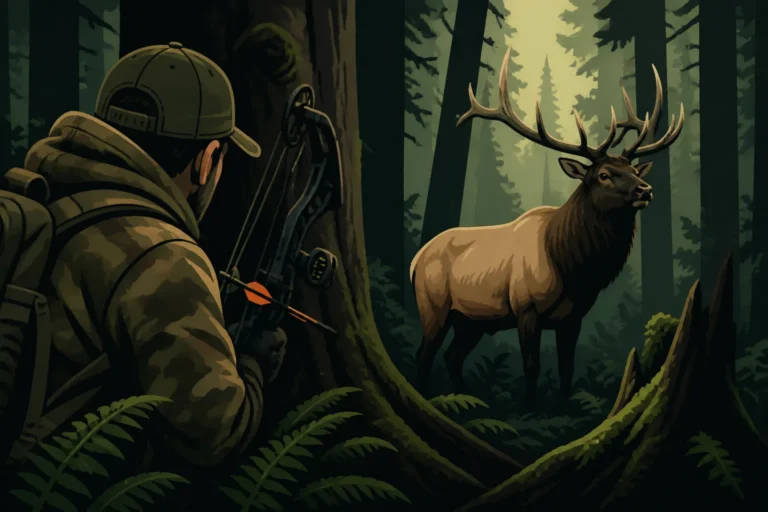
For archery hunting, a two-man calling setup is often the most effective and safest strategy. Here’s how it works: the shooter positions themselves 30-70 yards ahead of the caller, usually slightly off to the side, with their bow ready and aimed at likely shooting lanes. The caller then positions themselves behind the shooter, or slightly to the side, and does the bulk of the calling. The idea is that when the bull comes in, he will focus his attention on the sounds coming from the caller, drawing his attention past the camouflaged shooter.
This setup maximizes your chances of getting a broadside or quartering away shot, as the bull often presents an ideal angle as he walks past the shooter, trying to locate the "cow" (the caller). Communication between the caller and shooter is vital, often non-verbal through hand signals or pre-arranged cues. The caller needs to read the bull's approach and adjust calling intensity, while the shooter must remain absolutely motionless and ready. If you’re hunting with a partner, I highly recommend diving into Two-Man Calling Setups on Elk for detailed tactics.
Wind and Thermals Your Invisible Ally and Enemy
No amount of perfect calling or setup will overcome a bad wind. Elk have an incredible sense of smell, and if they catch your scent, the game is over, often before you even know they were there. Always, and I mean always, prioritize the wind. Your setup must ensure that the prevailing wind, or any shifting thermals, is carrying your scent away from where you expect the elk to approach.
In the mountains, thermals typically rise in the morning as the sun heats the ground, pulling your scent uphill. In the evening, as the air cools, thermals fall, carrying your scent downhill. You need to position yourself so that as a bull approaches, he is either walking into the wind or the wind is blowing parallel to his path, never directly from you to him. This often means approaching from below in the morning and from above in the evening, or using ridge lines and saddles to your advantage. Don't be afraid to back out and reposition if the wind shifts unexpectedly. A small shift can ruin an entire hunt.
Visual Cover and Shot Opportunities
Once you've factored in the wind and thermal considerations, your next priority is visual cover and identifying potential shot opportunities. You need to choose a setup spot that offers enough concealment to break up your outline but also provides clear shooting lanes. This is a delicate balance. Too much cover, and you won't see the bull until he's too close or already past you; too little, and he'll spot you before he even gets into range.
Look for natural elements like dense brush, fallen logs, the base of large trees, or small depressions that can hide your form. Before the bull arrives, identify multiple shooting lanes and mentally practice drawing your bow and making the shot at various distances. Understand the typical approach patterns an elk might take based on the terrain. Be ready for the shot when it happens, because it often happens fast and silently. Remember, ethical archery hunting demands a clean shot, so ensure you have a clear understanding of Shot Placement on a Quartering Elk before you even draw back.
| Call Type | Primary Purpose | Pros | Cons | Best Use in WA Archery Season |
|---|---|---|---|---|
| Aggressive Bugle | Challenge, assert dominance | Can draw out dominant bulls ready to fight | High risk of spooking wary or smaller bulls; not hands-free with external calls | Peak rut, vocal bull located, in units with less pressure like parts of the Colockum. |
| Subtle Bugle | Locate, inquire | Low risk, good for finding silent bulls | May not grab attention of hot bulls | Early/late season, thick timber (Westside), pressured units. |
| Estrus Mew | Attract breeding bulls | Highly effective on rutting bulls | Can be overdone, less effective outside of peak rut | Mid-late September, when bulls are actively seeking cows. |
| Maternal Mew | Reassure, draw curiosity | Natural, non-threatening, effective on all elk | Less urgency, might not draw in aggressive bulls quickly | General contact, drawing in cows/calves, or wary bulls in pressured areas. |
| Lost Calf Call | Create urgency/curiosity | Can elicit strong responses from cows and bulls | Can sound unnatural if overdone | Scattered herds, drawing in curious bulls, or breaking silence. |
| Soft Chirps | Close-range deception, contentment | Reassures closing bulls, sounds natural | No long-distance projection | Final few yards, bull committed and approaching shooter. |
Disclaimer
Hunting involves inherent risks, and conditions in the field can change rapidly. The information provided in this guide is for informational purposes only and should not replace proper safety training, local regulations, or personal judgment. Always consult the official Washington Department of Fish and Wildlife (WDFW) regulations and safety guidelines before engaging in any hunting activities.