Shot Placement on a Quartering Elk
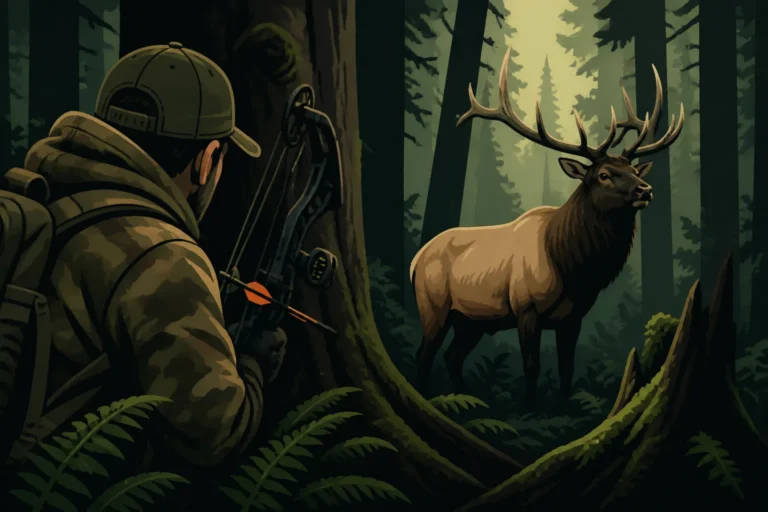
There's nothing quite like the surge of adrenaline when a magnificent Washington elk steps out, but often, they don't offer that perfect, textbook broadside shot we all dream about. Instead, you find yourself staring down a quartering animal, and the internal struggle begins: "Is this shot ethical? Where do I even aim?" That uncertainty, that fear of wounding an animal or making a costly mistake, can be paralyzing. This comprehensive guide is here to cut through that confusion, breaking down the intricate details of shot placement on a quartering elk, covering everything from vital anatomy to ethical decision-making and precise aiming points for a clean, humane harvest.
Understanding Elk Anatomy for Quartering Shots
Before you can even think about aiming, you’ve got to intimately understand what’s happening inside that massive animal. Elk are robust, powerful creatures, and their vitals are tucked behind a considerable amount of muscle and bone. A quartering shot changes everything about how those vital organs present themselves, making your mental visualization skills absolutely critical.
Vital Organs and Their Location
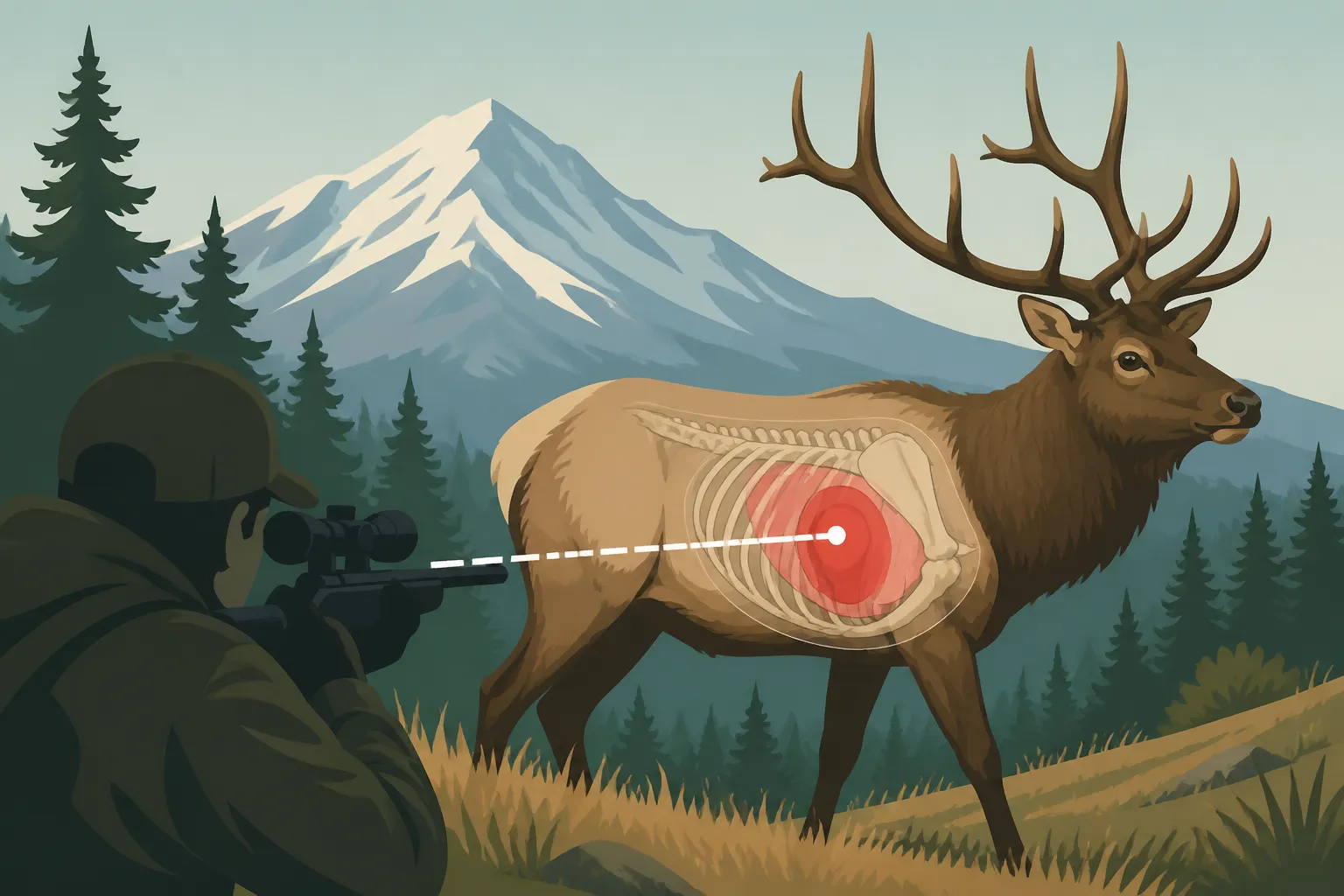
The goal of any ethical shot is to disrupt the central nervous system or destroy the heart and lungs, causing rapid blood loss and incapacitation. On an elk, the lungs are by far the largest target. They fill a significant portion of the chest cavity, extending from just behind the shoulder blade back through the ribs. The heart, while incredibly powerful, is a much smaller target, nestled low and forward in the chest, partly protected by the front leg and shoulder. Directly behind the lungs, protected by the diaphragm, lies the liver—a highly vascular organ that, if hit, will lead to eventual mortality but often a much longer, more difficult tracking job.
When an elk is quartering, these organs shift in relation to your angle. For instance, on a quartering-away shot, the far lung and heart become more accessible as the animal angles away, exposing more of its flank. However, the near lung might be partially obscured by the shoulder of the near leg. Conversely, on a quartering-towards shot, the animal’s front shoulder and chest present a much smaller, more challenging target, with the vital organs deeply buried behind heavy bone. Understanding this three-dimensional puzzle in your mind is the first step to success.
Bone Structure and Shot Obstructions
Elk are not only big, but they are incredibly dense, and their skeletal structure provides formidable protection for their vitals. The shoulder blade (scapula) is a large, flat bone that covers the upper portion of the rib cage. Directly below it, connecting to the leg, is the humerus—a thick, strong bone. These two bones, especially when an elk is broadside or slightly quartering towards you, can act like a ballistic shield, deflecting or stopping projectiles if you don't hit them precisely.
On a quartering-away shot, these bones are less of a direct obstruction to the vitals, allowing for a clearer path to the lungs and heart, especially if you aim behind the near shoulder and anticipate an exit through the far shoulder or rib cage. However, on a quartering-towards shot, the near shoulder and humerus become major obstacles. A projectile hitting these bones head-on might break the bone but fail to reach the vitals, leading to a wounded animal and a potentially dangerous tracking scenario. Always consider the potential for bone deflection or limited penetration when aiming, and be honest with yourself about whether your chosen weapon and projectile can handle the challenge.
The "Elk Vitals" Sweet Spot
So, where exactly is that magical spot? It changes with the angle, but the general principle is to aim for the heart-lung area, visualizing an exit wound on the opposite side of the animal. On a broadside elk, it’s about a third of the way up from the brisket, just behind the front leg. For a quartering elk, you need to project that line through the animal.
Imagine drawing a line from your position through where you believe the far leg would be, aiming for the opposite shoulder pocket or the last few ribs. This projection helps ensure that your projectile travels through both lungs and, ideally, the heart. For a quartering-away shot, you want to aim slightly further back than broadside, targeting a point that would angle forward into the vitals. On a quartering-towards shot, the aiming point moves much further forward, essentially trying to slip a shot just behind the point of the near shoulder blade, hoping to hit the vitals directly without encountering heavy bone. This critical understanding is key to making a clean shot and preventing a gut shot, which is a hunter's worst nightmare.
Analyzing Different Quartering Angles
The quartering shot is a nuanced dance between angle, distance, and ethical considerations. Each degree of angle presents a new set of challenges and opportunities, and knowing when to shoot and, perhaps more importantly, when to hold, is a hallmark of an experienced Washington hunter.
Quartering Away: The Hunter's Favorite
The quartering-away shot is widely considered the most ethical and effective quartering angle for most hunters, whether you’re flinging an arrow during Archery Elk Hunting in Washington's September Season or sending a bullet from your rifle. When an elk is quartering away, its tail is angled towards you, and its head is moving away. This opens up the rib cage, making the vital organs, particularly the far lung and heart, more accessible. The risk of hitting the heavy shoulder bone on the entry side is significantly reduced, and there's an excellent chance of a pass-through, which often leaves a better blood trail.
For rifle hunters, aim to enter just behind the near shoulder blade, angling your shot forward to exit through the opposite shoulder. This trajectory ensures maximum damage to the heart and both lungs. If the animal is steeply quartering away, you might need to aim a bit further back, closer to the last rib, to ensure the projectile angles through the vitals and exits through the far shoulder. For archers, this shot is also ideal because it minimizes the chance of hitting heavy bone, allowing the broadhead to do its work. Visualize your arrow entering behind the near rib cage and exiting out the front of the opposite shoulder, or even clipping the elbow of the far leg. This path ensures you'll hit both lungs and often the heart, delivering a quick, humane kill. Practice this shot angle extensively; it's one you'll encounter often in the field.
Quartering Towards: A High-Risk Shot
The quartering-towards shot is, simply put, a high-risk proposition that most hunters should avoid. Here, the elk's head and chest are angled towards you, and its rear is pointing away. This presents a much smaller target, and the critical vitals are heavily protected by the front shoulder, humerus, and sternum. The margin for error is incredibly small, and the chance of a non-lethal hit that breaks bone but doesn't penetrate vitals is very high.
If you absolutely must take a quartering-towards shot—and I strongly recommend against it unless you are incredibly confident, at close range, and using a powerful caliber with a well-constructed bullet—your aiming point needs to be extremely precise. For rifle hunters, the most ethical option is usually a shot aimed at the base of the neck, targeting the spine and central nervous system for an instant kill. Another option, though still risky, is to aim for the point of the near shoulder blade, hoping to break the shoulder and angle into the vitals. However, this relies on significant bone penetration. For archers, this shot is almost universally considered unethical. A broadhead simply doesn't have the kinetic energy to reliably penetrate heavy bone and reach vitals from this angle. When in doubt, always, always wait for a better shot. Patience is a virtue that pays off in ethical hunting.
Broadside and Steep Quartering Considerations
While our focus is on quartering shots, it’s worth a moment to understand how they differ from the ideal broadside. A true broadside shot, where the elk is standing perfectly perpendicular to you, offers the largest and clearest presentation of the heart and lungs, minimizing bone obstruction. This is the shot everyone waits for, and it's what you should strive for whenever possible.
Steep quartering angles, both away and towards, introduce additional complexities. If an elk is steeply quartering away, almost facing directly away from you, a shot through the hip might reach the vitals, but it’s a long path through gut material, almost guaranteeing meat spoilage and a difficult trail. This is generally a poor shot choice. If the elk is quartering towards you at an extreme angle, almost facing you head-on, the shot becomes a frontal chest shot. While a frontal shot can be lethal, hitting the narrow window between the sternum and major blood vessels is incredibly difficult and leaves no room for error. The animal’s size and the angle of the terrain also play a role. An elk standing below you on a steep slope will present its vitals differently than one standing above you, requiring adjustments for gravity and the animal's natural posture. Always consider the terrain and how it impacts the actual angle of the shot, not just the horizontal angle. Using tools like GoHunt's mapping features can help you visualize terrain contours and potential shot angles when e-scouting before the season.
Factors Influencing Shot Execution on Quartering Elk
Making a solid shot on a quartering elk isn't just about knowing where the vitals are; it's about understanding how your equipment performs and how environmental conditions can conspire against you. Every element, from your rifle caliber to the Washington weather, plays a role in the success or failure of your shot.
Weapon Type and Projectile Performance
The type of weapon you carry significantly impacts your ethical shot opportunities on a quartering elk. For rifle hunters, bullet selection is paramount. You need a bullet designed for deep penetration and controlled expansion, capable of breaking through bone if necessary and delivering maximum energy to the vitals. Calibers typically considered for Rifle Setup for Washington Elk and Deer like a .30-06 Springfield, .300 Win Mag, or .338 Win Mag loaded with premium hunting bullets (like Nosler Partitions, Barnes TSX, or Hornady ELD-X) offer the necessary power for quartering shots. A lightweight, frangible bullet might perform well on a broadside deer, but it could easily fail to penetrate deeply enough on a heavy-boned elk from a quartering angle. Always check Washington's minimum rifle caliber rule to ensure your setup is legal and effective for elk.
Archery hunters face even stricter limitations. Your broadhead choice, arrow weight, and shot placement must be flawless. Fixed-blade broadheads are often favored for quartering shots due to their structural integrity and reliable penetration compared to some mechanical broadheads, which can sometimes fail to deploy or break on heavy bone. A heavier arrow with a higher Front of Center (FOC) will also contribute to better penetration, which is critical when sending a projectile through an animal that’s not perfectly broadside. The energy transfer of an arrow is different from a bullet; it relies on cutting action, so a clear path to the vitals, avoiding major bone, is even more crucial for bowhunters.
Distance, Angle, and Ethical Limits
Every hunter has an "ethical killing range," and for quartering shots, that range often shrinks significantly. What might be a comfortable broadside shot at 400 yards for a skilled rifleman could become a highly unethical quartering-towards shot at 200 yards. The further away the animal, the harder it is to accurately judge the angle, and the more external factors (wind, bullet drop) can impact your shot. The angle itself also dictates your limits. A quartering-away shot might be acceptable at a greater distance than a quartering-towards shot, which ideally should only be considered at very close range, if at all.
Be brutally honest with yourself about your capabilities and your gear. Have you practiced at those distances, in varying conditions, from realistic hunting positions? Do you know your rifle's ballistics intimately? For archers, a quartering-away shot might be stretched to 40-50 yards if practice supports it, but a quartering-towards shot should probably be avoided at any distance beyond 20 yards, and often entirely. Never take a shot you're not 100% confident in. If the angle isn't right, or the distance is pushing your limits, wait. That elk might move, or another opportunity might arise. Sometimes, the most ethical decision is to pass on the shot entirely.
Elk Behavior and Environmental Challenges
Elk are not statues. They are constantly moving, feeding, looking around, and sometimes even sparring. A seemingly perfect quartering angle can change in a split second as they take a step or turn their head. You need to anticipate their movements and be ready to adjust your aim or hold your shot. Often, the ideal quartering shot presents itself briefly as an elk takes a step, exposing a small window to the vitals.
Environmental factors in Washington can further complicate matters. Dense timber and thick brush, common in areas like the Willapa Hills or Olympic Peninsula, can obscure your view, limit your shooting lanes, and make range estimation difficult. Rain, fog, or falling snow can affect visibility and dampen sound, making it harder to track an animal after the shot. Strong winds can dramatically influence arrow flight and, to a lesser extent, bullet trajectory, especially at longer ranges. When hunting in these challenging conditions, your personal ethical limits should become even more conservative. Muzzleloader Loading and Ignition in Rain in Washington's often-wet climate adds another layer of complexity, requiring meticulous preparation and practice to ensure reliability. Always consider how the environment is impacting your ability to make a clean, ethical shot on that quartering elk.
Practical Application and Practice
Knowing the theory of shot placement is one thing; putting it into practice in the field is another entirely. The stress of the moment, the adrenaline dump, and the sheer size of an elk can make even simple shots feel monumental. That's why consistent, deliberate practice is the cornerstone of ethical hunting, especially for those trickier quartering angles.
Visualizing the Exit Point
One of the most powerful tools a hunter has is mental visualization. Before you even draw your bow or shoulder your rifle, you should have a clear picture in your mind of where your projectile will enter, what vital organs it will pass through, and where it will ideally exit. This isn't just about aiming at the "spot" on the hide; it's about shooting through the animal. For a quartering-away shot, imagine your arrow or bullet entering behind the near shoulder and continuing on a diagonal path to exit out the opposite, front leg pocket. This ensures you'll slice through both lungs and potentially the heart.
Many hunters find it helpful to use anatomy apps on their phones, or even print out diagrams of elk vitals and tape them to 3D targets. Stand at various angles to the target, and trace the path your shot would take with your finger. This exercise helps to train your brain to see the internal anatomy in relation to the external hide. When the real moment comes, this ingrained visualization will allow you to make a more confident and precise shot, even when your heart is pounding out of your chest. Remember, a pass-through often creates a better blood trail, which is crucial for successful recovery in the dense cover often found in Washington, especially if you end up Blood Trailing in Salal and Devil's Club.
Practice Scenarios and Target Setup
The shooting range is invaluable, but it often doesn't replicate hunting conditions. To truly prepare for quartering shots, you need to diversify your practice. Instead of always shooting broadside, set up your targets at various angles—15, 30, 45 degrees quartering away, and even some light quartering towards. Use 3D targets if possible, as they give you a much better sense of the animal's dimensions and how the vitals shift. If you only have flat targets, draw the outline of the vitals on them to simulate the internal organs.
Practice shooting from different positions: kneeling, sitting, and even standing offhand. Many shots in the field aren't taken from a perfectly stable bench rest. Mimic real-world scenarios by practicing with your hunting pack on, or after a short hike to elevate your heart rate. This kind of dynamic practice, focusing on your specific weapon for your chosen Washington Elk Hunting Tactics by Weapon Season, will build the muscle memory and confidence needed to make a clean shot when that quartering bull finally presents himself. For bowhunters, Archery Practice for Wet Coastal Conditions is vital, as moisture can affect strings and limbs, impacting accuracy.
Post-Shot Strategy and Tracking Preparation
The shot is just the beginning. What you do immediately after, and how you prepare for tracking, can be just as critical as the shot itself, especially on a quartering animal where the blood trail might not be as immediate or heavy as a broadside shot. Immediately after the shot, observe the animal's reaction. Did it mule kick? Hump up? Bolt or stagger? Where did it run? Mark the exact spot where the animal was standing when you shot, and where you last saw it disappear. These landmarks are invaluable. Don't rush in immediately. Give the animal time, especially with a suspected lung or liver hit. For rifle shots, waiting 30-60 minutes is often wise; for archery, waiting several hours (3-6, or even overnight if conditions allow) is almost always recommended to prevent pushing a wounded animal.
Before you start tracking, take a moment to compose yourself. If you're hunting with a partner, discuss what you saw and agree on a plan. Organize your gear: tracking lights, flagging tape, your knife, and game bags for Field Dressing in Warm Early-Season Weather. If using a mapping app like those from GoHunt, mark your shot location. When you begin tracking, move slowly and deliberately, looking for any sign—blood, hair, disturbed earth, broken branches. A quartering shot might not produce an immediate, gushing blood trail, so you'll need to pay attention to subtle clues. Understanding how to track, and having the right tools for Packing an Elk Out of Washington's Backcountry, are critical skills for a successful and ethical hunt.
Why Quartering Shots Demand Extra Skill
Hunting in Washington offers incredible opportunities, but it also demands a high level of skill and respect for the game. Quartering shots epitomize this demand, requiring more than just pointing and pulling the trigger. They test your knowledge, your preparation, and your ethical resolve.
Minimizing Spoilage and Maximizing Ethical Harvest
A poorly placed quartering shot can lead to an unsalvageable animal or significant meat spoilage, which is heartbreaking for any hunter. A gut shot, often the result of misjudging a quartering-away angle, means the stomach and intestines are punctured. Not only does this prolong the animal's suffering and lead to a potentially impossible tracking job, but the digestive contents can contaminate the meat, making much of it inedible. Even a marginal hit that only catches one lung or skims the liver can result in a long, arduous recovery, increasing the chance of spoilage, especially if you're hunting in warm early-season conditions.
Mastering quartering shot placement means you're aiming for precision that ensures vital organ destruction, leading to a quick, humane kill. This minimizes suffering, maximizes the amount of usable meat, and honors the animal. It’s a core component of ethical hunting, ensuring that the resources provided by Washington’s Colockum Elk Herd or other populations are harvested responsibly. This level of skill not only benefits you as a hunter but contributes positively to the overall conservation effort by demonstrating a commitment to responsible practices.
Confidence in Decision-Making
Ultimately, mastering quartering shots builds confidence – not just in your shooting ability, but in your overall decision-making as a hunter. There will be times when an elk presents a perfect broadside opportunity, and you’ll know exactly what to do. But there will be many more times when the animal is slightly quartering, moving, or obscured by brush. In those moments, the ability to quickly and accurately assess the situation, visualize the shot path, and confidently determine if it’s an ethical shot is invaluable.
This confidence prevents those agonizing second guesses, the "should I have shot?" or "should I have waited?" internal debates. You'll know your limits, you'll know your weapon, and you'll know the anatomy. If the shot is good, you'll take it decisively. If it's not, you'll pass without hesitation, content in the knowledge that you made the right, ethical choice. This level of self-assurance comes from deep knowledge, dedicated practice, and a profound respect for the animal and the hunt. While pursuing trophy animals might involve understanding concepts like Hunting Washington's Three-Point Minimum Units or Judging Antler Points Before the Shot, the most important aspect remains the ethical execution of the harvest, regardless of antler size.
Disclaimer
The information provided in this guide is for educational purposes only and is not a substitute for professional hunting instruction, local regulations, or personal safety precautions. Always consult the most current Washington Department of Fish and Wildlife (WDFW) regulations before hunting. Hunting is an inherently risky activity, and safety should always be your top priority.