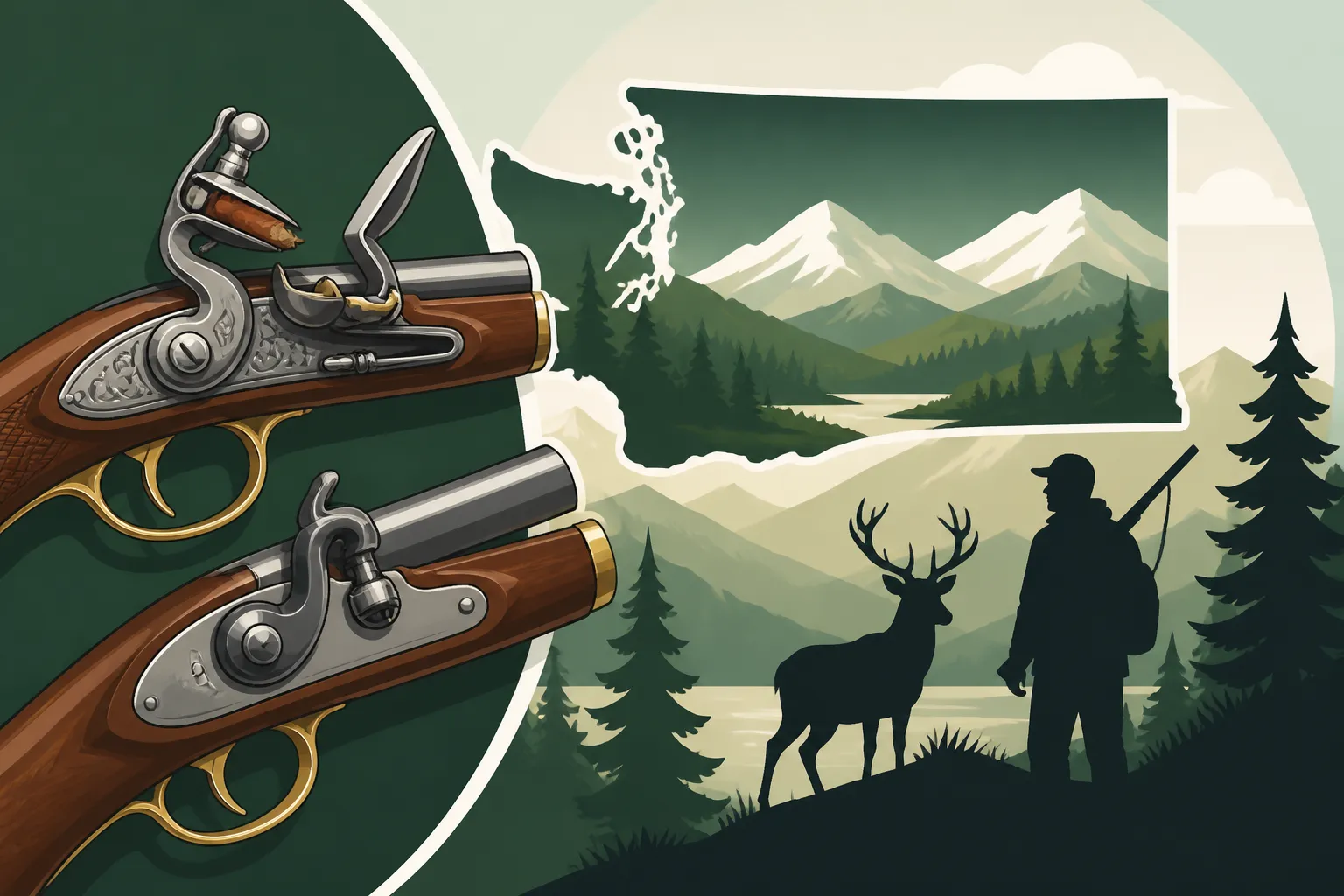
Flintlock and Percussion Locks Washington Permits
Hunting big game with a muzzleloader in Washington State offers a truly unique and challenging experience, but one common source of frustration for new and seasoned hunters alike is trying to decipher the specific regulations around legal ignition types. It can feel like you need a law degree just to understand if your favorite flintlock or percussion rifle is good to go. This guide aims to clear up that confusion, diving deep into what Washington permits so you can hit the field with confidence, knowing your equipment is fully compliant.
Understanding Washington's Muzzleloader Regulations
Stepping into the world of muzzleloader hunting in Washington State means embracing a tradition that predates modern firearms. It’s a pursuit that demands patience, precision, and a deep understanding of your equipment. But before you even think about loading powder, it's absolutely crucial to grasp the specific regulations that govern these unique hunting tools. The state has distinct rules for muzzleloaders, setting them apart from both archery and modern firearm seasons, which means what's legal for one might not be for another.
The Basics of Muzzleloader Hunting in Washington
Muzzleloader hunting isn't just about using an older style of rifle; it's about adhering to a specific set of limitations designed to provide a more traditional and challenging hunt. This means no scopes in many seasons, specific projectile types, and, critically, defined ignition systems. Many hunters are drawn to muzzleloading because it extends their hunting opportunities beyond the general modern firearm seasons, often offering earlier or later dates when other weapon types are restricted. However, this privilege comes with the responsibility of knowing every nuanced rule. Imagine planning an elaborate elk hunt in the Blue Mountains, hiking miles into a promising basin, only to realize on opening morning that your chosen muzzleloader isn't legal for that specific season due to its ignition system or optics. That's a heartache no hunter wants, and it's why understanding these rules from the outset is paramount. You really need to dig into the current WDFW pamphlet, often found through resources like GoHunt, to make sure you're up to date on all the Washington's Muzzleloader Equipment Rules.
Legal Ignition Types: Flintlock and Percussion
When it comes to the heart of the matter – how your muzzleloader goes bang – Washington State is quite clear: both flintlock and percussion lock systems are permitted for muzzleloader seasons. This is great news for traditionalists and those who appreciate the various forms of black powder hunting.
A flintlock system is the oldest form of ignition for muzzleloading firearms. It uses a piece of flint clamped into a hammer (often called the cock) which, when released, strikes a steel plate (the frizzen). This strike creates sparks that fall into a small pan of fine priming powder, which then ignites the main powder charge in the barrel. It's a truly historical method, known for its elegant mechanics and the satisfying "flash-in-the-pan" moment before the main charge fires. Hunting with a flintlock is a commitment to tradition, often requiring more attention to detail, especially in damp weather.
Percussion locks, on the other hand, represent a significant advancement in reliability. Developed in the early 19th century, this system uses a small metal cap containing an impact-sensitive explosive (the percussion cap) placed on a nipple at the breech of the barrel. When the hammer falls, it strikes this cap, detonating the primer and sending a flame directly into the main powder charge. This enclosed system is far less susceptible to moisture than a flintlock's exposed pan and priming powder, making it a more dependable choice in Washington's often wet conditions. Both types offer a distinct hunting experience, and understanding their individual characteristics is key to choosing the right one for your style. To truly grasp the permitted types, diving into Muzzleloader Ignition Types Washington Allows will offer a deeper look.
Navigating the Nuances of Flintlock Hunting in Washington
For some, hunting with a flintlock muzzleloader isn't just a choice; it's a pilgrimage back to the roots of American hunting. There's a certain romance in using a rifle virtually unchanged from the days of Lewis and Clark, a feeling of deep connection to the land and the history of those who hunted it before us. But let's be realistic, it's not without its particular challenges, especially in a state like Washington with its notoriously variable weather.
The Flintlock Experience and Practicalities
Hunting with a flintlock in Washington means embracing a slower pace and a greater emphasis on skill and preparation. The distinct "flash, whoosh, bang" sequence requires precise timing and a steady hand. You need to become intimately familiar with your rifle: how much priming powder to use, the perfect seating of your patched round ball, and the critical importance of keeping that pan dry. Imagine you've spotted a majestic Roosevelt bull elk through the timber in the Olympic Peninsula, perfectly broadside at 60 yards. You raise your flintlock, settle the sights, and squeeze the trigger. There's a flash, a puff of smoke from the pan, and then… nothing. A misfire due to damp priming powder or a fouled flint can turn a dream hunt into a frustrating lesson in humidity control. That's why meticulous preparation is paramount. Many flintlock hunters carry a small horn of extra-fine priming powder, keeping it bone dry and refilling the pan only when a shot is imminent. They also meticulously scrape and clean the flint and frizzen between shots, or even after a long stalk through misty rain. Mastering the flintlock means mastering the elements, and keeping a muzzleloader dry in Washington rain is a constant battle. Keeping a Muzzleloader Dry in Washington Rain is a skill every flintlock hunter quickly learns.
Sourcing Flintlock Components and Expertise
While flintlock hunting is a rich tradition, it's also a niche one, which can sometimes make sourcing components a bit more challenging than walking into any sporting goods store for modern rifle ammo. You'll need specific grades of black powder – typically FFFg for priming and FFG or FFFg for the main charge, depending on your rifle and caliber. Flints themselves come in various sizes and materials, and finding the right one that consistently throws a good spark can take some trial and error. Patched round balls are another essential; while some stores carry them, many dedicated flintlock enthusiasts cast their own or order from specialty suppliers. The upside is that the community of traditional muzzleloader shooters is incredibly passionate and helpful, often sharing knowledge and sources. For those who own antique or custom-built flintlocks, finding a gunsmith with expertise in these traditional mechanisms is invaluable. They can help with repairs, timing adjustments, or even just general maintenance advice. It's not a set-it-and-forget-it type of firearm, but that's part of its charm and challenge. Online resources, forums, and specialty shops are your best bet for finding these specific supplies, and remember to always check the WDFW regulations for powder storage and transport.
Percussion Locks: Modern Reliability for Washington Hunters
If the flintlock is a nod to the deep past, the percussion lock is a step towards a more reliable, yet still traditional, hunting experience. It bridges the gap between the purely primitive and the highly modern, offering a blend of historical feel with increased dependability, which is often a welcome trade-off, especially when facing Washington's unpredictable weather patterns.
Percussion Cap Systems and Their Advantages
The core advantage of the percussion lock system lies in its enclosed ignition. Instead of an open pan susceptible to wind and moisture, the percussion cap provides a sealed, waterproof (or at least highly water-resistant) primer. This dramatically reduces the chances of a misfire due to dampness, a huge benefit when you're hunting blacktail deer in the dripping wet Western Washington forests or tracking elk through a late-season snowstorm on the Eastside. The most common caps are the #11 percussion caps, designed for traditional side-lock muzzleloaders. Some modern in-line muzzleloaders use 209 shotgun primers, which are even more powerful and reliable, but it's crucial to note that many traditional muzzleloader seasons in Washington specifically restrict the use of 209 primers and in-line rifles. Always confirm the specific regulations for your chosen GMU and season to ensure your setup is legal. The immediate and consistent ignition of a percussion cap means quicker lock time and more reliable firing, which can make a critical difference when a big game animal offers only a fleeting opportunity. The confidence that comes with a reliable ignition system allows you to focus more on the shot and less on whether your powder is going to ignite. This is particularly noticeable when you might need a quicker follow-up shot in a dynamic hunting scenario, or when you just want one less variable to worry about in adverse conditions. Understanding Muzzleloader Loading and Ignition in Rain becomes much simpler with a percussion cap.
Choosing a Percussion Muzzleloader for Washington
When selecting a percussion muzzleloader for hunting in Washington, you'll generally encounter two main styles: traditional side-lock rifles and more modern in-line designs. Traditional side-locks, often mimicking the look and feel of old plains rifles or Hawken-style arms, use the classic exposed hammer and nipple for #11 caps. These are widely accepted in all muzzleloader seasons that permit percussion locks. The more modern in-line muzzleloaders, where the ignition system is "in line" with the barrel, often use 209 primers and can offer features like enclosed breeches and faster twist rates for modern projectiles. However, Washington regulations frequently ban or restrict in-line muzzleloaders and 209 primers during designated muzzleloader-only seasons. They are often classified under modern firearms or have specific limitations. This distinction is vital for compliance. Therefore, if you're aiming for a true muzzleloader season, a traditional side-lock percussion rifle using #11 caps is generally the safest and most widely accepted choice. No matter the style, ensure your chosen firearm meets the minimum caliber requirements for big game, which in Washington is a .45 caliber. Washington's .45 Caliber Muzzleloader Minimum is a non-negotiable rule. Carefully researching your potential purchase and verifying its legality against the current WDFW regulations is a step you absolutely cannot skip. Again, leveraging the detailed GMU and regulation data available on platforms like GoHunt can save you a lot of grief by pinpointing exactly what's allowed in your specific hunt area.
Essential Considerations for All Washington Muzzleloader Hunters
Regardless of whether you choose the historical charm of a flintlock or the increased reliability of a percussion cap rifle, there are fundamental principles every Washington muzzleloader hunter must adhere to. These aren't just about legality; they're about ethics, safety, and ensuring a successful and responsible hunt.
Ammunition and Projectile Rules
Washington State has specific rules regarding the type of ammunition and projectiles allowed for muzzleloaders during big game seasons. Generally, this means no jacketed bullets. You'll typically be limited to lead projectiles, whether they are patched round balls or solid lead conicals. Saboted bullets – where a plastic sleeve (sabot) allows a smaller-than-bore-diameter bullet to be fired – might be restricted or completely prohibited in muzzleloader-only seasons, depending on the specific GMU or weapon classification. The key takeaway here is to always, always consult the current Washington Department of Fish and Wildlife (WDFW) hunting regulations pamphlet for your specific year and hunt area. Regulations can change, and what was legal last season might not be this season. For example, some seasons might require a minimum weight for the projectile or prohibit certain materials. Getting this wrong could result in a citation and the forfeiture of your harvested animal, not to mention a deeply disappointing end to your hunt. Understanding your Powder, Bullets and Sabots is a critical part of your preparation.
Hunter Education and Ethical Considerations
Beyond the legalities of your firearm, being a responsible and ethical muzzleloader hunter in Washington means mastering your equipment and knowing its limitations. Muzzleloaders, especially traditional ones, typically have a shorter effective range compared to modern centerfire rifles. This means practicing diligently at various distances is crucial, not just from a bench rest, but in positions you might realistically encounter in the field. Sighting In Before the Opener should involve shooting offhand, kneeling, and from improvised rests to truly understand your rifle's capabilities.
Moreover, the single-shot nature of most muzzleloaders places a huge emphasis on making that first shot count. Ethical hunting dictates that you strive for a clean, humane kill. This means taking shots only when you are absolutely confident in your ability to hit a vital area. Passing on a marginal shot is a sign of respect for the animal and ensures you don't wound an animal that may never be recovered. The pursuit of big game with a muzzleloader is deeply rewarding, precisely because it demands more from the hunter – more skill, more patience, and a greater commitment to the traditions of the hunt. Utilizing resources like GoHunt's detailed GMU information can help you understand the terrain and typical shot distances you might encounter, aiding in your ethical decision-making before you even step foot in the field.
Table: Flintlock vs. Percussion for Washington Muzzleloader Season
Here's a quick comparison to help you weigh the pros and cons of each ignition system for your next Washington muzzleloader hunt:
| Feature | Flintlock System | Percussion Lock System |
|---|---|---|
| Ignition Method | Flint strikes frizzen, sparks ignite pan primer. | Hammer strikes cap on nipple, ignites main charge. |
| Reliability | Less reliable in wet/windy conditions. | More reliable, especially in adverse weather. |
| Speed | Distinct "flash-in-the-pan" delay, slower lock time. | Faster, more consistent ignition and lock time. |
| Maintenance | Requires constant attention to flint/frizzen/pan. | Simpler maintenance for ignition system. |
| Components | Flint, priming powder, main powder. | Percussion caps (#11), main powder. |
| Traditional Feel | Highest level of historical authenticity. | Historical, but represents an advancement. |
| Noise | Slight "fizzle" from pan before main report. | Single, direct report. |
| Common Use | Dedicated traditionalists, purists. | Hunters seeking traditional feel with more reliability. |
Choosing between a flintlock and a percussion lock for your Washington muzzleloader hunt really comes down to your personal hunting philosophy and tolerance for challenge. Both are viable and legal options under Washington regulations, assuming you adhere to all other equipment rules. Whether you're drawn to the deep historical connection of a flintlock or the robust reliability of a percussion cap, the experience of hunting big game with a muzzleloader is deeply satisfying. Always remember to check the current WDFW regulations for your specific hunting area and season, perhaps even using a comprehensive resource like GoHunt to double-check, to ensure you're fully compliant and ready for an incredible hunt.
Disclaimer
This article is for general informational purposes only and does not constitute professional advice. Laws, prices and regulations vary by location and change over time. Consult a qualified professional for guidance on your specific situation.