The .22 Centerfire Exception for Cougar
It’s a common moment of head-scratching for Washington hunters: you’ve been told all your life that big game requires a certain caliber, something with a bit of a punch, usually starting around .24 caliber. Then you start looking into cougar hunting, and suddenly you see an exception for the humble .22 centerfire. It can be confusing and lead to a lot of questions about what’s truly ethical and effective. This guide is here to clear up that confusion, explaining why Washington allows a .22 centerfire for cougars, what that means for your hunt, and how to ensure you're making the most responsible choice for the animal.
Washington's General Big Game Caliber Rules
When you're out chasing deer or elk in Washington, there's a good reason why you grab a rifle chambered in something substantial like a .30-06 or a .270. Our state's regulations, much like those in many other places, are designed to ensure humane and ethical harvests. This usually means requiring a certain level of power from your projectile.
Minimum Caliber Requirements
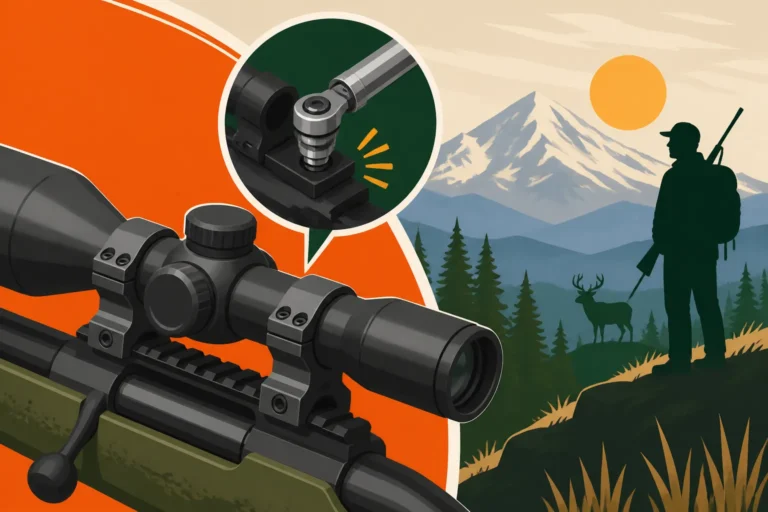
For most big game in Washington, specifically deer and elk, the rules state that you need a centerfire rifle using expanding point bullets with a minimum caliber of .24 (6mm). This isn't just an arbitrary number; it's rooted in the science of terminal ballistics and ethical hunting. The .24 caliber minimum is considered the baseline for providing sufficient energy transfer and penetration to dispatch a larger animal quickly and humanely. A bullet needs enough mass and velocity to punch through hide, muscle, and bone, reaching vital organs to cause rapid incapacitation. Using something smaller, like a .22 long rifle or even most .22 rimfire cartridges, simply wouldn't have the necessary punch for animals the size and toughness of a deer or, especially, an elk. You can dive deeper into these specifics by checking out Washington's Minimum Rifle Caliber Rule.
This minimum is a safeguard. It helps prevent situations where an animal is wounded and suffers, or worse, is lost entirely because the projectile lacked the kinetic energy to do its job. Imagine trying to anchor a big Roosevelt bull with a round designed for prairie dogs—it just wouldn't work, and it would be incredibly unethical. So, when you're looking at your general season deer or elk tag, you know you need to reach for a rifle that meets or exceeds that .24 caliber threshold.
Why Bigger is Usually Better
While the .24 caliber is the minimum, many experienced hunters will often opt for something larger still, especially for elk. Calibers like .270 Winchester, .308 Winchester, .30-06 Springfield, or even magnum cartridges like the 7mm Rem Mag or .300 Win Mag are incredibly popular for a reason. They offer increased bullet weight, higher muzzle velocities, and greater energy delivery. This translates to a more forgiving shot window and a higher probability of a quick, humane kill, even if your shot placement isn't absolutely perfect or if the animal is quartering sharply.
Consider a large bull elk in the deep timber of Western Washington or across the open breaks of the Eastside. These animals are incredibly tough, with thick hides, heavy muscle, and dense bone structure. A larger caliber bullet, often with a robust construction designed for deep penetration, has a better chance of breaking bone and reaching vitals, even if it has to pass through a shoulder or a rib first. This isn't to say smaller legal calibers won't work, but they often demand more precise shot placement and leave less room for error in difficult field conditions. It’s all about maximizing your chances for a clean harvest and minimizing the animal’s suffering, which is at the heart of responsible hunting.
The .22 Centerfire Exception for Cougar Hunting
Now for the curveball that often surprises new and seasoned hunters alike: the specific allowance for .22 centerfire rifles when hunting cougars in Washington. It seems to contradict everything we just discussed about big game calibers, but there's a specific logic behind it.
Understanding the Specific Regulation
Indeed, Washington state regulations make a distinct exception for cougar hunting, permitting the use of a .22 centerfire rifle. This means cartridges like the .223 Remington (and its military counterpart, 5.56 NATO), .22-250 Remington, or .220 Swift are perfectly legal choices when pursuing a cougar, provided you're using expanding point bullets. This is a significant departure from the .24 caliber minimum required for other big game animals like deer and elk.
This exception isn't a loophole or an oversight; it's a deliberate part of the regulations that recognizes the unique characteristics of cougars and the way they are often hunted. It's crucial for hunters to understand that "legal" doesn't automatically mean "optimal" for every situation, but it certainly opens up more options for those targeting these elusive predators. You'll find this detail clearly laid out when you review Washington's Legal Equipment Rules by Weapon for each season.
Rationale Behind the Exception
So, why the exception for cougars? Several factors play into this.
First, let's consider the anatomy and build of a cougar. While they are incredibly powerful, agile, and dangerous predators, their skeletal and muscular structure is not nearly as dense or massive as that of an elk or even a large mule deer. A cougar's body mass is generally closer to that of a very large domestic dog, although their tenacity and aggression are on a completely different level. A well-placed shot from a high-velocity .22 centerfire, especially with a quality expanding bullet, has sufficient energy and penetration to quickly incapacitate a cougar by disrupting vital organs. The goal, as always, is a clean, swift kill, and the ballistics of many .22 centerfire rounds are adequate for this purpose on a cougar.
Second, for many hunters, preserving the hide is a significant consideration when harvesting a cougar. Cougars are beautiful animals, and their pelts are often desired for taxidermy or tanning. A larger, heavier caliber bullet, while providing more knockdown power, can sometimes create a larger exit wound or more extensive tissue damage, which requires more intricate and costly repair work on the hide. A smaller, faster, well-constructed .22 centerfire bullet, particularly if it fragments or expands in a controlled manner without creating a massive exit, can potentially minimize fur damage. This isn't always a guarantee, as bullet performance varies wildly, but it's a factor often cited in the allowance.
Finally, the typical scenarios for cougar hunting often involve close-range opportunities. Whether you're Calling Cougars Without Dogs in Washington or happen to encounter one while pursuing other game, shots are often taken at relatively close distances where precision is paramount. A fast, flat-shooting .22 centerfire can be very accurate at these ranges, allowing for precise placement into the vitals. While Washington has banned the use of hounds, which historically led to very close-range shots, the principles of quick, precise engagement still hold true for other methods. Hunters meticulously scouting areas for fresh sign, like those learning Reading Cougar Sign in the Snow, might encounter a cougar during an ambush scenario where quick, accurate shot placement is key.
What Qualifies as a .22 Centerfire?
When we talk about ".22 centerfire," we're not talking about your everyday .22LR rimfire plinking rifle. Centerfire cartridges are designed for much higher pressures and velocities, offering significantly more power.
Common examples of .22 centerfire cartridges that are legal for cougar hunting in Washington include:
- .223 Remington / 5.56x45mm NATO: This is perhaps the most ubiquitous .22 centerfire round, known for its mild recoil, high velocity, and excellent accuracy. It's widely available and comes in a huge variety of bullet weights and constructions, making it a versatile choice.
- .22-250 Remington: A considerably faster round than the .223, the .22-250 pushes lighter bullets at blistering speeds, resulting in a very flat trajectory. It’s a popular choice for varmints and has more than enough energy for a cougar.
- .220 Swift: One of the fastest commercially produced cartridges, the .220 Swift offers extreme velocity. While less common, it certainly meets the requirements and packs a serious punch for its bullet diameter.
The key is to use expanding point bullets with these cartridges. This means soft-points, hollow-points, or other bullet designs that are engineered to mushroom upon impact, transferring energy and creating a wound channel necessary for a humane kill. Avoid full metal jacket (FMJ) bullets, as these typically pass through an animal without expanding, leading to less energy transfer and a higher risk of wounding rather than killing.
Ethical Considerations and Practical Advice
Just because a .22 centerfire is legal for cougars doesn't automatically mean it's the best choice for every hunter or every situation. Ethical hunting means always striving for the quickest, most humane kill possible, and that often comes down to a combination of shot placement and appropriate ammunition.
The Importance of Shot Placement
With any game animal, shot placement is king. With a smaller caliber like a .22 centerfire on a tough animal like a cougar, precise shot placement becomes absolutely critical. A cougar, despite its relatively slender build, is incredibly resilient and powerful. A poorly placed shot, even from a larger caliber, can lead to a wounded animal that suffers and is difficult, if not impossible, to recover. With a .22 centerfire, your margin for error is simply smaller.
Hunters should aim for the traditional "boiler room" area – directly behind the shoulder, targeting the heart and lungs. A shot through these vital organs will typically result in rapid incapacitation. Avoid aiming for the head (unless at extremely close range and with absolute certainty), as the target area is small, and a missed shot or a glancing blow can lead to a wounded animal with significant suffering. Understanding the anatomy of the animal you're pursuing is paramount. If you're wondering about general principles, reviewing guides like Shot Placement on a Quartering Elk can offer transferable knowledge about targeting vitals, even if the species differ in size.
Ammunition Choice for Cougars
Beyond just the cartridge, the specific bullet construction you choose for your .22 centerfire is incredibly important. You wouldn't use a fragile varmint bullet designed for explosive expansion on small critters if you're trying to anchor a cougar. Instead, you need bullets designed for medium game that will penetrate reliably and expand in a controlled manner.
Look for bullets that are often labeled "deer" or "hog" specific for .223/5.56. These usually have a tougher jacket and a bonded or interlocked core that helps them hold together better upon impact, ensuring deeper penetration before expansion. Examples might include bullets like the Nosler Partition, Barnes TSX/TTSX, Hornady InterLock, or similar designs from other reputable manufacturers like Federal or Winchester. These bullets are engineered to perform well on animals with tougher hides and bone, maximizing energy transfer and creating effective wound channels. The focus should always be on reliable penetration and expansion to reach the vitals, not simply rapid fragmentation on the surface. Understanding bullet performance, especially Bullet Construction for Heavy Bone, is vital for any ethical hunter.
When to Choose a Larger Caliber
While the .22 centerfire is legal, it’s perfectly acceptable, and often advisable, to choose a larger caliber if you feel more comfortable and confident with it. Many cougar hunters still prefer a .243 Winchester, 6.5 Creedmoor, .270 Winchester, or even a .30-06. These cartridges offer a greater margin of error in terms of energy and potential for deep penetration, which can be reassuring, especially if you anticipate longer shots or aren't absolutely confident in your .22 centerfire's capabilities.
If you’re hunting in dense timber where a quick, decisive stop is needed, or if you’re concerned about potential encounters with other larger game (like an opportunistic elk on your cougar hunt), a larger caliber can offer more versatility and peace of mind. The most ethical choice is always the one you can shoot most accurately and that provides sufficient power for the animal you're pursuing, given the conditions.
Here's a quick comparison of common choices:
| Caliber Category | Examples | Big Game Legal? (General) | Cougar Legal? (.22 Centerfire Ex.) | Typical Application | Pros | Cons |
|---|---|---|---|---|---|---|
| Small Centerfire | .223 Rem, .22-250 Rem | No (for deer/elk) | Yes | Varmints, small predators, cougars (specific) | Fast, accurate, low recoil, minimal fur damage potential for cougar | Minimal margin for error, requires precise shot placement |
| Medium Centerfire | .243 Win, 6.5 Creedmoor | Yes | Yes | Deer, antelope, cougars, lighter elk | Versatile, moderate recoil, good range, effective on multiple species | Less powerful than magnum calibers, still requires good placement |
| Standard Big Game | .270 Win, .308 Win, .30-06 | Yes | Yes | All North American big game (deer, elk, bear, cougar) | Ample power, proven performance, widely available ammo | More recoil, potentially more fur damage (if not careful with bullet) |
| Magnum Big Game | 7mm Rem Mag, .300 Win Mag | Yes | Yes | Larger/tougher big game, long-range elk, bear | Maximum power and range, very forgiving for elk | Significant recoil, heavier rifles, potentially overkills for cougar |
Preparing for a Washington Cougar Hunt
Hunting cougars, with or without dogs, presents a unique challenge. While the .22 centerfire exception offers flexibility, your overall preparation, knowledge, and skill are far more important than the specific caliber in your rifle.
Scouting and Understanding Cougar Behavior
A successful cougar hunt begins long before you ever step foot in the woods with a rifle. Understanding where cougars live, their travel patterns, and their prey preferences is absolutely vital. Cougars are incredibly elusive, intelligent, and cover vast territories. They thrive in rugged, remote terrain, often following the movements of deer and elk herds. This means extensive scouting, looking for tracks, scat, and kill sites, is critical.
Online tools and resources like GoHunt can be invaluable for e-scouting, helping you analyze terrain, identify potential travel corridors, and mark areas of interest. You can cross-reference this with actual boots-on-the-ground scouting, particularly in areas known for deer and elk activity. Washington Cougar Season and Harvest Guidelines will give you an idea of when and where these seasons are open, which can help narrow your focus. Remember, cougars are opportunistic hunters, and if you find deer, you’re often in cougar country.
Practice and Proficiency
No matter which legal caliber you choose for your cougar hunt, your personal proficiency with that firearm is non-negotiable. This means regular practice at the range, not just from a bench rest, but practicing shooting from various field positions: kneeling, standing, offhand, or using natural rests like a tree or backpack. Cougars can appear suddenly, often at closer ranges, requiring quick, accurate shots under pressure.
Practice simulating these scenarios. Work on target acquisition and smooth trigger control. If you opt for a .22 centerfire, dedicate extra time to ensuring you can consistently place shots precisely where they need to go. Understand your rifle’s ballistic performance with your chosen ammunition out to the maximum distance you anticipate shooting. A well-placed shot from a .223 will always be more effective than a poorly placed shot from a .300 Win Mag. If you're new to Washington hunting, ensuring your Washington Hunter Education and Licensing is up to date is a solid first step before you even think about gear.
Gear for Tracking and Recovery
Cougars, even with a seemingly good shot, can be incredibly tough animals. They often make it a short distance into thick cover before succumbing, and their stealthy nature means a blood trail can be sparse or difficult to follow. Having the right gear and skills for tracking and recovery is crucial.
Always give a cougar a reasonable amount of time after the shot before beginning to track, especially if using a smaller caliber. This allows the animal to expire and reduces the risk of a dangerous encounter. Carry a powerful headlamp or flashlight for tracking, as well as flagging tape to mark the trail. If you're hunting in a group, having multiple sets of eyes looking for sign can significantly improve your chances.
Remember that field dressing and meat care are also essential. While cougars aren't typically harvested for large amounts of meat like an elk, their meat is perfectly edible and delicious, assuming proper handling. Be prepared to field dress and cool the animal quickly, especially in warmer weather, to preserve both the meat and the hide. Even tips for Field Dressing in Warm Early-Season Weather can be adapted to ensure your cougar harvest is handled respectfully.
Ultimately, the .22 centerfire exception for cougars in Washington is a testament to the animal's unique characteristics and the specific demands of hunting them. It’s an option, not a mandate. Your responsibility as a hunter is to weigh the legal allowances against ethical considerations, ensuring you're choosing a setup that maximizes your chances of a swift, humane harvest. Research, practice, and a deep understanding of your quarry are always the most important tools in your arsenal, regardless of the caliber you carry. Don't forget to visit the WDFW website or use tools like GoHunt to stay on top of any changes to regulations or season dates for cougars.
Disclaimer
This article is for general informational purposes only and does not constitute professional advice. Laws, prices and regulations vary by location and change over time. Consult a qualified professional for guidance on your specific situation.