Finding Mule Deer in Wheat Stubble Edges
The vast, open stretches of eastern Washington's wheat country can feel impossibly huge when you're looking for a specific animal like a mule deer. It's easy to get overwhelmed by the sheer scale of the landscape, feeling like a tiny speck in an ocean of golden stubble. This comprehensive guide is designed to cut through that frustration, offering practical, on-the-ground strategies for locating those elusive mule deer bucking the trends in wheat stubble edges.
Understanding Mule Deer Behavior in Wheat Stubble
Mule deer in eastern Washington are masters of their environment, and the seemingly barren wheat stubble fields are far more than just agricultural remnants to them. These areas offer a unique combination of resources that often get overlooked by hunters focused solely on timber or traditional "breaks." To consistently find success, you need to think like a mule deer.
Why Deer Use Stubble Fields
Wheat stubble fields, particularly after harvest, provide several key benefits for mule deer. First and foremost, they are a significant food source. While the wheat heads themselves are gone, deer will browse on residual grains, dropped kernels, and the new growth of weeds and forbs that often sprout after a harvest or a timely rain. This residual forage can be highly nutritious and easily accessible, especially compared to the denser, often less palatable vegetation in nearby timber or sagebrush. Secondly, these fields often border other habitat types like timber patches, riparian zones along creeks, or rocky coulees. These edges provide vital cover and escape routes, allowing deer to quickly duck into safety if disturbed. Think of the stubble as a pantry and the edges as the bedroom and bathroom – they use both in conjunction. Lastly, the open nature of stubble fields can offer a tactical advantage against predators like coyotes. Mule deer, with their keen eyesight, can spot threats from a long distance, giving them ample time to react.
It's not uncommon to see deer, especially does and fawns, casually grazing in these fields during the cooler parts of the day. Bucks, however, tend to be a bit more cautious, often using the fields under the cover of darkness or during low-light conditions, especially if hunting pressure is high. They know the wide-open spaces make them vulnerable, so they'll stick closer to those transition zones. You might find them just inside the tree line, peering out, or tucked into a small draw within the field itself, using the subtle contours for concealment.
Seasonal Movements and Feeding Patterns
Mule deer movements in wheat country are heavily influenced by the seasonal cycle of agriculture and natural forage availability. In the early archery and modern firearm seasons (September-October), many fields will have been recently harvested. This is when the residual grain and fresh weed growth are most attractive. Deer will often migrate from their summer ranges, which might be higher elevations or more secluded timber pockets, down to these agricultural areas as other food sources begin to dry out or become less appealing. This is a critical time to be observing those stubble edges.
As the season progresses into late fall and early winter, colder temperatures and potential snow can shift their behavior. The quality of forage in the stubble fields might decrease, pushing deer towards winter wheat fields, which offer green growth, or back into dense timber and south-facing slopes for warmth and thermal cover. Water sources also play a huge role. In dry eastern Washington, knowing where the reliable water holes are is key, as deer will often travel from bedding areas to stubble fields, then to water. You can learn a lot about where deer are concentrated by understanding where they find reliable hydration; consider focusing your scouting on identifying Water Holes That Hold Deer in Dry Country. Understanding these patterns isn't just about finding deer; it's about predicting where they will be, even before you step foot in the field.
Scouting Strategies for Wheat Stubble Edges
Effective scouting is the bedrock of success when hunting mule deer in the vastness of eastern Washington's wheat country. You can't just drive around hoping to spot a giant buck; you need a systematic approach that blends modern technology with boots-on-the-ground investigation. The open nature of these fields means deer often have the advantage unless you've done your homework.
E-Scouting Before the Season
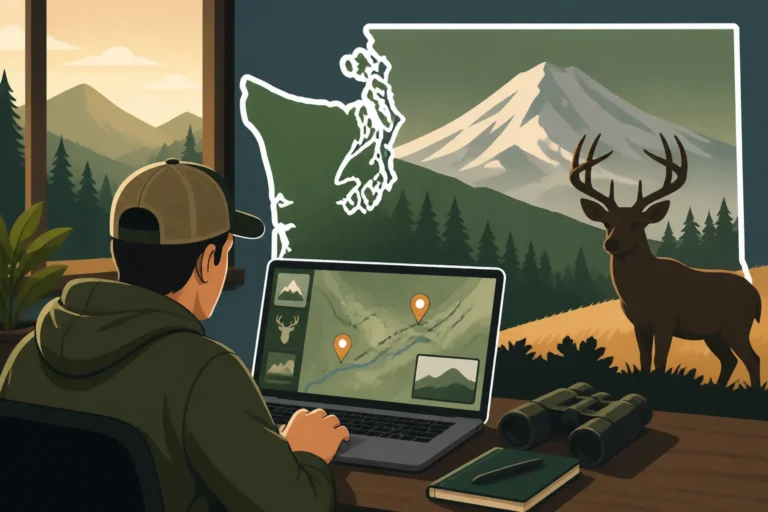
Your scouting efforts should begin long before the season opener, right from the comfort of your home. Modern mapping applications are incredible tools for this. Using satellite imagery, you can identify promising areas without burning fuel or daylight. Look for:
- Field Edges and Transitions: These are your prime targets. Identify where wheat fields meet timber, brushy draws, riparian corridors, or rocky breaks. These are the highways and bedrooms for mule deer.
- Isolated Cover: Sometimes, there will be small islands of brush, a rock pile, or a slight depression within a large field. These micro-habitats offer deer a place to bed down or stage before entering the open. Mark these as potential hotspots.
- Access Points and Roads: Pay close attention to roads, trails, and potential parking areas. This is where you'll figure out how to get to the country, but also how much pressure an area might receive. Remember, some timber company lands or private parcels may require permits; knowing the boundaries will help avoid issues later. Tools like the land ownership layers on GoHunt's mapping platform or similar apps can be invaluable for differentiating public land from private parcels, and identifying specific landowners.
- Water Sources: As mentioned, water is crucial. Pinpoint any ponds, creeks, or springs visible on the map.
- Topographical Features: Even in relatively flat wheat country, subtle changes in elevation, like small ridges or draws, can offer concealment for deer. Identify these contour changes; a deer doesn't need much to feel hidden in open terrain.
By meticulously mapping these features, you can develop a comprehensive plan for on-the-ground reconnaissance, creating a strategic advantage long before your actual hunt. This kind of detailed E-scouting helps narrow down the countless acres into manageable, high-potential zones. For more on this, check out our guide on E-Scouting Washington GMUs Before the Draw.
On-the-Ground Reconnaissance
While e-scouting provides a fantastic overview, nothing replaces physically exploring an area. Your on-the-ground scouting trips should focus on confirming what you saw from the satellite and uncovering the finer details.
- Walk the Edges: Systematically walk the boundaries between fields and cover. Look for trails leading in and out of the stubble, rub lines on small trees or bushes, and scrapes. These "highways" will show you exactly where deer are entering and exiting the fields.
- Glass from High Points: Use your binoculars or spotting scope from any vantage point you can find, such as a small knoll, a bluff overlooking a field, or even the top of your vehicle if permissible and safe. Spend time patiently glassing the fields and their edges, especially during early morning and late evening. This is a great time to practice Glassing Breaks at First Light.
- Check Water Sources: Verify the presence and activity around water. Look for tracks, droppings, and fresh mud. A reliable water source in dry country is a magnetic attraction for deer.
- Look for Bedding Areas: Although deer will often bed in the cover bordering the fields, they might also bed in depressions or tall stubble within the fields themselves, especially if undisturbed. Look for flattened areas or concentrations of droppings.
When you're out there, remember to be stealthy. Even during scouting, you don't want to spook deer out of a promising area. Move slowly, glass frequently, and keep the wind in your favor. Note down everything – specific trails, fresh sign, potential bedding spots – either in a physical notebook or on your mapping app.
Reading Sign in the Stubble
Mule deer leave plenty of clues, even in seemingly barren wheat stubble. Learning to read these signs is paramount to understanding their current movements and patterns.
- Tracks: Fresh tracks are the most obvious sign. Pay attention to their size and direction. Larger, deeper tracks often indicate a mature buck, especially if they're traveling alone. Tracks leading into and out of the stubble from cover are gold. Remember, a single set of tracks might just be a wanderer, but multiple tracks converging in one spot indicate a travel corridor.
- Droppings: Deer droppings (scat) can tell you about their diet and how recently they were in an area. Fresh, soft, dark droppings are a clear indicator of recent activity. Look for clusters of droppings, which suggest a feeding or bedding area.
- Rub Lines and Scrapes: While more common in timber, deer will create rubs on small saplings, fence posts, or even sturdy weeds along field edges. Scrapes, areas where a buck paws the ground and urinates, might be less common in the open stubble but can occur along the transition lines. These indicate a buck's presence and possibly his travel route.
- Funnels and Pinch Points: Look for natural funnels where deer movement is concentrated. This could be a narrow strip of timber between two fields, a dip in the terrain, or a bottleneck created by natural barriers. Deer, being creatures of habit, will often use the path of least resistance. These are perfect places to focus your attention, as they increase your chances of an encounter. Using advanced map tools like those found in GoHunt can help you visualize these topographical nuances and game trails before you even arrive.
By combining thorough e-scouting with meticulous on-the-ground reconnaissance and a keen eye for subtle signs, you'll start building a detailed picture of mule deer activity in these productive wheat stubble environments.
Effective Hunting Tactics for Stubble Field Mule Deer
Once you've done your homework and identified promising areas, it's time to translate that knowledge into successful hunting tactics. Hunting mule deer in wheat stubble often requires a blend of patience, precise glassing, and strategic stalking, all while respecting the open nature of the terrain.
Glassing Techniques from a Distance
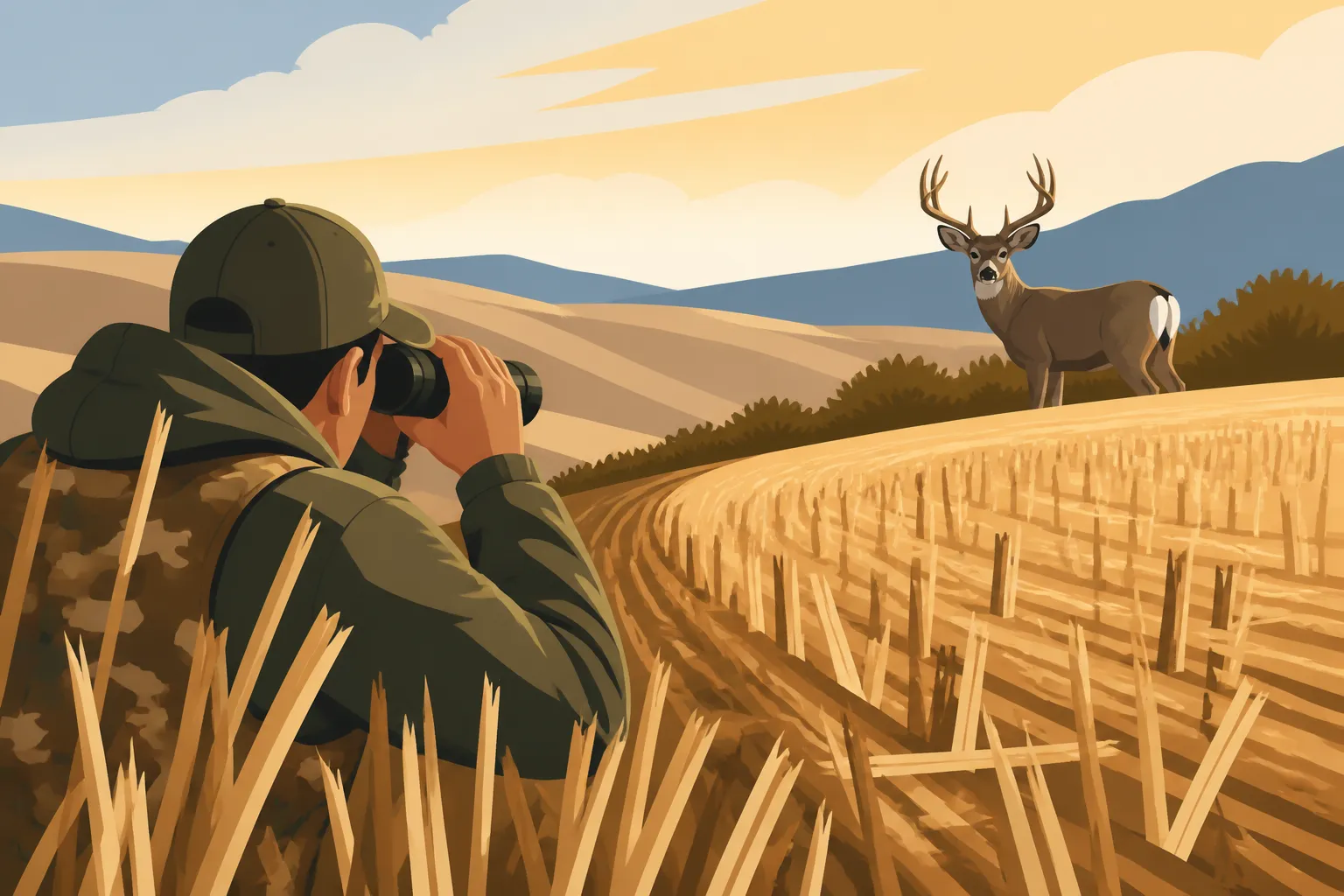
Glassing is undeniably the most important skill for hunting open country mule deer, and wheat stubble fields are no exception. You're trying to find a camouflaged animal, often just a patch of hide or an antler tip, in a vast, textured landscape.
- Utilize High Points: Always try to get to the highest vantage point available that offers a commanding view of the fields and their edges. This could be a ridge, a knoll, or even a vehicle if you're road hunting responsibly and legally.
- Systematic Gridding: Don't just scan randomly. Start at one end of a field or a section of timber edge and systematically "grid" the area with your binoculars or spotting scope. Move horizontally, then drop down slightly, then move horizontally again. This ensures you don't miss anything. Take your time; the average person spends far too little time behind their glass.
- Focus on Edges and Breaks: While a deer might be in the middle of a field, they're far more likely to be found along the edges where stubble meets timber, brush, or draws. Pay extra attention to any shadows, changes in texture, or breaks in the pattern that might indicate an animal. Your Choosing Binoculars for Washington Glassing decision is critical here, as clear, powerful optics make a huge difference. A good pair of 10x binoculars is your primary tool, often supplemented by a quality spotting scope for picking apart distant areas.
- Low Light Advantage: Mule deer are most active during dawn and dusk. These are prime glassing times. Look for movement, distinct shapes against the horizon, or the flicker of an ear. The golden hour light often makes deer stand out more.
When glassing, use a tripod for your binoculars or spotting scope whenever possible. Even slight hand tremors can make it difficult to pick out details at long range. Stability is key for hours of looking through optics. Also, don't be afraid to sit and glass the same area for extended periods. Deer can appear as if from nowhere, having been bedded down and hidden from view.
Stalking Approaches in Open Country
Once you've spotted a deer, especially a buck, the real challenge begins: closing the distance for a shot. Stalking in open wheat stubble requires extreme patience, careful planning, and a deep understanding of terrain and wind.
- Plan Your Approach: Before taking a single step, assess the situation. How far is the deer? What's the wind direction? What terrain features can you use for cover? Look for draws, folds in the land, clumps of brush, or even the subtle contours of the stubble itself. Every little bit of cover helps. Use your map to visualize these avenues of approach.
- Utilize the Wind: The wind is your best friend and worst enemy. Always approach with the wind in your face or quartering. Mule deer have an incredible sense of smell, and a misplaced gust of wind will end your hunt instantly. Check the wind frequently using a wind checker.
- Move Slowly and Methodically: This isn't a race. Take small, deliberate steps. Pause frequently, glass ahead, and ensure the deer hasn't moved or spotted you. Use the "stop-and-go" method: move slowly when the deer is looking away, freeze when it looks your direction.
- Crawl or Army Crawl: If cover is sparse, you might need to get on your hands and knees, or even army crawl, to stay out of sight. This is where good knee pads and tough hunting pants pay off. It's slow and often uncomfortable, but it's often the only way to get close enough in open country.
- Use the Terrain: Even shallow depressions in a wheat field can offer enough cover to move a significant distance undetected. Get low and use every rise, every clump of brush, to break up your silhouette. Remember, the deer's eye level is often lower than yours, so even subtle changes in elevation can hide you.
- Range Frequently: As you stalk, use your rangefinder constantly. Knowing the exact distance will be crucial when you finally get into shooting position. Rangefinding in Rain and Fog can be particularly tricky, so practice in all conditions.
Stalking a bedded buck in open stubble is often the most challenging. You might need to wait for hours for him to stand, or make a move when he drops his head to feed. This requires immense patience and mental fortitude.
Timing Your Hunts for Success
The timing of your hunt in wheat stubble country can dramatically influence your success. Mule deer are creatures of habit, but their patterns shift with light, temperature, and hunting pressure.
- Early Morning: The first few hours after dawn are prime. Deer will often be finishing their overnight feeding in the stubble fields before moving to bed in thicker cover. This is when you'll often catch them moving between these two areas. Get to your glassing point well before first light.
- Late Evening: Similarly, the last few hours before dark are highly productive. Deer will emerge from their bedding areas to feed in the fields. This is often your last chance to spot a buck before he disappears into the night. Plan your exit strategy carefully, especially if you anticipate packing out an animal after dark.
- Mid-Day Strategy: While deer are less active in the open during the middle of the day, don't write it off completely. This is an excellent time for aggressive glassing of potential bedding areas along the edges of the fields – thick timber, north-facing slopes, or deep coulees. A bedded buck might still be visible, and if you spot one, you can plan a mid-day stalk when the thermal currents are more stable.
- Weather Conditions: Overcast days or light rain can sometimes encourage deer to stay out in the open longer, as the heat of the sun is less intense. Be prepared for Layering for Wet Cold Weather if you plan to hunt in less-than-ideal conditions. High winds, however, can make deer nervous and also make effective glassing very difficult.
By understanding these timing considerations and adapting your approach, you can maximize your chances of encountering a mule deer buck in eastern Washington's wheat stubble country.
Navigating Access and Land Ownership
Eastern Washington's wheat stubble fields often sit on a patchwork of public and private land, and understanding these boundaries is non-negotiable for ethical and legal hunting. Getting this wrong can lead to serious consequences, so precise knowledge of where you can and cannot hunt is paramount.
Public vs. Private Land Considerations
Unlike some areas dominated by vast tracts of public land, hunting the agricultural zones of eastern Washington requires a keen awareness of land ownership.
- Public Land Islands: Sometimes, you'll find small parcels of public land, such as Bureau of Land Management (BLM) land, Washington Department of Fish and Wildlife (WDFW) wildlife areas, or even isolated chunks of state trust land, interspersed within private holdings. These "islands" can be overlooked hotspots for deer, especially if they offer good cover or natural funnels leading to private feed. However, accessing them might involve crossing private land, which requires explicit permission.
- WDFW Programs: Washington has programs like "Feel Free to Hunt" or "Register to Hunt" properties where landowners have enrolled their land with WDFW to allow public access under specific rules. These are invaluable resources, but often require checking the WDFW website for current listings and potentially signing up or calling ahead. Familiarize yourself with Hunting Washington's Register to Hunt Properties to leverage these opportunities.
- County Road Access: Public roads often dissect private land. You can usually hunt from public road right-of-ways, but always verify local regulations regarding shooting distances from roads, residences, and structures. More importantly, leaving the public road to step onto private land, even for tracking, requires permission.
- Mapping Tools: This is where digital mapping tools become indispensable. Applications like GoHunt or onX Hunt, with their detailed land ownership layers, can clearly show property boundaries, landowner names, and even access restrictions. Always download offline maps before heading out, as cell service can be spotty. Regularly checking onX Layers for Washington Land Status can save you a lot of headaches and potential trespass charges.
Never assume. If you're not 100% sure about the land status, err on the side of caution and either don't hunt it or seek explicit permission. A few moments of research can prevent a costly fine or even losing your hunting privileges.
Building Relationships with Landowners
For consistent access to prime wheat stubble mule deer hunting, especially on private ground, building good relationships with landowners is arguably the most effective long-term strategy. This isn't just about asking for permission; it's about being a respectful and responsible ambassador for hunters.
- Be Respectful and Courteous: When approaching a landowner, be polite, well-dressed, and articulate. Introduce yourself, explain why you're there (hunting mule deer), and ask if they allow hunting. Be prepared for a "no," and accept it graciously. A positive interaction, even if it doesn't grant access, leaves a good impression.
- Timing is Key: Don't show up on opening day asking for permission. Try to connect weeks or even months before the season. Farmers are often busy during harvest and planting times, so respect their schedule. A visit in late summer or early fall is often ideal.
- Offer Help: Farmers are busy people. Offering to help with chores, fix a fence, or even just offering a friendly conversation can go a long way. This isn't about bribery; it's about genuine reciprocity and community.
- Provide Contact Information: Offer your name and phone number, and ask for theirs. Let them know when and where you plan to hunt, and offer to call them when you're leaving.
- Be a Responsible Hunter: If granted permission, adhere strictly to any rules they set. This might include specific gates to use, areas to avoid (e.g., near livestock or homes), or restrictions on vehicle use. Leave gates as you found them, pack out all your trash, and avoid driving off established roads unless explicitly allowed.
- Share Your Harvest (If Appropriate): Offering a package of venison after a successful hunt is a fantastic way to show gratitude and solidify a relationship. It's a tangible way to thank them for the opportunity.
- Follow Up and Say Thank You: Send a thank-you note or make a call after the season, whether you were successful or not. This simple gesture reinforces your appreciation and increases your chances of gaining access again next year. For a more in-depth guide, consult our article on Getting Written Permission on Private Land.
Treating landowners with respect and demonstrating responsible hunting ethics not only benefits you but helps foster a positive image of hunters in general. It's a long-term investment that can lead to incredible hunting opportunities for years to come.
Key Glassing Strategies for Wheat Stubble Edges
| Time of Day | Primary Focus Areas | Optics Recommendation | Key Behavior to Watch For |
|---|---|---|---|
| First Light | Field edges, timber transitions, draws | 10x Binoculars, Spotting Scope | Deer moving from fields to bed, last minute feeding |
| Mid-Morning | Shady slopes, dense cover patches, coulees | Spotting Scope, Tripod | Bedded deer, subtle antler or ear movement |
| Mid-Day | Deep draws, isolated brush clumps, thick timber | Spotting Scope, Tripod | Bedded deer, looking for small, still forms |
| Late Afternoon | Edges of fields, areas with new growth | 10x Binoculars, Spotting Scope | Deer staging before feeding, moving to fields |
| Last Light | Open stubble fields, watering holes | 10x Binoculars, Spotting Scope | Primary feeding activity, deer silhouetted |
Disclaimer
Hunting is an inherently dangerous activity. The information provided in this guide is for informational purposes only and should not be taken as a substitute for professional training, official regulations, or personal judgment. Always consult the most current Washington Department of Fish and Wildlife (WDFW) regulations, obtain all necessary licenses and permits, and prioritize safety above all else. Hunt ethically, legally, and responsibly.