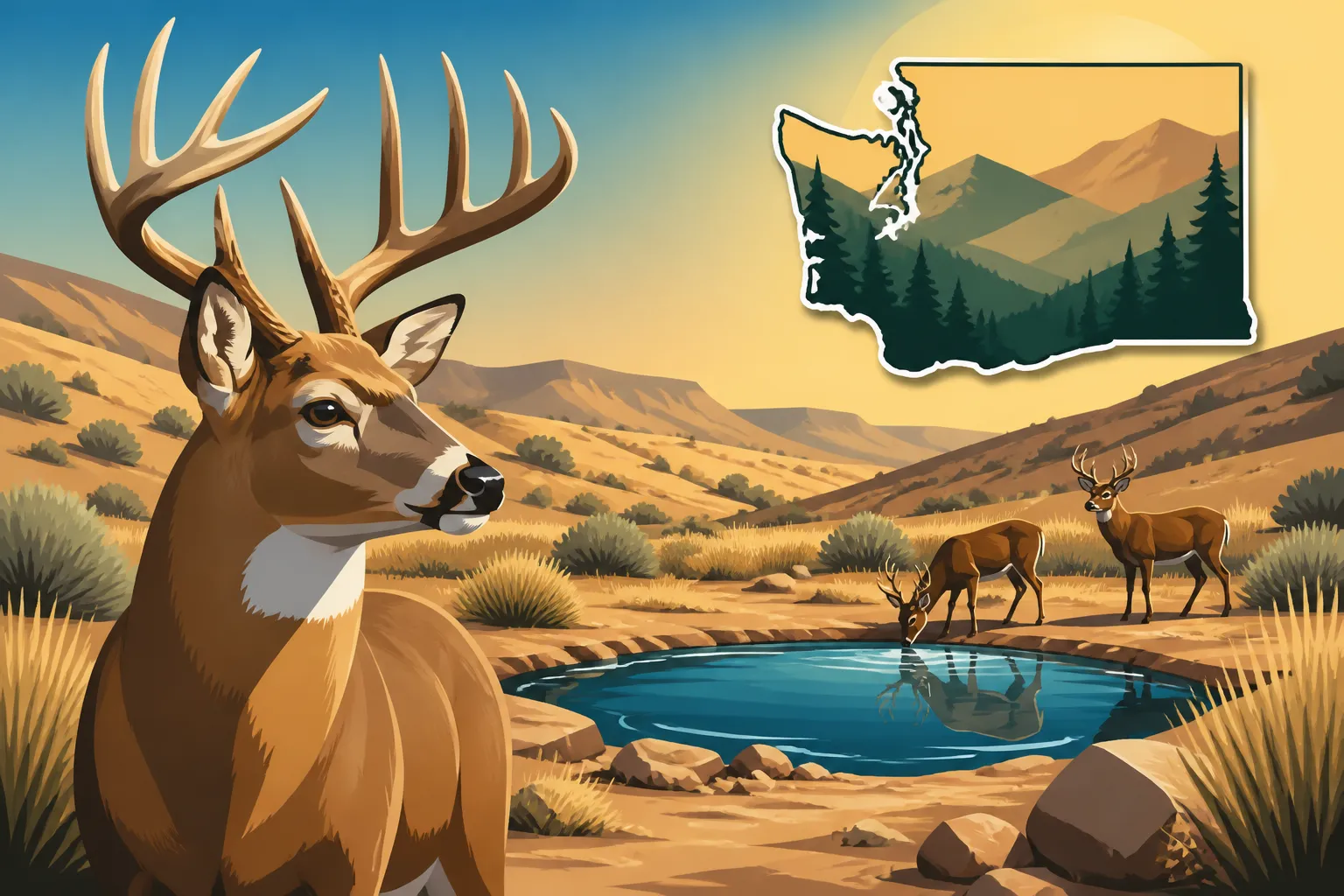
Water Holes That Hold Deer in Dry Country
Hunting deer in Washington's drier regions, especially when the summer sun has truly baked the landscape, can feel like you're searching for a phantom. Deer, like all living things, need water, and in those parched eastern units or even during dry spells on the west side, water becomes an absolute magnet. If you've ever felt frustrated trying to locate deer when every stream bed is dry and the dirt crunches underfoot, you know the challenge. This comprehensive guide is dedicated to uncovering those crucial water sources—both natural and man-made—and equipping you with the knowledge to hunt them effectively, transforming your dry-country struggles into strategic successes.
Understanding Deer Hydration Needs in Arid Washington Landscapes
When the grass turns brittle and the dust devils dance across the Columbia Basin, water isn't just a convenience for deer; it's a non-negotiable requirement for survival. Understanding their physiological need for hydration is key to predicting their movements and finding them when other factors like food might seem more scattered.
Deer Physiology and Thirst
Deer are incredibly resilient creatures, capable of surviving on surprisingly little free water if their diet is rich in moisture-laden forage. However, in sustained dry conditions, especially during the warm early seasons or late summer, that forage dries up, and their need for external water becomes acute. Their bodies are constantly losing water through respiration, digestion, and urination, and this deficit must be replenished. A deer can go a day or two without water if conditions are cool and they're eating moist plants, but under a hot sun and on dry feed, they'll be headed to water at least once a day, if not more frequently. This makes finding reliable water sources the absolute priority for them, and therefore, for you as a hunter.
Imagine a hot September day in eastern Washington, say in the Okanogan or Yakima units. A mule deer buck has spent the morning browsing on dry sagebrush and sun-baked bitterbrush. His metabolic processes are generating heat, and his body is working hard. Without a consistent intake of water, he faces dehydration, impacting his energy, focus, and ultimately, his survival. These animals will prioritize a water source above almost all else once thirst sets in, even if it means moving through slightly more open or less secure cover to get there.
The Impact of Drought and Dry Spells on Deer Behavior
Extended periods of drought or even just a particularly dry stretch during the hunting season dramatically alter deer behavior. Their home ranges may shrink, concentrating them around reliable water. They might become more nocturnal, moving to water under the cover of darkness to avoid heat and predators, only to bed down nearby in thick cover during the day. This shift in behavior can be perplexing if you're not anticipating it. In areas like the Beezley Unit in the Columbia Basin, where water is perpetually scarce, deer are already programmed for this, but even in typically wetter areas of western Washington, a late summer drought can mimic these conditions.
The frustration often stems from seeing scattered sign or a few deer in seemingly random spots, only to have them disappear. What's often happening is that they are covering significant ground between isolated food sources and their critical water supply. During these times, knowing Water Holes That Hold Deer in Dry Country becomes your secret weapon. Without this knowledge, you're chasing ghosts. But once you identify those crucial water points, you can focus your scouting efforts, set up trail cameras, and plan your hunts with surgical precision, dramatically increasing your odds.
Identifying Natural Water Sources in Washington's Dry Hunting Country
Nature provides many forms of water, but in dry country, not all are created equal. Some are permanent magnets, while others are fleeting opportunities that can be absolute gold if you catch them at the right time.
Seasonal Springs and Seeps
Seasonal springs and seeps are often overlooked but incredibly vital water sources, especially in the undulating terrain of eastern Washington. These aren't gushing rivers; they're often subtle, damp spots on a hillside or at the head of a draw where groundwater surfaces. You might not see standing water, but the soil will be moist, and you might notice lush, green vegetation that stands out from the surrounding dry grasses. Look for areas with cattails, sedges, or even simply darker, richer soil and heavier timber that thrives on consistent moisture, even if sparse.
E-scouting tools like GoHunt are fantastic for identifying potential seeps. Look for contour lines that "cup" into a hillside, creating natural drainages, especially where they intersect with benches or rock outcroppings. The satellite imagery can sometimes reveal patches of darker green, indicating moisture. Once on the ground, follow game trails, as deer will often create well-worn paths leading directly to these hidden oases. These spots can be absolute sanctuaries, as deer often feel secure drinking from small, concealed sources that don't expose them to wide-open areas. Remember, finding these often requires a keen eye and patience, sometimes even crawling into dense thickets or down steep ravines.
Rivers, Creeks, and Permanent Streams
While obvious, rivers, creeks, and permanent streams are undeniable deer magnets in dry country. In Washington, whether it's the Methow River in the Okanogan, the Tucannon River in the Blue Mountains, or even smaller, named creeks throughout the state, these flowing water sources are constant attractions. Deer will often bed in the timbered riparian zones along these waterways, using them for cover, travel, and, of course, hydration. The downside is that they are often easily accessed by humans and can experience significant hunting pressure.
Hunting these areas requires more strategic thinking. Don't just hunt the water's edge; think about how deer approach and leave the water. Look for trails leading up from the water into adjacent timber or brushy hillsides. Often, the best hunting isn't right on the bank, but 50 to 100 yards away, along a well-used trail leading to bedding cover. Early morning or late evening often sees deer moving to and from these larger water sources. You might also want to scout for smaller, less obvious bends or braids in the river that offer more secluded access, or even tiny trickles that break off the main flow and lead into dense cover.
Rain-Fed Potholes and Rock Tanks
In truly arid regions, especially in more open, rocky areas like parts of the Columbia Basin or the basalt flows of the Yakima Training Center, you might encounter rain-fed potholes or natural rock tanks. These are depressions in the rock or hardpan that collect and hold rainwater. They are inherently ephemeral – meaning they only exist after recent rainfall – but in a bone-dry landscape, they become incredibly valuable. These are often the first places to dry up, but also the first to be visited by deer after a shower.
These temporary water sources are opportunistic deer magnets. During a dry spell, a sudden rain shower can create these water holes, and deer will find them quickly. While not reliable long-term, they can offer incredible short-term hunting opportunities. Use mapping tools to identify flat rock formations or areas where natural depressions might form. After a rain, focus your scouting on these areas, looking for fresh tracks in any mud, even if it's just around the edges. A successful hunter knows to adapt to changing conditions, and capitalizing on these fleeting water sources is a prime example. Checking Washington Winter Range Closures That End Late Hunts is important to ensure you're not inadvertently hunting in off-limits areas, but understanding these temporary water sources can be effective during legal hunting periods.
Finding Man-Made Water Sources That Attract Deer
Beyond what nature provides, humans have inadvertently (and sometimes intentionally) created water sources that become critical for deer, particularly in areas altered by agriculture, ranching, or logging.
Stock Tanks and Guzzlers
In Washington's ranching country, particularly in the eastern half of the state, stock tanks are ubiquitous. These are typically large, often metal or concrete troughs filled by windmills, solar pumps, or pipelines, providing water for cattle and other livestock. While intended for domestic animals, deer, elk, and other wildlife quickly learn to utilize them. Similarly, guzzlers are man-made water catchments specifically designed for wildlife, often funded by conservation groups. They collect rainwater from a catchment apron and store it in underground tanks, providing a reliable source even in prolonged droughts.
Both stock tanks and guzzlers are absolute goldmines for deer hunters in dry country. Deer will visit them regularly, often at dawn, dusk, or even during midday in cooler weather. The challenge with stock tanks is the presence of livestock, which can make deer more wary or push them to drink at less convenient times. However, guzzlers are purely for wildlife, often located in more secluded areas, and can be hunted with less disturbance. When using scouting apps like GoHunt or onX, look for water icons or use satellite imagery to spot corrals, windmills, or distinct catchment systems. Remember to approach these areas carefully, as deer here can be accustomed to human presence (ranchers) but still very sensitive to hunters. Setting up on a well-used trail leading to the water, rather than right on top of the tank, is usually a better strategy.
Abandoned Homesteads and Old Irrigation Systems
Another fascinating category of man-made water sources comes from human history: abandoned homesteads, old logging camps, or defunct irrigation systems. Many pioneers and early settlers in Washington's dry regions dug wells, built cisterns, or diverted small streams for their homes and crops. When these properties were abandoned, the infrastructure often remained. A rusty old hand pump might still access groundwater, a concrete cistern could hold rainwater, or an old, leaky pipe might create a consistent seep.
These historical water sources are often overgrown and forgotten, making them perfect hidden gems for deer. They are typically surrounded by thicker vegetation that has thrived on the consistent moisture, offering both cover and sustenance. Finding them requires some detective work, often by studying old maps, looking for faint signs of old roads or clearings on satellite imagery, or simply stumbling upon them during deep scouting. Once found, they can be remarkably productive. Deer often feel incredibly secure at these forgotten spots, far from regular human activity. Consider E-Scouting a Washington GMU From Home as a way to identify potential historical sites, then verify on the ground.
Logging Road Puddles and Ditches
Logging operations, particularly in western Washington's expansive timber country but also in some eastern forests, create a network of roads that, when combined with rain, can lead to temporary water sources. While not always in "dry country," during prolonged summer droughts, even the wet side can dry out considerably. Puddles in compacted road ruts, water collecting in ditches alongside the road, or seeps caused by road cuts intercepting groundwater can become vital for deer. These are often transient, appearing after rain and drying up quickly, but they're easily accessible and heavily used by deer.
These roadside water sources are particularly common on Green Dot roads systems, or in areas where active logging has recently occurred. Deer will often utilize these during low-light hours or on cooler, overcast days. Because these are often exposed, deer can be very cautious. The key here is not to hunt right on the road, but to identify where deer are crossing to access these puddles from nearby cover. Look for fresh tracks in the mud, especially where trails intersect the road. Pay attention to how deer move through the landscape; they often use old logging roads as travel corridors, and any water along the way is an added bonus. Consider checking Washington DNR Road Gate Closures to ensure you have legal access to these areas.
| Water Source Type | Characteristics | Deer Reliability (Dry Season) | Hunting Pressure Risk | Best Approach |
|---|---|---|---|---|
| Permanent Springs / Seeps | Subtle, consistent moisture, often hidden | High | Low-Medium | Scout for fresh sign, quiet approach, good wind. |
| Rivers / Permanent Creeks | Obvious, flowing water, riparian cover | High | High | Focus on approach/exit trails, look for secluded bends. |
| Rain-fed Potholes | Temporary, rock or hardpan depressions | Opportunistic (after rain) | Low | Scout immediately after rain, check for fresh tracks. |
| Stock Tanks | Man-made for livestock, reliable, often exposed | High | Medium-High | Glass from distance, set up on deer trails away from the tank. |
| Guzzlers (Wildlife Specific) | Man-made for wildlife, often secluded | Very High | Low-Medium | Scout thoroughly, use trail cameras, plan quiet entry/exit. |
| Abandoned Homesteads | Old wells, cisterns, leaky pipes, often overgrown | Medium-High (if still active) | Low | Historical map research, detailed ground scouting, stealth. |
| Logging Road Puddles | Transient, in road ruts/ditches after rain | Low-Medium (after rain) | Medium | Focus on trails crossing roads, hunt during low light. |
Strategic Hunting Around Water Holes
Finding the water is only half the battle. The true art lies in knowing how to hunt it effectively and ethically, maximizing your chances while minimizing your impact.
Scouting for Sign Near Water
Once you've identified potential water sources, whether through Downloading Washington GMU Maps, GoHunt's detailed satellite imagery, or sheer boots-on-the-ground effort, the next critical step is thorough scouting. This isn't just a quick look; it's about piecing together the story of deer movement around that water. Look for well-worn game trails leading into and out of the water source. The fresher the tracks, the more recently deer have been using it. Muddy edges around a pond or spring are perfect for identifying track size, direction of travel, and even distinguishing between does, fawns, and bucks.
Beyond tracks, look for droppings, rub lines (if it's during the rut), or fresh browse on vegetation surrounding the water. Are there distinct entry and exit points? Do deer prefer one side of a pond over another due to prevailing wind or cover? Pay attention to prevailing wind directions. Deer will almost always approach water from downwind, circling to scent-check the area before committing to drink. Knowing this allows you to plan your ambush accordingly. Using Trail Cameras to Find Washington Bulls applies equally well to deer; place cameras on trails leading to water, or overlooking the water source itself, to gather intelligence on timing and specific animals.
Setting Up for an Ambush
An ambush strategy around water holes can be incredibly effective, but it demands careful planning and execution. First and foremost, consider the wind. This is non-negotiable. Your scent will carry, and deer will bust you every time if you're upwind. Identify the primary approach and exit routes deer use, and set up your stand or ground blind downwind of those routes, ideally at a distance that gives you a comfortable shot but keeps you out of their line of sight and hearing. For rifle hunters, this might mean a longer shot from a concealed position overlooking the water. For archers, it's about getting as close as possible without being detected.
Consider the time of day. Deer often visit water during the cooler parts of the day – early morning, late evening, or even midday during a cool spell. During hot conditions, they might visit at night. Trail cameras will give you the precise timing. Your setup should offer excellent concealment, whether it's a natural brush blind, a portable ground blind, or a tree stand. Minimize movement, avoid making noise, and be patient. Remember, deer are often at their most vulnerable when they are thirsty, but they are also incredibly cautious, knowing that predators, including cougars (which you might learn more about from Calling Cougars Without Dogs in Washington), also frequent water sources.
Utilizing Trail Cameras for Intelligence
Trail cameras are your eyes in the woods when you can't be there, and they are particularly valuable for hunting water holes. Place them strategically on main trails leading to the water, or, if legal and ethical in your hunting unit, directly overlooking the water source. Position them to capture not only the deer but also the time of day they are visiting. This intel is priceless. Are they coming in at first light, last light, or mostly at night? Are mature bucks visiting, or just does and young bucks?
Rotate your camera locations if necessary, moving them to different trails or angles once you've gathered initial data. Always check local regulations on trail camera use on public land in Washington, as rules can vary. For example, some jurisdictions have specific guidelines on how long cameras can be left unattended or where they can be placed. Using the data from your cameras, you can refine your hunting schedule, decide whether an evening sit or a morning ambush is more likely to pay off, and even identify specific bucks based on antler characteristics. This advanced scouting with technology is a game-changer for successful water hole hunting.
Disclaimer
Hunting is an inherently challenging and unpredictable activity. The information provided in this guide is for educational purposes only and is not a guarantee of success. Always prioritize safety, ethical hunting practices, and adhere to all Washington Department of Fish and Wildlife regulations. Conditions in the field can change rapidly, and hunters should always be prepared for unforeseen circumstances.