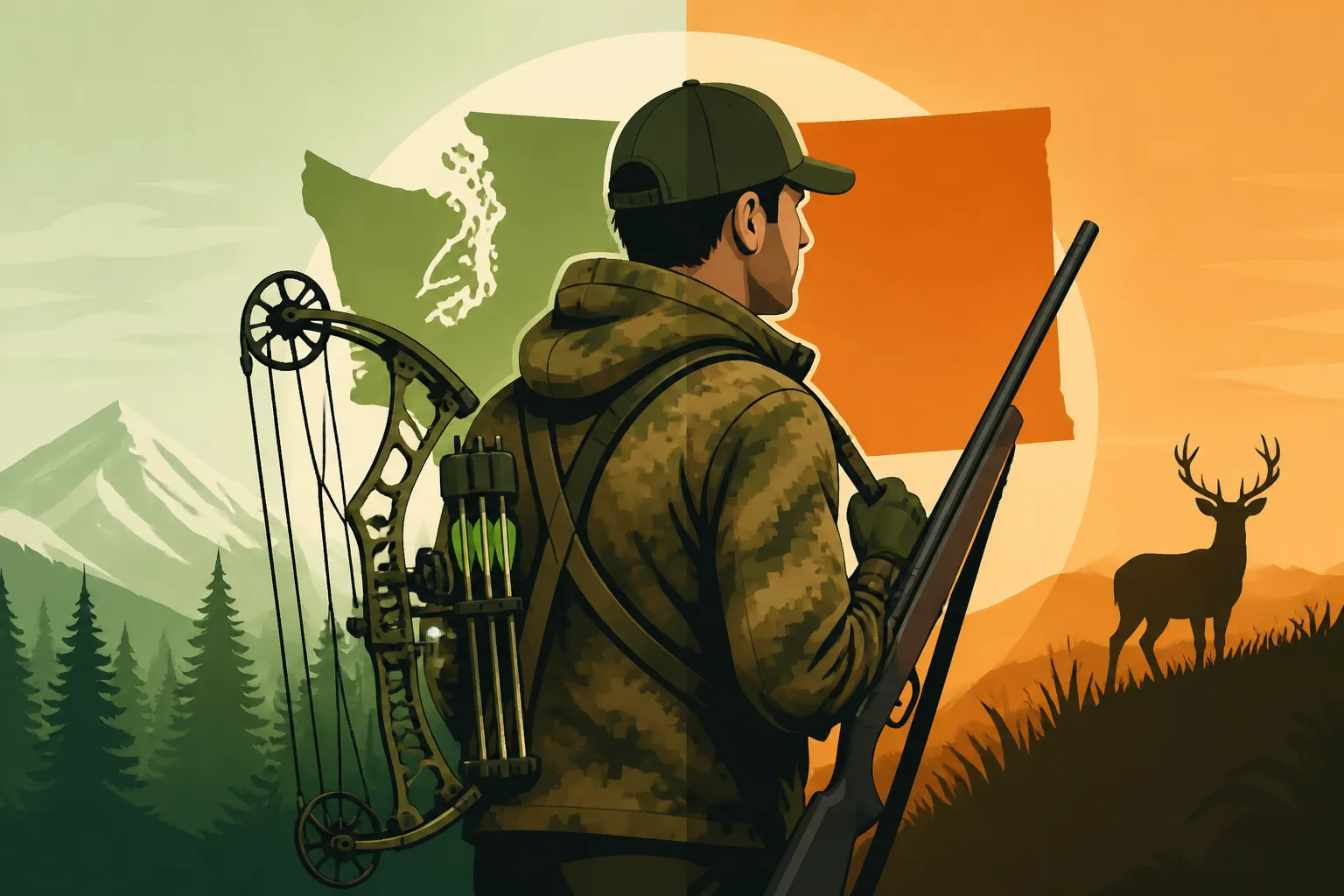
Carrying a Bow During Modern Firearm Season
It’s a common scenario in Washington: you’ve got that precious modern firearm tag in your pocket, but you also love the challenge of bowhunting. Maybe you’re out in the thick timber of the west side, and a close-range archery shot feels more achievable than trying to thread a bullet through dense foliage. Or perhaps you're just looking to maximize your time in the field, thinking if an opportunity arises for either, you'll be ready. While the idea of carrying both a bow and a modern firearm simultaneously might seem like a brilliant way to double your chances, the reality in Washington is a lot more complicated, both legally and practically. This guide will help you understand the specific WDFW regulations and the practical considerations involved in having both weapon types with you in the field.
Navigating Washington's Weapon-Specific Regulations
The Washington Department of Fish and Wildlife (WDFW) has clear, specific rules about weapon types and hunting seasons, designed to ensure fair chase, manage harvest, and provide diverse opportunities. These regulations are paramount, and misunderstanding them can quickly turn a hopeful hunt into a costly violation.
The Core Principle: "Equipped to Hunt"
The fundamental issue when considering carrying both a bow and a modern firearm during a general modern firearm season revolves around the concept of "equipped to hunt." WDFW regulations stipulate that during a particular season, you must be equipped to hunt with the legal weapon for that season. This means that if you're in a modern firearm deer season, you should be carrying a legal modern firearm. If you're carrying a bow with broadheads attached, and especially if it's strung and ready to shoot, you are likely considered "equipped to hunt" with archery equipment.
The problem arises because archery seasons typically have different dates and sometimes different bag limits or GMU restrictions than modern firearm seasons. If you're "equipped to hunt" with a bow outside of a designated archery season, you could be in violation, even if you also possess a legal modern firearm. For example, if it's general modern firearm elk season, and you have your rifle, but also a bow with broadheads in your hand or readily accessible on your pack, a game warden might interpret that as hunting or being equipped to hunt with a bow during an illegal period. This isn't just a technicality; it's a critical aspect of how WDFW manages hunting pressure and opportunity across different weapon types.
Understanding Weapon Declarations and Season Overlap
When you purchase your big game license and tags in Washington, you often declare a specific weapon type for certain species or hunts, especially for elk. While there might be instances where seasons for different species overlap, or even different weapon types for different permits, it’s crucial to understand that your general season tag typically ties you to one weapon type. For instance, if you bought a general season modern firearm elk tag, you are authorized to hunt elk with a modern firearm during the dates and in the GMUs specified for that season. You cannot legally use or be equipped to use archery equipment with that same tag if it's outside the designated archery season.
Even if you have separate tags for different species (e.g., a modern firearm deer tag and an archery bear tag, and those seasons overlap), the rule of "equipped to hunt" still applies to the specific animal you are pursuing. You need to be extremely clear about which animal you are hunting and with which legal weapon at any given moment. This is where Washington's Weapon Choice Rule for Deer and Elk becomes so important. It lays out the framework for making these declarations and understanding the implications. For example, you wouldn't carry a shotgun with birdshot while actively hunting deer with a rifle, even if bird season was open, because the intent and equipment don't match the primary hunt.
Multi-Season Tags: Flexibility, Not Simultaneous Use
Washington does offer a Multi-Season Deer and Elk Tag option, which is incredibly popular for hunters looking to extend their time in the field and capitalize on various opportunities. This special permit, drawn in the lottery, allows a hunter to participate in archery, muzzleloader, and modern firearm general seasons for deer or elk. This is what most hunters hope for when thinking about carrying multiple weapons.
However, even with a multi-season tag, the spirit of the regulation is about flexibility to participate in different seasons, not to blend them into one simultaneous hunt. A multi-season tag does not grant you the right to carry both a bow (equipped for hunting) and a modern firearm (equipped for hunting) at the same time, ready for use on the same species if only one of those weapon seasons is legally open for that species on that specific day and location. It means you can choose which legal season (archery, muzzleloader, or modern firearm) to hunt in, and during that time, you must comply with the rules for that specific weapon type. For instance, you could hunt during Washington Archery Deer and Elk Dates, then later switch to your rifle for the Washington Modern Firearm Deer Seasons, but generally not carry both primary weapons simultaneously when actively hunting for the same game animal. Understanding the nuances of Washington Multi-Season Deer and Elk Tags is key to maximizing your hunting calendar while staying legal.
The Practical Realities of Dual Carry in the Field
Beyond the legal complexities, trying to carry and effectively hunt with both a bow and a modern firearm simultaneously presents significant practical challenges that can hinder your success and compromise your safety.
Why Hunters Consider Carrying Both
The allure of having both a bow and a rifle comes from the desire for ultimate versatility. Imagine you’re still-hunting through dense reprod in western Washington, where visibility is limited to 40 yards, and you jump a bull elk. A bow shot might be possible in the thick cover where a rifle shot could be too risky due to deflection or lack of a clear backdrop. Conversely, if that same bull breaks into a clearcut and stops at 300 yards, your rifle would be the obvious choice, while a bow would be useless.
Hunters often dream of covering all bases: being ready for the close-quarters timber encounter with an arrow, and the long-range across-a-canyon shot with a bullet. This adaptability seems appealing, especially when hunting vast and varied terrain like that found in Washington's GMUs. The thought is that no matter what situation arises, you'd have the right tool. This mindset often comes from a place of wanting to maximize every second of precious hunting time, especially when time off work is hard to come by.
The Significant Physical Burden
Let’s be honest: hunting in Washington is often physically demanding. Adding a second primary weapon significantly increases your load. A modern hunting rifle, especially one scoped and ready for elk, can weigh 8-10 pounds. A compound bow typically weighs 4-6 pounds, not including arrows, quiver, and broadheads. Combined, you're looking at an extra 12-16 pounds of gear, carried on top of your pack, optics, water, emergency supplies, and any meat you might be packing out.
This extra weight takes its toll. It slows you down, increases fatigue, and makes traversing steep, brushy, or snow-covered terrain much harder. Every pound counts when you're many miles into the backcountry. The physical burden can compromise your ability to sneak quietly, cover ground efficiently, and remain focused during crucial moments. What might seem like a strategic advantage on paper can quickly become a significant liability when you're actually out there slogging up a ridge. Using quality mapping tools, like those offered by GoHunt, can help you visualize the terrain and better prepare for the physical demands, whether you carry one weapon or attempt to carry two.
Potential Interference with Hunting Operations
Beyond just the weight, carrying both weapons creates logistical nightmares. How do you carry them both securely and quietly? A rifle can be slung over a shoulder or carried in a scabbard on a pack. A bow needs to be protected from brush and impact, usually carried by hand or securely attached to a pack. Having both means one is almost always going to be awkward or interfere with the other.
Imagine still-hunting through thick salal and devil's club. If your rifle is slung on your shoulder, it's constantly catching brush. If your bow is on your pack, it might snag or make noise as you move, potentially spooking game. Drawing your rifle from a scabbard or unshouldering it quietly takes time. Drawing an arrow and coming to full draw with a bow takes time. Doing both while trying to manage the other weapon adds a layer of complexity that can lead to fumbling, noise, and missed opportunities. The speed and fluidity required for a successful shot, especially on a jumpy Washington deer or elk, are often compromised when you're trying to manage two bulky items.
Strategic Gear and Mindset for Versatile Hunting
While actively hunting with both a bow and a modern firearm simultaneously for the same game animal is rarely legal or practical in Washington, a versatile hunter still needs to prepare for different scenarios and seasons. This means having the right gear and mindset to switch between weapon types across different hunts or to be prepared for the specific demands of each.
Optimizing Your Pack for Different Weapons
A quality hunting pack is your best friend in the backcountry, regardless of your chosen weapon. When preparing for separate hunts that might utilize different weapons (e.g., an archery elk hunt followed by a modern firearm deer hunt), consider a pack system that can adapt. Many modern external frame packs or convertible internal frame packs offer excellent capabilities for carrying a rifle securely, either in a dedicated scabbard, compression straps, or a hip-belt pocket. For a bow, some packs have dedicated pockets or straps to hold it safely, protecting cams and strings from brush. Brands like KUIU, Stone Glacier, and Mystery Ranch design packs with modularity in mind, allowing hunters to attach specific weapon slings or scabbards as needed.
Instead of trying to carry both at once, focus on a system that allows for easy, quiet carry of your primary weapon for the specific hunt you are on. If you're going into an area known for very close encounters, and you have an archery tag, optimize your pack for your bow. If you’re planning on hunting the open breaks of eastern Washington with a rifle during Glassing Eastern Washington Breaks for Mule Deer, ensure your pack allows for quick access to your rifle and solid optics like a spotting scope.
Choosing the Right Weapon for the Situation
The decision of which weapon to carry should primarily be driven by the specific season regulations and the terrain you’ll be hunting, not a desire to have all options available all the time. If you’re heading into the dense coastal forests for Roosevelt elk, where shots are typically under 75 yards, and you have an archery tag, a bow is obviously your choice. For more open country, or during a modern firearm general season, your rifle provides reach and power.
Think about the strengths and weaknesses of each weapon:
- Bow: Excels in close quarters, offers a quiet stalk, and can be rewarding due to the heightened challenge. However, it demands extreme precision, range limitations, and typically requires the animal to be broadside or quartering away. Archery Practice for Wet Coastal Conditions is vital if you're hunting western Washington.
- Rifle: Provides extended range, greater knock-down power, and can be more forgiving with shot placement than a bow. But it can be loud, heavy, and less suitable for extremely thick cover where clear lines of sight are rare. A good Rifle Setup for Washington Elk and Deer is indispensable for general seasons.
The choice should align with the ethical hunting principles of making a clean, humane kill with the most appropriate tool for the expected shot.
The Importance of Situational Awareness and Ethics
Staying legal and ethical is paramount. Always double-check the current WDFW regulations for your specific GMU and season dates before heading afield. Utilize resources like the official WDFW hunting pamphlet and online mapping tools. Platforms like GoHunt can provide excellent overlays for GMU boundaries, private land access, and roads, which are critical for staying compliant.
When in the field, actively think about the impression you are making. Even if you believe you are technically legal, the appearance of potentially being "equipped to hunt" with an illegal weapon can draw unwanted attention from fellow hunters or game wardens. A responsible hunter ensures there is no ambiguity about their intent or adherence to regulations. This means:
- If carrying a bow during modern firearm season: Ensure the bow is unstrung, in a case, or clearly not "equipped to hunt" (e.g., broadheads removed, sights off). Make it unequivocally clear that it is not a primary hunting weapon for that specific active hunt.
- Prioritize safety: Always treat every weapon as if it's loaded and ready to fire. Ensure proper muzzle control for your rifle and never point a nocked arrow at anything you don't intend to shoot.
Ultimately, maximizing your opportunities in Washington hunting comes from deep knowledge of the regulations, skilled preparation, and a realistic understanding of what you can accomplish in the field. Rather than attempting to juggle two primary weapons simultaneously, focus on becoming highly proficient with one at a time and planning distinct hunts around specific weapon seasons. This approach will lead to more success, less stress, and ensure you remain a responsible and ethical hunter in Washington’s incredible wild spaces.
Disclaimer
This article is for informational purposes only and is not a substitute for official Washington Department of Fish and Wildlife (WDFW) regulations. Hunting laws and regulations can change, and it is the responsibility of every hunter to consult the most current WDFW hunting pamphlets and statutes before engaging in any hunting activity. Always confirm specific rules for your chosen Game Management Unit (GMU) and season dates directly with WDFW.